Michigan’s Great Lakes Fish Species Guide
Michigan's Great Lakes are an incredible freshwater fishery, but for many anglers, especially those new to the region, the sheer diversity of fish species can be a little overwhelming. It's easy to wonder what lurks beneath the surface and how to tell one magnificent game fish from another. This comprehensive guide will take a deep dive into the fascinating array of fish species that call Michigan's Great Lakes home, helping you understand their characteristics, habitats, and why they make for such exciting fishing opportunities.
The Majestic Salmon and Their Great Lakes Journey
The story of salmon in the Great Lakes is one of both challenge and triumph. While not native, these Pacific giants were introduced to help control burgeoning alewife populations in the mid-20th century, and they've since become an iconic part of Michigan's Great Lakes fishing scene. They offer some of the most thrilling battles an angler can hope for, with their powerful runs and acrobatic leaps.
Chinook Salmon (King Salmon)
Ah, the Chinook, often revered as the "King" salmon, and for good reason! These fish are the largest and most powerful of the Pacific salmon species found in the Great Lakes. Anglers regularly dream of the moment they hook into a heavy, hard-fighting Chinook. They are easily identified by their black gums and spots on both upper and lower tail lobes, which helps distinguish them from other salmon species.
Chinook salmon spend most of their lives in the vast, open waters of the Great Lakes, growing fat on baitfish like alewives. As they mature, typically after three to five years, they begin their incredible upstream migration into Michigan's rivers to spawn. This journey is where anglers often target them, especially during the late summer and fall. Their sheer size and strength make them a formidable opponent on the line, and landing one is a true badge of honor. You can learn more about these powerful fish in Chinook Salmon in Michigan's Great Lakes.
Their diet in the Great Lakes primarily consists of smaller baitfish, which fuels their rapid growth. While a large portion of their life is spent offshore, feeding in deep, cool waters, the anticipation of their annual spawning runs brings a palpable excitement to riverside communities. Many anglers devote considerable time and resources to chasing these magnificent fish, often investing in specialized gear found on retailers like Amazon, designed to handle their immense power. Knowing Best Months for Salmon Fishing in Michigan can greatly improve your chances of encountering these magnificent fish during their prime.
Coho Salmon (Silver Salmon)
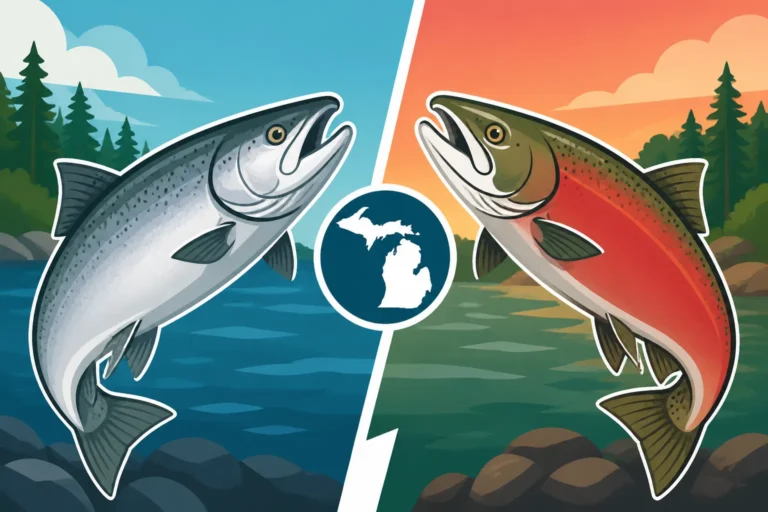
The Coho salmon, or "Silver" salmon, might not reach the sheer size of their Chinook cousins, but they are prized for their acrobatic fights and delicious table fare. Cohos are generally smaller, usually weighing in the single to low double digits, but what they lack in raw size, they make up for in eagerness to strike and spectacular aerial displays once hooked. They typically have a less spotted tail, with spots only on the upper lobe, and white gums.
Coho salmon also have a strong presence in the Great Lakes, undertaking similar spawning migrations into rivers in the fall. Their runs often precede the main Chinook runs, offering an earlier opportunity for river anglers to get in on the action. Offshore, they are often found higher in the water column than Chinooks, making them accessible to a variety of trolling techniques. Anglers who prefer a dynamic fight will find Cohos particularly rewarding. For more details on these spirited fish, check out Coho Salmon Fishing in Michigan.
Distinguishing between Chinook and Coho on the water can sometimes be tricky for beginners, but those tell-tale gum and tail spot patterns are key. Cohos also tend to have a more slender body profile compared to the deeper-bodied Chinook. Understanding Chinook vs Coho Salmon: What's the Difference can make you a more informed angler, helping you adapt your techniques to target one species over the other, or simply allowing you to identify your catch more accurately. Both species offer incredible angling experiences, each with its own unique characteristics and challenges.
Atlantic Salmon
While Chinook and Coho salmon get a lot of the spotlight, Michigan's Great Lakes are also home to the truly majestic Atlantic salmon, particularly in Lake Huron. These fish are native to the Atlantic Ocean and its connecting rivers but have been successfully introduced and managed in Lake Huron, offering a unique and exciting fishing opportunity that feels a bit like stepping back in time to the classic salmon fisheries of the East Coast.
Atlantic salmon are known for their beautiful, sleek, silver bodies, often with a few distinct black spots scattered above the lateral line. They don't typically grow as large as Chinook salmon in the Great Lakes, usually ranging from 5 to 15 pounds, but they are renowned for their incredible fighting ability, often leaping repeatedly when hooked. Their presence in Lake Huron is a testament to dedicated conservation and stocking efforts aimed at diversifying the fishery. Learning about Atlantic Salmon on Lake Huron will give you a deeper appreciation for this unique Great Lakes inhabitant.
Unlike their Pacific cousins which die after spawning, Atlantic salmon can survive their spawning journey and return to the lake to spawn in subsequent years, a trait that makes them particularly resilient and appealing to anglers. Targeting Atlantics often involves different techniques than those used for Pacific salmon, emphasizing finesse and presentation, especially in riverine environments. Their beauty and fighting spirit make them a highly sought-after trophy for many Michigan anglers.
Trout of the Deep and the Rivers
The Great Lakes basin is a haven for various trout species, ranging from the truly ancient and deep-dwelling native lake trout to the anadromous steelhead that make incredible upstream migrations. These cold-water species thrive in the vast, oxygen-rich depths of the Great Lakes and the cooler waters of their tributary rivers, offering diverse fishing experiences throughout the year.
Lake Trout
The magnificent Lake Trout is a true native of the Great Lakes, a fish that has roamed these deep, cold waters for millennia. These are stout, powerful fish, often characterized by their light spots on a dark body and a deeply forked tail. They are perfectly adapted to the frigid depths of the Great Lakes, where they stalk baitfish like ciscoes and alewives, growing to impressive sizes.
Fishing for lake trout often involves specialized deep-water trolling techniques, using downriggers and heavy gear to get lures down to where these fish reside. While they are present in all the Great Lakes, some waters are particularly renowned for their healthy lake trout populations. Landing a large "laker" from the depths is a test of strength and endurance, a rewarding experience for any angler. Understanding Lake Trout Identification in Michigan is key to appreciating this native species and adhering to specific regulations that might apply to them.
Historically, lake trout populations faced significant challenges, but extensive stocking programs and management efforts have brought them back to strong numbers in many areas. Their incredible longevity means some of the true giants have been swimming these waters for decades. While often associated with deep-water trolling, anglers can sometimes find them closer to shore during colder months or in specific rocky structures. If you're wondering How Big Do Lake Trout Get in Michigan, prepare to be impressed by the potential of these deep-water denizens!
Steelhead (Rainbow Trout)
Steelhead, the anadromous form of rainbow trout, are arguably one of Michigan's most beloved and challenging game fish. What makes them "steelhead" is their life cycle: they hatch in rivers, migrate to the Great Lakes to grow large and silver, and then return to their natal rivers to spawn. This migratory pattern provides incredible fishing opportunities in both the big lakes and the rivers.
When in the Great Lakes, steelhead are bright, chrome-silver, with a faint pink stripe, resembling salmon. Once they enter the rivers, their colors become more pronounced, with a vibrant rainbow stripe and darker backs, though still maintaining that steely determination. They are renowned for their incredible strength, blistering runs, and spectacular aerial acrobatics, making them a favorite target for fly anglers and gear fishermen alike. The distinction between a resident rainbow and a migratory steelhead is a fascinating aspect of their biology, which you can explore in Rainbow Trout and Steelhead: What's the Difference.
Michigan's major river systems, particularly those flowing into Lakes Michigan and Huron, experience significant steelhead runs in both the fall and spring. These migrations attract anglers from all over, eager to test their skills against these powerful fish. The Steelhead Life Cycle in Michigan Rivers is a complex and beautiful journey that contributes to the unique challenges and rewards of fishing for them. From the moment they leave the river as smolts to their triumphant return as mature adults, every stage of their life is a marvel of nature.
Brook Trout
While many immediately think of cold, clear inland streams when "brook trout" are mentioned, these beautiful native char also have a subtle, yet significant, connection to Michigan's Great Lakes. Particularly in the colder, pristine waters of Lake Superior and its numerous feeder streams, anglers can find populations of "coasters"—brook trout that live much of their lives in the big lake, growing to larger sizes before returning to streams to spawn.
Brook trout are easily identified by their distinctive worm-like markings (vermiculations) on their backs, red spots with blue halos along their sides, and white leading edges on their fins. The coasters of Lake Superior can be truly magnificent, showcasing a silvery sheen from their time in the big water, but still retaining those signature brook trout markings. They prefer exceptionally clean, cold, and well-oxygenated waters, making them an indicator of healthy aquatic ecosystems.
Targeting Great Lakes brook trout, especially the coasters, is often a specialized pursuit, requiring an understanding of their unique habitat preferences along the rugged Lake Superior coastline and its tributaries. For those willing to explore, the reward can be a truly stunning native fish. If you're venturing to the Upper Peninsula, learning about Lake Superior Brook Trout Identification and Size can help you distinguish these special fish and understand the regulations designed to protect them. Similarly, exploring Brook Trout in Michigan Rivers will shed light on their riverine habits.
Splake
Splake are a fascinating hybrid fish, a cross between a male brook trout and a female lake trout. These unique fish were initially developed by fisheries biologists to fill a specific niche in certain waters where neither brook nor lake trout thrive optimally. In Michigan, splake are primarily found in specific inland lakes and occasionally in the Great Lakes, especially in areas where they've been stocked.
Identifying a splake can be a bit tricky, as they possess characteristics of both parent species. They typically have a more moderately forked tail than a lake trout, but not as square as a brook trout. Their body coloration is often a mix, featuring some of the vermiculations of a brook trout alongside the lighter spots of a lake trout. They are known for their willingness to bite and can grow to a respectable size, making them a popular target in the waters where they are present. To get a better grasp on these unique hybrids, check out Splake Fishing in Michigan.
Splake offer anglers a chance to catch a fish that combines the fighting spirit of a brook trout with the potential for larger size, reminiscent of a lake trout. They tend to grow faster than brook trout and often inhabit shallower waters than lake trout, making them more accessible to some anglers. Understanding Splake vs Lake Trout: What's the Difference is crucial for proper identification and compliance with regulations, as well as for appreciating the distinct characteristics of this engineered species. They represent a clever solution by fisheries managers to enhance fishing opportunities.
Walleye, Perch, and Other Popular Panfish
While the salmon and trout of the Great Lakes are legendary, many anglers, myself included, have a special place in our hearts for the delicious and dependable walleye and the ever-popular yellow perch. These species offer fantastic fishing for a wider range of anglers, from those in small boats to families fishing from piers, and they are highly prized for their exquisite taste.
Walleye
The walleye, with its distinctive marble-eyed stare, is hands down one of the most sought-after game fish in Michigan's Great Lakes. Known for their delicious white, flaky fillets, walleye offer exciting angling throughout much of the year, particularly during their spring and fall feeding binges. They are masters of low-light conditions, often biting best at dawn, dusk, or even throughout the night.
Identifying a walleye is relatively easy: they have prominent, glassy eyes (hence "walleye," which refers to their large, light-sensitive eyes), sharp teeth, and a dark spot on the lower part of their dorsal fin. They prefer deeper, cooler water, often congregating around structures, reefs, or current breaks. Michigan boasts some truly world-class walleye fisheries within its Great Lakes, especially in Saginaw Bay of Lake Huron and the western basin of Lake Erie, which borders Michigan. Learning about Walleye Fishing in Michigan will provide you with a treasure trove of information on how to pursue this fantastic fish.
The pursuit of walleye is a passionate affair for many, involving various techniques from trolling crankbaits to jigging with live bait. Their elusive nature during the day and aggressive feeding habits during low light make them a thrilling target. If you're looking for the best places to catch these elusive beauties, exploring Best Waters for Michigan Walleye will point you in the right direction, highlighting specific areas known for abundant populations and trophy-sized fish. You might even find some specialized walleye lures on Amazon that seasoned anglers swear by.
Yellow Perch
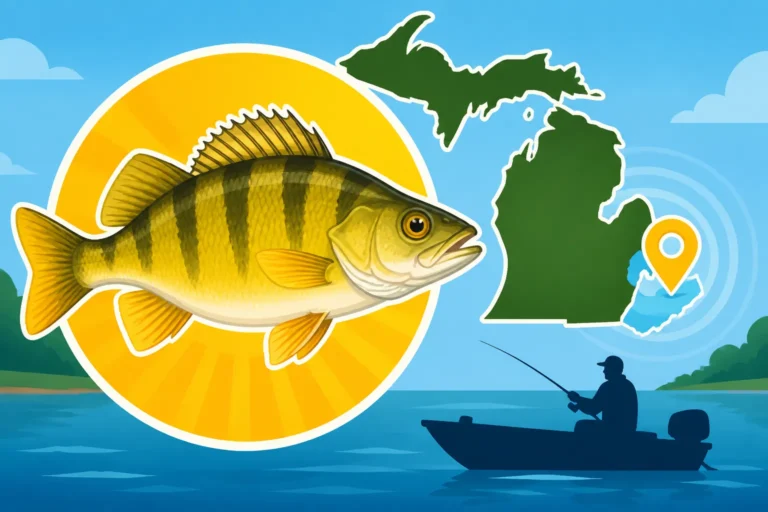
If there's one fish that epitomizes family-friendly fishing and a delicious meal, it's the yellow perch. These striped beauties are found throughout Michigan's Great Lakes and their connecting waters, offering consistent action for anglers of all ages and skill levels. They are highly sought after not just for their mild, sweet meat, but also for their abundance and willingness to bite.
Yellow perch are instantly recognizable by their distinct dark vertical stripes (typically 6-8) on a yellowish-green body and two dorsal fins. They are schooling fish, which means if you find one, you're likely to find many more. This schooling behavior makes them a popular target for ice fishing, as well as summer and fall boat and pier fishing. They generally prefer cooler, clearer waters but can adapt to a variety of habitats within the Great Lakes. For a deeper dive into these popular panfish, take a look at Yellow Perch Fishing in Michigan.
Targeting yellow perch often involves light tackle and small baits, such as minnows, worms, or small jigs. They provide fantastic fun for kids and adults alike, and a cooler full of fresh perch fillets is a true Michigan delicacy. Understanding Michigan Yellow Perch Size and Limit is crucial, as specific regulations can vary by body of water to ensure healthy populations for future generations of anglers. Their prevalence and cooperative nature make them a perfect introduction to fishing the Great Lakes for many beginners.
Other Panfish of the Great Lakes
While walleye and yellow perch are the stars, the Great Lakes and their interconnected bays, harbors, and tributaries also support various other panfish species that offer enjoyable angling, particularly in shallower, warmer waters. These smaller, yet feisty, fish are often the first catch for young anglers and provide consistent action when other species are harder to find.
Common panfish in these areas can include bluegill, crappie (both black and white), and rock bass. These species typically inhabit weed beds, docks, submerged structures, and calm backwaters within the larger Great Lakes system, as well as the mouths of rivers and protected bays. They are often targeted with light spinning gear or cane poles, using small hooks, bobbers, and live baits like worms or crickets. Catching a mess of panfish can be an incredibly relaxing and rewarding experience.
While not as heavily managed or specifically targeted as the larger game fish, these panfish play a vital ecological role and provide countless hours of recreation. They are an excellent way to introduce new anglers to the sport due to their relative ease of capture. To understand the broader array of these smaller, but no less fun, fish species, our Michigan Panfish Species Guide offers a fantastic overview of what you might encounter throughout the state's diverse waters, including those linked to the Great Lakes.
The Apex Predators: Pike and Muskie
For anglers seeking a true challenge and the thrill of battling a large, toothy predator, Michigan's Great Lakes offer exceptional opportunities for both Northern Pike and Muskellunge. These formidable fish are apex predators in their habitats, known for their aggressive strikes, powerful runs, and impressive size. Catching either one is an unforgettable experience.
Northern Pike
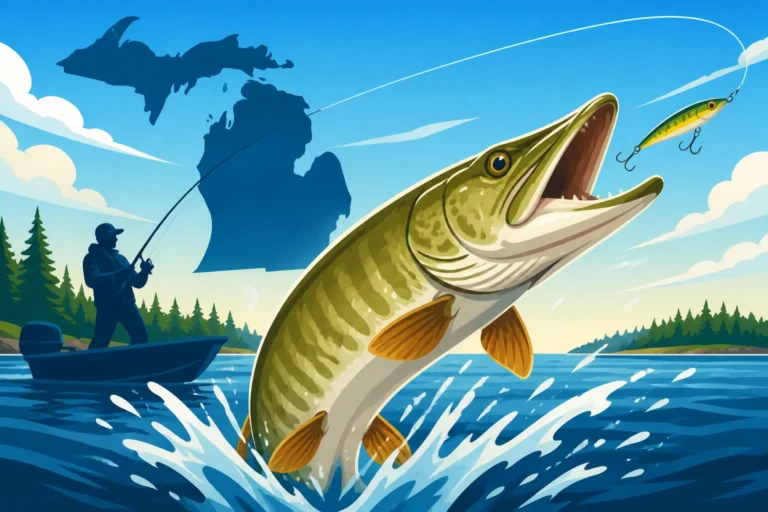
The Northern Pike is a classic freshwater predator, instantly recognizable by its long, torpedo-shaped body, duck-bill snout, and razor-sharp teeth. They are ambush hunters, typically lurking in weed beds, submerged timber, or other cover, waiting to dart out and engulf unsuspecting prey. While they are prolific in many inland Michigan lakes, they also have a significant presence in the shallower, vegetated bays and river mouths connected to the Great Lakes.
Pike can grow to impressive sizes, with large individuals offering a tremendous fight on appropriate gear. Their aggressive nature means they'll often strike large spoons, spinnerbaits, or crankbaits with ferocity. Anglers targeting pike often appreciate their willingness to bite and the explosive initial strike. Proper handling is crucial due to their sharp teeth and gill plates; a long-nosed pliers and a good landing net are essential tools. You can delve deeper into identifying these cunning predators by reading Northern Pike Identification in Michigan.
Distinguishing a northern pike from a muskellunge is a common question, and there are key features to look for. Pike typically have light, bean-shaped spots on a darker body, and their cheeks are fully scaled. Knowing the difference is important for regulations, as limits and sizes can vary between these two similar-looking species. If you're curious about how to tell them apart, our guide on How to Tell a Muskellunge From a Northern Pike offers clear distinguishing features that every Great Lakes angler should know.
Muskellunge (Muskie)
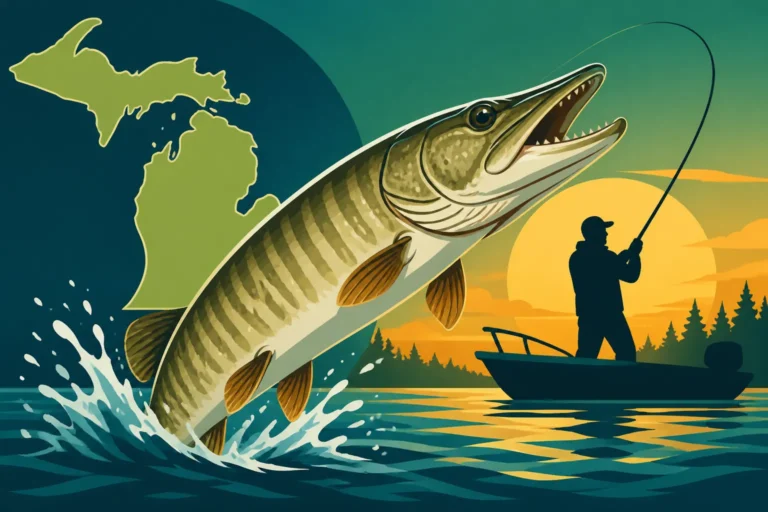
Often called the "fish of a thousand casts," the Muskellunge is the ultimate freshwater trophy fish for many anglers. These magnificent creatures are the largest members of the pike family, capable of growing to truly enormous sizes, making them a top-tier predator in the Great Lakes system. Their pursuit demands patience, dedication, and often heavy-duty tackle.
Muskies have a long, cylindrical body, a broad, duck-bill snout, and a mouth full of formidable teeth. Their coloration typically consists of dark bars or spots on a lighter background, though patterns can vary. What sets them apart from pike are usually the dark markings on a light background (pike are light spots on a dark background) and cheeks that are scaled only on the upper half. Lake St. Clair, connected to Lake Huron, is particularly famous for its incredible muskellunge fishery, often considered one of the best in the world. Learning about Muskellunge Fishing in Michigan can prepare you for the challenge.
Catching a muskie is a test of skill and perseverance. Anglers often spend entire days casting massive baits, hoping for that one explosive strike. These fish are known for their incredible power and dogged fighting style, often making multiple runs and head shakes. Because of their rarity and slow growth rates, catch-and-release is strongly encouraged, and specialized landing nets and tools are essential for the safe handling of these giants. Tales of Michigan's Michigan's Record Muskellunge serve as a testament to the incredible potential of these Great Lakes leviathans.
Bass and Their Varied Habitats
When it comes to pure fighting fun and widespread availability, bass fishing holds a special place in the hearts of many Michigan anglers. While largemouth bass are typically associated with warmer, weedier inland lakes, both smallmouth and largemouth bass can be found in various habitats connected to the Great Lakes, offering fantastic opportunities for anglers seeking an exhilarating fight.
Smallmouth Bass
The smallmouth bass is a true Great Lakes champion, renowned for its incredible fighting ability and preference for clear, rocky, cool waters. These hard-fighting fish are often referred to as "bronzebacks" due to their iridescent brown to bronze coloration. They are easily identified by their relatively small mouth, which typically doesn't extend beyond the back of the eye, and vertical bars or blotches along their sides.
Smallmouth bass thrive in the diverse structures of the Great Lakes, from rocky shoals and reefs to current breaks and drop-offs. Lakes Michigan, Huron, and especially Lake St. Clair are famous for their world-class smallmouth fisheries. Anglers target them with a variety of techniques, including tube jigs, crankbaits, spinnerbaits, and soft plastics, enjoying their aggressive strikes and powerful, acrobatic fights. To learn more about pursuing these feisty fish, our guide on Smallmouth Bass Fishing in Michigan is a great resource.
The sheer excitement of hooking a big smallmouth on light tackle is something every angler should experience. They are relentless fighters, often jumping clear of the water multiple times in an attempt to shake the hook. If you're specifically interested in the phenomenal smallmouth fishing offered by Lake St. Clair, delving into Best Technique for Smallmouth Bass on Lake St. Clair will provide you with valuable insights and tips to maximize your success in that famed fishery. It's a bass angler's paradise, offering some of the best action anywhere.
Largemouth Bass
While more commonly associated with the warm, vegetated waters of Michigan's inland lakes, the largemouth bass also finds suitable habitat within certain protected areas of the Great Lakes system. You'll typically find them in shallow, weedy bays, river mouths, marinas, and warmer backwaters that offer plenty of cover. They prefer slightly warmer water than their smallmouth cousins and are often ambush predators, striking from dense cover.
Largemouth bass are distinguished by their larger mouth, where the jaw extends beyond the back of the eye, and a prominent dark horizontal stripe or blotches along their sides. They are powerful fish, known for their explosive topwater strikes and their tendency to dive into cover once hooked, making for a challenging and exciting battle. Fishing for largemouth in Great Lakes-connected waters often involves flipping and pitching jigs or soft plastics into heavy cover, or throwing topwater lures over lily pads and weed mats.
Knowing how to differentiate between largemouth and smallmouth bass is a fundamental skill for any Michigan angler, not just for identification but also because their preferred habitats and typical fishing techniques can differ significantly. Our detailed guide on Largemouth Bass Identification in Michigan provides clear visual cues to help you tell them apart. Furthermore, if you're ever uncertain, How to Tell Smallmouth From Largemouth Bass offers a side-by-side comparison that will make identification a breeze, ensuring you're targeting the right fish with the right approach.
Other Fascinating Great Lakes Fish
Beyond the main game fish species, the Great Lakes are home to a fascinating array of other aquatic life, some of which are highly sought after by anglers, while others represent vital parts of the ecosystem or even historical significant commercial fisheries. From the ancient sturgeon to the humble whitefish, these species add to the incredible biodiversity and fishing opportunities of Michigan's vast waters.
Whitefish
The various species of whitefish (primarily Lake Whitefish, but also Round Whitefish and Menominee) are an integral part of the Great Lakes ecosystem and fishing heritage. Historically, lake whitefish supported a significant commercial fishery, prized for their delicious, flaky meat. Today, they also offer unique sportfishing opportunities, especially during the colder months.
Lake whitefish are characterized by their silvery bodies, small, subterminal mouths, and often a somewhat humped back. They are primarily bottom feeders, sifting through the substrate for insects, small crustaceans, and other invertebrates. While they don't fight with the same ferocity as a salmon or bass, their subtle bites and delicious fillets make them a rewarding catch. They are found throughout the Great Lakes, often in deeper, colder waters, but can move shallower, particularly during spawning season or when targeted by ice anglers.
Targeting whitefish often involves specialized techniques such as jigging small spoons or flies near the bottom, or even fly-fishing in certain rivers during their spawning runs. Many anglers will head out onto the ice in bays and harbors, using small jigs tipped with bait to entice these subtle biters. For those interested in pursuing these traditional Great Lakes fish, exploring Whitefish Fishing in Michigan provides an excellent starting point, while Best Waters for Whitefish Fishing in Michigan can guide you to some of the top spots.
Sturgeon
The Lake Sturgeon is an ancient and awe-inspiring fish, often referred to as a "living fossil" due to its prehistoric appearance. These incredible creatures can live for over 100 years and grow to immense sizes, making them one of the largest and longest-lived freshwater fish in North America. Their scutes (bony plates) along their back and sides, shovel-like snout, and bottom-oriented mouth make them unmistakable.
Sturgeon populations in the Great Lakes faced severe declines due to overfishing and habitat loss in the past, but intensive conservation and restoration efforts are slowly bringing them back. Because of their vulnerable status, fishing for lake sturgeon in Michigan is highly regulated and often limited to very specific seasons and locations, usually involving a lottery system for harvest opportunities, such as on Black Lake. For most anglers, any encounter with a sturgeon is a rare and revered experience, typically resulting in immediate release.
The sight of a large lake sturgeon is truly magnificent, a testament to the resilience of nature and dedicated conservation efforts. Even if you're not participating in a specific sturgeon fishery, understanding their presence and protected status is vital for any Great Lakes angler. Our article on Michigan Sturgeon Fishing on Black Lake offers a detailed look at this unique fishery, while How Rare Is Lake Sturgeon in Michigan emphasizes the importance of these ancient fish to the ecosystem and the efforts being made to ensure their survival.
Invasive Species: A Brief Mention
While our focus here is on the desirable and sport-worthy fish species, it would be incomplete not to briefly acknowledge the presence of invasive species within Michigan's Great Lakes. These non-native species, often introduced accidentally through shipping or other means, can significantly impact the native fish populations and the overall ecosystem.
Species like the round goby, zebra mussels, and quagga mussels have altered food webs and habitats, while the sea lamprey has historically devastated native lake trout populations before control measures were put in place. While anglers sometimes catch these species (like gobies), they are generally not targeted for sport or consumption due to their negative ecological impact. Awareness of these species helps anglers understand the complexities of the Great Lakes ecosystem and the ongoing conservation challenges.
Understanding the threats posed by these invaders is critical for responsible angling and environmental stewardship. Anglers play a role in preventing their spread by properly cleaning boats and gear. For a more in-depth look at this critical issue, our Invasive Fish Species in Michigan Waters article provides comprehensive information on the various non-native species present and their ecological effects. Additionally, if you're curious about a specific invader, Are Round Goby a Problem in Michigan Waters? details the impact of this particular species. It's a constant battle, but knowing about it is the first step toward being part of the solution.
Great Lakes Fish Species Comparison
Here's a quick comparison of some of the key Great Lakes fish species discussed, focusing on easy identification points and typical habitat. Remember, there can always be variations based on age, sex, and specific water body. For precise identification, always consult the most current Michigan fishing regulations digest. You can often find guides and resources on Amazon that help with fish identification as well.
| Feature | Chinook Salmon (King) | Coho Salmon (Silver) | Lake Trout | Steelhead (Rainbow Trout) | Walleye | Northern Pike | Muskellunge | Smallmouth Bass |
|---|---|---|---|---|---|---|---|---|
| Average Size | Large (15-30 lbs, can be larger) | Medium (6-15 lbs) | Large (10-25 lbs, can be larger) | Medium-Large (6-20 lbs) | Medium (2-8 lbs, can be larger) | Medium-Large (5-20 lbs) | Very Large (15-50+ lbs) | Medium (1-5 lbs, can be larger) |
| Distinguishing Marks | Black gums, spots on both tail lobes | White gums, spots on upper tail lobe only | Light spots on dark body, deeply forked tail | Silvery with faint pink stripe (lake), vibrant stripe (river) | Glassy eyes, dark spot on dorsal fin | Light spots on dark body, fully scaled cheeks | Dark bars/spots on light body, scaled upper cheek | Bronze body, vertical bars, mouth not past eye |
| Typical Habitat | Deep lake waters, large rivers for spawning | Mid-depth lake waters, rivers for spawning | Deep, cold lake waters, rocky areas | Great Lakes, cold rivers for spawning | Deeper, cooler lake waters, reefs, structure | Weedy bays, shallow cover, river mouths | Weedy bays, open water, large structures | Clear, rocky lake waters, current breaks |
| Fighting Style | Powerful runs, head shakes | Acrobatic jumps, fast runs | Deep runs, stubborn pull | Acrobatic jumps, blistering runs | Erratic, head shaking, often deep | Explosive strikes, powerful runs | Long, powerful runs, strong resistance | Hard pulling, frequent jumps |
| Native to Great Lakes | No (Introduced) | No (Introduced) | Yes | No (Introduced, but resident rainbows are native) | Yes | Yes | Yes | Yes |
Disclaimer
This article is for general informational purposes only and does not constitute professional advice. Laws, prices and regulations vary by location and change over time. Consult a qualified professional for guidance on your specific situation.