Brook Trout in Michigan Rivers
There's nothing quite like the thrill of chasing wild brook trout in Michigan's crystal-clear rivers and streams. Many anglers, myself included, have spent countless hours navigating fallen logs and thorny thickets, sometimes coming away frustrated by the elusive nature of these beautiful, native fish. This guide is all about demystifying the pursuit, helping you understand where brookies thrive, what techniques work best, and how we can all help conserve these precious jewels of our waterways.
Understanding Michigan's Brook Trout: Our Native Gems
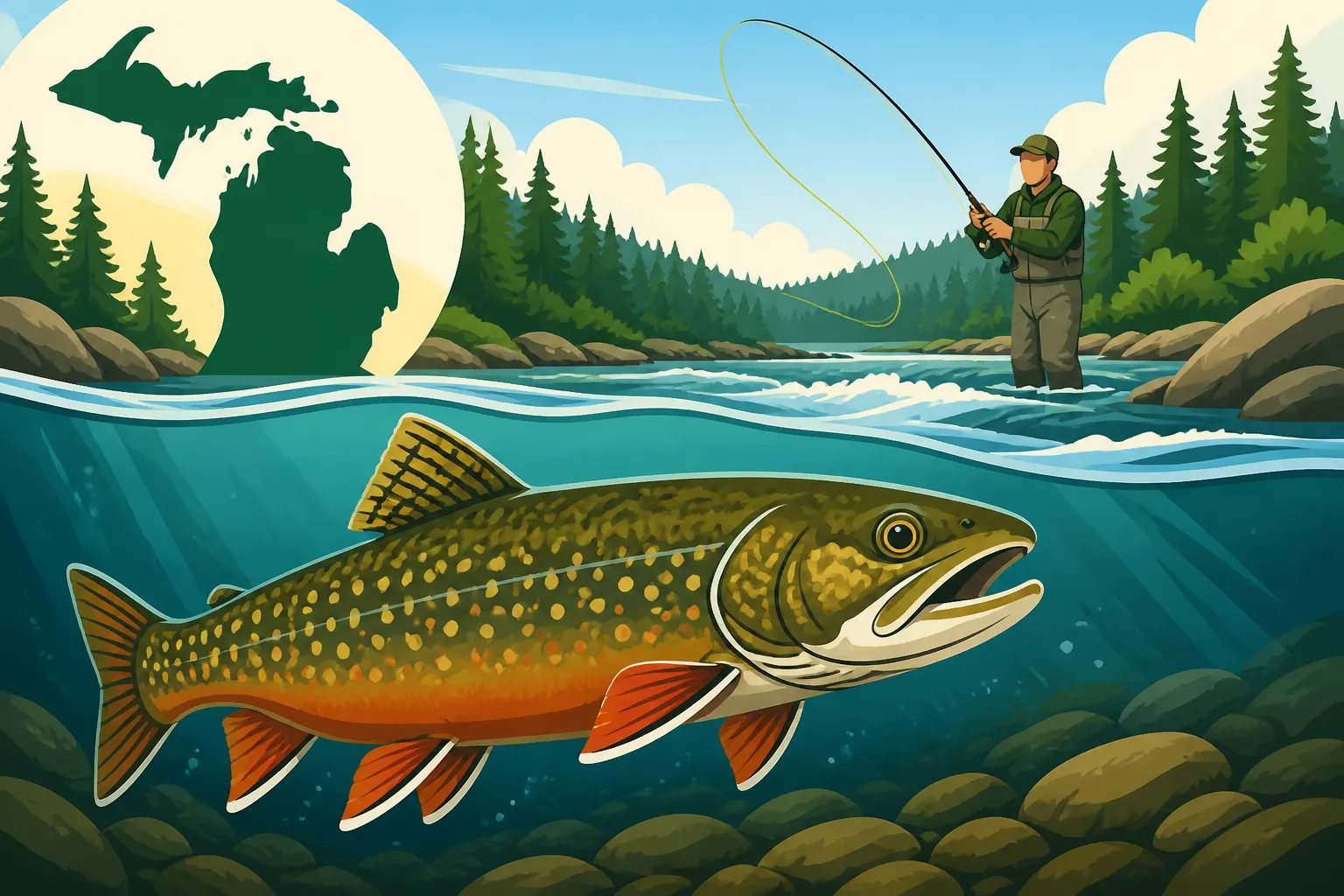
Brook trout, or "brookies" as we affectionately call them, hold a special place in the hearts of Michigan anglers. They're not just another fish; they're a vibrant symbol of our state's pristine natural waters, often found in the most secluded and picturesque corners of the landscape. Their striking vermiculation patterns, vivid red spots with blue halos, and fiery orange fins truly make them living works of art.
Identifying Michigan's Native Brook Trout
While some might confuse brook trout with other trout species, a few key features make them unmistakable. Their backs are covered in worm-like markings, called vermiculation, which range from olive to cream. Along their sides, you'll see small, brightly colored red spots, often encircled by a pale blue halo, almost like little jewels. The lower fins, especially the pectoral, pelvic, and anal fins, usually have a distinct white leading edge followed by a black stripe, and then a reddish or orange hue. If you’re ever unsure, take a moment to really look at those markings – they tell a story of cold, clean water. Compared to a brown trout, for instance, a brookie's body is typically more elongated and slender, built for navigating tight river bends and darting through currents. How to Tell a Brook Trout From a Brown Trout can offer more visual cues.
These fish are true natives to Michigan, having graced our waters long before other trout species were introduced. This native status means they are incredibly well-adapted to our local ecosystems, playing a vital role in maintaining the health and balance of many cold-water streams. Their presence is often an indicator of excellent water quality, which is something all of us as anglers and outdoors enthusiasts cherish. Learning to identify them is the first step in appreciating their unique place in our Michigan fishing heritage.
Ideal Habitat for River Brookies
Brook trout are finicky residents, preferring specific living conditions that cater to their needs. They are cold-water specialists, absolutely dependent on water temperatures that rarely exceed 68 degrees Fahrenheit, and ideally much cooler. This is why you'll almost exclusively find them in headwater streams, spring-fed creeks, and shaded river stretches, particularly those with plenty of groundwater seeping in to keep things chilled, even during the dog days of summer.
Beyond temperature, brookies crave structure and cover. Think about a classic Michigan trout stream: fallen trees that create current breaks and deep pockets, undercut banks that provide hiding spots from predators and bright sunlight, and abundant aquatic vegetation where insects can thrive. These features offer refuge from predators like ospreys and larger fish, and also provide ambush points for their own meals of insects and small minnows. They're also big fans of gravelly bottoms for spawning, which is crucial for the continuation of their species. Understanding these habitat preferences is key to knowing where to focus your efforts when you hit the stream. You won't find brookies just anywhere; you have to seek out their perfect, cool, complex homes.
Prime Riverine Real Estate for Brook Trout
Michigan is blessed with an incredible network of rivers and streams, and many of them are prime territory for brook trout. However, some stand out as particularly legendary, offering consistent opportunities for anglers willing to explore. These waters often share characteristics like strong spring influence, heavy tree cover, and limited development, which are all vital for sustaining healthy brook trout populations.
Noteworthy Upper Peninsula Brook Trout Streams
The Upper Peninsula, with its vast forests and numerous pristine watersheds, is truly brook trout heaven. Rivers here are often remote, wild, and incredibly scenic, providing an experience that feels truly untouched. Many of these streams are smaller, more intimate waterways that demand a careful approach and a keen eye for subtle signs of fish. The sheer volume of cold, clean water flowing through the UP makes it a sanctuary for these native beauties.
Consider the tributaries feeding into Lake Superior, or the remote stretches of rivers like the Two Hearted River system, which epitomizes wild trout fishing in the UP. These waters are often teeming with insect life, and the dense forests provide constant shade, keeping water temperatures perfectly cool. While some larger rivers might have pockets of brookies, it's often the smaller, less-frequented creeks, sometimes little more than trickles on a map, that hold the most rewarding populations of these aggressive, territorial fish. Don't be afraid to put on some waders, grab a small rod, and bushwhack your way to some hidden gems. The solitude and beauty alone make the effort worthwhile. For a broader overview, check out Michigan's Upper Peninsula Fishing Spots Guide.
Lower Peninsula Hotbeds for Brook Trout
While often overshadowed by its northern counterpart, Michigan's Lower Peninsula still boasts some fantastic brook trout fishing, especially in its northern regions. The key here is finding streams that remain consistently cold throughout the year, usually thanks to significant spring inputs or deep groundwater seeps. These waters can be a bit more challenging to find, often existing as pockets within larger river systems or as secluded feeder creeks.
The Au Sable River system, particularly its headwaters and many small tributaries, is a prime example in the Lower Peninsula. While the main branches are famous for brown trout, the smaller, colder feeder streams are often rich with brookies. The Pigeon River, another iconic northern Michigan waterway, also offers excellent brook trout fishing in its upper reaches. These aren't necessarily trophy waters for enormous brook trout, but they offer consistent action with beautiful, wild fish. The challenge and reward of finding these smaller, often brush-choked streams, and enticing a feisty brookie from its hideaway, is truly something special. Fly fishing is particularly popular on these types of streams, and understanding Au Sable River Trout Fishing in Michigan can be a great starting point.
Techniques and Tackle for River Brookies
Catching brook trout in rivers is an art form, often requiring a delicate touch, stealth, and an understanding of their aggressive yet wary nature. Unlike larger, more open water fishing, river brook trout demand a more intimate approach, whether you're casting a tiny fly or drifting a worm. Having the right gear certainly helps, but patience and observation are arguably even more important.
Fly Fishing for Brook Trout
Fly fishing is, for many, the quintessential method for pursuing river brook trout. There's something incredibly satisfying about matching the hatch or presenting a perfectly drifted dry fly to a rising brookie. These fish are often eager to strike, especially in secluded spots where they see less pressure. Light tackle is key; a 2 or 3-weight rod, about 6 to 7.5 feet long, is usually perfect for the tight quarters and small flies needed on Michigan's typically narrow trout streams.
When it comes to flies, brook trout aren't usually overly picky, but presentation is paramount. Dry flies like a Parachute Adams, Elk Hair Caddis, or even a simple Stimulator in sizes 14-18 can be deadly when trout are looking up. For subsurface action, small nymphs (Prince Nymph, Pheasant Tail, Hare's Ear) or tiny streamers (Woolly Bugger in olive or black) can coax strikes, especially when dead-drifted through deeper pools or undercut banks. Remember, stealth is crucial. Approach the water slowly, keep a low profile, and try to make your first cast count, as brook trout can be easily spooked by heavy footsteps or clumsy casts. For a deeper dive into techniques, consider Fly Fishing Techniques for Michigan Trout Streams.
Spin Fishing and Bait for Brook Trout
While fly fishing gets a lot of glory, spin fishing and even bait fishing can be incredibly effective for river brookies, especially for beginners or when conditions aren't ideal for flies. The key is to keep your tackle light and subtle. A lightweight spinning rod (ultralight action, 5-6 feet long) paired with a small reel spooled with 2-4 pound test monofilament or fluorocarbon line is ideal. This setup allows for precise casts and sensitivity to detect even the lightest strikes.
For lures, small spinners are often irresistible to brook trout. Classic inline spinners like Mepps Aglias or Panther Martins in sizes 00 to 1, with silver, gold, or even a black blade, can trigger aggressive bites. Small spoons or tiny crankbaits designed for trout can also work well. When using bait, a small worm or grub drifted naturally with the current under a tiny float can be incredibly effective. The goal is always to present your offering as naturally as possible, mimicking what the fish would naturally find in their environment. Make short, accurate casts, targeting those same pieces of structure where you'd expect a brookie to hide – logs, rocks, and current seams. You can find a great selection of ultralight gear and baits on platforms like Amazon, making it easy to get started.
Essential Gear for River Brook Trout Fishing
Having the right gear makes a huge difference in your comfort and success when targeting Michigan river brookies. It's not just about the rod and reel; it's about being prepared for the environment these fish call home. From wading in cold water to navigating overgrown banks, a few key items will enhance your experience.
| Gear Item | Why It's Essential | Considerations |
|---|---|---|
| Waders and Boots | Keeps you dry and warm in cold river water, allowing you to access prime fishing spots. | Chest waders are best for deeper streams. Choose sturdy wading boots with good ankle support and felt or rubber soles for traction on slippery rocks. Check out options on Amazon. |
| Lightweight Rod/Reel | Essential for delicate presentations and fighting feisty but smaller brook trout. | Fly fishing: 2-4 wt, 6-7.5 ft. Spin fishing: ultralight, 5-6 ft with a small reel. |
| Small Net (Rubber) | Helps land fish quickly and safely, minimizing stress and damage, especially for catch-and-release. | A rubberized net is gentler on fish scales and slime coat. Look for a short-handled net for easy maneuvering in tight river corridors. |
| Polarized Sunglasses | Crucial for spotting fish, reading water, and protecting your eyes from glare and stray hooks. | Amber or brown lenses are often best for varying light conditions. |
| Small Tackle Box/Vest | Keeps your flies, lures, weights, and tools organized and easily accessible. | Opt for something compact that doesn't hinder movement through brush. |
| Nippers/Forceps | Essential for quickly cutting line and safely removing hooks from fish. | Stainless steel options from brands like Umpqua or Dr. Slick are durable. Forceps are also great for crimping barbs (if allowed by regulations). |
| Insect Repellent | Michigan's woods can be buggy, especially near water. | Choose an effective repellent for ticks and mosquitoes. |
| Water Bottle | Staying hydrated is important, especially on longer excursions. | Hydration pack or a sturdy reusable bottle. |
| Small Backpack | To carry snacks, water, extra layers, and any additional gear. | Keep it light and streamline. Amazon has many suitable daypacks. |
Beyond these essentials, remember to dress in layers. Michigan weather can be unpredictable, and streamside environments are often cooler and damper than surrounding areas. A good rain jacket is always a wise addition, even if the forecast looks clear. Best Waders for River Fishing can give you more insights into that particular crucial piece of gear.
Conservation and Sustainable Brook Trout Fishing
As anglers, we have a profound responsibility to protect the very resources that bring us so much joy and connection with nature. This is especially true for native brook trout, which are sensitive indicators of ecosystem health. Practicing sustainable fishing isn't just a suggestion; it's a commitment to ensuring these beautiful fish thrive for generations to come. Michigan Fishing Regulations Every Angler Should Know outlines many of the legal requirements, but true conservation goes beyond just following the rules.
Catch and Release Practices
While it can be tempting to keep a few brookies for dinner, especially if allowed by local regulations, many dedicated brook trout anglers advocate for catch-and-release, particularly for larger or wilder fish. Every fish we release carefully back into the water contributes to the breeding population and the overall health of the stream. When you do choose to release, prioritize the fish's well-being above all else.
Handle the fish as little as possible, and always with wet hands to protect its delicate slime coat, which acts as a barrier against disease. Avoid dragging fish onto dry ground or squeezing them tightly. If possible, keep the fish in the water while unhooking it. Use barbless hooks, or crimp down the barbs on your regular hooks, as this makes hook removal much easier and quicker, reducing stress and injury to the fish. If a fish is deeply hooked, it's often best to simply cut the line as close to the hook as possible, as attempts to remove it can cause more harm. A quick photo while the fish is in the water is always preferable to one on the bank. Michigan Bag and Size Limits Explained will give you the precise rules for possession, but remember that conservation practices can extend beyond the minimum requirements.
Understanding Regulations and Ethics
Michigan has specific regulations designed to protect its brook trout populations, and these can vary by river and even by specific stretch. It's crucial to consult the current Michigan Fishing Regulations Digest before every outing. These regulations dictate everything from bag limits and size restrictions to tackle restrictions, such as "artificial lures only" or "single-pointed hooks." For example, some sensitive brook trout streams might have special restrictions on bait or even prohibit the use of certain types of lures, such as those that might appear too natural or that could be easily swallowed.
Beyond the written rules, there are unwritten ethical considerations. Be mindful of spawning fish, especially during fall when brook trout engage in their vibrant spawning rituals. Avoid wading directly through active redds (spawning beds), which appear as clean, gravelly depressions. Practice "leave no trace" principles by packing out everything you pack in, and even picking up any litter you encounter. Respect private property, and always ask for permission if you're unsure about access. By being thoughtful and responsible, we ensure that Michigan's wild brook trout rivers remain pristine and productive for all. When Does Trout Season Open on Inland Michigan Waters can provide seasonal context for these regulations.
Seasonal Strategies for Michigan River Brook Trout
Brook trout behavior, like that of many fish, is heavily influenced by the changing seasons. What works in the spring might not be as effective in the heat of summer, and knowing when and where to focus your efforts can dramatically increase your chances of success. Understanding these seasonal shifts is part of the deep knowledge that makes a truly successful Michigan angler.
Spring: The Opener and Beyond
Spring in Michigan, especially after the snowmelt, often brings higher water levels and cooler temperatures, making it a prime time for brook trout fishing. The famous "opener" for inland trout streams is usually a highly anticipated event, bringing anglers out in droves. During this time, brookies are often quite active, having survived winter and looking to feed aggressively. They're often found in slightly slower water, out of the main force of the current, but still near cover.
As spring progresses and insect hatches become more consistent, dry fly fishing can be exceptional. Look for hatches of caddisflies, mayflies, and stoneflies, and try to "match the hatch" with your fly selection. If the water is still cold and high, subsurface presentations with nymphs or small streamers can be more productive. Focus on deeper pools, eddies, and the edges of current seams. Spring is a fantastic time for exploring new waters as the lush greenery hasn't fully taken over yet, making access slightly easier in some areas. Remember to check Michigan's Spring Trout Opener Techniques for more specific tips as the season begins.
Summer: Seeking Cooler Waters
Summer can be a challenging time for brook trout in Michigan's rivers, especially during prolonged periods of hot weather. As air temperatures rise, so do water temperatures, pushing brookies into their thermal refuges. This means you'll need to seek out the coldest parts of the stream: spring-fed seeps, deep pools, and shaded areas with heavy overhead cover. Fishing early in the morning or late in the evening when water temperatures are at their coolest can also be more productive and less stressful for the fish.
During the summer months, terrestrials like grasshoppers, ants, and beetles become important food sources. Casting a hopper pattern near undercut banks or overhanging vegetation can be incredibly exciting. Small nymphs fished deep, often with a subtle indicator, can also entice strikes from heat-stressed fish. This is a time when understanding water temperature is paramount; carrying a stream thermometer can help you locate those precious pockets of cold water where brook trout can thrive. You'll likely find these fish more concentrated, making the search harder but potentially more rewarding once you find their sanctuary.
Fall: Spawning Colors and Aggression
Fall is arguably one of the most beautiful and exciting times to target brook trout in Michigan rivers. As the leaves turn vibrant shades of red and gold, brook trout themselves adopt stunning spawning colors, becoming even more brilliantly hued. Water temperatures begin to cool, making the fish more active and aggressive as they prepare for and engage in spawning. This is when you might have a shot at some of the larger, more mature brook trout that have been hidden away for most of the year.
During the fall, brook trout are often more territorial and will readily strike at a variety of offerings. Streamers, mimicking baitfish, can be very effective as fish try to bulk up for winter or defend their spawning areas. Egg patterns, especially those mimicking the eggs of other salmonids (if present), can also be highly productive. Focus on gravelly areas where fish are likely to be spawning, but remember to be extremely cautious and avoid disturbing redds. This is a crucial time for the continuation of the species, so practice extra care with catch-and-release. The fall season offers a unique blend of stunning scenery and fantastic fishing opportunities for these Michigan natives.
Disclaimer
This article is for general informational purposes only and does not constitute professional advice. Laws, prices and regulations vary by location and change over time. Consult a qualified professional for guidance on your specific situation.