Northern Pike Identification in Michigan
As an angler in Michigan, there are few things more exhilarating than feeling that tell-tale tug on your line, knowing a powerful fish is on the other end. But sometimes, especially for new anglers or even seasoned veterans in new waters, a momentary doubt creeps in: "Is this what I think it is?" When it comes to the toothy predators of our Michigan waters, specifically the northern pike, knowing exactly what you've hooked isn't just about bragging rights; it's vital for following regulations, ensuring your safety, and truly understanding the magnificent creature you're engaging with. This comprehensive guide will arm you with the knowledge to confidently identify a northern pike, differentiate it from its common look-alikes, and appreciate its unique place in our state's aquatic ecosystems.
Why Correct Northern Pike Identification Matters
Mistaking one fish for another can lead to all sorts of issues, from inadvertently breaking a regulation to handling a fish improperly and causing harm to yourself or the fish. Michigan's waters are home to several fish that can, at a glance, resemble a northern pike, and understanding the subtle (and sometimes not-so-subtle) differences is key to responsible angling. It's not just about what's legal to keep; it's about respecting the fish and the rules designed to protect our fisheries.
Navigating Michigan's Regulations
Michigan has very specific rules for various fish species, including daily limits and minimum size requirements. If you misidentify a northern pike for, say, a muskellunge, you could be facing entirely different regulations. For instance, muskellunge often have much stricter size limits and catch registration requirements compared to pike. Imagine landing what you think is a small pike, only to realize later it was a protected juvenile muskie – that's a mistake no one wants to make. Knowing the ins and outs of Michigan Fishing Regulations Every Angler Should Know is paramount, and it all starts with accurate identification.
These regulations are put in place by the Michigan Department of Natural Resources (DNR) to manage fish populations and ensure healthy ecosystems for future generations of anglers. If you're unsure about a fish, it's always best to practice catch and release, or at least consult the most current regulations digest. Don't risk a ticket or, worse, harming a vital part of our natural heritage because of a simple identification error.
Avoiding Mix-ups with Similar Species
The most common mix-up in Michigan is between a northern pike and a muskellunge. Both are long, predatory fish with similar body shapes and powerful jaws, often found in similar habitats. Anglers frequently struggle to tell them apart, especially when they're excited or in low light conditions. While true chain pickerel aren't native or common in Michigan, their resemblance to pike in other regions often leads to questions about their presence here.
Being able to quickly and accurately differentiate between these species allows you to make informed decisions about whether to keep the fish (if within legal limits) or release it. It also helps you understand the specific fishing tactics that might be more effective for one species over another. This knowledge adds another layer of enjoyment and expertise to your fishing adventures.
Understanding Pike Behavior
Knowing you've specifically targeted and caught a northern pike also helps you understand its behavior and ecological role. Pike are ambush predators, often lurking in dense weed beds or submerged structure, waiting for an unsuspecting meal to swim by. They're built for explosive bursts of speed and have incredibly sharp teeth designed to grasp and hold prey.
This understanding informs your choice of lures, fishing locations, and presentation techniques. If you're consistently catching pike in a certain type of cover, you're building a mental map of their habits, which makes you a more effective angler. It's a continuous learning process, and every identified fish contributes to that understanding.
The Signature Look: Key Northern Pike Features
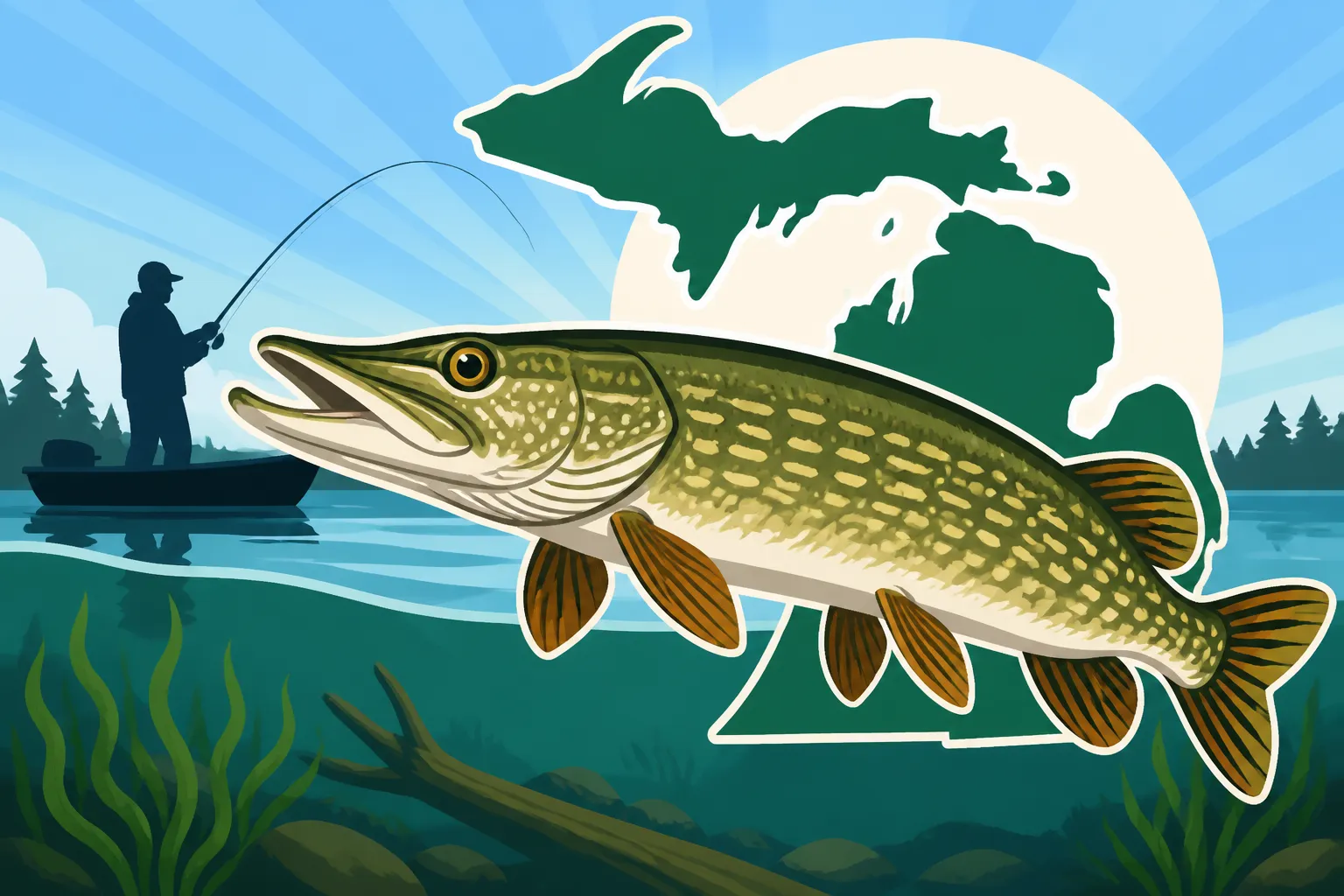
Northern pike are unmistakable once you know what to look for. They possess a suite of distinct physical characteristics that, when observed closely, set them apart from other species in Michigan's lakes and rivers. From their unique head shape to their distinctive markings, these fish are truly built for their predatory lifestyle.
Head and Jaw Distinctions
One of the most defining features of a northern pike is its large, duck-bill shaped snout. This long, flattened head tapers to a wide mouth full of razor-sharp, backward-pointing teeth. These teeth are not just on the jaws; they're also on the tongue and roof of the mouth, designed to grasp and hold onto struggling prey. When you look at a pike's mouth, you'll notice it extends well past the eye.
The eyes themselves are typically large and positioned high on the head, giving them excellent forward vision, crucial for their ambush hunting style. The lower jaw often protrudes slightly beyond the upper jaw, contributing to that distinctive "mean" look. Observing these features from the side view can be particularly helpful for quick identification.
Body Shape and Fin Placement
Northern pike have a long, slender, torpedo-shaped body, perfectly adapted for rapid bursts of speed through dense cover. Their back is typically straight, giving them a streamlined appearance. The dorsal fin is set very far back on the body, almost directly above the anal fin. This posterior placement of fins, along with a deeply forked caudal (tail) fin, allows for powerful, explosive propulsion, enabling them to strike prey with incredible force and speed.
Their pectoral fins are usually clear or yellowish, while the pelvic, anal, and caudal fins often have a reddish or orange hue with darker mottling. The positioning of these fins is a key identifier when comparing them to other fish species, as it's a consistent characteristic that distinguishes them from many other long-bodied fish.
Coloration and Markings
The coloration of northern pike can vary somewhat depending on their habitat, but they generally exhibit a dark green to olive green back, fading to lighter sides with distinctive bean-shaped, horizontal spots or streaks. These spots are usually lighter than their background color—a pale yellow to cream—and appear horizontally aligned along their flanks. The belly is typically white or cream-colored.
It’s important to note that these markings are lighter than the background. This is a crucial distinguishing factor when comparing them to muskellunge, which tend to have darker markings on a lighter background. The spots can sometimes coalesce into bars, but their light-on-dark appearance is usually consistent. This camouflage helps them blend seamlessly into vegetated environments, making them incredibly difficult for prey (and sometimes anglers) to spot.
Northern Pike vs. Their Look-Alikes: The Big Conundrum
The biggest challenge in identifying a northern pike, especially for those new to Michigan fishing, is often distinguishing it from a muskellunge. While chain pickerel are another member of the pike family (Esocidae) and look similar, they are not typically found in Michigan waters. Understanding the precise anatomical differences, particularly around the head and gill covers, is your most reliable tool.
Pike vs. Muskellunge: The Cheek and Scale Count
This is the golden rule, the absolute definitive way to tell a pike from a muskie. You need to look at the scales on the cheek and gill cover (operculum).
- Northern Pike: The entire upper half of the gill cover and the entire cheek are typically covered in scales. The lower half of the gill cover is usually scaleless. Think of it like a fully scaled "face" and a partially scaled "ear."
- Muskellunge: Only the upper half of both the cheek and the gill cover are scaled. The lower halves are scaleless. This gives them a more "naked" or "bare" appearance on the lower part of their head.
This detail is consistent across all sizes and variations of these fish. It's not about color, spots, or size—those can be deceiving. It's about the scales. Getting a good look at this area can sometimes be tricky on a feisty fish, but it’s the most accurate method. Sometimes, a quick look at the pattern on the body helps, but always defer to the gill plate and cheek scales for a definitive answer. For more detail on these distinctions, check out How to Tell a Muskellunge From a Northern Pike.
Pike vs. Pickerel: Size and Range
While pickerel species (like chain pickerel) are common in other parts of North America, they are generally absent from Michigan's natural waters. If you catch a smaller esocid in Michigan, it's almost certainly a young northern pike. Chain pickerel do have a distinct chain-like pattern on their sides and are typically smaller than northern pike, rarely exceeding 2-3 pounds.
However, the key identifier, if you were to encounter one, would again be the scales on the head. Pickerel, like pike, have fully scaled cheeks and gill covers. The main difference would be the body markings and overall size. Since they are not a common concern in Michigan, most anglers only need to worry about the pike-muskie distinction.
Other Esocid Family Members
The Esocidae family (the pike family) also includes grass pickerel and redfin pickerel, which are generally very small fish, rarely exceeding a foot in length. These are much less likely to be confused with a trophy northern pike or muskellunge. They also tend to inhabit very specific, heavily vegetated, shallow water environments.
For Michigan anglers, the focus will almost always be on the two giants: the pike and the muskie. Mastering that distinction is the real prize. The following table summarizes the key differences:
| Feature | Northern Pike | Muskellunge |
|---|---|---|
| Cheek Scales | Fully scaled (upper and lower half) | Upper half scaled, lower half scaleless |
| Gill Cover Scales | Upper half scaled, lower half scaleless | Upper half scaled, lower half scaleless |
| Body Markings | Light, bean-shaped spots or bars on a dark background | Dark bars or spots on a light background, sometimes clear |
| Tail Fin Tips | Often rounded or slightly pointed | Often sharply pointed |
| Snout Shape | More "duck-bill" or flattened | Can be more elongated, slightly more "pointed" |
| Pores on Jaw | 5 or fewer on each side of the lower jaw | 6 or more on each side of the lower jaw |
| Typical Size | Common up to 10-15 lbs, can exceed 20 lbs | Common from 20-40 lbs, can exceed 50 lbs |
Habitat and Behavior Clues
Beyond the physical features, understanding where northern pike prefer to live and how they behave can significantly aid in their identification and, more importantly, in your success as an angler. Their habitat preferences are quite strong, and learning them helps you predict where these powerful predators might be lurking.
Preferred Michigan Waters
Northern pike are incredibly adaptable and can be found in a wide variety of Michigan's waters, both inland and throughout the Great Lakes. They thrive in lakes, rivers, and even larger streams that offer ample weed growth, submerged timber, or other structure. These features provide the perfect ambush points and cover for their predatory lifestyle. In Michigan, you'll find them in many of the larger inland lakes like Houghton Lake and Mullett Lake, as well as the shallower bays of the Great Lakes. Best Michigan Lakes for Northern Pike delves into specific locations where you can target these fish.
They prefer cooler, clear to slightly stained water, but can tolerate a range of conditions. Look for them in areas with emergent vegetation like lily pads, cattails, or dense submerged weed beds. These green havens are not only prime hunting grounds but also offer protection from predators and provide oxygenated water.
Ambush Predator Habits
Northern pike are the quintessential ambush predators. They aren't generally open-water cruisers like some salmon or trout species. Instead, they position themselves strategically within cover, patiently waiting for an unsuspecting baitfish, frog, or even duckling to swim within striking distance. When a target presents itself, they explode from cover with incredible speed and power, engulfing their prey with their formidable teeth.
This behavior means that when you're fishing for pike, you're often casting into or around heavy cover. If you feel a sudden, violent strike followed by a strong run, there's a good chance you've hooked a pike. Their aggressive nature and powerful fights are what draw many anglers to target them. Understanding this helps you choose the right Best Lures for Muskellunge (which often apply to pike too) and techniques, such as casting spinnerbaits, spoons, or large crankbaits through weed edges.
Seasonal Movements
While pike generally stick to areas with cover, their movements can vary with the seasons, impacting where you might find them. In spring, after the ice melts, they'll often move into shallower areas to spawn, making them more accessible to shore anglers in some spots. As water temperatures rise in summer, they might retreat to slightly deeper weed lines or cooler water closer to springs, though they'll still be associated with structure.
In the fall, as water temperatures begin to drop, pike can become incredibly active, feeding heavily to build up reserves for winter. This can be a fantastic time to target them, as they're often aggressive and found in predictable locations. Even during ice fishing season, they remain active, often caught on tip-ups set along weed edges or near drop-offs. Knowing these general patterns can help you narrow down your fishing spots throughout the year.
Handling and Safety Considerations
Catching a northern pike is an exciting experience, but their mouths full of sharp teeth demand respect and proper handling techniques. Mishandling a pike can result in serious injury to yourself or, equally importantly, harm to the fish you intend to release. Being prepared with the right tools and knowledge is crucial for a safe and successful encounter.
The Pike's Toothy Grin
Let's be blunt: northern pike have a lot of teeth. They're like miniature scalpels, designed to slice and hold prey. Reaching your bare hand into a pike's mouth to remove a hook is a recipe for disaster. The wounds can be deep, painful, and prone to infection. Even a small pike can inflict a nasty bite.
Because of this, anglers must always prioritize safety when handling pike. Avoid placing your fingers anywhere near their mouth. If you plan to keep a pike, you might use a gripper or simply hold it firmly by the gill plate (not the gills themselves!) with protection. However, for catch and release, which is common for larger pike, other methods are far safer for both you and the fish.
Safe Release Practices
For responsible catch and release, especially with the potential to catch How Big Do Northern Pike Get in Michigan, you'll need specific tools. A long-nosed pliers or a specialized jaw spreader can be invaluable for safely removing hooks from a pike's mouth without risking your fingers. If the hook is deeply embedded, cutting the line as close to the hook as possible might be the best option to minimize stress on the fish. Many hooks will eventually rust out.
When releasing, support the fish horizontally with both hands, one near the head (avoiding the gills and teeth) and one supporting the tail. Gently revive the fish by moving it back and forth in the water until it swims away under its own power. Avoid dropping the fish or dragging it over rough surfaces. The goal is to get it back into the water as quickly and gently as possible. A sturdy landing net can also help contain the fish while you prepare your tools.
Essential Tools for Pike Anglers
To safely and effectively fish for northern pike, especially if you plan on catch-and-release, a few key pieces of gear are non-negotiable. First, as mentioned, a good pair of long-nosed pliers or forceps is essential for hook removal. The longer, the better, to keep your hands away from those teeth. Secondly, a jaw spreader can be incredibly helpful for larger pike, allowing you to open their mouth safely to get at deeply set hooks.
Many anglers also use a fish gripper (lip gripper) to control the fish while keeping hands clear of the danger zone. And don't forget heavy-duty gloves—while they won't stop a direct tooth jab, they can offer some protection from scrapes and fin pricks. You can find a wide variety of these essential tools on Amazon, often in sets designed specifically for toothy predators. Carrying a small first-aid kit in your tackle box is also a smart move, just in case of any minor nicks or scrapes.
Michigan's Northern Pike Management and Conservation
Michigan's DNR actively manages northern pike populations through a combination of regulations, habitat improvement, and stocking efforts. These actions are designed to maintain healthy fisheries, ensuring that future generations can enjoy the thrill of catching these impressive predators. As anglers, understanding and supporting these efforts is part of our responsibility.
State and Local Regulations
The Michigan DNR establishes specific regulations for northern pike, which can include minimum size limits, daily possession limits, and sometimes even specific regulations for certain bodies of water. For example, some lakes might have special "no-kill" zones or reduced limits to protect spawning populations. It's crucial to always check the current Michigan Fishing Regulations Digest before you head out, as these rules can change annually.
These regulations are based on scientific data, population surveys, and public input, all aimed at balancing fishing opportunities with conservation needs. Adhering to these rules is not just about avoiding fines; it's about contributing to the long-term health and sustainability of our pike fisheries. When you understand the species, you understand why these rules exist.
Habitat and Stocking Efforts
A key component of pike management is habitat protection and enhancement. Pike rely heavily on aquatic vegetation for spawning, feeding, and cover. Efforts to protect wetlands, prevent shoreline erosion, and manage invasive species that degrade habitat are vital for pike populations. Healthy weed beds mean healthy pike.
While northern pike reproduce naturally in many Michigan waters, the DNR may occasionally undertake stocking programs to supplement populations in certain lakes or rivers, especially those where natural reproduction might be limited or where new populations are being established. These stocking efforts ensure that there are plenty of pike for anglers to pursue across the state.
The Angler's Role in Conservation
As anglers, we play a significant role in northern pike conservation. Practicing responsible catch and release with appropriate tools, adhering to all regulations, and being mindful of our impact on aquatic environments all contribute to healthy fisheries. Reporting suspicious activity, such as poaching or pollution, to the DNR is also a way to protect our resources.
Education is also key. By understanding the differences between a pike and a muskie, for instance, we prevent accidental harm to protected species and spread knowledge among our fellow anglers. Sharing accurate information helps build a community of responsible and knowledgeable stewards of Michigan's natural resources. It's not just about what you catch; it's about how you fish and what you leave behind.
Conclusion
Identifying a northern pike in Michigan's abundant waters is a skill that becomes second nature with practice and a keen eye for detail. By focusing on key features like their distinctive duck-bill snout, the placement of scales on their cheek and gill cover, and their light-on-dark body markings, you can confidently distinguish them from muskellunge and other fish. Remember, proper identification isn't just a fun challenge; it's a critical component of responsible angling, ensuring you adhere to regulations and practice safe handling for both yourself and the fish.
Michigan's northern pike are magnificent predators, offering exciting challenges and rewarding experiences for anglers of all skill levels. By understanding their biology, preferred habitats, and the tools necessary for safe interaction, you're not just improving your fishing prowess—you're becoming a more informed and ethical steward of our incredible aquatic ecosystems. So next time you feel that powerful strike, you'll know exactly what you're dealing with, allowing you to fully appreciate the thrill of catching one of Michigan's most iconic game fish.
Disclaimer
This article is for general informational purposes only and does not constitute professional advice. Laws, prices and regulations vary by location and change over time. Consult a qualified professional for guidance on your specific situation.