Steelhead Fishing in Michigan
Michigan steelhead fishing can feel like chasing a ghost, especially for newcomers who are trying to figure out the right time, the right gear, and the right spots to intercept these incredible, hard-fighting fish. Many anglers get frustrated by the seemingly endless variables involved, but with the right knowledge, landing a Michigan steelhead is an achievable and incredibly rewarding experience. This guide aims to unravel the mysteries of steelhead fishing in Michigan, offering practical advice to help you succeed.
Understanding Michigan Steelhead: The Silver Ghosts
Steelhead are, quite simply, magnificent fish. They are an anadromous form of rainbow trout, meaning they live most of their lives in the vast waters of the Great Lakes (acting much like salmon) before making incredible spawning migrations up Michigan's rivers and streams. This unique life cycle gives them their power, their distinctive chrome-bright appearance, and their legendary fighting spirit. When you hook into a steelhead, be prepared for acrobatic jumps, screaming runs, and a test of your angling skill and tackle.
The Journey from Egg to Angler's Dream
The life cycle of a Michigan steelhead is a true testament to nature's resilience and determination. It all begins in the gravel beds of cold, clear Michigan rivers. Adult steelhead, after their arduous journey upstream, deposit their eggs, which then develop into tiny fry. These young fish, known as parr, spend their juvenile years feeding and growing in the river, often for one to three years, developing the characteristic parr marks along their sides that help them camouflage in the riverbed.
As they mature, a remarkable transformation occurs. The parr marks fade, their bodies become sleeker and silver, and they begin to migrate downstream towards the Great Lakes. At this stage, they are called "smolts." Once in the vastness of Lake Michigan, Lake Huron, or Lake Superior, they feed voraciously on smaller fish and invertebrates, growing rapidly in size and strength. It's this period in the Great Lakes that gives them their incredible power and stamina. After typically two to four years in the lake, driven by instinct, these powerful adults return to the rivers of their birth, or sometimes other suitable streams, to spawn. This is when anglers have their best chance to intercept these truly magnificent fish.
Steelhead vs. Rainbow Trout: A Matter of Lifestyle
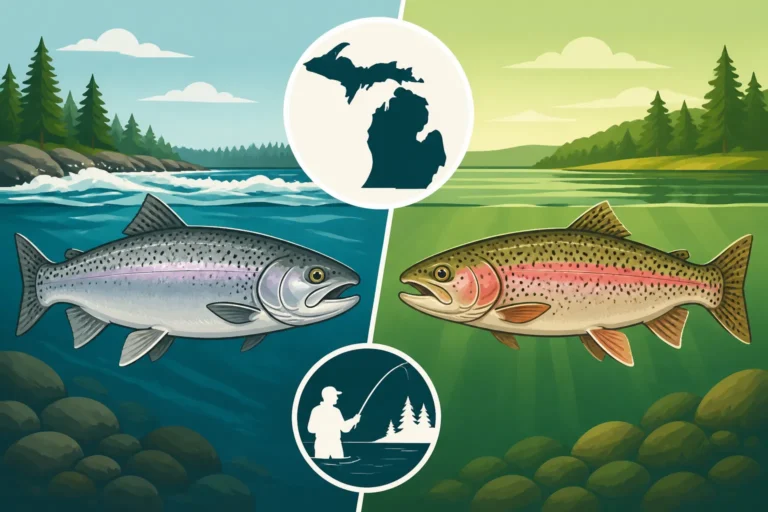
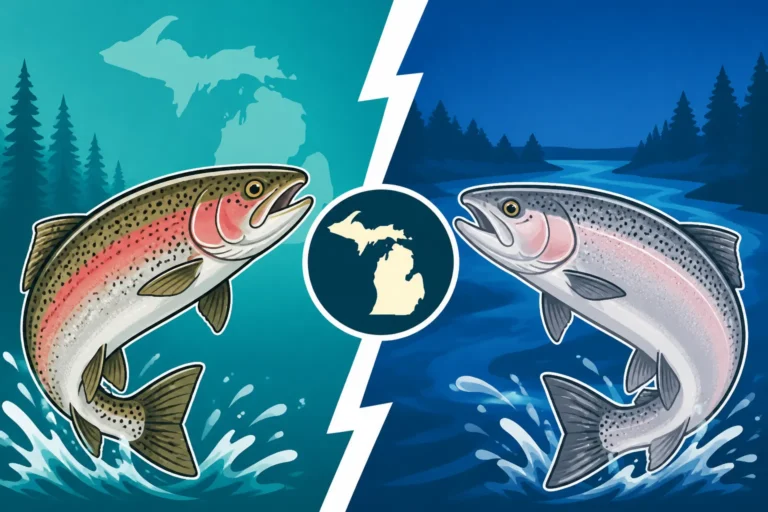
It's a common point of confusion, and for good reason! Genetically, steelhead and rainbow trout are the same species, Oncorhynchus mykiss. The key difference lies entirely in their lifestyle, specifically their migratory habits. Think of it this way: a rainbow trout spends its entire life in freshwater, typically a river or inland lake. They might move around, but they don't undertake long migrations to a large body of water like the Great Lakes.
Steelhead, on the other hand, are the migratory form. They are born in rivers, migrate to the Great Lakes to grow large, and then return to rivers to spawn. This anadromous behavior is what makes them "steelhead." The nutrient-rich environment of the Great Lakes allows them to reach much larger sizes and develop incredible strength compared to their landlocked rainbow cousins. So, while every steelhead is a rainbow trout, not every rainbow trout is a steelhead. When anglers talk about steelhead in Michigan, they are almost always referring to these lake-run fish.
Where Do Michigan Steelhead Originate?
Michigan's steelhead fishery is a fascinating blend of wild, naturally reproducing populations and extensive stocking efforts. Originally, some native populations of rainbow trout might have exhibited anadromous tendencies in connecting rivers. However, the prolific runs we enjoy today are largely thanks to deliberate introductions. Steelhead were first introduced to the Great Lakes region in the late 19th century, primarily from the Pacific Northwest, with the aim of creating a sport fishery.
Today, many of Michigan's prime steelhead rivers, particularly the larger ones flowing into Lake Michigan, boast significant natural reproduction. These wild fish are often incredibly strong and resilient. However, the Michigan Department of Natural Resources (DNR) also conducts regular stocking programs to supplement these wild populations and ensure robust fishing opportunities across the state. They raise millions of steelhead smolts in state hatcheries and release them into various rivers each year. This combination of natural reproduction and strategic stocking helps sustain Michigan's world-class steelhead fishery, making it a truly unique experience for anglers.
When to Chase Chrome: Michigan Steelhead Seasons
One of the most thrilling aspects of Michigan steelhead fishing is that it's a multi-season affair. Unlike salmon, which die after spawning, steelhead are iteroparous—meaning they can spawn multiple times throughout their lives. This allows for runs of fish throughout much of the year, though specific peaks offer the best chances. Understanding these seasonal nuances is crucial for planning a successful trip. The water temperature, flow, and even the amount of daylight all play a role in triggering these magnificent fish to move upriver.
The Thrill of the Fall Run
The fall steelhead run is often considered the first major opportunity for anglers, kicking off in late September and continuing through November. As water temperatures begin to drop and leaves start to change color, steelhead stage in the river mouths and begin their migration upstream. These fish are generally not actively spawning yet; instead, they are entering the rivers to feed on salmon eggs (from the Chinook and Coho salmon runs) and to prepare for their own spawning efforts in the spring.
Fall steelhead are often incredibly aggressive and powerful, having spent all summer bulking up in the Great Lakes. They'll readily strike a variety of presentations, especially those mimicking salmon eggs or baitfish. Anglers often target them with beads, spawn bags, or small crankbaits. The crisp autumn air, vibrant fall foliage, and the sheer power of these fish make the fall run an unforgettable experience. Focusing on staging areas near river mouths and deeper pools upstream can be highly productive. Check out our detailed guide on Fall Steelhead Run in Michigan Rivers for more specific tactics.
Battling Winter Steelhead: A Test of Resolve
For the truly dedicated angler, winter offers a unique and often rewarding steelhead experience. While the runs slow down significantly compared to fall and spring, many steelhead will remain in the rivers throughout the colder months, holding in deeper, slower pools where the water is slightly warmer and less turbulent. These fish become more lethargic and less aggressive, requiring a more finessed approach.
Successful winter steelhead fishing demands patience, specialized gear, and a willingness to brave the cold. Small, subtle presentations like tiny jigs tipped with wax worms, small beads, or delicate spawn bags are often the ticket. Stealth is paramount, as fish in clear, cold water are easily spooked. Thermal layers, good waders, and insulated boots are essential for staying comfortable. While you might not encounter the sheer numbers of fish seen during peak runs, the size and beauty of a chrome-bright steelhead pulled from an icy Michigan river in winter is a memory that truly stands out. It's a challenging but incredibly satisfying pursuit. Winter Steelhead Run in Michigan Rivers delves deeper into conquering the cold.
Spring's Explosive Steelhead Spawning Run
The spring steelhead run is arguably the most anticipated and celebrated season for many Michigan anglers. As ice recedes and water temperatures begin to climb into the 40s and 50s Fahrenheit, steelhead, driven by their spawning instincts, surge into the rivers en masse. This period, typically from late March through May, sees the highest concentration of fish as they move onto gravel beds to reproduce.
During the peak of the spring run, steelhead can be found throughout the rivers, often congregating in spawning redds (shallow depressions where eggs are laid) or holding in nearby deeper water before and after spawning. They become extremely sensitive to natural egg patterns, making beads and spawn bags incredibly effective. Fly anglers will find success with egg patterns, nymphs, and sometimes even small streamers. It's an incredibly exciting time to be on the water, with fish frequently jumping and fighting with incredible vigor. The sheer numbers and aggressive nature of these pre-spawn and actively spawning fish provide some of the most intense angling action Michigan has to offer. Understanding Michigan Steelhead Run Timing can help you hit the peak of this fantastic season.
Prime Michigan Steelhead Waters: Where the Big Ones Roam
Michigan is truly blessed with an abundance of fantastic steelhead waters, from sprawling major rivers to smaller, more intimate streams. Each offers a unique experience, from battling powerful fish in large river currents to stealthily stalking them in clearer, more challenging flows. Knowing where to focus your efforts can make all the difference in connecting with these incredible fish.
Iconic Rivers of the Lower Peninsula
The Lower Peninsula is home to some of Michigan's most famous and productive steelhead rivers, drawing anglers from across the country. These rivers are generally larger, offering more public access and a greater diversity of fishing opportunities.
The Manistee River, often referred to as the "Big Manistee," is legendary for its prolific steelhead runs. From its mouth near Manistee all the way upstream to Tippy Dam, anglers can find excellent fishing. The lower sections are popular for drift boat fishing, while upstream, wade anglers can find success. This river is known for its strong runs of both fall and spring steelhead, often mixed with robust salmon populations. It's a true Michigan gem.
The Muskegon River, flowing into Lake Michigan at Muskegon, is another powerhouse steelhead fishery. It's a large, slow-moving river in its lower sections, transitioning to faster water upstream. It offers fantastic opportunities for both boat and wade anglers, especially below Croton Dam. The Muskegon sees excellent fall and spring runs, and its broad nature allows for various techniques, from float fishing to pulling plugs from a boat.
The Pere Marquette River holds a special place in the hearts of many anglers, particularly fly fishers. It's a federally designated "Wild and Scenic River" and is the site of the first successful introduction of steelhead to Michigan. While smaller than the Manistee or Muskegon, it boasts an incredibly strong run of fish and offers a more intimate, wade-fishing experience. Its clear waters demand stealth and precise presentations, rewarding anglers with truly wild and beautiful steelhead. The Pere Marquette is known for strong runs in both fall and spring, making it a year-round destination for many.
These rivers, along with others like the Rogue, Grand, and St. Joseph, are the backbone of Michigan's Lower Peninsula steelhead fishing, each with its own character and charm.
Upper Peninsula Gems for Steelhead
While the Lower Peninsula rivers might get more press, Michigan's Upper Peninsula offers a wilder, more remote steelhead fishing experience. The rivers here are generally smaller, often with fewer anglers, and surrounded by rugged, untamed beauty. These streams flow into Lake Superior and Lake Michigan, providing diverse opportunities.
Rivers flowing into Lake Superior, such as the Two Hearted River (immortalized by Ernest Hemingway) and the Tahquamenon River, are renowned for their incredibly strong and hard-fighting steelhead. These fish often battle against colder water and more extreme conditions, making them exceptionally tough. The scenery is breathtaking, with dense forests and pristine wilderness. Access can be more challenging on some of these rivers, but the reward of a wild Upper Peninsula steelhead in a secluded setting is unparalleled.
On the Lake Michigan side of the Upper Peninsula, rivers like the Manistique River and the Ford River also host impressive steelhead runs. These rivers offer a different character, often a bit wider and more accessible than their Lake Superior counterparts, but still provide that distinct UP fishing feel. The runs might be slightly later or earlier depending on snowmelt and water temperatures, but the fish are just as eager. Exploring these lesser-known waters can lead to incredible adventures and some truly memorable catches.
Great Lakes Tributaries: Gateway to the Runs
Beyond the major rivers, countless smaller tributaries and creeks feed into the Great Lakes, serving as vital gateways for steelhead during their migratory runs. These smaller streams might not hold the sheer numbers of fish as the larger rivers, but they can offer fantastic, often overlooked, opportunities, especially during peak spawning times.
These smaller tributaries warm up and cool down faster than larger rivers, often dictating when fish move in. During heavy rains or snowmelt in spring, these creeks can become a highway for steelhead looking for prime spawning gravel. Anglers often find success by carefully walking these smaller streams, looking for holding water or actively spawning fish. Stealth is even more critical here due to the shallower, clearer conditions.
Moreover, the Great Lakes shoreline itself can offer excellent opportunities, particularly during periods when steelhead are staging near river mouths or cruising close to shore. Pier fishing or casting from the beach can intercept fish waiting for optimal conditions to enter the rivers. This is particularly true in the early fall or late spring when fish are transitioning. Understanding the nuances of these tributary movements is a key part of becoming a well-rounded Michigan steelhead angler. For those interested in Michigan Great Lakes Fishing Regulations Guide, there are specific rules that apply to these waters.
Essential Gear for Michigan Steelhead Fishing
Steelhead fishing is a demanding pursuit, and having the right gear can significantly impact your success and comfort on the water. These powerful fish require tackle that can handle long, intense fights, often in challenging river environments. Investing in quality equipment means you'll be ready when that chrome rocket decides to peel line off your reel.
Rods and Reels for River Battles
Choosing the right rod and reel is paramount for steelhead fishing. You need a setup that offers both sensitivity for detecting subtle bites and backbone for fighting large, powerful fish.
Rods: For river fishing, a longer rod is generally preferred. This allows for better line management, easier mending (controlling your line's drift), and shock absorption during those explosive runs.
- Spinning Rods: A 9-11 foot medium-light to medium action spinning rod is a popular choice. Look for models designed specifically for float fishing or drift fishing. A longer rod allows you to keep more line off the water, reducing drag and improving your drift. Brands like Fenwick, St. Croix, and G. Loomis offer excellent options.
- Casting Rods (for Centerpinning): If you're going the centerpin route, specialized float rods, often 11-15 feet long, are essential. These rods are incredibly sensitive and designed for precision line control.
- Fly Rods: For fly anglers, a 9-10 foot 7 or 8-weight rod provides the necessary power to cast heavy flies and battle strong fish, while still offering enough finesse for delicate presentations.
For more details, check out Best Rods for Steelhead Fishing.
Reels:
- Spinning Reels: A 2500-4000 series spinning reel with a smooth drag system is ideal. A good drag is crucial to prevent break-offs when a steelhead makes a powerful run. Capacity for at least 150 yards of line is also important. Shimano and Daiwa are popular choices known for their reliable drags.
- Centerpin Reels: These specialized reels, often resembling large fly reels without a drag, allow for perfectly drag-free drifts. They require a specific technique but offer unparalleled presentation.
- Fly Reels: A large arbor 7 or 8-weight fly reel with a strong, smooth disc drag is essential. It needs to hold your fly line plus ample backing, as steelhead will often take you deep into your backing.
Learning about Best Reels for Steelhead Fishing will help you match your setup perfectly. When you're ready to buy, you can often find great deals on these specialized rods and reels on Amazon.
Line Choices: Braided, Fluorocarbon, and Monofilament
Your choice of fishing line is just as critical as your rod and reel. Each type has distinct characteristics that can be advantageous depending on your chosen technique and water conditions.
- Braided Line: Many anglers use braided line as their main line, especially for spinning and centerpin setups. It has virtually no stretch, offering incredible sensitivity to detect light bites, and exceptional strength-to-diameter ratio. However, its visibility can be an issue in clear water, so it's almost always paired with a fluorocarbon leader. Popular choices range from 15-30 lb test.
- Fluorocarbon Line: This line is highly valued for its low visibility underwater, as it has a refractive index very close to water. It also offers excellent abrasion resistance, which is vital when fishing around rocks and logs. Many anglers use fluorocarbon for their leaders (6-10 lb test is common for steelhead), connecting it to their braided main line with a knot like the FG or Double Uni. Some dedicated anglers will even use it as a main line in specific situations.
- Monofilament Line: While less common as a primary main line for serious steelhead anglers today due to its stretch and higher visibility, monofilament still has its place. It's more forgiving due to its stretch, which can be beneficial when a fish makes a sudden move. Some anglers prefer it for leader material in certain cloudy water conditions. For fly fishing, specific weight-forward floating or sinking lines are used, often with fluorocarbon or monofilament leaders.
Understanding What Line Weight for Michigan Steelhead is crucial for balancing sensitivity and strength.
Waders, Boots, and Layering for Comfort
Steelhead fishing in Michigan often means spending hours in cold rivers, frequently in challenging weather conditions. Staying warm, dry, and comfortable is not just about enjoyment; it's about safety.
- Waders: Breathable chest waders are the standard. Neoprene waders offer more warmth but can be bulky. Modern breathable waders, made from Gore-Tex or similar materials, offer excellent waterproofing and allow perspiration to escape, keeping you dry from the inside out. Look for reinforced knees and seat for durability. When looking for quality waders and boots, Amazon has a wide selection of reputable brands.
- Wading Boots: Felt soles offer superior grip on slick, algae-covered rocks, but are often banned in some areas due to concerns about invasive species transfer (check local regulations!). Rubber soles with aggressive treads and often metal studs (if allowed) are a versatile and increasingly popular alternative. Make sure your boots are comfortable and offer good ankle support, as you'll be navigating uneven riverbeds. Our Best Waders for River Fishing guide has more recommendations.
- Layering: The key to staying warm is proper layering. Start with moisture-wicking base layers (merino wool or synthetic, never cotton). Add insulating layers like fleece pants and jackets, and finish with your waders and a waterproof, breathable outer jacket. Don't forget a warm hat, gloves (fingerless for dexterity), and wool socks. Being prepared for Michigan's fickle weather is essential.
The Tackle Box Essentials: Lures, Baits, and Terminal Gear
Your tackle box needs to be well-stocked with the right baits, lures, and terminal tackle to adapt to various conditions and steelhead preferences.
- Baits & Imitations:
- Spawn Bags: Small mesh bags filled with cured salmon or trout eggs are incredibly effective, especially during salmon runs (fall) and steelhead spawning (spring). The natural scent and appearance are hard to beat.
- Beads: Trout beads, often made of plastic or glass, imitate single salmon or steelhead eggs. They are fished either free-sliding above a hook or pegged tightly to the leader, offering a very natural presentation. Is a Bead an Artificial Lure Under Michigan Trout Rules? clarifies the regulations around their use.
- Worms/Maggots: Wax worms, spikes, or even nightcrawlers (in certain conditions) can be tipped on small jigs or hooks for a subtle, natural presentation, particularly effective in cold water.
- Lures:
- Jigs: Small marabou jigs (1/32 to 1/8 oz) in various colors (pink, white, black, chartreuse) are incredibly versatile. They can be fished under a float or drifted.
- Spinners: Inline spinners (Mepps, Rooster Tail) can be effective, especially for aggressive, actively feeding fish in faster water.
- Crankbaits/Plugs: Smaller, dark-colored crankbaits (e.g., Rapala, Storm Wiggle Wart) can be deadly when pulled from a boat or cast and retrieved in deeper runs, especially during the fall.
- Terminal Tackle:
- Hooks: Sharp, strong, small hooks (size 8-14 octopus or baitholder style) are essential for natural presentations and strong hooksets.
- Split Shot/Slinkies: You'll need various sizes of split shot or specialized "slinky" weights to achieve the perfect drift in different currents.
- Floats/Indicators: Large, buoyant bobbers (slip floats are popular) or small strike indicators (for fly fishing) are critical for detecting subtle bites when float or drift fishing.
- Swivels: Small barrel swivels help prevent line twist.
- Forceps/Pliers: Essential for hook removal and crimping split shot.
- Net: A large, long-handled landing net with rubberized mesh is crucial for safely landing and releasing steelhead.
Having a well-organized tackle box, perhaps with different compartments for beads, jigs, and terminal tackle, will keep you ready for any situation on the river. Many of these items are readily available and can be ordered directly from Amazon.
Mastering Michigan Steelhead Fishing Techniques
Steelhead fishing is a finesse game, requiring precise presentations and a deep understanding of how fish react to different baits and currents. While steelhead are powerful, they can also be incredibly finicky, especially in clear water or during slower periods. Developing proficiency in several key techniques will significantly increase your success rate.
Centerpinning and Float Fishing: Precision and Presentation
Centerpinning and traditional float fishing are arguably the most popular and effective methods for targeting steelhead in Michigan rivers. Both techniques focus on achieving a long, natural, drag-free drift that allows your bait to move downstream at the exact same speed as the current, presenting it naturally to holding fish.
Float Fishing (Spinning Gear): This involves using a sensitive spinning rod (often 9-11 feet), a spinning reel, and a float (often a large, brightly colored slip float). You attach split shot or a pencil weight above your hook or spawn bag, setting the float so your bait drifts just above the river bottom where steelhead typically hold. The key is to "mend" your line—flipping it upstream of your float—to eliminate drag and allow the bait to drift without unnatural resistance. When the float dips or stops, it's time to set the hook! This method is highly effective for covering long runs and detecting even the lightest bites.
Centerpinning: This is a more specialized form of float fishing, using a unique centerpin reel. These reels have no drag system in the traditional sense; the spool spins freely on a central pin, allowing for incredibly long, perfectly drag-free drifts. The angler controls the line coming off the reel by gently palming the spool or by using their thumb. The long rods (11-15 feet) associated with centerpinning further aid in line control and mending. Centerpinning for Michigan Steelhead goes into greater detail on this captivating method. It demands practice but offers unparalleled presentation and a direct connection to the fish. Both float fishing and centerpinning are incredibly effective for presenting small baits like beads or spawn bags, especially during the fall and spring runs. You can find excellent instructional videos and gear for these techniques on Amazon.
Drift Fishing: The Classic River Approach
Drift fishing, particularly with a "slinky" weight system, is another time-honored and highly effective method for presenting bait to steelhead in rivers. This technique aims to bounce your bait along the river bottom, imitating dislodged eggs or nymphs naturally tumbling downstream.
Instead of a float, drift fishing relies on feeling the bottom. You use a heavy enough weight (often a lead-filled paracord "slinky" or round lead weights) to tick the riverbed without snagging excessively. Your bait (spawn bag, bead, or jig) is tied on a short leader, allowing it to trail just above or along the bottom. The presentation involves casting slightly upstream and across, letting the current carry your rig downstream while maintaining a tight enough line to feel subtle taps or hesitations as your weight bounces. A sudden stop or pull usually indicates a bite. This method is particularly good for covering deeper runs, pockets behind structure, and in water where overhead casting or float mending might be challenging due to brush or trees. It's a very tactile form of fishing, teaching you to "read" the river bottom through your rod tip. Learn more about the nuances in Drift Fishing Michigan Rivers for Steelhead.
Fly Fishing for Michigan Steelhead: The Purist's Pursuit
Fly fishing for steelhead is a passion for many, offering a unique challenge and connection to the fish. It requires specific gear and techniques tailored to these powerful, migratory trout.
- Indicator Nymphing: Similar to float fishing, this involves using a strike indicator on your fly line to suspend nymphs, egg patterns, or small streamers. The goal is a drag-free drift, allowing your flies to tumble naturally in the current. This is a highly effective method, especially for fish holding in deeper runs or actively feeding on eggs.
- Swinging Flies: This involves casting a weighted fly (often a Spey fly, streamer, or even a wet fly) across and downstream, letting the current swing the fly through potential holding lies. The take is often a sudden, aggressive pull that can be electrifying. Two-handed Spey rods are often used for this technique to cover large rivers with minimal effort.
- Stripping Streamers: For aggressive fish, particularly in deeper pools or during low light, stripping large baitfish-imitating streamers can elicit powerful strikes. This is more of an active retrieval, often used to cover water quickly.
Fly fishing for steelhead requires practice with casting, mending, and understanding current dynamics. The reward, however, of hooking and landing a chrome steelhead on a fly rod is truly unparalleled. Our guide Fly Fishing Techniques for Michigan Steelhead offers more in-depth advice.
Trolling and Casting in the Great Lakes
While most steelhead fishing discussions focus on river runs, it's important to remember that these fish spend the majority of their lives in the vastness of the Great Lakes. Anglers targeting them in these open waters employ different strategies.
Trolling: This is the most common method for Great Lakes steelhead. Boats use downriggers, planer boards, or lead core line to present spoons, plugs, or flies at specific depths where steelhead are actively feeding. Often, steelhead are found near the surface in cooler water, or deeper depending on water temperatures and baitfish location. Trolling allows you to cover vast amounts of water and target schools of fish. Bright, flashy colors are often effective, as steelhead are attracted to movement and shimmer.
Casting from Shore/Piers: In early spring or late fall, when steelhead are staging near river mouths or cruising closer to shore, casting spoons or crankbaits from piers or beaches can be productive. This is an accessible way for many anglers to target Great Lakes steelhead without a boat. Look for areas with current, drop-offs, or near river entrances, especially during low light conditions. The challenge is often finding the fish, but when you do, the fights can be explosive right near shore.
Reading the Water and Understanding Steelhead Behavior
Successful steelhead fishing isn't just about having the right gear or knowing the techniques; it's about understanding the fish and their environment. Steelhead are creatures of habit and instinct, and learning to "read the water" – interpreting what the river is telling you – is a skill that comes with experience and observation.
Decoding River Structure: Runs, Riffles, and Pools
Every river has distinct features, and steelhead will hold in specific types of water depending on current speed, depth, and cover. Learning to identify these structures will help you locate fish more effectively.
- Runs: These are typically long, relatively uniform sections of river with moderate current. Steelhead often travel through runs or hold in them, especially if there's sufficient depth and cover (like submerged logs or boulders). They are excellent places for float fishing or drift fishing, as you can achieve long, natural presentations.
- Riffles: Riffles are shallower, faster-moving sections of river where the water tumbles over rocks and gravel. While steelhead generally don't hold in the fastest part of a riffle, they will often be found in the deeper water just below a riffle, waiting for food to be washed downstream. Spawning steelhead will also utilize the gravel beds within riffles for redd creation.
- Pools: Pools are deeper, slower-moving sections of the river, often found on the outside bends or below major obstructions. Steelhead use pools as resting areas, especially during their upstream migration, or as holding water during cold snaps when they seek refuge from fast currents. Larger pools often hold significant numbers of fish, particularly in winter. Deeper, slower areas are prime spots for jigs, or for careful float fishing presentations.
- Seams and Current Breaks: These are critical. Look for the transition points where fast water meets slow water, or where current sweeps around a boulder or log. Steelhead will often sit just out of the main current in these "seams," conserving energy while waiting for food to drift by. These subtle current breaks are ambush points that often hold fish.
By systematically working through these different structures and understanding how steelhead use them, you can develop a more targeted and effective fishing strategy.
Water Conditions: Temperature, Clarity, and Flow
Water conditions are arguably the most important factor influencing steelhead behavior and fishing success. They dictate when fish move, where they hold, and how aggressively they feed.
- Water Temperature: This is a primary driver of steelhead activity.
- Cold Water (Below 40°F / 4°C): Fish are generally lethargic, holding in deeper, slower pools. They are less likely to chase and require subtle, precise presentations (small baits, slow drifts). This is typical of winter fishing.
- Ideal Spawning Temps (40-50°F / 4-10°C): This is the "sweet spot" for spring steelhead runs. Fish are active, migrating, and spawning. They'll be more aggressive and respond to a wider range of presentations.
- Warm Water (Above 60°F / 15°C): Steelhead will become stressed and less active. You'll find fewer fish in the rivers, as they prefer the cooler Great Lakes during summer.
- Water Clarity:
- Clear Water: Demands stealth, lighter leaders, and natural presentations. Fish are easily spooked. Fly fishing and long leaders with beads or small spawn bags excel here.
- Stained/Turbid Water: Often preferred by steelhead, as it provides cover and makes them feel more secure. This is when slightly larger or brighter baits (pink, chartreuse spawn bags/jigs) can shine. However, extremely muddy water after heavy rains can shut down a bite temporarily.
- Water Flow/Level:
- Rising Water: Can trigger runs, especially in fall and spring. Fish move with the push of fresh water. Be cautious of rapidly rising water, which can make fishing unsafe.
- Falling/Stable Water: Often the best fishing, as fish have settled into predictable lies.
- Low Water: Fish can become concentrated but also very spooky and lethargic. Lighter lines and extreme stealth are required.
Always check river reports or even current stream gauge data before heading out. Understanding these conditions helps you predict where fish will be and what they'll be willing to bite.
The Art of the Approach: Stealth and Presentation
Steelhead, especially in clearer waters, are incredibly wary fish. Your approach and the way you present your bait can be the difference between a memorable catch and a frustrated day.
- Stealth: This cannot be overemphasized. Walk quietly along the bank, avoiding heavy footfalls or sudden movements. Keep a low profile, especially when approaching prime holding water. Wear natural, muted colors that blend with the environment. Cast long, accurate lines to avoid getting too close to the fish, particularly in shallow water. Avoid casting shadows over the water.
- Presentation: Beyond just the bait, how you present it matters most.
- Drag-Free Drift: As discussed with float fishing and centerpinning, making your bait drift as naturally as possible is crucial. Any unnatural drag will make your bait look suspicious, and steelhead will ignore it.
- Matching the Hatch (or Imitating Eggs): Whether it's a bead mimicking a salmon egg or a nymph imitating an insect, your presentation should closely resemble natural food sources found in the river.
- Weighting: Proper weighting is key. Too much weight, and you're snagging bottom; too little, and your bait isn't getting down to the fish. Constantly adjust your split shot or slinky to maintain optimal depth and drift.
- Depth Control: Knowing how deep to fish is paramount. Steelhead often hold very close to the bottom. Your bait needs to be in their strike zone.
- Current Awareness: Understand how currents will carry your line and bait. Cast upstream of your target, allowing the current to bring your offering naturally to where you expect fish to be.
The subtle art of the approach and perfect presentation is honed over many hours on the water. Don't get discouraged if it doesn't come naturally at first; consistency and attention to detail will eventually pay off.
Conservation and Ethical Angling for Steelhead
Michigan's steelhead fishery is a precious resource, and as anglers, we have a responsibility to protect it for future generations. Practicing ethical angling and understanding regulations are not just good practices; they are essential for the long-term health of the steelhead population.
Practicing Responsible Catch and Release
Many steelhead anglers practice catch and release, especially given the resilience of these fish. However, "catch and release" isn't just about letting a fish go; it's about doing so in a way that maximizes its chances of survival.
- Minimize Fight Time: Use appropriate tackle that allows you to land the fish quickly without completely exhausting it. A prolonged fight can stress a steelhead beyond recovery.
- Keep Fish in Water: Steelhead are air breathers, but prolonged exposure to air can damage their gills and reduce their chances of survival. Keep the fish in the water as much as possible while unhooking and taking photos.
- Wet Hands: Always wet your hands before handling a fish. Dry hands can remove the protective slime layer, leaving the fish susceptible to disease.
- Gentle Handling: Support the fish horizontally, ideally with one hand under the belly and the other gently gripping the caudal peduncle (the narrow part of the tail). Avoid squeezing or putting pressure on its internal organs.
- Barbless Hooks: Consider using barbless hooks or pinching down barbs on your hooks. This makes unhooking much faster and causes less damage to the fish's mouth.
- Proper Unhooking Tools: Carry long-nose pliers or forceps to quickly and safely remove hooks, especially if they are deeply set.
- Revive the Fish: If a fish is lethargic, hold it gently upright in the current, facing upstream, allowing water to flow over its gills. Only release it when it's strong enough to swim away on its own.
By following these simple guidelines, you significantly increase the chances that the steelhead you release will go on to spawn and be caught again.
Navigating Michigan Steelhead Regulations
Michigan's fishing regulations are designed to manage fish populations sustainably, and it's every angler's responsibility to know and follow them. Steelhead regulations can vary by river, time of year, and even specific sections of a river, so always consult the most current Michigan Fishing Guide.
- Fishing License: First and foremost, you'll need a valid Michigan fishing license. Whether you're a resident or nonresident, annual or 24-hour, make sure your license is current. Our Michigan Fishing License Guide for Residents and Nonresidents is a great resource.
- Season Dates: While steelhead can be found in rivers throughout much of the year, there are often specific regulations regarding season openers, closures, or gear restrictions during certain periods (e.g., during peak spawning). The Great Lakes often have year-round trout and salmon seasons.
- Bag and Size Limits: There are specific daily possession limits and minimum (and sometimes maximum) size limits for steelhead. These can vary by the body of water. Always measure your fish carefully if you intend to keep it. Learn more about general rules in Michigan Fishing Regulations Every Angler Should Know and specifics in Michigan Bag and Size Limits Explained.
- Gear Restrictions: Certain rivers or sections of rivers may have tackle restrictions. For example, some "flies only" sections exist, or restrictions on the type of bait (e.g., no live bait) or number of hooks. Always check the regulations for the specific water you plan to fish.
- Boundary Waters: If you're fishing on a river that forms a boundary with another state (like the St. Joseph River with Indiana) or Canada, be aware that special reciprocal agreements and different rules might apply.
Ignorance of the law is not an excuse. Always carry a copy of the current Michigan Fishing Guide (available online or at license retailers) and review the rules for your intended fishing location.
Protecting the Future of Michigan Steelhead
Beyond individual angling practices, ensuring the future of Michigan's steelhead fishery involves a broader commitment to conservation. This includes supporting efforts that protect and restore their habitats.
- Habitat Protection: Steelhead rely on clean, cold water and healthy river systems with ample gravel for spawning. Support organizations working on river cleanups, erosion control, and dam removal or modification projects that improve fish passage. Runoff from agriculture and urban areas can degrade water quality, impacting steelhead health.
- Responsible Recreation: Be mindful of your impact on the river environment. Pack out all trash, avoid disturbing spawning redds (do not wade through them), and be respectful of private property and other anglers.
- Report Violations: If you witness illegal fishing activity, such as over-harvesting, poaching, or illegal gear use, report it to the Michigan DNR's Report All Poaching (RAP) line. This helps law enforcement protect the resource.
- Advocacy and Education: Stay informed about issues affecting Michigan's fisheries and lend your voice to conservation efforts. Educate new anglers on ethical practices and the importance of preserving this incredible resource.
By being informed, responsible, and actively engaged, we can all contribute to ensuring that Michigan's steelhead fishing remains a world-class experience for generations to come.
Steelhead Fishing Techniques Comparison
Here's a quick look at the primary steelhead fishing techniques used in Michigan rivers, helping you decide which might be best for your next outing.
| Technique | Primary Gear | Ideal Conditions | Key Advantage | Best For | Learning Curve |
|---|---|---|---|---|---|
| Float Fishing | Long spinning rod, spinning reel, slip float | All river conditions, varied depths | Highly visible strike detection, versatile | Presenting eggs/beads naturally | Moderate |
| Centerpinning | Long float rod, centerpin reel, fixed float | All river conditions, varied depths | Unparalleled drag-free drifts, finesse | Superior presentation of light baits | High |
| Drift Fishing | Medium-heavy spinning/casting rod, slinky weights | Moderate to fast current, deeper runs | Covers bottom effectively, less snagging | Bouncing spawn bags/jigs along the bottom | Moderate |
| Fly Fishing (Nymphing) | Fly rod (7-8 wt), fly reel, strike indicator | Clear to slightly stained water, all depths | Delicate presentation, natural imitation | Egg patterns, nymphs, subtle presentations | High |
| Fly Fishing (Swinging) | Spey/Switch rod, fly reel, sinking lines | Moderate to fast current, wider rivers | Covers large areas, aggressive takes | Larger streamers, Spey flies for active fish | High |
Disclaimer
This article is for general informational purposes only and does not constitute professional advice. Laws, prices and regulations vary by location and change over time. Consult a qualified professional for guidance on your specific situation.