Splake vs Lake Trout: What’s the Difference
It's easy to get a little turned around when you're out on the vast, beautiful waters of Michigan, especially when you're trying to figure out exactly what kind of fish just took your bait. Two species, in particular, often cause a bit of head-scratching among anglers, even seasoned ones: the Splake and the Lake Trout. While they might look similar at first glance and certainly put up a good fight, these two fish have distinct origins, behaviors, and roles in our beloved Michigan fisheries. This guide is going to clear up all that confusion, helping you confidently identify your catch and better understand the unique characteristics of each of these fantastic fish.
What Exactly is a Splake, Anyway?
The Splake is one of those fascinating stories in fishery management, a true testament to human ingenuity in enhancing fishing opportunities. When you pull one of these beauties out of the water, you're not just catching a fish; you're reeling in a carefully crafted hybrid with a unique heritage. Knowing their backstory helps appreciate what makes them so special.
The Hybrid Nature of Splake
At its core, a Splake isn't a naturally occurring species. Instead, it's a "designer" fish, a hybrid cross between two different species of trout: the male brook trout ( Salvelinus fontinalis) and the female lake trout (Salvelinus namaycush). This crossbreeding is quite deliberate, usually done in hatcheries to combine desirable traits from both parents. From the brook trout, the Splake inherits a faster growth rate and a greater willingness to strike an angler's lure, making them a more accessible and exciting target. From the lake trout, it gets a bit of that deep-water toughness and the potential for a larger size than a typical brook trout.
The main reason wildlife agencies, including Michigan's Department of Natural Resources (DNR), introduced Splake was to fill specific ecological niches or enhance fishing in waters where native fish might struggle. Sometimes, a body of water might not be deep or cold enough year-round to sustain a thriving population of lake trout, or it might lack the natural food sources that lake trout typically rely on. In these scenarios, the hardier, faster-growing Splake can thrive, providing a consistent angling experience. They're basically a tailor-made solution for certain lake environments, offering a robust fishery where others might not succeed.
Physical Characteristics of a Splake
When you're trying to identify a Splake, you'll notice a blend of features from its parent species. Generally, Splake tend to have a more streamlined body shape than a lake trout but are often longer and more torpedo-like than a brook trout. Their coloration is usually a mix of greens, browns, and grays, adorned with light spots. These spots are often larger and more pronounced than those on a lake trout, and they can sometimes have a halo effect, similar to a brook trout.
One of the most telling features to look for is the tail fin. A true Splake will typically have a moderately forked tail, a bit less deeply forked than a lake trout, but more so than the square or slightly notched tail of a brook trout. This intermediate fork is often the clearest visual clue. Another hint is the presence of vermiculations—those worm-like markings—on their backs and dorsal fins, which are a strong brook trout trait but usually less defined than on a pure brook trout. When comparing it to the similar-looking Lake Trout Identification in Michigan, these subtle differences become crucial. Splake often grow faster in their early years than lake trout and can reach respectable sizes, making them a prized catch for many anglers.
Understanding the Michigan Lake Trout
In many ways, the Lake Trout is the elder statesman of Michigan's deep, cold waters. There's a certain majesty and history that comes with this species, one that speaks to the wildness and depth of the Great Lakes themselves. Understanding their natural role and how they look is key to appreciating their significance.
Native Royalty of Michigan's Deep Waters
Lake Trout (Salvelinus namaycush) are magnificent fish, truly native to Michigan's Great Lakes and many of its larger, deeper inland lakes. They are part of the char family, closely related to brook trout and Arctic char, and have adapted perfectly to the frigid, oxygen-rich depths. For centuries, they were the apex predators in these coldwater ecosystems, playing a vital role in maintaining balance. Their history in Michigan is rich, but also fraught with challenges, particularly with the introduction of invasive species like the sea lamprey, which devastated populations in the mid-20th century.
Thanks to extensive conservation efforts, including lamprey control and robust stocking programs, Lake Trout populations have made a remarkable comeback, particularly in Lake Superior and parts of Lake Michigan and Lake Huron. They symbolize the resilience of our Great Lakes ecosystems and the ongoing commitment to preserving native species. These fish prefer the deep, dark corners of our lakes, often found near underwater structures like drop-offs, reefs, and humps, especially where water temperatures remain consistently cold. This preference for deep, cold water is a stark contrast to where you might often find their hybrid cousins, the Splake, showcasing one of their fundamental differences.
Identifying a True Lake Trout
Identifying a genuine Lake Trout often comes down to a few key physical characteristics that distinguish them from other trout and char species. Their coloration can vary quite a bit depending on their habitat and diet, but they typically range from dark green, olive, or grey on their backs, fading to lighter shades on their sides and a white or cream belly. They are covered in irregular, light-colored spots that are generally smaller and less distinct than those on a brook trout or Splake. These spots extend onto their dorsal fin and caudal (tail) fin, but generally not onto their pectoral, pelvic, or anal fins.
The most reliable identification marker for a Lake Trout is its deeply forked tail. This V-shaped tail is much more pronounced than the moderately forked tail of a Splake or the nearly square tail of a brook trout. Their body shape is generally more robust and thick-bodied compared to the more streamlined Splake. Another subtle but helpful clue is the absence of the vibrant red or orange spots, often with blue halos, that are characteristic of brook trout. Lake Trout can also grow to impressive sizes, much larger than most other trout species in Michigan, often reaching lengths that truly classify them as trophy fish, making the quest for Michigan's State Fish Records a thrilling pursuit for many.
Key Differences: Splake vs. Lake Trout Side-by-Side
Understanding the individual traits of Splake and Lake Trout is a great start, but the real challenge for anglers often comes when they're holding a fish and trying to decide which one it is. Let's break down the most critical differences you can use to make a confident identification. These aren't just academic distinctions; they can inform your fishing strategy and help you adhere to specific regulations, as discussed in Michigan Fishing Regulations Every Angler Should Know.
Visual Cues for Identification
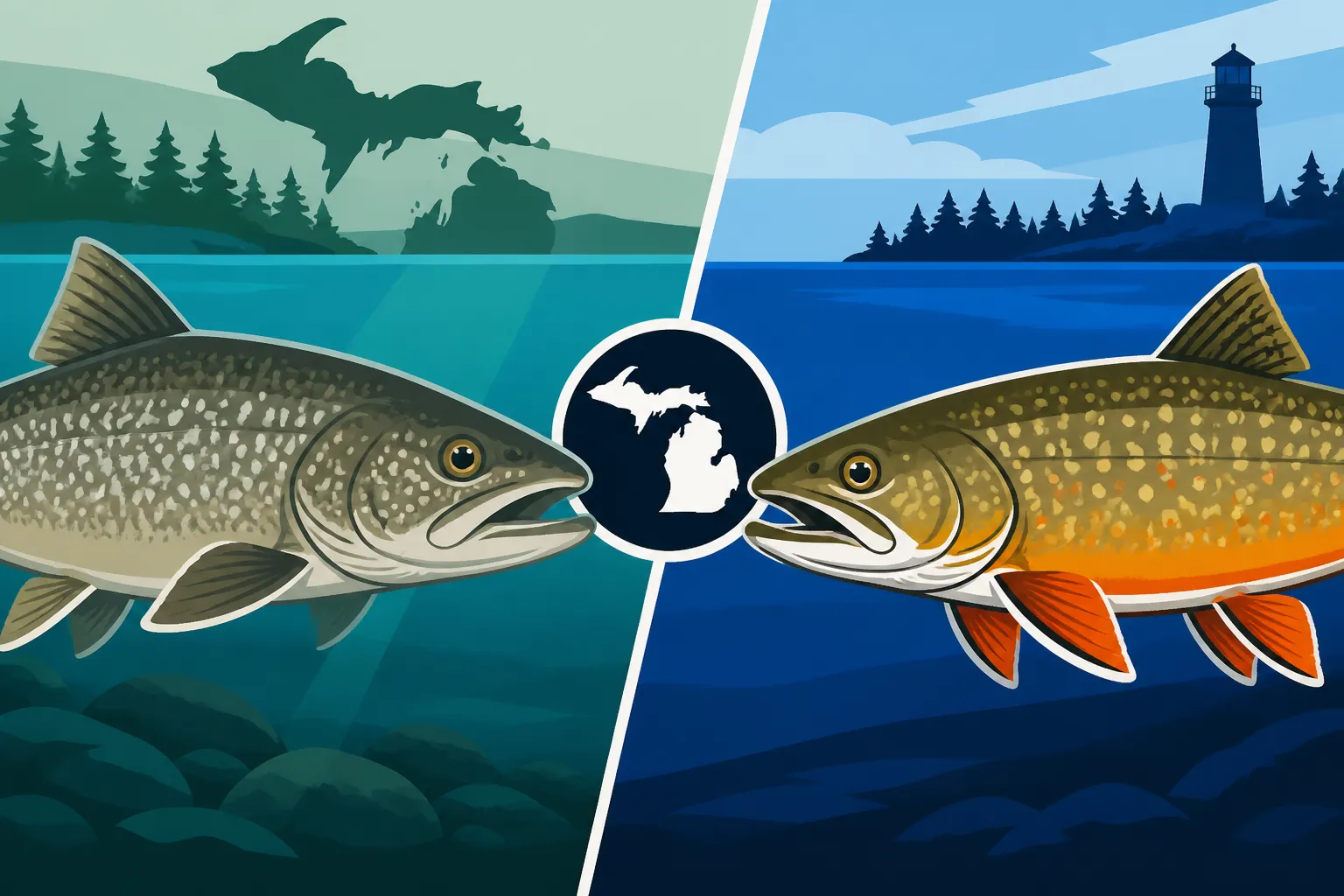
When you're comparing a Splake to a Lake Trout, especially side-by-side, several visual cues jump out. The easiest place to start is often the tail fin. A Lake Trout will almost always have a deeply forked tail, a distinctive V-shape that's quite prominent. Think of it like a capital 'V' carved into the tail. A Splake, being a hybrid, has a tail that's moderately forked – it's definitely notched, but not as dramatically as the Lake Trout, often appearing more like a gentle crescent or U-shape. This is perhaps the most reliable field mark.
Next, look at the spots. Lake Trout typically have smaller, irregularly shaped light spots that are often confined to the body and dorsal fin. Splake, on the other hand, often display larger, more defined spots, sometimes with a subtle halo, and they may extend more broadly across the body. You might also notice those "worm-like" vermiculations on the back of a Splake, a clear nod to its brook trout parentage, which are generally absent or much fainter on a Lake Trout. The overall body shape can also be a hint; Splake tend to be a bit more slender and elongated, while Lake Trout often have a stockier, more robust build, especially as they age.
Here's a quick reference table to help visualize these differences:
| Feature | Splake | Lake Trout |
|---|---|---|
| Parentage | Brook Trout x Lake Trout (hybrid) | Native char species |
| Tail Fin | Moderately forked | Deeply forked (distinct V-shape) |
| Spots | Larger, often clearer, sometimes with halos, may have vermiculations on back | Smaller, irregular, less distinct, generally without halos |
| Body Shape | More streamlined, elongated | Stockier, more robust |
| Pectoral Fins | Often dark or mottled | Often has a distinct white leading edge |
Habitat and Behavior Differences
Beyond their looks, Splake and Lake Trout also exhibit different preferences when it comes to where they live and how they act. Lake Trout are true deepwater specialists. They absolutely thrive in the coldest, deepest parts of Michigan's large lakes, needing consistent cold temperatures and high oxygen levels year-round. You'll typically find them congregating around deep structure – underwater humps, drop-offs, and sunken islands – often at depths of 50 feet or more, particularly during the warmer months. Their feeding behavior is adapted to these depths, preying on baitfish like ciscoes and smelt.
Splake, however, are a bit more adaptable. While they appreciate cold water, they don't have the same strict deep-water requirements as Lake Trout. You'll often find Splake in shallower areas, closer to the surface, and in waters that might not be quite deep enough to support a natural Lake Trout population. This makes them more accessible to shore anglers or those fishing from smaller boats. Their aggressive feeding habits, inherited from the brook trout, also mean they are generally more willing to strike a variety of lures and baits, making them a popular target for anglers. This difference in habitat can sometimes be a strong indicator of what you've hooked before you even get a good look at it.
Growth Rates and Lifespan
Another notable divergence between Splake and Lake Trout lies in their growth rates and overall lifespans. Splake, due to their hybrid vigor and their brook trout lineage, tend to grow quite quickly, especially in their initial years. This rapid growth makes them an appealing species for stocking, as they can reach an attractive catchable size sooner, providing quicker returns for angler effort. However, this fast-paced life often means a shorter overall lifespan. While they can still reach impressive sizes, they typically don't live as long as their Lake Trout cousins, usually peaking in size within a few years.
Lake Trout, conversely, are slow growers. They mature much more gradually, taking many years to reach their full potential. This slower growth contributes to their incredible longevity; some Lake Trout in the Great Lakes have been known to live for decades, growing into true leviathans of the deep. This extended lifespan allows them to reach much larger sizes than Splake, making them the ultimate trophy fish for anglers patient enough to pursue them. The "long game" is definitely the name of the game when it comes to targeting large Lake Trout, contrasting sharply with the relatively faster turnaround of a Splake fishery.
Fishing for Splake and Lake Trout in Michigan
Armed with the knowledge of how to tell a Splake from a Lake Trout, let's talk about actually catching them! Both offer unique and exciting challenges, but their distinct habits mean different approaches are often needed. Whether you're rigging up for the deep or casting near shore, Michigan has fantastic opportunities for both.
Targeting Splake: Techniques and Locations
When it comes to Splake, their adaptable nature and aggressive feeding make them a joy to fish for. You can often find them in a wider range of depths compared to Lake Trout, sometimes even cruising shallower waters, particularly during cooler months or early mornings and late evenings. This accessibility makes them a favorite for many anglers, especially during the ice fishing season. Good general baits include live minnows, worms, or small spoons and jigs. When choosing lures, I often find a trip to Amazon for a good selection of diverse tackle is invaluable. The key is often to keep your presentations active, as their brook trout heritage means they're often keen on chasing down a meal.
In Michigan, many inland lakes, particularly those stocked by the DNR, offer excellent Splake fishing opportunities. Lakes that might be too warm or shallow for a self-sustaining Lake Trout population often become prime Splake havens. During spring and fall, they might be found closer to shore or near tributary mouths. In the summer, they'll seek out cooler, deeper pockets but rarely at the extreme depths where you'd find Lake Trout. For example, lakes within the Upper Peninsula or northern Lower Peninsula that have good cool-water habitat but aren't deep enough for Lake Trout can be excellent Splake destinations. Always check local fishing reports and stocking schedules to find the current hot spots. You can also gain insight from articles like Michigan Inland Lakes Worth Fishing to find potential Splake locations.
Pursuing Lake Trout: Strategies for Deepwater Success
Catching Lake Trout, especially the larger, older ones, is often a more specialized endeavor, largely because of their deepwater preferences. Unless you're fishing in early spring or late fall when they might move shallower to spawn, targeting Lake Trout typically involves getting your bait down deep. Trolling with downriggers or weighted lines is a highly effective method, allowing you to present lures like spoons, stickbaits, or dodger-and-fly combos at precise depths where the Lake Trout are holding. Many anglers will stock up on heavy weights and specialized trolling gear from retailers like Amazon before heading out on the Great Lakes.
Jigging is another popular technique, especially over deep structure like reefs and humps. Large tube jigs, heavy spoons, or vertical jigs fished near the bottom can entice a strike. Location is paramount; focus on areas with significant depth changes, underwater points, and offshore structures. The Great Lakes, particularly Lake Superior, Lake Michigan, and Lake Huron, are prime destinations for trophy Lake Trout. However, some very deep inland lakes also hold healthy populations. Always be prepared for a strong fight; Lake Trout are powerful fish, and bringing them up from great depths requires patience and the right tackle. Remember that you may need a Michigan Fishing License Guide for Residents and Nonresidents before you head out!
Regulations and Conservation
It’s absolutely crucial to remember that Michigan has specific regulations for both Splake and Lake Trout. These rules, which cover everything from size limits and possession limits to specific seasons, are put in place for a good reason: to ensure healthy fish populations for future generations of anglers. Because they are distinct species with different life histories and ecological roles, their management strategies can vary significantly. You might find that the daily bag limit or minimum size for a Splake is different from that of a Lake Trout, even if you're fishing the same body of water.
This is why it's so important to consult the current Michigan Fishing Guide (available online through the DNR or at most license retailers) before each fishing trip. Regulations can change, and knowing the differences between these two species isn't just about showing off your identification skills; it's about fishing responsibly and legally. The ongoing conservation efforts for both Lake Trout, a native species struggling with historical pressures, and Splake, an introduced species designed to enhance specific fisheries, are vital. Adhering to these rules helps support the efforts to maintain robust and diverse fishing opportunities across Michigan. Understanding Michigan's Combined Trout and Salmon Possession Limit is also essential for responsible fishing.
Why Does Michigan Stock Splake? The Fishery Management Perspective
Michigan's waters are incredibly diverse, and managing them to provide the best possible fishing experiences for anglers while also protecting native species is a complex balancing act. The decision to stock Splake is not made lightly; it's a strategic move rooted in sound fishery management principles. These efforts are part of a broader plan to ensure Michigan's Great Lakes Fishing Guide and inland lakes remain vibrant.
Filling an Ecological Niche
One of the primary reasons Michigan's DNR stocks Splake is to fill specific ecological niches that might otherwise go underutilized or where native species might not thrive as effectively. In some inland lakes, for instance, water temperatures might get too warm in the summer to support a robust, naturally reproducing population of native Lake Trout. Yet, these lakes might have ample forage fish and sufficient cool water in deeper pockets to sustain a hybrid like the Splake. Because Splake tolerate a slightly wider range of temperatures and conditions than pure Lake Trout, they can survive and grow well in these marginal habitats, turning them into productive fisheries.
Furthermore, Splake can provide a valuable predator role in certain ecosystems. They grow relatively quickly and are aggressive feeders, helping to control populations of smaller baitfish. This can create a healthier balance within the aquatic community. By introducing a species that can thrive where others might struggle, fishery managers are essentially optimizing the productivity of Michigan's diverse waters, ensuring that more lakes can offer high-quality fishing experiences without necessarily impacting vulnerable native populations. This careful planning contributes to the overall health and diversity of Michigan's aquatic life.
Angler Satisfaction and Economic Impact
Beyond ecological considerations, stocking Splake also plays a significant role in angler satisfaction and the economic health of Michigan's fishing communities. Anglers love to catch fish, and Splake are known for their willingness to bite and their spirited fight. Their relatively faster growth rate means they reach catchable sizes more quickly than Lake Trout, providing a more immediate return on stocking investments and a more consistent fishing experience for those casting lines. This direct connection to angler success fosters enthusiasm and participation in fishing, which is a cornerstone of Michigan's outdoor heritage.
The appeal of catching Splake contributes directly to the local economies of fishing towns and bait shops across the state. When anglers are excited about a fishery, they're more likely to travel, stay in local accommodations, buy gear (perhaps from an online retailer like Amazon, or a local tackle shop), purchase bait, and support other small businesses. This influx of activity generates revenue and jobs, underscoring the broader economic importance of a well-managed fishery. Ultimately, the decision to stock Splake is a blend of scientific understanding and a commitment to providing diverse, rewarding fishing opportunities that benefit both the environment and the people who cherish Michigan's waters. For those looking to enjoy these opportunities, remembering Michigan Fishing Seasons Explained can help plan your trips.
Disclaimer
This article is for general informational purposes only and does not constitute professional advice. Laws, prices and regulations vary by location and change over time. Consult a qualified professional for guidance on your specific situation.