Coho Salmon Fishing in Michigan
There's nothing quite like the thrill of a hard-fighting salmon on the end of your line, and for many anglers in Michigan, the Coho salmon embodies that excitement perfectly. It can be incredibly frustrating to hit the water day after day without success, especially when you know these magnificent fish are out there. This comprehensive guide will walk you through everything you need to know about Coho salmon fishing in Michigan, from understanding their lifecycle to mastering the best techniques and gear, helping you turn those frustrating days into memorable catches.
Understanding Michigan Coho Salmon
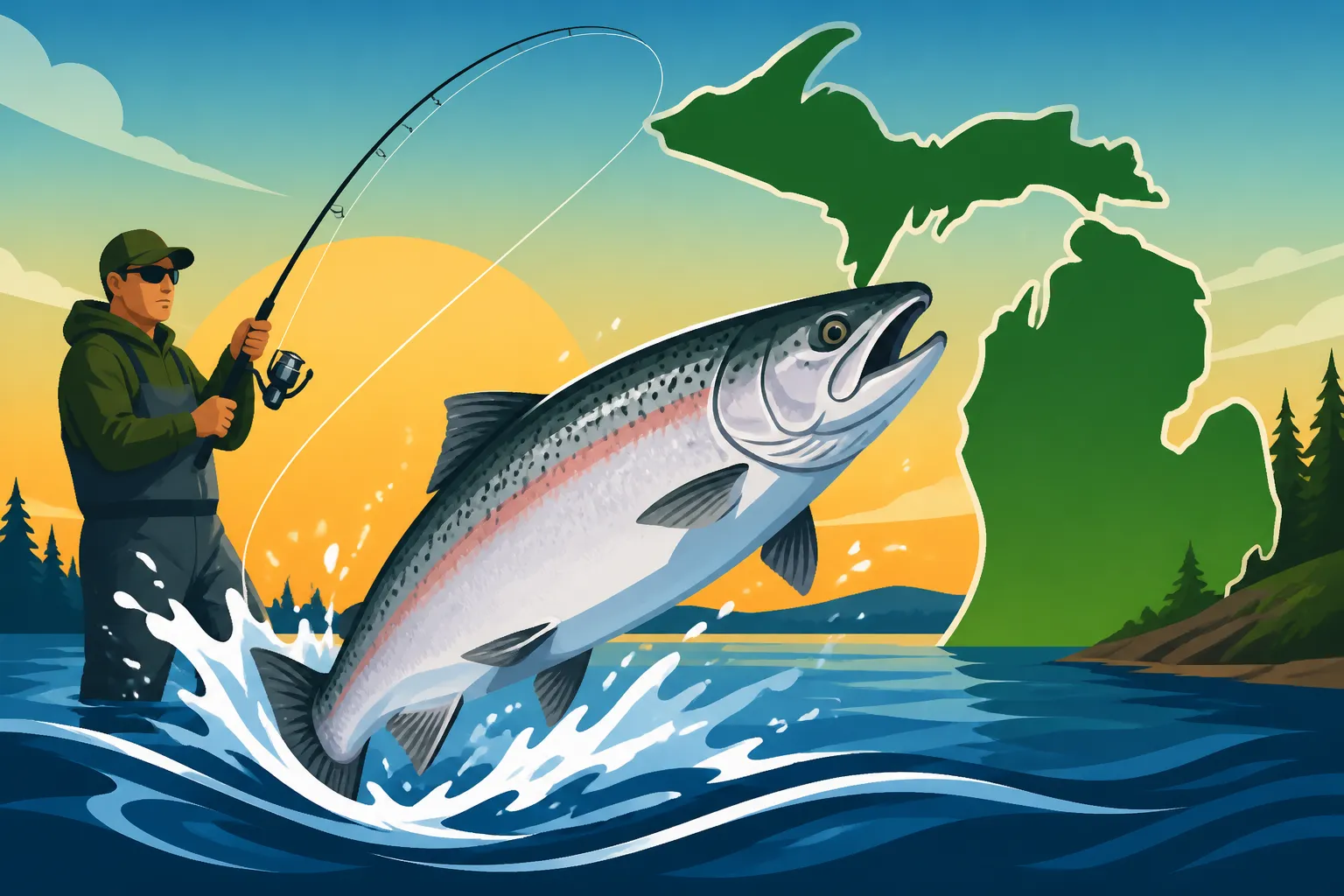
Coho salmon, often affectionately called "silvers" due to their striking chrome appearance, are a beloved species among Michigan anglers. Their aggressive strikes and acrobatic fights make them a prime target, drawing thousands to our Great Lakes and tributary rivers each year. However, catching them consistently requires a deep understanding of their biology and behavior within our unique ecosystem.
Coho Salmon Life Cycle in Michigan's Great Lakes
The journey of a Coho salmon in Michigan's waters is a fascinating and determined one. These fish are not native to the Great Lakes but were introduced, and they've thrived remarkably well. Their life cycle typically begins in the spring when eggs, laid by spawning adults in the gravel beds of tributary rivers, hatch into tiny alevin. These alevin quickly develop into fry, which spend a year or two in the river system, growing stronger and feeding on aquatic insects. It's during this freshwater phase that they begin to imprint on their natal stream, a crucial step for their return.
After their initial growth in the rivers, these young salmon, now called smolts, undergo a physiological change that allows them to transition from fresh to saltwater – or in our case, to the vast freshwater "ocean" of the Great Lakes. They migrate out into the open waters of Lake Michigan, Lake Huron, or Lake Superior, where they spend an average of 18 months to two years feeding and growing rapidly. This is their primary growth phase, bulking up on baitfish like alewives and smelt. Their transformation during this period is incredible, as they develop into powerful, silver-sided predators.
As their biological clock winds down, usually in the late summer and fall, these mature Coho salmon begin their final journey. Driven by an innate instinct, they migrate back towards the rivers they were born in, or at least the rivers they were stocked in. This upstream migration is their spawning run, and it's when they become accessible to river anglers. Once they have completed spawning, their life cycle ends, having completed their incredible migration and ensured the next generation. Coho Salmon Fishing in Michigan
Identifying Coho Salmon in Michigan Waters
Distinguishing Coho salmon from other salmonids in Michigan can sometimes be a bit tricky, especially when they're in their freshwater spawning phase and their colors begin to change. However, there are a few key characteristics that can help you identify a Coho confidently. In the open waters of the Great Lakes, Coho are typically a vibrant silver color, almost mirror-like, with a darker back that can range from a steely blue to a greenish hue. They often have small, sparse spots on their back and the upper lobe of their tail, but unlike Chinook salmon, these spots don't extend all the way down to the lower lobe.
One of the most reliable identification markers is their mouth. If you lift the gill plate and look at the gum line of a Coho, you'll notice that the gums around their teeth are white, or at least a very light color. This contrasts with the distinct black gum line you'll find on a Chinook salmon. Additionally, Coho typically have a more slender body profile compared to the often chunkier, more robust Chinook. As they move into rivers for spawning, their silver sheen gives way to a darker, often reddish-maroon color, especially on the males, who also develop a more pronounced kype (hooked jaw). It's a dramatic color shift that signals their transition from lake dweller to river spawner.
When and Where to Find Coho
Timing and location are absolutely everything when it comes to successfully targeting Coho salmon in Michigan. These fish are creatures of habit, driven by water temperature, baitfish presence, and their powerful spawning instincts. Knowing when and where to intercept them will dramatically increase your chances of a bent rod.
Best Months for Salmon Fishing in Michigan
While you can technically catch Coho salmon in Michigan throughout the open water season, there are definitely peak times when your efforts are most likely to pay off. The early season, typically late spring to early summer (May and June), offers excellent opportunities, particularly in the deeper, cooler waters of the Great Lakes. During this time, the Coho are actively feeding and can be found closer to the surface or at various depths chasing schools of baitfish. They are often bright, chrome-colored, and incredibly aggressive.
However, the real excitement for many Michigan anglers begins in late summer and continues through the fall. As water temperatures begin to drop and the days shorten, Coho salmon stage in anticipation of their spawning run. August, September, and even into October are prime months. This is when the fish move closer to shore in the Great Lakes and then begin their migrations into the tributary rivers. The Fall Steelhead Run in Michigan Rivers might steal some of the spotlight, but the Coho run offers incredible action, both from boats in the big lakes and from shore or waders in the rivers. Each month offers a slightly different experience, but for sheer numbers and accessibility, fall is hard to beat. Michigan Fishing Season Dates and Rules
Top Coho Salmon Hotspots Across Michigan
Michigan is blessed with an abundance of fantastic Coho salmon fishing locations, from the vast stretches of the Great Lakes to the winding tributary rivers. Deciding where to go often depends on the time of year and your preferred fishing style.
During the open water season, Lake Michigan is undeniably one of the premier destinations for Coho. Ports like Manistee, Frankfort, Ludington, and Grand Haven consistently produce excellent catches. Anglers will head out into the deeper waters, often trolling with various setups, targeting thermoclines and baitfish concentrations. The Saginaw Bay area on Lake Huron can also hold Coho, though often in smaller numbers compared to Lake Michigan. Even parts of Lake Superior, especially around the Keweenaw Peninsula, can offer unique Coho opportunities, often in conjunction with other cold-water species.
As fall approaches and the salmon begin their migratory push, attention shifts to the rivers. Rivers like the Manistee River, the Au Sable River, the Pere Marquette River, and the St. Joseph River become popular destinations. These rivers offer both boat and shore access, and anglers will spread out, targeting fish moving upstream. Piers along the Great Lakes also become incredible hotspots as the fish stage near river mouths, providing fantastic Shore Fishing Techniques for Michigan's Great Lakes opportunities without needing a boat. Look for areas with deeper holes, current breaks, and gravelly bottoms where Coho might rest or attempt to spawn. The key is to be flexible and follow the fish as they transition from the open lake to the river systems.
Effective Techniques for Coho
Coho salmon are aggressive, but they can also be finicky. Employing the right techniques, whether you're out on the big water or wading a river, is crucial for consistently putting these powerful fish in your net. It often comes down to presenting your bait or lure in a way that triggers their predatory instincts.
Trolling Strategies for Great Lakes Coho
When fishing for Coho salmon in the vastness of the Great Lakes, trolling is by far the most effective and popular technique. This involves dragging multiple lines behind a boat at a specific speed, covering a large amount of water to locate fish. Coho often cruise in the upper water column, especially early in the season, making surface or near-surface presentations highly effective.
One common setup involves using planer boards, which are boards that extend your lines out to the sides of the boat, covering a wider swath and preventing tangles. This allows you to run multiple lines at different depths and distances from the boat. For deeper presentations, downriggers are indispensable. These devices allow you to precisely control the depth of your lure, dropping it right into the thermocline where Coho are feeding. Flashers or dodgers paired with spoons, flies, or small plugs are incredibly popular and effective. The flasher/dodger creates an enticing action and flash that mimics a struggling baitfish, drawing Coho in from a distance. Experimenting with lure colors, especially bright oranges, reds, and greens, can make a huge difference, as Coho are known to be attracted to vibrant hues. You can find a huge variety of these specialized trolling lures and equipment on Amazon, making it easy to build your tackle box.
River and Pier Fishing for Spawning Coho
Once Coho salmon enter the rivers and stage near piers, the fishing techniques shift dramatically from open-water trolling. Here, precision and stealth often become more important than covering vast distances. For river fishing, drift fishing is king. This involves casting your bait or lure upstream and allowing it to drift naturally downstream with the current, mimicking a free-floating food source. Popular baits include cured salmon eggs, often presented in small spawn bags, beads that imitate single salmon eggs, or small spinners and spoons. The key is to use enough weight (split shot or pencil lead) to get your bait down to the fish without snagging excessively on the bottom.
Float fishing, or "centerpinning" for the more advanced anglers, is another incredibly effective method. A bobber or float suspends your bait at a precise depth, allowing it to drift perfectly through current seams and holding lies where Coho congregate. Centerpinning for Michigan Steelhead uses very similar principles. For pier fishing, casting spoons, crankbaits, or even vertical jigging can be productive. Many pier anglers will cast and retrieve a Cleo spoon or a Little Cleo, allowing it to flutter through the water column. The trick with both river and pier fishing is patience and observation. Look for jumping fish, subtle bumps, or changes in current that indicate fish holding areas. Early mornings and late evenings often provide the best action, especially in highly pressured areas.
Ice Fishing for Coho in Winter
While less common than targeting them during their open water and spawning runs, Coho salmon can indeed be caught through the ice in certain Michigan waters. This usually occurs in large, deeper bays or harbors that connect to the Great Lakes, or occasionally in very large inland lakes where they might be present. The challenge with ice fishing for Coho is that they are less concentrated than in the fall, and they maintain their pelagic, or open-water, feeding habits even under the ice.
When ice fishing for Coho, you'll want to focus on areas where baitfish are likely to congregate, often near deeper basins, sudden drop-offs, or around current areas if accessible. Small jigging spoons, often tipped with a minnow head or a piece of cut bait, can be effective. Popular colors include silver, blue, and chartreuse. Ice fishing rods should be on the heavier side, capable of handling a strong, fast run. Utilizing a good fish finder is almost essential to locate these roaming fish and to understand the depth they are cruising at. While not a primary target for most ice anglers, stumbling upon a Coho through the ice is a fantastic and unexpected bonus. Just remember that Michigan Ice Fishing Season Timing depends on safe ice conditions.
Essential Gear for Coho Anglers
Having the right gear is just as important as knowing the right techniques when chasing Coho salmon. From reliable rods and reels to the specific lures that trigger their strikes, having your tackle dialed in will make a huge difference in your success and enjoyment on the water.
Rods and Reels for Great Lakes and River Coho
Choosing the right rod and reel setup depends heavily on where and how you plan to fish for Coho salmon. For Great Lakes trolling, you'll typically want a medium to heavy action trolling rod, often 8 to 10 feet long, paired with a line-counter baitcasting reel. The line counter is crucial for replicating successful depth presentations. These rods need enough backbone to handle the weight of downriggers or planer boards, plus a powerful fish. Best Trolling Rods for Michigan Salmon are designed to withstand the sustained pressure of trolling large lures.
For river and pier fishing, a medium-heavy spinning rod or a sensitive float rod (for centerpinning) is generally preferred. A spinning rod in the 8 to 10-foot range offers excellent casting distance and leverage for fighting fish in current. Pair this with a high-quality spinning reel in the 3000-4000 size range, spooled with 10-15 lb test monofilament or braided line. The sensitivity of these rods allows you to feel subtle bites, which can be key when Coho are finicky. For centerpin setups, a long, flexible rod (11-14 feet) provides excellent line control and drift presentation. When you're building out your tackle, you can find a huge array of options on Amazon, from entry-level combos to pro-grade gear, with plenty of reviews to help you choose.
Top Lures and Baits for Aggressive Silvers
Coho salmon have a reputation for being aggressive, and their preferred baits and lures often reflect this. In the Great Lakes, spoons are probably the most iconic Coho lure. Brands like Dreamweaver, Michigan Stinger, and Northern King produce a variety of spoon sizes and colors that are deadly for Coho. Bright colors like orange, chartreuse, pink, and vibrant greens are perennial favorites, often with a silver or gold back. Plugs, especially those mimicking baitfish, also work well, as do flies tied behind dodgers. These lures are designed to be trolled, mimicking erratic baitfish movements.
For river and pier fishing, the game changes slightly. Cured salmon eggs, either single eggs or in spawn bags, are incredibly effective, tapping into the Coho's natural instinct. Soft plastic beads, designed to imitate salmon eggs, have also become extremely popular and productive. Small spinners, like Mepps or Blue Fox, and brightly colored spoons (e.g., Little Cleo) cast and retrieved can trigger powerful strikes. For those looking for specialized and sometimes hard-to-find lures or unique fly patterns for Coho, checking online retailers like Amazon can often yield exactly what you're looking for, expanding your arsenal beyond what's available in local shops.
Essential Accessories for a Successful Coho Trip
Beyond your rod, reel, and lures, a few essential accessories can make your Coho salmon fishing trip much more successful and enjoyable. First and foremost, a good quality landing net is critical. Coho are powerful fish, and trying to hoist a large one onto a boat or pier by the line is a recipe for disaster. Look for a net with a rubberized mesh to protect the fish (if you plan to release it) and to prevent hooks from tangling.
If you're fishing rivers, a pair of comfortable, durable waders and wading boots will keep you dry and allow you to access prime fishing spots. A fishing vest or pack to organize your tackle, a pair of polarized sunglasses to cut glare and spot fish, and a decent pair of pliers or forceps for hook removal are all must-haves. For boat anglers, a good fish finder is invaluable for locating schools of baitfish and salmon. Don't forget your Michigan Fishing License Guide for Residents and Nonresidents and a copy of the current Michigan Fishing Regulations Every Angler Should Know, as knowing the rules for bag limits and size restrictions is paramount. Always be prepared with warm layers, rain gear, and plenty of snacks and water, because a long day of Coho fishing can be physically demanding!
Safety and Conservation When Coho Fishing
As passionate anglers, we have a responsibility to not only enjoy the incredible fishing Michigan offers but also to ensure its sustainability for future generations. This means practicing safe boating and fishing habits, and adhering strictly to conservation guidelines.
Michigan Boating Safety and Regulations
When you're out on the vast waters of the Great Lakes chasing Coho salmon, safety should always be your top priority. The weather can change rapidly, and conditions can go from calm to treacherous in a matter of minutes. Always check the marine forecast before heading out and be prepared to cut your trip short if conditions deteriorate. Every boat needs to have the proper safety equipment onboard, including approved life jackets for everyone, a sounding device (like a horn or whistle), navigation lights if you're out after dark, and visual distress signals. Life Jackets and Michigan Boating Safety Rules are not just suggestions; they are regulations designed to save lives.
Additionally, understanding and abiding by Michigan's boating regulations is essential. This includes proper boat registration and titling, knowing the rules of navigation, and operating your vessel safely and responsibly. If you're new to boating or operating a larger vessel, consider taking a boating safety course. Many incidents on the water could be avoided with proper education and a healthy respect for the power of the Great Lakes. A well-maintained boat and attention to detail before every trip can make all the difference between a great day of fishing and a dangerous situation.
Sustainable Practices and Regulations for Coho
Conservation is key to preserving Michigan's fantastic Coho salmon fishery. While Coho are not native, they are a vital part of the Great Lakes ecosystem and a prized recreational resource. This means every angler has a role to play in ensuring healthy fish populations. One of the most important aspects is understanding and strictly adhering to Michigan Bag and Size Limits Explained for Coho salmon. These limits are set by fisheries biologists to manage populations and ensure a sustainable harvest. It's not just about avoiding fines; it's about respecting the resource.
Practicing proper catch-and-release techniques for fish you don't intend to keep is also crucial. If a fish is undersized or you've already met your limit, handle it as little as possible, keep it in the water, and release it gently. Avoid using treble hooks when fishing with natural bait if possible, as single hooks often result in less damage to the fish. Educate yourself on Michigan Fishing Regulations Every Angler Should Know and any specific rules for the waters you're fishing. By being mindful of our impact and following the rules, we can all contribute to a thriving Coho fishery for years to come.
Disclaimer
This article is for general informational purposes only and does not constitute professional advice. Laws, prices and regulations vary by location and change over time. Consult a qualified professional for guidance on your specific situation.