Michigan Sturgeon Fishing on Black Lake
For many Michigan anglers, the thought of dropping a line into the icy waters of Black Lake, specifically targeting the ancient and majestic lake sturgeon, is a profound dream. It's a highly regulated, deeply cherished tradition, and the frustration of navigating the strict lottery system and specific rules can often feel overwhelming. This guide is here to unravel the complexities of sturgeon fishing on Black Lake, offering insights into the species, the regulations, and how you can prepare for this truly unique angling experience.
Understanding Black Lake's Unique Lake Sturgeon Fishery
Black Lake, nestled in Cheboygan and Presque Isle counties in Michigan, is more than just another beautiful body of water; it's a living relic. It holds one of Michigan's most significant and successful lake sturgeon rehabilitation stories. These incredible fish, often called "living fossils," have been swimming in Michigan's waters for millennia, surviving countless changes to their environment. However, due to overfishing and habitat loss in the past, their populations plummeted dramatically across the Great Lakes region.
The fishery on Black Lake stands as a testament to dedicated conservation efforts. What makes it particularly unique is the highly controlled nature of the fishing season. This isn't your typical open-season fishing trip; it's a privilege earned through a lottery system, designed to allow a very limited harvest while ensuring the species continues its remarkable comeback. This careful balancing act makes every sturgeon hooked and every fish harvested on Black Lake a truly special event, steeped in the history of the species and the future of conservation.
The Historic Significance of Black Lake Sturgeon
The lake sturgeon in Black Lake represent a lineage that dates back to the time of dinosaurs. Their ancient appearance, with rows of bony plates (scutes) instead of scales, and their bottom-feeding mouth, truly set them apart. For generations, they were a vital resource for indigenous communities and early European settlers. Sadly, this majestic fish was pushed to the brink of extinction by the late 19th and early 20th centuries, due to factors like commercial fishing, dam construction that blocked spawning routes, and pollution.
Black Lake became a focal point for recovery efforts because it retained a remnant sturgeon population and suitable spawning habitat. The resurgence of the Black Lake sturgeon is a narrative of hope and perseverance, involving decades of research, habitat restoration, and strict management. Anglers who participate in this fishery aren't just fishing; they are actively engaging in and supporting a critical conservation success story. It's a powerful connection to both Michigan's natural heritage and its ongoing commitment to ecological stewardship.
The Controlled Harvest and Lottery System
The most distinctive aspect of Black Lake sturgeon fishing is its strictly controlled harvest. To manage the population sustainably, Michigan only allows a very limited number of sturgeon to be taken each year. This is achieved through a highly competitive lottery system. Prospective anglers must apply during a specific window, and only a select few are chosen to participate. This approach ensures that the total harvest remains well within sustainable limits, preventing any setback to the species' recovery.
The lottery system is designed to be fair, offering everyone an equal chance to experience this exceptional fishery. If you're fortunate enough to be drawn, you'll receive a special tag, which is absolutely essential for legal harvest. This system underscores the rarity and value of each sturgeon caught, transforming what might be a simple fishing trip elsewhere into a significant conservation event. It's a profound reminder that some of Michigan's greatest natural treasures require collective responsibility and a deep respect for strict Michigan Fishing Regulations Every Angler Should Know.
Lake Sturgeon: Identification and Life Cycle
Lake sturgeon are truly unique among Michigan's fish species. They are readily identifiable by their primitive features, and understanding their life cycle is key to appreciating why their conservation on Black Lake is so critical. Knowing these ancient fish better helps you understand the gravity of participating in such a specialized fishery.
Distinctive Features and Identification
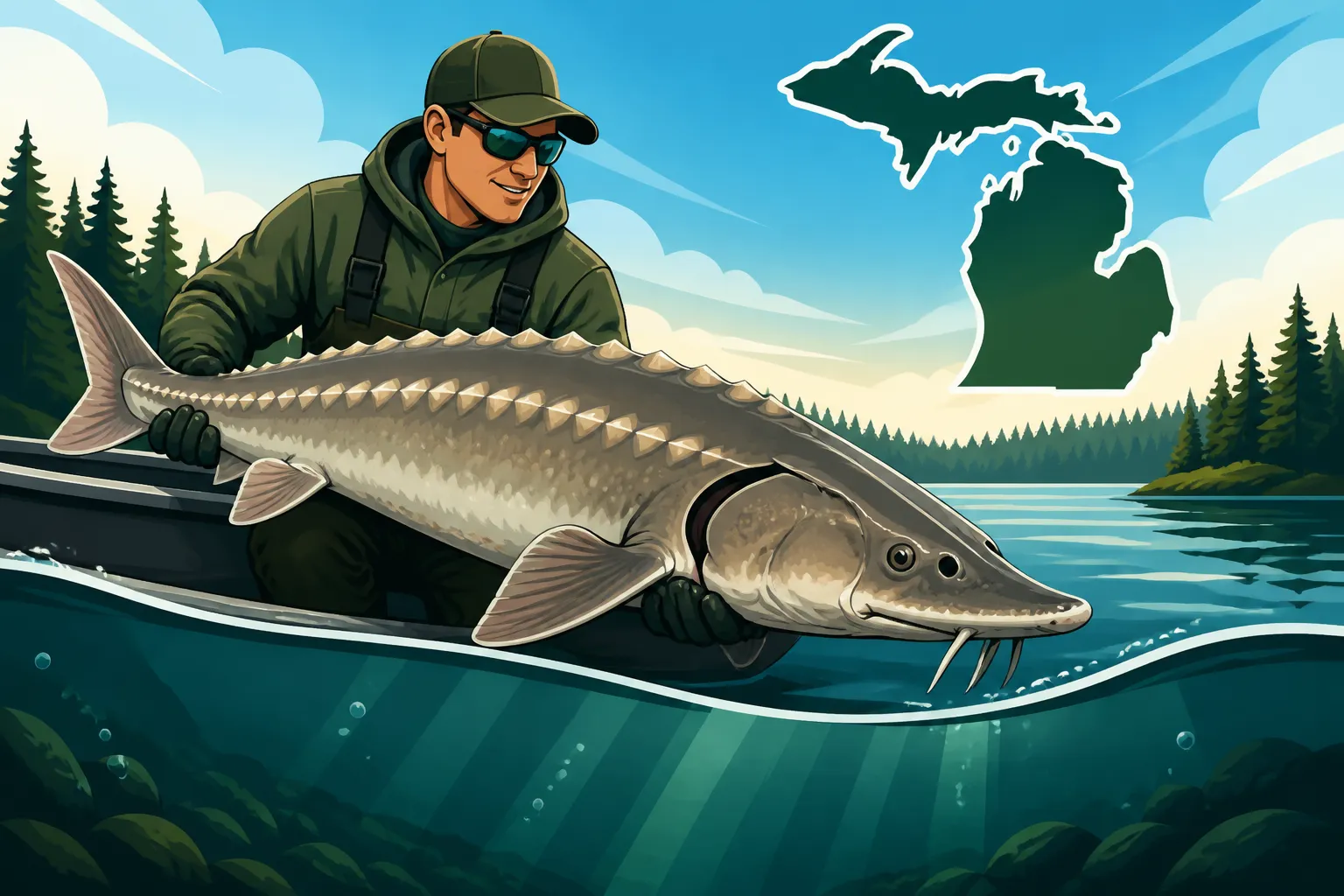
Lake sturgeon possess several striking features that make them unmistakable. They have an elongated body, a shark-like tail, and five rows of bony plates, or scutes, running along their body instead of scales. Their snout is pointed, and on the underside, they have four barbels (whisker-like sensory organs) in front of a toothless, protrusible mouth, which they use to vacuum up food from the lake bottom. Unlike many fish, their skeleton is primarily cartilage, not bone.
Their coloration can vary, usually ranging from olive green to grayish-brown on their back and sides, fading to a lighter, often yellowish-white belly. These are large, powerful fish. A harvested sturgeon from Black Lake can easily weigh 50 to 100 pounds or more, and reach lengths exceeding five feet. This sheer size, combined with their ancient appearance, makes every encounter unforgettable. It's truly a marvel to witness a fish that has changed so little over millions of years. For more on specific fish identification, check out Lake Trout Identification in Michigan, which shares some Great Lakes characteristics with sturgeon even though they are very different species.
Slow Growth and Remarkable Longevity
One of the most defining characteristics of lake sturgeon is their incredibly slow growth rate and remarkable longevity. These fish mature very slowly; females often don't spawn until they are 20-25 years old, and then only do so every 3 to 7 years. Males typically mature earlier, around 8-12 years of age, and spawn more frequently, though still not annually. This slow reproductive cycle is a major reason why sturgeon populations are so vulnerable to overharvesting and habitat degradation, and why conservation efforts are paramount.
Lake sturgeon are also among the longest-lived freshwater fish in North America, with individuals documented to live over 100 years. Imagine, a fish you might encounter could have been swimming in Black Lake before your grandparents were born! This incredible lifespan, combined with their slow maturation, means that every generation of sturgeon is precious and takes a very long time to replace. This deep understanding of their biology underscores why Black Lake's management focuses so heavily on limited, sustainable harvest through its lottery system.
Black Lake Sturgeon Fishing Regulations and Seasons
Fishing for lake sturgeon on Black Lake is an experience unlike any other, not just because of the fish itself, but because of the meticulous rules and regulations designed to protect this ancient species. It’s absolutely vital to be fully informed and compliant with every aspect of the season, which is typically an intense, short window in winter.
Understanding the Black Lake Sturgeon Season
The Black Lake sturgeon fishing season is notoriously short and thrilling, often lasting only a matter of hours or days. It's primarily an ice fishing season, typically held in early February. The precise opening date is announced annually by the Michigan Department of Natural Resources (DNR), and the season closes once a predetermined harvest quota is met, or after a certain number of days, whichever comes first. This means anglers must be ready at a moment's notice, as conditions can change rapidly and the season can conclude with very little warning.
This highly condensed season creates an almost palpable sense of anticipation and urgency among the permitted anglers. It's not uncommon for the season to close within the first few hours of opening if the quota is reached quickly. This makes every minute on the ice a high-stakes adventure, emphasizing the importance of preparation and swift action. Knowing the exact Michigan Fishing Season Dates and Rules is crucial for any angler, but especially so for the Black Lake sturgeon season.
Lottery, Tags, and Legal Requirements
To participate in the Black Lake sturgeon season, you must be one of the lucky few selected through the annual lottery system. Without a valid lottery tag, you cannot legally fish for or harvest sturgeon on Black Lake. The application period for the lottery typically runs in the fall, so keep a close eye on the Michigan DNR website for specific dates each year. This is not a fishery you can decide to participate in at the last minute; it requires planning far in advance.
If you are drawn and receive a tag, that tag is your golden ticket. It's specific to you and non-transferable. Along with your tag, you’ll need a valid Michigan Fishing License Guide for Residents and Nonresidents. Every angler, regardless of age, must have a license to participate in this controlled fishery. Once a sturgeon is harvested, it must immediately be tagged, and then reported to the DNR within a specific timeframe, often within 24 hours. This reporting is critical for monitoring the harvest and ensuring the sustainability of the population, much like the Michigan Muskellunge Harvest Reporting Rules for muskie.
Size Limits and Quotas
The Black Lake sturgeon fishery operates under very specific size limits and a strict harvest quota. These rules are designed to protect younger, reproductively active fish and ensure that enough large, mature sturgeon remain in the population to continue spawning. The exact minimum and maximum size limits for harvested sturgeon are determined annually by the DNR and are clearly outlined in the season regulations. It's imperative that anglers know these measurements precisely, as harvesting an undersized or oversized fish can result in significant penalties.
The overall harvest quota is a hard limit on the total number of sturgeon that can be taken from the lake during the season. This quota is usually quite small, often in the single digits. DNR personnel are on the ice during the season, closely monitoring the catch. As the quota is approached, warnings are broadcast, and the season is immediately closed once the limit is reached. This swift closure mechanism is why anglers must be so vigilant and ready to stop fishing at any moment. It highlights the precious nature of each fish and the shared responsibility of all participants in protecting this recovering species.
Essential Gear and Preparation for Black Lake Sturgeon Fishing
Sturgeon fishing on Black Lake is not for the faint of heart, nor for the unprepared. This is heavy-duty ice fishing, requiring specialized gear and a significant commitment. Being properly equipped isn't just about comfort; it's about safety, efficiency, and increasing your chances of success during a very limited season.
Heavy-Duty Ice Fishing Equipment
Forget your panfish rod – sturgeon fishing demands serious heavy-duty ice fishing gear. You'll need stout rods, often 4-6 feet long, capable of handling immense pressure. These are typically paired with large, robust reels spooled with heavy monofilament or braided line, usually 80-100 pound test or even more. The sheer power of a lake sturgeon, especially a large one in freezing water, can quickly snap lighter tackle.
Your terminal tackle needs to match this strength. Think large, strong hooks, often 8/0 to 12/0 or bigger, tied to heavy leaders. Many anglers prefer to use a slip sinker rig with a heavy weight (up to several ounces) to keep their bait on the bottom in what can be significant current, even under the ice. When shopping, consider searching for "heavy-duty ice fishing rods" or "sturgeon fishing tackle" on platforms like Amazon to see the range of specialized equipment available. Remember, durability and strength are your top priorities here.
Specialized Ice Fishing Shelter and Tools
Given that the season is in early February, you'll be dealing with potentially extreme cold. A well-insulated, portable ice fishing shelter is practically a necessity, providing warmth and protection from the elements. These shelters come in various sizes, from one-person flip-overs to larger hub-style shanties that can accommodate several anglers and all their gear. Having a reliable heat source within your shelter is also crucial for staying comfortable and focused during long waits.
Beyond shelter, you'll need specialized tools for cutting through thick Black Lake ice. A heavy-duty gas or propane-powered ice auger is essential for drilling the large holes required for sturgeon fishing – often 10-12 inches in diameter, or even larger if permitted, to accommodate the size of these fish. You'll also need a large scoop to keep your hole clear of ice slush, and perhaps an ice saw for creating spear-fishing size holes if you plan to partake in that method, which is also part of the limited season for some. For a general guide on essentials, look up What Gear Do You Need to Ice Fish in Michigan.
Bait and Lure Selection
When it comes to bait for Black Lake sturgeon, natural presentations are king. Ciscoes, smelt, suckers, and other oily fish are popular choices, often fished whole or in large chunks. The key is to use fresh, appealing bait that emits a strong scent to attract these bottom-feeding scavengers. Some anglers also use large globs of nightcrawlers or even commercially prepared sturgeon baits. The presentation needs to be on the bottom, where sturgeon typically feed.
While bait is predominant, some anglers may use large jigging spoons or other lures, often tipped with bait, to try and entice a strike. However, the vast majority of successful Black Lake sturgeon anglers rely on natural bait. Regardless of your choice, ensure your bait is securely hooked to withstand potential current and the powerful bite of a sturgeon. Remember, these are ancient opportunists, and a well-presented, scent-rich bait is often irresistible.
Techniques for Catching Black Lake Sturgeon Through the Ice
Successfully hooking a lake sturgeon through the ice on Black Lake is a blend of patience, proper technique, and a bit of luck. It's a waiting game, but when the bite comes, it can be explosive. Understanding the nuances of presentation and fighting these powerful fish is paramount.
Setting Up Your Sturgeon Spread
Once you've drilled your massive hole and set up your shelter, the next step is to prepare your fishing spread. Most anglers will fish one or two heavy-duty rods, often using rod holders to keep them steady. The goal is to get your bait precisely on the bottom, where sturgeon are feeding. Use a slip-sinker rig, allowing the sturgeon to pick up the bait without immediately feeling the full weight of your sinker. This provides a more natural presentation and encourages them to commit to the bite.
Depths on Black Lake can vary, so using a depth finder or marking your line is helpful to ensure your bait is right where it needs to be. Many anglers will also 'tip up' their rod, meaning they position it so the tip is just above the water, allowing for clear visual detection of a subtle bite. Keep your lines as vertical as possible to minimize tangles and ensure direct contact with your bait. This meticulous setup is critical, as you might only get a few chances during the short season.
Detecting the Bite and Hook Setting
Sturgeon bites can be surprisingly subtle for such large fish, often starting as a gentle tap or a slow, deliberate pull on your line. It might feel like a snag at first, but then the rod tip will slowly bend over, or your line will start to move steadily. Avoid setting the hook too quickly; sturgeon have tough, cartilaginous mouths, and you want to ensure they've fully taken the bait. Wait for a solid, sustained pull or a deep bend in your rod.
When you feel that unmistakable commitment, it's time for a powerful hook set. Use a strong, sweeping motion to drive that large hook into their mouth. Don't be afraid to put some muscle into it. Once hooked, brace yourself; a sturgeon will often make a powerful initial run, testing your gear and your resolve. Keep your drag set appropriately – tight enough to control the fish but loose enough to prevent snapped lines under extreme pressure. For general ice fishing techniques, you might find tips in How to Catch Walleye Through the Ice in Michigan, which emphasizes patience and proper presentation, though for much smaller fish!
Fighting and Landing a Lake Sturgeon
Fighting a large lake sturgeon through an ice hole is an epic battle. These fish are incredibly strong and resilient. They will make powerful, sustained runs, often hugging the bottom. Your job is to slowly, steadily gain line whenever the fish pauses, using your rod to pump and reel. Avoid horsing the fish; this can tear the hook out or snap your line. It's a war of attrition, demanding patience and a strong back.
As you bring the sturgeon closer to the hole, be prepared for more surges. It's common for them to dive under the ice when they see the light. Once the fish's head is in the hole, you'll need a large, strong gaff (check regulations for legal gaff types and usage) or multiple hands to carefully guide it through. This is often where a team effort comes into play, with one person managing the rod and others assisting with the landing. Remember, these fish are long and heavy, so a safe and controlled landing is essential for both the fish's welfare and your own safety.
Responsible Angling: Handling, Reporting, and Conservation
Participating in the Black Lake sturgeon fishery carries a profound responsibility. Every angler plays a role in the ongoing conservation success story. This means not just following the rules, but actively practicing ethical handling, timely reporting, and respecting the incredible resilience of these ancient fish.
Proper Catch and Release Techniques
Even if you have a tag and intend to harvest, you might hook a sturgeon that is outside the legal size limit or you may simply decide to release it. Practicing proper catch and release techniques is critical for the survival of these long-lived fish. Minimize the time the fish is out of the water. If possible, keep the sturgeon in the hole while removing the hook. Use needle-nose pliers or a hook remover to quickly and carefully extract the hook.
Support the fish's body horizontally, especially if you need to lift it for a quick photograph. Avoid holding it vertically by the head or tail, as this can damage its internal organs. If the fish is lethargic, hold it upright in the water, gently moving it back and forth to circulate water over its gills, until it regains strength and swims away on its own. Every released sturgeon represents a vital part of the future breeding stock for Black Lake.
Mandatory Reporting and Data Collection
The Black Lake sturgeon season is a prime example of a data-driven fishery. Every harvested sturgeon must be immediately tagged with your lottery tag and then reported to the Michigan DNR within 24 hours of harvest. This isn't just a suggestion; it's a mandatory requirement. DNR staff are typically on-site during the season to facilitate immediate reporting, or you'll need to use designated reporting stations or online systems.
This reporting provides critical data that helps fishery biologists monitor the health and population dynamics of the Black Lake sturgeon. Information on size, sex, and the precise timing of the catch all contribute to sound management decisions for future seasons. Your compliance with reporting requirements directly supports the continued existence and recovery of this iconic species. It's an essential part of being a responsible steward of Michigan's natural resources.
The Future of Lake Sturgeon in Michigan
The success story of Black Lake's lake sturgeon is a beacon of hope for conservation efforts across Michigan and beyond. The strict management, coupled with ongoing research, habitat restoration, and responsible angling, has allowed this ancient species to not only survive but thrive. However, the work is never truly done. Lake sturgeon still face challenges from habitat fragmentation, pollution, and the slow pace of their reproductive cycle.
Continued public support, adherence to regulations like those found in the Michigan Great Lakes Fishing Regulations Guide, and an understanding of the species' vulnerability are all crucial for their long-term survival. The Black Lake fishery serves as a powerful reminder that with careful management and a deep respect for nature, even species pushed to the brink can make a remarkable comeback. Every angler who participates contributes to this legacy, ensuring that future generations can also marvel at these "living fossils" swimming in Michigan's waters.
| Black Lake Sturgeon Season Key Aspects | Description | Importance |
|---|---|---|
| Season Duration | Typically very short, often only hours or days in early February. | Protects population, creates a high-intensity, exclusive experience. |
| Participation Method | Annual lottery system; limited number of tags issued. | Controls harvest, ensures sustainability, provides fair access. |
| Gear Requirement | Heavy-duty ice fishing rods, reels, line (80-100lb+), large hooks, auger. | Essential for safely fighting and landing large, powerful sturgeon. |
| Bait Preference | Oily fish (ciscoes, smelt, suckers) fished on the bottom. | Strong scent attracts bottom-feeding sturgeon effectively. |
| Harvest Quota | Very strict, low single-digit number of fish allowed statewide. | Prevents overharvesting, crucial for species recovery. |
| Mandatory Reporting | All harvested sturgeon must be tagged and reported within 24 hours. | Provides vital data for population management and conservation. |
| Conservation Focus | Emphasizes responsible angling, catch-and-release of non-target fish. | Ensures long-term health and recovery of the lake sturgeon population. |
Disclaimer
This article is for general informational purposes only and does not constitute professional advice. Laws, prices and regulations vary by location and change over time. Consult a qualified professional for guidance on your specific situation.