Whitefish Fishing in Michigan
Michigan is truly an angler's paradise, but let's be honest, sometimes we get a little tunnel vision for salmon, steelhead, and walleye. Many anglers overlook a fantastic fighting fish that's also delicious on the dinner table: the whitefish. These elusive creatures can be tricky to find and even trickier to catch if you don't know their habits, but this comprehensive guide is here to shed light on everything you need to know about successfully targeting whitefish across the diverse waters of the Wolverine State.
Understanding Michigan's Whitefish Species
Before we dive into the nitty-gritty of where and how to catch them, it's crucial to understand a bit about the stars of our show. Michigan is home to several species of whitefish, but most anglers, when talking about "whitefish fishing," are primarily focused on one particular type that offers a great angling challenge and culinary reward.
Lake Whitefish: The Primary Target
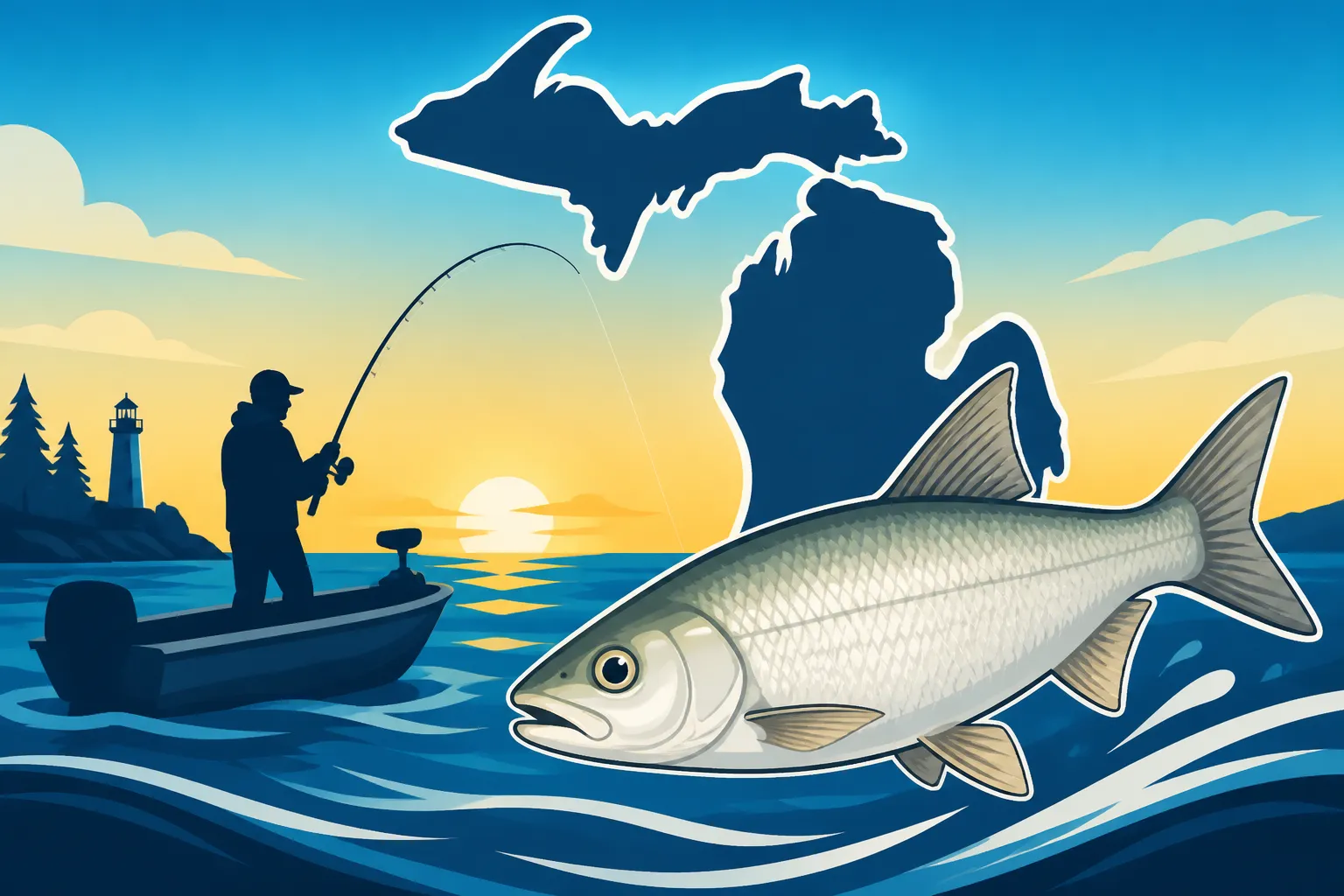
When you hear most Michigan anglers buzzing about whitefish, they're almost certainly referring to the Lake Whitefish ( Coregonus clupeaformis ). These fish are iconic cold-water inhabitants, thriving in the deep, clear, oxygen-rich waters of the Great Lakes and a select few of Michigan's deepest inland lakes. They have a distinctive appearance that helps differentiate them from other species: a generally silvery body, often with a darker back that can range from olive to brownish-green, and a paler belly. Their mouth is small and underslung, adapted for feeding on small invertebrates from the lake bottom. Crucially, like trout and salmon, they possess an adipose fin – a small, fleshy fin on their back between the dorsal and caudal fins – which immediately tells you they belong to the Salmonidae family.
Lake Whitefish are predominantly bottom feeders. Their diet consists mainly of aquatic insects, crustaceans, and small mollusks, which they root out from the substrate. This feeding behavior is key to understanding why certain techniques and baits are so effective. They are also schooling fish, which means if you find one, you're likely to find more. However, their sensitivity to light and pressure, combined with their tendency to suspend at precise depths in the water column, can make them quite the puzzle to crack. Finding that perfect combination of depth, bait, and presentation is what makes whitefish fishing so incredibly rewarding.
Cisco (Lake Herring) and Round Whitefish
While the Lake Whitefish is the main event, Michigan waters are also home to other whitefish species that occasionally make an appearance on an angler's line. The Cisco ( Coregonus artedi ), also known as Lake Herring, is another significant species. Cisco tend to be a bit more slender and streamlined than Lake Whitefish, with a larger mouth and typically a more pronounced silvery sheen. They are primarily plankton feeders, often found suspended higher in the water column, making them a slightly different target. They are also excellent eating and are an important forage fish for larger predators in the Great Lakes.
Then there's the Round Whitefish ( Prosopium cylindraceum ), often affectionately called "Menominee" in certain parts of the Upper Peninsula. These fish are generally smaller than Lake Whitefish, with a more cylindrical body shape and a smaller, more pointed snout. They too inhabit cold, deep waters, often overlapping with Lake Whitefish territories, particularly in Lake Superior. While not typically targeted specifically by recreational anglers, they are a welcome bonus catch and are just as tasty. Understanding these distinctions isn't just for trivia; it helps you appreciate the biodiversity of Michigan's cold-water fisheries and how different species might respond to your angling efforts.
Prime Whitefish Fishing Grounds in Michigan
Michigan offers some truly exceptional opportunities for whitefish, primarily thanks to its extensive Great Lakes coastline and a scattering of deep, cold inland lakes. Knowing where to focus your efforts is half the battle when pursuing these finicky feeders.
Great Lakes Hotspots
The undisputed champions for whitefish fishing in Michigan are the Great Lakes themselves. These vast, cold, and deep bodies of water provide the ideal habitat for thriving whitefish populations. Each lake offers unique characteristics and prime locations.
Lake Michigan is particularly renowned for its whitefish, with areas like Grand Traverse Bay standing out as a premier destination. The deep, clear waters and abundant forage in the bay create perfect conditions. Anglers frequently target whitefish here from early fall well into the winter ice fishing season. Other productive stretches include the northern waters of Lake Michigan, from Frankfort up to the Straits of Mackinac, where anglers can find deep reef structures and drop-offs that whitefish frequent. The same types of rocky bottom structures and deep contours that hold salmon and lake trout often hold whitefish as well. You can find more details on fishing in these areas by checking out Best Spots for Whitefish on Lake Michigan.
Lake Huron also offers excellent whitefish opportunities. Thunder Bay, near Alpena, is a fantastic spot, known for its extensive shoals and deeper basins that attract large schools of whitefish. The historical abundance of commercial whitefish fisheries in Thunder Bay speaks to the robust populations found there. Further north, the waters around the Straits of Mackinac Fishing are also highly productive, offering strong currents and varying depths that appeal to whitefish.
Lastly, Lake Superior, with its immense depths and perpetually cold waters, holds substantial whitefish populations. While the sheer size of the lake can be intimidating, targeting areas with known deep reefs and nearshore drop-offs can yield excellent results, especially for ice anglers. The rugged coastline and remote nature of many of Lake Superior's fishing spots mean that when you find a productive area, it can feel like a truly wild experience. These Great Lakes areas provide cold, deep water, ample oxygen, and a rich supply of benthic invertebrates – all the ingredients for a thriving whitefish fishery.
Inland Lake Opportunities
While the Great Lakes steal the spotlight, a handful of Michigan's deepest, coldest inland lakes also harbor respectable whitefish populations. These lakes often mimic the cold-water conditions of the Great Lakes in certain areas, providing suitable habitat for whitefish.
Lakes like Higgins Lake Fishing Guide and Torch Lake Fishing in Northern Michigan are classic examples of inland lakes that hold whitefish. These are among Michigan's deepest and clearest inland bodies of water, maintaining cold temperatures even in the height of summer. Anglers often find success targeting whitefish in these lakes, particularly during the ice fishing season when whitefish move into more accessible depths. However, fishing for whitefish in inland lakes can present its own set of challenges. The fish populations might not be as dense or widespread as in the Great Lakes, and locating them often requires intimate knowledge of the lake's contours, deep holes, and underwater structures.
The challenge of inland whitefish fishing compared to the Great Lakes often comes down to scale and accessibility. Smaller lakes can sometimes mean more concentrated fish if you find the right spot, but they might also be more susceptible to fishing pressure. Great Lakes fishing offers vast expanses and typically larger populations, but also requires more specialized gear and boat capabilities to cover that much water effectively. Regardless of your chosen venue, a good understanding of bathymetry (underwater topography) and fish finder technology will significantly increase your odds of success.
Seasonal Strategies for Michigan Whitefish
Whitefish behavior, and consequently, the best times to fish for them, varies significantly throughout the year. Adapting your approach to the season is crucial for consistent success. Understanding Michigan Fishing Season Dates and Rules is always helpful for all species.
Open Water Seasons Spring, Summer, Fall
Each open-water season presents unique opportunities and challenges when targeting whitefish.
- Spring: As the ice recedes and waters begin to warm slightly, whitefish in some areas may move into shallower bays and flats, recovering from their winter metabolism and beginning to feed more actively. This can be a brief but productive window, particularly in areas where they spawn in late fall. Look for them in depths of 20-40 feet, often near river mouths or areas with emerging weed beds and gravel bottoms. They're still cold-water fish, so don't expect them in bathwater-warm shallows.
- Summer: This is arguably the most challenging time to consistently catch whitefish. As surface waters heat up, whitefish retreat to the cooler, oxygenated depths, often hugging the thermocline (the layer where warm surface water meets cold deep water). They can be found anywhere from 60 to 150 feet deep, making them primarily a boat-based target. Deep jigging, downrigging, or employing specialized deep-water tactics become necessary. This season demands patience and advanced electronics to pinpoint schools of fish in the vastness of the deep lakes.
- Fall: Without a doubt, fall is often considered the prime open-water season for whitefish, especially as they begin to stage for their late fall/early winter spawning period. As water temperatures drop, whitefish become more active and start moving into shallower areas, congregating near rocky reefs, shoals, and gravel beds where they will eventually spawn. This is when they are most accessible to shore anglers and boaters alike, often found in depths ranging from 15 to 60 feet. The fish are typically aggressive feeders, building up reserves for the spawn. This overlap with the cooling waters of autumn often makes for some of the Best Time of Year to Fish in Michigan for many species, and whitefish are no exception.
Ice Fishing for Whitefish
If there's one season that truly shines for whitefish anglers, it's winter. Ice fishing for whitefish has gained immense popularity in Michigan, and for good reason: the fish become far more accessible and often quite aggressive under the ice. Michigan Ice Fishing Guide offers a broader look at this exciting season.
The peak ice fishing season for whitefish typically runs from mid-December through March, depending on ice conditions. During this time, whitefish are concentrated in specific areas, making them easier to locate with modern electronics. They often cruise just off the bottom over sand, gravel, or rocky humps and drop-offs. Depths can vary greatly, from 20 feet in some inland lakes to 80-100 feet or more in the Great Lakes bays.
What makes ice fishing so effective is the vertical presentation of lures and baits. Anglers can drop small jigs directly into schools of fish seen on their sonar. The cold water slows down their metabolism slightly, but they are still actively feeding, making them susceptible to tantalizing presentations. Large bays like Grand Traverse Bay on Lake Michigan and Saginaw Bay on Lake Huron are legendary for their ice whitefish action, drawing anglers from all over the Midwest. The social aspect of ice fishing, combined with the consistent action, makes it a must-try for any serious whitefish enthusiast.
Effective Techniques and Tackle for Whitefish
Catching whitefish consistently requires a refined approach, focusing on finesse, precise lure presentation, and often, the right technology. These fish aren't usually big biters, so subtle techniques and sensitive gear are paramount.
Open Water Techniques
When fishing in open water, anglers employ several methods to entice whitefish, largely depending on the depth and behavior of the fish.
- Jigging: This is perhaps the most versatile and popular technique. Small, brightly colored jigging spoons (like Swedish Pimples or Crippled Herrings) or tube jigs in white, chartreuse, or natural minnow patterns are excellent choices. Tipping these with a small piece of bait like a wiggler (mayfly nymph), wax worm, or even a kernel of canned corn can significantly increase your strike rate. The key is a subtle jigging motion: short, sharp lifts followed by a pause, letting the lure flutter or fall naturally. A drop-shot rig, presenting a small bait or jig above a bottom weight, can also be deadly when whitefish are suspended slightly off the bottom.
- Bottom Bouncing: For truly bottom-hugging fish, a simple bottom-bouncing rig with a walking sinker and a snelled hook often works wonders. Bait with wigglers, wax worms, or a small chunk of minnow. The idea is to slowly drift or troll, keeping your bait just off the bottom, stirring up a little commotion as your weight ticks along. This method is particularly effective in fall when whitefish are actively foraging.
- Downrigging/Dipsy Divers: For targeting deep-water whitefish in summer, especially in the Great Lakes, downriggers or Dipsy Divers are essential. These allow you to present small spoons, flies, or small crankbaits at precise depths. Whitefish might hit these baits if they're feeding on baitfish, though smaller, more subtle presentations are usually preferred. Experiment with bright colors and natural patterns.
- Sight Fishing: In exceptionally clear waters, especially in calmer conditions or shallower depths, some anglers can sight fish for whitefish. This involves slowly moving along shorelines or over clear flats and casting to visible fish. This is a highly visual and exciting way to target them, but it requires patience and stealth.
Ice Fishing Techniques
Ice fishing techniques for whitefish leverage the vertical access provided by an auger hole and the benefits of modern electronics.
- Aggressive Jigging: Under the ice, whitefish often respond well to an aggressive jigging cadence, especially when using tiny tungsten jigs or small jigging spoons. The idea is to call fish in with more vigorous movements, then switch to subtle twitches to trigger a bite. Often, a small piece of live bait (wax worm, minnow head, or wiggler) on the hook dramatically increases success. Using ultralight rods with highly sensitive tips is crucial to detect the often incredibly light "thump" or upward "lift" bite of a whitefish.
- Dead Sticking: Many ice anglers use a two-rod setup when permitted by Michigan Fishing Regulations Every Angler Should Know. While one rod is used for active jigging, the second rod is "dead-sticked" – simply sitting in a rod holder with a small jig or bare hook tipped with live bait a few inches off the bottom. Whitefish often prefer a stationary, easy meal, and the dead stick can often outfish the actively jigged rod.
- Using Electronics: A quality flasher or fish finder (like those from Vexilar or Marcum, widely available on Amazon) is virtually indispensable for whitefish ice fishing. It allows you to see your lure, monitor its depth, and, most importantly, detect whitefish approaching your bait. Watching a fish rise on your screen to inspect your lure, and then adjusting your retrieve to entice a bite, is a thrilling aspect of whitefish ice fishing.
Recommended Gear & Bait
The right gear makes all the difference when pursuing whitefish. Their subtle bites demand sensitive equipment.
- Rods: Look for ultralight to light action spinning rods, typically 6 to 7 feet long for open water, and 24 to 36 inches for ice fishing. A fast action tip is critical for detecting those faint takes. Carbon fiber rods offer excellent sensitivity.
- Reels: Small, lightweight spinning reels (500-1000 series) that balance well with your chosen rod are ideal. Smooth drag is important, as whitefish can put up a surprisingly strong fight on light line.
- Line: Light line is crucial. 4-6 pound test monofilament or fluorocarbon is standard. Some anglers prefer a braided main line (e.g., 6-10 lb) for its sensitivity and lack of stretch, typically with a 4-6 foot fluorocarbon leader for stealth. You can find a wide array of high-quality fishing lines for various techniques and species on Amazon.
- Baits:
- Live Bait: Wigglers (mayfly nymphs) are gold for whitefish and often considered the best natural bait. Wax worms, spikes (maggots), and very small pieces of minnows or minnow heads are also highly effective.
- Artificial Lures: Small jigging spoons (1/16 oz to 1/4 oz) in silver, gold, copper, or glow patterns. Tiny tube jigs (1-2 inches) in white, natural, or glow colors. Specialized "whitefish flies" or teardrop jigs, often in bright colors or glow finishes, are also highly effective, especially for ice fishing. Don't forget to check out the selection of these lures available on Amazon.
- Terminal Tackle: Small swivels, light leaders (if not using fluorocarbon main line), and small, sharp hooks (size 8-12) are essential. For open water bottom bouncing, small walking sinkers (1/4 oz to 1/2 oz) work well.
| Technique | Season | Rod Action | Line Weight | Primary Lures/Baits | Key Gear |
|---|---|---|---|---|---|
| Jigging | Open Water | Light/Medium | 4-6 lb mono/fluoro | Small spoons, tube jigs, drop-shot rig | Sensitive rod, electronics |
| Bottom Bouncing | Open Water | Light/Medium | 6-8 lb mono | Wigglers, wax worms, corn | Walking sinker, snelled hook |
| Downrigging | Summer | Medium | 10-15 lb mono | Small spoons, flies, crankbaits | Downriggers, Dipsy Divers |
| Aggressive Jigging | Ice Fishing | Ultralight | 2-4 lb fluoro | Tungsten jigs, small spoons | Flasher/Fish finder |
| Dead Sticking | Ice Fishing | Ultralight | 2-4 lb fluoro | Wax worms, minnow heads, wigglers | Rod holder, sensitive tip |
Navigating Michigan Whitefish Regulations
As with any fishing adventure in Michigan, understanding and adhering to the state's fishing regulations is non-negotiable. While whitefish are not typically subject to the same intricate rules as some trout or salmon species, it's still vital to be informed.
Licenses and General Rules
First and foremost, any angler aged 17 or older needs a valid Michigan fishing license to target whitefish in any public waters, whether it's the vast expanse of Lake Superior or a smaller inland lake. If you're new to the state or need a refresher, our Michigan Fishing License Guide for Residents and Nonresidents is an excellent resource to ensure you're properly equipped before casting a line. These licenses are crucial because the revenue generated helps fund the Michigan Department of Natural Resources (DNR)'s conservation efforts, including fish stocking, habitat restoration, and enforcement, all of which benefit the very fisheries we enjoy.
Beyond the license, it’s always wise to familiarize yourself with the general fishing rules that apply statewide. This includes understanding what constitutes legal fishing methods, how many lines you can use, and prohibitions on certain types of gear. While whitefish rules are generally straightforward, these foundational regulations apply to all species and are essential for responsible angling. Make sure your fishing practices are ethical and sustainable, so these fantastic fish continue to thrive for future generations.
Species-Specific Limits and Exceptions
For Lake Whitefish, Cisco (Lake Herring), and Round Whitefish, Michigan regulations are generally quite generous, reflecting healthy populations in many areas. Typically, there isn't a statewide minimum size limit for these species, allowing anglers to keep fish of varying sizes. However, there is a daily possession limit, which can vary. For many years, the daily possession limit for these "other species" (including suckers and cisco) has been quite high, often 25 fish in combination.
It’s crucial to understand that regulations can sometimes have regional or lake-specific exceptions, especially for particular bodies of water or boundary waters. For instance, while most of the Great Lakes might follow a general rule, a specific bay or tributary might have a different regulation based on local biological assessments. Therefore, before heading out, always consult the most current Michigan Fishing Regulations Handbook, available both online on the DNR website and in print at license retailers. Our guide on Reading the Michigan Fishing Regulations Digest provides a helpful walkthrough. Double-checking these details will prevent any unintentional violations and ensure your whitefish outing is both successful and legal. Always remember, regulations are in place to protect the resource, ensuring that everyone can enjoy the fantastic whitefish fishing Michigan has to offer for years to come.
Disclaimer
This article is for general informational purposes only and does not constitute professional advice. Laws, prices and regulations vary by location and change over time. Consult a qualified professional for guidance on your specific situation.