Steelhead Life Cycle in Michigan Rivers
There's a certain magic to Michigan's rivers, especially when you're talking about steelhead. Many anglers are utterly captivated by these incredible fish, yet the nuances of their journey – from a tiny egg in a riverbed to a powerful, chrome-bright adult returning from the Great Lakes – can feel like a mystery. This guide will take you deep into the fascinating life cycle of Michigan steelhead, helping you understand their incredible transformations and migrations.
The Journey Begins: Spawning and Incubation
The story of every Michigan steelhead starts in the cold, clear waters of our rivers and streams, a testament to the resilience of nature and the vital role these waterways play. Without healthy river ecosystems, the steelhead simply wouldn't exist as we know them.
The Spawning Ritual in Michigan Rivers
When the urge to reproduce takes hold, typically from late fall through spring, adult steelhead embark on one of nature's most epic journeys. Having spent years growing fat and strong in the vastness of the Great Lakes – often Lake Michigan or Lake Huron – they answer an ancient call, navigating upstream into the very rivers, and sometimes even tributaries, where they were born. Imagine the sheer determination required to fight strong currents, leap over obstacles, and avoid predators, all for the sake of continuing their species. This is why when you hook into a fresh steelhead in the river, it feels like such an accomplishment; you're connecting with a truly wild survivor. Anglers often focus on these crucial Michigan Steelhead Run Timing periods.
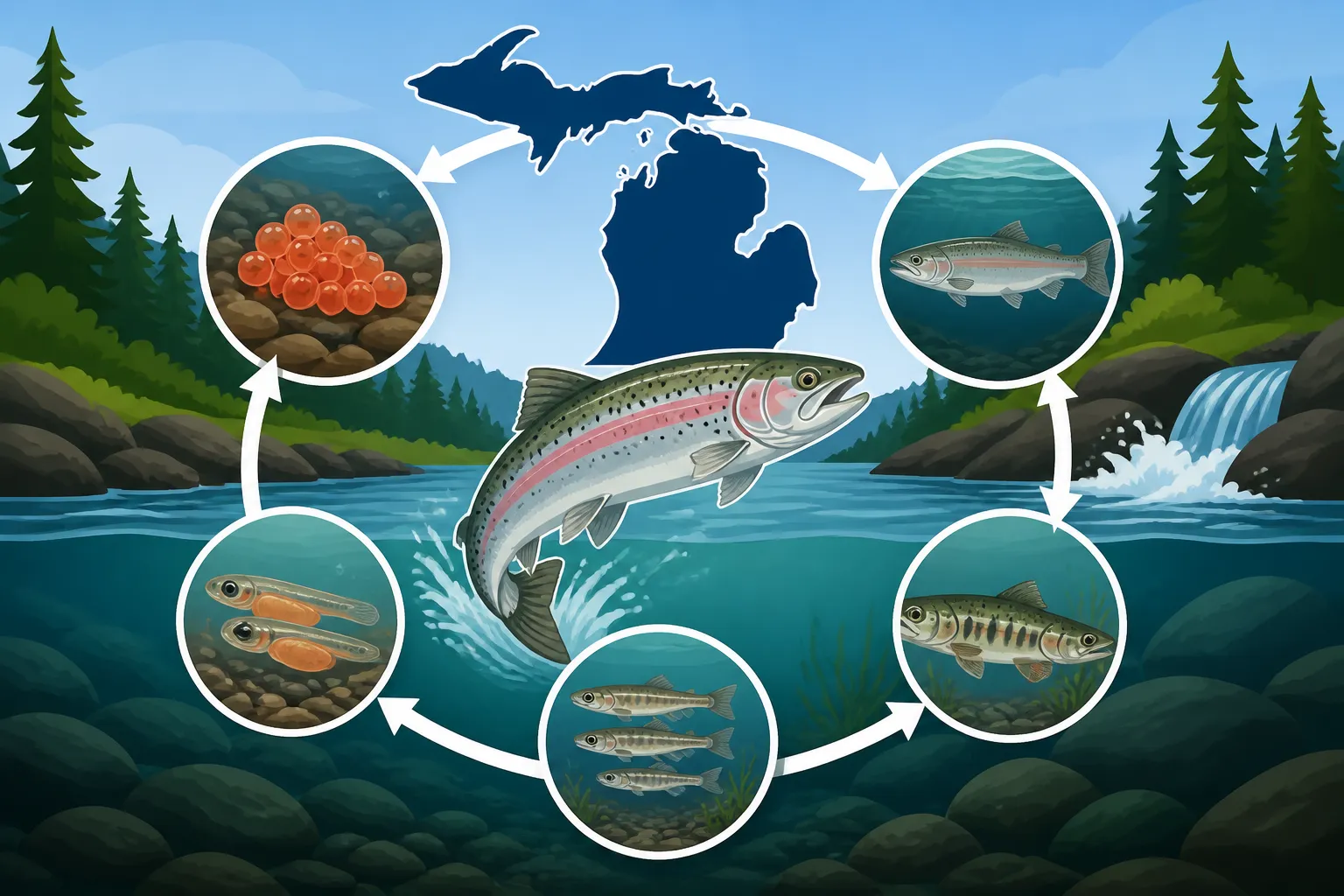
Once they arrive in suitable spawning grounds, often gravelly riffles or the tailouts of pools where water flows consistently and is well-oxygenated, the ritual begins. The female, known as a hen, selects a spot and uses her tail fin to meticulously fan out a depression in the gravel, creating what's called a redd. This isn't a quick process; it can take hours of tireless effort. As she prepares the redd, a male, or buck, will position himself nearby, often vying with other males for the chance to fertilize her eggs. It's a true spectacle of nature, largely unseen by most, yet fundamental to the river's health and our fishing heritage.
From Egg to Alevin: Hatching in the Gravel
Once the redd is prepared, the female deposits her precious orange-pink eggs into the depression, and almost simultaneously, the male releases his milt, fertilizing them. She then quickly covers the eggs with gravel, protecting them from predators and the harsh elements. These eggs, numbering anywhere from a few hundred to several thousand depending on the size and age of the hen, are now entrusted to the riverbed. For weeks, sometimes months, they lie dormant, slowly developing. The water temperature is the primary factor dictating how quickly they hatch. Colder water means a longer incubation period, allowing them to remain safely tucked away until conditions are more favorable for emergence. You can learn more about general fish limits in Michigan Fishing Regulations Every Angler Should Know.
Eventually, the eggs hatch into what are called alevins. These tiny creatures are still essentially yolk sacs with tails, carrying a small, visible pouch of nutrients that sustained them through their incubation period. They remain hidden within the protective gravel, absorbing this yolk sac, growing a bit stronger, and developing their fins and internal organs. During this incredibly vulnerable stage, they rely entirely on the river's currents to bring them fresh, oxygenated water and keep them safe from direct sunlight and predation. The gravel acts as both nursery and fortress, a silent protector for the next generation of Michigan's magnificent steelhead.
Early Life in the River: Fry and Parr Stages
After the critical incubation period and the initial alevin stage, young steelhead undergo further transformations, each stage bringing new challenges and requiring different survival skills in their freshwater home.
The Fry's First Foray: Emergence and Feeding
When the alevin has absorbed most of its yolk sac and developed sufficiently, it wriggles free from the gravel bed and emerges into the open water as a fry. This is a momentous, yet perilous, step. Suddenly, these tiny fish are exposed to a world of swift currents, hungry predators, and the constant need to find food. Steelhead fry are incredibly small, often only an inch or so long, and their primary goal is survival. They typically seek refuge in shallow, calmer areas along the riverbanks, amongst aquatic vegetation, or in the complex structure of rootwads and submerged logs. These hiding spots offer some protection from larger fish, birds, and even other predatory insects.
Their diet consists mainly of microscopic aquatic organisms and tiny insect larvae, whatever they can find to fuel their rapid growth. The challenge is immense; a vast number of fry will not survive this initial stage due to predation, fluctuating water levels, or lack of food. This demanding period is a critical filter, ensuring that only the strongest and most adaptable fish continue their life journey. It's a stark reminder of nature's harsh realities, even in Michigan's beautiful rivers. Understanding where these young fish hide can even give clues to where their parents might have spawned, a helpful detail for dedicated anglers trying to decipher river patterns.
Growing Pains: The Parr Stage in Freshwater
As the steelhead fry grow, they transition into the parr stage, easily identifiable by the distinctive vertical bars or "parr marks" along their sides. These markings provide excellent camouflage against the mottled riverbed, helping them blend in and avoid detection. Parr are still relatively small, usually a few inches long, but they are more robust than fry and exhibit increasingly trout-like behaviors. They become more active hunters, expanding their diet to include a wider range of aquatic insects, nymphs, and small crustaceans. You might even see them rising to the surface to snatch a drifting fly during a summer hatch.
During the parr stage, these young fish will spend anywhere from one to three years in their natal river, growing and strengthening before the next major transformation. This extended freshwater residence is a key characteristic of steelhead, differentiating them from many salmon species that migrate to the ocean much sooner. The longer they spend in the river, the larger and stronger they become, increasing their chances of survival during their impending migration to the Great Lakes. The parr stage is where they truly learn the ways of the river, honing their instincts and building the endurance they'll need for the arduous journeys ahead. For fly anglers, these young fish can be fun to target on small flies, offering a glimpse into the future of the river's steelhead population.
The Call of the Lake: Smoltification and Downstream Migration
After a year or more of growing up in the river, a profound biological shift occurs within the young steelhead, preparing them for a completely different environment. This is arguably one of the most incredible transformations in their entire life cycle.
The Transformative Smolt Stage
The transition from a river-dwelling parr to a lake-bound smolt is nothing short of miraculous. This process, known as smoltification, is triggered by a complex interplay of hormonal changes, daylight hours, and water temperature, typically occurring in the spring. Physically, the parr marks begin to fade, and the fish's coloration shifts from the camouflaged browns and greens of the river to a sleek, silvery, and iridescent sheen. This "chrome" appearance is not just for aesthetics; it's a vital adaptation for life in the open, often deeper, waters of the Great Lakes, providing camouflage against the sunlit surface and open water predators.
More than just a cosmetic change, smoltification involves significant physiological adjustments. Their gills and kidneys reconfigure to handle the higher salt content of the Great Lakes (though freshwater, the Great Lakes are osmotically different from pure river water, requiring adaptation), and their digestive system prepares for a new diet of larger prey. It's a full-body preparation for a life at sea, or rather, a life in our freshwater "seas." This stage is critical, as a failed smoltification can mean the difference between life and death for the young steelhead. The natural world truly orchestrates an amazing symphony of changes within these fish.
The Treacherous Journey to the Great Lakes
Once fully smoltified, these silver-sided adolescents begin their downstream migration towards the Great Lakes. This journey, often undertaken under the cover of darkness to avoid predators, is fraught with danger. They must navigate past various obstacles, including dams, culverts, and strong currents, all while constantly evading hungry birds, larger fish, and even land-based predators that might snatch them from the shallows. The Great Lakes are a vast and open environment, and reaching them safely is a significant achievement.
Upon entering the Great Lakes, the smolts disperse, immediately beginning their new existence as pelagic (open water) predators. They quickly adapt to feeding on an abundance of baitfish like alewives and smelt, as well as various invertebrates, which allows for rapid growth. This period of downstream migration and initial adaptation to the Great Lakes is a testament to the steelhead's anadromous nature – their ability to live and thrive in both freshwater rivers and large lake environments. It's a fascinating contrast to purely stream-resident trout, as explained in articles like Rainbow Trout and Steelhead: What's the Difference. Many anglers might not realize the epic journey these fish undertake before they even become the prized gamefish we know.
Life in the Big Water: Growth and Maturation in the Great Lakes
Once they've successfully navigated the treacherous journey from their natal river to the vast expanse of the Great Lakes, Michigan steelhead embark on a new chapter of rapid growth and maturation. This period is crucial for them to develop into the powerful, hard-fighting fish we love to catch.
Feeding and Growing Strong in Lake Michigan and Huron
Life in the Great Lakes, particularly Lake Michigan and Lake Huron, is a feast for steelhead. They become efficient pelagic predators, actively hunting baitfish such as alewives, smelt, and gobies. These forage fish are abundant, providing the rich diet necessary for the steelhead to put on significant size and strength. Imagine a fish that spent its early life scrounging for tiny insects in a river now chasing schools of baitfish in a freshwater ocean – it's a profound shift in lifestyle and diet. This high-protein diet is what gives them their incredible power and stamina, making them such formidable fighters on the end of a line. Their silvery, almost chrome-like coloration also helps them blend seamlessly into the open water, protecting them from larger predators and aiding their own predatory pursuits.
During this time, often lasting one to three years, steelhead can grow from a few ounces to several pounds, sometimes even reaching double-digit weights. They roam widely across the lakes, following baitfish concentrations and adapting to changing water temperatures and conditions. Understanding their preferred forage and movements in the lakes is key for charter captains and anglers who target them offshore. While offshore trolling for these powerful fish is a popular method, it's also where they develop the robust physique and keen instincts that make them such a challenge when they return to the rivers. You might even find specialized gear for this type of fishing on Amazon, ranging from trolling rods to downriggers.
The Urge to Return: Sexual Maturity
As the steelhead grow and mature in the Great Lakes, an internal clock begins to tick. This biological imperative, driven by hormonal changes and increasing sexual maturity, signals that it's time to complete the life cycle by returning to their spawning grounds. This urge to return is incredibly powerful, often drawing them back to the very river they left as a smolt years earlier. They might begin to stage near the river mouths as early as late summer or fall, gathering strength and waiting for the right conditions to begin their upstream migration.
The exact timing of their return, and whether they come back in the fall/winter or spring, depends on a variety of factors, including water temperature, river flows, and the specific strain of steelhead. Some strains are known for their "winter" runs, entering the rivers in late fall and holding over through the cold months, while others are "spring" run fish, making their push when the ice breaks and water temperatures begin to rise. This complex timing provides incredible angling opportunities almost year-round in different Michigan rivers. The transition from lake dweller to river migrant is a final, dramatic act in their life story, bringing them full circle back to the freshwater currents that first cradled their eggs.
The Return to the Rivers: Adult Spawning Runs
The most anticipated chapter for many Michigan anglers is when the adult steelhead, now hefty and vibrant from their time in the Great Lakes, make their grand return to the rivers. This is when the real action begins for those seeking these magnificent fish.
The Fall and Winter Steelhead Runs
As autumn colors blaze across Michigan's landscape and water temperatures begin to drop, the first waves of adult steelhead start to nose their way into river mouths. These are often referred to as "fall run" steelhead. They're typically fresh from the lake, carrying that characteristic bright chrome sheen, and are incredibly powerful. Their primary motivation isn't immediate spawning, but rather to establish themselves in the river system, sometimes migrating slowly upstream to hold in deeper pools or gravelly runs. These early arrivals will often spend the entire winter in the river, waiting for the optimal conditions of spring to actually spawn. This means winter anglers can enjoy fantastic fishing opportunities, targeting these holding fish in slower, deeper water. The Fall Steelhead Run in Michigan Rivers is a prime time for many dedicated anglers.
As winter deepens and ice forms along the banks, the runs continue, though often in smaller numbers. These "winter run" steelhead are true survivors, enduring harsh conditions and often becoming more challenging to entice. However, their presence provides a unique and rewarding ice fishing alternative or an incredible challenge for cold-weather river anglers. The beauty of these runs is that they keep our rivers alive with activity even when many other fish species are dormant. It’s a testament to the hardiness of steelhead that they can thrive and migrate in such frigid conditions, making every catch feel like a hard-won victory. Specialized cold-weather gear, sometimes found on Amazon, is a must for these chilly expeditions.
The Spring Spawning Frenzy
The true spawning frenzy typically kicks off as winter loosens its grip and spring thaws begin to swell the rivers. This is when the majority of steelhead, including those that entered in the fall and winter, push further upstream to locate suitable redds. The rivers become alive with activity as fish pair up, and the females diligently construct their nests in the gravel. Water temperature is a critical factor; once it reaches a certain threshold, often in the mid-40s to low 50s Fahrenheit, the spawning ritual intensifies. This is the peak of the Michigan Steelhead Run Timing for many systems.
During this period, male steelhead can become highly aggressive, fiercely defending their territory and the spawning females from rivals. Anglers often find success using techniques that imitate eggs or small baitfish, as the steelhead, while focused on reproduction, will still strike out of aggression or instinct. After spawning, spent steelhead, often called "drop-backs" or "kelts," begin their downstream journey back to the Great Lakes. While often thinner and less energetic than when they first entered the river, many of these fish will survive to spawn again, a remarkable characteristic that sets steelhead apart from Pacific salmon, which typically die after spawning.
The Unique Michigan Steelhead: Repeat Spawners
One of the most remarkable characteristics of Michigan's Great Lakes steelhead is their ability to survive the rigors of spawning and return to the lakes, only to migrate back into the rivers again in subsequent years. This makes them truly unique among many anadromous fish.
Surviving the Spawn: A Second Chance
Unlike their Pacific salmon cousins, which typically undertake a single, fatal spawning run, many Michigan steelhead are repeat spawners. After the exhausting act of depositing their eggs or milt, these fish, now often referred to as "kelts" or "drop-backs," begin their arduous journey back downstream to the Great Lakes. They are often leaner, battle-scarred, and temporarily depleted of energy. However, a significant portion of them will successfully make it back to the big water. There, they will resume their feeding patterns, regaining strength and weight over the spring, summer, and fall.
This ability to survive and recover is a testament to their resilience and is a key factor in maintaining robust steelhead populations. A fish that has spawned once or twice before is often larger, stronger, and more experienced, making it an even more prized catch for anglers. It's truly inspiring to think of a steelhead that has made multiple round trips, each time defying the odds of predation, environmental challenges, and the sheer energy drain of migration and reproduction. Protecting these drop-back fish by handling them gently and practicing responsible catch-and-release is vital for ensuring future generations of Michigan steelhead. Learning Catch-and-Release Techniques for Michigan Muskellunge can even provide helpful insights for handling large steelhead.
The Value of Older Fish and Conservation
Older, repeat-spawning steelhead are invaluable to the overall health and genetic diversity of the population. These fish have proven their ability to survive and reproduce, carrying genes that contribute to hardiness and adaptability. A large, experienced hen, for instance, can lay thousands of eggs, contributing significantly more to the next generation than a smaller, first-time spawner. Therefore, conservation efforts often focus on protecting these larger, older fish. Anglers play a critical role in this by practicing ethical fishing, especially during spawning runs, and by adhering to regulations that help safeguard these magnificent creatures.
Michigan's commitment to supporting these runs through habitat restoration, stocking programs (where appropriate), and careful management of fishing seasons ensures that these incredible life cycles continue year after year. Understanding the full journey of a steelhead, from tiny egg to powerful adult and back again, fosters a deeper appreciation for these fish and the incredible rivers and lakes that sustain them. Whether you're drift fishing with spawn bags, fly fishing with nymphs, or centerpinning for Michigan steelhead, knowing their life story adds a whole new dimension to your time on the water. Many excellent books on steelhead fishing, offering detailed techniques and insights, can be found on Amazon, making for great off-season reading.
| Life Stage | Description | Typical Location | Diet (Primary) | Appearance | Time in Stage |
|---|---|---|---|---|---|
| Egg | Fertilized embryo encased in protective shell. | River gravel (redd) | Yolk sac (internal) | Small, orange-pink bead | Weeks to months (temp. dependent) |
| Alevin | Newly hatched, yolk-sac attached, hidden in gravel. | Within river gravel | Yolk sac (internal) | Tiny, with prominent yolk sac, translucent | Few weeks |
| Fry | Yolk sac absorbed, emerged from gravel, begins active feeding. | Shallow river margins | Microscopic organisms, tiny insect larvae | Small, slender, still developing fins | Few months |
| Parr | Grows larger, distinctive vertical markings (parr marks). | River pools, riffles, runs | Aquatic insects, nymphs, small crustaceans | Camouflaged, dark parr marks, trout-like | 1 to 3 years |
| Smolt | Undergoes physiological changes for lake life, turns silvery. | Downstream river | Prepares for lake diet | Sleek, silvery ("chrome"), parr marks fade | Few weeks |
| Adult (Lake) | Feeds and grows in the Great Lakes, matures sexually. | Great Lakes (pelagic) | Alewives, smelt, gobies, invertebrates | Large, powerful, bright chrome, streamlined | 1 to 3+ years |
| Adult (River) | Returns to rivers for spawning, then drops back to lake (repeat spawner). | River (upstream migration) | May not feed actively (focus on spawning) | Chrome to darker, spawning colors; often battle-scarred | Weeks to months (spawning run) |
Disclaimer
This article is for general informational purposes only and does not constitute professional advice. Laws, prices and regulations vary by location and change over time. Consult a qualified professional for guidance on your specific situation.