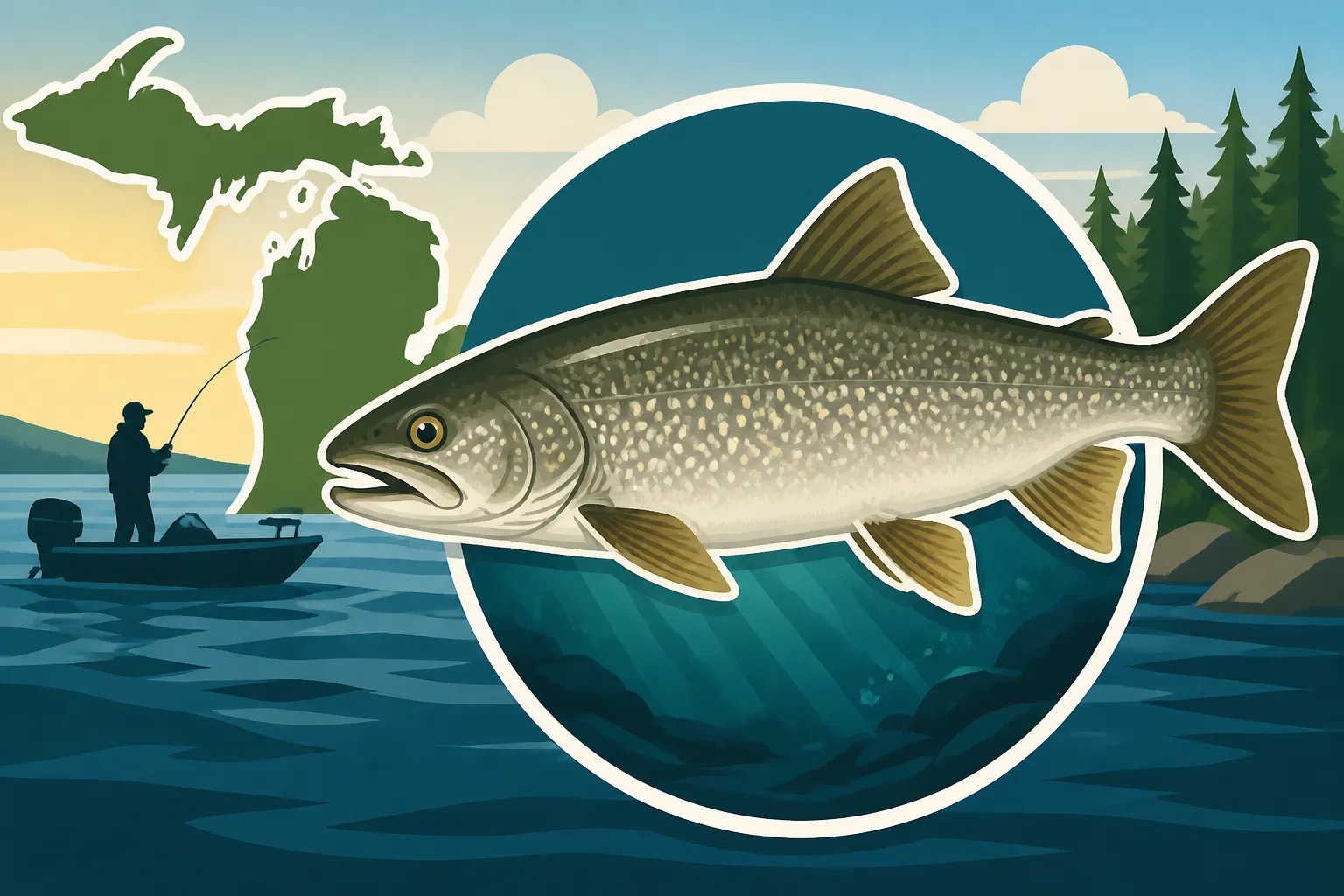
Lake Trout Identification in Michigan
You've just landed a beautiful fish, it put up a valiant fight, and now you're holding it up, admiring its colors. But then the nagging question creeps in: "What exactly is this fish?" For anglers in Michigan, especially those casting lines in the deep, cold waters of our Great Lakes or larger inland lakes, correctly identifying your catch isn't just about bragging rights; it's crucial for following regulations and contributing to conservation. This guide will walk you through the distinct features of Michigan lake trout, helping you confidently tell them apart from their lookalike cousins.
Why Accurate Lake Trout Identification Matters for Michigan Anglers
Picture this: you're out on Lake Superior, the waves are gently rocking, and your line goes taut. After a thrilling battle, you net a magnificent fish. Is it a lake trout? A splake? Maybe even a salmon? The pressure is on because Michigan's fishing regulations, particularly regarding Michigan Bag and Size Limits Explained and Michigan's Combined Trout and Salmon Possession Limit, can vary significantly between species. Misidentifying your catch could lead to unknowingly breaking the rules, and no one wants a run-in with the DNR, especially when you're just trying to enjoy a peaceful day on the water.
Avoiding Misidentification: Consequences for Anglers
The frustrations of misidentification are real. It's not always easy, especially for newer anglers or those who only occasionally target these deepwater dwellers. You might think you've caught a legal lake trout, only to find out later it was a splake with a different size limit, or a young salmon that needs to go back. This isn't just about potential fines, though those are certainly a deterrent. It's also about ethical angling and respecting the effort that goes into managing our fisheries. Knowing your fish helps you comply with daily possession limits and minimum size requirements for each specific species. Imagine releasing a fish that was perfectly legal to keep, or worse, keeping one that should have been released – these are common anxieties that accurate identification can alleviate.
The Importance of Conservation and Regulation Adherence
Beyond personal consequences, accurate identification plays a vital role in the broader conservation efforts of Michigan. Our fisheries are a precious resource, and sustainable management relies on anglers adhering to the rules designed to protect fish populations. Different species have different growth rates, spawning patterns, and ecological roles. For example, lake trout are native to the Great Lakes and are a cornerstone of the deepwater ecosystem, whereas splake are a hybrid species often stocked for sport. By correctly identifying and following regulations for each, you're directly contributing to healthy fish populations for future generations of anglers. It's part of being a responsible steward of Michigan's incredible natural heritage, and understanding Michigan Fishing Regulations Every Angler Should Know is a big part of that responsibility.
Key Physical Characteristics of Michigan Lake Trout
So, how do you really tell a lake trout apart? They're often large, silvery, and speckled, but so are many other fish in our vast waters. The trick is to look beyond the general impression and focus on a few distinct physical traits that act like a fishy fingerprint.
Body Shape, Coloration, and Fin Structure
Lake trout typically possess a long, somewhat slender, and torpedo-shaped body that tapers towards the tail. They are built for cruising cold, deep waters. Their coloration can be quite variable depending on their specific habitat, diet, and even the time of year, which can be tricky! Generally, they have a silvery or grayish-green background, often with a lighter belly that can range from white to cream. Some lake trout, especially those from deeper, darker waters, might appear darker, almost charcoal gray or even bluish. The key is often the patterns of spots over this base color.
When it comes to fins, pay close attention to the caudal fin, or tail. A true lake trout will have a distinctly deeply forked tail. This fork is much more pronounced than on other trout species or splake. Their dorsal (top) fin and pectoral (side) fins are generally unremarkable in color, usually matching the body's base tones, but the shape of the tail is a dead giveaway for lake trout. This deep fork is essential for their powerful swimming in strong currents and deep water.
Distinctive Markings: Spots, Stripes, and Patterns
This is where lake trout really start to distinguish themselves. Their bodies are covered in numerous light-colored, irregular spots against their darker background. These spots are typically cream-colored, white, or yellowish. What's crucial here is that these spots are usually all over the body, including the head, dorsal fin, and especially the caudal fin. Unlike some salmon or other trout that might have spots predominantly above the lateral line or in more organized rows, lake trout spots tend to be more haphazardly scattered.
Think of it like a speckled stone. The spots are not typically "haloed" (light-edged with a dark center) like you might see on some brown trout. Instead, they are more solid, irregular splotches. Sometimes, the spots on the back and upper sides might even connect, forming intricate, worm-like patterns, particularly noticeable on their dorsal area. This unique spot pattern is a primary identifier when comparing them to other trout and salmon species found in Michigan.
Mouth, Teeth, and Head Features
Take a closer look at the head and mouth, and you'll find more clues. Lake trout have a large mouth, extending back to at least the middle of the eye, often even further. Inside that impressive maw, you'll find plenty of sharp, conical teeth. They are predators, after all, designed to grab and hold onto slippery baitfish.
One of the most telling features, however, is on the roof of their mouth, specifically on the vomer bone (a bone in the center of the roof of the mouth). Lake trout have a distinct, raised patch of teeth on the vomer that is usually larger and more pronounced than on other trout. If you can safely (and carefully!) examine this area, it can be a very strong indicator. Their head is generally pointed, but proportional to their body, without any excessively prominent features. The overall impression is one of a powerful, efficient predator. For those serious about identification, a good field guide or even a waterproof chart on Amazon can be an invaluable tool to quickly check these nuanced features.
Habitat and Behavioral Clues for Lake Trout Identification
Beyond their physical appearance, understanding where and how lake trout live and behave can also provide strong hints about their identity. These fish are creatures of habit, and their preferences for certain environments are quite specific.
Preferred Depths and Water Temperatures
Lake trout are classic coldwater fish. They thrive in deep, clear, oxygen-rich lakes, which is precisely why they are so prevalent in our Great Lakes—especially Lake Superior, Lake Michigan, and the deeper sections of Lake Huron. You'll typically find them in waters that maintain temperatures below 55°F (13°C), often much colder, down into the low 40s or even 30s. This means they spend most of their lives in deeper water, often 50 to 100 feet down, and much deeper during the warm summer months.
During spring and fall, when surface waters are cooler, they might venture into shallower areas, sometimes even within casting distance from shore or piers. But generally, if you're pulling a fish from significant depths in the middle of summer in one of Michigan's large, cold bodies of water, the odds of it being a lake trout are considerably higher. This preference for depth and cold water is a key ecological niche for Michigan's Great Lakes Fishing Guide. Knowing What Depth Do Lake Trout Live At can guide your identification efforts.
Seasonal Movements and Spawning Habits
Like many fish, lake trout exhibit seasonal movements driven primarily by temperature and spawning. As mentioned, they'll be in shallower water during the cooler shoulder seasons. However, their spawning habits are quite distinctive. Lake trout are fall spawners, typically moving into shallower rocky shoals and reefs in late September, October, and sometimes into November. They don't build redds (nests) like some other trout or salmon but instead scatter their eggs over clean, rocky substrates.
Observing these behaviors can help confirm your identification. If you're catching a fish on a rocky reef in October, and it has the physical characteristics of a lake trout, it's a pretty safe bet. This makes Best Time to Catch Lake Trout on the Great Lakes often coincide with these seasonal movements. These patterns are very different from the spring-spawning rainbow trout or the fall-spawning salmon species that often run up rivers.
Diet and Feeding Behaviors
Lake trout are apex predators in their deepwater environments. Their diet primarily consists of other fish, particularly smaller forage species like cisco (lake herring), alewives, and sculpins. In the Great Lakes, invasive species like round gobies have also become a food source. Their large mouth and sharp teeth are perfectly adapted for ambushing and consuming these prey.
You might find stomach contents to be a helpful, albeit less common, identification clue if you're cleaning your catch. More practically, understanding their diet informs the lures and baits they strike. If you're successfully fishing deep with large spoons, minnow imitations, or cut bait, you're likely targeting species like lake trout that feed on other fish. This contrasts with some smaller trout that might feed more heavily on insects or aquatic invertebrates.
Differentiating Lake Trout from Similar Michigan Fish Species
This is often the trickiest part for Michigan anglers, as several other species can be confused with lake trout, especially at first glance. Knowing the subtle differences is crucial.
Lake Trout vs. Splake: A Common Confusion
The splake is probably the most commonly confused fish with the lake trout, and for good reason—it's a hybrid, a cross between a male brook trout and a female lake trout. Michigan often stocks splake in various lakes. This means they share characteristics of both parents, making identification a challenge.
Here’s how to tell them apart:
- Tail: The most reliable indicator. Lake trout have that very distinct, deeply forked tail. Splake, being part brook trout, will have a tail that is less forked than a lake trout but more forked than a brook trout. It's often described as moderately forked.
- Coloration and Spots: Lake trout have light spots on a darker body, often extending onto the tail. Splake also have light spots, but these spots tend to be more defined and sometimes have a faint halo, reminiscent of a brook trout's spots. Splake also often exhibit a reddish-orange hue along their lower fins, another nod to their brook trout ancestry.
- Pyloric Caeca: This is an internal feature, so it's only useful if you're cleaning the fish. Lake trout have a large number of pyloric caeca (finger-like projections near the stomach), usually 90-200. Splake will have a moderate number, typically between 60-80. While not a practical on-the-water ID, it's definitive.
For more in-depth comparison, check out Splake vs Lake Trout: What's the Difference or How to Tell a Splake From a Lake Trout.
Lake Trout vs. Brown Trout and Rainbow Trout
While less likely to be confused in typical lake trout habitat, brown trout and rainbow trout (steelhead) can sometimes cross paths with lakers, especially in river mouths or shallower areas.
Here's how they differ:
- Brown Trout:
- Tail: Square or very slightly forked. Definitely not deeply forked like a laker.
- Spots: Brown trout have prominent dark spots, often with pale halos, scattered on their sides, and sometimes reddish spots. Their tail usually has few or no spots. Their body color is typically brown or olive-brown.
- Rainbow Trout (Steelhead):
- Tail: Moderately forked, but not as deep as a lake trout's.
- Spots: Small, distinct black spots all over their body, including the dorsal and caudal fins. They are also famous for the distinct pink or red stripe along their lateral line, which is absent in lake trout.
- Body: More silvery and streamlined than a typical lake trout, especially when fresh from the Great Lakes.
You can learn more about these fascinating fish in Michigan Trout Species Explained.
Lake Trout vs. Salmon Species
Michigan's Great Lakes are also home to several salmon species, primarily Chinook (King) salmon and Coho (Silver) salmon. These can be confused with lake trout, especially when they are in their silvery lake phase.
Key differences:
- Tail: Salmon generally have a moderately forked tail, not the deep fork of a lake trout.
- Spots: Chinook salmon have small, irregular black spots on their back and both lobes of their caudal fin. Coho salmon have spots primarily on their back and upper lobe of the caudal fin. Lake trout, as discussed, have light spots on a dark background, often extending across the entire tail. Salmon spots are always dark.
- Mouth: Chinook salmon have black gums, while Coho salmon have white gums with a dark mouth lining. Lake trout have white or pale gums.
- Body Shape: Salmon tend to be more streamlined and laterally compressed (taller than they are wide) compared to the more cylindrical lake trout.
Understanding these distinctions is key, particularly since salmon are a significant part of Michigan Salmon Species Explained.
Here's a quick comparison table to help visualize the differences:
| Feature | Lake Trout | Splake | Brown Trout | Chinook Salmon |
|---|---|---|---|---|
| Tail Shape | Deeply forked | Moderately forked (less than laker, more than brook) | Square to slightly forked | Moderately forked |
| Spot Color | Light spots (white, cream, yellow) | Light spots, sometimes with halos | Dark spots (black, red) with light halos | Dark spots |
| Spot Location | All over body, head, dorsal, & caudal fins | All over body, less on caudal fin | Primarily on upper body, few on tail | Back & both lobes of caudal fin |
| Gum Color | White/pale | White/pale | White/pale | Black |
| Vomer Teeth | Prominent, raised patch | Moderate | Less prominent | Present, but different structure |
| Body Color | Silvery-gray/green, lighter belly | Variable, often olive with reddish fins | Golden-brown/olive, yellow sides | Silvery, darker back, often purplish sheen |
| Preferred Depth | Deep, cold water (50-200+ ft) | Moderately deep, cold water | Rivers, streams, shallow lake areas | Deep pelagic zones, near surface at times |
Practical Tips for On-the-Water Identification
Even with all this knowledge, identifying a fish quickly when it's flopping on the deck or in the net can be a challenge. Here are some practical tips to make the process easier and more reliable.
Best Practices for Handling and Observing Your Catch
First and foremost, always prioritize the health of the fish. If you're planning to release it, minimizing handling time and keeping it wet are critical. However, for identification, you do need a good look. Consider bringing a large, soft-mesh landing net. Once the fish is in the net, you can gently cradle it in the water or quickly lift it for a few seconds to observe the key features.
Have your camera ready! A quick, clear photo can be invaluable for later identification, or for sharing with experienced anglers. Focus on getting a shot that clearly shows the tail, the spot patterns on the side, and if possible, the head and mouth area. If you decide to keep the fish, take your time examining it more thoroughly at the cleaning station. That's when you can check those internal features like the vomer teeth if you're still unsure. Remember, a quick, careful glance at the tail shape is usually your first and best bet for differentiating lake trout from many other species.
Using Field Guides and Online Resources
Don't be afraid to use aids! Modern technology has made on-the-water identification much simpler. Carry a waterproof fish identification guide or download a reliable fish ID app on your smartphone. Many excellent guides for Michigan fish species are available, and you can often find them on Amazon or at local sporting goods stores. These guides often highlight the key distinguishing features with clear illustrations or photos.
If you have a reliable internet connection on the water (or can save images offline), keep pictures of common lookalikes (like splake, brown trout, and salmon) on your phone for quick comparison. The Michigan DNR Hunt Fish App for Licenses and Reporting is fantastic for checking regulations, but a visual guide is also extremely helpful. Don't stress about being an instant expert; even seasoned anglers double-check when a fish looks unfamiliar or falls into a tricky category. It's better to be certain, especially when regulations are involved. A good waterproof field guide that focuses on Michigan's Most Popular Fish Species can be a real game-changer.
Disclaimer
This article is for general informational purposes only and does not constitute professional advice. Laws, prices and regulations vary by location and change over time. Consult a qualified professional for guidance on your specific situation.