What Is the Difference Between Walleye and Sauger
It's incredibly frustrating when you're out on the water, you land a beautiful fish, and then you stare at it, wondering, "Is this a walleye or a sauger?" This confusion is common among Michigan anglers, and it's not just about bragging rights – it can impact whether you're complying with regulations. This guide is here to clear up that mystery once and for all, giving you the confidence to identify these two similar, yet distinct, species.
The Core Differences: More Than Just a Speckle
While walleye and sauger are both part of the Sander genus and share many similarities, they have distinct features that, once you know them, make identification much easier. Think of them as cousins; they look alike at first glance, but have their own unique traits. For anglers in Michigan, knowing these differences is key, especially given varying regulations and habitat preferences.
Physical Appearance and Markings
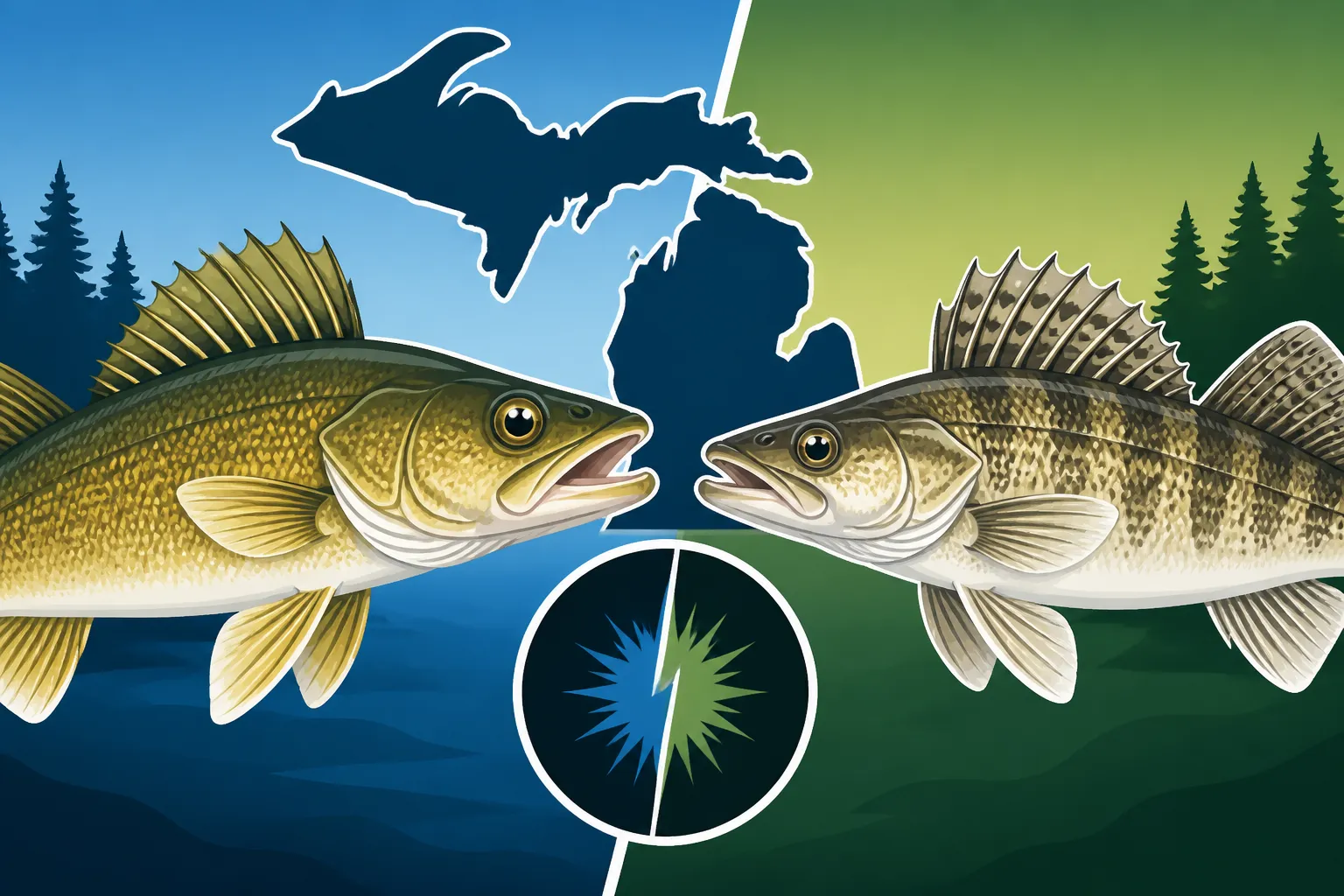
The most telling distinction often lies in the dorsal fin and tail. A walleye will typically have a uniform, dark, spiny dorsal fin with no distinct spots, but it will almost always have a prominent white tip on the lower lobe of its tail fin. This white tip is like a signature mark for a walleye, a beacon. Their bodies are usually more cylindrical and often a lighter golden-olive color, fading to white on the belly. The sides might have faint, irregular dark bars or mottling, but it's usually subtle.
Sauger, on the other hand, boast very obvious, distinct black spots all over their spiny dorsal fin, almost like a leopard print. This is perhaps the easiest tell. They also lack that signature white tip on their lower tail fin; instead, their tail will be more uniformly colored, perhaps with some dark banding. Their bodies tend to be more slender and cylindrical than a walleye, with a brassy or brownish-yellow color, and they usually have more pronounced dark blotches or saddle-like markings along their sides. These blotches can be quite striking, giving them a camouflaged appearance often well-suited to the murkier waters they sometimes prefer.
Size and Growth Patterns
Generally speaking, walleye grow considerably larger than sauger. A trophy walleye in Michigan can easily reach over 30 inches and weigh upwards of 10 pounds, with the state record pushing even higher. They are prized for their size and delicious fillets, making them a top target for many anglers. When you’re reeling in a truly massive fish that you suspect is either a walleye or a sauger, chances are it’s a walleye if it’s pushing significant length and girth. Their growth is tied to abundant forage and suitable habitat, which Michigan's Great Lakes and larger inland waters provide in spades.
Sauger are typically much smaller, usually topping out around 15 to 20 inches in Michigan, with fish over 2 pounds being considered quite respectable. While they can be found, they aren't as common or as large as their walleye cousins in Michigan's most popular fishing spots. They tend to grow slower and don't reach the same imposing lengths. This size difference isn't an absolute rule, as a young walleye might be similar in size to a mature sauger, but it’s a strong indicator, especially for larger fish. Always remember to check Michigan Walleye Size and Bag Limits for current regulations.
Habitat and Behavior
Walleye are incredibly adaptable and can be found in a wide range of Michigan waters, from the vast open expanses of the Great Lakes to large inland lakes and even some slow-moving rivers. They prefer clear to moderately turbid waters and are often found near structured areas like submerged humps, rock piles, weed edges, and drop-offs. They are notoriously light-sensitive, which is why they are often most active during low-light conditions at dawn, dusk, or night, or in deeper, darker water during the day. This behavior makes night fishing for walleye a popular and often productive pursuit.
Sauger, by contrast, tend to prefer more turbid, shallower, and often current-laden environments, such as large rivers or the murky stretches of certain lakes. They are more tolerant of cloudy water and aren't as sensitive to light as walleye, sometimes being more active during bright daylight hours in their preferred habitats. While they share some habitat with walleye, especially in river systems that flow into the Great Lakes, sauger are generally less widespread in Michigan's clearer, deeper lakes. This distinction in habitat preference can often give you a clue before you even see the fish up close.
Identifying Walleye in Michigan
Understanding the specific traits of a walleye is crucial for any angler casting lines in Michigan. These fish are a cornerstone of the state's freshwater fishery, and correctly identifying them ensures you're following the rules and targeting them effectively.
Key Walleye Characteristics
The most dependable characteristic of a walleye is that unmistakable white tip on the lower lobe of its caudal (tail) fin. This is the "gold standard" identifier. If you see it, you've got a walleye. Beyond that, their spiny dorsal fin (the front one) will be mostly clear or dusky, without distinct spots. It might have a dark blotch at the very back edge, but not scattered spots across the entire fin.
Walleye typically have large, glassy eyes that seem to glow in the dark, a trait that gave them their name, "walleye," referring to their "wall-like" appearance. This adaptation allows them to see incredibly well in low-light conditions. Their body color can vary based on water clarity and diet, ranging from golden-brown to olive-green, often with lighter, brassy tones. The side pattern is usually subtle, with indistinct vertical bars or mottling that blend into their background, rather than standing out sharply. For more details on what to look for, check out Walleye Identification and Size in Michigan.
Here's a quick comparison of Walleye vs. Sauger:
| Feature | Walleye | Sauger |
|---|---|---|
| Dorsal Fin | Clear or dusky, no distinct spots | Numerous distinct black spots |
| Tail Fin | Prominent white tip on lower lobe | No white tip, often banded |
| Body Markings | Subtle, irregular bars/mottling | More pronounced dark blotches/saddles |
| Body Shape | More robust, slightly deeper | More slender, cylindrical |
| Eyes | Large, glassy, prominent | Slightly smaller, less prominent |
| Average Size | Larger (15-30+ inches) | Smaller (10-20 inches) |
| Preferred Habitat | Clear to moderate turbidity, structured lakes/rivers | More turbid, shallower, riverine waters |
Where to Find Michigan Walleye
Michigan offers some truly world-class walleye fishing. The sheer abundance of large water bodies means anglers have plenty of opportunities to target these prized fish. Some of the most famous walleye fisheries include Saginaw Bay on Lake Huron, renowned for its incredible spring and fall walleye runs. Lake Erie, particularly its western basin, is another legendary spot, often producing high numbers of keeper-sized walleye. Anglers flock to these areas, often using specialized gear found on platforms like Amazon, to get their hands on prime walleye tackle.
Beyond the Great Lakes, many of Michigan's large inland lakes, such as Houghton Lake and Bay de Noc, also hold healthy walleye populations. Rivers like the Detroit River and the St. Clair River are also prime walleye destinations, especially during their spawning runs. If you're looking for where to start your walleye adventure, our guide to Best Waters for Michigan Walleye will give you some excellent pointers. When you fish these locations, remember that understanding walleye behavior is key to success, whether you're jigging, trolling, or casting.
Identifying Sauger in Michigan
While less common than walleye in many parts of Michigan, sauger are still present and offer a unique challenge. Knowing how to identify them not only expands your fishing knowledge but also ensures you're fishing within legal limits, as their regulations can differ.
Key Sauger Characteristics
The defining feature for a sauger, which makes it distinct from a walleye, is its spiny dorsal fin. Instead of being clear or dusky, a sauger's dorsal fin will have very noticeable, round black spots scattered across it. Imagine a fine-spotted pattern. The sauger's body often has more pronounced dark blotches or "saddle" markings that run down its sides, giving it a more camouflaged or mottled appearance compared to the walleye's more uniform coloration.
Unlike the walleye, the sauger's caudal fin will not have a white tip on the lower lobe. Its tail will typically be darker, sometimes with distinct bands, but without that bright white flash. Their overall body profile is often more slender and streamlined than a walleye, a trait that helps them navigate river currents more efficiently. Their eyes are generally smaller and less "glassy" than a walleye's. It’s worth noting that if you're not sure, it's always better to err on the side of caution and release the fish, or consult the Michigan Fishing Regulations Every Angler Should Know digest.
Where to Find Michigan Sauger
In Michigan, sauger are predominantly found in specific river systems and the more turbid, shallower areas of the Great Lakes that are influenced by major river inflows. They are not as widely distributed as walleye. Historically, they've been more prevalent in areas like the St. Clair River and Detroit River, especially in stretches with moderate current and some turbidity. They can sometimes be caught as bycatch when targeting walleye in these same riverine environments.
You're less likely to encounter a sauger in the vast, clear waters of northern Michigan's inland lakes or the deeper parts of Lake Michigan or Lake Huron. Their preference for murkier, flowing water is a key indicator of where you might encounter them. Anglers specifically targeting sauger might focus on techniques like bottom bouncing or vertical jigging in these river systems, using baits and lures that work well in lower visibility.
Why Accurate Identification Matters for Michigan Anglers
Beyond simply knowing what you've caught, being able to distinguish between a walleye and a sauger is incredibly important for responsible and legal angling in Michigan. The regulations aren't just suggestions; they're there to protect fish populations and ensure healthy fisheries for everyone.
Regulation Differences and Bag Limits
This is where accurate identification becomes absolutely critical. The Michigan Department of Natural Resources (DNR) often has different size and possession limits for walleye and sauger. For instance, you might find a specific minimum size limit or a different daily bag limit for walleye in a particular lake or river compared to a sauger. Misidentifying your catch could lead to keeping an undersized fish or exceeding a bag limit, resulting in fines or other penalties.
Imagine you're fishing on the Detroit River, and you pull in a couple of fish that look similar. If you mistakenly count a sauger as a walleye, or vice-versa, and their limits are different, you could inadvertently break the law. This is why many experienced anglers carry a copy of the annual fishing regulations digest, available from the Michigan DNR or sometimes even at tackle shops. It's an invaluable resource, often updated annually, to ensure you're compliant. Knowing the Michigan Daily Bag Limits by Species is a fundamental part of responsible fishing.
Fishing Techniques and Gear
While walleye and sauger often occupy similar ecological niches and can be caught with similar methods, understanding their subtle differences in habitat preference can refine your approach. If you're specifically targeting sauger, you might focus more on river channels with current, using slightly heavier jigs or bottom-bouncing rigs to present your bait effectively in turbid water. They might respond better to presentations that stay closer to the bottom, especially if the water is cloudy.
For walleye, especially in the larger lakes, trolling with crankbaits or crawler harnesses at specific depths using planer boards or downriggers might be the go-to technique. Their light sensitivity often means adjusting your fishing times or depths to find them in low light or deep water. While much of your general walleye tackle, like many of the excellent fishing rods and reels available on Amazon, would work for both, fine-tuning your presentation based on the target species and its preferred environment can significantly increase your success. Even your choice of line, say a particular brand of fluorocarbon or braid, might be influenced by the typical depth and water clarity associated with one species over the other.
Disclaimer
This article is for general informational purposes only and does not constitute professional advice. Laws, prices and regulations vary by location and change over time. Consult a qualified professional for guidance on your specific situation.