What Is the Difference Between Steelhead and Rainbow Trout
It's a question that has puzzled countless anglers, especially here in Michigan: what exactly is the difference between a steelhead and a rainbow trout? Many folks, myself included, have stood on the riverbank or the shore of a Great Lake, scratching our heads over whether that beautiful, silver-sided fish was one or the other. This guide is here to clear up that common confusion, diving deep into their shared biology and vastly different life paths, so you'll know exactly what you've hooked into next time.
Understanding the Common Confusion: Steelhead vs. Rainbow Trout
The root of the confusion between steelhead and rainbow trout is a pretty simple one: they are, in fact, the exact same species. Yes, you read that right! Biologically speaking, both are Oncorhynchus mykiss. However, their life histories diverge dramatically, leading to different appearances, behaviors, and challenges for anglers. It's like comparing a person who lives their entire life in their hometown to someone who travels the world for decades before returning home. Same person, wildly different experiences and sometimes even appearances!
The Genetic Link: They're the Same Species, But Different Life Stories
At the genetic level, a steelhead is simply a rainbow trout that has decided to take a grand adventure. Specifically, it's an anadromous form of rainbow trout. "Anadromous" means they hatch in freshwater rivers, migrate to the ocean (or in Michigan's case, the vast expanse of the Great Lakes) to grow large, and then return to those same freshwater rivers to spawn. Resident rainbow trout, on the other hand, spend their entire lives in freshwater rivers, streams, or inland lakes. They never make that journey to the big water.
This shared genetic code means that a steelhead smolt (a young fish preparing for its journey to the lakes) and a resident rainbow trout smolt are indistinguishable. The decision to migrate or stay put is influenced by a complex mix of genetics, environmental cues, and population dynamics. Some offspring of steelhead parents might decide to stay in the river their whole lives, becoming resident rainbows, while some offspring of resident rainbows might feel the call of the big water and head out to the Great Lakes. It's a fascinating biological phenomenon that adds a layer of mystery and excitement to fishing these incredible fish. Understanding this fundamental connection is the first step to truly appreciating both forms of Oncorhynchus mykiss.
The Life Cycle Divergence: A Journey to the Great Lakes and Back
The defining difference lies in their life cycle. A resident rainbow trout's life is relatively straightforward: hatched in a stream, lives in that stream (or an inland lake), spawns, and repeats. They often don't grow to the massive sizes of their lake-dwelling counterparts because their food sources and habitat are more limited. They're often recognized by their vibrant colors and pronounced lateral stripe, blending into their freshwater surroundings.
Steelhead, however, embark on an epic journey. After hatching in a river, they spend one to three years growing in that freshwater environment, feeding and developing. Then, usually as a smolt, they migrate downstream to one of the Great Lakes. Here, in the immense waters of Lake Michigan, Lake Huron, or Lake Superior, they find an abundance of food – baitfish like alewives and smelt – which allows them to grow much larger and develop their characteristic silver, ocean-like coloration. They might spend anywhere from one to several years in the lake, growing stronger and fatter, before the irresistible urge to spawn calls them back to their natal rivers. This upstream migration, often in late fall, winter, or early spring, is when they earn their "steelhead" moniker, referring to their hardened, resilient nature as they battle currents and obstacles. This incredible Steelhead Life Cycle in Michigan Rivers is what makes them such a prized game fish.
Key Characteristics and How to Identify Them in Michigan Waters
When you pull a beautiful Oncorhynchus mykiss from the water, you might wonder, "Is this a resident rainbow or a steelhead?" While they are the same species, their different life histories lead to some distinct visual and behavioral cues that can help you tell them apart, especially here in Michigan. It's not always a clear-cut case, but there are definitely indicators.
Physical Distinctions: Coloration, Shape, and Fin Wear
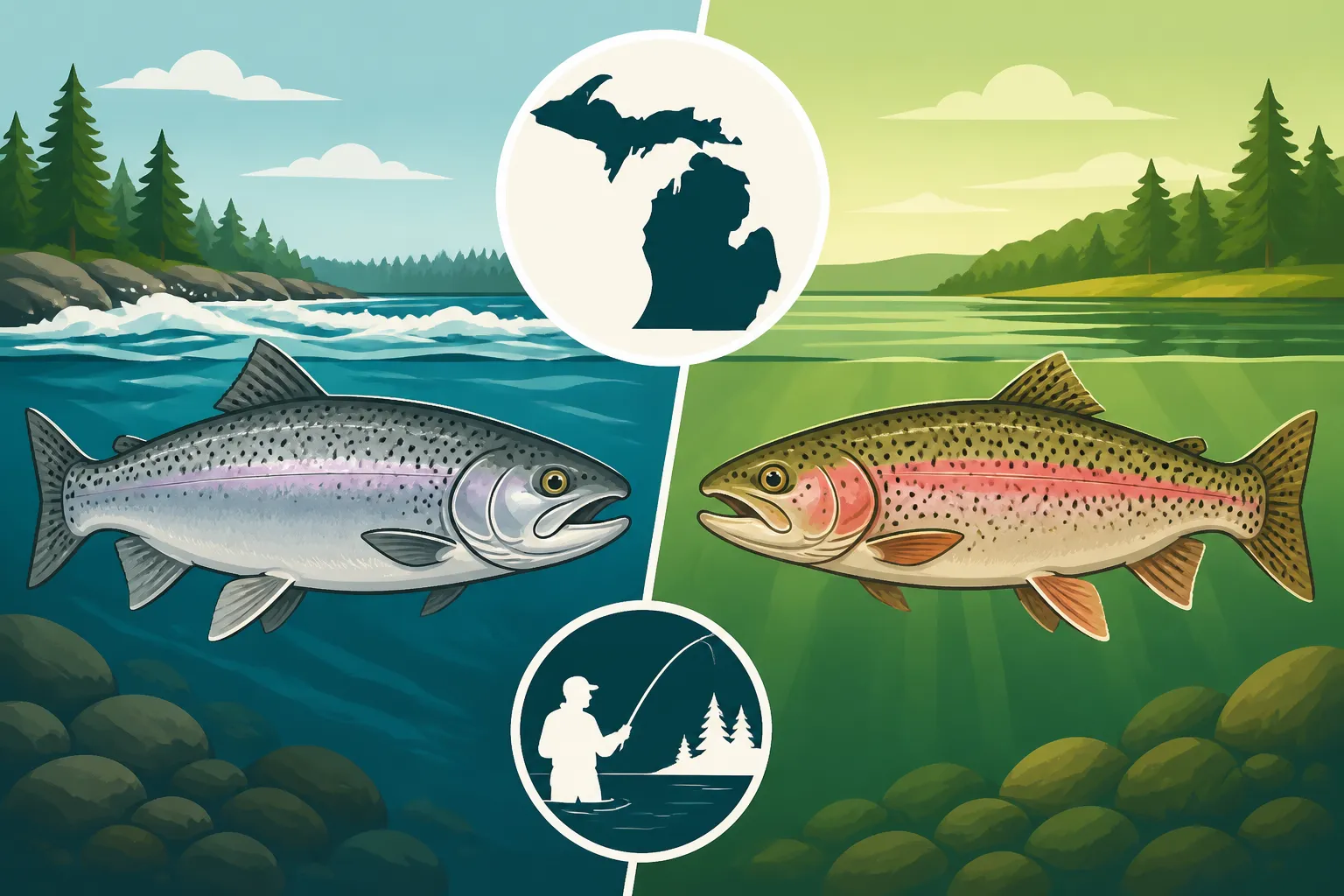
One of the most immediate indicators is coloration. Resident rainbow trout, living in rivers and inland lakes, tend to be much more vibrant. They often display a distinct, reddish-pink band running along their lateral line, hence the "rainbow" in their name. Their backs are typically olive-green to bluish-green, fading to silvery sides and a white belly. They might also have more pronounced spots, especially on their operculum (gill plate) and fins. Their fins tend to be in pristine condition, as they're not typically undertaking long, arduous migrations.
Steelhead, on the other hand, especially those fresh out of the Great Lakes and just entering the rivers, are often strikingly silver, almost chrome-like. This camouflage helps them blend into the open waters of the big lakes. The "rainbow" stripe is often faint or completely absent. As they spend more time in the river environment, particularly if they are preparing to spawn, they may start to redevelop some of those vibrant colors, but generally, they retain a more subdued, metallic sheen compared to their resident cousins. Their fins, particularly the tail, might show signs of wear and tear from their long journey and battles against currents, giving them a slightly less perfect appearance.
Here's a quick comparison table:
| Feature | Steelhead (Great Lakes Run) | Resident Rainbow Trout (River/Inland Lake) |
|---|---|---|
| Coloration | Striking silver, chrome-like, often faint or no rainbow stripe. May darken slightly with time in river. | Vibrant, often pronounced reddish-pink lateral stripe. Olive-green back, silvery sides, white belly. |
| Spotting | Often fewer, less distinct spots. | More numerous and distinct spots, especially on gill plates and fins. |
| Fin Condition | May show wear and tear, especially on caudal (tail) fin, from migration. | Generally pristine, well-defined fins. |
| Body Shape | Often more streamlined and torpedo-shaped, built for open water travel. | Can be a bit stockier or more robust, depending on local food sources. |
| Size | Typically larger, often exceeding 5 pounds, due to abundant Great Lakes food. | Generally smaller, rarely exceeding 3-4 pounds in most inland waters. |
Habitat and Behavior: Where You'll Find Each One
Beyond their looks, where you find these fish and how they behave offers significant clues. Resident rainbow trout are the quintessential stream dwellers. You'll find them holding in cool, oxygenated runs, riffles, and pools of Michigan's countless rivers and streams, particularly in areas with good cover like fallen logs or undercut banks. They're often territorial and will defend their feeding lies. You might also find them in certain cold-water inland lakes, where they're often stocked. They feed on insects, small baitfish, and crustaceans readily available in their freshwater homes.
Steelhead, on the other hand, are migratory. Their primary habitat for growth is the Great Lakes. They enter rivers specifically to spawn or to stage before spawning. This means you'll typically encounter them in the lower and middle stretches of Michigan rivers that connect directly to the Great Lakes. Rivers like the Manistee, Pere Marquette, Au Sable, and St. Joseph are famous for their steelhead runs. Best Rivers for Trout and Steelhead in Michigan showcases many of these prime locations. They are powerful fighters, known for acrobatic jumps and long runs, a testament to their strength developed in the vast lakes. When they are in the rivers, they're less focused on feeding and more on reproduction, though they will still strike at baits and lures out of aggression or instinct. Their presence in a river is almost always seasonal, tied to their spawning migrations in spring and fall.
The Angler's Perspective: Fishing for Steelhead and Resident Rainbows
For us anglers, knowing the difference isn't just about identifying what's on the end of your line; it also dictates our approach, our gear, and even our expectations. Both offer unique challenges and immense satisfaction, but they require different strategies.
Targeting Steelhead: The Challenge and the Reward
Fishing for steelhead in Michigan is often described as an addiction, and for good reason. These are powerful, elusive fish that demand skill, patience, and often, a bit of grit to pursue. When they run up the rivers from the Great Lakes, they are often on a mission to spawn, not necessarily to feed aggressively. This means anglers need to present baits or lures that trigger an instinctual strike, whether it's out of aggression, territoriality, or simply a last-ditch effort for energy.
Techniques for How to Fish for Steelhead in Michigan are varied and often highly specialized. Float fishing with a centerpin reel, drift fishing with spawn bags, beads, or jigs, and swinging flies are popular methods. The gear is often heavier-duty than what you'd use for resident trout: longer rods (10-13 feet for float fishing), larger reels with smooth drags, and stronger line are common. You'll find a great selection of these specialized rods and reels on Amazon, often with detailed reviews to help you choose. Steelhead are famous for their aerial acrobatics and blistering runs, making every hook-up an unforgettable battle. The reward isn't just a big fish; it's the experience of connecting with a truly wild, migratory creature that has defied incredible odds to return to its home waters. The timing is crucial, with distinct Fall Steelhead Run in Michigan Rivers and spring runs.
Enjoying Resident Rainbows: Accessible and Abundant Opportunities
Resident rainbow trout, while often smaller than their steelhead cousins, offer a different kind of angling joy. They are generally more accessible, found in countless streams and inland lakes across Michigan, often closer to urban centers. They are also typically more willing to strike, as they are actively feeding on a daily basis. This makes them an excellent target for anglers of all skill levels, from beginners to seasoned veterans.
Techniques for resident rainbows often include light spinning tackle, fly fishing, or even simple bait fishing with worms, corn, or small spinners. Gear can be much lighter: 6-7 foot ultralight or light action rods, small spinning reels, and light monofilament or fluorocarbon line are common. For fly anglers, a 4- or 5-weight rod is often ideal for presenting small dry flies, nymphs, or streamers. You can find quality, affordable spinning combos and fly fishing starter kits on Amazon, perfect for getting into trout fishing without breaking the bank. Resident rainbows are often found in picturesque settings, making the experience as much about being in nature as it is about catching fish. They're abundant in many of Michigan's streams, offering consistent action and a chance to hone your trout fishing skills throughout the Michigan Spring Fishing Season Guide and beyond.
Michigan's Management and Conservation Efforts
Michigan's commitment to robust trout populations, both resident rainbows and steelhead, is a testament to the value these fish hold for anglers and the ecosystem. The Michigan Department of Natural Resources (DNR) plays a crucial role in ensuring these fish thrive, balancing natural processes with strategic interventions.
Stocking Programs and Natural Reproduction
For both resident rainbow trout and steelhead, Michigan employs a combination of stocking programs and relies on natural reproduction. Many of our rivers have strong wild populations of rainbow trout that reproduce naturally, especially in the colder, cleaner headwaters. These fish are a vital part of the ecosystem, and their presence indicates healthy water quality.
However, to supplement these wild populations and create diverse angling opportunities, the DNR also undertakes extensive stocking efforts. Steelhead stocking, in particular, has been crucial for establishing and maintaining strong migratory runs in many Great Lakes tributaries. These stocked fish are often marked (e.g., adipose fin clips) so biologists can differentiate them from naturally reproduced steelhead and monitor the success of stocking programs. Resident rainbows are also stocked in many inland lakes and streams, providing "put-and-take" fisheries that are popular with families and those seeking consistent action. This blend of supporting natural reproduction and strategic stocking ensures that Michigan remains a premier destination for Michigan Trout Species Explained.
Regulatory Differences: Why It Matters for Anglers
Because steelhead and resident rainbow trout represent different life stages and population dynamics, there can sometimes be subtle, but important, differences in how fishing regulations apply to them. While often grouped under "trout" for general regulations, certain rules might target specific behaviors or habitats. It's absolutely critical to consult the latest Michigan Fishing Regulations Every Angler Should Know digest before you head out.
For instance, some rivers might have specific regulations concerning the season, creel limits, or even tackle restrictions (like fly-fishing-only sections, or artificial lures only) that are put in place to protect spawning steelhead or specific populations of wild resident trout. While a general statewide trout season might apply to many inland waters, Great Lakes tributaries often have unique rules during the migratory periods for steelhead. For example, some rivers may have special "trout and salmon" regulations that encompass steelhead during their runs, which might differ from the rules for resident trout in smaller, non-migratory streams. The DNR might also have specific guidelines regarding catch-and-release practices for steelhead to ensure their successful spawning. Always double-check the specifics for the body of water you intend to fish. This due diligence ensures you're fishing legally and contributing to the conservation of these magnificent fish.
The distinction between a steelhead and a rainbow trout in Michigan is a beautiful example of nature's adaptability, all within a single species. While genetically identical, their diverging life paths create two distinct angling experiences, each with its own charm and challenge. Whether you're chasing the chrome torpedoes of the Great Lakes tributaries or enjoying the vibrant colors of a resident stream trout, you're engaging with a truly remarkable fish. Understanding their differences not only makes you a more informed angler but also deepens your appreciation for Michigan's diverse and abundant fisheries. So grab your gear, whether it's specialized steelhead tackle you found on Amazon or a simple spinning rod, and hit the water to experience these incredible fish firsthand!
Disclaimer
This article is for general informational purposes only and does not constitute professional advice. Laws, prices and regulations vary by location and change over time. Consult a qualified professional for guidance on your specific situation.