How to Tell a Michigan Walleye From a Sauger
It's a common scenario out on Michigan's waters: you've just reeled in a beautiful fish, its eyes reflecting the sunlight, its body a shimmering green-gold. You're almost certain it's a walleye – the king of the dinner plate for so many of us – but then a nagging doubt creeps in. Could it be a sauger instead? This confusion is perfectly normal, as these two cousins share a striking resemblance. This comprehensive guide is here to untangle that mystery, giving you the clear, actionable tips you need to confidently tell a Michigan walleye from a sauger, ensuring you stay within regulations and truly understand the fish you're catching.
Why Distinguishing Walleye and Sauger Matters for Michigan Anglers
For many anglers, a fish is a fish, especially when it looks so similar and provides such a great fight. However, when it comes to walleye and sauger in Michigan, knowing the difference isn't just about showing off your fish identification skills. It has real-world implications that can affect your fishing trip, your legal standing, and even your overall success on the water.
Navigating Michigan's Fishing Regulations
Michigan has a robust set of fishing regulations designed to protect fish populations and ensure sustainable angling for generations to come. These rules often vary significantly between species, even closely related ones. Imagine you're out on the Saginaw Bay, known for its incredible walleye fishing. You've been keeping a mental tally, carefully making sure you're within the daily limit for walleye. Then, you catch a few more fish that look just like walleye, but upon closer inspection, they might be sauger.
The crucial point here is that Michigan Walleye Size and Possession Limits might be different from those for sauger, if specific sauger limits even exist for that body of water. Some species have minimum size requirements, others have slot limits, and daily possession limits can change drastically from one species to another. If you misidentify a sauger as a walleye, or vice versa, you could inadvertently be over your limit for one species, or keeping an undersized fish of another. This isn't just a minor oversight; it can lead to penalties, including fines and the loss of your fishing privileges. It's truly a frustration when you're trying to do everything right, but the fish themselves make it tricky! Always having the latest Reading the Michigan Fishing Regulations Digest on hand, or easily accessible through an app like Michigan's DNR Hunt Fish App for Licenses and Reporting, is your first line of defense.
Understanding Fish Behavior and Habitats
Beyond legalities, knowing whether you've hooked a walleye or a sauger can tell you a lot about the water you're fishing and even help you refine your techniques. While both are members of the perch family and share some common traits, their preferred habitats and behaviors have subtle but important differences. Walleye are often associated with larger, deeper, and sometimes clearer lakes and rivers, making them a prime target in places like the Great Lakes or Houghton Lake. Sauger, on the other hand, tend to favor more turbid, shallower, and often current-rich river systems.
Understanding these preferences means that if you're consistently catching one over the other, it can offer valuable clues. For instance, if you're pulling sauger from a murky river stretch, it might indicate that you're in prime sauger territory and can adjust your presentation or bait to target more of them specifically. Conversely, if you're out on a large, clear lake, and you're only catching what you think are walleye, knowing the distinct characteristics can confirm your target and help you hone your Michigan Walleye Fishing Techniques. It's like having an extra piece of the puzzle that helps you understand the underwater world just a little bit better, leading to more productive and enjoyable fishing trips.
Key Physical Characteristics to Look For
When you've got a fish in hand, there are a few tell-tale signs that can help you quickly determine if it's a walleye or a sauger. It's not always easy, especially when they're flopping around, but with a bit of practice and keen observation, you'll become a pro at spotting the differences. Think of it like a detective trying to find clues on the fish's body.
Dorsal Fin Differences
This is often the easiest and most reliable way to tell these two apart, so it's usually the first place I look. Both walleye and sauger have two distinct dorsal fins on their backs: a spiny one towards the head and a softer, rayed one further back.
Here's the key:
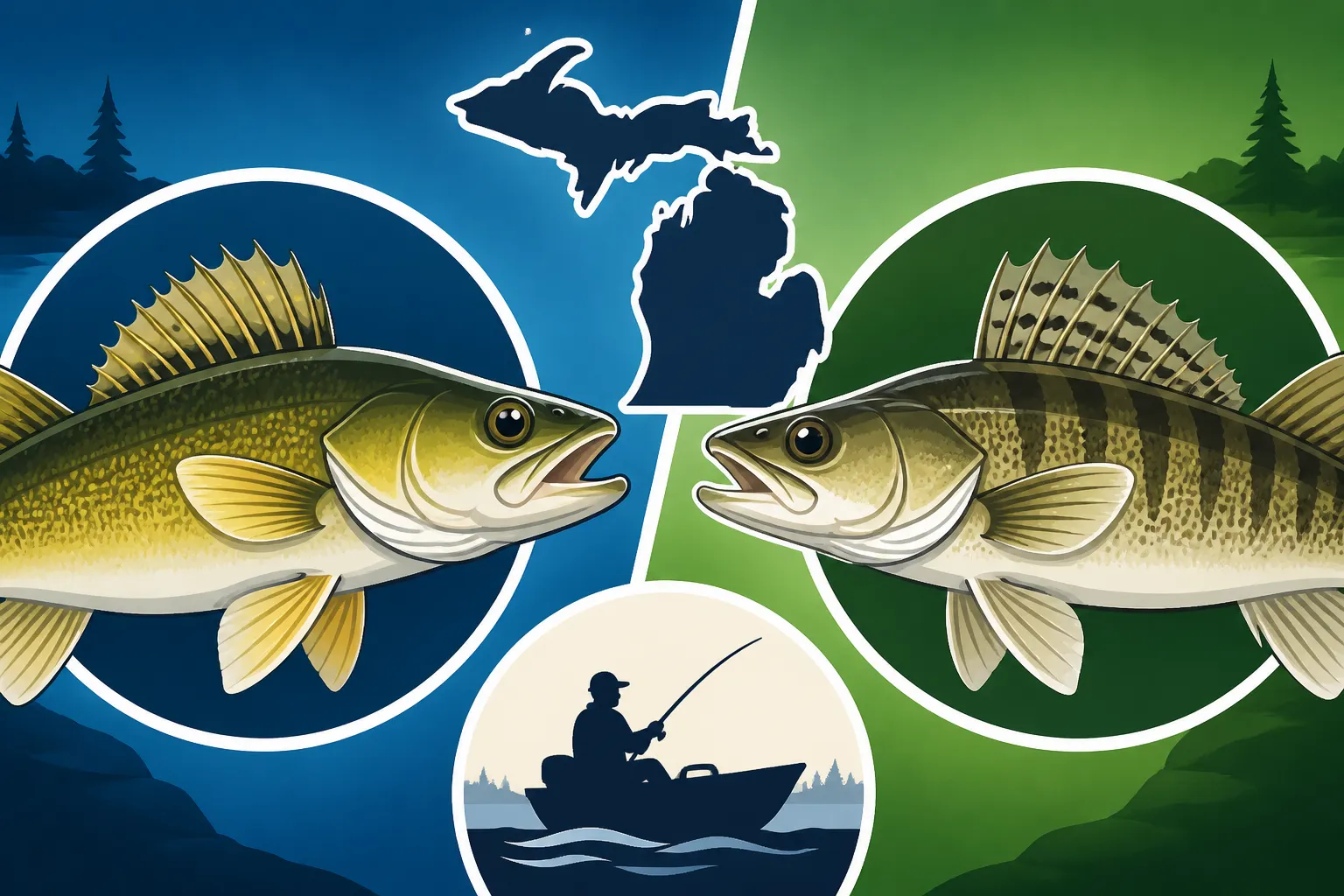
- Walleye: The spiny dorsal fin of a walleye is typically quite plain. You might see some faint mottling, but generally, it lacks prominent black spots. Another critical feature for walleye is that the spiny dorsal fin and the soft dorsal fin are usually separate. There's a clear gap between them, almost like two distinct flags on their back.
- Sauger: This is where the sauger truly distinguishes itself. Its spiny dorsal fin will almost always have very distinct, dark spots arranged in clear rows, giving it a somewhat patterned or barred appearance. It's usually quite obvious once you know what to look for. Furthermore, the spiny dorsal fin of a sauger is often connected to the soft dorsal fin by a membrane, or the gap between them is very narrow, making them appear almost as one continuous fin. If you run your finger lightly along the back, you'll feel the difference.
Body Shape and Coloration
While less definitive than the dorsal fin, body shape and coloration can offer additional hints, especially when considered alongside other features.
- Walleye: Walleye tend to have a more uniform, cylindrical body shape. Their coloration is usually a golden-olive to brownish hue on their back, fading to a lighter, often white or cream belly. The sides might show some darker blotches or saddles, but they are typically less pronounced and more integrated into the overall body color. They can look quite beautiful, especially vibrant ones caught from clear water. This general pattern helps them blend into rocky or sandy bottoms.
- Sauger: Sauger often appear a bit more slender or "streamlined" than walleye. Their most striking color characteristic is the presence of several distinct, dark, saddle-like blotches or markings that run down their sides, breaking up their lateral line. These markings are usually much more defined than anything you'd see on a walleye and provide excellent camouflage in the turbid waters they often inhabit. Their overall color tends to be more bronze or yellowish-brown, helping them disappear against muddy riverbeds.
Tail Fin and Pectoral Fin Details
Don't forget to look at the fins beyond the dorsal! The caudal (tail) fin and the pectoral fins can also provide clues.
- Walleye: A classic identifier for a walleye, particularly younger fish, is a distinct white tip on the lower lobe of its caudal (tail) fin. It's almost like the fish dipped its tail in white paint. This white patch can be quite prominent and is often one of the first things experienced anglers look for. Their pectoral fins are typically clear or faintly colored.
- Sauger: Sauger, by contrast, generally lack this prominent white tip on their tail fin. The tail might be mottled or have some darker markings, but you won't see that characteristic bright white patch. Their pectoral fins often have more defined spotting or banding, which again, contributes to their camouflaged appearance in murky water.
Sometimes, it takes looking at all these features together to make a conclusive identification. If you're still not sure, don't worry – even seasoned anglers can pause for a moment when they pull up a particularly ambiguous specimen. Many anglers find it helpful to carry a small, waterproof field guide, easily available on Amazon, to double-check these features on the spot.
Habitat and Distribution Clues in Michigan
Beyond physical characteristics, knowing where you caught your fish can provide a strong clue about its identity. Walleye and sauger, while both native to Michigan, tend to have different preferences when it comes to their aquatic homes. These habitat choices influence where you're more likely to encounter each species, giving you an environmental "tell."
Where Walleye Prefer to Live
Walleye are perhaps Michigan's most iconic game fish, and for good reason! They thrive in a variety of environments but generally prefer large, deep, and often clearer bodies of water. Think of the vast expanse of the Great Lakes, where they congregate in impressive numbers, or the sprawling inland seas like Lake Gogebic or Houghton Lake. These waters offer the deeper, cooler temperatures they favor, especially during the warmer months, and often have rocky or gravel bottoms where they spawn.
In Michigan, you'll find walleye in abundance across the Great Lakes system, particularly in areas like Saginaw Bay on Lake Huron or the numerous bays and reefs of Lake Michigan. They are also prevalent in many of Michigan's larger inland lakes and the wider, slower stretches of rivers with good depth. If you're fishing in these classic walleye locales, like some of the Best Waters for Michigan Walleye, and you're catching fish with golden sides and that tell-tale white tail tip, you're almost certainly targeting our beloved walleye. They're often found hugging the bottom during the day and moving into shallower feeding flats during low light conditions.
Where Sauger Tend to Be Found
Sauger, while also found in Michigan, typically prefer a slightly different type of environment. They are more commonly associated with rivers that have a moderate to strong current, and often those with murkier or more turbid water. While you can find them in some larger lakes, especially near river mouths or areas with significant current, they truly shine in riverine systems.
Consider rivers like the Grand River, the St. Clair River, or other larger tributaries that feed into the Great Lakes. These environments, with their constant flow and often sediment-rich waters, provide the ideal conditions for sauger. They use the current to their advantage, often lurking behind structures or in deeper pockets, ambushing prey as it drifts by. If you're drifting jigs or bouncing bottom baits in a moderately flowing, somewhat cloudy river, and you're consistently catching fish with distinct saddle markings and spotted dorsal fins, there's a good chance you've landed a sauger. While Best Rivers for Trout and Steelhead in Michigan focuses on different species, it highlights the importance of river systems as distinct habitats for many of Michigan's fish.
Overlap Zones and Hybrids
Of course, nature rarely draws perfectly straight lines, and there are areas in Michigan where walleye and sauger can be found in the same waters. River mouths, large river systems flowing into lakes, or even certain bay areas can see both species coexisting. This is where identification becomes even more critical, as you can't rely solely on location.
To add another layer of complexity, there's also the "saugeye." This is a hybrid fish, a cross between a walleye and a sauger, usually occurring where both species are present and sometimes even stocked intentionally in other states. While less common to encounter naturally in Michigan compared to pure walleye or sauger, they do exist. A saugeye will often display a mix of characteristics from both parents, making identification even trickier. They might have faint dorsal spots and a less pronounced white tail tip, for example. If you're consistently catching fish that don't quite fit either description, you might be dealing with a saugeye. Learning to distinguish them adds to your angling expertise, and it's a good idea to know Do Walleye and Sauger Interbreed? to understand this possibility.
Practical Tips for On-the-Water Identification
You've hooked a fish, brought it to the boat or shore, and now the moment of truth arrives. How do you quickly and confidently identify it as a walleye or a sauger without a marine biologist on speed dial? With a few simple steps and a handy reference, you can become adept at distinguishing these two species in the heat of the moment.
Quick Check List for Anglers
Having a mental checklist, or even a printed one tucked into your tackle box, can make all the difference. When that fish is thrashing, time is often of the essence, especially if you plan to release it. Here’s a quick-reference guide to help you make a speedy and accurate identification:
| Feature | Walleye | Sauger |
|---|---|---|
| Dorsal Fin (Spiny) | Usually clear/spotless or very faint mottling | Distinct black spots in rows |
| Dorsal Fin (Connection) | Two dorsal fins are usually separate | Spiny dorsal often connected to soft dorsal |
| Tail Fin | Prominent white tip on the lower lobe | No distinct white tip |
| Body Markings | More uniform golden-olive/brown, subtle blotches | Distinct dark saddle blotches on sides |
| Pyloric Caeca | 3-5 long, finger-like projections (internal) | 7-10 shorter projections (internal) |
| Habitat Tendency | Deeper, clearer lakes and larger rivers | Shallower, turbid rivers with current |
This table provides the most reliable external indicators. The pyloric caeca are internal organs (part of the digestive system) and not something you'd check on a catch-and-release fish, but it's a scientific distinction often used for detailed identification. For us anglers, the fins and body markings are the primary visual cues. You might consider marking up a waterproof card from Amazon with these key differences to keep with your gear.
Photography and Reference Guides
Even with the best intentions and a sharp eye, sometimes a fish just doesn't cooperate, or you might catch one that has characteristics that seem to blur the lines. That's why I always recommend two essential tools for on-the-water identification: your phone's camera and a good reference guide.
First, take a clear photograph of the fish, especially focusing on its dorsal fins, tail fin, and the overall body markings. Get a few angles if you can. This allows you to safely release the fish (if you're planning to) and then examine the photo at your leisure, perhaps after the excitement has subsided. Many times, reviewing a still image lets you spot details you missed while the fish was active.
Second, invest in a reliable fish identification guide specific to Michigan or the Great Lakes region. You can find excellent waterproof versions on Amazon or at local tackle shops. These guides often feature detailed illustrations or photographs that highlight the key differences between similar species. Comparing your photo to the images in a guide is an incredibly effective way to confirm your identification. Some anglers even prefer to download a fishing app, such as the Michigan's DNR Hunt Fish App for Licenses and Reporting, which often includes fish identification tools and the latest regulations, making it an indispensable digital companion on your trips. Don't be shy about asking fellow anglers either; often, local knowledge can be invaluable for species identification, especially if you're fishing a new body of water. Confident identification not only helps you follow the rules but also deepen your understanding of the incredible diversity of fish species Michigan's Most Popular Fish Species has to offer.
Disclaimer
This article is for general informational purposes only and does not constitute professional advice. Laws, prices and regulations vary by location and change over time. Consult a qualified professional for guidance on your specific situation.