Michigan Bag and Size Limits Explained
The maze of Michigan's fishing regulations can feel overwhelming, can't it? You just want to enjoy a relaxing day on the water, but the constant worry about whether your prized catch is legal, or if you're over the limit, can really put a damper on things. It's frustrating to juggle different rules for different lakes, rivers, and even specific species. This comprehensive guide is here to untangle all that complexity, making Michigan's fishing bag and size limits clear, digestible, and easy to understand so you can fish with confidence.
Why Michigan's Fishing Limits Matter So Much
When you're out on the vast waters of the Great Lakes or exploring a peaceful inland stream, it's easy to think that one more fish won't make a difference. But the truth is, Michigan's fishing limits aren't just arbitrary rules designed to make your life harder. They are carefully crafted regulations that are absolutely crucial for maintaining the health and abundance of our cherished fisheries. Ignoring them isn't just a minor oversight; it has real, tangible consequences for both the ecosystem and your wallet.
Protecting Our Fisheries for Future Generations
Think about it: our fish populations face a lot of pressure, not just from anglers but also from environmental changes, habitat loss, and even invasive species. Bag and size limits are like the speed limits of the fishing world – they ensure that enough fish survive to reproduce and replenish the populations. For example, minimum size limits on species like walleye or bass mean that juvenile fish have a chance to grow, mature, and spawn at least once before they can be harvested. This is especially vital for larger, predatory fish that take longer to reach sexual maturity. Without these rules, we'd quickly see declines in fish numbers, leading to less enjoyable fishing trips for everyone, and potentially irreversible damage to the ecological balance of our waters. It's a collective responsibility, and every angler plays a part in keeping our lakes and rivers thriving for years to come.
Avoiding Costly Fines and Legal Trouble
Let's be honest, nobody wants to end a great day of fishing with a conversation with a conservation officer that results in a hefty ticket. Fishing without understanding the rules can lead to serious fines, confiscation of your catch, and even impoundment of your gear. Michigan takes its natural resources seriously, and the penalties for violating bag and size limits can be significant. Imagine catching a beautiful walleye, only to find out it's an inch too short for the specific lake you're on, or you've accidentally kept one too many. These are honest mistakes, but ignorance of the law is rarely an excuse. That's why having a solid grasp of these regulations, and perhaps even keeping a copy of the annual Michigan Fishing Regulations Every Angler Should Know handy, is not just good practice – it's essential for a stress-free fishing experience.
Understanding the Basics: Daily vs. Possession Limits
One of the most common sources of confusion for anglers, especially those new to Michigan or visiting from out of state, is the difference between daily and possession limits. It sounds simple on the surface, but the nuances can catch you off guard. Getting these two concepts straight is fundamental to staying compliant and enjoying your fishing adventure without any unwelcome surprises.
What is a Daily Limit Really?
The daily limit, sometimes referred to as the "daily creel limit," dictates the maximum number of a specific fish species you can keep in a single calendar day. This limit applies to you, the individual angler, and it resets at midnight. So, if the daily limit for walleye is five, you can catch and keep up to five walleye between 12:00 AM and 11:59 PM. However, here's the kicker that often trips people up: once you have those five walleye in your possession, you generally cannot continue to fish for walleye that day, even if you plan to release them. This rule is in place to prevent "high-grading," where anglers might catch and release smaller fish in hopes of catching larger ones, putting undue stress on the population. Always assume that once your daily limit is met, your fishing for that species is done for the day unless specifically stated otherwise in the regulations (which is rare for daily limits). This concept is crucial, and it’s one of the Michigan Daily Bag Limits by Species that anglers need to memorize.
Deciphering the Possession Limit
Now, the possession limit is where things can get a bit more complex, especially if you're on an extended fishing trip. The possession limit refers to the total number of a specific species you can have in your possession at any given time, whether on your person, in your boat, in your vehicle, at your camp, or even at home. Often, the possession limit is the same as the daily limit, or it might be twice the daily limit. However, for some species, like muskellunge, the possession limit is dramatically different – often one per year!
Let's illustrate with an example: if the daily limit for a certain species is five, and the possession limit is ten, you could theoretically catch five on Monday, and if you haven't eaten or processed them, you could catch another five on Tuesday, bringing your total to ten. But once you have ten, you cannot catch any more until some of those fish are consumed, given away, or otherwise disposed of, bringing your total possession below the limit. This rule is particularly important for multi-day trips. Always be mindful of the cumulative total of fish you have. If you're heading home after a fantastic few days of fishing and your cooler is full, ensure the total number of fish doesn't exceed the possession limit for that species, regardless of how many days you spent catching them.
General Statewide Bag and Size Limits for Popular Species
Michigan is a truly incredible state for fishing, boasting an immense diversity of freshwater species. While specific bodies of water often have their own unique rules, understanding the general statewide bag and size limits for the most popular game fish is your foundational knowledge. These are the fish you're most likely to encounter, and knowing these basics will keep you out of trouble more often than not.
Walleye: The Coveted Catch
Ah, walleye! The elusive, delicious fish that many Michigan anglers dream of catching. Statewide, the general rule for walleye is a daily possession limit of five fish per person. But here's where it gets tricky: the minimum size limit is usually 15 inches. This means any walleye you keep must be at least 15 inches long.
However, Michigan is renowned for its specific walleye regulations on certain bodies of water. For example, some lakes might have a protected slot limit, where you can keep fish under a certain size and over a larger size, but not in between. Other waters might have increased minimum size limits to protect trophy fisheries. For instance, parts of the Detroit River and Lake Erie might have slightly different nuances due to their unique fish populations and fishing pressure, or perhaps different seasonal rules apply to the Lower Peninsula Trout and Walleye Opener compared to the Upper Peninsula Walleye Season Opener. Always, and I mean always, check the current Michigan Fishing Guide for the specific body of water you intend to fish. A small measuring board, easily found on Amazon, is an indispensable tool here to quickly verify your catch's length before it goes into the livewell or cooler.
Bass: Largemouth and Smallmouth Rules
Bass fishing in Michigan offers thrilling action, particularly for the feisty smallmouth and the hard-fighting largemouth. Generally, for both largemouth and smallmouth bass, the statewide daily possession limit is five fish in total, combined. The minimum size limit for bass is typically 14 inches.
However, just like with walleye, bass regulations can vary significantly depending on the season and the specific water body. During the closed season (usually a good portion of the spring), bass fishing might be strictly catch-and-release only, or completely prohibited. Some lakes might have higher minimum size limits or reduced daily limits to foster trophy bass populations. For instance, the renowned smallmouth bass fisheries in places like Lake St. Clair or specific inland lakes might have special regulations to protect their unique populations. It's not uncommon to find areas where the minimum size is 18 inches, or where the daily limit is only one or two fish. Always consult the local regulations carefully to ensure you're compliant with the Michigan Smallmouth and Largemouth Bass Daily Limit for your chosen fishing spot.
Yellow Perch: A Panfish Staple
Yellow perch are a favorite among Michigan anglers, known for their delicious taste and willingness to bite. They are often targeted during all seasons, including ice fishing. Statewide, the general daily possession limit for yellow perch is quite generous: 25 fish per person. There is typically no minimum size limit for yellow perch on most waters, making them a fantastic target for family fishing trips where quantity can be as exciting as size.
However, like all rules, there are exceptions. Some specific lakes or regions, particularly those experiencing heavy fishing pressure or with unique management goals, might have reduced daily limits or even a minimum size. A prime example is the Michigan Yellow Perch Limit on Lake St. Clair, where specific rules are often in place due to its immense popularity and unique ecosystem. These localized adjustments are vital for preventing overfishing in specific areas. If you're heading to a well-known perch hotspot, take an extra moment to verify the local rules in the Michigan Fishing Guide to avoid any surprises.
Northern Pike and Muskellunge: The Freshwater Giants
Michigan is home to two formidable predators: the northern pike and the muskellunge (or muskie). These toothy giants demand respect, and their regulations reflect their slower growth rates and importance as top predators.
For northern pike, the statewide daily possession limit is generally five fish per person, with a minimum size limit of 24 inches. However, there are numerous exceptions for pike, particularly in the Upper Peninsula, some inland lakes, and parts of the Great Lakes where slot limits or higher minimum sizes apply. You might find "no minimum size" rules on specific lakes struggling with overpopulation of smaller pike, or conversely, 30-inch minimums on waters managed for trophy pike.
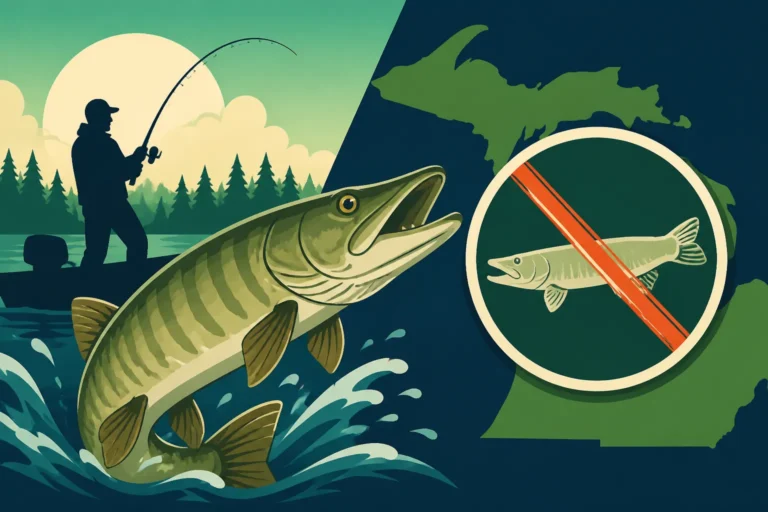
Muskellunge are in a league of their own. They are truly the fish of a thousand casts, and their regulations are designed to protect these incredible, long-lived fish. Statewide, the daily possession limit for muskellunge is typically one fish per season, with a substantial minimum size limit of 42 inches. For certain waters managed for trophy muskies, this minimum size can be even higher, sometimes up to 50 inches. This means that if you're lucky enough to catch and keep a legal muskie, your muskie season is generally over for the year. Additionally, Michigan has strict Michigan Muskellunge Harvest Reporting Rules that require you to register your catch within 24 hours. Given their size, it's wise to have a sturdy tape measure and a reliable scale, perhaps a digital one from Amazon, on board to ensure your trophy meets all requirements before you decide to keep it.
| Species | Statewide Daily Limit | Statewide Minimum Size (Inches) | Common Exceptions/Notes |
|---|---|---|---|
| Walleye | 5 | 15 | Slot limits or higher minimums on specific waters; check local regs. |
| Largemouth/Smallmouth Bass | 5 (combined) | 14 | Closed seasons, higher minimums on certain lakes (e.g., Lake St. Clair); check local regs. |
| Yellow Perch | 25 | None | Reduced limits on specific, heavily fished waters like Lake St. Clair. |
| Northern Pike | 5 | 24 | Varies widely by water body, including no size limit or higher minimums. |
| Muskellunge | 1 (per season) | 42 | 50-inch minimum on certain trophy waters; mandatory harvest reporting. |
| Trout (Inland) | 5 (combined) | 8, 10, or 12 | Highly varied by stream/river; check specific regulation tables. |
| Salmon (Great Lakes) | 5 (combined trout/salmon) | 10 | Some species have specific limits within the combined total; see Great Lakes regs. |
Trout and Salmon: Navigating the Great Lakes and Inland Waters
Michigan is a global destination for trout and salmon fishing, offering incredible opportunities whether you prefer the solitude of a small inland trout stream or the thrill of trolling for salmon on the vast Great Lakes. However, because of the diverse habitats and life cycles of these species, their bag and size limits are among the most intricate and require careful attention. Don't assume a rule for one river applies to another, or that Great Lakes rules are the same as inland.
Inland Trout Stream Regulations
For inland trout streams, the regulations are exceptionally granular. You'll find different rules based on the specific stream, or even different sections of the same stream. Some streams are designated "Type 1" through "Type 4," each with its own set of rules regarding daily limits, minimum sizes, and even legal methods (e.g., artificial lures only, or flies only).
Generally, for brook, brown, and rainbow trout in inland waters, the daily possession limit is often five fish, but usually with a maximum of three fish over a certain size, such as 10 or 12 inches. Minimum size limits can range from 8 inches to 12 inches, depending on the stream classification. For example, some famous rivers like the Au Sable or Pere Marquette will have highly specific regulations for different sections, including areas designated "flies only" or "single-hook artificial lures only." These are often designed to protect wild, naturally reproducing trout populations. Always consult the detailed inland trout stream tables in the Michigan Fishing Guide before you hit the water. This is where a detailed review of the Michigan Statewide Minimum Size Limits comes in handy, especially when comparing different types of streams.
Great Lakes Trout and Salmon Rules
Fishing for trout and salmon on the Great Lakes (Lakes Michigan, Huron, Superior, and Erie) is an entirely different ballgame with its own set of rules. The seasons are often open year-round, which is a fantastic perk. Here, the regulations frequently revolve around a combined daily possession limit for all trout and salmon species.
Typically, the combined daily limit for all trout and salmon species (Chinook salmon, Coho salmon, Atlantic salmon, lake trout, brown trout, and rainbow trout/steelhead) on the Great Lakes is five fish. However, within this combined limit, there are often sub-limits for specific species. For instance, you might be limited to three lake trout within your five-fish combined limit, or two Atlantic salmon. The minimum size limit for most salmon and trout species on the Great Lakes is generally 10 inches, though lake trout often have a 15-inch minimum.
For specific species like Chinook and Coho salmon, there isn't typically a separate limit beyond the combined trout/salmon total. However, the number of Atlantic salmon is very tightly managed due to their recovery efforts, especially in Lake Huron. Always check the specific Great Lakes section of the fishing guide. Understanding the Michigan's Combined Trout and Salmon Possession Limit is crucial to ensure you're compliant when you have a mixed bag in your cooler.
Important Combined Possession Limits
Beyond the specific daily and possession limits for individual species, Michigan also employs "combined possession limits" that lump together certain groups of fish. We just touched on the combined trout and salmon limit on the Great Lakes, but there are other examples. For instance, "panfish" (like bluegill, crappie, and sunfish) might have a very generous daily limit, but it might be a combined total for all species in that group.
These combined limits are designed to prevent anglers from taking an excessive number of fish, even if they stay under the individual species limits. It's about overall resource management. Always read the fine print in the regulations to see if the species you're targeting falls under any combined limits. It's another layer of complexity, but one that helps maintain healthy fish populations across the state.
Species-Specific Deep Dives and Exceptions
While we've covered the general statewide rules and some specific categories, Michigan's fishing regulations are truly a mosaic of rules tailored to protect and manage individual fish populations. Delving into some more niche or unique regulations can help you avoid unexpected issues and enhance your understanding of the state's conservation efforts.
Crappie and Bluegill: Panfish Limits
Crappie (both black and white) and bluegill are quintessential Michigan panfish, offering accessible and enjoyable fishing for anglers of all ages. Their popularity means they are heavily fished, and thus, their regulations are important. Generally, for crappie and bluegill, there is a very generous combined daily possession limit of 25 fish per person. In most cases, there is no minimum size limit for these species, allowing anglers to keep a good number of delicious fillets for the dinner table.
However, like all panfish, localized exceptions exist. You might find a specific lake where managers are trying to grow larger bluegill or crappie, and they might implement a modest minimum size limit (e.g., 7 or 8 inches) or a reduced daily limit. These are usually clearly marked in the special regulations section for that particular body of water in the Michigan Fishing Guide. For anyone thinking about a family outing, panfish often provide consistent action, and knowing these broad limits, with an eye out for any local changes, is key to a successful day.
Spearing and Netting Specifics (Suckers, Carp)
Fishing in Michigan isn't just about rod and reel. There are traditional and alternative methods like spearing and netting, particularly for certain "rough fish" or "commercial species" such as suckers and carp. The rules for these methods are quite distinct from typical rod-and-reel fishing and are often geared towards removal or harvest of abundant species, or traditional practices.
For suckers and carp, spearing is often permitted during specific seasons, usually in the spring when suckers run up rivers to spawn. The daily possession limits for these species when spearing or netting are typically very liberal, sometimes with no daily limit at all, or a very high number. There are generally no size limits. However, the methods are strictly regulated. You can only spear during daylight hours on certain waters, and specific types of spears or nets might be required or prohibited. Always double-check the "General Regulations" and "Special Regulations" sections for spearing and netting rules in the Michigan Fishing Guide, as these can change annually and are very specific to location and time of year.
Special Rules for Less Common Species
Michigan's waters are teeming with various fish, and while walleye, bass, trout, and salmon get most of the attention, there are regulations for many other species too. For example, species like channel catfish often have a daily limit of 10 fish, with no minimum size. Lake whitefish and cisco (lake herring), important commercial and recreational species in the Great Lakes, have their own specific regulations regarding daily limits and methods, especially for those using gill nets or specialized gear.
Additionally, regulations exist for less commonly targeted species like rock bass, redhorse, bowfin, and gar, often falling under very generous general panfish-like rules or even having no limits at all. The key takeaway here is: if you're targeting a species not explicitly listed under the major game fish, always assume there's a rule. A quick check of the "General Regulations" section in the Michigan Fishing Guide is always a good idea. Having a fish identification guide on hand, perhaps a laminated one from Amazon for quick reference, can be incredibly helpful for identifying species and then looking up their specific rules.
Navigating Water Body Specific Regulations
One of the biggest pitfalls for Michigan anglers is assuming that statewide rules apply everywhere. Michigan is a vast state with incredibly diverse aquatic ecosystems, and fisheries managers frequently implement specific regulations for particular lakes, rivers, or sections of rivers. These localized rules are critical for managing unique populations, protecting sensitive spawning grounds, or addressing specific fishing pressures. Missing these can lead to unintended violations.
Great Lakes Specifics: Lake Michigan, Huron, Superior, Erie
Each of Michigan's Great Lakes—Michigan, Huron, Superior, and Erie—has its own set of nuances within the broader Great Lakes regulations. While there are overarching rules for trout and salmon on the Great Lakes, specific bays, harbors, or even entire lakes can have their own distinct provisions.
For example, Lake Erie is famous for its walleye fishery, and while the general Great Lakes trout and salmon rules apply, walleye limits and seasons here can sometimes differ slightly due to the immense pressure and shared management with Ohio. Lake Superior, with its colder waters and unique ecosystem, might have specific limits for species like brook trout, often with different size limits than elsewhere, like the Lake Superior Brook Trout Size Limit. Lake Huron, particularly Saginaw Bay, is a walleye powerhouse, and while the 5-fish, 15-inch rule usually applies, specific enforcement or seasonal considerations might be highlighted. Lake Michigan also has its own intricacies, especially around salmon runs into tributary rivers. When fishing any of the Great Lakes, it's not enough to know the general rules; you need to look at the specific Great Lake section of the Michigan Fishing Guide and any boundary water agreements if you're near a state or international border.
Inland Lake and River Exceptions
This is where things can get truly localized. Nearly every major inland lake and many rivers have the potential for unique, site-specific regulations. These are often implemented to address specific conservation needs, enhance particular fisheries, or deal with environmental factors.
Consider Lake St. Clair, renowned for its smallmouth bass and muskellunge fisheries. While the statewide bass limit might be five, Lake St. Clair often has specific, more restrictive bass regulations to protect its world-class fishery. Similarly, the Michigan Yellow Perch Limit on Lake St. Clair can differ from the statewide norm. For trout streams, as mentioned earlier, the variations are even more pronounced. A river like the Manistee or Au Sable might have miles of water under general regulations, but then a special "quality water" or "flies-only" section with reduced limits and higher minimum sizes. These specific regulations are usually listed in tables or special notes in the Michigan Fishing Guide, often organized by county or water body name. It’s absolutely vital to check the exact lake or river you plan to fish to ensure you're aware of any localized variations.
Boundary Water Rules and Interstate Agreements
Fishing on waters that border other states or Canada adds another layer of complexity. Michigan shares significant water bodies with Wisconsin, Indiana, Ohio, and Ontario (Canada). When fishing these boundary waters, such as parts of Lake Michigan, Lake Erie, or the St. Marys River, anglers might be subject to agreements between the jurisdictions.
Often, there are reciprocal agreements where a license from one state might be valid in certain boundary waters, but the fishing regulations (bag and size limits, seasons) might be a hybrid of both states, or a special unified set of rules. For example, specific sections of the St. Joseph River that flow into Indiana might have shared regulations, or the rules for fishing Lake Erie might be harmonized with Ohio's regulations in certain areas. These situations are very specific and are always detailed in the "Boundary Water Fishing Rules" section of the Michigan Fishing Guide. If you're planning to fish anywhere near a state or international border, you must consult this section, as the penalties for violating cross-jurisdictional rules can be severe. This often requires understanding Michigan's Boundary Water Fishing Rules on the Great Lakes and other shared rivers.
Practical Tips for Staying Compliant on the Water
Even with a thorough understanding of the regulations, practical application on the water can still pose challenges. Fumbling with a fishing guide while a fish is flopping on deck or trying to remember a specific rule when you're tired can lead to mistakes. Having the right tools and habits can make a huge difference in ensuring you stay compliant and avoid any unintentional violations.
Essential Gear for Measuring and Identifying
The first step to compliance is accurate measurement and identification. You can't know if a fish is legal if you don't know its length and species.
- Measuring Device: A rigid, marked measuring board is invaluable. Soft tape measures can stretch, leading to inaccurate readings. Many anglers attach a sturdy measuring board to their boat or tackle box for quick, hands-free measurement. You can find excellent options on Amazon that even float! Remember to lay the fish flat, nose against the stopper, and measure to the tip of the tail, typically with the tail pinched.
- Fish Identification Guide: If you're targeting multiple species, or fishing in new waters, a laminated, waterproof fish identification guide can be a lifesaver. Some species, like walleye and sauger, or largemouth and smallmouth bass, can look very similar, but have different size and bag limits. A quick visual check against a reliable guide can confirm your catch's identity.
- Scale (Optional but helpful): While not required for compliance, a small digital scale can be fun for weighing your catch and might be useful if certain rules pertain to fish weight (though this is rare for Michigan limits).
How to Quickly Reference Regulations in the Field
It's impractical to carry a bulky paper fishing guide everywhere, especially on a kayak or small boat. Fortunately, modern technology makes staying informed much easier.
- Michigan DNR Hunt Fish App: The absolute best tool for any Michigan angler is the official Michigan's DNR Hunt Fish App for Licenses and Reporting. This free app, available on iOS and Android, provides digital versions of your licenses and, critically, a full, searchable version of the current fishing regulations. You can pull it up on your phone, search by species or water body, and get instant access to the most up-to-date rules. It even works offline if you've downloaded the regulations beforehand. This is a must-have for every angler.
- Printed Summary: For those who prefer paper or fish in areas with no cell service, print out the specific pages of the Michigan Fishing Guide relevant to your target species and water body. Laminate them if possible to protect against water damage. Keep them in a tackle box or dry bag.
- Bookmark Key Pages: If you're using a digital PDF on a tablet or e-reader, bookmark the relevant sections for quick navigation.
Best Practices for Catch-and-Release
Even if you intend to keep a limit, you'll often catch fish you need to release due to size, species, or having already met your limit. Proper catch-and-release techniques are vital for the survival of those fish, ensuring they contribute to future populations.
- Minimize Handling: Reduce the time the fish is out of the water. Handle them gently with wet hands or a wet cloth.
- Use Barbless Hooks: Crushing the barb on your hook makes removal much easier and less damaging.
- Proper Hook Removal: Use needle-nose pliers or a de-hooking tool to remove hooks quickly. If the fish is deeply hooked, especially in the gills, it's often best to cut the line as close to the hook as possible rather than tearing the fish's internal organs trying to retrieve it.
- Revive the Fish: Hold the fish gently in the water, facing into the current, until it can swim away under its own power. Don't just toss it back; make sure it's strong enough to survive.
- Keep a Net Handy: A good, soft-mesh net is crucial for quickly landing fish and can minimize handling time, especially for large species like salmon or pike.
The Annual Regulatory Cycle and How to Stay Updated
Michigan's fishing regulations aren't set in stone for eternity. They are dynamic, evolving documents that are reviewed and updated annually by the Michigan Department of Natural Resources (DNR). These changes are not arbitrary; they are based on scientific data, population assessments, angler feedback, and conservation goals. Understanding this cycle and knowing where to find the most current information is paramount for any responsible angler.
When Do Regulations Change?
The Michigan fishing regulations typically operate on a cycle that begins on April 1st and runs through March 31st of the following year. This means that significant changes, if any, usually go into effect at the start of April. It's like the start of a new school year for fish rules.
However, don't assume that every rule changes every year. Many regulations remain consistent for several years, but others, particularly for specific waters or species experiencing management challenges, might see tweaks or even major overhauls. For example, a severe winter kill on an inland lake might prompt a temporary reduction in limits, or a successful stocking program might lead to a liberalization of rules. The important thing is that every April 1st should trigger a personal review of the new Michigan Fishing Guide to ensure you're up-to-date with any adjustments. Ignoring this annual refresh is a surefire way to accidentally fall out of compliance. This annual change means that every angler should be aware of the Michigan Fishing License Renewal Each Spring and associated rule updates.
Where to Find the Most Current Information
Staying informed is easier than ever with the resources provided by the Michigan DNR. There's no excuse for not having access to the latest regulations.
- Official Michigan Fishing Guide: This is your bible. The Michigan DNR publishes a new guide every year, typically available online as a PDF in late winter/early spring, and in print at license dealers, DNR offices, and many bait and tackle shops before April 1st. You can easily find the Michigan Fishing Regulations Digest PDF for 2026 (or the current year) directly on the DNR website. This document contains all bag limits, size limits, season dates, and special regulations for every body of water in the state.
- DNR Website: The Michigan DNR website (Michigan.gov/DNR) is a treasure trove of information. Beyond the full fishing guide, you'll find news releases about regulation changes, species-specific information, stocking reports, and fishing reports. It's a great habit to browse the fishing section of the DNR site periodically.
- DNR Hunt Fish App: As mentioned earlier, this app provides real-time access to the regulations, and it will update with the new rules once they become active. It’s an indispensable digital companion for any Michigan angler.
- Local Bait Shops and Charter Captains: Don't underestimate the value of local knowledge! Bait and tackle shop owners and experienced charter captains are often the first to know about localized regulation changes and can offer valuable insights. However, always cross-reference their advice with the official DNR guide.
By proactively reviewing the annual guide, utilizing the DNR app, and staying engaged with official sources, you can ensure you're always fishing responsibly and legally, contributing to the rich tradition of Michigan fishing for years to come.
Disclaimer
Please remember that fishing regulations, including bag and size limits, are subject to change. While every effort has been made to provide accurate and up-to-date information in this guide, it should not be considered a legal document. Always consult the official Michigan Fishing Guide published by the Michigan Department of Natural Resources (DNR) for the most current and authoritative regulations before you go fishing. Your license purchase supports conservation efforts, and knowing the rules protects our shared natural resources.