Chinook Salmon in Michigan’s Great Lakes
For many anglers in Michigan, the thought of reeling in a massive, hard-fighting Chinook salmon is the stuff of dreams. These powerful fish offer an unmatched thrill, but understanding their habits, habitats, and the best ways to target them can feel like a daunting task, especially with the vastness of the Great Lakes and their connecting rivers. This comprehensive guide aims to demystify Chinook salmon fishing in Michigan, offering seasoned advice and breaking down everything you need to know to pursue these magnificent fish.
The Lure of Chinook Salmon in Michigan's Waters
When you mention salmon fishing in Michigan, the Chinook, often called "Kings," usually steal the spotlight. There's a certain mystique around these fish, a combination of their incredible size, their fighting prowess, and the sheer challenge of landing one. Many anglers dedicate their entire season, or even their fishing careers, to chasing these majestic creatures across the Great Lakes and up their spawning rivers. It's not just about the catch; it's about the experience, the anticipation, and the pure adrenaline rush.
A Brief History: Why Chinook Thrive Here
It might surprise some, but Chinook salmon aren't native to the Great Lakes. They were first introduced back in the late 1960s, primarily to combat the exploding alewife population, an invasive forage fish that was causing ecological havoc. The experiment was a resounding success, and Chinook quickly established themselves, finding the cold, deep waters of Lake Michigan and Lake Huron particularly hospitable. They thrived on the abundant alewife, grew to impressive sizes, and rapidly became a cornerstone of Michigan's sport fishery. This deliberate introduction created an incredible opportunity for anglers, transforming the Great Lakes into a world-class salmon destination, offering fantastic opportunities for Michigan's Great Lakes Fishing Guide.
The success of the Chinook program wasn't just about controlling alewives; it was about creating an entirely new fishery that brought economic prosperity to many waterfront communities. Charter captains emerged, tackle shops boomed, and fishing tourism flourished. These fish adapted remarkably well, completing their life cycle by migrating up rivers to spawn, much like their Pacific ancestors. This annual migration provides both offshore and river anglers unique chances to target them. The commitment to stocking and managing these fish continues to ensure a healthy population for future generations of anglers.
The Thrill of the Fight: What Makes Them Special
Anyone who has hooked a large Chinook salmon will tell you it's an experience unlike any other. They are renowned for their powerful, explosive runs, often stripping hundreds of feet of line off a reel in mere seconds. It's a battle of strength and endurance, demanding the angler's full attention and skill. From the moment the rod doubles over to the final moments at the net, a King salmon fight is an adrenaline-fueled dance that tests both angler and gear. Their sheer mass, combined with their incredible strength, makes them a trophy catch for many.
Beyond the raw power, there's also the satisfaction of the chase. Chinook salmon are intelligent and can be elusive, requiring anglers to hone their techniques, understand bait presentations, and read the water effectively. Whether you're trolling deep offshore with a spread of lures or carefully presenting a fly in a river, the challenge of outsmarting a King is deeply rewarding. This species truly embodies the spirit of big-game freshwater fishing, and it’s why so many anglers eagerly await the Best Months for Salmon Fishing in Michigan each year.
Identifying Michigan's Chinook Salmon
Knowing your fish is crucial, not just for identification, but also for understanding regulations. While all salmon species in Michigan offer a great fight, Chinook have distinct features that set them apart. Being able to correctly identify a Chinook from other salmon or even larger trout ensures you're adhering to the rules and appreciating the specific characteristics of your catch.
Key Physical Characteristics
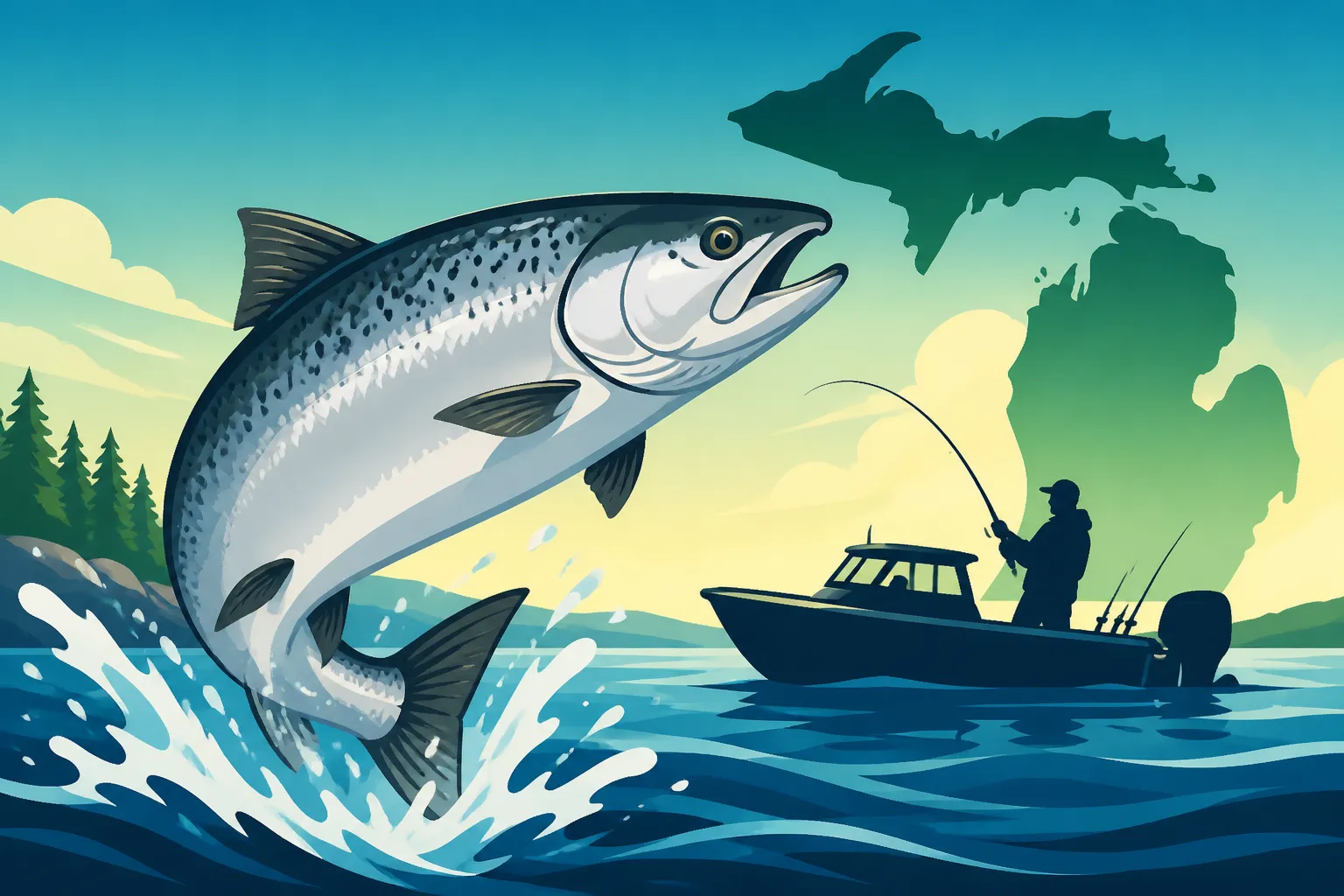
Chinook salmon are generally the largest of the Pacific salmon species found in the Great Lakes. They can grow to impressive sizes, often exceeding 20 pounds, with some true giants tipping the scales at over 30 or even 40 pounds. A mature Chinook typically has a dark, metallic blue-green back that fades into silvery sides and a white belly. One of the most reliable identification markers is the presence of black spots on both lobes of their caudal (tail) fin, as well as along their back and dorsal fin. Their gums are also a crucial indicator: Chinook have a black gum line at the base of their teeth, a feature not shared by other salmon species in the Great Lakes.
Their body shape is robust and powerful, built for speed and endurance, which becomes very evident during a fight. When they enter the rivers to spawn, their coloration changes dramatically, becoming darker, often with reddish or brownish hues, and developing a pronounced kype (hooked jaw) in males. These visual cues are essential for any angler to master, particularly when facing strict Michigan Bag and Size Limits Explained that can vary by species.
Distinguishing Chinook from Other Salmon Species
While Chinook are the undisputed kings in terms of size and power, Michigan's Great Lakes are also home to other fantastic salmon species like Coho salmon and, in Lake Huron, Atlantic salmon. Knowing the differences is important for both regulations and bragging rights!
Chinook vs. Coho Salmon:
Coho salmon are often confused with younger Chinook, as both share a silvery appearance. However, Coho are typically smaller, rarely exceeding 15 pounds, though larger ones are caught. The most significant visual differences are the spots on the tail: Coho salmon only have spots on the upper lobe of their caudal fin, not both. Their gum line is also different; Coho have a white or light-colored gum line at the base of their teeth, compared to the Chinook's black gum line.
Chinook vs. Atlantic Salmon (Lake Huron):
Atlantic salmon are less common in the Great Lakes compared to Chinook and Coho, primarily found in Lake Huron. They have a more slender body profile and smaller, more sparse spots, usually above the lateral line. Crucially, Atlantic salmon typically have a white or light-colored mouth and gum line, and their tail fin is typically unspotted or has very few spots, differentiating them from both Chinook and Coho.
Here's a quick comparison table to help you keep them straight:
| Feature | Chinook Salmon (King) | Coho Salmon (Silver) | Atlantic Salmon |
|---|---|---|---|
| Average Size | 15-30+ lbs, can exceed 40 lbs | 6-15 lbs, occasionally larger | 5-10 lbs, can reach 20+ lbs |
| Tail Spots | Black spots on both lobes | Black spots on upper lobe only | Few to no spots, more slender tail |
| Gum Line | Black | White or light | White or light |
| Body Color | Dark blue-green back, silvery sides | Bluish-green back, silvery sides | Slender, dark back, silvery sides |
| Mouth Color | Dark mouth with black gum line | White mouth with white gum line | White mouth with white gum line |
Understanding these distinctions will help you appreciate the diversity of Michigan Salmon Species Explained and comply with all necessary rules.
Where to Find Chinook Salmon in Michigan's Great Lakes
Chinook salmon are migratory fish, meaning their location changes throughout the year. They spend most of their lives in the vast, deep waters of the Great Lakes, feeding and growing, before making their annual journey into tributary rivers to spawn. Knowing these patterns is key to finding them, whether you prefer offshore trolling or wading a river.
Great Lakes Hotspots: Lake Michigan and Lake Huron
When Chinook aren't in the rivers, they're out in the big water, primarily Lake Michigan and Lake Huron. Lake Michigan, in particular, has long been considered the premier Chinook fishery, known for producing massive Kings year after year. These fish prefer cooler waters, typically congregating in depths where water temperatures are in the 40-50 degree Fahrenheit range. This often means offshore, sometimes miles from shore, in depths ranging from 60 to over 200 feet, depending on the thermocline and baitfish location.
Anglers targeting Kings on the Great Lakes often focus on specific areas known for their deep-water structure, sudden depth changes, or proximity to river mouths. Harbors and piers, especially in early spring and late summer, can also hold fish as they stage for their runs. Key ports along Lake Michigan include Ludington, Manistee, Frankfort, and Traverse City, while on Lake Huron, ports like Oscoda and Harrisville offer good opportunities. These large bodies of water require specialized gear and techniques, like those detailed in Trolling Gear for Michigan's Great Lakes, to effectively cover water and present baits at the correct depths. Often, anglers will utilize fish finders and downriggers to target specific depths where baitfish and salmon are concentrated.
River Runs: Seasonal Migrations
The most exciting time for many anglers is when the Chinook salmon leave the open waters of the Great Lakes and begin their spawning migration up Michigan's rivers. This typically starts in late summer, often in August, and peaks through September and into October. The rivers become teeming with these powerful fish, offering a different kind of angling challenge compared to offshore trolling. These "fall runs" are legendary and draw anglers from all over.
Major Chinook-producing rivers include the Manistee River, the Pere Marquette River, the Au Sable River, and the Muskegon River, among many others that feed into Lake Michigan and Lake Huron. As the fish move upstream, they become accessible to shore anglers, waders, and those fishing from boats using different methods. They are driven by an instinctual urge to spawn, and while they may not be actively feeding in the rivers as they do in the lakes, they can still be enticed to strike out of aggression or instinct. The sheer number of fish, combined with the power of a river current, makes for an unforgettable fight. For river anglers, understanding the specific runs and stages of the fish is critical for success, as outlined in articles like Michigan's Fall Salmon Run Fishing.
Peak Seasons and Best Times for Chinook Fishing
Timing is everything when it comes to Chinook salmon fishing in Michigan. Their migratory patterns and feeding habits dictate when and where you'll find them. Understanding these seasonal shifts allows you to plan your trips for the best possible success.
Spring and Summer Offshore Action
The Great Lakes Chinook salmon season kicks off in earnest in the spring, typically starting in April and May, as water temperatures begin to rise. In these early months, the salmon are often found closer to shore, sometimes in shallower water, as they follow baitfish schools. This can be a great time for boats to target them without having to travel too far offshore. As summer progresses into June and July, the Chinook move further out into the deeper, cooler waters of the main lake, following the thermocline where their primary food source, alewives, resides.
During the summer, offshore trolling is the name of the game. Anglers use elaborate spreads of rods, often employing downriggers, planer boards, and lead core line to present a variety of lures and baits at different depths. Early mornings and late evenings are often the most productive times, as low light conditions can encourage more aggressive feeding. Targeting structure like underwater points, drop-offs, and current breaks can also be highly effective. The summer months are when these fish are actively feeding and bulking up, making for strong, healthy fights. If you're looking to consistently hook into these big fish, knowing how to approach Trolling for Chinook Salmon on Lake Michigan during these months is paramount.
The Iconic Fall River Runs
Without a doubt, the fall is the prime time for many anglers to target Chinook salmon as they make their spawning runs into Michigan's rivers. This period typically begins in late August in the southernmost rivers and continues through September and into October further north. The rivers swell with large, powerful fish, driven by their ancient urge to reproduce. While their condition might degrade as they spend more time in freshwater, the sheer volume of fish and their aggressive nature make for incredible fishing.
During the fall runs, techniques shift from offshore trolling to river-specific methods. Anglers will drift spawn bags, beads (which some consider an artificial lure, but rules vary by water, so always check What Counts as an Artificial Lure Under Michigan's Trout Rules), or small crankbaits through deep holes, runs, and riffles where salmon stage. Fly fishing for these kings also becomes a popular, albeit challenging, pursuit. The key is to be present during the peak of the run, which can vary slightly year to year depending on water levels and temperatures. While catching these fish in the river, it's also a perfect time to hone your skills for other species, such as those targeted during the Fall Steelhead Run in Michigan Rivers, which often follows closely behind the salmon.
Effective Techniques and Gear for Chinook Salmon
Catching Chinook salmon requires a blend of specific techniques and robust gear, whether you're battling them in the expansive Great Lakes or in the intimate settings of a Michigan river. Investing in the right equipment and understanding how to use it will significantly increase your chances of success.
Great Lakes Trolling Strategies
For offshore Great Lakes Chinook, trolling is the most prevalent and effective method. This involves moving slowly through the water, pulling multiple lines with various baits and lures at different depths and distances behind the boat. A typical setup might include:
- Downriggers: These devices allow you to precisely lower baits to specific depths, crucial for targeting Chinook holding in the thermocline. You'll often run multiple downriggers, staggering depths to cover more of the water column. Downriggers for Michigan Great Lakes Trolling are an absolute game-changer.
- Planer Boards: These boards pull lines away from the boat, spreading out your lure presentation and allowing you to cover a wider swath of water without tangling lines. They are especially useful for running shallow-diving crankbaits or spoons higher in the water column.
- Lead Core and Copper Line: These specialized lines are weighted, allowing lures to dive to specific depths without external weights. They're often used to present baits at mid-depths or to get lures away from the boat.
- Lures: Spoons, flasher/fly combinations, and crankbaits are all highly effective. Popular spoon colors vary, but often include variations of greens, blues, silvers, and oranges, mimicking common baitfish. Experimentation is key to finding what the fish prefer on any given day. Many anglers find great success with renowned brands like those found on Amazon, offering a huge selection of trolling spoons and flashers.
Successful trolling also involves understanding boat speed, lure action, and scent. Often, small adjustments in speed (even half a mile per hour) can make a huge difference in getting a strike. Adding natural bait strips or artificial scents to your lures can also enhance their appeal.
River Fishing Tactics (Casting, Drifting)
Once Chinook enter the rivers, the game changes. Here, stealth and precise presentation are paramount. Anglers typically employ casting, drifting, or sometimes float fishing techniques.
- Drift Fishing: This involves allowing a natural bait (like a spawn bag or bead) or a small lure to drift naturally with the current through likely holding water, such as deep runs, pools, and current seams. The key is to use just enough weight to keep the bait near the bottom without dragging. This is a highly effective way to entice strikes from fish that are holding, even if not actively feeding.
- Casting and Retrieving: Small crankbaits, spinners, or even weighted flies can be cast across runs and retrieved. The erratic action of a crankbait or the flash of a spinner can trigger an aggressive reaction strike from a salmon defending its territory.
- Float Fishing (Centerpinning): A highly specialized and effective technique, particularly for steelhead, but also used for salmon. It involves using a large, buoyant float and a centerpin reel to achieve long, drag-free drifts of natural baits. This allows for excellent control and a very natural presentation in turbulent river currents.
Regardless of the technique, reading the river is critical. Look for obvious holding water: deep pools, the inside bends of rivers, behind large rocks or logs that break the current, and areas where currents merge. These are places where fish will rest or stage before continuing their journey upstream.
Essential Gear for Success
Whether you're on the lake or in the river, robust and reliable gear is a must for Chinook salmon. These fish are not to be underestimated.
- Rods and Reels: For offshore trolling, stout trolling rods with line counter reels spooled with heavy monofilament or braided line are standard. For river fishing, a medium-heavy to heavy spinning or baitcasting rod, typically 8-10 feet in length, provides the backbone needed for battling big fish and handling heavy current. A quality reel with a smooth, powerful drag system is non-negotiable. You can find excellent options for Best Rods and Reels for Michigan Fishing from trusted retailers.
- Line: Heavy monofilament (20-30lb test) or braided line (30-50lb test, often with a fluorocarbon leader) is common. The strength of these lines is necessary to withstand the powerful runs and abrasion against structure.
- Terminal Tackle: A variety of hooks, swivels, and weights will be needed. For river fishing, heavy-duty swivels prevent line twist, and sharp, strong hooks are essential to penetrate the tough mouths of salmon. Having a well-stocked tackle box with a variety of lures, weights, and leaders will keep you prepared for changing conditions, and a strong, large landing net is absolutely critical for safely bringing these powerful fish to hand. Many experienced anglers prefer specific brands available through Amazon for their durability and performance.
- Waders and Boots: If you're planning on wading rivers, a good pair of breathable waders and sturdy wading boots with good grip are essential for comfort and safety.
- Pliers and Hook Removers: Strong pliers and a dedicated hook remover are invaluable for safely unhooking fish, especially when practicing catch and release.
Understanding Regulations for Michigan Chinook Salmon
Michigan's fisheries are carefully managed to ensure sustainable populations for future generations. This means adhering to specific regulations regarding Chinook salmon is not just good practice, but a legal requirement. Ignorance of the law is never an excuse, so it's vital to stay informed.
Daily Bag and Size Limits
The most crucial regulations for Chinook salmon revolve around daily bag limits and minimum size limits. These limits can vary not only by species but also by specific water bodies and even change season to season. For Chinook salmon, Michigan typically has a specific daily possession limit as part of a broader salmon/trout aggregate limit. For instance, you might be allowed to keep a certain number of salmon and trout in total per day, with specific rules for individual species like Chinook. Minimum size limits are also common, ensuring that fish have a chance to mature and reproduce before being harvested.
It is absolutely imperative to check the current Michigan fishing regulations before you head out. These regulations are updated periodically, and what was true last year might not be true today. You can find these details in the official Michigan Fishing Regulations Every Angler Should Know digest, which is available online through the Michigan Department of Natural Resources (DNR) website or at license retailers. Pay close attention to any special regulations for specific rivers or sections of rivers, as these can differ from general Great Lakes rules.
Importance of the Michigan Fishing Regulations Digest
The Michigan Fishing Regulations Digest is your bible when it comes to legal angling in the state. It's a detailed document that covers everything from licensing requirements to specific species regulations, season dates, gear restrictions, and special rules for particular bodies of water. For Chinook salmon, you'll want to pay close attention to sections on:
- General Great Lakes regulations: These apply to the open waters of Lake Michigan and Lake Huron.
- Tributary regulations: Rivers often have different rules, especially during spawning runs. These might include tackle restrictions, specific season dates, or different bag limits.
- Catch-and-release guidelines: If you plan to release fish, understanding best practices for minimizing stress and injury is important for fish survival.
- Identification guides: The digest often includes visual aids to help differentiate between species, reinforcing what you've learned here about telling Chinook from Coho or Atlantic salmon.
Always carry a copy of the current digest, or have access to the digital version on your phone, whenever you're fishing. It's not just about avoiding fines; it's about being a responsible angler and contributing to the health of Michigan's incredible fisheries. You can also review broader topics like Michigan Fishing License Guide for Residents and Nonresidents and Michigan Bag and Size Limits Explained to ensure full compliance.
Disclaimer
This article is for general informational purposes only and does not constitute professional advice. Laws, prices and regulations vary by location and change over time. Consult a qualified professional for guidance on your specific situation.