How Big Do Lake Whitefish Get
As an angler here in Michigan, you've probably heard tales of some truly impressive catches, but also wondered about the more common realities. Many of us are curious about the true potential of the fish we target, and Lake Whitefish are no exception. This guide is dedicated to pulling back the curtain on just how big these beautiful, powerful, and often elusive fish can get in our beloved Michigan waters, helping you understand what to expect and what makes a real trophy.
Understanding Lake Whitefish Growth and Size in Michigan
It's a common question among anglers: exactly how big do Lake Whitefish get? You hear stories, you see pictures, but what's the typical catch, and what truly makes a giant? The answer, like with many fish species, isn't a single number. It's a range influenced by a whole host of environmental and biological factors. Lake Whitefish are slow-growing, long-lived fish, and their size can vary significantly depending on where they live and what resources are available to them.
Average Size vs. Trophy Catches
When you're out on the Great Lakes or some of Michigan's deeper inland waters, the average Lake Whitefish you're likely to encounter will typically fall into a respectable size range. Most anglers consistently catch fish in the 18 to 24-inch range, often weighing between 2 to 4 pounds. These are solid fish, offering good sport and excellent table fare. They're often caught jigging or on drop-shot rigs, especially in deeper pockets of the lakes where they forage along the bottom. You can find a wide variety of jigging spoons and drop-shot weights on platforms like Amazon that are perfect for targeting these average-sized whitefish.
However, the "trophy" category for Lake Whitefish is a different beast entirely. Michigan is renowned for producing some truly massive whitefish, particularly in the Great Lakes. We're talking about fish that push the scales past 8, 10, or even more pounds, often exceeding 28 or 30 inches in length. These are older, dominant fish that have managed to avoid predators and find abundant food sources for many years. Catching one of these giants is often the culmination of persistence, local knowledge, and sometimes, a little bit of luck. It's the kind of catch that gets talked about around the campfire for years, and rightfully so. The state record fish, for example, would dwarf even these impressive numbers, showcasing the ultimate potential of the species in our rich Michigan waters.
Factors Influencing Whitefish Growth
Several crucial factors play a role in determining how large a Lake Whitefish will grow over its lifespan. Understanding these can help you anticipate the size of fish you might encounter in different locations.
Firstly, food availability is paramount. Whitefish are primarily bottom-feeders, consuming a diet of aquatic insects, crustaceans, and small invertebrates like amphipods. Waters with a rich, diverse benthic community will support faster growth rates and larger fish. If a lake or bay has a thriving population of these food sources, the whitefish there tend to be healthier and grow bigger. Conversely, in areas with fewer food options or high competition, whitefish might mature at smaller sizes.
Secondly, water temperature and water quality are critical. Lake Whitefish are cold-water species, thriving in deep, oxygen-rich waters. The Great Lakes, with their vast expanses of cold, clean water, provide ideal conditions for whitefish to grow old and large. Inland lakes that are deep and maintain cold, oxygenated water throughout the summer will also host robust whitefish populations. Waters that are warmer or suffer from oxygen depletion, especially in deeper sections, will limit their growth potential and overall health. A good fish finder can help locate these cooler, oxygenated depths, and many models can be purchased through retailers like Amazon.
Finally, population density and genetics also play a significant role. In lakes with very high whitefish populations, competition for food can lead to stunted growth for individual fish. Conversely, in areas where populations are managed or naturally less dense, individual fish might have more resources, allowing them to grow larger. While less understood by the average angler, the genetic makeup of a local whitefish population can also influence the maximum size potential, with some strains naturally predisposed to larger growth than others. This is part of the mystery and allure of fishing, as you never truly know what genetic marvel might be at the end of your line!
Identifying Lake Whitefish and Distinguishing Them from Lookalikes
Before you can appreciate the size of a Lake Whitefish, you first need to be sure you've actually caught one! In Michigan, especially in the Great Lakes, we have several similar-looking species that can sometimes cause confusion. Knowing the key identification features of a true Lake Whitefish is essential, not just for bragging rights, but also for adhering to Michigan Fishing Regulations Every Angler Should Know and understanding Michigan Bag and Size Limits Explained.
Key Identification Features
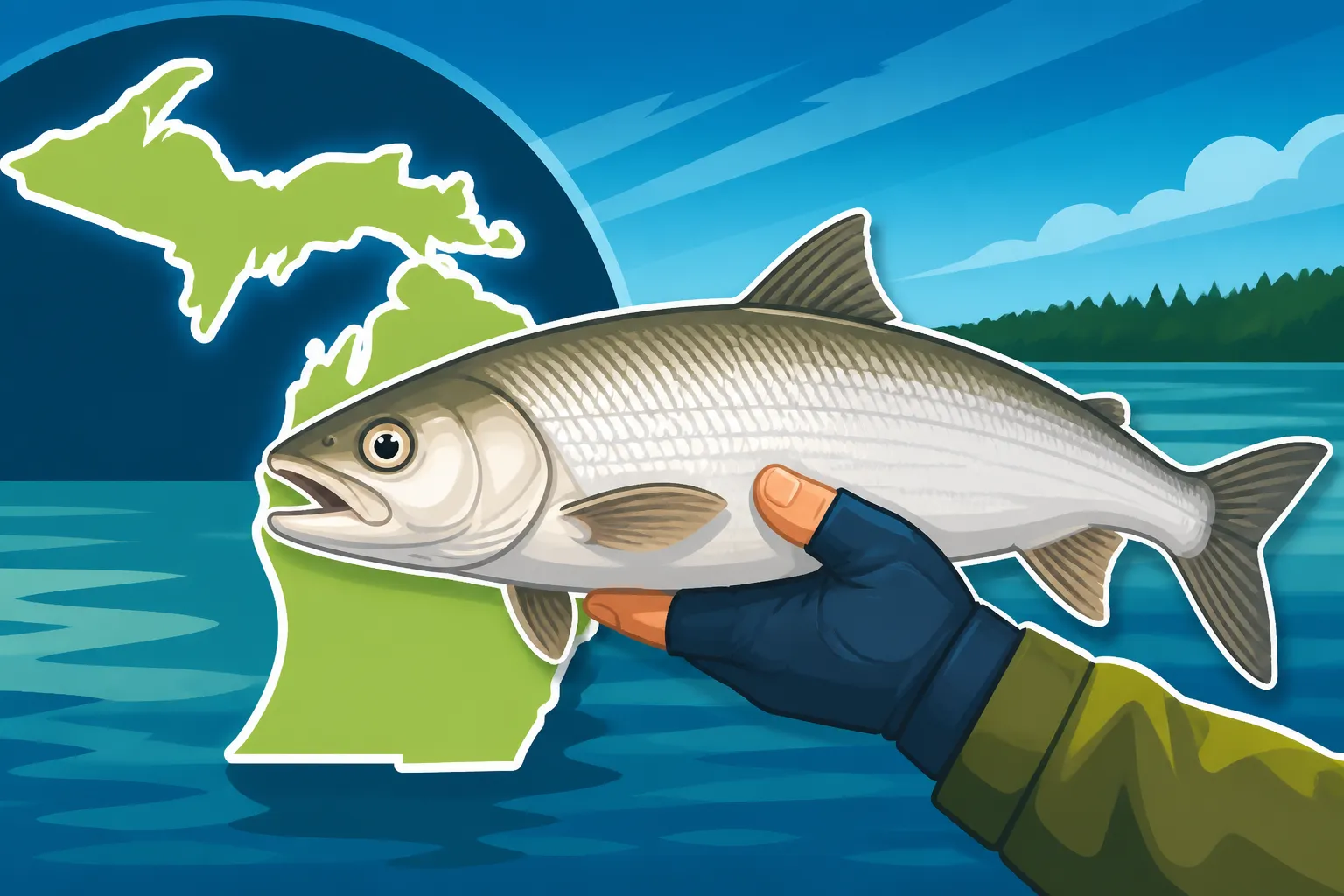
Lake Whitefish have a distinctive appearance that, once you know what to look for, makes them fairly easy to identify. Their body shape is generally streamlined and laterally compressed, often described as somewhat "cigar-shaped." The coloring is typically silvery, sometimes with a faint olive-green or brownish hue on the back that fades to white on the belly. Their scales are relatively large and smooth.
One of the most defining features is their small, inferior mouth, which means it's located under the snout and points downwards. This mouth is perfectly adapted for their bottom-feeding diet, allowing them to root around in the substrate for invertebrates. Unlike many other game fish, Lake Whitefish do not have teeth in their jaws, though they do possess small teeth in their throat (pharyngeal teeth). Their head is relatively small in proportion to their body. Another key identifier for members of the salmon family (which whitefish belong to) is the presence of an adipose fin, a small, fleshy fin located on the back between the dorsal fin and the tail fin. This fin is a dead giveaway for the family, distinguishing them from species like perch or walleye. Their tail fin is deeply forked.
Whitefish vs. Cisco (Lake Herring) vs. Other Similar Species
The most common confusion arises between Lake Whitefish and their close relatives, the Cisco, also known as Lake Herring. While both are members of the whitefish family and share some general characteristics, there are noticeable differences.
| Feature | Lake Whitefish | Cisco (Lake Herring) |
|---|---|---|
| Mouth Position | Small, inferior (under snout), points downward | Terminal (at the very front of the snout), points forward |
| Body Shape | Deeper, more "hump-backed" behind the head, robust | More slender, elongated, "torpedo-shaped" |
| Coloration | Silvery, olive-green back, white belly | Silvery, often with a more bluish-green back |
| Scales | Larger scales | Smaller scales |
| Greatest Depth | Typically deeper in relation to length | Shallower in relation to length |
The crucial distinction lies in the mouth. The Lake Whitefish has that small, underslung mouth, while the Cisco's mouth is more forward-facing or terminal, suggesting it feeds more in the water column than directly off the bottom. If you're unsure, gently feel inside the mouth – neither will have prominent teeth in the jaws.
Other species that might cause brief confusion, like Common Carp or even large suckers, are typically easily distinguished by their barbels (whisker-like appendages near the mouth), much larger scales, or different fin structures. Always refer to a reliable fish identification guide or the Michigan Fishing Regulations Digest PDF for 2026 if you're uncertain, as misidentification can lead to legal issues concerning limits and sizes. You can often find excellent laminated fish identification guides on Amazon that are perfect for keeping in your tackle box or boat.
Michigan's Lake Whitefish: Popular Waters and Fishing Prospects
Michigan truly is a fantastic state for anglers, and Lake Whitefish are a prime example of the incredible fishing opportunities available here. From the vastness of the Great Lakes to some unique inland gems, there are plenty of places to target these delectable fish, often with the chance of hooking into a real heavyweight. Knowing where to go and what techniques to employ can significantly increase your odds of success.
Premier Lake Whitefish Destinations in Michigan
When it comes to prime Lake Whitefish territory, the Great Lakes are undeniably the champions. Lake Michigan, Lake Huron, and Lake Superior all boast healthy and often abundant whitefish populations. These immense bodies of water provide the deep, cold, oxygen-rich environments that whitefish need to thrive and grow large. Areas known for consistent whitefish action include the bays and deeper offshore structures of these lakes. For instance, the northern waters of Lake Michigan, particularly around the Grand Traverse Bay area, can be highly productive. Similarly, Saginaw Bay and Thunder Bay on Lake Huron are well-known for their diverse fisheries, including whitefish in certain seasons. The deepest, coldest waters of Lake Superior are also home to some impressive specimens, though fishing there can be more challenging due to its vastness and often turbulent conditions.
Beyond the Great Lakes, several of Michigan's larger, deeper inland lakes also hold good numbers of Lake Whitefish. Lakes like Higgins Lake and Torch Lake, with their incredible depths and cool, clear waters, are often considered premier inland whitefish fisheries. While the whitefish in these inland lakes might not consistently reach the colossal sizes found in the Great Lakes, they still offer excellent fishing and the potential for very respectable catches. Anglers targeting these inland lakes often find success through the ice or during cooler open-water periods, patiently working the bottom contours. Understanding the specific depths and structures of these Michigan Inland Lakes Worth Fishing is key to locating concentrations of whitefish.
Fishing Techniques and Gear for Larger Whitefish
To consistently catch Lake Whitefish, especially the bigger ones, you need to employ techniques that target their preferred habitats and feeding behaviors. Whitefish are primarily bottom feeders, so most successful methods involve presenting baits or lures near the lakebed.
Jigging is arguably the most popular and effective technique, particularly through the ice or when fishing from a boat in open water. Anglers use small, heavy jigging spoons, often tipped with a piece of bait like a wax worm or minnow head. The key is to vertically jig these lures just off the bottom, creating a subtle action that mimics a struggling invertebrate. A sensitive rod and reel combo is crucial for detecting the often light bites of a whitefish. For open water, a fish finder with good bottom-reading capabilities can be invaluable for locating schools of whitefish or productive structures.
Drop-shot rigs are another excellent choice for open water. This technique involves tying a weight to the bottom of your line and then attaching a hook (or hooks) above it, allowing your bait to suspend naturally just off the bottom. This presentation keeps your offering right in the whitefish's strike zone without getting fouled in the muck. Small artificial baits, pieces of crawlers, or wax worms work well on drop-shot rigs. You can find a vast selection of drop-shot weights, hooks, and soft plastics suitable for whitefish on Amazon.
When it comes to gear, light to medium-light action spinning rods are preferred, typically in the 6 to 7-foot range for open water, paired with a small, sensitive spinning reel. For ice fishing, shorter, more specialized rods are used. Spool your reel with 4-8 pound test monofilament or fluorocarbon line, as whitefish can be line-shy. Many anglers also use a short leader of even lighter fluorocarbon to enhance stealth. Proper tackle, combined with patience and an understanding of the fish's habits, will dramatically improve your chances of hooking into those impressive Michigan Lake Whitefish. Michigan Ice Fishing Guide offers more specific advice if you're planning a winter excursion.
Conservation and Sustainable Whitefish Fishing in Michigan
As recreational anglers, we all share a responsibility to ensure that Michigan's fantastic Lake Whitefish populations remain healthy and abundant for generations to come. While catching a truly enormous whitefish is an incredible thrill, it's equally important to consider how our actions impact the future of the fishery. Sustainable fishing practices and adherence to regulations are not just about following the law; they're about preserving a cherished resource.
Michigan's Role in Whitefish Management
The Michigan Department of Natural Resources (DNR) plays a vital role in monitoring and managing Lake Whitefish populations throughout the state's waters. This involves conducting surveys, analyzing catch data, and setting appropriate regulations to ensure sustainable harvest levels. Because Lake Whitefish are slow-growing and long-lived, they can be particularly vulnerable to overfishing if not properly managed. The DNR's efforts are crucial in balancing the interests of commercial fisheries, which have historically targeted whitefish, with those of recreational anglers.
These management strategies often include establishing specific seasons, daily possession limits, and sometimes minimum size limits, all designed to protect the breeding stock and allow fish to reach maturity before being harvested. It's why familiarizing yourself with the Michigan Fishing Regulations Every Angler Should Know and the Michigan Great Lakes Fishing Regulations Guide is so important. These rules are put in place based on scientific data to protect the fishery, and every angler's compliance contributes to its long-term health. Understanding these rules means we can all do our part, whether we're fishing for a meal or hoping to land that once-in-a-lifetime trophy.
Best Practices for Handling and Releasing Large Whitefish
While many anglers target whitefish for their delicious meat, there are times when you might want to release a particularly large specimen, especially if you've already filled your limit or if you simply wish to contribute to the breeding stock. Releasing a fish, especially a big one, requires careful handling to maximize its chances of survival.
Firstly, minimize fight time. While it's exhilarating to fight a large whitefish, prolonged struggles can exhaust the fish, making it more susceptible to stress and predation after release. Use appropriately matched tackle that can land the fish efficiently. Secondly, handle the fish gently and as little as possible. If you plan to release it, avoid laying it on dry surfaces or squeezing its body. Wet your hands before touching the fish to protect its protective slime coat. Using a knotless, rubberized landing net can also help prevent damage to its fins and scales.
Finally, quick removal of the hook is key. If the fish is deeply hooked, consider cutting the line as close to the hook as possible rather than trying to rip it out, which can cause internal damage. Many tackle boxes on Amazon come with pliers or de-hooking tools that can make this process quicker and safer for the fish. When releasing, hold the fish gently upright in the water, allowing fresh, oxygenated water to flow over its gills until it regains its strength and can swim away on its own. Watching a magnificent, large Lake Whitefish swim away to potentially spawn another day is a rewarding experience that embodies the spirit of sustainable angling.
Disclaimer
This article is for general informational purposes only and does not constitute professional advice. Laws, prices and regulations vary by location and change over time. Consult a qualified professional for guidance on your specific situation.