Michigan’s Fall Salmon Run Fishing
The crisp autumn air, the vibrant changing leaves, and the electrifying pull of a powerful fish on the end of your line – there’s nothing quite like Michigan’s fall salmon run. But let’s be real, navigating this annual migration can feel overwhelming for even seasoned anglers, especially with fluctuating water levels, shifting fish patterns, and the sheer number of people trying to get in on the action. This comprehensive guide is here to break down everything you need to know, from understanding the salmon’s journey to mastering the techniques that will put those magnificent fish in your net.
Understanding the Fall Salmon Run in Michigan
The fall salmon run in Michigan is a phenomenon that draws anglers from all over. It’s a truly incredible natural event where thousands of salmon, primarily Chinook and Coho, leave the vast expanse of the Great Lakes and push upstream into Michigan's rivers and tributaries to spawn. This isn't just a casual swim; it’s a grueling, instinct-driven journey that marks the culmination of their lives. For us anglers, it represents an unparalleled opportunity to target some of the hardest-fighting freshwater fish out there.
The Annual Migration: Chinook and Coho
When we talk about salmon in Michigan, we're primarily focused on two powerhouse species that dominate the fall run: Chinook salmon, often called "Kings," and Coho salmon, also known as "Silvers." These Pacific salmon species were introduced to the Great Lakes decades ago and have since established thriving populations, thanks in large part to successful stocking programs by the Michigan DNR. Their lifecycle is fascinating and directly impacts when and how we target them.
Chinook salmon are the behemoths of the run, with many fish exceeding 20 pounds and some truly massive specimens pushing into the 30s and even 40s. These fish, generally spending three to four years in the Great Lakes growing fat on baitfish like alewives, are full of power. They begin their upstream journey a bit earlier than Coho, often showing up in significant numbers in late August and peaking in September. You can learn more about these impressive fish in our article on Chinook Salmon in Michigan's Great Lakes. Coho salmon, while smaller, typically ranging from 5 to 12 pounds, are incredibly acrobatic fighters known for their blistering runs and aerial displays. They usually start entering the rivers in mid-September and their run can extend well into October, sometimes even into November, overlapping nicely with the later stages of the Chinook run and the early stages of the steelhead migration. If you're keen to learn more about the differences and how to target them, check out our detailed guide on Michigan Salmon Species Explained.
Factors Triggering the Run
The salmon’s instinct to spawn is undeniable, but several environmental factors act as the ultimate triggers for their migration from the Great Lakes into the rivers. Understanding these triggers can help you predict when and where the best fishing opportunities will arise, giving you a serious edge over other anglers.
Water temperature is perhaps the most critical factor. As the massive waters of the Great Lakes begin to cool in late summer and early fall, the salmon sense the change. Ideal water temperatures for initiating the upstream migration are typically in the 50s Fahrenheit, with some variation between Chinook and Coho. Significant rainfall events also play a huge role. A good soaking rain can cause river levels to rise, increasing flow and often providing the necessary depth for salmon to navigate shallower stretches and cross sandbars at river mouths. This surge of fresh, cool water acts like an open invitation, encouraging staging fish in the lake to make their move. Many anglers keep a close eye on weather forecasts and river gauges, knowing that a substantial rain can turn a quiet river into a salmon highway overnight. Barometric pressure changes, though more subtle, can also influence fish behavior, often encouraging them to move and feed more actively.
Life Cycle and Spawning Behavior
The fall salmon run is fundamentally a spawning run, and understanding the salmon’s life cycle and behavior during this period is crucial for ethical and effective fishing. Once in the rivers, Chinook and Coho salmon are driven by a singular purpose: reproduction. They change dramatically during this time, both physically and behaviorally. Their silvery lake colors transform into darker, often mottled hues, and males develop prominent kypes (hooked jaws) as they prepare to defend their spawning territories.
Salmon will seek out gravel beds in shallower, oxygenated sections of the river to construct "redds," which are nests where the females deposit their eggs and the males fertilize them. During this process, they are not actively feeding in the same way they were in the Great Lakes. Instead, they are reacting to instinct, aggression, and irritation. This means your fishing approach needs to shift from trying to entice a bite from a hungry fish to provoking a strike from a territorial one. After spawning, their lifecycle concludes, and they die in the rivers, providing essential nutrients back into the ecosystem. This post-spawn mortality is a natural part of their Pacific salmon life cycle, enriching the very rivers that sustained their journey.
Prime Timing and Locations for the Fall Salmon Run
Michigan is blessed with an abundance of fantastic salmon rivers, and knowing when and where to focus your efforts can make all the difference between a memorable trip and a frustrating one. The fall run isn’t a single, uniform event across the entire state; it’s a dynamic period influenced by geography, specific species, and local conditions.
Peak Seasonality Across Michigan's Rivers
Timing is everything when it comes to the fall salmon run. While the general window runs from late August through November, the peak varies significantly for Chinook and Coho, and even from river to river. Generally, you’ll see the first substantial pushes of Chinook salmon in the larger rivers of West Michigan, like the Big Manistee and Pere Marquette, around late August to early September. These early arrivals are often fresh from the lake, full of fight, and still somewhat silvery. The peak of the Chinook run typically occurs from mid-September to early October. By mid-October, many Chinook have completed their spawn and are beginning to succumb to their post-spawn fate.
Coho salmon usually follow a slightly later schedule. Their numbers build through September and can peak from early October well into November, especially in rivers with strong Coho populations such as the Platte River and the Grand River tributaries. This staggered timing means that if you miss the peak of the Kings, you often still have excellent opportunities for Silvers. Many anglers appreciate this extended season, allowing for multiple trips. Keeping an eye on local fishing reports and river conditions is paramount, as a warm fall can delay runs, and a cold snap or heavy rain can accelerate them.
Top Rivers and Tributaries to Target
Michigan boasts an impressive roster of rivers that host spectacular fall salmon runs. Each river has its own character, access points, and peak times, so choosing your destination wisely is a key part of your strategy.
- Big Manistee River: This is arguably one of Michigan's most iconic salmon rivers. Known for its strong runs of both Chinook and Coho, particularly in the stretches below Tippy Dam, it offers excellent opportunities for drift boat anglers and shore fishermen alike. The sheer volume of fish can be astounding.
- Pere Marquette River: A designated "Blue Ribbon" trout stream, the PM is also famous for its impressive Chinook and Coho runs, especially its earlier fish. It's a more challenging river to fish dueater to its wild nature and often gin-clear water, making stealth and precise presentations crucial.
- Muskegon River: Below Croton Dam, the Muskegon becomes a prime salmon destination. It’s a larger river, offering good access and often a strong, sustained run of both salmon species. It's also known for kicking off the Fall Steelhead Run in Michigan Rivers that often follows the salmon.
- Grand River: While less pristine than some northern rivers, the Grand River and its tributaries, particularly near Grand Rapids, see substantial salmon runs. Fish push all the way up to the dams, offering accessible fishing right in the city.
- Au Sable River: Though more famous for its trout, the lower stretches of the Au Sable also receive salmon runs, providing a unique fishing experience in a truly beautiful setting.
- Platte River: Located near Honor, the Platte is famous for its robust Coho salmon run. It's a smaller, more intimate river, and while Chinook are present, it's truly a Coho angler's paradise.
Many of these rivers are also prime destinations for trout and steelhead, as outlined in our guide on the Best Rivers for Trout and Steelhead in Michigan. Remember, checking the latest conditions and understanding specific regulations for each stretch of river is vital, as rules can vary.
Great Lakes Shoreline and Harbor Opportunities
The salmon run doesn't just happen in the rivers; it actually starts in the Great Lakes. Before they enter the river mouths, salmon stage in the nearshore waters, congregating in harbors, near piers, and along breakwalls. These areas offer fantastic opportunities for anglers who prefer to stay out of the river crowds or who don't have access to specialized river fishing gear.
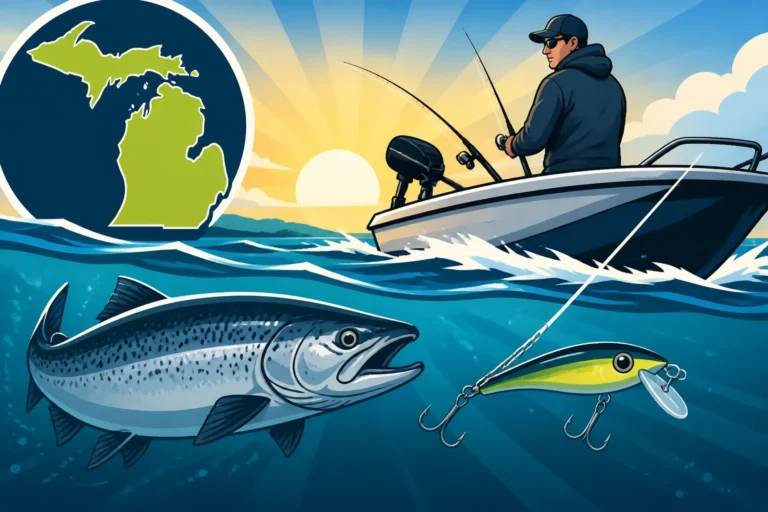
During late summer and early fall, as lake temperatures begin to drop, salmon will move closer to shore, especially around the mouths of their natal rivers or stocking sites. Pier fishing can be incredibly productive during this staging phase. Anglers casting spoons, crankbaits, or even drifting spawn bags under bobbers can hook into fresh, powerful salmon that are still bright silver and aggressive. Popular spots include piers in Ludington, Manistee, Muskegon, and Holland, among many others along the Lake Michigan coastline. Shoreline casting from beaches can also yield results, particularly at dawn and dusk. For those with boats, trolling the nearshore waters and just outside river mouths can be highly effective, especially when trying to intercept those powerful pre-spawn fish before they commit to the river journey. These lake-run fish often fight with unmatched vigor, making them a thrilling target.
Essential Gear and Tackle for Fall Salmon Fishing
Successfully targeting fall salmon in Michigan's rivers demands the right equipment. These are big, powerful fish, and under-gunned tackle will lead to heartbreak and lost fish. Investing in quality gear designed for the challenge will dramatically increase your hook-up and landing rates.
Rods, Reels, and Line Choices
When it comes to battling Michigan salmon, your rod and reel setup is your primary weapon. You'll want a combination that offers power, sensitivity, and durability.
- Rods: For river fishing, a medium-heavy to heavy power spinning or casting rod, typically ranging from 8'6" to 10'6", is ideal. The longer length helps with casting distance, line control, and absorbing the shock of a hard-fighting fish. Many anglers opt for specialized "steelhead rods" which are perfectly suited for salmon as well. You might find excellent options for such rods available on Amazon. For heavier current or larger fish, some prefer even longer float rods, up to 13 feet, which are fantastic for mending line and subtle presentations.
- Reels: A high-quality spinning reel in the 3000 to 5000 size range, or a baitcasting reel with a robust drag system, is essential. The drag is paramount – it needs to be smooth and consistent to prevent break-offs during powerful runs. Don't skimp here; a cheap reel will quickly fail under the stress of a feisty King salmon. Brands like Shimano, Daiwa, and Penn offer reliable choices.
- Line: Your main line choice will often be 15-20 lb monofilament or braided line. Braided line offers superior sensitivity and strength for its diameter, but its lack of stretch means you'll need a rod with good flex to absorb shocks. If using braid, always tie on a fluorocarbon leader (12-20 lb test) for abrasion resistance and invisibility, typically 3-6 feet long. Fluorocarbon is also excellent for main line when fishing clearer water or for more subtle presentations. Check out what's available for strong, reliable lines on Amazon before your next trip. This robust setup is also quite similar to what's needed for other strong river fighters, as discussed in our Essential Gear for Michigan Steelhead Fishing guide.
Terminal Tackle and Baits That Work
The business end of your line, your terminal tackle and bait, is where the rubber meets the road. Given that spawning salmon aren't actively feeding, your presentation needs to provoke a strike.
- Spawn Bags: These are perhaps the most popular and effective bait for fall salmon. They consist of salmon or trout eggs tied into a small mesh sack. The scent and natural appearance are irresistible to salmon, which often strike out of instinct or aggression. You can buy pre-tied spawn bags or make your own with fresh eggs. Different colors of mesh (pink, orange, chartreuse) can be effective depending on water clarity and fish preference.
- Artificial Baits: A wide array of artificials can trigger strikes.
- Drift Baits/Scented Worms: Soft plastic worms or egg imitations like those from Berkley Gulp! can be deadly when drifted naturally.
- Spoons: Casting spoons, particularly in vibrant colors like orange, silver, or chartreuse, can be effective in deeper runs or when salmon are still somewhat aggressive in the lower river sections. Brands like Koho, Little Cleo, and Croc spoons are popular choices.
- Crankbaits/Plugs: Larger diving crankbaits in natural or bright colors can infuriate salmon into striking, especially in slower pools or when fish are holding tight to structure.
- Beads: Trout beads, designed to imitate single salmon eggs, are increasingly popular. Rigged a few inches above a small hook, they offer a very natural presentation, particularly in clear water.
- Hooks and Weights: Use sharp, strong hooks in sizes appropriate for your bait (e.g., #2 to 1/0 octopus hooks for spawn bags). For drifting, a variety of split shot, pencil lead, or slinky weights will be needed to get your bait down to the fish without snagging excessively. The goal is to tick the bottom without dragging.
Waders, Boots, and Safety Essentials
Michigan's fall fishing often means cold water and slippery riverbeds, so proper attire and safety gear are non-negotiable. Being comfortable and safe allows you to focus on fishing.
- Waders: Breathable chest waders are essential for staying dry and warm. Neoprene waders offer more insulation but can be bulky. Modern breathable waders, often made from Gore-Tex or similar materials, provide excellent comfort and mobility. Look for durable construction to withstand riverbank abrasion.
- Wading Boots: Paired with your waders, sturdy wading boots with felt or rubber soles (often studded for extra grip) are critical for navigating slick rocks and uneven river bottoms. Ankle support is key. Many anglers swear by Korkers wading boots for their interchangeable sole system, allowing you to adapt to different conditions.
- Layered Clothing: Dress in layers! Early mornings can be frigid, but midday sun can warm things up. Wicking base layers, fleece mid-layers, and a waterproof/windproof outer shell are standard. Don't forget a warm hat and gloves – cold hands can quickly end a fishing day.
- Landing Net: A large, salmon-specific landing net with a rubberized mesh is crucial. Rubber nets are gentler on the fish (important for catch-and-release) and prevent hooks from getting tangled. You can find robust nets that will stand up to the rigors of salmon fishing on Amazon. Trying to land a big King without a net is a recipe for disaster.
- Safety Gear: A wading staff provides stability and helps you probe unknown depths, especially in swift current. Always fish with a buddy, know your limits, and wear a PFD (Personal Flotation Device) when wading in deeper or faster water, especially if you're not a strong swimmer. A small first-aid kit, a whistle, and a fully charged cell phone are also smart additions to your pack.
Effective Techniques for Landing Fall Salmon
Landing a trophy salmon in Michigan’s rivers requires more than just good gear; it demands skill, patience, and the right approach. Salmon in rivers are often wary and concentrated, meaning presentation and stealth are critical.
Drift Fishing and Float Fishing Strategies
These are arguably the most popular and effective methods for targeting salmon in Michigan's rivers. Both focus on presenting your bait naturally with the current, mimicking something drifting downstream.
- Drift Fishing: This technique involves using just enough weight to bounce your bait along the river bottom, where salmon are often holding. The key is to maintain a "drag-free" drift, meaning your line isn't pulling your bait faster or slower than the current. This requires constant mending of your line (lifting and repositioning your rod tip to keep slack out and the bait moving naturally). Anglers typically use pencil lead, slinky weights, or split shot. When your weight ticks the bottom, it's normal, but a sudden stop or tap could be a fish. Set the hook! This method is extremely effective for covering water and presenting spawn bags or beads to reluctant fish. It’s also a cornerstone technique for the Michigan Steelhead Run Timing and trout fishing.
- Float Fishing (or "Centerpinning"): This method utilizes a specialized float (often called a "bobber") to suspend your bait at a precise depth, allowing it to drift naturally with the current without touching the bottom. This is particularly effective in runs with consistent depth and current, or over snaggy bottoms where drift fishing is difficult. A long rod (10-13 feet) and a sensitive float are essential. Centerpin reels, designed for extreme line control and long, drag-free drifts, are often paired with this technique, though a good spinning reel can also work. The strike detection is visual: watch the float intently. Any dip, pause, or movement against the current signals a bite. This technique is often seen as a more refined way to fish river salmon and steelhead.
Casting and Retrieving Lures
While often less subtle than drifting, casting and retrieving lures can be highly effective, especially for more aggressive fish or when covering wider stretches of water. This is a more active form of fishing that often involves targeting specific pockets or seams in the current.
- Spoons: Casting a heavy spoon upstream and allowing it to swing and flutter through a salmon holding area can provoke powerful strikes. The flash and erratic movement often mimic wounded baitfish, which, while not a primary food source for river salmon, can trigger an aggressive reaction. Vary your retrieve speed and depth, experimenting with pauses and twitches. Silver, gold, chartreuse, and orange are classic salmon spoon colors.
- Crankbaits/Plugs: Diving crankbaits or plugs can be incredibly effective when trolled from a boat in the lower river or cast and retrieved in deeper holes. The vibration and profile of these lures can infuriate territorial salmon. Look for lures that dive to the depth where fish are holding and have a strong, erratic wobble. Firetiger, hot pink, and metallic finishes are popular choices.
- Spinners: While perhaps more commonly associated with trout, larger inline spinners can also entice salmon, especially Coho. Their flashing blade and vibration can be irresistible in certain conditions. Cast across current and retrieve just fast enough to get the blade spinning, allowing the lure to swing downstream.
The key to successful lure fishing for salmon is persistence and experimentation. Don't be afraid to change colors, sizes, or retrieve styles until you find what the fish are reacting to on a given day.
Fly Fishing for Spawning Salmon
For the purists and those seeking a truly immersive experience, fly fishing for fall salmon offers an incredible challenge and reward. It requires a different set of skills and an understanding of how to present flies that imitate either eggs or an aggressive reaction.
- Gear Setup: You'll typically need a heavier fly rod, often an 8- to 10-weight, paired with a matching reel that has a smooth, reliable drag and ample backing. A weight-forward floating line or a sink-tip line is usually preferred, depending on the depth and current you're fishing. For leader material, a stout 10-20 lb fluorocarbon leader is essential.
- Flies: The most effective flies for river salmon are often egg patterns (like bright orange, pink, or chartreuse Glo-Bugs or Nuke Eggs) or streamer patterns designed to imitate baitfish or simply provoke a strike. Intruders and large woolly buggers can also be effective.
- Techniques:
- Indicator Nymphing: Similar to float fishing with spinning gear, this involves using a strike indicator to suspend an egg pattern or weighted nymph at the salmon's depth. The goal is a drag-free drift. This method can be incredibly subtle and effective.
- Swinging Streamers: Casting large streamer patterns across and downstream, then allowing them to swing through holding water, can trigger aggressive strikes from salmon. This often involves stripping the line in short bursts to impart action to the fly.
- Dead-Drifting: Essentially a fly fishing version of drift fishing, where heavily weighted egg patterns are allowed to tumble naturally along the bottom. This requires precise line control and quick reflexes to detect strikes.
Fly fishing for salmon is a test of skill and often leads to an unforgettable battle on light tackle.
Conservation and Regulations for Michigan Salmon Fishing
While the excitement of the fall salmon run is undeniable, responsible angling practices and strict adherence to Michigan's fishing regulations are paramount. These regulations are in place to ensure the sustainability of our fisheries and the continued enjoyment for generations to come. It’s not just about catching fish; it’s about protecting the resource.
Understanding Catch Limits and Size Restrictions
Michigan's Department of Natural Resources (DNR) establishes specific regulations for salmon, including daily possession limits and minimum size restrictions. These rules can vary by species, water body, and even specific stretches of river, so it's absolutely crucial to consult the most current regulations before you head out.
For Chinook and Coho salmon, there’s typically a combined daily possession limit on the Great Lakes and connecting waters. For example, the Michigan Daily Bag Limits by Species often dictate a limit of five salmon, of which no more than three can be of a certain species. Minimum size limits are also in place to protect juvenile fish and allow them to mature and spawn. For instance, Chinook salmon usually have a 10-inch minimum size, while Coho might have similar or slightly different rules. Always measure your fish carefully from the tip of the snout to the end of the tail to ensure compliance. Ignorance of the law is not an excuse for violations, and wardens patrol these rivers heavily during the salmon run. Make sure you're up-to-date by regularly checking the Reading the Michigan Fishing Regulations Digest. There's also a Michigan's Combined Trout and Salmon Daily Limit that anglers need to be aware of when targeting multiple species.
Ethical Angling and Handling Practices
Beyond the letter of the law, ethical angling practices are essential, especially during the fall salmon run when fish are stressed by their spawning journey and rivers can be crowded. Practicing good stewardship helps ensure healthy fish populations and a positive experience for everyone on the water.
- Fish for Fresh Fish: While any salmon is a prize, targeting fish that are still relatively fresh and silver, closer to the lake, is often more sporting and yields better table fare. Heavily spawned-out fish are in poor condition and are often best left to complete their spawning duties undisturbed.
- Minimize Stress: If you intend to release a fish, handle it as little as possible. Keep it in the water, use a knotless, rubberized net, and remove the hook quickly with forceps. Avoid touching gills or eyes. If taking a photo, do it quickly and keep the fish partially submerged.
- Snagging is Illegal: Intentionally snagging fish is illegal in Michigan and widely considered unethical. Salmon in rivers are often lethargic, and it can be tempting to try to hook them outside the mouth. Ensure your fishing technique is aimed at enticing a legitimate strike.
- Respect Other Anglers: Fall salmon rivers can get crowded. Give other anglers ample space, avoid cutting lines, and be mindful of your casting. A friendly "hello" and a shared enthusiasm for fishing go a long way in fostering a positive environment.
- Leave No Trace: Pack out everything you pack in. Dispose of all trash, including broken line and bait containers, properly. Protecting the pristine beauty of Michigan's rivers is everyone's responsibility.
Important Reporting and Licensing Details
Before you even make your first cast, you need to ensure you're properly licensed. Fishing without a valid license is not only illegal but also deprives the Michigan DNR of funds critical for conservation, stocking programs, and habitat restoration.
Every angler aged 17 and older needs a valid Michigan fishing license. There are various options, including annual licenses for residents and non-residents, or shorter 24-hour licenses which can be a good option for a quick trip. You can easily purchase your license online through the DNR website, via their mobile app, or in person at various retailers across the state. Our guide, Michigan Fishing License Guide for Residents and Nonresidents, provides all the specifics you need.
Beyond licensing, there aren't typically special reporting requirements for fall salmon catches in the same way there might be for a rare species like muskellunge. However, staying informed about any changes or new conservation initiatives from the Michigan DNR is always a good idea. The revenue generated from license sales directly supports the management of these incredible salmon runs, ensuring that future generations can enjoy the same thrilling fall fishing experiences we do today.
Disclaimer
The information provided in this guide is for general informational purposes only and does not constitute legal advice. Fishing regulations in Michigan are subject to change, and it is the angler's sole responsibility to consult the most current Michigan Department of Natural Resources (DNR) fishing guide and local regulations before engaging in any fishing activity. Always prioritize safety, ethical angling practices, and respect for the environment.