How Big Do Rainbow Trout Get in Michigan
It's a common dream for any angler heading out to Michigan's beautiful waters: hooking into a truly impressive fish. When it comes to rainbow trout, many of us wonder just how big these magnificent fish can get in our state, especially with their reputation for strong fights and stunning colors. This comprehensive guide will dive deep into the factors that influence rainbow trout size in Michigan, from your local inland streams to the vast Great Lakes, helping you understand what to expect and how to target those bigger specimens.
Understanding Rainbow Trout Size in Michigan: It's All About Location
When you ask "how big do rainbow trout get in Michigan," it's not a simple one-size-fits-all answer. The truth is, a rainbow trout's size can vary dramatically depending on where it lives in Michigan's diverse aquatic environments. Are we talking about a resident trout in a small, cold stream, or a giant, lake-run "steelhead" battling its way up a major river from the Great Lakes? Both are technically rainbow trout, but their life histories and, consequently, their potential for growth are vastly different.
Think about it like comparing a house cat to a tiger – same family, but very different potential for size! Michigan offers a spectrum of habitats that dictate everything from available food sources to swimming space, all of which play a crucial role in how large a rainbow trout can grow. Understanding these nuances is key to appreciating the incredible diversity within this single species.
Resident Stream Rainbow Trout
Many of Michigan's smaller, colder streams and rivers hold populations of resident rainbow trout. These fish spend their entire lives within the stream system, never venturing out into the larger Great Lakes.
They typically feed on insects, small baitfish, and aquatic invertebrates available in their immediate environment. Their growth is often limited by the abundance and size of these food sources, as well as the overall carrying capacity of the stream. A typical resident rainbow trout in a smaller Michigan stream might be anywhere from 8 to 14 inches long, with fish in the 16-18 inch range considered a very respectable catch. While you might occasionally find a truly exceptional one pushing 20 inches, these are much rarer. These fish are beautiful, vibrant, and offer fantastic sport on light tackle, but they generally don't reach the leviathan sizes of their lake-dwelling cousins.
Great Lakes Steelhead: The Anadromous Giants
Now, let's talk about the true trophies of Michigan's rainbow trout fishery: steelhead. These are anadromous rainbow trout, meaning they are born in rivers, migrate to the vast, food-rich waters of the Great Lakes (like Lake Michigan or Lake Huron) to grow, and then return to their natal rivers to spawn. It's this access to an almost endless buffet of baitfish and crustaceans in the Great Lakes that allows them to attain much larger sizes than their resident stream brethren. Michigan's Great Lakes Fishing Guide offers a good overview of these incredible waters.
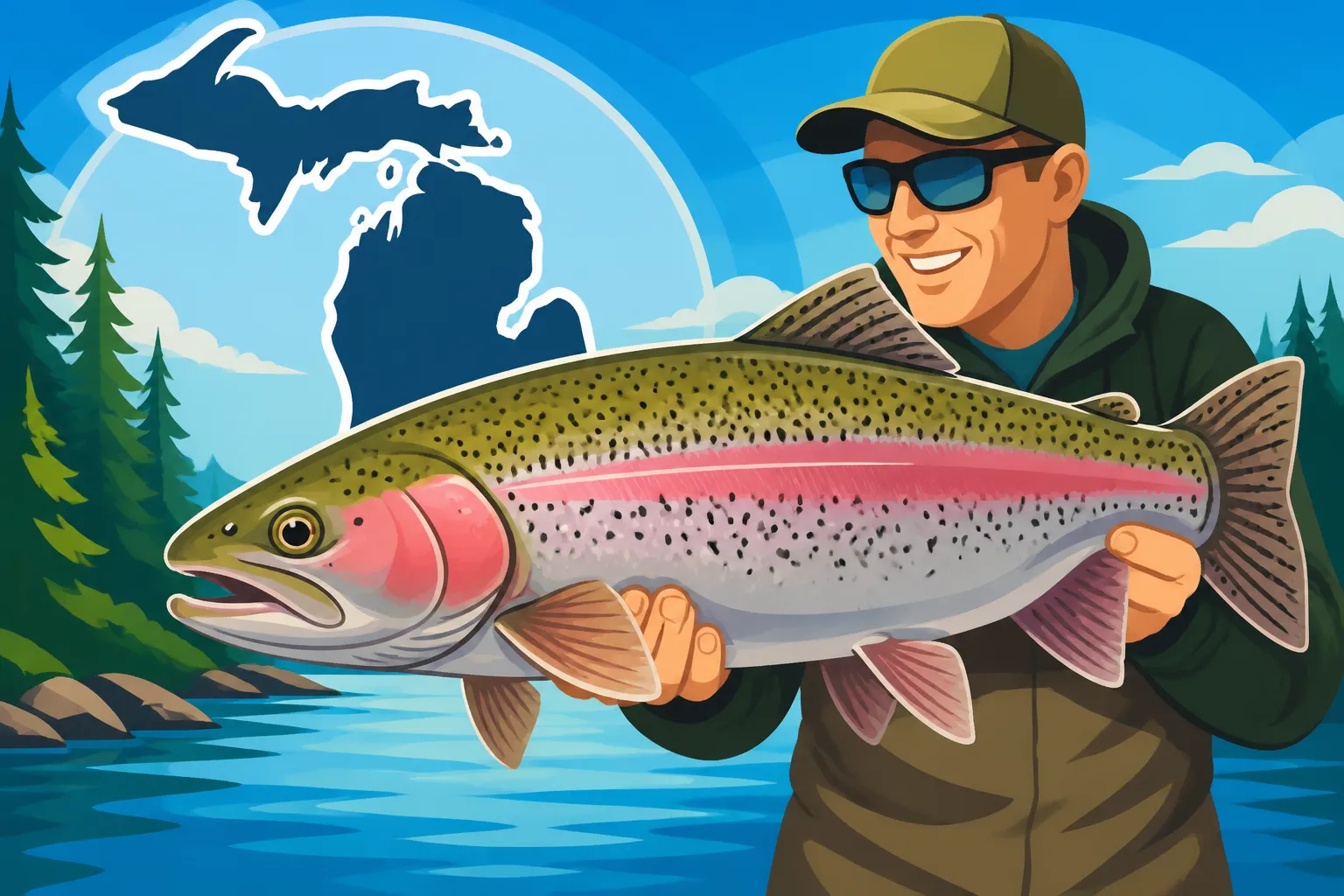
A typical steelhead caught during its migratory run in a Michigan river can range from 24 to 30 inches, often weighing 6 to 12 pounds. It's not uncommon for anglers to land fish in the 15-20 pound range, and occasionally, a truly massive steelhead will tip the scales at over 20 pounds and stretch well over 30 inches. These are the fish that provide epic battles, testing both angler skill and gear to their limits. The sheer power of a fresh-run steelhead, often jumping clear out of the water, is something every Michigan angler dreams of experiencing. They truly represent the pinnacle of rainbow trout growth in the state. If you're wondering How Big Do Rainbow Trout Get in Michigan, the answer often comes down to targeting these incredible lake-run fish.
Stocked vs. Wild Rainbow Trout
Michigan's waters contain both wild, naturally reproduced rainbow trout and those that are stocked by the Michigan Department of Natural Resources (DNR). Both contribute to the fishery, but there can be subtle differences in their growth patterns.
Wild trout, particularly in pristine stream environments, are often products of natural selection and can be incredibly resilient and hardy. Their growth is entirely dependent on the natural food chain and habitat quality. Stocked trout, on the other hand, are raised in hatcheries and released at a certain size (often 6-10 inches). While they might have a "head start" in terms of initial size, their ultimate growth potential once released into the wild depends heavily on the specific water body. If stocked into a nutrient-rich environment with ample food, they can thrive and grow quickly, sometimes even surpassing wild fish in size within a few years. However, if stocked into an overpopulated or less productive area, their growth can be stunted. Many of the larger steelhead runs are bolstered by extensive stocking programs, providing a robust fishery for anglers.
What Factors Contribute to a Rainbow Trout's Size?
It's fascinating to consider what makes one rainbow trout a modest pan-sized catch and another a veritable freshwater torpedo. Several interconnected factors play significant roles in determining just how big these fish can get in Michigan. It's a complex dance between environment, genetics, and food availability that dictates their ultimate dimensions.
Food Availability and Diet
This is perhaps the most significant factor. Simply put, more food generally means bigger fish. In the Great Lakes, steelhead have access to a vast and diverse diet of smaller baitfish like alewives, smelt, and gobies, along with various crustaceans and insect larvae. This abundant, high-protein food source provides the necessary energy and nutrients for rapid growth, allowing them to pack on pounds and inches quickly. Imagine having an endless buffet versus a small, fixed menu; the former will always lead to greater gains.
In contrast, resident stream trout rely primarily on aquatic insects (like mayflies, caddisflies, and stoneflies), terrestrial insects that fall into the water, and small forage fish. While these provide sustenance, the overall biomass of food in a confined stream is far less than in the Great Lakes. This is why a 16-inch brown trout in a stream is considered a trophy, while a 16-inch steelhead would be a juvenile. The diet directly correlates to the growth potential, and the Great Lakes offer unparalleled opportunities for rainbow trout to gorge and grow.
Water Temperature and Habitat
Water temperature plays a critical role in a trout's metabolism and growth rate. Rainbow trout thrive in cold, well-oxygenated water, typically between 50-65°F. Within this optimal range, their metabolism is efficient, allowing them to digest food and convert it into growth effectively. If water temperatures are consistently too warm, trout become stressed, growth slows, and they may even cease feeding. Conversely, extremely cold water can also slow their metabolism, leading to reduced feeding and growth, though they are generally more tolerant of cold than heat.
Beyond temperature, the overall quality and size of the habitat are vital. Large, deep bodies of water like the Great Lakes offer ample space for fish to roam, find food, and avoid predators. Rivers with good cover (log jams, undercut banks, deep pools), stable substrate, and minimal pollution provide secure environments for trout to grow without constant stress. Rivers like the Manistee River Steelhead and Salmon Fishing in Michigan or the Pere Marquette River Fly Fishing in Michigan are renowned for their consistent cold water and excellent habitat, which are crucial for growing big fish.
Genetics and Age
Just like humans, some fish are simply genetically predisposed to grow larger than others. While a fish's genes dictate its maximum potential size, environmental factors determine how close it gets to that potential. A fish with "big fish" genes won't reach its full size if food is scarce or conditions are poor. Conversely, a fish with average genetics might grow impressively large in an exceptionally rich environment.
Age also directly correlates with size, up to a point. Generally, the older a rainbow trout is, the larger it will be, assuming favorable conditions. However, trout have a finite lifespan, and as they age, their growth rate may slow down. Steelhead, because of their rapid growth in the Great Lakes, tend to reach impressive sizes in fewer years than resident stream trout. It’s also worth noting that spawning takes a massive toll on a fish's energy reserves, so repeated spawners might be leaner, even if they're quite old.
Pressure and Competition
Angling pressure and competition for food within a specific water body can also influence the average size of rainbow trout. In heavily fished areas, larger, older fish might be removed from the population more frequently, leading to a higher proportion of smaller, younger fish. Additionally, if a stream or lake is overpopulated with trout, they will compete more intensely for limited food resources, which can stunt the growth of all individuals.
This is where careful management by the DNR comes into play, utilizing stocking programs and regulations like Michigan Bag and Size Limits Explained to maintain a healthy balance and ensure sustainable fisheries. By understanding these factors, anglers can better predict where and when they might encounter Michigan's biggest rainbow trout.
Targeting Michigan's Trophy Rainbow Trout
So, you want to hook into a monster rainbow trout in Michigan? While there's no magic bullet, understanding where and how to fish for the biggest specimens significantly increases your odds. It's about putting yourself in the right place at the right time with the right presentation.
Best Waters for Big Rainbow Trout (Steelhead)
Without a doubt, if you're chasing truly large rainbow trout, you need to focus on Michigan's Great Lakes tributaries. These are the rivers that host the spectacular steelhead runs, where fish migrate from the big lakes to spawn.
- Lake Michigan Tributaries: Rivers like the Manistee River, Pere Marquette River, Muskegon River, and the St. Joseph River are legendary for their steelhead runs. These rivers offer varied fishing opportunities, from large, open stretches to more intimate bends. The sheer volume of water and the consistent runs of large fish make them prime destinations. Best Rivers for Trout and Steelhead in Michigan details many of these fantastic spots.
- Lake Huron Tributaries: While perhaps not as globally renowned as Lake Michigan's, rivers flowing into Lake Huron also receive strong steelhead runs. Rivers like the Au Sable River, Thunder Bay River, and the Cheboygan River can offer excellent opportunities, especially for those looking to explore different waters.
- Lake Superior Tributaries: The Upper Peninsula's rugged landscape and countless cold, clear rivers flowing into Lake Superior are home to some of the most beautiful and wild steelhead runs. These fish often fight with incredible vigor due to the cold water. Access can be more challenging, but the reward of a wild Lake Superior steelhead is unparalleled.
When these fish are in the rivers, they're often found in deeper pools, behind structure, or in current seams where they can rest and ambush food. Knowing the river's characteristics and reading the water is paramount.
Seasons and Timing for Steelhead Runs
Timing is everything when it comes to steelhead. These anadromous fish make distinct migratory runs up the rivers from the Great Lakes.
- Fall Run (September-November): As water temperatures drop and the salmon runs dwindle, steelhead begin to enter rivers, often feasting on salmon eggs. They'll continue to move upstream, staging in deeper pools through the winter. This is a prime time for fresh, powerful fish. Many anglers consider this their favorite time to fish.
- Winter Run (December-February): Steelhead will hold over in rivers throughout the colder months. While fishing can be challenging due to ice and bitter temperatures, patient anglers can be rewarded with less crowded conditions and strong fish. Michigan Ice Fishing Guide might give you some ideas for fishing these cold months.
- Spring Run (March-May): This is perhaps the most popular time for steelhead fishing, as the bulk of the fish move upstream to spawn. Fish are actively moving and biting, especially as water temperatures rise. Post-spawn "drop-backs" (fish returning to the lake) are also aggressively feeding. Michigan Fishing Seasons Explained provides more detail on these seasonal patterns.
Checking local fishing reports and understanding river conditions (water flow, clarity, temperature) will be crucial for success, as these can vary significantly year to year.
Gear and Techniques for Larger Rainbow Trout
To consistently land larger rainbow trout, especially strong-fighting steelhead, you need appropriate gear and techniques. Light panfish setups simply won't cut it against a 15-pound chrome missile.
- Rods and Reels: A medium-light to medium power spinning or casting rod, typically 8 to 11 feet in length, is ideal for river steelhead. The longer rod helps with line control, casting distance, and cushioning powerful runs. Pair this with a high-quality spinning reel (size 2500-4000) spooled with 8-12 lb monofilament or fluorocarbon main line, often with a fluorocarbon leader of 6-10 lb test. For fly anglers, a 9-10 foot 7-9 weight fly rod is standard. Best Rods for Steelhead Fishing and Best Reels for Steelhead Fishing offer more specific advice. You can find a good selection of quality rods and reels on Amazon to suit your budget and preferences.
- Baits and Lures: Steelhead respond to a variety of presentations.
- Drift Fishing: This involves drifting natural baits or artificials downstream with the current. Spawn bags (salmon or trout eggs in netting), beads (imitating eggs), and small worms are very effective natural baits. How to Rig a Bead for Steelhead explains a popular method.
- Float Fishing (Centerpinning): This highly effective technique uses a specialized float and reel (or a long spinning rod) to present bait naturally to holding fish. How to Centerpin for Steelhead goes into depth on this.
- Jigs and Plastics: Small marabou jigs tipped with wax worms or soft plastic baits can be deadly, especially in colder water or when fish are lethargic.
- Lures: Spoons, spinners, and crankbaits can entice aggressive fish, particularly in wider river sections or near the river mouth.
- Waders and Boots: Since you'll often be wading in cold rivers, quality waders (neoprene or breathable) and sturdy wading boots with good grip are essential for safety and comfort. Getting cold and wet will cut your trip short! You can find durable options for waders and wading boots on Amazon.
- Nets: A large, rubberized landing net is crucial for safely landing and releasing big fish. Rubberized nets protect the fish's slime coat and are less likely to tangle hooks.
- Patience and Persistence: Steelhead fishing can be challenging. There will be days when the fish aren't biting, or you might struggle to find them. Persistence, a willingness to move, and attention to detail in your presentation will ultimately lead to success.
Comparing Michigan's Rainbow Trout Sizes
To give you a clearer picture, here's a table comparing the typical size ranges you might encounter for rainbow trout in different Michigan fishing scenarios. Remember, these are averages, and exceptions always exist – that's the beauty of fishing!
| Category | Typical Length Range (Inches) | Typical Weight Range (Pounds) | Notes |
|---|---|---|---|
| Resident Stream Rainbow | 8 – 14 inches | 0.5 – 1.5 pounds | Found in smaller inland rivers; primarily insect diet, limited growth. |
| Larger Resident Trout | 15 – 20 inches | 1.5 – 3 pounds | Less common, usually in richer, larger inland trout streams or lakes. |
| Juvenile Great Lakes Steelhead | 18 – 24 inches | 2 – 5 pounds | "Skippers" or younger fish making their first river returns from the lake. |
| Average Great Lakes Steelhead | 24 – 30 inches | 6 – 12 pounds | Common size for mature, migratory fish; strong fighters. |
| Trophy Great Lakes Steelhead | 30+ inches | 13 – 20+ pounds | Exceptional catches, multiple years spent feeding in the Great Lakes. |
This table highlights the significant difference in growth potential between rainbow trout that spend their entire lives in a river versus those that migrate to the Great Lakes. The Great Lakes offer a truly unique environment that fosters incredible growth for these anadromous wonders.
Conserving Michigan's Rainbow Trout Fishery
Catching a large rainbow trout is an exhilarating experience, but it also comes with the responsibility of ensuring these incredible fisheries remain healthy for future generations. Conservation practices are paramount, especially when targeting larger, often spawning, fish.
Catch and Release Practices
For many anglers, especially those targeting steelhead, catch and release is a fundamental principle. These fish are valuable resources, and releasing them unharmed allows them to continue their spawning cycle and provide sport for other anglers. When practicing catch and release:
- Minimize Fight Time: Use appropriate gear to land fish quickly, reducing stress.
- Handle With Care: Keep the fish in the water as much as possible. If you must remove it, do so gently, supporting its body horizontally. Avoid squeezing or touching the gills.
- Use Barbless Hooks: Barbless hooks greatly reduce damage and make hook removal much easier and quicker. You can often pinch down the barb on standard hooks with pliers.
- Revive Properly: Hold the fish upright in the current until it swims away under its own power. Don't simply toss it back; ensure it's strong enough to survive.
Practicing careful catch and release is not just good etiquette; it's vital for maintaining the health and abundance of Michigan's rainbow trout populations, particularly the larger breeding stock.
Understanding Regulations
Michigan has specific regulations to manage its trout and salmon fisheries, which vary by water body and season. These regulations are designed to protect fish populations and ensure sustainable angling opportunities. It's crucial to consult the current Michigan Fishing Regulations Every Angler Should Know digest before heading out.
Regulations might include:
- Size Limits: Minimum or maximum sizes for keeping certain species.
- Bag Limits: The number of fish you can keep per day.
- Gear Restrictions: Limitations on the types of bait or lures that can be used (e.g., artificial lures only, no treble hooks).
- Seasonal Closures: Certain sections of rivers or lakes may be closed during specific times to protect spawning fish.
Ignoring these rules can lead to fines and negatively impact the fishery. Always be informed and responsible. You can purchase your Michigan Fishing License Guide for Residents and Nonresidents and check the latest regulations through the Michigan DNR website or their Michigan's DNR Hunt Fish App for Licenses and Reporting. Being prepared also means having essential items like a multi-tool or forceps, which you can easily find on Amazon, for quick and safe hook removal.
Conclusion
So, how big do rainbow trout get in Michigan? They get as big as the Great Lakes allow them! While you'll find charming, feisty resident rainbows in our inland streams measuring up to 20 inches, the true giants are the steelhead, which can easily exceed 30 inches and weigh over 20 pounds after years of gorging in the vast freshwater seas. These magnificent fish offer incredible angling challenges and rewards.
Whether you're casting tiny dry flies for small stream trout or battling a chrome torpedo on a mighty river, Michigan's rainbow trout fishery is diverse and exciting. Understanding the factors that influence their size, knowing where and when to target the biggest specimens, and practicing responsible angling will enhance your experience and help preserve these cherished resources for generations to come. Now go on, get out there and chase that dream fish!
Disclaimer
This article is for general informational purposes only and does not constitute professional advice. Laws, prices and regulations vary by location and change over time. Consult a qualified professional for guidance on your specific situation.