Michigan Trout Species Explained
For anyone who's ever stood by a pristine Michigan river, fly rod in hand, and wondered exactly what kind of trout might be lurking in those cool, clear waters, you're not alone. Michigan is a true angler's paradise, but with that abundance comes a delightful (and sometimes bewildering) variety of fish. It can feel a bit like trying to identify different bird species by their songs – beautiful, but distinct. This comprehensive guide will untangle the fascinating world of Michigan's trout species, helping you identify what you've hooked and understand the unique characteristics of each one.
The Trout Family in Michigan: A Diverse Angler's Dream
Michigan is blessed with an incredible array of freshwater environments, from the vast, deep waters of the Great Lakes to countless cold, winding streams and sparkling inland lakes. This diverse habitat is precisely why our state is such a haven for trout. For anglers, this means a fantastic opportunity to pursue different species, each offering its own challenge and reward. It’s not just about casting a line; it’s about understanding the ecosystem, the habits of the fish, and what makes each species so special.
Why Michigan is a Trout Haven
Our geography is a huge factor. Michigan is virtually surrounded by the Great Lakes, providing immense cold-water habitat for species like lake trout and steelhead, which spend a significant portion of their lives in these vast freshwater seas before returning to rivers. Beyond the big lakes, the Lower and Upper Peninsulas are crisscrossed by thousands of miles of cold, clear rivers and streams – perfect for brook, brown, and rainbow trout. Many of these waterways are spring-fed, ensuring consistently cool temperatures even during the summer months, which is crucial for trout survival.
Furthermore, the Michigan Department of Natural Resources (DNR) has long-standing and robust fish stocking programs. While some species thrive naturally, others, particularly certain strains of rainbow and brown trout, have been strategically introduced and maintained through stocking efforts to enhance fishing opportunities. These efforts have created an intricate and thriving fishery, making Michigan a top destination for trout enthusiasts from all over. The dedication to maintaining these populations is a testament to the value placed on our natural resources and the angling traditions that run deep here.
Understanding Trout vs. Salmon
This is where things can get a little murky for new anglers, and even seasoned folks sometimes mix them up! Trout and salmon, while closely related members of the Salmonidae family, have distinct differences in their life cycles, appearance, and typical habitats. Both are cold-water fish, and both are highly prized by anglers for their fighting spirit and delicious flesh. However, thinking of them as interchangeable can lead to confusion, especially when trying to understand regulations or target specific fish.
A key difference lies in their reproductive habits. Many salmon species are anadromous, meaning they spend most of their lives in saltwater (or in the case of the Great Lakes, a large freshwater body that mimics an ocean) and then migrate to freshwater rivers to spawn, often dying after their first spawning run. While some trout species, like steelhead (which are rainbow trout), also exhibit this anadromous behavior, many other trout species, such as brook and brown trout, spend their entire lives in freshwater rivers and lakes. Another distinction often lies in their physical appearance, though this can be subtle. Salmon tend to have fewer, smaller spots, often confined to the tail, while many trout are heavily spotted over their entire body. Of course, size also plays a role, with some salmon species growing significantly larger than many river-dwelling trout. Understanding these nuances is key not just to identifying your catch, but also to appreciating the incredible biodiversity of Michigan's waters.
Native Beauty: The Brook Trout
Ah, the brook trout! Michigan's state fish, and for good reason. These aren't just fish; they're living jewels, a symbol of pristine wilderness and cold, clean water. There's a certain magic to catching a brook trout, especially in a remote, quiet stream where they've lived wild for generations. Many anglers consider brook trout to be the ultimate prize, not necessarily for their size, but for their stunning beauty and the wild places they inhabit.
Identifying Michigan's State Fish
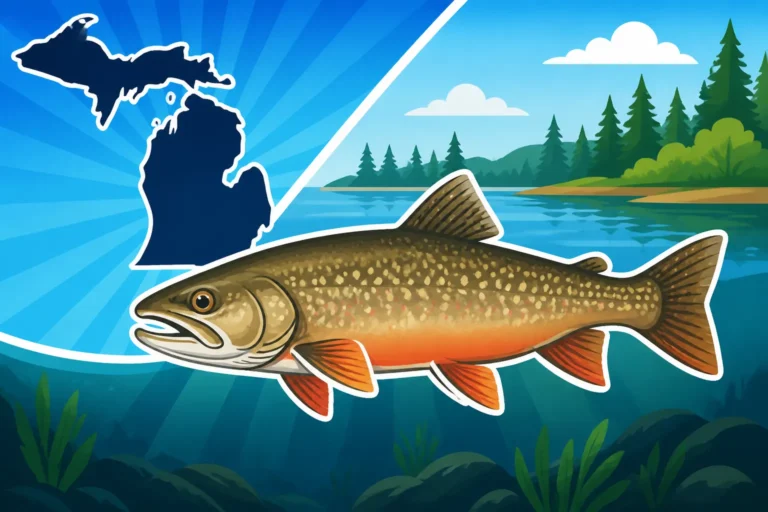
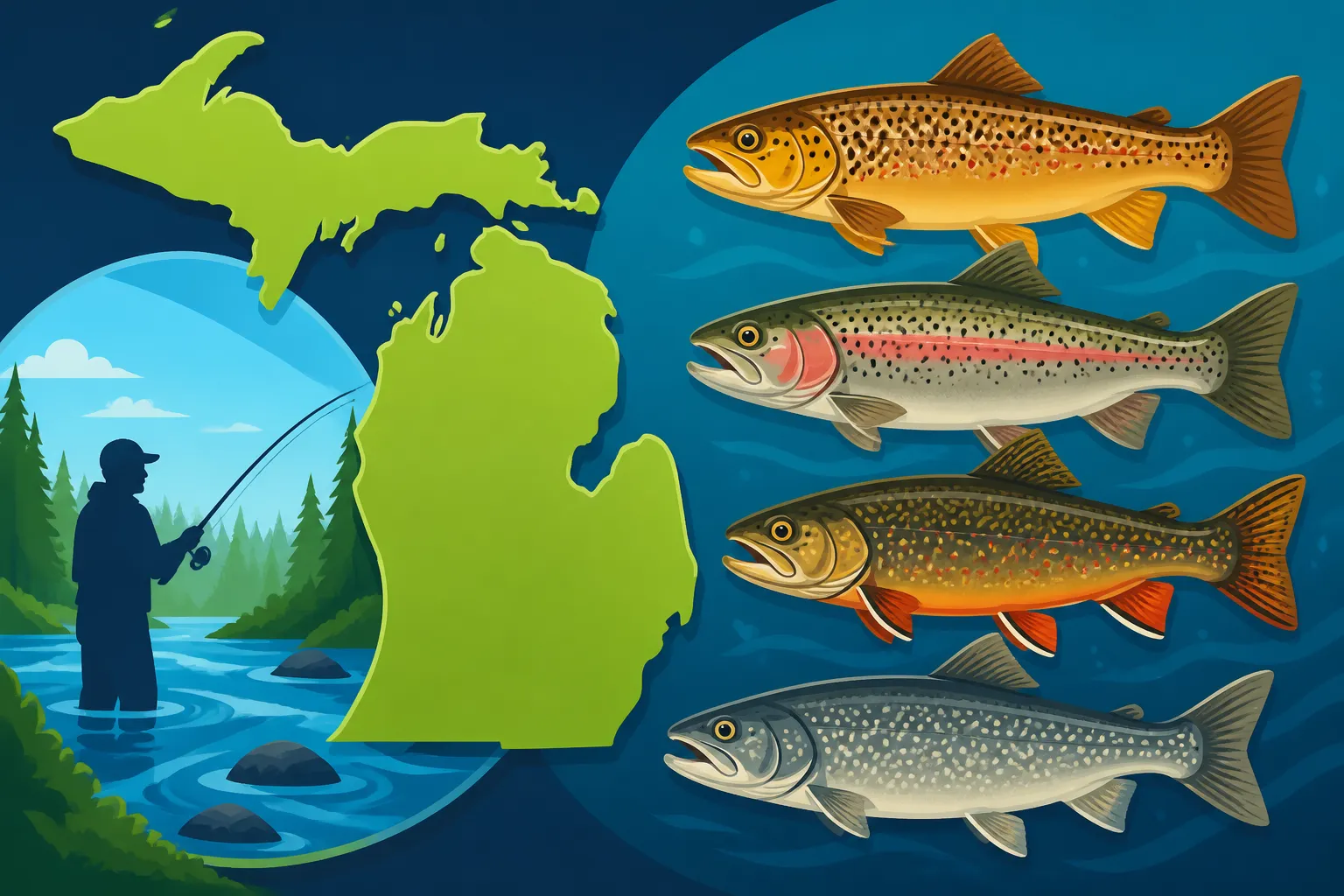
If you’ve never seen a brook trout up close, prepare to be amazed. They are easily one of the most beautiful fish you’ll encounter. Their backs are typically a dark, mottled olive green, often with worm-like markings called "vermiculations" that extend onto their dorsal fin. Along their flanks, you'll see scattered red dots, each surrounded by a faint blue halo – these are called "areolae" or "halos." Their lower fins, particularly the pectoral, pelvic, and anal fins, boast a distinctive white leading edge, followed by a black stripe, and then a fiery orange or reddish hue. This vibrant tri-color band is a dead giveaway. Their bellies can range from white to a brilliant orange-red, especially during spawning season.
While brook trout typically don't grow to massive sizes in Michigan's inland streams – a 10-inch brook trout is considered a trophy in many places – their smaller stature only adds to their charm. They are stream-dwelling specialists, preferring the coldest, cleanest water, which often means finding them tucked away in remote, hard-to-reach pockets of wilderness. The thrill isn't just in the catch, but in the journey to find them.
Where to Find Brook Trout in Michigan
If you're looking for brook trout, think cold, clear, and quiet. The Upper Peninsula is truly brook trout country, with countless small streams, beaver ponds, and remote lakes holding healthy populations. Rivers like the Two Hearted, the Fox, and many unnamed trickles flowing into Lake Superior are prime brook trout habitat. In the Lower Peninsula, you'll find them in the headwaters of larger river systems, in small feeder creeks, and in designated "brook trout only" streams where they face less competition from other species. Look for areas with dense overhead cover from trees, undercut banks, and plenty of fallen logs or boulders in the stream bed – these provide crucial hiding spots and thermal refuges.
You'll often find them in water that feels almost too shallow or too small to hold fish. They're surprisingly adept at tucking into tiny pockets of slow water behind rocks or logs. Some larger brook trout can even be found in certain inland lakes, particularly those with deep, cold sections and plenty of groundwater input. And let's not forget Lake Superior itself, where wild, native brook trout can be found in shallow, rocky areas, often near river mouths, representing truly magnificent specimens, though they are much rarer to encounter than their riverine cousins. For a deeper dive, check out Lake Superior Brook Trout Fishing.
Fishing Techniques for Brook Trout
When pursuing brook trout, finesse is the name of the game. These fish are often found in tight quarters and can be easily spooked by heavy footsteps or clumsy casts. Fly fishing with small, delicate presentations is often the most effective method. Dry flies that mimic terrestrial insects like ants, beetles, or small grasshoppers can be deadly, especially on warm summer days. Emergers and nymphs, fished upstream with a subtle drift, are also highly effective.
For spin anglers, ultra-light tackle is essential. Small spinners (sizes 0 or 1) in natural colors like silver, gold, or black, or tiny spoons that flutter enticingly, can tempt a strike. Small jigs tipped with a piece of worm or scented soft plastic can also be productive. Remember, stealth is paramount. Keep a low profile, make accurate casts, and use light line (2-4 pound test) to avoid spooking these wary fish. Wade carefully, or if fishing from shore, approach the water slowly and quietly. It's an intimate form of fishing, connecting you directly with the wild heart of Michigan.
The Hardy Introduced Species: Brown Trout
While brook trout hold the title of Michigan's native pride, brown trout have carved out their own revered niche in our waters. Introduced from Europe in the late 19th century, brown trout quickly adapted to Michigan's rivers and have become a favorite target for many anglers, known for their wariness, powerful fights, and impressive size potential. They often thrive in waters that might be a bit too warm for brook trout, expanding the overall trout fishing opportunities in the state.
Identifying the Elusive Brown Trout
Brown trout possess a rugged, earthy beauty that contrasts with the brook trout's vibrant colors. Their coloration can vary significantly depending on their habitat and diet, but they generally have a brownish-golden or olive-brown back, fading to lighter flanks and a cream or yellowish belly. The most defining features are their dark spots, which are often mixed with reddish-orange spots, particularly along their sides. Crucially, many of these spots, both dark and red, have a distinct light "halo" around them. The spots usually extend onto the dorsal fin, but typically not onto the tail fin, which is another key differentiator from some salmon species.
Their jaws often extend past their eye, giving them a more predatory look, especially in larger males which develop a prominent kype (hooked jaw) during spawning. Brown trout can grow considerably larger than brook trout in Michigan, with fish over 20 inches being common in productive river systems and even larger specimens found in some lakes. Their elusive nature and impressive size make them a truly challenging and rewarding fish to pursue. For more details on other species, you might be interested in Michigan's Most Popular Fish Species.
Prime Brown Trout Habitats in Michigan
Brown trout are incredibly adaptable, making them a widespread species throughout Michigan. While they still require cool, clean water, they can tolerate slightly warmer temperatures and more turbid conditions than brook trout. This means you'll find them in many of Michigan's most famous trout rivers, including the Au Sable, Manistee, Pere Marquette, and Boardman Rivers. They thrive in areas with abundant insect life, good cover, and a mix of riffles, runs, and deep pools.
Look for brown trout holding in areas with overhead cover, such as undercut banks, fallen trees, log jams, and overhanging vegetation. They are often ambush predators, waiting patiently in these dark, protected spots for an unsuspecting meal to drift by. They are also masters of using structure in the current, tucking behind large boulders or subtle current breaks. Many inland lakes also support good populations of brown trout, especially those that are deep and cool with access to good forage. The ability of brown trout to adapt to a wider range of conditions means they fill a crucial niche in Michigan's fisheries, providing excellent angling opportunities in many different environments.
Tactics for Chasing Michigan Brown Trout
Brown trout are notoriously spooky and intelligent, earning them a reputation as challenging adversaries. Successfully catching them often involves a combination of stealth, patience, and matching your presentation to their feeding habits. Fly fishing is incredibly popular for brown trout, with anglers often "matching the hatch" using dry flies during insect emergences. When no insects are visible, nymphs and streamers are highly effective. Streamers, mimicking baitfish, can draw aggressive strikes from larger browns, especially when fished near cover. For some of the most productive techniques, consider exploring Fly Fishing Techniques for Michigan Trout Streams.
Spin anglers can find success with small crankbaits that imitate minnows, twitching them near cover or retrieving them through deeper pools. Spinners, particularly those with a broad blade that creates a lot of flash and vibration, can also provoke a strike. Don't overlook soft plastics rigged to imitate worms or crayfish. For the truly dedicated, night fishing for large brown trout is a time-honored tradition in Michigan. Big browns often become more active and less wary under the cover of darkness, feeding on larger prey like mice or big minnows. This is when larger stickbaits and surface lures can be particularly effective. Whichever method you choose, remember that consistency and knowing the water are key to unlocking the secrets of these wily fish. You might find great gear options for these tactics on platforms like Amazon.
The Celebrated Rainbow Trout and its Steelhead Form
The rainbow trout is perhaps one of the most widely recognized trout species globally, and in Michigan, it holds a special place, not just for its beauty and fighting prowess but also for its remarkable anadromous variant: the steelhead. It's easy to think of them as two entirely different fish, but at their core, they are the same species, with their life history dictating their name and often their size.
Rainbow Trout in Inland Waters
The standard, freshwater-resident rainbow trout is a stunning fish in its own right. They get their name from the iridescent, often pinkish or reddish stripe running along their lateral line, which shimmers in the light like a rainbow. Their bodies are typically olive green or bluish-green on the back, fading to silvery sides and a white belly. They are usually covered in small, distinct black spots across their back, sides, and caudal (tail) fin, which is often square or slightly forked.
In Michigan, you'll find these rainbows thriving in many of the same rivers as brown trout, as well as in numerous inland lakes where they are often stocked. They are aggressive eaters, making them a popular target for anglers of all skill levels. They provide excellent sport on light tackle and are known for their acrobatic jumps when hooked. Whether you're drift fishing with bait, casting spinners, or presenting a fly, resident rainbow trout offer consistent action and a beautiful catch. Their widespread availability makes them a staple for many Michigan fishing trips.
The Steelhead Phenomenon
Now, let's talk about steelhead. This is where the rainbow trout's story takes an epic turn in Michigan. Steelhead are essentially rainbow trout that have chosen an anadromous life cycle, meaning they migrate from the vastness of the Great Lakes into freshwater rivers to spawn, much like salmon. This migratory journey, and the rich forage opportunities in the Great Lakes, transform them into powerful, chrome-bright fighters often reaching impressive sizes. They are revered by anglers as one of the hardest-fighting freshwater fish.
When they enter the rivers from the Great Lakes, steelhead are typically much larger and more streamlined than their resident rainbow counterparts. Their bodies are silver-colored, reflecting their time in the open waters of the Great Lakes. The distinctive pink stripe might be faint or even absent until they've spent some time in the river, at which point it can become more pronounced as they prepare to spawn. The sheer power and speed of a hooked steelhead, combined with their propensity for aerial acrobatics, make them an ultimate challenge for many Michigan anglers. Understanding Steelhead Life Cycle in Michigan Rivers is key to appreciating these incredible fish.
How to Differentiate Rainbows from Steelhead
While they are the same species, differentiating between a resident rainbow trout and a steelhead can be tricky, especially if you catch a large resident rainbow in a river that also sees steelhead runs. Generally, the most obvious difference is size and coloration. Steelhead, having spent years feeding in the Great Lakes, tend to be much larger, often ranging from 5 to 20 pounds or more, whereas resident rainbows in streams rarely exceed 2-3 pounds, though larger specimens certainly exist in some inland lakes.
Coloration is also a major clue. A steelhead fresh from the lake will have a silvery, almost chrome-like sheen, with a faint lateral stripe and black spots. A resident rainbow will typically have a more vibrant and distinct pink or red lateral stripe, and often more pronounced spots. However, as steelhead spend more time in the river before spawning, their colors can deepen, and their pink stripe can become much more evident, making them look very similar to resident rainbows. For definitive identification, one might look at fin erosion or specific fin clips if the fish are stocked, but for the average angler, size and overall body form – the sleek, torpedo-like shape of a lake-fed steelhead versus the often more robust build of a river rainbow – are the most reliable indicators. If you're looking for more general information, Rainbow Trout and Steelhead: What's the Difference can provide additional context.
Michigan's Lake-Dwelling Giants: Lake Trout and Splake
Michigan’s deep, cold lakes, particularly the Great Lakes, are home to another class of trout entirely: the true giants of the Salvelinus genus. These are the lake trout and their fascinating hybrid cousin, the splake. While different from the river-dwelling trout we've discussed, these fish offer incredible angling experiences, often requiring specialized techniques to reach them in their deep, chilly domains.
The Mighty Lake Trout
The lake trout (Salvelinus namaycush) is Michigan's largest native trout and a magnificent predator. These fish are built for life in deep, cold water, and they can grow to truly enormous sizes, with fish weighing over 20 pounds not uncommon in the Great Lakes. They are characterized by a long, slender body with a deeply forked tail, a feature that immediately distinguishes them from other Michigan trout. Their coloration is typically dark green, gray, or brownish-gray on the back, with irregular, light-colored spots that extend onto their head, fins, and deeply forked tail. Their belly is usually white or cream-colored.
Lake trout are found in all of Michigan's Great Lakes, thriving in the deep, cold waters where they feed on a variety of baitfish, including ciscoes and alewives. They are slow-growing and long-lived, some reaching ages of 20 years or more. Historically, lake trout were a cornerstone of commercial and recreational fisheries in the Great Lakes, and while their populations faced challenges in the past, strong conservation efforts and stocking programs have helped them rebound, offering fantastic opportunities for anglers today. Their strength and stamina on the line are legendary. Dive into Lake Trout Identification in Michigan for more details on recognizing these impressive fish.
The Hybrid Marvel: Splake
Now, the splake (Salvelinus namaycush x Salvelinus fontinalis) is a truly unique fish in Michigan, a fascinating hybrid born from the cross-breeding of a female lake trout and a male brook trout. This isn't a naturally occurring hybrid in the wild; splake are intentionally produced in hatcheries and stocked in various inland lakes across Michigan, particularly in lakes that are deep and cold enough for lake trout but might not sustain a robust population of them, or where they can fill an ecological niche.
Identifying a splake can be a fun challenge, as they often exhibit characteristics of both parent species. They typically have a more rounded or slightly forked tail than the deeply forked tail of a pure lake trout, but not as square as a brook trout's. Their body shape is generally more streamlined than a lake trout's but not as stout as a brook trout. Coloration can range from dark gray to brownish, often with lighter, worm-like markings (vermiculations) on their back, similar to a brook trout, but also with light spots on their sides, like a lake trout. They may also have the white leading edges on their lower fins, characteristic of brook trout. Splake grow faster than brook trout and are more aggressive than lake trout, making them a popular target in the lakes where they are stocked. For more on catching these unique fish, check out Splake Fishing in Michigan.
Deep Water Strategies for Laker and Splake
Fishing for lake trout and splake often means venturing into deeper waters, requiring specialized gear and techniques. During much of the year, especially in summer, these fish will retreat to the coldest depths of the lakes, often 50 to 150 feet down, or even deeper in the Great Lakes. This necessitates using methods like trolling with downriggers to get your lures to the exact depth where the fish are holding. Large spoons, stickbaits, and dodgers/flies are popular choices, mimicking the baitfish they prey upon.
Jigging is another highly effective technique, particularly for lake trout and splake found near structure like reefs or underwater drop-offs. Heavy jigs (1/2 oz to 2 oz or more) tipped with plastic or bait, dropped directly over fish marked on your fish finder, can entice aggressive strikes. Ice fishing for these species is also incredibly popular in certain inland lakes and even in some protected bays of the Great Lakes. Using tip-ups with live bait or jigging aggressively with spoons and tube jigs are common and productive methods. Because these fish often live in deeper water, you'll want a stout rod and reel combo, capable of handling powerful runs and the heavy lead of deepwater presentations. When preparing for such an outing, acquiring sturdy gear from a reliable source like Amazon can make all the difference.
Protecting Michigan's Trout Heritage: Conservation and Regulations
The vibrant and diverse trout fisheries we enjoy in Michigan today are not just a stroke of luck; they are the result of tireless conservation efforts, responsible management, and the collective dedication of anglers and environmentalists. Protecting these precious resources is crucial for future generations to experience the same joys of trout fishing.
The Importance of Catch and Release
For many trout species, especially native brook trout and larger brown trout or steelhead, practicing catch and release is incredibly important for maintaining healthy populations. While it might feel counterintuitive to let a beautiful fish go, it ensures that these fish can continue to grow, spawn, and contribute to the genetic diversity of the fishery. Catch and release helps sustain robust populations, especially in waters with high fishing pressure or for species that are slower to reproduce.
When practicing catch and release, handling the fish gently and quickly is paramount. Minimize its time out of water, use wet hands to hold it, and avoid touching its gills or eyes. If using bait, consider using circle hooks, which are designed to hook fish in the corner of the mouth, reducing the chance of deep hooking. When releasing, hold the fish gently in the water, facing upstream, until it regains its strength and can swim away on its own. It's a small act that makes a huge difference in the long-term health of our trout fisheries.
Navigating Michigan's Trout Regulations
Michigan's fishing regulations are designed to protect fish populations and ensure sustainable angling opportunities. However, they can sometimes seem complex, with varying seasons, size limits, and bag limits depending on the specific water body, fish species, and even the type of bait or lure used. It's not uncommon to hear anglers discussing the intricacies of rules for a specific stretch of river. For example, some stretches of famous trout rivers might be designated "flies-only" or "artificial lures only," while others allow bait. Different regulations apply to inland waters versus the Great Lakes.
Before heading out, always consult the current Michigan Fishing Guide, published annually by the DNR. This comprehensive guide details all the regulations you need to know, including specific rules for designated trout streams and lakes. Ignoring these rules can not only lead to fines but also negatively impact the very fish populations we cherish. Understanding regulations is part of being a responsible angler. You'll find a wealth of information in documents like Michigan Fishing Regulations Every Angler Should Know or Michigan Bag and Size Limits Explained. Don't forget that if you're fishing in the Great Lakes, there are additional considerations to keep in mind, detailed in Michigan's Great Lakes Fishing Regulations Guide.
Supporting Michigan's Trout Fisheries
Beyond following regulations and practicing ethical angling, there are many ways to support Michigan's trout fisheries. Purchasing a fishing license is one of the most direct ways; a significant portion of license revenue goes directly to funding fish stocking programs, habitat restoration projects, and conservation efforts led by the DNR. For more information on how to obtain one, consider looking up Michigan Fishing License Guide for Residents and Nonresidents. Many local angling clubs and conservation organizations also play a vital role, organizing river clean-ups, stream improvement projects, and educational initiatives.
Participating in these efforts, or even just becoming more informed about the challenges facing our aquatic ecosystems, contributes to a healthier environment for trout and all aquatic life. When you buy fishing gear, whether from a local tackle shop or online through platforms like Amazon, a portion often supports the fishing industry which in turn has a vested interest in conservation. By being an active and informed participant in the angling community, you help ensure that Michigan's incredible trout fishing heritage will continue to thrive for generations to come. Your passion for fishing is a powerful force for good when channeled into conservation.
Trout Species At-A-Glance: A Michigan Angler's Quick Reference
To help clarify the distinctions between Michigan's diverse trout species, here's a handy comparison table summarizing key identification features, typical sizes, and preferred habitats. This can be a useful tool when you're out on the water and trying to figure out what beautiful fish you've just brought to hand.
| Feature | Brook Trout | Brown Trout | Rainbow Trout | Steelhead | Lake Trout | Splake |
|---|---|---|---|---|---|---|
| Scientific Name | Salvelinus fontinalis | Salmo trutta | Oncorhynchus mykiss | Oncorhynchus mykiss | Salvelinus namaycush | S. namaycush x S. fontinalis |
| Native/Introduced | Native (State Fish) | Introduced | Introduced | Introduced (Anadromous Rainbow) | Native | Hybrid (Stocked) |
| Coloration | Dark, vermiculations, red spots with blue halos, white fin edges | Brown/gold, dark & red spots (often haloed), sometimes faint spots on tail | Green/blue back, silvery sides, distinct pink/red stripe, black spots | Silvery/chrome when fresh from lake, faint stripe & spots | Dark green/gray, irregular light spots on body, head & fins | Variable; blend of parents (vermiculations + spots), sometimes white fin edges |
| Tail Fin | Square/slightly forked | Square/slightly forked | Square/slightly forked | Square/slightly forked | Deeply forked | Slightly forked to moderately forked |
| Typical Size | 6-12 inches (streams), larger in some lakes/Lake Superior | 12-24 inches (rivers), larger in lakes | 10-20 inches (inland lakes/rivers) | 5-20+ pounds (Great Lakes) | 5-20+ pounds (Great Lakes) | 12-24 inches (stocked lakes) |
| Preferred Habitat | Cold, clear, small streams, headwaters, some cold lakes, UP | Cooler rivers, larger streams, inland lakes, good cover | Rivers, streams, inland lakes | Great Lakes (migrates to rivers to spawn) | Deep, cold Great Lakes, deep inland lakes | Deep, cold inland lakes (stocked) |
| Key ID Feature | White leading edge on lower fins, worm-like markings on back | Distinct spots with pale halos; often more aggressive | Rainbow stripe, overall silvery/green, spots on tail | Silvery sheen, large size, strong fight; migratory | Deeply forked tail; irregular light spots | Hybrid features of brook/lake trout; often stocked where LTs struggle |
Disclaimer
This article is for general informational purposes only and does not constitute professional advice. Laws, prices and regulations vary by location and change over time. Consult a qualified professional for guidance on your specific situation.