Best Time to Catch Lake Trout on the Great Lakes
Trying to pin down the absolute "best" time to catch Lake Trout on Michigan's vast Great Lakes can feel like chasing a phantom, especially with conditions changing constantly. Many anglers get frustrated by inconsistent success, wondering if they're fishing the right spot at the right time. This comprehensive guide will peel back the layers of Lake Trout behavior, breaking down their seasonal movements, preferred habitats, and the most effective strategies to help you connect with these incredible fish year-round across the Great Lakes.
Understanding Lake Trout Behavior Throughout the Year
Lake Trout, or "lakers" as they're affectionately known, are a fascinating species, and understanding their annual cycle is the cornerstone of successful fishing. Unlike some other fish, their behavior is heavily influenced by water temperature, available forage, and their natural urge to spawn. This means that what works in the spring might be completely ineffective in the summer, making seasonal adjustments crucial for any serious angler.
Winter Habits and Locations
When the ice locks down Michigan's smaller inland lakes, many Great Lakes anglers still find ways to target lakers. During the coldest months, Lake Trout tend to congregate in deeper sections of the lakes, often holding near structure such as sunken islands, steep drop-offs, or underwater points. Their metabolism slows down, but they still need to feed. They're often found in very specific thermal layers, seeking out water that's just a few degrees warmer than the surrounding frigid depths. Think about vast expanses of Lake Superior or Lake Michigan; these fish aren't just roaming aimlessly. They're relating to underwater topography and hunting baitfish that are also seeking stable conditions.
Ice fishing for Lake Trout on certain bays of the Great Lakes, or in the protected waters of large inland lakes connected to the system, requires a different approach. The fish are often less active, requiring slower presentations and precise bait placement. They might be found anywhere from 30 to 150 feet deep, depending on the specific body of water and the concentration of their prey, such as ciscoes or smelt. This period demands patience and a good understanding of lake contours.
Spring Awakening and Spawning Patterns
As the ice retreats and spring runoff brings an influx of warmer water, Lake Trout begin to stir. This is a period of transition, and their behavior can be somewhat unpredictable but also highly rewarding. In early spring, especially in April and May, lakers will move into shallower waters, particularly around river mouths and nearshore structures, as they follow baitfish that are also moving into warmer areas. They're hungry after a long winter and actively feeding.
By late spring, particularly in deeper parts of the Great Lakes, some Lake Trout might begin their pre-spawn movements. While their primary spawning window is in the fall, some populations might have secondary movements related to thermal preferences and food sources. This movement brings them into a more active feeding mode, making them more susceptible to a variety of presentations. Knowing where baitfish like alewives and smelt are staging is key, as the lakers won't be far behind. This is often an excellent time to target them before they descend to their deep summer haunts. For more on preparing for the fishing season, check out our guide on Michigan Fishing Seasons Explained.
Summer Depths and Forage
Summer on the Great Lakes transforms Lake Trout fishing into a deepwater game. As surface temperatures soar, lakers retreat to the frigid depths where oxygen levels are stable and the water remains cool, typically in the 40s to low 50s Fahrenheit. You'll find them concentrating along the thermocline – the layer where warm surface water meets cold deep water – or deeper still, often 80 to 200 feet down, sometimes even deeper in immense lakes like Superior. Here, they patrol vast underwater structures, feeding heavily on cold-water baitfish like alewives, ciscoes, and bloaters.
This is primarily a trolling season, requiring specialized gear like downriggers and lead core line to get lures down to where the fish are holding. The sheer size of the Great Lakes means that finding these fish can be a challenge, often involving long runs and reliance on marine electronics to locate schools of bait and temperature breaks. For a deeper dive into the specific depth requirements, read our post on What Depth Do Lake Trout Live At.
Fall Pre-Spawn and Feeding Frenzy
Autumn is arguably one of the "best" times to target Lake Trout on the Great Lakes, particularly for those seeking trophy-sized fish. As water temperatures begin to cool, Lake Trout move into shallower waters, typically 20 to 60 feet deep, to stage for their fall spawning rituals. This pre-spawn period, usually from late September through November, sees them feeding aggressively, bulking up for the energetic demands of spawning. They'll be found near rocky reefs, shoals, and gravel beds – their preferred spawning habitat.
The fall bite is characterized by a strong feeding instinct, making them highly responsive to various lures. They are often less spooky in shallower water, offering exciting opportunities for casting or shallower trolling. This is also when some of the largest specimens are caught, as they are at their peak weight and activity levels. For general Great Lakes fishing, consult our Michigan's Great Lakes Fishing Guide.
Seasonal Strategies for Great Lakes Lake Trout
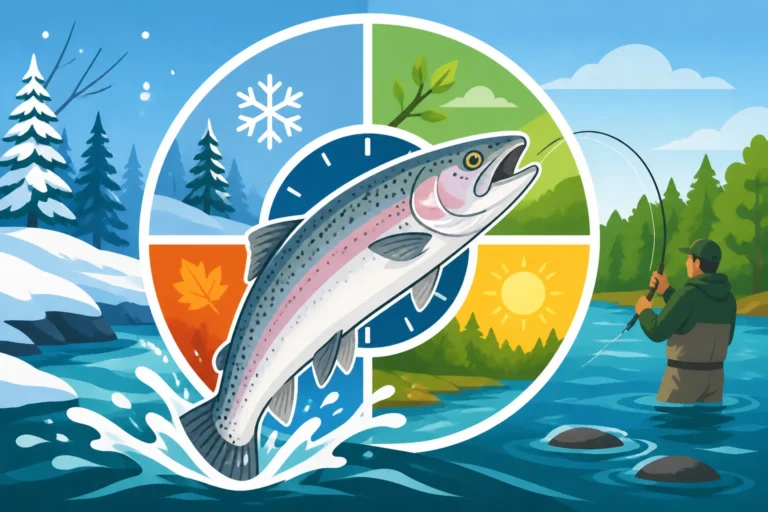
Each season presents unique challenges and opportunities for targeting Lake Trout. Adapting your approach based on their behavior, water conditions, and location is paramount. What works like a charm in July will likely disappoint in October, so let’s break down the optimal strategies for each time of year.
Ice Fishing for Lake Trout
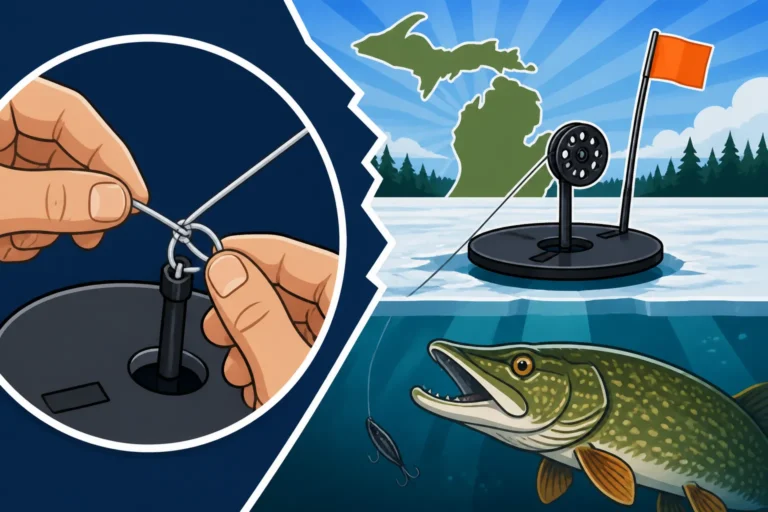
While not as common for Lake Trout as it is for walleye or perch, ice fishing for lakers is a thrilling pursuit in areas where safe ice forms on suitable Great Lakes bays or large connecting waters. Prime locations might include protected bays of Lake Superior or certain deep, clear inland lakes. Anglers typically target depths of 30 to 100 feet or more, often using heavy jigs tipped with minnows or artificial soft plastics. Active jigging, sometimes with a deadstick rod nearby, is the primary technique.
Fish finders, like those available on Amazon, become indispensable tools for locating fish, identifying structure, and monitoring your bait presentation in real-time. Patience is key, as lakers can be finicky under the ice, but when they bite, it's often a solid, unmistakable hit. Always prioritize safety on the ice, checking thickness frequently, and understanding local regulations. For a full breakdown of winter fishing, check out the Michigan Ice Fishing Guide.
Spring Trolling and Jigging
Spring is a fantastic time for more accessible Lake Trout fishing. As fish move shallower, conventional boat-based tactics become highly effective. Trolling with spoons, crankbaits, or stickbaits in depths ranging from 20 to 80 feet is a popular and productive method. Covering water is essential, as the fish can be scattered as they follow bait schools. Colors like silver, blue, green, and chartreuse often perform well, mimicking smelt or alewives.
Jigging also shines in spring, especially when you locate schools of lakers hugging specific structures like submerged points or rock piles. Heavy jigging spoons, tubes, or bucktail jigs dropped right into the strike zone can entice aggressive strikes from hungry fish. Vertical jigging a baitfish imitation can be particularly deadly when fish are concentrated. For anglers wondering about the start of the season, our guide on Best Time to Target Lake Trout in Spring offers additional details.
Summer Deepwater Tactics
Summer is almost exclusively a trolling affair for Lake Trout on the Great Lakes. The goal is to get your presentation down to the cold-water sanctuary where the lakers are holding. Downriggers are the workhorse here, allowing you to precisely control the depth of your lures, whether they are large spoons, flasher-and-fly combinations, or big plugs. Lead core line and copper line setups are also popular alternatives, offering similar deep-water access without the need for downriggers.
Common depths for summer lakers range from 80 to 200 feet, but this can vary significantly based on the specific Great Lake, the depth of the thermocline, and the location of bait. Targeting areas with sharp depth changes, offshore humps, or deep canyons will often yield results. Maintaining consistent boat speed and monitoring your fish finder for bait balls and fish arches are critical components of a successful summer laker trip. Items like diving planers and specialized trolling rods are readily available on Amazon to help you reach those deep lakers.
Fall Nearshore Opportunities
The fall pre-spawn period brings Lake Trout back into shallower, more accessible waters, often providing some of the most exciting action of the year. Trolling remains highly effective, but you can lighten up your gear considerably compared to summer. Spoons, crankbaits, and even large inline spinners become excellent choices in depths from 20 to 60 feet. Focus on rocky shorelines, offshore reefs, and any areas with good current or upwellings that concentrate baitfish.
Casting heavy spoons or large stickbaits from a boat or even from piers (where accessible and deep enough) can also be productive. Fish are often very aggressive and willing to chase. This is the time when you might encounter truly massive Lake Trout preparing for their spawn. Remember to practice responsible catch-and-release, especially with these spawning-focused fish, to ensure future generations of lakers thrive. You can learn more about specific types of trout in our Lake Trout Identification in Michigan article.
Daily Factors Influencing Lake Trout Bites
While the season provides the general framework for Lake Trout behavior, daily conditions can significantly impact whether the fish are actively feeding or remaining docile. Ignoring these subtle shifts can lead to frustrating days on the water. Paying attention to details like water temperature, weather, and the presence of bait can turn a slow day into a memorable one.
Water Temperature and Thermocline
Lake Trout are cold-water species, preferring water temperatures between 45 and 55 degrees Fahrenheit (7-13 degrees Celsius). The location of this preferred temperature range, often delineated by the thermocline, is the single most important factor dictating their depth and activity level. During the summer, a pronounced thermocline will essentially compress the fish into a specific band of water, making them easier to target once that depth is identified. In spring and fall, as the water column mixes, they might be more scattered but will still seek out pockets of their preferred temperature.
If the water is too warm, lakers will dive deeper, becoming lethargic if they can't find cool relief. If it's too cold, their metabolism slows, and they might become less aggressive. Continuously monitoring water temperature at various depths using your boat's electronics, or even a simple temperature probe, is critical. Understanding the relationship between the surface temperature, the thermocline, and the deepest cold water allows you to literally map out where the fish should be.
Weather Conditions and Barometric Pressure
Like most fish, Lake Trout are sensitive to changes in weather and barometric pressure. Stable weather patterns, especially a few days of consistent high pressure, often lead to more predictable and active feeding periods. A rapidly falling barometer, often indicative of an approaching cold front or storm, can sometimes trigger a pre-front feeding frenzy, but more often leads to shut-down bites once the front passes.
Overcast days with light chop can often be ideal, as the reduced light penetration might make the fish feel more secure feeding shallower, and the chop breaks up the surface, making lures appear more natural. Bright, sunny days with a slick-calm surface can sometimes push lakers deeper or make them more wary, requiring subtle presentations or early morning/late evening efforts. Always check the marine forecast before heading out on the Great Lakes, as conditions can change rapidly. For proper boat preparation, refer to our Michigan Boat Registration Requirements guide.
Forage Availability and Location
Lake Trout are apex predators, and their movements are inextricably linked to the presence and movements of their primary forage species. In the Great Lakes, this includes alewives, ciscoes, smelt, and even juvenile whitefish. If you can locate schools of baitfish, you're usually in the vicinity of Lake Trout. These baitfish also respond to water temperature and light conditions, often moving shallower or deeper, or concentrating in specific areas.
Using your fish finder to mark baitfish schools is just as important as marking the lakers themselves. Pay attention to how the bait is behaving – are they tightly schooled, or scattered? Tightly schooled bait often indicates predators are nearby. Trolling or jigging directly through or around these bait concentrations is often the most effective strategy. If the bait is deep, so too will be the lakers. Keeping an eye on what's available for purchase on Amazon, like new sonar units, can help improve your ability to locate these crucial bait schools.
Gear and Techniques for Great Lakes Lake Trout Success
Having the right equipment is non-negotiable when targeting Lake Trout, especially on the vast and often unforgiving Great Lakes. The gear needs to be robust, reliable, and capable of handling deep-water presentations and powerful fish. Let's talk about what you'll need in your tackle box and on your boat.
Rods, Reels, and Line Choices
For Great Lakes Lake Trout, you'll generally want stout rods and reels capable of handling heavy lines and big fish.
- Trolling Rods: Medium-heavy to heavy power rods, typically 7 to 9 feet in length, are ideal for trolling with downriggers or lead core. They need enough backbone to absorb the shock of a big fish while still providing enough sensitivity to detect subtle bites or snagged lines. Companies like Ugly Stik and Daiwa offer reliable options.
- Reels: Levelwind baitcasting reels are standard for trolling, offering excellent line capacity and drag systems. Look for reels with a smooth, powerful drag that can handle long runs from a pissed-off laker. Brands like Penn, Shimano, and Abu Garcia make excellent trolling reels. For jigging, a robust spinning reel or a smaller, faster baitcasting reel can be suitable.
- Line: For downrigger fishing, 30-50 lb test braided line with a 20-30 lb fluorocarbon or monofilament leader is common. Braided line offers minimal stretch and excellent sensitivity. For lead core, you'll be using specific lead core line with a monofilament or fluorocarbon leader. When looking for high-quality line, many anglers find great deals on Amazon. Don't skimp on line; it's your direct connection to the fish. More details on optimal setups can be found in our Best Rods and Reels for Michigan Fishing guide.
Lures, Baits, and Presentations
The variety of lures for Lake Trout is vast, but some staples consistently produce.
- Spoons: Large trolling spoons (like Magnum Dipsy Divers or Northern King spoons) in silver, blue, green, and watermelon patterns are go-to choices, mimicking baitfish. Their erratic wobbling action is irresistible to cruising lakers.
- Flashers and Flies: Often run behind downriggers, a flasher creates vibration and visual attraction, while a trailing fly or small spoon (often a "peanut" fly) seals the deal. Brands like Pro-Troll and Luhr Jensen make popular flashers.
- Crankbaits and Stickbaits: Deep-diving crankbaits (e.g., Rapala Down Deep Husky Jerks, Reef Runners) and stickbaits can be highly effective, especially in spring and fall when fish are shallower.
- Jigs: Heavy jigging spoons (e.g., Swedish Pimples, Crippled Herrings) or bucktail jigs are excellent for vertical jigging over structure or when actively marking fish on your sonar. Tipping them with a minnow head or scent can enhance their appeal.
- Live Bait: While less common for Great Lakes trolling, live herring or ciscoes, where legal, can be deadly when still-fishing or drifting in specific situations. Check the Michigan Fishing Regulations Every Angler Should Know for bait rules. For a comprehensive overview of trolling setups, don't miss our Trolling Gear for Michigan's Great Lakes article.
Electronics and Boat Setup
Modern marine electronics are indispensable for successful Great Lakes Lake Trout fishing.
- Fish Finder/Sonar: A high-quality fish finder with down-imaging and side-imaging capabilities is crucial for locating bait schools, marking individual fish, and identifying underwater structure. Brands like Humminbird, Lowrance, and Garmin are popular choices.
- GPS/Chartplotter: Essential for navigation, marking productive waypoints, and ensuring you can return to specific spots. The Great Lakes are vast, and a reliable GPS is a safety necessity.
- Autopilot: While not strictly necessary, an autopilot system can greatly enhance your trolling efficiency, allowing you to maintain consistent speeds and headings, freeing you up to focus on rod adjustments.
- Boat: For targeting Lake Trout on the Great Lakes, you'll ideally want a boat capable of handling rough water, such as a deep-V fiberglass boat or a large aluminum fishing boat. Safety should always be your top priority on these immense bodies of water. Our Best Boats for Michigan Fishing guide provides valuable insights.
| Season | Typical Depth Range (feet) | Primary Techniques | Best Lures/Baits | Key Considerations |
|---|---|---|---|---|
| Winter | 30 – 150+ | Ice Jigging | Heavy jigs, minnows | Patience, electronics, safety |
| Spring | 20 – 80 | Trolling, Jigging | Spoons, Crankbaits | Following bait, temperature breaks |
| Summer | 80 – 200+ | Deep Trolling | Spoons, Flashers/Flies, Plugs | Downriggers, thermocline, offshore structure |
| Fall | 20 – 60 | Trolling, Casting | Spoons, Stickbaits, Jigs | Pre-spawn staging, aggressive bite |
Disclaimer
Fishing conditions and regulations in Michigan can change frequently. Always consult the latest Michigan Department of Natural Resources (MDNR) fishing guide before heading out on the water to ensure you are aware of all current rules, regulations, and licensing requirements. This guide is for informational purposes only and does not supersede official MDNR publications.