What Depth Do Lake Trout Live At
One of the biggest head-scratchers for Michigan anglers chasing lake trout is figuring out where these elusive giants hang out. You can spend hours on the water, trolling or jigging, only to come up empty because you're simply not presenting your bait at the right depth. It’s incredibly frustrating when you know the fish are there but just can't seem to get on them. This comprehensive guide will help you unravel the mystery of lake trout depth preferences, exploring how factors like season, water temperature, oxygen levels, and food availability dictate where these magnificent fish reside, giving you the knowledge to target them more effectively across Michigan's diverse waters.
Understanding Lake Trout Depth Preferences
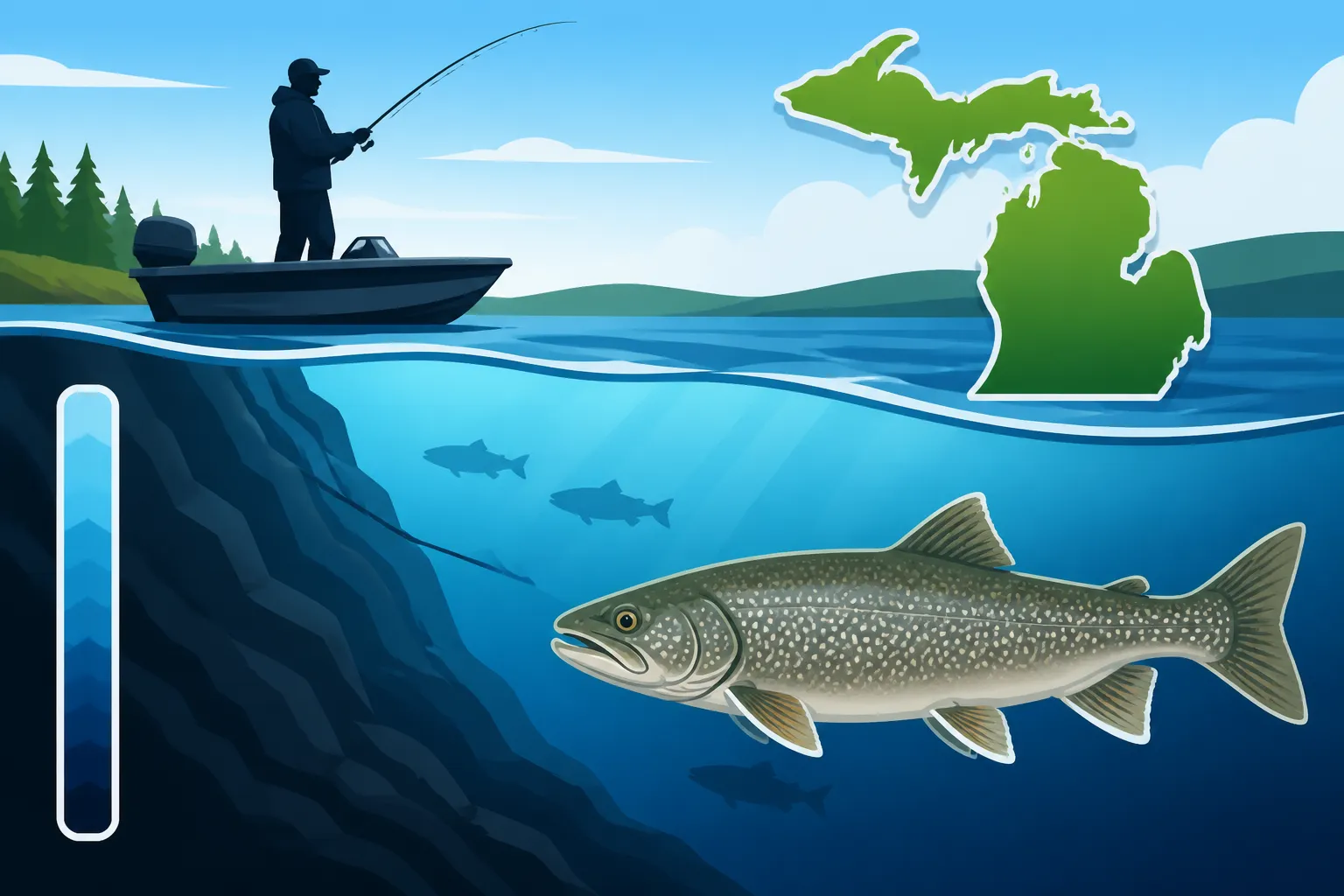
Lake trout are fascinating creatures, perfectly adapted to the cold, clear waters they call home. Unlike many other species, they aren't fans of warm water. Their optimal temperature range is quite specific, usually between 40 to 55 degrees Fahrenheit (4 to 13 degrees Celsius). This preference is the primary driver behind their depth movements throughout the year. If the surface water gets too warm, they're going to dive deep, seeking out that comfortable, cold thermocline.
Beyond temperature, lake trout also need ample oxygen and a reliable food source. Deeper waters typically hold more stable oxygen levels, especially in large, stratified lakes. When we talk about food, lake trout are apex predators, preying on baitfish like ciscoes, smelt, and sculpins. If these baitfish are found schooling at a certain depth, you can bet the lake trout will be nearby, shadowing their movements. Understanding this triumvirate of temperature, oxygen, and food is key to consistently finding these fish.
Factors Influencing Lake Trout Depth
It's not just a simple matter of "deep water" for lake trout; there are nuances that dictate their exact whereabouts. Think of it like a treasure hunt where the map constantly redraws itself based on environmental conditions. Anglers often overlook these subtle shifts, leading to fruitless fishing trips. Learning to interpret these environmental cues can dramatically improve your success rate.
Water Temperature and the Thermocline
The thermocline is arguably the single most important factor for finding lake trout. In the spring and fall, when the entire lake is a uniform temperature (we call this "lake turnover"), lake trout can be found anywhere from shallow bays to deeper structures. However, once summer rolls around and the surface warms, a distinct thermocline forms. This is a layer of water where the temperature changes rapidly. Above it, the water is warm; below it, it's cold. Lake trout will typically hug the bottom of this thermocline or just below it, seeking their preferred cool temperatures.
For instance, in the vast expanses of Lake Superior, where the water rarely gets truly warm, lake trout might be found relatively shallower than in a deep inland lake that experiences significant summer stratification. Monitoring water temperature using a fish finder with a temperature gauge is crucial. If you're seeing surface temps in the high 60s or 70s, you know those lake trout are down deep, possibly 60 to 120 feet or more, depending on the specific body of water and the depth of the thermocline.
Dissolved Oxygen Levels
While temperature often gets the spotlight, dissolved oxygen (DO) is just as critical. Fish need oxygen to breathe, just like us. Cold water naturally holds more oxygen than warm water. This is why when you combine cold water and good oxygen, you've got a prime lake trout habitat. In some deep, highly productive inland lakes, the very deepest parts can become anoxic (lacking oxygen) during peak summer, even if they're cold. In these scenarios, lake trout might be forced to move shallower than their ideal temperature zone, seeking out areas with enough oxygen.
A good example might be some of the deeper inland lakes in Michigan's Upper Peninsula. While they are deep and cold, if they have a lot of organic decomposition on the bottom, the oxygen levels can plummet in the deepest pockets. Savvy anglers will look for the sweet spot where the water is cold and oxygenated. How Big Do Lake Trout Get in Michigan often depends on their ability to thrive in these ideal conditions.
Availability of Forage Species
Lake trout are opportunistic feeders, but they do have their favorites. Ciscoes (lake herring), smelt, and sculpins are primary forage for larger lake trout. These baitfish also have their own preferred temperature and depth ranges. If you can locate the schools of baitfish, you're often one step closer to finding the lake trout. Modern fish finders are incredibly helpful for this, allowing you to mark bait balls on your screen.
For example, on Lake Michigan, vast schools of alewives and smelt might congregate at particular depths. Lake trout will patrol these depths, making quick strikes into the schooling bait. This means that even if the water temperature is ideal at 80 feet, if all the baitfish are suspended at 60 feet, the lake trout will likely be concentrating at 60 feet. It's a constant game of cat and mouse, and knowing where the "mice" are is half the battle. This ecological relationship also ties into the growth rate, affecting Lake Trout Identification in Michigan by size.
Seasonal Depth Patterns for Michigan Lake Trout
Lake trout aren't static; their depth varies significantly throughout the year in response to Michigan's distinct seasons. What works in spring won't necessarily work in summer. Understanding these seasonal shifts is fundamental to being a successful lake trout angler.
Spring: Post-Spawn and Shallow Opportunities
As the ice retreats and the waters begin to warm slightly in spring, lake trout often move into shallower areas, sometimes as shallow as 10-30 feet. This post-spawn period sees them actively feeding, recovering energy lost during spawning. The entire water column is usually well-oxygenated and uniformly cool, meaning they aren't confined to specific deep pockets yet. This is a fantastic time for shore anglers in certain spots or those fishing from smaller boats closer to shore.
You might find them cruising along rocky points, drop-offs, or even sandy flats near deeper water. Casting spoons or stickbaits can be highly effective during this period. As the season progresses and the surface warms, they'll gradually start migrating deeper. This is also a good time to remember that Michigan's Great Lakes Fishing Guide emphasizes these shallower periods.
Summer: The Deep Dive
Summer is when lake trout truly become deepwater residents. As the sun beats down and the surface waters heat up, the thermocline establishes itself firmly. Lake trout will typically descend to depths ranging from 50 to 150 feet, sometimes even deeper in exceptionally clear, deep lakes like parts of Lake Superior or Torch Lake. They seek out that cooler, oxygenated water below the thermocline.
During this time, trolling with downriggers or weighted lines is the most common and effective technique. You'll be targeting specific depths, often near underwater structure like humps, reefs, or along deep drop-offs. Your fish finder becomes your best friend, helping you locate the thermocline and any suspended baitfish. If you're wondering Best Time to Catch Lake Trout on the Great Lakes, for deepwater tactics, summer is prime.
Fall: Pre-Spawn and Turnover
As autumn arrives, the surface waters cool, and the thermocline begins to break down. This period, often called "lake turnover," means the water column starts to become more uniform in temperature and oxygen again. Lake trout will begin to move shallower once more, driven by their pre-spawn instincts. They'll often be found in depths similar to spring, anywhere from 20 to 60 feet, especially near traditional spawning grounds like rocky shoals and reefs.
This can be another excellent time for targeting them with traditional casting or jigging techniques, as they are actively feeding in preparation for the spawn. The fishing can be fast and furious during the fall, as these fish pack on the calories.
Winter: Ice Fishing Depths
For the intrepid ice angler, winter offers unique opportunities to target lake trout. In many Michigan lakes, once the ice forms, lake trout often suspend at moderate depths, sometimes 30 to 70 feet over even deeper water, or they can be found close to bottom structure in similar depths. They don't typically go to the extreme depths they inhabit in summer, as the entire water column is cold and well-oxygenated.
Jigging spoons or vertical presentations with live bait are popular. While they might still be found at over 100 feet in some areas, many successful ice anglers target more manageable depths. The key is finding their cruising lanes or where they're relating to underwater structure.
| Season | Typical Depth Range (Approximate) | Preferred Water Temperature | Common Forage | Primary Angling Technique |
|---|---|---|---|---|
| Spring | 10 – 50 feet | 40 – 50°F (4 – 10°C) | Smelt, Ciscoes, Sculpins | Casting, Trolling (shallow) |
| Summer | 50 – 150+ feet | 40 – 55°F (4 – 13°C) | Alewives, Smelt, Ciscoes | Deep Trolling (Downriggers) |
| Fall | 20 – 70 feet | 45 – 55°F (7 – 13°C) | Smelt, Ciscoes, Sculpins | Casting, Trolling, Jigging |
| Winter | 30 – 80 feet | 35 – 40°F (1 – 4°C) | Smelt, Sculpins | Jigging, Tip-ups |
Locating Lake Trout in Michigan's Waters
Michigan is blessed with incredible lake trout opportunities, from the vast Great Lakes to numerous deep inland gems. However, finding these fish requires a slightly different approach depending on whether you're on a massive freshwater sea or a smaller, albeit deep, inland lake.
Great Lakes Strategies: Superior, Michigan, Huron
When you're fishing the Great Lakes for lake trout, you're dealing with immense bodies of water. Lake Superior, for example, is notoriously deep and cold, often allowing lake trout to stay at more consistent depths throughout the year, though they'll still follow seasonal patterns. Here, your gear needs to be robust. Trolling with downriggers is paramount for reaching depths of 80 to 150 feet or more. Boats need to be seaworthy, capable of handling variable conditions.
On Lake Michigan and Lake Huron, you'll still encounter very deep water, but the thermocline can be more pronounced and shallower than in Superior during the summer months. Anglers often focus on specific structures like the "Lakers" (large underwater reefs and rock piles) or deep canyons where baitfish congregate. Having a reliable fish finder with GPS capabilities is non-negotiable for marking these spots and tracking your trolling passes. Trolling Gear for Michigan's Great Lakes is essential for success here.
Many anglers on the Great Lakes rely on specialized electronics, which you can find readily available on Amazon, to pinpoint fish and bait schools. These units make all the difference when you're trying to figure out if you're trolling through empty water or right over a school of hungry lake trout.
Inland Lake Tactics: Torch, Higgins, Burt, Mullett, etc.
Michigan's deep inland lakes, while smaller than the Great Lakes, still offer fantastic lake trout fishing. Lakes like Torch Lake, Higgins Lake, Burt Lake, and Mullett Lake are deep enough to support thriving lake trout populations. In these lakes, the depth patterns are similar to the Great Lakes but on a slightly smaller scale. During summer, you'll still find lake trout holding deep, often 60-100 feet.
However, inland lakes might have more distinct "lake trout holes" – specific deep basins or steep drop-offs where they consistently congregate. Focus your efforts on these areas. Jigging over deep structure can be incredibly effective, especially if you can mark fish on your sonar. Vertical jigging a tube jig or heavy spoon can entice a strike. For those exploring these waters, a reliable Best Fish Finder for Boat Fishing in Michigan will be invaluable. Remember that on these lakes, especially in late spring and early fall, lake trout might push shallower to chase bait, offering exciting opportunities with less specialized gear.
Gear and Techniques for Targeting Deepwater Lake Trout
Successfully catching lake trout in their deepwater haunts requires specialized gear and refined techniques. You can't just cast a bobber and expect results. It's about precision, understanding your electronics, and having the right tools for the job.
Essential Deepwater Tackle
When it comes to deepwater lake trout, your standard bass rod and reel just won't cut it. You need robust equipment designed to handle heavy lures, strong lines, and powerful fish from significant depths.
- Rods: Look for stout trolling rods, often 7-9 feet long, with a medium-heavy to heavy action. These rods need enough backbone to handle the drag of heavy weights or downrigger balls, yet enough sensitivity to telegraph strikes. For jigging, a sensitive 6-7 foot medium-heavy spinning or casting rod is ideal.
- Reels: High-quality baitcasting reels, often with line counters, are preferred for trolling. These allow you to precisely control your depth and repeat successful presentations. For jigging, a sturdy spinning reel capable of holding a good amount of heavy line is suitable.
- Line: Braided line is a favorite for deepwater applications due to its thin diameter, incredible strength, and zero stretch, which provides excellent sensitivity. A 20-30 lb test braided mainline, often with a fluorocarbon leader (15-20 lb test), is a common setup. The fluorocarbon leader is less visible in clear water.
- Lures: Spoons (like Dodger/Fly combos, Michigan Stingers, or Silver Streaks), deep-diving crankbaits, and heavy tube jigs or bucktail jigs are all staples for lake trout. Color choice can vary, but silver, blue, green, and chartreuse are often productive. Many of these effective lures can be easily found on Amazon.
Trolling with Downriggers and Dipsy Divers
Trolling is king for summer lake trout, and downriggers are your best friend. A downrigger allows you to precisely present your lure at a specific depth, bypassing the thermocline and putting your bait right in the strike zone. You attach a heavy lead ball (the "downrigger weight" or "ball") to a cable, and your fishing line clips into a release mechanism on the cable. When a fish strikes, the line releases from the clip, and you fight the fish directly.
Dipsy divers are another excellent tool for reaching depth without the need for downriggers, though they are often used in conjunction with them. These disc-shaped devices dive when retrieved, taking your lure down with them. They come in various sizes and can be set to dive to different depths and even track out to the sides of the boat, expanding your trolling spread. Learning How Deep to Troll for Lake Trout is a skill honed with experience and the right equipment.
Jigging Deepwater Structures
When fish are concentrated on specific underwater features like humps, rock piles, or steep drop-offs, vertical jigging can be incredibly effective. Using your fish finder to locate these structures and mark individual fish is crucial. Heavy jigging spoons, like Northland Buck-Shot Rattle Spoons or Swedish Pimples, tipped with a minnow head or a piece of cut bait, are popular. Tube jigs, especially white or chartreuse, can also be deadly.
The technique involves dropping your jig to the desired depth, then lifting and dropping it with varying rhythms to mimic a wounded baitfish. Be patient, as strikes can sometimes be subtle, feeling like a slight "mush" or added weight on your line. This active form of fishing is a fantastic way to engage with the fish, especially when they're not actively chasing trolled baits.
Electronics: Your Underwater Eyes
A quality fish finder (sonar unit) with GPS is absolutely indispensable for lake trout fishing, especially in deep water. This isn't just a nice-to-have; it's a necessity. It allows you to:
- Locate the Thermocline: Identify the temperature break where lake trout are likely to be holding.
- Mark Baitfish Schools: See where the forage is, as lake trout will often be nearby.
- Identify Structure: Pinpoint humps, reefs, drop-offs, and other underwater features that attract fish.
- Mark Individual Fish: In many cases, you'll be able to see actual fish arches, sometimes even clearly identifying larger lake trout.
- Navigate and Mark Waypoints: Use the GPS to return to productive spots or follow specific contours.
The investment in a good fish finder is one of the best you can make for lake trout fishing. Many anglers consider it the single most important piece of equipment after their boat. For those looking to upgrade, considering options available on Amazon can provide a wide range of choices to fit different budgets and needs. Learning how to effectively use tools like What Electronics Help Find Walleye can be easily transferred to lake trout.
Ice Fishing Specifics for Lake Trout
During the hardwater season, finding lake trout through the ice still involves understanding depth. While they might be shallower than in summer, they're rarely just under the ice. Portable sonar units (like Vexilars or Marcums) are essential for showing you the depth, structure, and any fish or bait passing through. This real-time feedback allows you to adjust your jigging presentation on the fly.
Heavy jigs, spoons, or even large shiners suspended under a tip-up are effective. Focus on deep humps, points, and the edges of steep drop-offs. Drilling multiple holes and moving until you mark fish is a common strategy. Being mobile and utilizing your electronics is key to success on the ice for lake trout, similar to the techniques covered in a general Michigan Ice Fishing Guide.
Disclaimer
This article is for general informational purposes only and does not constitute professional advice. Laws, prices and regulations vary by location and change over time. Consult a qualified professional for guidance on your specific situation.