How to Identify Whitefish in Michigan
Many anglers, myself included, have pulled a beautiful, silver-sided fish from Michigan's vast waters only to pause, fish in hand, and wonder, "What exactly is this?" Identifying certain fish species, especially those with similar appearances, can be a genuine head-scratcher. This comprehensive guide is here to help you confidently identify whitefish in Michigan, breaking down their key characteristics, habitat clues, and how to tell them apart from common look-alikes so you'll never be left guessing again.
Understanding Michigan's Whitefish Species
Before we dive into the nitty-gritty of identification, it’s important to understand what "whitefish" generally refers to in Michigan. We're primarily talking about members of the Coregonus genus, which are cold-water species native to our Great Lakes and many deep, cold inland lakes. They are highly valued for their delicate flavor and are a popular target for commercial and recreational anglers, especially during the colder months.
The Core Species: Lake Whitefish and Round Whitefish
In Michigan, when most people talk about whitefish, they're typically referring to two main species: the Lake Whitefish (Coregonus clupeaformis) and the Round Whitefish (Prosopium cylindraceum). While they share the "whitefish" name, they have distinct features and occupy slightly different niches within their aquatic environments. The Lake Whitefish is generally larger and more robust, often found in deeper, open waters of the Great Lakes. The Round Whitefish, true to its name, has a more cylindrical body and prefers slightly shallower, often rocky habitats. Understanding these two primary players is the first step toward accurate identification.
Why Identification Matters for Anglers
Accurate fish identification isn't just about satisfying your curiosity; it's crucial for responsible angling. Different species often have different regulations concerning bag limits, size restrictions, and even seasons. Mistaking a protected species or exceeding a limit due to misidentification can lead to legal issues. Beyond regulations, knowing your catch helps you understand fish behavior, improve your fishing techniques, and contribute to accurate data collection for fisheries management. For those interested in where to find these elusive fish, our guide on Whitefish Fishing in Michigan offers some fantastic insights.
Key Physical Characteristics for Identification
Let's get down to the visual cues. Whitefish have several distinguishing physical traits that, once you know what to look for, make them stand out from other fish you might encounter in Michigan's waters. Paying close attention to these details when you land a fish can make all the difference.
Fin Structure and Placement
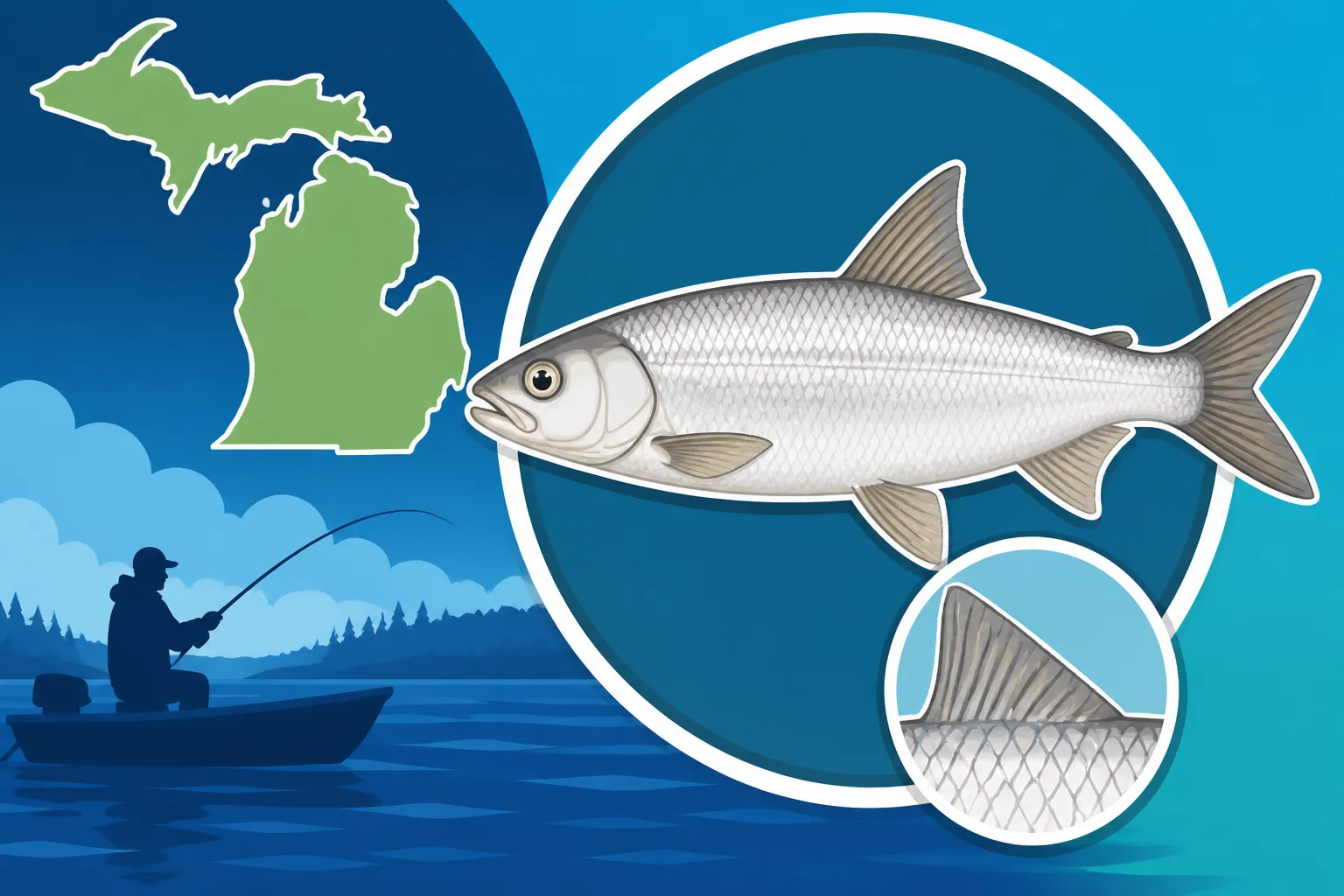
One of the most immediate giveaways for whitefish, and a characteristic they share with trout and salmon, is the presence of an adipose fin. This small, fleshy, rayless fin is located on the back between the dorsal fin and the tail fin. If your fish has this, you know it's a salmonid, or a close relative, which narrows down your options considerably.
Beyond the adipose fin, observe the other fins:
- Dorsal Fin: Typically single, relatively tall, and located mid-back.
- Pectoral and Pelvic Fins: These fins are generally well-developed. The pelvic fins are usually located quite far forward on the belly, closer to the head than the anal fin. This anterior placement of the pelvic fins is a common trait among salmonids.
- Tail Fin (Caudal Fin): Usually forked, which is typical for fast-swimming open-water fish.
Mouth and Jaw Configuration
The mouth of a whitefish is perhaps its most distinctive feature, especially when comparing it to salmon, trout, or even suckers. Whitefish, particularly the Lake Whitefish, have a small, inferior mouth. This means the mouth is located on the underside of the head, and the snout protrudes slightly over the upper jaw. Their jaws are typically toothless or have very small, weak teeth, reflecting their diet of small invertebrates and bottom-dwelling organisms. This mouth structure is perfectly adapted for sifting through substrate or picking tiny morsels off the bottom. In contrast, most salmon and trout have a more terminal (front-facing) mouth with noticeable teeth for catching other fish. How Big Do Lake Whitefish Get can give you an idea of the scale of the mouth on larger specimens.
Body Shape, Coloration, and Scales
Whitefish generally possess a sleek, streamlined body designed for navigating cold, often current-laden waters.
- Body Shape: The Lake Whitefish has a moderately compressed, somewhat deep body, often described as "herring-like" in its profile. The Round Whitefish, as its name suggests, has a more cylindrical, pencil-like body shape, less compressed laterally than the Lake Whitefish.
- Coloration: Both species typically exhibit a silvery, sometimes iridescent, coloration on their sides, fading to a lighter, often white, belly. Their backs can range from olive-green to dark brown or even black, providing camouflage in deeper waters. There might be some subtle speckling or spotting, especially on Round Whitefish, but it's generally not as pronounced as on many trout or salmon.
- Scales: Whitefish have relatively large, cycloid scales that are smooth to the touch. These scales are often quite reflective, giving them their characteristic silvery sheen.
To put these details into perspective, consider this quick comparison table:
| Feature | Lake Whitefish | Round Whitefish |
|---|---|---|
| Adipose Fin | Present | Present |
| Mouth Position | Small, inferior (snout overhangs upper jaw) | Small, subterminal (snout slightly overhangs) |
| Body Shape | Moderately deep, compressed, herring-like | Cylindrical, slender, "round" cross-section |
| Coloration | Silvery sides, darker back (olive/brown) | Silvery sides, darker back (brown/grey), often fine spots |
| Teeth | Absent or minute | Absent or minute |
| Snout | Distinctly conical, often pronounced | Blunter, less pronounced overbite |
If you're finding it tricky to discern the finer points, a good, waterproof fish identification guide (many excellent options are available on Amazon) can be an invaluable tool to have on hand. It allows you to cross-reference characteristics immediately while the fish is still fresh.
Distinguishing Whitefish from Common Look-Alikes
Michigan's diverse aquatic ecosystems are home to many species that, at first glance, might be confused with whitefish. Knowing these common look-alikes and their key differences is vital for accurate identification. This is where your keen observation skills truly come into play.
Whitefish vs. Cisco (Lake Herring)
The cisco (Coregonus artedi), also known as lake herring, is perhaps the most commonly confused fish with the Lake Whitefish. They are both members of the Coregonus genus and share many similarities. However, there are crucial distinctions:
- Mouth: This is often the biggest clue. Ciscos have a terminal mouth, meaning the mouth is located at the very front of the head, and the lower jaw is typically equal to or slightly projects beyond the upper jaw. Remember, Lake Whitefish have that distinctly inferior mouth with the snout overhanging.
- Body Shape: While both are silvery and streamlined, ciscos tend to be even more elongated and slender than Lake Whitefish, truly resembling a herring. Lake Whitefish generally have a deeper, more robust body.
- Snout: The cisco's snout is usually blunter and less conical than that of a Lake Whitefish.
If you're catching a lot of silvery fish, and some have the distinct overbite and others don't, you're likely encountering both whitefish and cisco. Both are fantastic eating, but regulations can differ.
Whitefish vs. Lake Trout and Salmon Juveniles
Another common mix-up, especially for smaller specimens, is confusing whitefish with juvenile lake trout (Salvelinus namaycush) or various salmon species (like Chinook or Coho) that inhabit the Great Lakes. While they all possess an adipose fin, their other features quickly set them apart.
- Mouth and Teeth: Lake trout and salmon have prominent teeth in their jaws and a more terminal or slightly superior (lower jaw protruding) mouth. Whitefish, as discussed, have a small, inferior mouth with virtually no teeth.
- Coloration and Markings: This is a major differentiator. Lake trout are typically dark gray or olive with distinct light spots (often white or yellowish) all over their body, including fins. Salmon species, especially juveniles, often have parr marks (vertical bars) on their sides, and adult salmon develop various spots and colors, but generally not the distinct white or yellow spots of a lake trout. Whitefish lack these pronounced spots or parr marks. For a deeper dive into these species, check out Michigan Trout Species Explained and Michigan Salmon Species Explained.
- Body Shape: While trout and salmon can be streamlined, their body profiles often differ from the more 'herring-like' whitefish. Trout and salmon can also be more robust or muscular depending on their age and specific species.
If you're unsure, gently opening the mouth to check for teeth and carefully observing the spotting patterns are excellent ways to make the call. Having a good fish identification chart or even photos on your phone (downloaded beforehand, in case of no signal!) can be incredibly helpful. A small, portable magnifying glass, also easily sourced from Amazon, can aid in examining minute details like scale patterns or fin ray counts if you're really stumped.
Whitefish vs. Suckers
Finally, there's the possibility of confusing a whitefish with a sucker, especially a longnose sucker or white sucker. Both are bottom feeders, and both have an inferior mouth. However, the differences are quite stark once you know what to look for:
- Adipose Fin: Suckers do not have an adipose fin. This is the absolute easiest way to tell them apart. If it lacks that little fleshy fin on its back, it's not a whitefish, trout, or salmon.
- Mouth Structure: While both have inferior mouths, a sucker's mouth is much more distinctive. It's often thick-lipped, fleshy, and protrusible, forming a distinct "sucker" disk for vacuuming up food from the bottom. A whitefish's mouth, while inferior, is small and more pointed, designed for picking rather than sucking.
- Body Shape: Suckers tend to have a more elongated, cylindrical body, often with a somewhat blunt head. While the Round Whitefish is cylindrical, its head and mouth profile are quite different from a sucker.
Understanding these distinctions is crucial for proper identification. Always compare multiple features, not just one, to be absolutely sure of your catch.
Habitat and Behavioral Clues for Identification
Knowing where a fish prefers to live and how it behaves can offer additional powerful clues to its identity, even before you get it into your hands. Whitefish, like all species, have specific environmental preferences that dictate their distribution in Michigan's waters.
Preferred Depths and Water Temperatures
Whitefish are quintessential cold-water species. They thrive in well-oxygenated, cool water, which is why they are so prevalent in the Great Lakes and many of Michigan's deeper inland lakes.
- Lake Whitefish are often found in deeper offshore waters, especially during warmer months, sometimes at depths exceeding 100 feet. They will move shallower during spawning seasons.
- Round Whitefish tend to prefer shallower, rocky areas, often in strong currents of rivers connecting to the Great Lakes, or in the nearshore zones of large lakes, but still in cold water.
If you're fishing warm, shallow inland lakes during mid-summer, the likelihood of catching a true whitefish is significantly lower than if you're out on Lake Michigan in deep water. Conversely, targeting river mouths or rocky break walls in colder conditions might increase your chances of finding Round Whitefish. For comprehensive information on fishing in these vast waters, refer to Michigan's Great Lakes Fishing Guide.
Foraging Habits and Diet
Whitefish are primarily bottom feeders. Their small, inferior mouths are perfectly adapted for grubbing around the substrate for their food. Their diet consists mainly of:
- Benthic invertebrates: Small insects, larvae, freshwater shrimp (like Mysis relicta), and amphipods.
- Mollusks: Small snails and clams, especially zebra and quagga mussels in the Great Lakes.
- Fish eggs: During spawning seasons, they may opportunistically feed on the eggs of other fish.
Understanding their diet gives you clues about where to target them and what baits or lures might be effective. If you're using small jigs or baits presented close to the bottom, and you're catching silvery fish with small, downward-pointing mouths, you're likely on to whitefish. This also helps differentiate them from predatory species like salmon and trout, which primarily feed on smaller fish (though they will also eat invertebrates).
Seasonal Movements and Spawning
Whitefish exhibit distinct seasonal movements, largely driven by temperature and spawning cycles.
- Summer: Both Lake and Round Whitefish typically retreat to deeper, cooler waters as surface temperatures rise. This makes them a prime target for deepwater trolling or bottom fishing.
- Fall/Early Winter: This is prime time for whitefish. As water temperatures cool, they move into shallower areas, often near shoals, rocky reefs, or river mouths, to spawn. Lake Whitefish are well-known for their fall migrations into shallower spawning grounds in the Great Lakes, while Round Whitefish will ascend rivers or utilize nearshore lake areas. This migration makes them more accessible to shore and pier anglers. You can learn more about general seasonal patterns in Michigan Fishing Seasons Explained.
- Winter: During ice fishing season, whitefish can be caught in various depths, often congregating near structures like drop-offs, humps, or reefs. Ice anglers targeting these fish often use specialized jigs and bait.
Knowing these patterns helps you anticipate when and where you're most likely to encounter whitefish, which in turn aids in identification. If you're catching silvery fish in shallow, rocky areas in late fall, it's a strong indicator they might be spawning whitefish.
Practical Tips for Confident Whitefish Identification
Even with all the knowledge in the world, identifying fish in the field can sometimes be tricky. Here are some practical tips to ensure you make the right call every time.
What to Look for When You Land One
The moment you land a fish, don't just grab it and toss it in the cooler. Take a few seconds to observe:
- Check for an Adipose Fin: First thing, every time. If it's there, you're dealing with a salmonid or a whitefish. If not, it's not a whitefish.
- Examine the Mouth: Gently open the mouth. Is it small and on the underside of the head? Does the snout clearly overhang the upper jaw? Are there any visible teeth? This is your strongest clue against trout and salmon.
- Note Body Shape and Coloration: Is it deeply compressed like a herring, or more cylindrical? What are the primary colors, and are there any distinct spots or markings?
- Feel the Scales: Whitefish scales are generally smooth. While this isn't a primary identifier, it can add to the overall picture.
- Measure and Photograph: If you're still unsure, take a clear photo next to a ruler or a familiar object for scale. Later, you can compare it to field guides or online resources. A good digital fish scale and measuring tape, readily available on Amazon, can be incredibly useful here.
Remember, responsible handling is key. If you're planning to release the fish, minimize handling time and keep it wet.
Using Field Guides and Digital Resources
A good, waterproof field guide specific to Michigan or Great Lakes fish species is an angler's best friend. Keep it in your tackle box or boat. These guides often have detailed illustrations or photos and highlight key distinguishing features. Many excellent ones are available through retailers like Amazon.
Beyond physical books, many reputable online resources and even dedicated apps can help. The Michigan Department of Natural Resources (DNR) website is a treasure trove of information, often featuring identification guides and regulations. When using digital resources, ensure they are from credible sources to avoid misinformation. Familiarize yourself with the Reading the Michigan Fishing Regulations Digest as it often contains species-specific illustrations.
The Importance of Respectful Handling
When you're actively identifying a fish, especially if you plan to release it, minimizing stress is paramount. Handle the fish gently, support its body, and avoid touching its gills or eyes. If it's a cold-water species like a whitefish, try to keep it in the water as much as possible while you examine it. If you're fishing in Michigan, it's always wise to refresh your knowledge of Michigan Fishing Regulations Every Angler Should Know to ensure you're in compliance, especially with catch-and-release rules for certain species or during specific seasons. Knowing what you've caught means you can treat it appropriately and contribute to healthy fish populations for years to come.
By combining an understanding of whitefish anatomy with knowledge of their preferred habitats and behavior, and by practicing careful observation, you'll become an expert at identifying these beautiful and delicious fish in Michigan's incredible waters.
Disclaimer
This article is for general informational purposes only and does not constitute professional advice. Laws, prices and regulations vary by location and change over time. Consult a qualified professional for guidance on your specific situation.