How to Tell a Brook Trout From a Brown Trout
Oh, the age-old angler's dilemma! You're out on a beautiful Michigan stream, the water is crisp, and you hook into a gorgeous trout. Your heart races, but then a question pops into your head: Is this a stunning native brook trout or a well-established brown trout? It can be surprisingly tricky to tell them apart, even for seasoned anglers, leading to moments of confusion right there on the riverbank. This guide is here to untangle that mystery, giving you clear, visual, and behavioral cues to confidently identify brook and brown trout in Michigan's abundant waters.
The Tale of Two Trouts: Why Identification Matters in Michigan
There's a special kind of satisfaction that comes with knowing exactly what you've caught. In Michigan, distinguishing between a brook trout and a brown trout isn't just about showing off your angling prowess; it's genuinely important for understanding our ecosystems and following fishing regulations. Many folks, especially those new to trout fishing in our state, find themselves scratching their heads when a beautiful specimen comes to hand, unsure if it's the native jewel or the robust import.
The Frustration of Misidentification
Imagine this: You're wading through a pristine Upper Peninsula stream, casting into a deep pool. Wham! A feisty trout slams your fly. You carefully bring it in, admiring its colors, convinced it’s a brook trout, Michigan’s only native stream trout. You even take a quick photo. Later, showing it off to a more experienced friend, they squint and say, "That's a nice brown, actually!" Suddenly, your pride might turn to mild embarrassment, or worse, you might realize you accidentally kept a fish that was under the brown trout size limit, or over the bag limit for that specific species, had it been the other way around. This kind of confusion is common, but it highlights just how crucial accurate identification can be.
Beyond personal pride, specific rules apply to different species. In some waters, there might be special protections or different size and possession limits for brook trout compared to brown trout. Misidentifying your catch could inadvertently lead to a violation, which is the last thing any responsible angler wants. Knowing the difference allows you to enjoy your catch responsibly, whether you're keeping it for dinner or carefully releasing it back into the stream. You'll find a wealth of information in the Michigan Fishing Regulations Every Angler Should Know to keep you on the right side of the law.
Native vs. Introduced: A Michigan Perspective
Part of the reason identification holds such weight in Michigan is the ecological backstory of these two fish. Brook trout, often lovingly called "brookies," are Michigan's sole native stream trout. They've been here for millennia, evolving with our landscapes, and they truly embody the wild spirit of our colder, cleaner northern waters. Catching a brook trout is like holding a piece of Michigan's natural heritage. They are particularly sensitive to habitat degradation and prefer pristine, oxygen-rich environments, often thriving in smaller, higher-gradient tributaries where water temperatures remain consistently cool.
Brown trout, on the other hand, are an introduced species, brought over from Europe in the late 19th century. They've done incredibly well in Michigan, establishing thriving populations in many of our rivers and streams, often outcompeting brook trout in slightly warmer or less pristine conditions. Their adaptability has made them a staple for anglers across the state, and they can grow to impressive sizes. Understanding this native-vs.-introduced dynamic often shapes our appreciation for each species and influences conservation efforts. Knowing your fish helps you appreciate their place in Michigan's diverse aquatic ecosystems, as further detailed in Michigan Trout Species Explained.
Key Visual Cues: Spotting the Differences Like a Pro
Alright, let's get down to brass tacks. When that fish is in your net (or in your hand, if you’re quick and gentle), what exactly should you be looking for? It boils down to a few distinct visual characteristics that, once you know them, become unmistakable. It takes a little practice, but soon you'll be calling them out with confidence.
Body Shape and Fin Characteristics
First, let’s look at the overall silhouette and the fins. Brook trout, when you hold them, often feel and look more streamlined, almost torpedo-shaped. They tend to have relatively larger fins compared to their body size, giving them an agile, powerful look for navigating swift currents. Their tail fin is typically square or only very slightly emarginate (meaning it has a very shallow fork). This square tail is a key identifier.
Brown trout, by contrast, tend to be a bit more robust and blocky, especially as they get larger. Their body might appear deeper or thicker, particularly in larger specimens. Their tail fin is often slightly forked, though it can sometimes appear nearly straight in smaller fish. One of the most telling fin characteristics for brook trout is the distinct white leading edges on their pectoral, pelvic, and anal fins, often followed by a thin black stripe, then the rest of the fin is usually a reddish-orange. Brown trout generally lack these prominent white and black fin margins; their fins tend to be more uniformly colored, often matching their body tone or having darker mottling.
Coloration and Spot Patterns: The Dead Giveaways
This is arguably the most reliable way to differentiate the two. Their patterns and colors are truly nature's fingerprints.
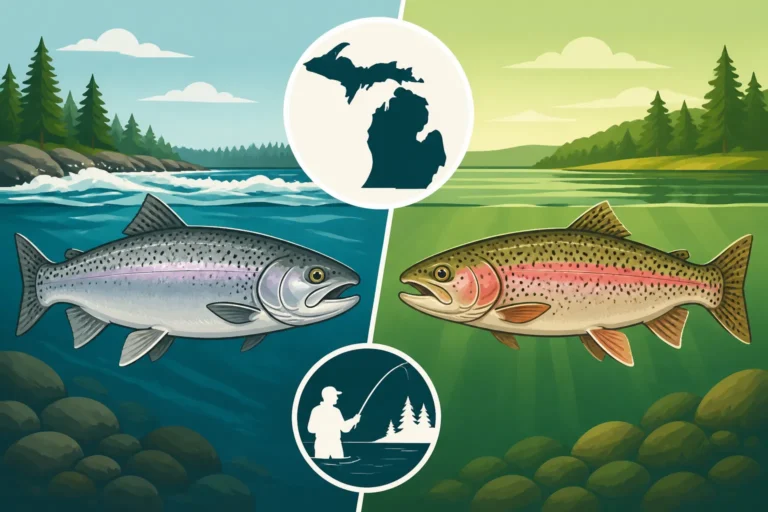
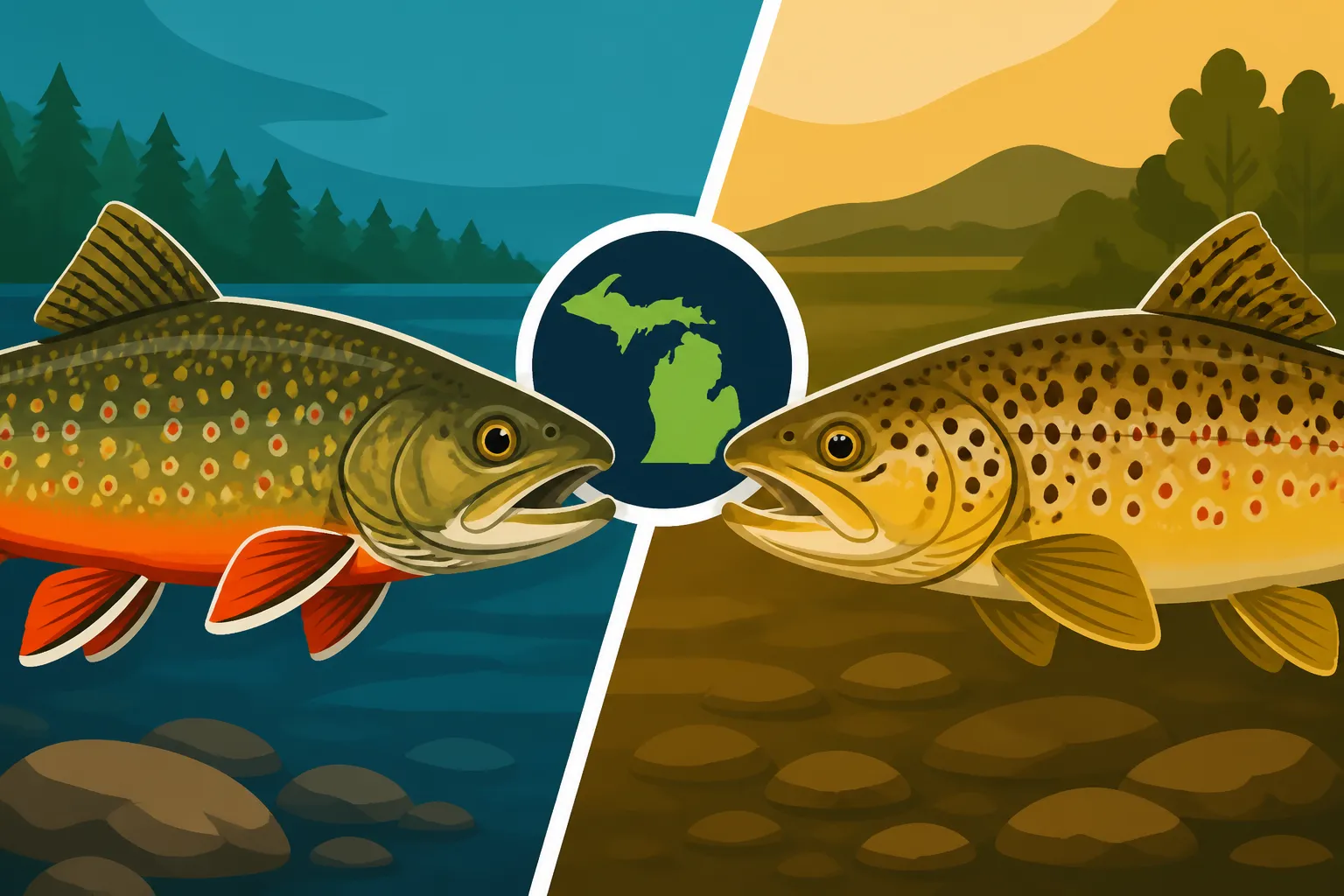
Brook trout are simply stunning, adorned with what looks like a masterpiece of nature. Their backs and dorsal fin are typically olive green or dark brown, covered with an intricate pattern of light, worm-like markings called "vermiculation." This pattern is a dead giveaway – imagine a maze of squiggles. Along their sides, they boast vibrant red or orange spots, and here's the crucial part: many of these red spots are surrounded by distinctive blue halos. It's like someone took a paintbrush and carefully outlined each red spot with a sky-blue ring. Their bellies can range from white to creamy, often turning a brilliant orange or red during spawning season, particularly in males. The white leading edges on their lower fins, mentioned earlier, stand out vividly against the darker parts of the fin and body.
Brown trout have a different, equally beautiful, but distinct palette. Their base color can vary widely depending on their habitat and diet, ranging from a golden brown to olive green, sometimes with silvery flanks in lake-dwelling individuals. What sets them apart visually are their spots. Brown trout have prominent dark spots – typically black or dark brown, though some may have reddish-brown spots as well – scattered across their sides, back, and importantly, extending onto their operculum (the gill cover). Unlike brook trout, these dark spots rarely, if ever, have distinct blue halos, though some red or orange spots might be present, they won't have the vibrant blue outline. They completely lack the worm-like vermiculation on their backs and dorsal fin. Their bellies are usually a creamy white to yellowish color. To really pick out these subtle details, especially in varying light conditions or when the fish is still wet, a good pair of polarized sunglasses can make all the difference, helping to cut through glare and reveal the true colors. Amazon offers a wide selection of polarized sunglasses that can be a game-changer for on-the-water identification.
Mouth and Jaw Structure
While not always as obvious as coloration, the mouth and jaw can offer another clue, especially with larger fish. Brown trout tend to have a larger mouth that extends noticeably past the rear edge of the eye, particularly in larger, mature individuals. Male brown trout, especially during spawning season, can develop a pronounced hook on their lower jaw, known as a "kype." This is a classic characteristic.
Brook trout generally have a smaller mouth that typically does not extend past the middle of the eye. While male brook trout can also develop a slight kype, it's usually less pronounced and doesn't give that same extended-jaw appearance as a large brown trout. This distinction is subtle, but if you're still debating after looking at spots, it can provide an extra piece of the puzzle.
Habitat and Behavior Clues: Where and How They Live
Beyond their physical appearance, the environment in which you find a trout and how it behaves can offer strong hints as to its identity. These two species have adapted to different niches, and understanding their preferences can help you predict what you're likely to catch, even before you see the telltale spots.
Preferred Water and Temperature
Brook trout are truly creatures of the wild, pristine places. They are cold-water specialists, demanding water temperatures that rarely exceed 68°F (20°C). You'll typically find them in smaller, high-gradient streams and headwater tributaries – those crystal-clear, oxygen-rich creeks tumbling through dense forests. They love plenty of cover, such as undercut banks, fallen logs, and abundant aquatic vegetation, which provide shelter from predators and strong currents. If you're fishing a tiny, spring-fed stream that feels like it hasn't changed in a hundred years, you're most likely in prime brook trout territory, as often found in Brook Trout in Michigan Rivers.
Brown trout, on the other hand, are much more tolerant and adaptable. While they certainly appreciate cold, clean water, they can handle slightly warmer temperatures and a wider range of habitat conditions. This means you might find them in those same small, cold streams alongside brook trout, but also in much larger rivers, some inland lakes, and even the Great Lakes. They are incredibly resilient and can thrive in waters that might be too warm or less oxygenated for brook trout. This wider distribution means that when you're fishing a larger Michigan river, you're just as likely, if not more likely, to encounter a brown trout. This adaptability is part of what makes them so successful across the state's diverse waterways.
Feeding Habits and Aggression
Their personalities, or at least their feeding behaviors, also offer a glimpse into their identity. Brown trout are notorious for being opportunistic and, especially as they grow larger, can be quite aggressive. They're often piscivorous, meaning they'll readily eat smaller fish, in addition to insects, crayfish, and anything else they can get their mouths on. This aggression often translates to powerful strikes on flies, lures, or bait. It's not uncommon to hear stories of a large brown trout surprising an angler with its brute strength. This aggressive nature is part of why many anglers love targeting them with a variety of techniques, including those outlined in How to Catch Brown Trout in Michigan Rivers.
Brook trout tend to be less aggressive, often feeding primarily on aquatic and terrestrial insects, small crustaceans, and other invertebrates. While a big brook trout can certainly put up a spirited fight, they generally don't exhibit the same predatory swagger as a large brown. They often hold in tight cover and dart out to snatch passing food. This isn't a hard and fast rule, of course – a hungry brook trout will hit a lure with gusto – but it can be a subtle indicator. If you're consistently getting subtle takes and your catches are smaller, insect-focused fish, you might be in brook trout country. Having a versatile tackle box, stocked with various lures and baits from retailers like Amazon, means you'll be ready for whatever their mood dictates.
Putting It All Together: A Quick Reference and Tips
Don't worry if it still feels a little daunting. Like anything in fishing, practice makes perfect. The more trout you encounter, the more easily you'll recognize these distinctions. To help you cement the information, here’s a handy comparison table to keep in mind next time you’re on the water.
Side-by-Side Comparison Table
Here's a quick reference guide to help you distinguish between Michigan's brook trout and brown trout:
| Feature | Brook Trout | Brown Trout |
|---|---|---|
| Back/Dorsal | Dark, distinct "worm-like" vermiculation | Dark spots, no vermiculation |
| Side Spots | Red/orange spots with blue halos | Dark (black/brown) spots, no blue halos |
| Fins (Lower) | Distinct white leading edges, often with black | Lacking prominent white/black margins |
| Tail Shape | Square or very slightly emarginate | Slightly forked or straight |
| Mouth Size | Doesn't extend much past middle of eye | Often extends past eye, pronounced kype in males |
| Preferred Habitat | Cold, pristine, high-oxygen streams | More tolerant of varied temps/habitats, larger rivers |
Photography and Field Guides for Confirmation
In today's world, you've got powerful tools right in your pocket. Don't hesitate to snap a few clear photos of your catch before releasing it (or placing it on ice, if legal and you plan to keep it). Reviewing those photos later, perhaps even with a seasoned angler or by cross-referencing with online resources, can be an excellent way to learn. Focus on getting good shots of the back, sides, and fins.
Beyond your phone, carrying a compact, waterproof field guide specific to Michigan's fish species is an invaluable asset. These guides often have detailed illustrations or photos that can clarify any lingering doubts. Many fishing apps also have identification features that can be surprisingly helpful in a pinch. You can find durable, laminated field guides that fit perfectly in a vest pocket or tackle box on Amazon, ensuring you always have a quick reference at hand. Even seasoned anglers sometimes refer to these guides, especially when fishing new waters or for a species they don't encounter every day.
Respecting Regulations and Conservation
Ultimately, accurate identification isn't just a fun challenge; it's a fundamental part of being a responsible angler in Michigan. The state's Department of Natural Resources (DNR) sets specific regulations, including Michigan Daily Bag Limits by Species and size limits, for various trout species to manage populations and ensure sustainable fishing for generations to come. Knowing exactly what you've caught allows you to adhere to these rules without guesswork.
For instance, the rules for Michigan's Trout and Salmon Season on the Great Lakes might differ significantly from those for inland streams. Respecting the native brook trout, which are more sensitive to environmental changes, is particularly important. If you’re unsure, a good rule of thumb is to practice catch and release, ensuring the fish has the best chance of survival. Always handle trout gently, minimize their time out of water, and use proper release techniques. By doing your part, you're not just fishing; you're contributing to the health and vitality of Michigan's incredible trout fisheries. Understanding the subtle differences between these beautiful fish adds another layer of appreciation to every cast and every catch.
Disclaimer
This article is for general informational purposes only and does not constitute professional advice. Laws, prices and regulations vary by location and change over time. Consult a qualified professional for guidance on your specific situation.