How to Troll for Salmon on the Great Lakes
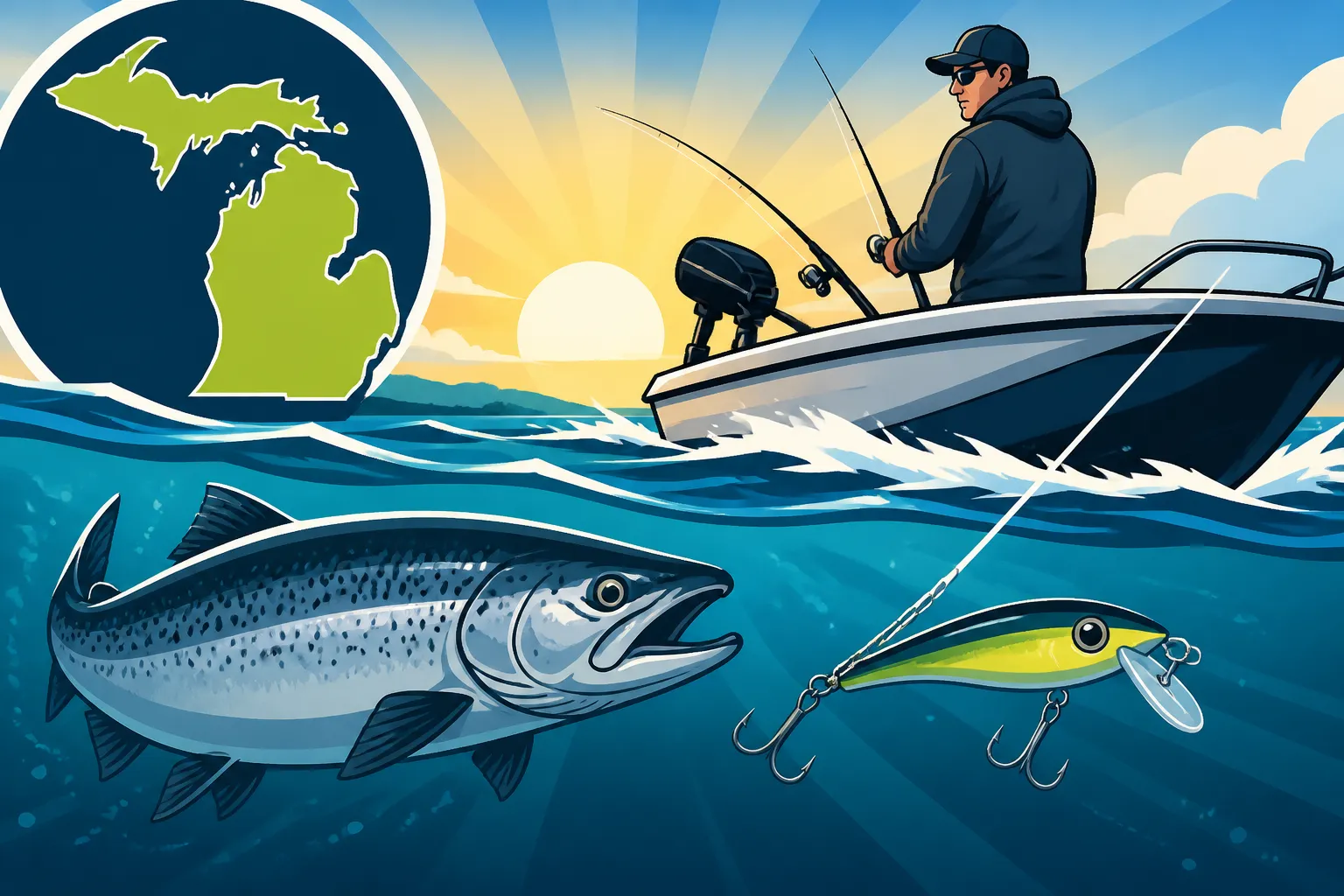
There’s nothing quite like the thrill of a rod bending violently, signaling that a powerful salmon has absolutely hammered your lure far below the surface of one of Michigan's majestic Great Lakes. But let’s be honest, getting to that point, especially for newcomers, can feel like trying to solve a complex puzzle. From understanding which gear to use, where to even begin looking, and how to effectively present your baits, the sheer scale of the Great Lakes can be incredibly daunting. This comprehensive guide is here to demystify the art and science of trolling for salmon, helping you navigate the big waters with confidence and ultimately, bring more fish to the net.
Understanding Great Lakes Salmon and Their Habits
Before you even think about putting a line in the water, it's crucial to understand the stars of the show: the different species of salmon that call the Great Lakes home, especially during their prime feeding times. Knowing their typical behavior, preferred habitats, and diet will give you a significant advantage when planning your trolling strategy. Michigan’s Great Lakes are famous for their robust populations of Chinook and Coho salmon, and while they share some similarities, they also have distinct preferences that savvy anglers learn to exploit.
Chinook Salmon King Salmon Behavior
Chinook salmon, often referred to as "King Salmon," are the undisputed heavyweights of the Great Lakes. These powerful fish are renowned for their aggressive strikes and drag-screaming runs, making them a bucket-list species for many anglers. Kings are opportunistic feeders and typically spend their lives in the deeper, cooler waters of the Great Lakes, pursuing schools of baitfish, primarily alewives. They grow rapidly, reaching impressive sizes, with many fish caught in the 15-25 pound range, and true giants occasionally exceeding 30 pounds.
Their behavior is heavily influenced by water temperature and the presence of their food source. Kings prefer cooler water, generally between 48-55 degrees Fahrenheit. During the warmer summer months, this often means they'll be found in deeper sections of the lake, sometimes 50 to 150 feet down, or even deeper, following the thermocline where the cooler water and baitfish congregate. As fall approaches, mature Chinook begin their annual migration towards their natal rivers to spawn, becoming more accessible to nearshore anglers, especially around river mouths and harbors like those found along Lake Michigan. At this time, they become incredibly focused on reproduction, and while they still strike lures, it's often more out of aggression or instinct than pure hunger. Understanding this migration pattern is key to successful Michigan's Fall Salmon Run Fishing.
Coho Salmon Silver Salmon Preferences
Coho salmon, affectionately known as "Silver Salmon," might not reach the sheer size of Kings, but they more than make up for it with their acrobatic fights and delicious table fare. Cohos are typically smaller, averaging 5-12 pounds, but they are incredibly feisty and often jump clear out of the water when hooked, providing an exhilarating experience. Like Chinooks, Cohos also rely heavily on alewives, but they tend to be found in slightly warmer water than Kings, often preferring temperatures in the 52-60 degree Fahrenheit range. This means they can be found higher in the water column, especially during the spring and early summer when the surface waters begin to warm.
In the spring, Cohos are often concentrated in the warmer, stained waters nearshore, especially after big rainfalls or near river outflows. This makes them a prime target for early-season trolling, sometimes just a few feet below the surface. As summer progresses, they move further offshore, but generally remain shallower than Kings, often suspended in the top 30-50 feet of water. Their migration patterns in the fall also lead them to river mouths, though their runs typically precede or overlap with the later Chinook runs. Their aggressive nature and willingness to chase a variety of lures make them a fantastic target for both seasoned and novice trollers. If you're looking for consistent action and a great fight, targeting Cohos is often an excellent strategy.
Alewife and Baitfish Dynamics
The humble alewife is the cornerstone of the Great Lakes salmon fishery. These small, silvery forage fish are not native to the Great Lakes but were introduced and subsequently exploded in population, providing a rich food source that fueled the salmon stocking programs. Both Chinook and Coho salmon, along with other predators like lake trout, depend heavily on alewives for their survival and growth. Without abundant alewife populations, the salmon fishery simply wouldn't thrive as it does.
The dynamics of alewife populations directly influence where salmon will be found. Alewives themselves are sensitive to water temperature and light conditions. They tend to school up tightly, often near the thermocline during summer, or in warmer nearshore waters during spring. Salmon, being efficient predators, will follow these schools. This means that a key part of successful salmon trolling isn't just finding salmon, but finding the baitfish they are feeding on. Modern electronics, which we'll discuss later, become invaluable for marking these baitfish schools. Understanding that salmon are essentially "following the food" allows you to think like a predator and adjust your trolling patterns to intercept feeding fish. Pay close attention to reports of baitfish concentrations, as these areas are almost certainly holding salmon.
Essential Gear for Great Lakes Salmon Trolling
Trolling for salmon on the Great Lakes isn't just about dropping a line in the water and hoping for the best. It's a sophisticated method that requires specialized gear to effectively present lures at specific depths and speeds across vast expanses of water. Investing in the right equipment isn't just about catching more fish; it's about making the experience safer, more efficient, and ultimately, more enjoyable. Trying to make do with inadequate gear will only lead to frustration and missed opportunities.
Rods, Reels, and Line Selection
For Great Lakes salmon trolling, you'll need robust gear designed to handle powerful fish and the demands of offshore fishing. Standard bass or walleye rods simply won't cut it. Your rod choice is critical for absorbing the shock of a strike and controlling a heavy-fighting salmon. Most experienced trollers opt for fiberglass or composite trolling rods, typically 7 to 10 feet long, with a moderate to fast action. A moderate action allows the rod to flex deeply, acting as a shock absorber when a fish hits a trolled lure running behind a downrigger or planer board. For specific types of trolling, like using lead core or copper line, shorter, stiffer rods might be preferred. When considering what to use, check out guides on Best Trolling Rods for Michigan Salmon.
Reels need to match the rods in terms of strength and line capacity. Level-wind trolling reels are the standard, designed for durability, smooth drag systems, and the ability to hold hundreds of yards of heavy line. Look for models with a strong gear ratio and a high-quality, smooth drag that can be easily adjusted mid-fight. Brands like Daiwa and Shimano offer excellent options built for this kind of abuse. Line selection is equally important. Many trollers use monofilament mainline (20-30 lb test) for its stretch, which acts as an additional shock absorber. However, super braids (like 30-50 lb test) are also popular for their no-stretch sensitivity, allowing anglers to detect subtle bites or weed on the lure, though they require a more forgiving rod. Some specialized techniques also employ wire line, lead core, or copper line, each designed to reach different depths without the aid of a downrigger.
Lures, Baits, and Attractors
The world of salmon lures is vast and ever-evolving, but a few categories consistently produce. Spoons are arguably the most popular and versatile choice. These metal lures come in an endless array of sizes, shapes, and colors, mimicking baitfish perfectly. Popular spoon brands include Michigan Stinger, Dreamweaver, and Warrior Lures. The key with spoons is to match the size and color to the prevailing baitfish and water conditions. For instance, smaller, more natural colors often work in clear water on bright days, while larger, brighter, or glow-in-the-dark spoons excel in stained water or low-light conditions. Many anglers purchase them from reputable online retailers like Amazon due to the wide selection and competitive pricing.
Flasher-fly combinations are another deadly setup, particularly for Chinook salmon. A flasher is a large, rotating or wobbling blade that creates flash and vibration, attracting salmon from a distance. Trailing behind it, usually on a short leader, is a plastic fly or squid imitation, which is what the salmon actually strikes. Brands like SpinDoctor, Pro-Troll, and Big Weenie offer a wide range of flashers and flies. Plugs, such as J-Plugs or Mag Lips, are also effective, especially for aggressive Kings. These hard-bodied lures dive and wobble, imitating wounded baitfish. Live or cut bait, often herring or alewives, can also be trolled, particularly when fish are finicky, but this typically requires specialized rigs and additional gear. Don't forget attractors like dodgers, which are less about direct strikes and more about creating a large, erratic flash to draw fish in for a trailing bait. Having a diverse selection in your Best Tackle Box Setup for Michigan Anglers is crucial.
Downriggers and Planer Boards
To consistently catch salmon, you need to present your lures at the exact depth where the fish are holding, which can vary wildly. This is where downriggers and planer boards become indispensable. Downriggers are devices that allow you to precisely lower a fishing line, with a lure attached, to a specific depth using a heavy cannonball weight. Your fishing line is clipped to a release clip on the cannonball, and when a fish strikes, the line pops free from the clip, allowing you to fight the fish directly without the weight. This is paramount for targeting deep-holding Chinook and lake trout. Check out this guide on Downriggers for Michigan Great Lakes Trolling for a deeper dive into their function. Most serious trollers run multiple downriggers off their boat, often two or more, to cover different depths simultaneously.
Planer boards, on the other hand, are designed to spread your fishing lines out to the sides of the boat, away from the prop wash and noise, covering a much wider swath of water. This is incredibly effective for targeting fish that are spread out, or for presenting lures in shallower water without spooking fish directly under the boat. There are two main types: inline planer boards, which attach directly to your fishing line and run out to the side, and mast-style planer board systems, which use a main line from a mast on the boat to which multiple fishing lines are attached with release clips. Both systems allow you to present many lines at once, increasing your chances of intercepting actively feeding salmon. Utilizing a combination of downriggers and planer boards allows for a truly comprehensive trolling spread, covering a wide range of depths and widths.
Boat Setup and Electronics for Trolling Success
Trolling for salmon on the Great Lakes is a capital-intensive endeavor, and your boat is the primary tool. It needs to be equipped not just for comfort, but for efficiency, safety, and precision. The vastness of the Great Lakes demands a stable, seaworthy vessel, and the intricate nature of trolling requires a suite of electronic aids to locate fish, navigate accurately, and communicate effectively. Skimping on these aspects can lead to frustrating days on the water or, worse, dangerous situations.
Equipping Your Boat for Trolling
When it comes to Great Lakes salmon trolling, size and stability matter. While smaller boats can certainly fish nearshore, offshore trolling demands a vessel capable of handling unpredictable Great Lakes conditions. Many successful trollers use deep-V hull boats, typically 20-30 feet in length, built to cut through waves and provide a stable platform for deploying multiple lines. Brands like Lund, Crestliner, and Grady-White are popular choices for their robust construction and fishing amenities. Your boat should have ample deck space for rigging and landing fish, as well as rod holders strategically placed around the gunwales to manage numerous rods simultaneously.
Beyond the boat itself, you'll need a reliable propulsion system. A primary outboard or inboard motor for cruising and main trolling duties is essential. However, many trollers also equip their boats with a smaller, secondary "kicker" motor, typically a 9.9 or 15 horsepower outboard. This kicker motor serves several vital purposes: it provides a backup if your main motor fails, it's more fuel-efficient for long days of slow trolling, and it allows for more precise speed control, which is critical for dialing in your lure presentation. Having a good Best Boats for Michigan Fishing is key. Other considerations include a strong battery system to power all your electronics, a washdown pump to keep the deck clean, and perhaps even a small cabin or hardtop for shelter from the elements.
Utilizing Sonar and GPS for Precision
Modern marine electronics are truly the eyes and brains of a Great Lakes salmon trolling operation. A high-quality fish finder (sonar) is non-negotiable. This device allows you to "see" what's beneath your boat – not just the bottom, but also baitfish schools, individual game fish, and the critical thermocline. Look for units with powerful transducers and high-resolution displays from brands like Humminbird, Lowrance, or Garmin. Being able to clearly identify arches (fish), dense clouds (baitfish), and the distinct line of the thermocline (where water temperatures rapidly change) will guide your lure placement and significantly improve your catch rates. You're not just guessing where the fish are; you're actively seeking them out.
GPS is equally important, serving as your navigational backbone. The Great Lakes are vast, and it's easy to get disoriented, especially on foggy days or when you're focused on fishing. A GPS unit allows you to mark waypoints (hot spots, baitfish concentrations, productive depths), create trolling tracks, and navigate safely back to port. Many modern fish finders integrate GPS functionality, offering a comprehensive charting and sonar package. These units allow you to save your successful trolling passes, mark specific areas where you found concentrations of Chinook Salmon in Michigan's Great Lakes, or even track your speed and direction with incredible accuracy. This level of precision helps eliminate guesswork and allows you to replicate successful patterns on future trips.
Understanding Marine Radios and Communications
Safety on the Great Lakes should always be your top priority, and a reliable marine radio is a critical piece of that safety puzzle. A VHF (Very High Frequency) marine radio allows you to communicate with other boats, shore stations, and the Coast Guard. In an emergency, this is your lifeline. While cell phones are useful, their range is limited, especially far offshore, and they are not a substitute for a dedicated marine radio. Always monitor Channel 16, the international hailing and distress frequency, and use working channels to communicate with fellow anglers or share information about fishing conditions.
Beyond emergency communications, your marine radio is also a valuable tool for sharing fishing intelligence. Many Great Lakes charter captains and experienced recreational anglers use specific working channels to communicate informally throughout the day. You might hear reports of fish biting in a certain depth range, specific lure colors working, or important weather updates. While not every boat will share their secret spot, being part of this informal network can provide valuable real-time data that helps you adjust your strategy. Moreover, having the ability to call for assistance or report dangerous conditions helps ensure everyone on the water has a safer and more enjoyable experience. Always ensure your radio is properly installed, connected to a good antenna, and that you know how to operate it, especially how to issue a distress call.
Mastering Trolling Techniques for Salmon
Trolling for salmon is far more nuanced than simply dragging lures behind a boat. It’s a dynamic dance of speed, depth, lure choice, and boat control, all aimed at presenting your baits in the most enticing way possible to actively feeding fish. Understanding and mastering these techniques is what separates consistent producers from those who spend more time untangling lines than catching fish. It requires patience, attention to detail, and a willingness to adapt.
Controlling Trolling Speed and Direction
The speed at which you troll is one of the most critical factors in salmon fishing success. Different lures have optimal speeds at which they exhibit their intended action. Spoons, for instance, often have a specific speed range where they wobble and flash most effectively, mimicking a wounded baitfish. Flasher-fly combinations might require a slightly slower speed to ensure the flasher has enough time to create its attracting motion, while plugs might perform better at faster speeds. Generally, salmon trolling speeds range from 1.8 to 3.5 miles per hour, but the "perfect" speed can vary daily based on fish mood, water temperature, and lure type.
Beyond just the number on your speed indicator, subtle changes in boat direction can impart a deadly action to your lures. Instead of trolling in a straight line, making gradual S-curves or figure-eights will cause your outside lines to speed up and rise, while your inside lines will slow down and drop. This change in speed and depth can often trigger strikes from otherwise uninterested fish, as the sudden erratic movement mimics a fleeing or injured baitfish. Pay close attention to when and where strikes occur during these maneuvers, as it might reveal a particular side of the turn or speed variation that the salmon prefer. An autopilot system linked to your GPS can be invaluable for maintaining precise speeds and making these subtle, consistent turns.
Deploying Gear at Multiple Depths
Salmon often suspend at specific depths, sometimes in a very narrow band, to feed on baitfish. Your goal is to cover as much of the water column as possible where fish are likely to be, and this means deploying lures at multiple depths simultaneously. This is where your downriggers, divers, and specialized lines come into play. On a typical Great Lakes salmon spread, you might have downriggers set at various depths (e.g., 50 feet, 70 feet, 100 feet), covering the suspected feeding zones. Each downrigger may have a different lure, allowing you to experiment with colors and actions.
Beyond downriggers, diving planers or Dipsy Divers are excellent tools for reaching depths without heavy weights. These devices attach directly to your fishing line and use water pressure to dive to a set depth, often 20-60 feet, and release when a fish strikes. Lead core line, a fishing line with a lead core wrapped in a braided sheath, sinks at a predictable rate (approximately 5 feet per color segment, with a segment being 10 yards). Running "cores" of varying lengths (e.g., 5-color, 7-color) allows you to present lures at different shallow-to-mid depths. Copper line, a solid copper wire fishing line, sinks even faster than lead core and is often used for presenting lures in deeper mid-range depths without a downrigger. By combining these different depth-finding methods, you create a "water column coverage" strategy, significantly increasing your chances of intercepting active fish.
Spacing Lines and Preventing Tangled Messes
Running a multi-line trolling spread effectively without constantly battling tangles is an art form. Most serious Great Lakes salmon anglers will run anywhere from 6 to 12 lines or more, depending on regulations and personal preference. The key to preventing headaches is proper line spacing, both horizontally and vertically. Horizontally, planer boards are your best friend. By deploying lines off each side of the boat, you create a wide path, separating your lures from each other and from the boat's prop wash. The lines closest to the boat often run deeper than the ones furthest out.
Vertically, downriggers with different set depths ensure that your deepest lines don't interfere with shallower ones. You'll typically want to ensure your deepest downrigger is clear of the bottom by a safe margin to avoid snags. When setting your lines, always start with your deepest lines first (downriggers), then deploy your mid-depth lines (divers, lead core, copper), and finally your shallowest lines (planer boards). This prevents shallower lines from running into the deeper ones during deployment. When retrieving, do the opposite: clear your shallowest lines first, then work your way to the deepest. This methodical approach, coupled with careful turns and consistent boat speed, will minimize tangles and maximize your fishing time. Also, using swivels, especially ball-bearing swivels, on all your leaders and lure connections will help prevent line twist, a major cause of tangles.
Seasonal Strategies and Best Times to Troll
Michigan's Great Lakes offer a year-round salmon fishery, but the location and techniques you employ will change dramatically with the seasons. Salmon, like many fish, are highly sensitive to water temperature and their instinctual drive to feed or spawn. Understanding these seasonal shifts is crucial for knowing where to find them and how to entice them to bite. Being in the right place at the right time with the right presentation is a recipe for success.
Spring Salmon Trolling Nearshore Action
Spring on the Great Lakes is a time of renewal, and for salmon anglers, it often means fantastic action for Coho salmon and early-season Chinook. As ice breaks up and inshore waters begin to warm, baitfish move into shallower areas, and salmon follow suit. This is often when you'll find concentrations of Coho salmon in the upper water column, sometimes just a few feet below the surface, especially in the warmest, often stained, water found near river mouths or current breaks. Shoreline trolling can be incredibly effective during this period.
Trolling speeds during spring often lean towards the slower side, typically 1.8-2.5 mph, to allow lures to work effectively in cooler water. Smaller spoons in brighter colors (like orange, chartreuse, or even a mix of silver and blue) often excel for Cohos, as do small flasher-fly combinations. Many anglers will focus their efforts in waters less than 50 feet deep, sometimes as shallow as 10-20 feet, often using inline planer boards and flat lines to cover wide areas. This nearshore bite can last well into early summer, slowly transitioning as offshore waters warm and fish disperse. Keep an eye on water temperature charts, as finding that "thermal edge" where warmer water meets cooler can be key to locating spring salmon. For more specific timings, refer to guides like Best Time to Catch Chinook Salmon in Michigan.
Summer Salmon Trolling Offshore Depths
As summer progresses and surface temperatures on the Great Lakes climb, salmon generally move offshore and deeper, seeking their preferred cooler water and concentrated baitfish along the thermocline. This is when the true "big water" trolling techniques come into play. Kings will often be found anywhere from 50 to 150 feet down or more, while Coho might hold a bit shallower, perhaps 20-60 feet. Locating the thermocline with your sonar becomes paramount, as this is often where both bait and salmon will stack up.
Summer trolling often involves a full spread of downriggers to cover multiple depths, along with divers, lead core, and copper lines to fill in the water column. Trolling speeds might increase slightly, typically 2.0-3.0 mph, to cover more water and give lures an active presentation. Lure colors often shift to more natural baitfish patterns like blue/silver, green/silver, or black/silver, but on overcast days or in deeper water, glow colors remain effective. Offshore humps, breaks, and sudden changes in bottom contour can hold fish, but often salmon are found suspending over vast featureless expanses, purely following bait. Targeting specific depth zones where your electronics mark bait and fish, especially from mid-summer through early fall, is key to success. This is also prime time for Trolling for Chinook Salmon on Lake Michigan and Trolling for Coho Salmon on the Great Lakes.
Fall Salmon Trolling River Mouths and Staging
As the days shorten and water temperatures begin to cool in late summer and early fall, a dramatic shift occurs in the salmon fishery: the mature fish begin their annual spawning migration. This is a highly anticipated time for anglers, as salmon that have spent years growing large in the open lake begin to stage near the mouths of their natal rivers, preparing to run upstream. Areas like the Manistee River, Au Sable River, and St. Joseph River become major hubs of activity.
During this staging period, salmon are often concentrated in shallower waters near river mouths, sometimes less than 50 feet deep, but they can still be found deeper offshore. While they are no longer actively feeding in the same way, they will strike lures out of aggression or instinct. Trolling around these river mouth areas, often in the early morning or late evening, can be incredibly productive. Lure choices often include larger spoons in vibrant or glow colors, flasher-fly combinations, and J-plugs, which can trigger aggressive strikes. Anglers often switch to more aggressive trolling patterns, with sharper turns to induce strikes. Understanding that these fish are transitioning from a feeding mode to a spawning mode is key to adapting your presentation. This is the last chance for anglers to intercept these magnificent fish before they complete their life cycle upstream.
Reading the Water and Locating Salmon
The Great Lakes are enormous bodies of water, and simply driving around hoping to stumble upon salmon is a surefire way to burn fuel and get frustrated. Successful salmon trolling is about understanding the subtle clues the lake provides and using modern technology to pinpoint where the fish are most likely to be. It's a combination of science, experience, and a bit of intuition.
Interpreting Water Temperature and Thermoclines
Water temperature is arguably the single most important factor influencing salmon location in the Great Lakes. Both Chinook and Coho salmon have preferred temperature ranges, and they will actively seek out these "comfort zones." As mentioned, Kings prefer cooler water (48-55°F), while Cohos tolerate slightly warmer conditions (52-60°F). During summer, these preferred temperatures are often found in the thermocline. The thermocline is a distinct layer of water where the temperature rapidly changes with depth. Below it, the water is cold and stable; above it, it's warmer and more mixed.
Your fish finder is your best friend for identifying the thermocline, which usually appears as a distinct, often dense, band on your sonar screen. Baitfish tend to congregate along the thermocline, as do the salmon that feed on them. Monitoring surface water temperatures with a thermometer or your boat's electronics, and then using your sonar to find the depth of the thermocline, gives you a strong starting point for deploying your lures. If the thermocline is at 60 feet, you'll want to focus many of your lures in that depth range and slightly above or below it. Pay attention to "breaks" in the thermocline or areas where it rises or falls rapidly, as these can be natural fish attractors.
Identifying Structure and Baitfish Concentrations
While salmon often suspend in open water, they are still drawn to underwater structure, especially if it concentrates baitfish. Structure can include steep drop-offs, underwater points, humps, or even shipwrecks. These features provide ambush points for predators and often create current eddies or upwellings that bring nutrients, attracting baitfish. Your GPS and sonar are invaluable for identifying and marking these structural elements. Look for areas where the bottom contour changes dramatically, as these are often prime holding spots for salmon.
Beyond structure, actively locating baitfish is paramount. Salmon are not just swimming aimlessly; they are actively hunting. If you can find the bait, you're usually close to the salmon. Baitfish schools will appear as dense, often hazy, clouds or clusters of smaller arches on your fish finder screen. Pay attention to how dense these schools are and what depths they are holding at. Sometimes, you'll see larger arches (salmon) lurking just below or on the edges of these baitfish schools. Trolling through or around these baitfish concentrations, especially with lures that mimic the size and color of the forage, is often the most effective strategy. Remember, the Great Lakes ecosystem relies heavily on alewives, so learning to identify them on your sonar will pay dividends.
Using Current and Wind to Your Advantage
The Great Lakes are dynamic environments, and factors like current and wind can significantly influence salmon behavior and your trolling success. While strong currents are less common in the open lake than in rivers, subtle currents, often driven by wind or seiches, can concentrate baitfish and passively moving salmon. Trolling with or against the current can also affect your lure's action and apparent speed. Sometimes, trolling against a slight current can give your lures a more erratic, enticing action.
Wind, particularly strong wind, can make trolling challenging and even dangerous. However, moderate wind can create "wind lanes" or "currents" on the surface that can concentrate debris and, more importantly, baitfish. Trolling along the edges of these wind lanes can be productive. Furthermore, trolling into waves (head-sea) or with waves (following sea) will affect your boat speed and lure action. Often, a quartering-sea, where waves hit your boat at an angle, can impart a subtle, undulating motion to your lures that salmon find irresistible. Always be mindful of wind direction and strength, not just for safety, but for how it might be influencing the fish and how you can use it to your advantage to position your boat and present your baits. Strong winds can churn up water, creating turbid conditions nearshore, which can sometimes attract spring Cohos.
Safety on the Great Lakes: Preparing for the Elements
Fishing on the Great Lakes, especially when trolling far offshore, demands respect for the immense power of these inland seas. Conditions can change rapidly, turning a calm day into a perilous situation in a matter of minutes. Prioritizing safety isn't just about following regulations; it's about being prepared, vigilant, and having the knowledge and equipment to handle emergencies. No fish is worth risking your life or the lives of your crew.
Weather Awareness and Monitoring
The number one rule for Great Lakes fishing is to respect the weather. Always check the marine forecast before heading out, and continue to monitor it throughout the day. Conditions can escalate quickly, with calm waters turning into formidable waves. Use multiple sources for weather information, including NOAA marine forecasts, local radar, and apps like AccuWeather or The Weather Channel, which often provide real-time updates. Pay close attention to wind speed and direction, wave height predictions, and the likelihood of thunderstorms. A small craft advisory is a clear signal to exercise extreme caution or stay in port altogether.
Beyond checking forecasts, be observant while on the water. Look for changes in cloud patterns, sudden drops in barometric pressure, or distant storm clouds. If conditions start to deteriorate, don't hesitate to cut your trip short and head back to the safety of the harbor. It’s far better to be safe ashore wishing you were fishing than to be in distress on rough water. Having a reliable VHF marine radio with weather alert capabilities can provide crucial, immediate updates that a cell phone might miss. Always err on the side of caution; the fish will still be there another day.
Essential Safety Equipment Onboard
Michigan boating regulations require certain safety equipment, but for Great Lakes salmon trolling, you should carry much more than the minimum. Every person on board must have an easily accessible, Coast Guard-approved life jacket (Personal Flotation Device or PFD). It’s highly recommended that everyone wear their PFD while underway, especially in rough conditions. Beyond PFDs, your boat should be equipped with:
- Throwable Flotation Device: A life ring or cushion for someone who falls overboard.
- Sound-Producing Device: A horn or whistle to signal other vessels or in an emergency.
- Visual Distress Signals: Flares (day and night signals) or an electronic distress light.
- Fire Extinguisher: Properly maintained and accessible.
- First-Aid Kit: Well-stocked for injuries common on a boat.
- Anchor and Ample Rode (Rope/Chain): Strong enough to hold your boat in various conditions.
- Bailing Device: A bucket or bilge pump to remove water.
- Navigation Lights: Functioning properly for low light or night operations.
Consider also carrying an EPIRB (Emergency Position Indicating Radio Beacon) or PLB (Personal Locator Beacon) for offshore trips, which can transmit your location to rescue services. A satellite phone or a more robust satellite messenger like a Garmin InReach is also a wise investment for communicating beyond VHF range. For more detailed requirements, check out the Michigan Boating Laws for Anglers.
Navigational Skills and Emergency Protocols
Knowing how to operate your boat safely and effectively in all conditions is paramount. This includes understanding basic navigation, knowing how to read charts (both paper and electronic), and being familiar with aids to navigation like buoys and lighthouses. A Michigan Boating Safety Certificate Requirements course can teach you invaluable skills and knowledge that go far beyond just passing a test. Practice docking, anchoring, and operating your boat in varying conditions.
Beyond general skills, have a clear emergency protocol for various scenarios:
- Man Overboard: Immediately throw a throwable device, mark the location on GPS, designate a spotter, and practice recovery maneuvers.
- Engine Failure: Have a plan for troubleshooting, deploying your kicker motor, or deploying your anchor.
- Fire: Know where your extinguisher is and how to use it; practice shutting off fuel and power.
- Medical Emergency: Know basic first aid and how to call for help on your VHF radio or other communication devices.
- Taking on Water: Locate the source, attempt to plug it, and use bilge pumps or bailing devices.
Before each trip, inform someone ashore of your float plan – where you're going, your expected return time, and who is with you. These simple steps can make all the difference if an unforeseen event occurs on the vast and unpredictable Great Lakes.
Common Challenges and Troubleshooting
Even the most experienced Great Lakes salmon trollers encounter challenges. Fishing isn't always glamorous, and there will be days when the fish are finicky, gear acts up, or conditions make things difficult. The key to consistent success and maintaining your sanity is knowing how to identify these problems and effectively troubleshoot them. Don't let a bad day turn into a full-blown meltdown; adaptability is your greatest asset.
Dealing with Finicky Biters and Slow Days
We've all been there: you've got your spread out, the electronics look promising, but the rods just aren't bending. Finicky biters or slow days are a common frustration in salmon fishing. When the bite slows down, resist the urge to simply keep doing the same thing. This is when it's time to become a detective and systematically adjust your strategy.
- Change Lure Colors/Patterns: Start with the most drastic change, like switching from a natural baitfish pattern to a bright glow color, or vice-versa. Sometimes a subtle change in hue is all it takes. Have a wide variety of spoons, flies, and plugs ready.
- Adjust Trolling Speed: Even a half-mile-per-hour change can alter the action of your lures significantly. Experiment with slowing down or speeding up. Making S-turns more frequently can also trigger strikes.
- Vary Depth: If your electronics show fish at a certain depth, try deploying lures just above or below that zone. Sometimes fish are looking up or down. Deploying a "stinger" line off the bottom of your downrigger can entice fish that are looking at the cannonball.
- Change Lure Size/Type: If they're not hitting spoons, try a flasher-fly or a plug. If they're ignoring large lures, scale down to smaller ones, mimicking smaller baitfish.
- Check for Fouled Lures: Sometimes a piece of weed or debris can snag on a lure, making it swim unnaturally. Periodically check your lines, especially after trolling through suspected weed beds.
- Move to a New Area: If after an hour or two of adjusting, nothing works, it might be time to pull lines and move to a completely different area, looking for new baitfish concentrations or temperature breaks.
Remember, fishing is a process of elimination. Keep a mental (or written) log of what you've tried and what, if anything, produced a bite.
Managing Gear Breakdowns and Snags
Gear breakdowns are an inevitable part of serious trolling. Whether it's a tangled downrigger cable, a snapped rod tip, or a malfunctioning reel, things will go wrong. Being prepared to handle these issues quickly and efficiently will save you valuable fishing time and frustration.
- Carry Spare Parts and Tools: A well-stocked toolbox is essential. This includes spare line, leader material, extra release clips, split rings, hooks, pliers, screwdrivers, and electrical tape. Some anglers even carry a spare reel or a complete spare rod. You can find many of these essential spares readily available on Amazon.
- Downrigger Issues: Downrigger cables can fray or break, and release clips can wear out. Know how to re-rig a downrigger cable or replace a clip. Ensure your downrigger counter is accurate.
- Line Breaks: Line breaks can be frustrating, especially when it costs you a fish. Regularly inspect your mainline for nicks or abrasions, especially near the lure. Re-tie knots often. If using wire or copper, check for kinks.
- Motor Troubles: Even with a kicker motor, main engine issues can arise. Know basic troubleshooting for your engine, such as checking fuel filters, spark plugs, or battery connections.
- Snags: Great Lakes salmon fishing is generally open-water, but snags can happen near structure or river mouths. If you snag, try to back the boat up slowly over the snag point to free the lure. If it's a downrigger, be prepared to cut the cable if necessary to save the downrigger itself. Prevention is key: know the depths you're fishing and keep your cannonballs well off the bottom.
Having a robust, well-organized Best Tackle Box Setup for Michigan Anglers can help you keep these essential repair items handy.
Adapting to Changing Conditions
The Great Lakes are infamous for their rapidly changing conditions. A flat-calm morning can quickly turn into a windy, wave-battered afternoon. Successful trollers are those who can adapt their strategy to these shifts.
- Wind and Waves: If the wind picks up, your boat speed will be affected. You might need to adjust your main motor or kicker to maintain your desired trolling speed. Waves will also make your boat pitch and roll, which can impart an exaggerated action to your lures – sometimes good, sometimes bad. You might need to switch to heavier downrigger weights or adjust line lengths to keep lures stable.
- Light Conditions: Overcast days often mean fish will be shallower and might prefer brighter or glow lures. Sunny, clear days might push fish deeper and call for more subtle, natural presentations. Adjust your lure color palette accordingly.
- Water Clarity: Heavy rain or strong winds can stir up nearshore waters, reducing clarity. In turbid water, bright, fluorescent, or glow lures are often more effective as they stand out. In crystal clear water, natural, muted colors tend to perform better.
- Fish Movement: Sometimes, fish simply move. If your electronics show fish leaving an area, don't cling to a "hot spot" that has gone cold. Be willing to move, even if it means pulling all your lines and redeploying elsewhere. Pay attention to other boats – if everyone else is heading in a certain direction, there might be a reason.
Being flexible and willing to adjust your entire game plan – from lure choice and depth to trolling speed and location – is a hallmark of a truly successful Great Lakes salmon angler. Every day on the water is a learning experience, and those who learn fastest often catch the most fish.
Disclaimer
Fishing involves inherent risks, including but not limited to drowning, injury from hooks or equipment, and exposure to the elements. The information provided in this guide is for informational purposes only and should not be considered a substitute for professional instruction, adherence to all local, state, and federal regulations, or sound judgment. Always prioritize safety, wear appropriate personal flotation devices, check weather conditions, and inform others of your fishing plans. The author and publisher are not responsible for any accidents, injuries, or legal issues incurred while following the advice in this guide. Consult the latest Michigan Department of Natural Resources (DNR) regulations before fishing.