Michigan’s Combined Trout and Salmon Daily Limit
One of the trickiest parts about fishing in Michigan, especially if you're targeting those prized trout and salmon, is figuring out exactly what the daily catch limits mean. It's not always as simple as a flat number per species; sometimes, the Michigan Department of Natural Resources (DNR) has a "combined" limit that can leave even seasoned anglers scratching their heads. This guide is here to untangle that knot of regulations, helping you understand Michigan's combined trout and salmon daily limit so you can enjoy your time on the water without worrying about accidental violations.
Understanding Michigan's Combined Limit Philosophy
Michigan's waters are incredibly diverse, supporting a fantastic array of fish species, from the mighty Chinook salmon in the Great Lakes to the delicate brook trout in pristine inland streams. Because of this rich biodiversity and the varying health of different fisheries, the Michigan DNR uses a combination of individual species limits and "combined" limits. This isn't done to confuse us, but rather to serve a crucial purpose: conservation and sustainable management.
Why Combined Limits Exist
Think about it: if you could catch ten of every single trout and salmon species, some populations would be decimated quickly, especially those that are more vulnerable or slower-growing. The DNR employs combined limits to spread fishing pressure across multiple species, ensuring that no single stock is overfished while still allowing anglers to enjoy a productive day. It's a balancing act, trying to provide ample fishing opportunities while protecting the future of our fisheries. These limits are part of the broader framework of the Michigan Fishing Regulations Every Angler Should Know, designed to maintain ecological balance and angling sustainability.
For instance, if anglers exclusively targeted the largest, most aggressive species, those genetics could be reduced from the population. A combined limit encourages diversity in catch, implicitly reducing the intense focus on one type of fish. It also acknowledges that often, when you're fishing for one type of salmon, you might hook another, or a lake trout. Rather than forcing you to immediately release a perfectly good fish because you hit a specific single-species limit, the combined limit offers a bit more flexibility, within a strict overall cap.
What "Combined" Truly Means in Practice
When the regulations state a "combined daily possession limit" for trout and salmon, it means that the total number of fish from all designated trout and salmon species that you can keep in one day cannot exceed that single, overarching number. It’s not an "add them all up" game where you can keep the maximum of each; it's a sum total.
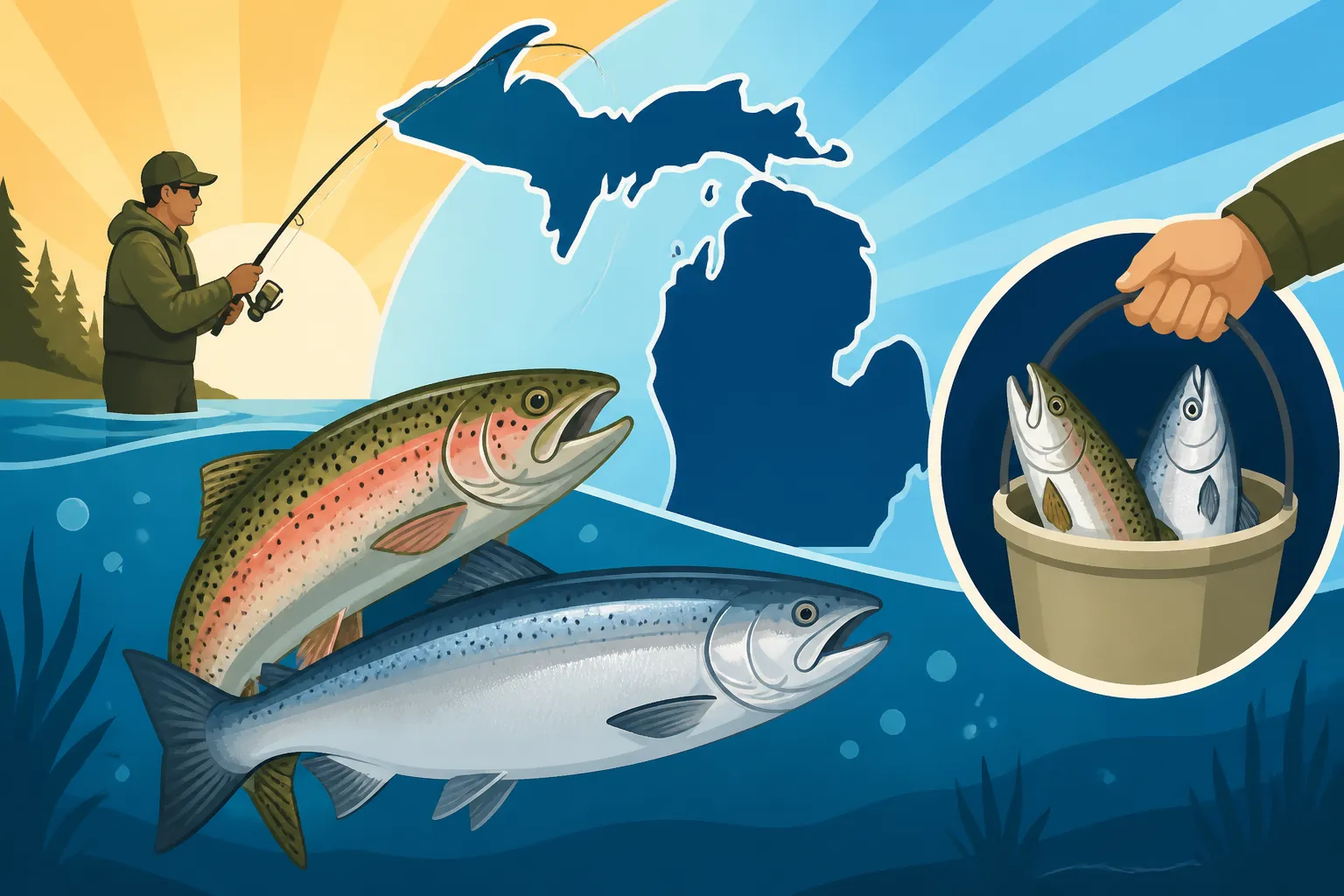
Let's say the combined limit is five. If you catch three steelhead (rainbow trout) and two Chinook salmon, you've reached your combined limit of five fish. You cannot then keep any more lake trout, brown trout, or coho salmon that day, even if you haven't hit the individual species limit for those specific fish. The bucket is full. This rule applies to any fish you've caught and kept for the day, whether they're in your livewell, on a stringer, or already on ice in your cooler. It’s vital to understand the difference between daily and possession limits too – the daily limit is what you can harvest in a 24-hour period, while the possession limit is what you can legally have on hand at any given time, including fish from previous fishing trips. Michigan's rules generally state that the possession limit is the same as the daily limit unless specifically noted otherwise, meaning you can't accumulate fish over multiple days beyond the daily limit.
Deconstructing the Daily Limits for Trout and Salmon Species
Navigating the specific numbers can feel like deciphering an ancient code, especially with all the exceptions. However, once you break it down, it becomes much clearer. The Michigan DNR publishes an annual fishing guide that details all these regulations, and you can usually find physical copies at license retailers or view the full PDF online.
General Statewide Combined Daily Limit
For most Michigan waters, the general rule of thumb for trout and salmon is a combined daily possession limit of five fish. Within this five-fish total, there are often further stipulations on specific species:
- Lake Trout and Splake: Typically, you can only keep a maximum of three Lake Trout or Splake within that five-fish combined limit. This means if you keep three lake trout, you can only keep two other trout or salmon (e.g., two Chinook salmon) to reach your overall limit of five.
- Brook Trout: Often, there's a specific limit for Brook Trout, such as one, which would then count towards your five-fish combined limit. So, if you keep one brook trout, you have four remaining slots for other trout or salmon species.
- Atlantic Salmon: Generally, the limit for Atlantic Salmon is one, again counting towards your combined total.
This means you're not just aiming for five fish, but five fish that also adhere to the sub-limits for particular species. It's a multi-layered approach to protection.
Let's look at a simplified breakdown:
| Species Category | General Daily Limit (part of 5 combined) | Specific Exceptions (often vary by water) |
|---|---|---|
| Combined Trout & Salmon Total | 5 Fish | |
| Lake Trout & Splake | Max 3 of the 5 | Some Great Lakes zones have different size/possession limits |
| Brook Trout | Max 1 of the 5 | Some waters have no harvest allowed |
| Atlantic Salmon | Max 1 of the 5 | Specific to Great Lakes waters (Lake Huron) |
| Other Salmon (Chinook, Coho) | No specific sub-limit, count towards 5 | |
| Other Trout (Brown, Rainbow/Steelhead) | No specific sub-limit, count towards 5 | Inland streams often have different rules |
It's really important to keep in mind that the above table is a general guide. The actual limits can change yearly and vary drastically by the body of water you're fishing. For the most up-to-date information, anglers should always consult the current Michigan Daily Bag Limits by Species in the official Michigan Fishing Guide.
How Different Species Contribute to the Limit
Let’s dive a little deeper into how specific species fit into that combined five-fish quota.
- Chinook (King) Salmon and Coho Salmon: These are usually the primary target for many Great Lakes anglers. If you're out on Lake Michigan and you catch five Chinook salmon of legal size, your combined limit for trout and salmon is reached. You can't keep any other trout or salmon that day.
- Rainbow Trout (Steelhead): Whether you're targeting them in a river during their runs or catching them in the Great Lakes, steelhead also fall under this combined limit. Catch three steelhead and two coho, and you're done for the day. Remember, the distinction between a resident rainbow trout (which lives its whole life in an inland stream) and a steelhead (an anadromous rainbow trout that migrates to the Great Lakes and back to rivers to spawn) is often academic for the purposes of the combined daily limit, as both generally count towards the overall trout/salmon total.
- Brown Trout: A favorite among many stream anglers, brown trout also count towards your five-fish combined limit. If you have a banner day on the Au Sable River and catch five gorgeous brown trout, your combined limit is fulfilled.
- Lake Trout and Splake: These are where it gets a bit more nuanced. While they count towards the five-fish combined limit, you're usually limited to three total of these two species. So, if you catch three lake trout, you can only keep two more fish from the remaining trout and salmon species to hit your overall five. Splake are a hybrid species (brook trout x lake trout), and their management often mirrors that of lake trout due to similar habitat and growth patterns. Anglers often struggle with the Splake vs Lake Trout: What's the Difference, which can complicate matters if you're trying to stay within the specific sub-limits.
- Atlantic Salmon: Primarily found in Lake Huron, Atlantic salmon are a prized catch. The limit for these beauties is typically one fish, and that one fish will count towards your five-fish combined total. If you manage to land a legal Atlantic, congratulations! Just remember you've now got four slots left for other trout or salmon species.
- Brook Trout: Often found in Michigan’s colder, pristine inland streams, brook trout usually have a specific sub-limit, often one fish. Like Atlantic salmon, this single brook trout counts towards your overall combined five-fish limit.
It's clear that the DNR wants you to diversify your catch or at least be aware of how different species contribute to the total. This complexity is why having a current fishing guide in your tackle box or on your phone is non-negotiable.
Navigating Special Regulations and Water-Specific Rules
Michigan is a vast state with thousands of miles of shoreline on the Great Lakes and countless inland lakes and rivers. It's simply impossible for a single set of rules to apply everywhere, which is why "special regulations" are a critical component of understanding your limits.
Great Lakes vs. Inland Waters: A Tale of Two Fisheries
The rules you follow on Lake Michigan for salmon are often vastly different from the rules you'd adhere to on a small, cold inland trout stream in the Upper Peninsula.
- Great Lakes: When fishing the Great Lakes (Lakes Superior, Michigan, Huron, and Erie, plus connecting waters like the St. Clair and Detroit Rivers), you're typically dealing with larger, anadromous (migratory) populations of salmon and trout that have different life cycles and population dynamics. For example, the Michigan Great Lakes Fishing Regulations Guide outlines specific regulations for these massive bodies of water, which can include varying size limits, open seasons, and even species-specific zones. For instance, Lake Superior might have different brook trout regulations compared to a tiny brook trout stream in the Lower Peninsula, where they are protected more stringently.
- Inland Waters: Inland lakes and rivers are often managed for resident populations, or for specific runs of anadromous fish. A small, designated "Type 1" trout stream, for example, might have specific tackle restrictions (like artificial lures only) and different daily limits, or even catch-and-release-only sections for certain species, regardless of the statewide combined limit. Always assume inland waters may have more restrictive, localized rules.
It’s not just the species that differ, but the very ecosystems. A deep Great Lake has different pressures than a shallow, warm inland lake, or a cold, clear river. The regulations reflect these differences.
How to Check for Specific Waterbody Exceptions
This is where your diligence as an angler truly comes into play. You simply cannot rely on general knowledge. Before every fishing trip, especially if you're exploring a new body of water, you must consult the current Michigan Fishing Regulations Digest.
Here’s how you can do it:
- Online DNR Website: The Michigan DNR website is your absolute best friend. They publish the full, official regulations digest online, often as a PDF. You can search by county or specific waterbody.
- DNR Hunt Fish App: This app is a game-changer for modern anglers. The Michigan's DNR Hunt Fish App for Licenses and Reporting allows you to quickly look up regulations by specific lake or river right on your smartphone. It’s incredibly convenient when you're already on the water or planning a spontaneous trip. You can even purchase your fishing license through the app!
- Physical Digest: Many bait shops, sporting goods stores, and DNR customer service centers carry free physical copies of the latest digest. It’s always good to have one in your boat or vehicle, especially if you're going somewhere with spotty cell service. Stores like Frank's Great Outdoors in Linwood or Cabela's and Bass Pro Shops across the state are reliable places to pick one up. You can also sometimes find laminated copies, which are great for boat use, available for purchase from retailers, and even on Amazon.
Example of an Exception:
Let's say you're fishing on a specific section of the Manistee River. While the general combined limit for trout and salmon might be five, that particular section could have a rule like "Artificial Lures Only, Daily Limit: 2 Trout, 15-inch minimum size." In this case, your combined limit for that specific water is two fish, not five, and you must adhere to the size limit. If you catch and keep two legal brown trout, your daily limit for that water is met, even if you haven't hit the statewide 'five fish' mark.
Another example is Michigan's Lake Trout and Splake Combined Limit, which might have specific size restrictions or seasonal closures on certain Great Lakes waters, especially near spawning grounds. Always check the section of the digest pertaining to the specific lake or river you intend to fish.
Practical Scenarios and Avoiding Common Mistakes
Understanding the regulations intellectually is one thing; applying them in the heat of the moment on the water is another. Many anglers, even experienced ones, can inadvertently make mistakes. Let's walk through some common scenarios and how to best navigate them.
Hypothetical Fishing Trips: Staying Legal
Imagine you're out on the waters of Lake Huron, targeting salmon.
Scenario 1: A Successful Morning
You've been trolling since dawn.
- First, you land a beautiful 28-inch Chinook salmon. You keep it. (Current count: 1 fish, 1 Chinook).
- An hour later, you reel in a 20-inch Coho salmon. You keep it. (Current count: 2 fish, 1 Chinook, 1 Coho).
- Just before lunch, you hook into a sizable 30-inch Lake Trout. You keep it. (Current count: 3 fish, 1 Chinook, 1 Coho, 1 Lake Trout).
- In the afternoon, you get another strike and land a 22-inch Splake. You keep it. (Current count: 4 fish, 1 Chinook, 1 Coho, 1 Lake Trout, 1 Splake).
- Finally, as the sun begins to set, you catch another 24-inch Lake Trout. You keep it. (Current count: 5 fish, 1 Chinook, 1 Coho, 2 Lake Trout, 1 Splake).
Are you legal?
Let's check:
- Combined Total: You have 5 fish. This meets the general combined daily limit of 5.
- Lake Trout/Splake Sub-limit: You have 2 Lake Trout and 1 Splake, totaling 3 fish from this category. This meets the general sub-limit of 3 Lake Trout/Splake.
In this scenario, you are legal, assuming all fish met their individual Michigan Statewide Minimum Size Limits and no specific local regulations for that part of Lake Huron were violated. But if you had kept one more lake trout, you would have been over the Lake Trout/Splake sub-limit, making you illegal, even though your total combined fish count was still 5.
Scenario 2: Fishing an Inland Stream
You're fly fishing a designated trout stream in northern Michigan that has special regulations: "Combined Daily Limit: 3 Trout, only 1 of which may be a Brook Trout. No size limit for Brook Trout, 10-inch minimum for Brown Trout and Rainbow Trout."
- You catch and keep a 7-inch Brook Trout. (Current count: 1 fish, 1 Brook Trout).
- Later, you land a gorgeous 14-inch Brown Trout. You keep it. (Current count: 2 fish, 1 Brook Trout, 1 Brown Trout).
- You then catch another 12-inch Brown Trout. You keep it. (Current count: 3 fish, 1 Brook Trout, 2 Brown Trout).
Are you legal?
Let's check:
- Combined Total: You have 3 fish. This meets the specific stream's combined daily limit of 3.
- Brook Trout Sub-limit: You have 1 Brook Trout. This meets the stream's sub-limit of 1 Brook Trout.
- Size Limits: All fish meet their respective size limits (Brook Trout no size limit, Brown Trout 10-inch minimum).
In this scenario, you are legal. However, if you had caught a fourth trout, even if it was a legal size, you would have exceeded that stream's specific combined limit, regardless of the general statewide rule.
These examples highlight why it's not enough to know the general combined limit; you have to know the specific regulations for the body of water you're fishing that day.
The Importance of Species Identification and Measurement
Mistakes often happen not out of malice, but out of genuine confusion.
- Species Identification: Knowing your fish is paramount. Can you confidently tell the difference between a coho and a Chinook salmon? Or a lake trout and a splake? What about a resident rainbow trout versus a steelhead? Misidentifying a fish could lead you to accidentally exceed a species-specific sub-limit. For instance, sometimes a small Chinook might be mistaken for a Coho by an inexperienced angler. There are many guides available online (and in the DNR digest) to help with Michigan Salmon Species Explained and Michigan Trout Species Explained.
- Accurate Measurement: Every regulation has a size limit, whether it's a minimum or sometimes a slot limit (where fish within a certain size range must be released). Always carry a reliable measuring tape or board. Lay the fish flat, nose against a solid surface, and measure to the tip of the tail. Don't eyeball it! Many anglers find durable, retractable measuring tapes or even stick-on measuring decals for their boat or kayak on Amazon to be invaluable tools for quick and accurate measurements.
Leverage Tools and Ask Questions
Don't be afraid to utilize all the resources at your disposal:
- DNR App: Seriously, download the Michigan DNR Hunt Fish App. It's a fantastic resource for checking regulations on the fly, even when you're already fishing.
- Call the DNR: If you have a specific question about a confusing regulation or a particular waterbody, call your local DNR office. They are there to help and would much rather answer your questions than cite you for a violation.
- Local Bait Shops: The folks who run bait shops are often highly knowledgeable about local regulations and conditions. They live and breathe fishing in their area and can be a great source of information, especially for localized rules that might not be immediately obvious in the digest.
- Connect with Fellow Anglers: Join local fishing forums, Facebook groups, or strike up conversations at the boat launch. Experienced anglers are often happy to share their knowledge, though always double-check any advice against the official regulations.
By being prepared, staying informed, and taking responsibility for understanding the rules, you can ensure your fishing trips in Michigan are both enjoyable and entirely legal. It adds a bit of homework, but the reward of knowing you're contributing to sustainable fishing in our beautiful state is well worth it.
Disclaimer
The information provided in this guide is intended for general informational purposes only and does not constitute legal advice. Fishing regulations in Michigan are subject to change by the Michigan Department of Natural Resources (DNR). While we strive to provide accurate and up-to-date information, it is the sole responsibility of each angler to consult the most current official Michigan Fishing Regulations Digest before engaging in any fishing activities. Failure to do so may result in fines or other penalties.