Michigan Muskellunge Fishing Techniques
Michigan’s muskellunge, often lovingly—and sometimes frustratingly—dubbed the "fish of 10,000 casts," present a unique and exhilarating challenge for even the most seasoned angler. These apex predators are notoriously elusive, demanding extreme patience, specialized gear, and refined techniques to coax them into striking. If you’ve ever felt the thrill of a muskie follow to the boat only to see it vanish, or spent hours casting without a hint of action, you know the particular blend of awe and frustration these magnificent fish inspire. This comprehensive guide will arm you with the knowledge and strategies you need to increase your odds of success, covering everything from understanding their habits to selecting the right lures and mastering catch-and-release protocols, ensuring your pursuit of Michigan’s freshwater giants is both rewarding and responsible.
Understanding Michigan's Muskellunge
Before you can even think about casting for muskies, it’s absolutely vital to understand these incredible creatures. They aren't just another fish in the lake; they're intelligent, powerful, and perfectly adapted predators that require a completely different approach than your average bass or walleye. Knowing their habits, preferred environments, and how to identify them will be your first step toward success.
The Elusive "Fish of 10,000 Casts"
The moniker "fish of 10,000 casts" isn't just a catchy phrase; it’s a deeply ingrained truth for muskie anglers across the country, and especially here in Michigan. It speaks volumes about the dedication and persistence required to consistently catch these elusive giants. Muskellunge are at the very top of the food chain in many of our lakes and rivers, meaning they don't have to eat frequently, and when they do, they're incredibly discerning. They're opportunistic but not reckless. They are often solitary hunters, lurking in ambush, making them hard to pinpoint.
This isn't to discourage you, but rather to set realistic expectations. You might spend an entire day, or even several, casting massive lures that would exhaust most other species, only to come up empty-handed. But then, there's that one electrifying moment – a flash in the water, a sudden violent strike, and the explosive fight of a true trophy. That single moment makes all those "10,000 casts" worth it. The mental game is as crucial as the physical one when chasing muskies; you have to believe that the next cast could be the one, even after hundreds of uneventful retrieves.
Michigan Muskellunge Habitat and Behavior
Michigan is blessed with some truly exceptional muskellunge fisheries, from the vast expanses of the Great Lakes to numerous productive inland lakes. Understanding where these fish choose to live and how they behave seasonally is paramount. In our larger bodies of water, like Lake St. Clair or Saginaw Bay, muskies often relate to expansive weed flats, deep channels, and the edges where these features meet. They use these areas for ambush points, patrolling for schools of baitfish like perch, walleye, or even smaller pike. On clearer inland lakes, you might find them holding near rocky points, sunken timber, sudden drop-offs, or dense weed beds that offer both cover and access to deeper, cooler water.
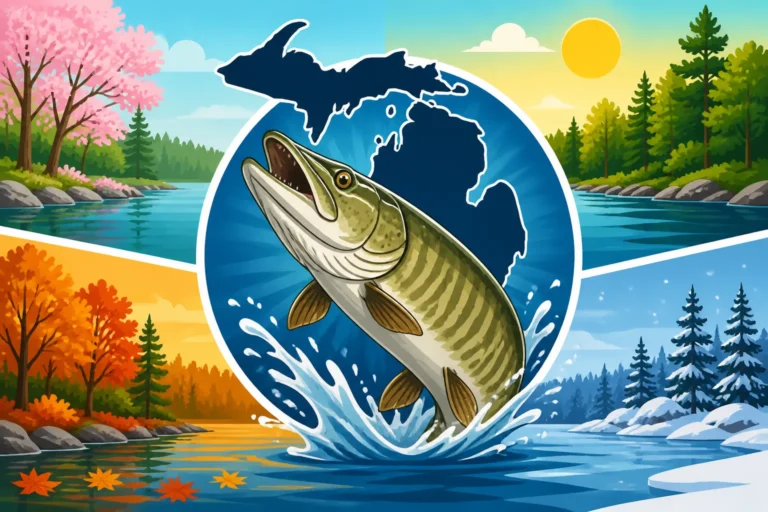
Their behavior is highly influenced by water temperature and the availability of forage. In spring, after ice-out, they'll often be in shallower, warmer bays recuperating from the spawn and feeding. As summer progresses, they might retreat to deeper, cooler water during the heat of the day, moving to shallower weed edges or open water to feed during low light periods. Fall, however, is when many anglers truly shine, as muskies enter a "feeding frenzy" to bulk up for winter, often becoming more aggressive and moving into shallower areas again, or patrolling deeper structures with an increased appetite. Knowing these seasonal movements is key to putting your lure in the right place at the right time. For specific location insights, you might want to delve into articles like Michigan Lakes With a 50-Inch Muskellunge Minimum.
Identifying Michigan Muskellunge
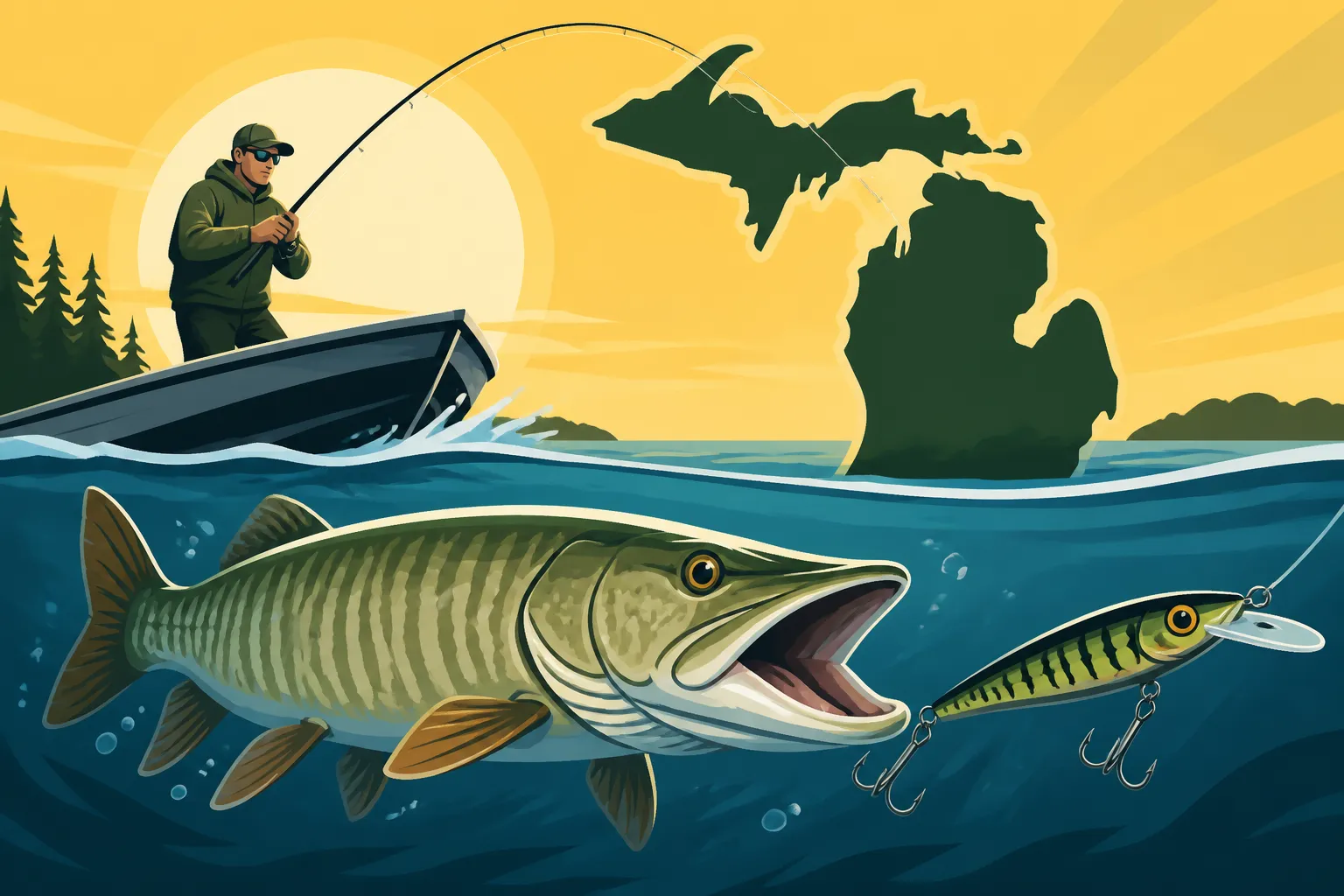
Distinguishing a true muskellunge from its close cousin, the northern pike, is a critical skill for any Michigan angler, not just for bragging rights, but for adherence to regulations. While both are long, toothy predators, there are clear differences. The most reliable way to tell them apart is by examining their scales and patterns. A muskellunge will typically have dark markings (spots, bars, or blotches) on a lighter background, whereas a northern pike generally has lighter, bean-shaped spots on a darker body.
More definitively, check the scales on the gill plate and the sensory pores on the underside of the jaw. A muskellunge has scales only on the upper half of both gill plates and typically 6 to 9 sensory pores on each side of its lower jaw. A northern pike, conversely, has scales completely covering its gill plates and usually 5 or fewer sensory pores on each side of its lower jaw. Knowing these subtle differences is vital, especially since Michigan's muskellunge often have specific size and harvest regulations. For more detailed visual aids and information, check out our guide on Michigan Muskellunge Identification and Size Limit. These fish grow to impressive sizes in Michigan, with some reaching over 50 inches, making them a true freshwater trophy.
Essential Gear for Michigan Muskellunge
Muskellunge fishing isn't just about big lures; it's about heavy-duty gear designed to withstand the violent strikes, powerful runs, and sharp teeth of these formidable fish. Skimping on tackle is a surefire way to lose a trophy and leave you frustrated. Investing in the right tools is paramount for both success and safety.
Rods, Reels, and Line for Serious Anglers
When it comes to muskellunge, your standard bass or walleye setup simply won't cut it. You need specialized equipment that can handle the sheer power of the fish and the substantial weight of the lures you'll be casting.
- Rods: Forget your medium-heavy spinning rods. Muskie fishing demands heavy to extra-heavy power, fast-action casting rods. These rods typically range from 8 to 10 feet in length, though some anglers use even longer rods, especially for big figure-eights at the boat. The extra length provides leverage for casting large, wind-resistant baits, greater hook-setting power, and better control of a fighting fish. Look for rods made from durable graphite or composite materials that offer a good balance of strength and sensitivity. Many reputable brands offer excellent muskie-specific rods, and you can find a wide selection of specialized options on Amazon, often with detailed reviews from other muskie anglers.
- Reels: Pair your heavy rod with a heavy-duty baitcasting reel. Many muskie anglers prefer robust, low-profile baitcasting reels or traditional round baitcasters known for their durability and high line capacity. A high gear ratio (e.g., 7.1:1 or higher) is often preferred for quickly retrieving large bucktails and taking up slack, which is crucial for a solid hookset. The drag system must be incredibly smooth and powerful to handle the long, hard runs of a big muskie without snapping your line.
- Line: Braided line is the only choice for muskellunge. Its lack of stretch provides immediate feedback from your lure and ensures powerful, direct hooksets. You'll want to spool up with 80- to 100-pound test braided line. This heavy line is essential not just for fighting fish, but also for its exceptional abrasion resistance, which helps prevent break-offs when a muskie's razor-sharp teeth or gill plates come into contact with the line. Plus, many muskie lures are expensive, so strong line is a good investment! For more general information on fishing equipment, consider our guide on Best Rods and Reels for Michigan Fishing.
Leaders and Landing Nets: Non-Negotiables
These two items are not optional extras; they are absolutely critical for successful and responsible muskie fishing.
- Leaders: Muskies have a mouth full of incredibly sharp teeth that can slice through even the heaviest braided line in an instant. A leader is non-negotiable. While some anglers use heavy fluorocarbon (100-150 lb test) for its invisibility, many prefer wire leaders for maximum tooth resistance. Look for solid wire or multi-strand wire leaders, typically 12 to 18 inches long, connected with heavy-duty swivels and snaps that can withstand the torque and force exerted by a large muskie. Avoid cheap snaps; a muskie can easily straighten them. Quality leaders are an investment that prevents heartbreak.
- Nets: A proper muskie net is equally important, not just for landing your fish, but for protecting it during the catch-and-release process. These nets are enormous, with a wide hoop (often 40+ inches) and a deep, rubber-coated mesh. The rubber coating is crucial because it protects the muskie's delicate slime coat, which is its primary defense against disease. Traditional nylon nets can strip this slime. A large net also allows you to keep the fish in the water while you remove hooks, minimizing its stress and handling time. Never try to land a muskie by hand or with a small bass net; it's dangerous for both you and the fish. For more on this vital piece of equipment, refer to Best Net for Landing Muskellunge.
Tackle Boxes and Accessories
With oversized lures and specialized tools, your tackle organization will also need an upgrade.
- Storage: Your standard fishing tackle box won't cut it. Muskie lures are often 8 to 15 inches long and can weigh several ounces. You'll need large, robust tackle boxes or dedicated muskie lure bags with oversized compartments to store these behemoths. Many anglers opt for large, waterproof utility boxes from brands like Plano, or specialized soft-sided bags that can hold multiple hard-sided trays. Efficient organization is key, as you'll want quick access to specific lures when the bite is on.
- Tools: Beyond your basic pliers, muskie fishing requires a specific set of tools to ensure safe handling and release.
- Long-nose pliers: At least 11 inches long, to reach deep-set hooks.
- Bolt or hook cutters: For quickly cutting hooks when they're too deep or difficult to remove, or if a fish is particularly agitated. This is a muskie's life-saver.
- Jaw spreaders: Used carefully, these can hold a muskie's mouth open for safer hook removal, but use them sparingly and for as short a time as possible to minimize stress.
- Heavy-duty gloves: To protect your hands from teeth and gill rakers if you must handle the fish.
- Measuring tape and camera: To quickly document your catch before release.
Safety glasses are also a smart idea to protect your eyes from flying lures during casting or unexpected hook snaps. For ideas on organizing your gear for these big fish, see Best Tackle Box Setup for Muskellunge. You can find many of these specialized tools and storage solutions readily available on Amazon, often with options tailored specifically for muskie anglers.
Top Muskellunge Lures for Michigan Waters
Muskellunge lures are a world unto themselves – big, bold, and often expensive. Selecting the right lure isn't just about size; it's about understanding action, depth, and how different baits perform in varying conditions. Michigan’s diverse waters call for a versatile tackle box.
Bucktails and Spinnerbaits
These are often considered the bread and butter of muskie fishing, especially for covering water and eliciting aggressive strikes.
- Bucktails: Perhaps the most iconic muskie lure, bucktails are designed to create massive flash and vibration in the water. They typically feature one or more large blades (Colorado, Willowleaf, or Indiana styles) attached to a weighted shaft, followed by a skirt of deer hair (bucktail) or synthetic material. Tandem bucktails, with two blades, are particularly popular as they create even more commotion. Sizes range from smaller "8s" to colossal "12s" or larger. The key with bucktails is a fast, steady retrieve – burn them just under the surface or at mid-depth. This speed often triggers a reaction strike from following fish. Popular colors include chartreuse, black, white, and various combinations, often with contrasting blades (e.g., silver/gold). You'll find an incredible array of bucktails from various manufacturers on Amazon, giving you plenty of options to stock up for different water conditions.
- Spinnerbaits: While perhaps more associated with bass fishing, oversized spinnerbaits are incredibly effective for muskies, especially when fishing through heavy cover like dense weed beds. They feature a single or double blade setup that spins around a wire arm, with a weighted jighead and a large silicone skirt. Their design allows them to deflect off snags and vegetation, making them ideal for probing areas where other lures would get hung up. Retrieve them steadily, occasionally bumping them off weeds to trigger strikes.
Jerkbaits and Crankbaits
When muskies are deeper, less aggressive, or simply prefer a different presentation, jerkbaits and crankbaits can be incredibly potent.
- Jerkbaits: These hard-bodied lures are designed to be fished with an erratic, stop-and-go retrieve, mimicking a wounded baitfish. They come in various styles: gliders, dive-and-rise baits, and those that suspend at a certain depth. Gliders, often worked with a sweeping rod motion, sashay side-to-side, creating an enticing, injured-fish presentation. Dive-and-rise jerkbaits plunge on the retrieve and float back up on the pause. The key with jerkbaits is the pause; many muskie strikes occur when the bait is stationary, tempting a hesitant fish. Experiment with the length of your pauses.
- Crankbaits: Large, deep-diving crankbaits are excellent for covering open water, especially when trolling or casting to deep structure. Their oversized bills allow them to dive to significant depths, where they often exhibit a strong, wide wobbling action that muskies can't resist. Shallow-diving crankbaits are effective for working over weed tops or shallow flats. When casting, a steady retrieve is often best, but don't hesitate to incorporate a few rips or pauses. For specific insights into lure selection, consider Best Muskellunge Lure Colors for Stained Water which can help you choose the right crankbait for the conditions.
Soft Plastics and Topwater Baits
These categories offer unique presentations that can be deadly in the right circumstances.
- Soft Plastics: The world of muskie soft plastics has exploded in recent years. These include large paddle-tail swimbaits, soft-bodied glide baits, and even gigantic worms or creature baits. Soft plastics offer a much more subtle, natural presentation than hard baits, often with a lifelike swimming action even at slower retrieves. They can be rigged on heavy-weighted hooks for fishing deeper or weedless for navigating thick cover. Their versatility makes them excellent for slow-rolling over structure or dissecting specific cover.
- Topwater Baits: The sheer excitement of a muskie exploding on a topwater lure is unmatched in freshwater fishing. These lures are designed to be fished entirely on the surface, creating a commotion that calls fish up from the depths. Common types include "walk-the-dog" baits, prop baits, and buzzbaits. Topwater lures are most effective in low-light conditions (dawn, dusk, cloudy days) or when the water is calm. They can be particularly effective over shallow weed beds or along shorelines where muskies might be cruising. The key is to generate enough splash and noise to grab attention, then maintain an enticing retrieve that doesn't spook the fish.
Muskellunge Fishing Techniques by Season
Muskie fishing isn't a one-size-fits-all endeavor. The strategies and techniques you employ must adapt to the changing seasons in Michigan, as muskie behavior, location, and feeding patterns shift dramatically throughout the year.
Spring and Early Summer Strategies
As the ice melts and water temperatures slowly climb, muskies begin to stir. Early spring, shortly after the spawn, can be a particularly challenging time. These fish are often recovering and may be less aggressive.
- Post-Spawn Recovery: Focus your efforts on shallower, warmer bays and protected flats, especially those with emerging weed growth. These areas provide both warmth and abundant baitfish, allowing muskies to recuperate. Slower presentations are often key during this period. Think smaller bucktails, glide baits, or soft plastics worked deliberately. The goal isn't to trigger an aggressive chase, but rather to present an easy meal.
- Water Temperature is Key: Pay close attention to water temperatures. Muskies become more active and willing to chase as temperatures rise into the mid-50s to low-60s Fahrenheit. Look for areas that warm up fastest, like dark-bottomed bays. While Michigan’s muskie season has specific opening dates to protect spawning fish, once open, early season success often hinges on finding these warmer pockets. Many anglers swear by the idea that certain water temperatures trigger specific levels of aggression. For more general information on when to target these fish, you can look up Michigan Muskellunge Fishing: Best Time of Year.
Mid-Summer and Fall Tactics
Summer brings consistent warm water, and muskies spread out. Fall, however, is when the real excitement often begins as they prepare for winter.
- Summer Challenges: During the dog days of summer, muskies can be found in a wider range of depths. On hot, sunny days, they might retreat to deeper weed edges, thermoclines, or cool, dark cover. Consider using larger, faster-moving baits during this time, like oversized bucktails or deep-diving crankbaits, to cover more water and elicit reaction strikes. Night fishing can also be incredibly effective during summer, as muskies move shallower to feed under the cover of darkness.
- Fall Feeding Frenzy: This is prime time for trophy muskies in Michigan. As water temperatures drop in autumn, muskies enter a pre-winter feeding binge, becoming incredibly aggressive and putting on weight. They often move into shallower areas to feed on migrating baitfish, but also patrol main lake points, rocky reefs, and deep structures. Trolling large crankbaits and soft plastics at various depths can be exceptionally effective for covering water and targeting these actively feeding fish. The sheer size of baits used in fall often increases, with lures reaching 15-20 inches being common. For anglers focused on this prime window, our article How to Catch Muskellunge in the Fall offers even deeper insights.
Winter and Ice Fishing for Muskellunge
While not as common as open-water fishing, some dedicated anglers do target muskies through the ice, and the Great Lakes offer unique year-round opportunities.
- Ice Fishing Considerations: Ice fishing for muskellunge is a specialized pursuit, typically done on smaller inland lakes where it is legal. It usually involves using large tip-ups rigged with substantial live bait (like large suckers or golden shiners, where legal) fished near known muskie haunts such as deep weed edges or drop-offs. Jigging large spoons or soft plastics can also draw strikes. Remember, ice safety is paramount, especially when targeting such large fish that might require extra time and effort to land.
- Year-Round Great Lakes Opportunities: On the Great Lakes and connecting waters like Lake St. Clair and the St. Clair River, muskie fishing can extend later into the fall and, in some designated areas, even into the winter months. These open-water fisheries rarely freeze solid in their main basins, offering opportunities for those willing to brave the cold. Always check current regulations for specific waters, as rules can vary. For those curious about year-round possibilities, Is Catch-and-Release Muskie Fishing Legal Year-Round in Michigan? might provide helpful context.
Finding Michigan Muskellunge Hotspots
Knowing how to fish for muskies is one thing, but knowing where to find them is arguably even more crucial. Michigan offers a diverse array of muskie waters, each with its own nuances and prime locations.
Targeting Great Lakes Muskellunge
Michigan's Great Lakes system, particularly Lake St. Clair, is world-renowned for its muskellunge fishery, attracting anglers from across the globe.
- Lake St. Clair: A Muskie Mecca: Often called the "Muskie Capital of the World," Lake St. Clair is a relatively shallow, fertile lake known for its incredible abundance of trophy-sized muskellunge. The vast, expansive weed flats, combined with numerous channels, drop-offs, and baitfish populations, create an ideal environment. Anglers here often focus on trolling large crankbaits along weed lines or casting bucktails and jerkbaits over prominent weed beds and points. The sheer size of the lake means covering water is key, and quality electronics are invaluable for identifying structure and bait schools. You can dive deeper into this specific fishery with guides like Lake St. Clair Muskellunge Fishing and Where to Catch Muskellunge on Lake St. Clair.
- Saginaw Bay and Other Great Lakes Waters: While Lake St. Clair gets much of the attention, Saginaw Bay on Lake Huron also boasts a healthy muskellunge population, particularly in its shallower, more fertile sections. Other areas of the Great Lakes and their connecting rivers can also hold muskies, especially areas with good forage and appropriate cover. Fishing these vast waters often requires larger, more robust boats and a keen eye on weather conditions for safety.
Inland Lake Exploration
Beyond the Great Lakes, Michigan is home to numerous inland lakes that hold impressive muskellunge populations, offering different challenges and rewards.
- Notable Inland Fisheries: Lakes like Lake Hudson, Thornapple Lake, and Black Lake are just a few examples of Michigan inland waters managed for muskies. These lakes often require a more intimate knowledge of specific structures, as muskie populations can be more localized. Look for areas with dense submerged timber, prominent rock piles, sudden depth changes (break lines), and deep weed beds.
- Using Maps and Sonar: Navigating inland lakes for muskies means becoming a student of your surroundings. High-definition contour maps (available digitally through apps like Navionics or Lowrance/Humminbird units) are indispensable for identifying subtle changes in bottom composition, depth, and structure. Use your sonar, especially side imaging and down imaging, to locate submerged features, isolated weed clumps, and even individual fish. Muskies are often associated with these unique pieces of structure, and finding them is often half the battle. If you're looking for more details on promising locations, explore Best Inland Lake for Muskellunge Fishing in Michigan.
Reading Water and Structure
Regardless of whether you're on a vast Great Lake or a smaller inland body, learning to "read the water" and identify key structures is fundamental to muskie fishing success.
- Key Structures: Muskies are ambush predators, so they'll position themselves near structure that offers cover and a vantage point for intercepting prey.
- Weed Lines: The edges of dense weed beds are prime ambush points. Muskies will cruise these lines, waiting for baitfish to stray.
- Points and Saddles: Submerged points extending into deeper water, or "saddles" (dips between two higher points), are natural travel corridors and feeding zones.
- Break Lines: Any abrupt change in depth, from shallow to deep, creates a break line that muskies will patrol.
- Isolated Cover: Single boulders, stumps, or small weed clumps away from the main structure can hold a trophy muskie.
- Wind and Baitfish: Pay attention to the wind. Wind-blown shores often push baitfish and warm surface water, concentrating muskies. Also, observe baitfish activity – flickering schools on your sonar or surface boils are clear indicators that predators are nearby. Modern fish finders from brands like Humminbird or Garmin are invaluable for identifying these subtle signs and locating both bait and muskie. Using your electronics effectively to interpret these underwater landscapes will significantly boost your chances.
Catch and Release Best Practices for Muskellunge
Given the immense effort and dedication required to catch a muskellunge, and their relatively slow growth rates, practicing proper catch and release is not just a suggestion—it's an ethical imperative. Many fisheries, including Michigan's, thrive because anglers carefully release these magnificent fish, ensuring future generations can experience the same thrill.
Prioritizing Fish Health and Survival
The primary goal after catching a muskie, especially if you intend to release it, is to minimize stress and handling time to ensure its survival. Muskies are powerful fish, and the fight to land them can be exhausting. Prolonged exposure to air, excessive handling, or rough treatment can be fatal, even if the fish swims away initially.
- Keep the Fish in the Water: Whenever possible, keep the muskellunge in the net and in the water while you prepare for hook removal. This provides essential oxygen and support for the fish's body. Avoid dragging the fish onto boat carpet or exposing it to direct sunlight for extended periods. A quick photo, if desired, should be done with the fish partially submerged or held horizontally for only a few seconds.
- Support the Body: If you must lift the fish for a quick measurement or photograph, always support its entire body horizontally. Never hold a large muskie vertically by its head or gills, as this can severely damage its internal organs and spine, leading to delayed mortality. A large net and a helpful fishing partner are invaluable for this process. Our guide How to Catch and Release a Muskellunge goes into extensive detail on these practices.
Essential Tools for a Clean Release
Having the right tools at the ready is crucial for a swift and safe release for both the fish and the angler.
- Large, Rubberized Net: As mentioned earlier, a big, rubber-coated net is your best friend. It helps contain the fish safely while you work and protects its slime coat.
- Long-Nose Pliers: Keep a pair of at least 11-inch long-nose pliers handy to reach hooks set deep in a muskie's mouth, keeping your fingers away from its formidable teeth.
- Bolt/Hook Cutters: This is perhaps the most important tool. If a hook is deeply embedded, near vital organs, or if the fish is thrashing violently, don't hesitate to cut the hook shank. This is far better than struggling to extract it, which only prolongs stress and injury. These can be found at hardware stores or specialized fishing tackle retailers.
- Jaw Spreaders: Use jaw spreaders with extreme caution and only when absolutely necessary to safely remove a hook. Deploy them quickly, gently, and remove them as soon as possible. Overuse can cause jaw damage.
- Heavy Gloves: While you should avoid handling the fish directly, a pair of heavy, cut-resistant gloves can provide protection if unexpected contact with teeth or gill rakers occurs.
Reviving and Releasing Muskellunge
The final step is arguably the most important: ensuring the muskie is fully revived before it swims away.
- Proper Revival: After hook removal and any quick photos, gently cradle the fish in the water, supporting its belly and facing it into any current. If there's no current, slowly move the fish back and forth to force water over its gills.
- Wait for Strong Tail Kicks: Hold the fish in this position until it begins to show strong, sustained tail kicks and attempts to swim away on its own. It may take a few minutes, especially after a prolonged fight. Don't rush this process; a weak release is often a death sentence.
- Observe Post-Release: Take a moment to watch the fish swim away. Does it swim strongly, or does it list or struggle? While sometimes unavoidable, a fish that struggles after release may indicate excessive stress or injury. By meticulously following these guidelines, you greatly increase the chances that your trophy muskie will live to fight another day, contributing to the health and sustainability of Michigan's incredible fishery.
Michigan Muskellunge Regulations and Reporting
Fishing for muskies in Michigan isn't just about the thrill of the chase; it's also about respecting the rules and contributing to the conservation of these magnificent fish. Understanding and adhering to Michigan's specific regulations is crucial for every responsible angler.
Understanding Size and Bag Limits
Michigan's Department of Natural Resources (DNR) sets specific regulations to manage muskellunge populations, which can vary depending on the water body. These regulations are designed to protect the species and ensure healthy fisheries for the future.
- Statewide and Lake-Specific Rules: Generally, Michigan has a statewide minimum size limit for muskellunge, often requiring them to be quite large (e.g., 42 inches). However, certain lakes, such as Lake Hudson, Thornapple Lake, and Black Lake, have unique regulations, often with an even larger minimum size limit, sometimes 50 inches or more, to promote the growth of true trophy fish. Always consult the current Michigan Fishing Guide before heading out, as these rules can change annually.
- The "One Muskellunge Per Year" Rule: A distinctive regulation in Michigan is the "one muskellunge per year" rule. This means that if you choose to harvest a legal-sized muskie, you are permitted to keep only one within the fishing license year. This strict limit underscores the DNR's commitment to conserving these slow-growing, highly valued fish. Most muskie anglers, due to the challenge and conservation ethic, practice catch and release exclusively. For detailed current information on harvest restrictions, refer to Michigan Muskellunge Daily Catch Limit and Michigan's One Muskellunge Per Year Rule. It's essential to know these rules before you ever put a line in the water, especially if you’re fishing waters with a Michigan Lakes With a 50-Inch Muskellunge Minimum.
The Mandatory Harvest Reporting System
Michigan mandates that all harvested muskellunge be reported to the DNR within a specific timeframe. This isn't just bureaucracy; it's a vital tool for fisheries management.
- Why Reporting is Required: The data collected from reported muskie harvests is invaluable for the DNR. It helps them track population trends, assess the effectiveness of management strategies (like stocking programs or size limits), and ensure the long-term health of Michigan's muskie fisheries. Without accurate harvest data, it's much harder for biologists to make informed decisions.
- How and When to Report: If you do harvest a legal muskie (which, again, is limited to one per year), you are required to report it within 24 hours of capture. This can typically be done online through the DNR website, via a dedicated phone number, or using the Michigan DNR Hunt Fish App. The process usually requires details such as the date, location, length, and sometimes weight of the fish. For step-by-step instructions, our articles Michigan Muskellunge Harvest Reporting Rules and Michigan's 24-Hour Muskellunge Reporting Requirement are excellent resources, as is How to Register a Muskellunge Catch in Michigan. Make sure you're familiar with this process before you even think about harvesting one of these magnificent fish.
Fishing Licenses and General Rules
Beyond muskie-specific rules, always remember the overarching Michigan fishing regulations.
- Licensing Requirements: Any angler 17 years of age or older needs a valid Michigan fishing license to fish in public waters. This applies to both residents and non-residents, and there are various license types available, including annual and short-term options. Purchasing a license is not just a legal requirement; the revenue generated directly supports fisheries management and conservation efforts in the state. Our Michigan Fishing License Guide for Residents and Nonresidents is a great starting point, along with Michigan Fishing Regulations Every Angler Should Know.
- General Fishing Regulations: Be aware of other general rules, such as restrictions on certain types of gear, bait collection rules, or protected species. While most muskie fishing involves artificial lures and conventional tackle, it's always good practice to review the full fishing guide to ensure you're compliant with all regulations. Ignorance of the law is not an excuse, and violations can result in fines and other penalties.
Advanced Strategies and Tips for Trophy Muskellunge
Once you've got the basics down and are comfortable with your gear and the seasonal patterns, it's time to delve into some of the more advanced techniques and mental approaches that can make the difference between an occasional encounter and consistently putting yourself in position for a trophy muskie.
The "Figure Eight" and Follow-Up Strikes
This is perhaps the most iconic and often critical technique in muskie fishing, turning a "follow" into a "catch." It's a true test of focus and quick thinking.
- Understanding the Figure Eight: It's incredibly common for a muskie to follow your lure all the way back to the boat, often appearing just feet away, inspecting the bait but refusing to strike. This is where the "figure eight" comes in. Instead of simply lifting your lure out of the water, quickly plunge your rod tip into the water and immediately begin drawing large "figure eight" patterns with your lure right alongside the boat. The erratic, continuously moving lure often triggers a reaction strike from the following muskie, which might perceive the lure as trying to escape.
- Practice and Patience: Mastering the figure eight takes practice. You need to keep the lure moving fluidly, covering a wide area, and watching the fish's every move. Many strikes happen when the fish is "cornered" in the turn of the eight. The key is never to lose focus until your lure is completely out of the water. That split second of distraction can cost you a trophy. It's an exhilarating moment that transforms a potential disappointment into a memory you'll never forget.
Trolling for Open Water Giants
While casting is exciting, trolling is often the most effective way to cover vast expanses of water and target suspended muskies in large bodies like the Great Lakes.
- When to Troll: Trolling is particularly effective on large lakes such as Lake St. Clair or Saginaw Bay, especially when fish are scattered or holding in deeper, open-water areas that are difficult to reach with casting. It allows you to present multiple lures at varying depths simultaneously, covering a wide swath of water efficiently.
- Specialized Gear for Trolling: Trolling for muskies requires specific gear. You'll use sturdy trolling rods, often shorter and stiffer than casting rods, designed to handle the drag of heavy lures and the shock of a strike at speed. Line counter reels are essential for precisely knowing how much line is out, which helps replicate successful depths.
- Planer Boards: These devices are attached to your main line and deployed to the sides of the boat, allowing you to spread your lures out and cover a wider horizontal area, away from the boat's disturbance.
- Downriggers: If muskies are suspended deep in the water column, downriggers are invaluable. These allow you to send heavy weights down to a specific depth, with your lure clipped to a release clip, presenting your bait at the exact depth the fish are holding.
- Speed, Depth, and Lure Selection: Experiment with trolling speed; sometimes a slow, almost crawling speed is best, while other times a faster pace (3-5 mph) is needed to trigger strikes. Use large crankbaits, soft plastics, or even specialized trolling bucktails. Pay attention to your fish finder to identify bait schools and muskie marks, then adjust your lure depth accordingly. When considering a boat for this kind of fishing, our article Best Boats for Michigan Fishing might offer some useful insights.
Patience, Persistence, and the Hunt
Ultimately, successful muskie fishing transcends specific techniques; it's a mindset. The "fish of 10,000 casts" isn't a myth; it's a testament to the mental fortitude required.
- The Mental Game: Muskie fishing is as much a mental game as it is a physical one. You must maintain unwavering focus, cast after cast, hour after hour, believing that the next retrieve could be the one. Don't let long periods of inactivity deter you. Every follow, every swirl, even every missed strike, is a piece of the puzzle.
- Learning from Every Outing: Even if you don't land a muskie, analyze your day. Did you see follows? Were baitfish present? Did you cover the right type of structure? What worked for other anglers you spoke with? Consistent success comes from continuously learning and adapting. Keep a detailed log of conditions, locations, lures, and results.
- Boat Control and Casting Accuracy: Efficient boat control is paramount for positioning your casts precisely. Whether you're drifting a weed edge or slowly trolling a break line, maintaining optimal boat speed and position helps maximize your lure's effectiveness. Similarly, accurate casting allows you to hit small pockets in cover or present your lure perfectly along a precise depth contour, making your presentation irresistible to an otherwise wary muskie. The hunt for muskellunge is a journey, not just a destination, filled with challenges, anticipation, and ultimately, incredible rewards.
| Lure Type | Best Use Case | Retrieve Style | Gear Notes |
|---|---|---|---|
| Bucktails | Covering water, eliciting reaction strikes, weed edges | Fast, steady burn, occasional pause/rip | High-speed reels, heavy braid |
| Spinnerbaits | Fishing through heavy cover (weeds), stained water | Steady, bumping cover | Good for avoiding snags |
| Jerkbaits | Erratic wounded baitfish imitation, clearer water | Twitch, pause, sweep, stop-and-go | Focus on the pause, sharp hooks |
| Crankbaits | Trolling, deep water, open water, specific depths | Steady retrieve, trolling, casting | Deep divers for open water, shallow for weeds |
| Soft Plastics | Subtle presentation, slow retrieves, heavy cover | Slow roll, jigging, weedless rigging | Versatile for various depths and conditions |
| Topwater Baits | Low light, calm water, over shallow cover | Walk-the-dog, chug, splash | Exciting surface strikes, requires angler focus |
Disclaimer
The information provided in this guide is for general informational purposes only and is not intended as legal advice. Fishing regulations in Michigan are subject to change by the Department of Natural Resources (DNR). It is the sole responsibility of the angler to consult the most current Michigan Fishing Guide and local regulations before engaging in any fishing activity. Always prioritize safety, responsible angling practices, and adherence to all applicable laws.