Michigan’s 24-Hour Muskellunge Reporting Requirement
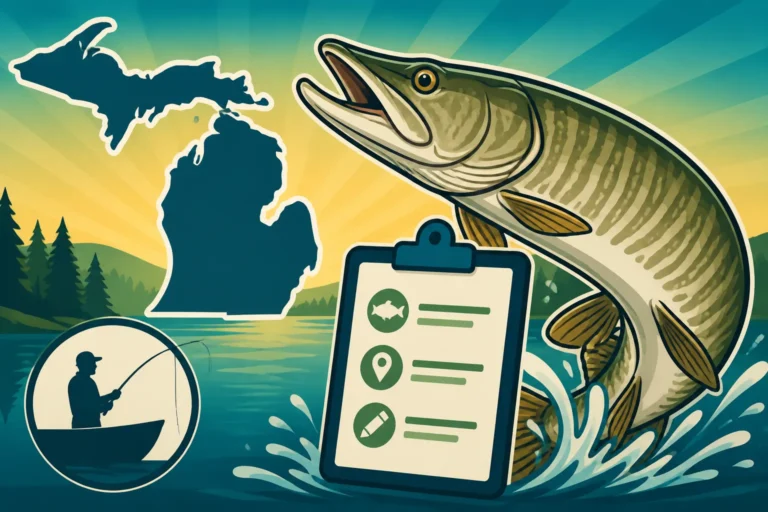
Landing a magnificent muskellunge in Michigan is an exhilarating experience, but the excitement doesn't end when the fish is in the net. Many anglers find themselves scratching their heads, wondering about the crucial next step: reporting the catch. It’s easy to overlook this vital regulation, but missing the 24-hour deadline can lead to serious issues. This guide will walk you through Michigan's specific reporting requirements for muskellunge, ensuring you comply with the law and contribute to critical conservation efforts.
Understanding the Mandate: Why 24 Hours?
It might seem like a bit of a hassle, having to report your muskie catch within a single day. You've just experienced the thrill of a lifetime, wrestled a toothy giant, maybe traveled a long way to do it, and now the state wants you to jump through another hoop? I get it. But there's a really good reason behind Michigan's strict 24-hour muskellunge reporting requirement. It's not just about bureaucracy; it's about safeguarding these incredible fish for future generations and making sure Michigan continues to be a premier muskie destination. The Michigan Department of Natural Resources (DNR) isn't just making arbitrary rules; they're working with solid data to manage these fisheries effectively. This prompt reporting is a key component of the overall Michigan Muskellunge Harvest Reporting Rules.
The Importance of Muskie Data Collection
Think about it from a biological and management perspective. Muskellunge are elusive, long-lived, and not as abundant as, say, yellow perch. Every single one caught, especially those that are harvested (which is quite rare given the catch-and-release ethos for many muskie anglers), provides invaluable data. When you report your catch, you're not just telling the DNR you caught a fish; you're providing details that help them understand population health, growth rates, geographic distribution, and the effectiveness of their stocking programs. Without this angler-provided information, wildlife managers would be largely guessing, making it incredibly difficult to implement sound conservation strategies.
This data directly influences decisions about stocking numbers, size limits, and even whether certain lakes need special protections. For instance, knowing how many fish are being caught from specific bodies of water helps the DNR tailor their management plans. Your simple report helps paint a much clearer picture of Michigan's entire muskie population. It helps answer critical questions like: Are populations stable? Are fish growing well? Which areas are seeing increased fishing pressure? This kind of granular data, provided by diligent anglers, forms the backbone of adaptive management practices that keep our muskie fisheries thriving.
Michigan's Conservation Goals for Muskellunge
Michigan is home to some truly impressive muskie fisheries, from the productive waters of Lake St. Clair to many pristine inland lakes in both the Upper and Lower Peninsulas. The DNR's primary goal is to maintain and enhance these opportunities. By requiring prompt reporting, they can quickly identify trends, react to potential issues, and ensure the long-term sustainability of the species. This is explicitly covered under Michigan's Muskellunge Harvest Registration Requirement. For example, if reports suddenly show a decline in muskie catches from a particular lake, or if the average size of harvested fish drops, the DNR can investigate and take action before a problem becomes severe.
This proactive approach is crucial for species like the muskellunge, which take many years to reach trophy size and have specific habitat needs. The 24-hour window is designed to ensure the data is fresh and accurate, minimizing the chance of forgotten details or delayed reports skewing the picture. It helps the DNR monitor how frequently anglers are encountering muskies, which can be an indicator of population health and abundance. It's all part of a larger plan to keep Michigan a world-class fishing destination for these apex predators. Understanding these conservation goals can certainly help ease the perceived burden of the reporting mandate; it's a small price to pay for such a magnificent fishery.
Step-by-Step: How to Report Your Michigan Muskellunge Catch
Alright, so you've just landed a muskie, taken your photos, and carefully released it (or in rare cases, decided to harvest it according to regulations). Now the clock is ticking on that 24-hour reporting window. Don't panic! The Michigan DNR has made the process relatively straightforward, with a couple of convenient options to ensure you can meet the requirement, even if you're out in the wilds of the U.P. or busy celebrating back at the cottage. Getting this right is key to avoiding issues, and honestly, it only takes a few minutes once you know what to do. The goal here is to make it as easy as possible for you to comply, so let's break down the methods.
Reporting Online Through the DNR Hunt Fish App or Website
This is, by far, the most common and convenient way to report your muskie. Many anglers already have the Michigan DNR's "Hunt Fish App" downloaded on their smartphones. It's a fantastic tool that also allows you to purchase and display your Michigan Fishing License Guide for Residents and Nonresidents. If you don't have it, I highly recommend checking it out on your phone's app store. You can also report directly through the Michigan DNR website from any computer or tablet. Both methods require you to have an online account with the DNR, which you likely already have if you've purchased any licenses online or used other DNR services.
Once you're logged in, you'll navigate to the "Report a Harvest" or similar section. For muskellunge, you'll typically select the species, enter the date and time of catch, the county and specific body of water where it was caught, and the length of the fish. If you harvested the fish, you'll also need to indicate that and potentially other details, keeping in mind the Michigan's One Muskellunge Per Year Rule. The app is generally user-friendly, guiding you through the prompts step-by-step. It's a good idea to familiarize yourself with the app's reporting section before you're out on the water, just so you know what to expect. Think of it like a pre-trip checklist – ensuring your reporting method is as ready as your tackle box. This process is detailed further in the Michigan Muskellunge Catch Reporting Online System.
Reporting via Phone Call
While the online options are preferred, there are certainly times when you might not have internet access, or perhaps you're just more comfortable talking to a human. For these situations, the Michigan DNR provides a phone reporting option. You can call the dedicated number for harvest reporting. This method is especially useful if you're in a remote area without reliable cell data, but still have enough signal for a call. However, remember that the 24-hour clock still applies. If you're planning a trip to a truly off-the-grid location, it's wise to plan how you'll make that call if you do happen to land a muskie. Maybe it's a quick drive back to town, or knowing a specific spot with signal. The specific number can usually be found on the DNR website or in the annual fishing guide, and is highlighted in the Michigan Muskellunge Catch Reporting Phone Number.
When you call, a DNR representative will ask you for all the same information you'd enter online: your license number, the date and time of catch, the county and specific body of water, and the length of the muskellunge. Be prepared to provide accurate details. Having a small notebook with this information readily available while fishing, or making a mental note of it immediately after the catch, can save you a lot of fumbling. This method ensures that even without an internet connection, you can still fulfill the requirement and contribute to the data collection effort.
Essential Information for Your Report
Regardless of whether you use the app, the website, or the phone, the key to a successful report lies in providing accurate and complete information. Here's a quick rundown of what you'll typically need to provide, as emphasized in How to Register a Muskellunge Catch in Michigan:
- License Number: Your current Michigan fishing license number. This verifies you're a legal angler.
- Date and Time of Catch: Be as precise as possible. The 24-hour clock starts from the moment you caught the fish.
- Body of Water and County: Specify the lake, river, or Great Lake where you caught the muskie, and the county it's located in. Knowing the specific spot helps the DNR track localized populations and understand geographical distribution.
- Fish Length: This is crucial data for growth rates and population health. Measure your muskie carefully before release (if applicable). Many muskie anglers carry a bump board, often found readily available on Amazon, specifically for this purpose to get an accurate measurement without harming the fish.
- Harvest or Release: You'll need to indicate whether the fish was harvested or released. Given the stringent regulations like the Michigan Muskellunge Daily Catch Limit, and the generally strong catch-and-release ethic for muskie, most reports will be for released fish. If harvested, additional details might be required about the specific lake where it was taken.
Always double-check your information before submitting. An incorrect report is almost as unhelpful as no report at all. This meticulous attention to detail ensures the data is sound and contributes positively to Michigan's muskie conservation.
Michigan Muskellunge Reporting Methods at a Glance
| Reporting Method | Requires Internet? | Requires Phone Service? | Key Information Needed | Best Use Case |
|---|---|---|---|---|
| DNR Hunt Fish App | Yes | No (can pre-load) | License #, Date/Time, Waterbody/County, Length, Harvest/Release | Convenient, on-the-go reporting with photos |
| DNR Website | Yes | No | License #, Date/Time, Waterbody/County, Length, Harvest/Release | From home or office, detailed entry |
| Phone Call (DNR Contact) | No | Yes | License #, Date/Time, Waterbody/County, Length, Harvest/Release, Angler Name & Contact Info | When internet is unavailable, speaking with a representative |
The Consequences of Non-Compliance
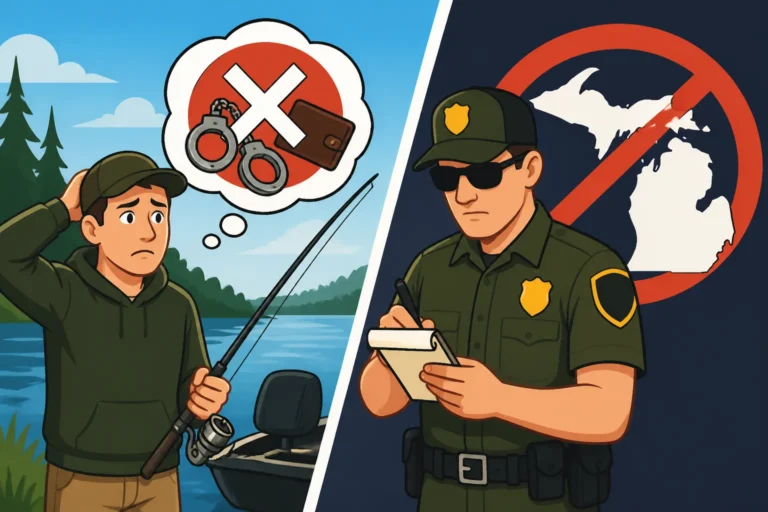
Look, nobody wants to be on the wrong side of the law, especially when you're just trying to enjoy a peaceful day of fishing. It's easy to think, "Oh, it's just one fish, who will know?" But Michigan takes its fishing regulations seriously, and the muskellunge reporting requirement is no exception. Forgetting to report, or intentionally failing to report, isn't just a minor oversight; it can carry some real repercussions. It’s important to understand these not just as threats, but as safeguards for the fishery itself. Ignoring the rules ultimately harms the resource we all cherish. All anglers should be familiar with the Michigan Fishing Regulations Every Angler Should Know to avoid these issues.
Penalties for Late or Unreported Catches
The Michigan Department of Natural Resources (DNR) conservation officers are out there for a reason, and part of their job is to ensure compliance with fishing regulations. Failing to report a muskellunge catch within the 24-hour window, or failing to report it at all, can result in penalties. These aren't usually just a slap on the wrist. You could be looking at a significant fine, and in some cases, your fishing privileges could even be suspended. Imagine losing access to Michigan's incredible fisheries because you forgot to log a fish. That would be a truly frustrating outcome, especially after all the effort and expense you might have put into your gear, like that new high-quality rod and reel combo you found on Amazon.
The exact penalty can vary depending on the severity of the violation, whether it's a first offense, and the discretion of the conservation officer or judicial system. However, it's safe to say that a violation will be much more costly and troublesome than taking a few minutes to fill out the report. The DNR maintains detailed records, and a pattern of non-compliance can lead to more severe actions. This reporting requirement is part of the broader regulatory framework, and ignorance of the law is rarely an excuse. It's always better to be safe than sorry, and a quick report ensures peace of mind, saving you from potential Michigan Fishing Violation Penalties and Fines.
Impact on Future Muskie Management
Beyond the personal legal ramifications, there's a wider, more significant consequence of unreported catches: it directly impacts muskie management. If anglers aren't reporting their catches, the data collected by the DNR becomes incomplete and inaccurate. This skewed data can lead to poor management decisions. For example, if a large number of muskies are caught but not reported, the DNR might underestimate the fishing pressure on a particular body of water. They might then allow for more liberal harvest regulations or stocking levels than the population can actually sustain, leading to a decline in muskie numbers over time.
Conversely, if catches are underreported, it might seem like muskie populations are struggling when they are not, leading to unnecessary restrictions that frustrate anglers. Every report, whether it's a trophy fish or a smaller one, contributes to a robust dataset that allows the DNR to make informed decisions about stocking, habitat protection, and bag limits, like the statewide Michigan Muskellunge Daily Catch Limit. By diligently reporting your catch, you're actively participating in the conservation process, ensuring that the thrill of muskie fishing remains a vibrant part of Michigan's outdoor heritage for years to come. Your participation is a direct investment in the future of the fishery.
Tips for a Smooth Reporting Process and Ethical Angling
We've covered the "why" and the "how" of muskellunge reporting, but let's talk about making it a seamless part of your fishing routine. Nobody wants added stress when they're enjoying their passion. By taking a few proactive steps, you can ensure that meeting the 24-hour reporting requirement is just another part of a successful and ethical muskie outing, not a last-minute panic. It’s all about preparation and embracing the responsibility that comes with pursuing such a magnificent species.
Preparing Before You Go
Preparation is key for any successful fishing trip, and that extends to your post-catch obligations. Before you even launch the boat or hit the shore, take a moment to ensure you're ready to report a muskie.
- Download the App: If you plan to use the Michigan's DNR Hunt Fish App for Licenses and Reporting, download it and create your account well in advance. Log in once to ensure everything works and you know where the reporting section is. This way, you're not fumbling with it when you're excited and tired after a long day.
- Know the Phone Number: Have the DNR reporting phone number saved in your phone contacts or written down somewhere accessible. This is your backup in case of connectivity issues.
- Carry Measuring Tools: Always have a reliable measuring device with you. A bump board is ideal for accurate, fish-friendly measurements. These are widely available, often through online retailers like Amazon, and are indispensable for responsible muskie fishing.
- License Ready: Ensure your current fishing license is easily accessible, whether it's a physical copy, on your phone via the app, or you simply know your license number by heart. It's a good habit to always know your Michigan Fishing License Expiration Date to avoid any licensing issues.
- Plan Connectivity: If you're heading to a remote area, think about how you'll get a signal or internet access if you need to report. Will you drive back to a specific town, or do you have a satellite messenger? Having a plan ahead of time reduces stress significantly.
Responsible Catch-and-Release Practices
While the reporting requirement applies to all muskies caught, a significant majority of muskie anglers practice catch-and-release, given the species' conservation status and the trophy nature of the fish. Even if you release the fish, it still needs to be reported within 24 hours. Therefore, integrating responsible catch-and-release techniques with your reporting process is paramount. The Catch-and-Immediate-Release Rules for Muskellunge are in place to maximize the fish's survival after being caught.
- Minimize Stress: Land the fish as quickly as possible without overplaying it. A prolonged fight can exhaust the fish and reduce its chances of survival.
- Handle with Care: Keep the fish in the water as much as possible. Use a large, knotless net, and handle the fish gently with wet hands or specialized gloves. Avoid putting fingers in the gills, which are extremely delicate and vital for respiration.
- Quick Measurements and Photos: Have your measuring device and camera ready. Get your length measurement and any photos done quickly and efficiently, ideally with the fish still partially submerged or held horizontally for minimal stress. This is where a good bump board comes in handy, allowing you to get an accurate length in seconds while minimizing handling time.
- Proper Release: Ensure the fish is revived before letting it go. Hold it gently in the water, facing into the current, until it can swim away strongly on its own. Watch for strong tail kicks and good equilibrium.
- Report Promptly: Once the fish is safely released, take a moment to record the necessary information (length, location, time) and make a plan to report it as soon as feasible within the 24-hour window. This might mean pulling out your phone right there on the boat, or making a note to do it when you get back to shore.
By embracing both the legal requirement of reporting and the ethical responsibility of safe handling, you ensure that every muskie encounter contributes positively to both the data pool and the health of Michigan's amazing muskie population. It's a testament to your dedication as a true conservation-minded angler.
Disclaimer
The information provided in this guide is for general informational purposes only and does not constitute legal advice. Fishing regulations in Michigan are subject to change. Always consult the most current Michigan DNR Fishing Guide or website for the official and most up-to-date regulations before heading out on the water.