Lake St. Clair Muskellunge Fishing
Fishing for muskellunge on Lake St. Clair is a dream for many anglers, but it’s also known for its demanding nature and the sheer challenge of landing one of these elusive giants. If you've ever felt frustrated by the lack of clear guidance on tackling these "fish of 10,000 casts" in Michigan's famous muskie waters, you're not alone. This comprehensive guide is designed to equip you with the essential knowledge, techniques, and local insights to increase your chances of success and truly understand the unparalleled excitement of Lake St. Clair muskie fishing.
Understanding Lake St. Clair's Muskellunge Population
Why Lake St. Clair is a Muskie Haven
Lake St. Clair isn't just a good place for muskellunge; it's often hailed as one of the best muskie fisheries in the world. This isn't just angler hype; there's a real science behind it. The lake itself is relatively shallow, with an average depth of about 10 feet, which means sunlight penetrates easily, fostering dense weed growth. These expansive weed beds are absolutely crucial for muskies, providing prime ambush points, excellent cover from predators (especially when they're young), and a rich habitat for the baitfish they prey upon. Think of it as a massive, shallow, nutrient-rich buffet that keeps the muskie population healthy and growing to impressive sizes.
Furthermore, Lake St. Clair is part of the Great Lakes system, connected to Lake Huron by the St. Clair River and to Lake Erie by the Detroit River. This constant flow of fresh, oxygenated water and the incredible biodiversity it supports contribute to a thriving ecosystem. The lake’s large size – approximately 430 square miles – means there’s ample room for these apex predators to roam and find abundant food sources like yellow perch, northern pike, and various panfish. This natural abundance, coupled with strong conservation efforts and sensible fishing regulations like those detailed in the Michigan's Great Lakes Fishing Regulations Guide, has allowed Lake St. Clair to maintain an exceptionally robust muskie population, making it a truly unique and highly sought-after destination for trophy muskie hunters.
Muskellunge Behavior and Habitat
Muskies, often nicknamed "water wolves," are ambush predators, and their behavior is heavily influenced by their pursuit of prey. On Lake St. Clair, this means they are intrinsically linked to the sprawling weed beds, transition zones, and structural elements. During warmer months, you'll often find them tucked into the thickest parts of the cabbage, coontail, and milfoil beds, waiting to dart out and strike unsuspecting baitfish. These weeds provide not only cover but also temperature regulation and oxygenated water, which are vital during the hot summer. As seasons change, their patterns will shift, but the fundamental principle remains: find the food, find the muskie, and the food is often concentrated around specific habitats.
Beyond the weed lines, muskies also relate to subtle changes in depth, rock piles, drop-offs, and even man-made structures like channel markers, docks, and bridge pilings, especially in the connecting rivers. They are territorial and often hold to specific "prime" spots within these larger habitats. Understanding their daily movements – often moving from deeper, cooler water in the heat of the day to shallower feeding grounds during dawn and dusk – is key to success. Anglers who consistently boat muskies on Lake St. Clair aren't just blindly casting; they're actively reading the water, looking for the tell-tale signs of baitfish, changes in bottom composition, and the specific types of cover that scream "muskie territory."
Identifying Lake St. Clair Muskies
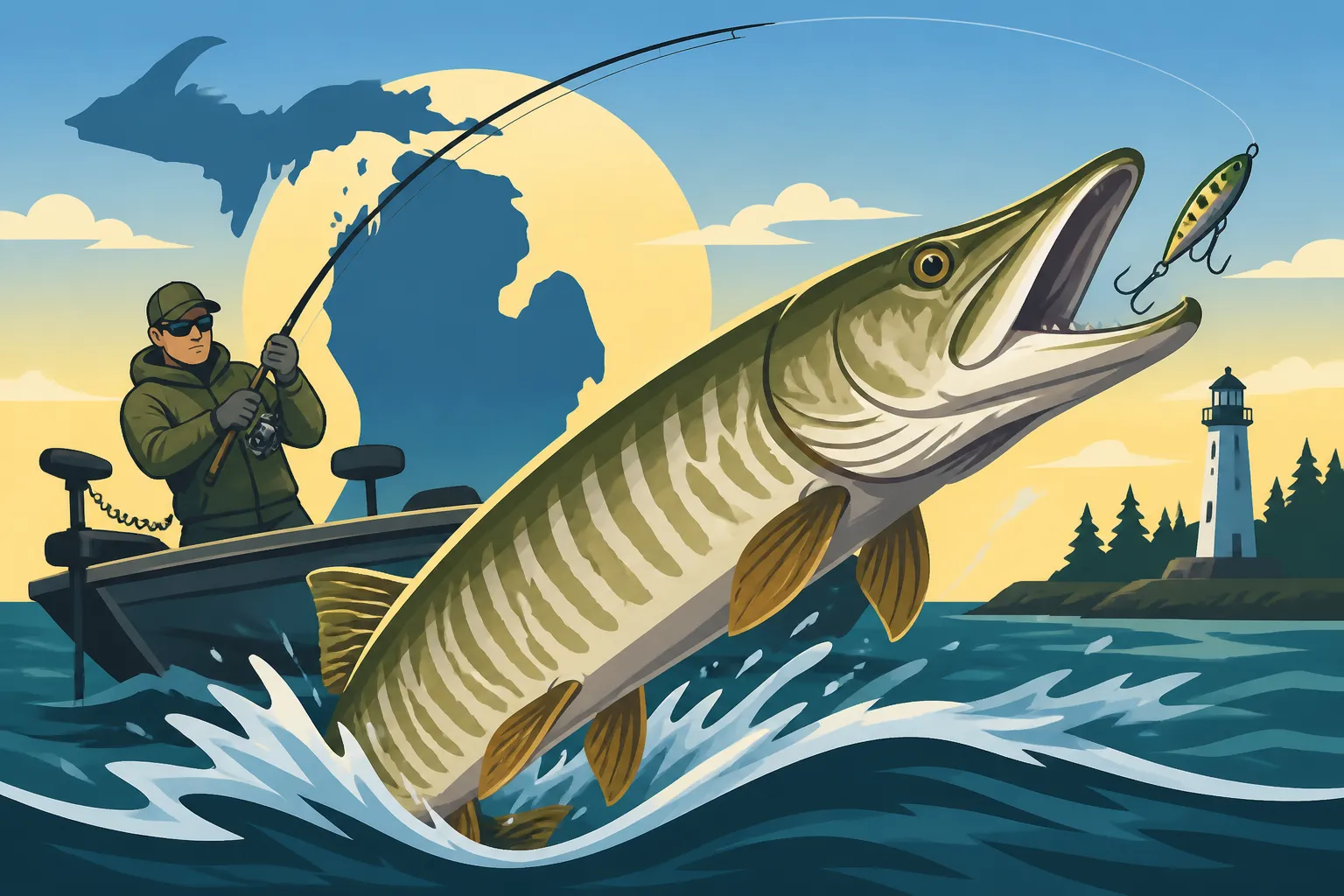
While it might seem straightforward, properly identifying a muskellunge, especially distinguishing it from its close relative, the northern pike, is important, particularly given the specific regulations that apply to each species. On Lake St. Clair, you're primarily targeting purebred muskies, but understanding the differences can prevent any accidental misidentification or regulatory issues. The most reliable way to tell them apart is by looking at the markings on their body and the scales on their cheek and gill cover. Muskies typically have dark spots or vertical bars on a lighter background, giving them a more "striped" or "blotchy" appearance, whereas northern pike usually have lighter, bean-shaped spots on a darker background.
Another key identifier is the scales on their cheek and gill cover. A true muskellunge will have scales only on the upper half of both its cheek and operculum (gill cover), leaving the lower half bare. In contrast, a northern pike has scales covering its entire cheek and at least the upper half of its gill cover. While less common on Lake St. Clair, it's also worth noting that Michigan has tiger muskies, a sterile hybrid of northern pike and muskellunge, which exhibit more pronounced vertical barring. However, for the purposes of Lake St. Clair fishing, focusing on the purebred muskie's characteristics will serve you well. Knowing these features is crucial not just for identification but for adhering to Michigan fishing regulations and ensuring you're targeting the right fish.
Best Times to Fish for Muskellunge on Lake St. Clair
Seasonal Patterns and Peak Activity
Muskellunge fishing on Lake St. Clair is a year-round pursuit for some, but certain seasons undeniably offer better odds for success. The general consensus among seasoned muskie anglers is that the late spring, summer, and fall are the prime times. As the lake waters warm in late spring (May-June), muskies become more active after their spawn. They'll be on the prowl, often found on the edges of newly emerging weed beds and flats, eager to feed. This can be a fantastic time for action, as fish might be a bit less pressured and more willing to hit a variety of presentations.
Summer (July-August) brings consistent action, particularly early mornings and late evenings when the sun isn't as high. During the day, muskies will retreat deeper into the thick weed cover or along cooler transition zones. This is when patience and persistence are key. The peak of the season, however, is often considered fall (September-November). As water temperatures begin to drop, muskies enter their "feed bag" mode, aggressively bulking up for the lean winter months. They become incredibly active, often moving to deeper weed lines, rock humps, and current breaks. This is when many of the biggest Lake St. Clair muskies are caught, as they throw caution to the wind in their pursuit of calories. Winter offers ice fishing opportunities for some, but it's a specialized approach compared to open water.
Daily and Weather Considerations
Beyond the seasonal shifts, daily timing and weather conditions play a monumental role in muskie activity on Lake St. Clair. Classic fishing wisdom often points to dawn and dusk as prime feeding times, and for muskies, this holds particularly true. Low light conditions provide them with a predatory advantage, making them bolder in their pursuit of prey. However, never underestimate the power of overcast days or the hours leading up to a major front. A cloudy, windy day can sometimes be more productive than a calm, sunny one, as the chop on the water breaks up light penetration, offering muskies more comfort to roam.
Barometric pressure is another critical factor. Many dedicated muskie hunters pay close attention to the barometer, often finding fish activity increases just before a cold front moves in or during a stable period of high pressure. A rapidly dropping barometer can sometimes trigger a feeding frenzy, as fish sense the impending change and feed aggressively. Conversely, a stable high-pressure system can make fishing tough, causing fish to be lethargic and less willing to chase. Wind direction and strength also dictate where baitfish might congregate, and consequently, where muskies will be found. Understanding these subtle environmental cues can give you a significant edge when planning your days on the water.
Essential Techniques and Lures for Lake St. Clair Muskellunge
Casting and Trolling Strategies
When it comes to muskie fishing on Lake St. Clair, both casting and trolling are highly effective, and often, anglers will employ a combination of the two depending on conditions and preferred style. Casting is particularly effective when targeting specific structures like weed pockets, points, or isolated cover. It allows for a more direct, precise presentation and the ability to work an area thoroughly. Anglers often drift with the wind or use a trolling motor to systematically cover productive flats and weed lines, casting large bucktails, jerkbaits, and soft plastics. The key here is repetition and varying your retrieve until you find what triggers a strike. Don't be afraid to make hundreds of casts in a day – it's called the "fish of 10,000 casts" for a reason!
Trolling, on the other hand, allows you to cover vast expanses of water, especially the open flats and deeper edges of the weed beds, much more efficiently. This is often the preferred method for locating active fish over large areas or when fish are scattered. Deep-diving crankbaits and large stickbaits are staples for trolling. Using planer boards can help spread out your lines and cover a wider swath of water, allowing you to present multiple lures at varying depths and distances from the boat. When trolling, pay close attention to your speed, lure depth, and the action of your baits. Often, subtle changes in boat speed or direction can trigger a reluctant muskie. Many charter captains operating on Lake St. Clair, which you can easily find on platforms like FishingBooker, specialize in both techniques and can offer invaluable insights into what's working on any given day.
Top Lures and Baits for St. Clair Muskies
Lake St. Clair muskies aren't shy about hitting big presentations, and your tackle box should reflect that. There's a wide array of lures that consistently produce on these waters.
- Bucktails: These are probably the most iconic muskie lures. Their pulsating flash and vibration are irresistible. Larger bucktails, often in sizes 8, 9, or 10, with double or even triple blades, are standard. Popular brands include Musky Mayhem Tackle and Livingston Lures. Varying colors based on water clarity (brighter in clear, darker in stained) is a good strategy.
- Crankbaits and Trolling Baits: For trolling, deep-diving crankbaits are essential. Baits like those from Drifter Tackle, Salmo, and Rapala are go-to choices. Look for models that can dive to the 10-15 foot range to get into the strike zone. Colors mimicking natural baitfish or bright, attention-grabbing patterns can be effective.
- Jerkbaits: These lures require an active retrieve, mimicking a wounded baitfish. Hard plastic jerkbaits that suspend or slowly sink, from brands like Grandma and Suick, are excellent for twitching and pausing over weed beds.
- Soft Plastics and Glide Baits: Increasingly popular, large soft plastics offer a different profile and action. Medussa baits and large soft swimbaits can be incredibly effective, especially when muskies are being finicky. Glide baits, often fished with a "walk-the-dog" retrieve subsurface, can also entice strikes.
Remember, presentation is often as important as the lure itself. Experiment with retrieve speeds, pauses, and cadences until you unlock the muskie's mood. It's also worth noting that specific lure choices can vary by the time of year and water conditions, emphasizing the importance of a versatile tackle box. For a deeper dive into lure selection, check out our guide on the Best Lures for Muskellunge.
Proper Catch-and-Release Practices
Catching a muskie is often a once-in-a-lifetime experience for many, and due to their long lifespan and the "trophy" status, responsible catch-and-release is absolutely paramount on Lake St. Clair. These fish are fighters, and proper handling ensures they survive to be caught another day.
Here are critical steps for proper muskie release:
- Preparation: Have all your tools ready before you even hook a fish: large, long-nosed pliers (like Knipex or Dr. Slick), bolt cutters (for cutting hooks if necessary), a heavy-duty hook remover, and a large, knotless rubberized landing net. A quality pair of sturdy gloves is also highly recommended for handling the fish and hooks.
- Minimize Fight Time: Use heavy tackle appropriate for muskie to land the fish as quickly as possible, reducing stress and exhaustion.
- Netting: Use a large, deep, rubberized net to secure the fish. Avoid nets with knotty mesh that can damage fins or remove slime. Keep the fish in the water as much as possible.
- Unhooking: While the fish is still in the net and largely submerged, carefully remove hooks. If hooks are deeply embedded or in a precarious spot, use bolt cutters to snip them. Never attempt to pry deeply swallowed hooks. If you must remove the fish from the water, do so quickly and support its entire body horizontally. Avoid holding it vertically by the head or gill plate, as this can cause severe internal damage.
- Photography: If taking a photo, hold the fish horizontally, supporting its belly with one hand and grasping the base of its tail with the other. Keep it out of the water for only a few seconds – just enough for a quick photo – and then immediately return it.
- Revival: Gently hold the muskie by the tail in the water, facing into the current or moving it slowly back and forth to force water over its gills. When it can swim strongly on its own and maintain equilibrium, release it.
Following these practices is not just good sportsmanship; it's vital for maintaining Lake St. Clair's world-class muskie fishery. Remember, Michigan requires that Catch-and-Immediate-Release Rules for Muskellunge are followed strictly.
Navigating Lake St. Clair: Spots and Access
Key Muskie Hotspots and Structure
Lake St. Clair is massive, but seasoned muskie anglers know that success often comes down to understanding specific structural elements and hotspots. While muskies can be found almost anywhere there's bait, certain areas consistently produce. The expansive weed beds are the primary draw, particularly those with distinct edges, points, and interior pockets. Look for transitions where different types of weeds meet, or where weeds give way to sand or rock bottom. These "edge" areas are prime ambush points.
Beyond the visible weeds, pay attention to subtle depth changes, humps, and shoals. Even a slight rise of a few feet off the main flat can concentrate baitfish and, consequently, muskies. The St. Clair River mouth and the channels leading into and out of the lake are also critical areas, especially during seasonal migrations or when current is a factor. These areas provide excellent oxygenation and funnel baitfish. Think about the deeper channels that snake through the lake, like the shipping lanes, and their adjacent flats. Many experienced guides will also explore rip-rap shorelines, marinas, and bridge pilings in the connecting rivers, particularly in areas like the North Channel and Anchor Bay, for active fish. Utilizing up-to-date marine charts and good electronics is paramount for identifying these subtle yet crucial structures.
Boat Launches and Charter Options
Accessing Lake St. Clair is relatively straightforward, with numerous public and private boat launches available around its perimeter. On the Michigan side, popular launches include those in Harrison Township, particularly the Metropolitan Beach Metropark (Metropark) launch, which offers ample parking and multiple ramps. Other well-used launches can be found in New Baltimore, Fair Haven, and along the St. Clair River. These launches provide good access to different parts of the lake, allowing anglers to target specific areas without excessively long boat rides. Always check for launch fees and operating hours, especially during peak season.
For those new to the lake or looking to maximize their chances of success, hiring a professional muskie guide or charter service is highly recommended. These guides spend countless hours on the water, possess an intimate knowledge of muskie behavior on St. Clair, and come equipped with all the specialized gear you'll need. A quick search on platforms like FishingBooker will reveal numerous highly-rated Lake St. Clair muskie charters. A guide can teach you the nuances of techniques, identify current hotspots, and dramatically cut down your learning curve, turning a potentially frustrating "fish of 10,000 casts" into a much more manageable and enjoyable experience. Plus, they handle the boat and navigation, allowing you to focus purely on fishing.
Conservation and Regulations for Muskellunge in Michigan
Michigan's One Muskellunge Per Year Rule and Size Limits
Michigan has very specific and strict regulations designed to protect its muskellunge population, especially on trophy waters like Lake St. Clair. These rules are crucial for maintaining the quality of the fishery and ensuring these magnificent fish continue to thrive. One of the most significant regulations is the Michigan's One Muskellunge Per Year Rule. This means that once you harvest (keep) one muskellunge in a calendar year, you are done for the rest of the year, regardless of where in Michigan you caught it. This rule underscores the DNR's commitment to conserving these large, slow-growing fish.
Furthermore, there are strict size limits. On Lake St. Clair, the minimum size limit for muskellunge is typically 42 inches. This is a substantial size, reflecting the desire to allow muskies to reach reproductive maturity and contribute multiple spawning cycles before being harvested. It's imperative that anglers carry a reliable measuring device and accurately measure any muskie they intend to keep. Any fish even slightly under the legal limit must be immediately released unharmed. These regulations, combined, are paramount to the sustainability of the Lake St. Clair fishery, allowing it to remain a world-class destination for trophy muskie. For the most up-to-date and comprehensive details, always consult the official Michigan Fishing Regulations Every Angler Should Know digest issued by the Michigan Department of Natural Resources (DNR).
The 24-Hour Reporting Requirement
Beyond the size and annual harvest limit, Michigan has another critical regulation for muskellunge: a mandatory reporting requirement. If you are fortunate enough to harvest a legal-sized muskellunge, you are required to report your catch to the Michigan DNR within 24 hours. This isn't just a suggestion; it's a legal obligation. This data is incredibly valuable to fisheries biologists, providing crucial information on muskie populations, harvest rates, and the overall health of the fishery. It helps them make informed management decisions to ensure the future of muskie fishing in Michigan.
Reporting can typically be done online through the Michigan DNR's website, using their Michigan DNR Hunt Fish App for Licenses and Reporting, or by phone. You'll need to provide details such as the date and location of the catch, the length of the fish, and potentially other information. Failure to report a harvested muskie within the 24-hour window can result in fines and penalties, so it's essential to be aware of and adhere to this rule. Even if you're primarily a catch-and-release angler, understanding the Michigan Muskellunge Harvest Reporting Rules is part of being a responsible steward of this incredible resource.
Catch-and-Immediate-Release Rules for Muskellunge
Even if you don't intend to keep a muskie, Michigan's regulations emphasize immediate release for fish that do not meet the legal size limits or for those caught during closed seasons or in areas where harvest is prohibited. This means that if you catch a muskie that you are not going to keep, it must be returned to the water as quickly and safely as possible, minimizing its time out of the water. The emphasis is on "immediate." You shouldn't be spending excessive time trying to get the perfect photo if it risks the fish's health, especially if it's undersized or you've already met your annual limit.
The spirit of this rule ties directly into the proper catch-and-release practices we discussed earlier. The goal is to maximize the muskie's chances of survival post-release. Prolonged handling, improper netting, or taking too long to unhook can all lead to post-release mortality, even if the fish swims away initially. This is why having your tools ready, minimizing air exposure, and performing a proper revival are not just ethical practices but often implicitly part of the Catch-and-Immediate-Release Rules for Muskellunge. The health of Lake St. Clair's muskie fishery depends on every angler's commitment to these conservation-minded rules.
Preparing for Your Lake St. Clair Muskellunge Adventure
Essential Gear and Tackle
Muskellunge fishing demands specialized, heavy-duty gear that can withstand the violent strikes and powerful runs of these freshwater giants. Skimping on tackle is a surefire way to end up with broken lines, bent hooks, and lost fish.
- Rods: Look for heavy or extra-heavy power baitcasting rods, typically 8 to 9 feet long. Longer rods provide better leverage for casting large baits and controlling big fish. Brands like St. Croix, G. Loomis, and Okuma offer excellent muskie-specific rods.
- Reels: A robust baitcasting reel with a strong drag system and high line capacity is crucial. Reels from Daiwa, Shimano, or Abu Garcia in sizes like 300 or 400 are common choices. A fast retrieve ratio is beneficial for working bucktails and quickly picking up slack.
- Line: Spool up with 80-100 lb braided line. This high-strength, low-stretch line provides the power needed for hook sets and handling the fish.
- Leaders: A heavy-duty fluorocarbon or wire leader (100-200 lb test, 12-18 inches long) is absolutely non-negotiable. Muskies have incredibly sharp teeth that will easily slice through braid or monofilament. Look for leaders with strong, high-quality snaps and swivels to attach your lures.
- Tools: As mentioned in catch-and-release, a large net with a rubberized mesh, long-nosed pliers, bolt cutters, and hook removers are essential safety and handling tools.
Beyond this core setup, consider a good pair of polarized sunglasses to spot fish and structure, and reliable rain gear because Michigan weather can change quickly. Having a well-organized Best Tackle Box Setup for Muskellunge will make your day on the water much smoother.
Hiring a Guide or Charter
For many, the thought of tackling Lake St. Clair's muskies for the first time can be daunting. It's a vast body of water, and finding these elusive fish requires a deep understanding of the lake, its seasons, and muskie behavior. This is where a seasoned muskie guide or charter comes into play, offering an invaluable shortcut to success and an incredible learning experience.
Hiring a guide allows you to benefit from years of local knowledge. They know the current hot spots, what baits are working best, and how to present them effectively. They typically provide all the necessary, high-end gear, so you don't have to invest heavily in specialized muskie tackle before you're even sure you're committed to the pursuit. This can include everything from the heavy-duty rods and reels to the specific, expensive lures that can entice a strike. For general boat considerations, you might also find our guide on Best Boats for Michigan Fishing helpful for understanding what vessel suits muskie hunting. Many guides also prioritize safety, offering a secure and comfortable fishing platform, which is especially important on a large body of water like Lake St. Clair where conditions can change rapidly. For those coming from out of state, or even local anglers looking to refine their skills, a Lake St. Clair muskie charter found on a platform like FishingBooker can transform a challenging hunt into a memorable and educational adventure. It's an investment not just in catching a muskie, but in gaining the knowledge and confidence to pursue them independently in the future.
Key Lake St. Clair Muskellunge Regulations Summary
Here’s a quick overview of the most crucial muskellunge regulations for Michigan waters like Lake St. Clair, essential for every responsible angler.
| Regulation Type | Detail (Michigan, Lake St. Clair) | Importance |
|---|---|---|
| Minimum Size Limit | 42 inches | Ensures fish reach reproductive maturity; protects trophy potential. |
| Daily Possession Limit | 1 fish per day (if harvested) | Strict conservation measure; encourages catch-and-release. |
| Annual Harvest Limit | 1 fish per year | Prevents overharvesting of slow-growing trophy fish. |
| Harvest Reporting | Mandatory within 24 hours of harvest | Provides crucial data for fisheries management and conservation efforts. |
| Catch-and-Release | Immediate release required for all unkept fish, minimal handling. | Maximizes post-release survival rates; ethical angling practice. |
| Fishing License | Required for all anglers 17 years and older | Funds conservation programs and fisheries management. Michigan Fishing License Guide for Residents and Nonresidents |
Disclaimer
Please be aware that fishing regulations can change. Always consult the latest official Michigan Department of Natural Resources (DNR) fishing guide or website before heading out to fish. The information provided in this article is for general guidance only and should not be considered a substitute for the official regulations.