Michigan Muskellunge Daily Catch Limit
Navigating the specific regulations for fishing in Michigan can sometimes feel like trying to untangle a particularly stubborn fishing line. You want to enjoy the thrill of the catch, especially when it comes to a magnificent creature like the muskellunge, but the fear of inadvertently breaking a rule can really take the joy out of it. This guide is here to cut through the confusion, clearly explaining Michigan's daily catch limit for muskellunge and all the nuances that come with it.
Understanding Michigan's Muskellunge Daily Catch Limit
When you hook into a muskellunge in Michigan, the excitement is palpable. These are truly incredible fish. However, before you even think about putting that beauty in your livewell, it's crucial to understand the very strict regulations around them. Unlike many other species where you might have a generous daily bag limit, muskellunge are treated quite differently in Michigan due to their unique life history and the intensive management efforts to sustain their populations.
The big takeaway, and often the most surprising for new anglers, is that the daily catch limit for muskellunge in Michigan is effectively one fish per year. Yes, you read that right. While you might encounter a daily possession limit of one, it's really the annual limit that dictates your harvest potential. This isn't just about limiting how many you can take on a single outing; it's about controlling your total harvest over an entire fishing season. This distinction is vital, especially if you plan multiple muskie trips throughout the year. The moment you harvest one legal muskellunge, your season for keeping another one is over. It’s a conservation measure designed to protect these long-lived, slow-growing predators.
The "One Fish Per Year" Rule Explained
This annual limit is paramount for muskellunge anglers in Michigan. It means that once you keep a legally sized muskellunge, you cannot harvest another one for the remainder of that licensing year, which runs from April 1st through March 31st of the following year. This rule is designed to ensure the sustainable management of muskellunge populations, which take a long time to reach trophy size and are sensitive to overharvesting. Imagine spending years patiently waiting for a large muskie to grow, only for it to be removed from the fishery too quickly. That's what this rule helps prevent.
Many anglers embrace this rule, viewing the opportunity to harvest even one muskie as a significant achievement. It elevates each catch to a special event, encouraging careful planning and consideration before deciding to keep a fish. Remember, even if you travel to a different lake or region within Michigan, that single-fish annual limit still applies across the state. The spirit of the law here is about appreciating these magnificent fish and ensuring future generations of anglers have the same opportunity to pursue them. For more details on this specific regulation, you can look into Michigan's One Muskellunge Per Year Rule.
Statewide Minimum Size Requirements
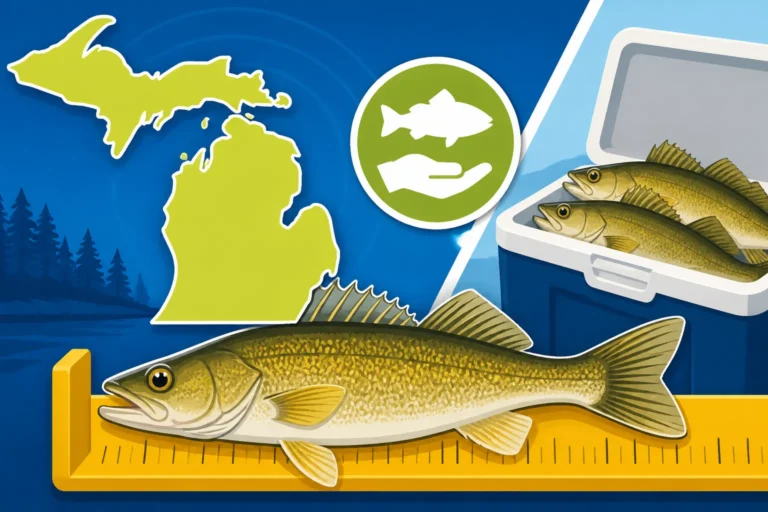
Beyond the annual catch limit, there's also a significant minimum size requirement that must be met for any muskellunge you intend to keep. Generally, the statewide minimum size limit for muskellunge is 42 inches. That’s a seriously big fish! Forty-two inches is not just a number; it represents a fish that has had the chance to mature and reproduce multiple times, contributing to the health of the population. Trying to land a fish of that size alone is a challenge, let alone finding one. This high minimum size limit reinforces the idea that muskellunge are truly trophy fish, intended for experienced anglers who are dedicated to the pursuit.
It's absolutely critical to measure any fish you're considering keeping immediately and accurately. If a muskie doesn't meet that 42-inch mark, it must be released immediately with as little harm as possible. Carrying a reliable measuring board or tape is non-negotiable for muskellunge fishing. Don't eyeball it; a few inches can mean the difference between a legal harvest and a violation.
Here’s a quick overview of the primary regulations:
| Regulation Type | Detail |
|---|---|
| Daily Limit | One muskellunge |
| Annual Limit | One muskellunge per fishing license year (April 1 – March 31) |
| Size Limit | 42 inches minimum (statewide general rule, with exceptions) |
| Reporting | Mandatory within 24 hours of harvest |
Why Such Strict Regulations for Muskellunge?
You might wonder why muskellunge, in particular, are subject to such stringent rules compared to, say, perch or panfish. It’s not arbitrary; these regulations are deeply rooted in scientific understanding of the species' biology and their role in Michigan's aquatic ecosystems. The Michigan Department of Natural Resources (DNR) invests considerable effort in managing these fisheries, and the rules reflect a commitment to their long-term health.
Muskellunge are the apex predators in many of Michigan's waters. They sit at the top of the food chain, and their presence is often an indicator of a healthy ecosystem. However, they are also incredibly vulnerable to overfishing if not managed carefully. Their biology simply doesn't allow for casual harvest without significant consequences to their populations.
Conservation Efforts and Population Management
The strict catch and size limits for muskellunge are cornerstones of Michigan's conservation efforts. Muskellunge are relatively slow-growing fish, often taking many years to reach that impressive 42-inch minimum size. They also don't reproduce as prolifically as many other game fish. If too many large, breeding-age fish are removed from the population, it can severely impact future generations, leading to fewer fish and smaller average sizes over time.
Think of it like this: if you continually harvest the largest, most productive apple trees in an orchard, you'll eventually have fewer and smaller apples. The same principle applies to fish populations. By allowing muskies to grow large and spawn multiple times, we ensure a robust and healthy fishery for everyone. The DNR actively monitors muskellunge populations, using these regulations to balance fishing opportunities with the ecological needs of the species. This ensures that the thrill of hooking a Michigan muskie isn't just a fleeting memory but a sustained tradition. Learn more about the specific rules in the Michigan Fishing Regulations Every Angler Should Know.
The Unique Life Cycle of Michigan Muskellunge
Part of what makes muskellunge so special, and so carefully managed, is their unique life cycle. They are often referred to as "the fish of 10,000 casts" not just because they're elusive, but because they simply don't grow as quickly or in the same numbers as other popular game species. A muskellunge might live for 15-30 years, depending on the water body, and reach incredible sizes in that time.
For a muskellunge to reach 42 inches, it has typically survived numerous challenges and years of growth. This extended growth period means each large fish represents a significant investment of time and resources within the ecosystem. The regulations are in place to allow these fish to complete several spawning cycles before they are eligible for harvest, thereby maximizing their contribution to the gene pool. This focus on protecting mature breeding stock is a critical component of sustaining the high-quality muskie fisheries that Michigan is known for, from Lake St. Clair to the Upper Peninsula's inland lakes.
Navigating the Muskellunge Harvest Reporting System
Okay, so you've done it. You've landed a legal muskellunge that meets the stringent 42-inch minimum and you've decided to keep it as your single fish for the year. Congratulations! But your responsibilities don't end there. Michigan has a mandatory harvest reporting system for muskellunge, which is just as important as the catch and size limits themselves. This system provides critical data to the DNR, helping them to continue their conservation efforts and make informed decisions about future regulations.
Ignoring the reporting requirement is not an option. It's a legal obligation that all muskie harvesters must fulfill. This data helps biologists understand harvest rates, estimate population sizes, and detect any potential issues that might arise in the fishery. It's your contribution to the ongoing health of Michigan's incredible muskellunge.
The 24-Hour Reporting Mandate
Perhaps the most crucial aspect of the reporting system is the timeframe: any harvested muskellunge must be reported to the Michigan DNR within 24 hours of its capture. This isn't a suggestion; it's a strict requirement. The reason for such a tight window is to collect timely and accurate data. Fresh information allows the DNR to quickly assess harvest pressure and track trends across the state's various muskie fisheries.
This means that if you land a muskie on a Saturday afternoon, you can't just put off reporting it until Monday morning. You need to take care of it as soon as possible. It might seem like an extra step after an exciting day on the water, but it's a small price to pay for ensuring the future of Michigan's muskie fishing. Make it part of your routine—it should be on your checklist right after you secure your catch and before you clean your boat. Further details can be found under Michigan Muskellunge Harvest Reporting Rules.
Methods for Reporting Your Catch
Reporting a harvested muskellunge is surprisingly straightforward, thanks to modern technology. The DNR provides a few convenient options to ensure you can meet the 24-hour deadline, even if you're out in a more remote area.
- Online Reporting: The most common and easiest method is to report your catch online through the Michigan DNR's website. They have a dedicated system for this. You'll need some basic information about your catch, such as the date, location (often a specific lake or river), and the length of the fish. This digital method is quick and accessible from anywhere with an internet connection.
- DNR Hunt Fish App: For anglers who prefer using their mobile devices, the official Michigan DNR Hunt Fish App is an excellent tool. This app allows you to purchase licenses, check regulations, and, importantly, report your muskie harvest directly from your smartphone. It’s incredibly convenient when you're still out by the lake or on your way home.
- DNR Customer Service Centers: If you prefer an in-person approach or have questions, you can also report your catch at a DNR Customer Service Center. Check their operating hours beforehand, especially if your 24-hour window is closing in.
Regardless of the method you choose, make sure you receive confirmation that your report was submitted successfully. Keeping a screenshot or confirmation number can be helpful for your records. This system, detailed further in How to Register a Muskellunge Catch in Michigan, is a testament to Michigan's commitment to robust fisheries management.
Beyond the Daily Limit: Specialized Rules and Catch-and-Release Practices
While the general statewide rules for muskellunge are consistent, Michigan's diverse waters sometimes necessitate specialized regulations for specific lakes or river systems. These localized rules are often implemented to address unique biological conditions, population dynamics, or habitat features specific to that body of water. Always, and I mean always, check the most current Michigan Fishing Regulations Digest before heading out, especially if you're fishing a new spot.
Furthermore, given the rarity and trophy status of muskellunge, many anglers choose to practice catch-and-release exclusively, even if the fish meets the legal size. This is a highly respected practice within the muskie community and is often critical for maintaining healthy populations.
Specific Lake Exceptions and Higher Minimums
It's important to remember that the 42-inch statewide minimum size limit is a general guideline. Some specific Michigan lakes or river sections have even higher minimum size requirements for muskellunge. These exceptions are put in place for various ecological reasons, such as managing genetically distinct populations, protecting newly stocked fish, or allowing fish to reach an even larger size before being eligible for harvest, creating truly world-class trophy fisheries.
For example, certain well-known muskie waters might have a 50-inch minimum size limit. Imagine that – 50 inches! This is a serious commitment to growing monster muskies. Specific lakes like Lake Hudson and Thornapple Lake are often cited as having these unique regulations. If you're heading to a renowned muskie lake, assume there might be a special regulation in place. You can find detailed information about these specific regulations in resources like Michigan Lakes With a 50-Inch Muskellunge Minimum. Always check the official Michigan Fishing Guide for the body of water you intend to fish. A few moments of research online or flipping through the regulation book can save you from a potential violation and, more importantly, ensure you're contributing to sustainable fishing.
Best Practices for Catch and Immediate Release
Given the "fish of 10,000 casts" moniker and the one-fish-per-year rule, many muskie anglers are passionate about catch-and-release, even when a fish is legal to keep. Successfully releasing a large muskie unharmed requires specialized gear and techniques. These fish are powerful and can be easily injured if not handled correctly.
Here's how to ensure a healthy release:
- Proper Netting: Use a large, knotless, rubber-coated landing net. These nets are designed to protect the fish's slime coat and fins. Avoid smaller, knotted nylon nets that can strip slime and damage delicate tissues. You can find excellent options for a Best Net for Landing Muskellunge on sites like Amazon, ensuring you have the right tools.
- Minimal Handling: Keep the fish in the water as much as possible. If you must lift it for a quick photo, support its body horizontally with both hands—one under the belly, one grasping the base of the tail. Never hold a large muskie vertically by the gill plate or jaw, as this can cause severe internal damage.
- De-hooking Tools: Carry long-nosed pliers, bolt cutters (for cutting hooks if necessary), and a jaw spreader. Muskie often engulf lures deeply, and these tools are essential for quickly and safely removing hooks. Speed is key here to minimize stress on the fish.
- Revival: After de-hooking, gently hold the muskie in the water by its tail and just behind its head, allowing water to flow over its gills. Move it back and forth gently if there's no current, until it regains strength and can swim away on its own. This might take several minutes, but it's crucial for its survival.
- Documentation: If you plan to register a muskie for a "trophy release" program or simply want photos, have your camera ready to go before the fish is out of the water. Minimize the time the fish is exposed to air.
Embracing these catch-and-release techniques is a mark of a responsible and ethical muskie angler. It ensures that the fish you release has the best possible chance of survival, to be caught again another day, or to grow even larger and reproduce. Remember that Is Catch-and-Release Muskie Fishing Legal Year-Round in Michigan? Yes, it absolutely is, and it's highly encouraged!
Disclaimer
Please be aware that fishing regulations in Michigan can change. While this guide provides comprehensive information based on current understanding, it is always your responsibility to consult the most recent Michigan Department of Natural Resources (DNR) fishing regulations handbook or website before engaging in any fishing activity. This article is for informational purposes only and should not be considered a substitute for official legal guidance.