Shore Fishing Techniques for Michigan’s Great Lakes
Michigan's vast Great Lakes, with their sheer size and ever-changing moods, can feel incredibly intimidating for anglers who aren't heading out in a fully rigged boat. Many folks assume that serious fishing here requires expensive charters or specialized vessels, leaving shore-bound enthusiasts feeling like they're missing out on the best action. But that couldn't be further from the truth! This comprehensive guide is here to prove that some of the most exciting and productive fishing experiences on Lakes Michigan, Huron, Superior, and Erie are waiting right along their edges, if you know the right techniques and spots.
The Unique Appeal and Challenges of Great Lakes Shore Fishing
Fishing from the shore of Michigan's Great Lakes offers a distinct blend of accessibility and adventure. It’s an experience that connects you directly with the immense power of these inland seas, yet often requires a different mindset and approach than simply casting from a boat. There’s a raw, elemental beauty to it, but also specific hurdles to overcome.
Why Shore Fishing Isn't Just for Beginners
While it’s true that many beginners start their fishing journey from a dock or a beach, Great Lakes shore fishing is far from a simplistic pursuit. Seasoned anglers often embrace it for the challenge, the strategy, and the incredible rewards it can offer. You see, when you're confined to the land, you're forced to become an expert at reading the water, understanding currents, and adapting to conditions in ways that boat anglers, with their mobility, might not always need to. This isn't just about tossing a line in; it's about observation, patience, and a deep connection to the environment.
Moreover, certain times of the year, especially during spawning runs, can bring trophy-sized fish within casting distance of shore that would otherwise be out in deeper waters. Think about the massive salmon and steelhead pushing into river mouths or hugging the breakwalls – these are prime targets for shore anglers. It’s a game of strategy, where understanding the fish's migratory patterns and preferred habitats becomes paramount. The sheer convenience of being able to walk up to a spot, cast, and potentially hook into a monster without the need for a boat, fuel, or a launch ramp, is a huge draw for many.
Overcoming Environmental Obstacles
The Great Lakes are stunning, but they can also be incredibly challenging. Weather can change in an instant, turning calm waters into a formidable, wave-churned beast. Wind, in particular, is a major factor for shore anglers, affecting casting distance and accuracy, making it tough to feel subtle bites, and sometimes even creating dangerous conditions near the water's edge. High winds can also stir up bottom sediment, making the water murky and impacting fish visibility.
Water temperature and clarity are other significant variables. Fish behavior is highly dependent on these factors, and understanding how they fluctuate seasonally and even daily can make or break a trip. For instance, cold, clear post-frontal conditions might push fish deeper or make them less aggressive, while a warm rain might trigger a feeding frenzy, especially in river mouths. Access can also be an obstacle; many prime spots might require a bit of a hike, or navigating rocky terrain. But with the right preparation and gear, these challenges can be managed, turning potential frustrations into part of the adventure.
Essential Gear for Successful Great Lakes Shore Angling
You don't need a boatload of expensive equipment to be a successful shore angler on the Great Lakes, but having the right tools for the job can make a world of difference. Investing in quality gear designed to handle the rigorous conditions and powerful fish found here will pay off in comfort, efficiency, and more importantly, in landing those prized catches. Many reliable options are available on platforms like Amazon, making it easy to assemble your kit.
Rods, Reels, and Line: Building Your Foundation
When you're casting from shore into the vastness of the Great Lakes, distance and power are often key. You'll want a rod that's typically longer than what you might use for inland lake fishing, usually in the 8 to 12-foot range, offering better casting distance and leverage when battling strong currents or larger fish. A medium-heavy to heavy power rod with a fast action tip is a versatile choice, capable of handling larger lures and heavier weights while still detecting subtle bites. Graphite rods are popular for their sensitivity and lighter weight.
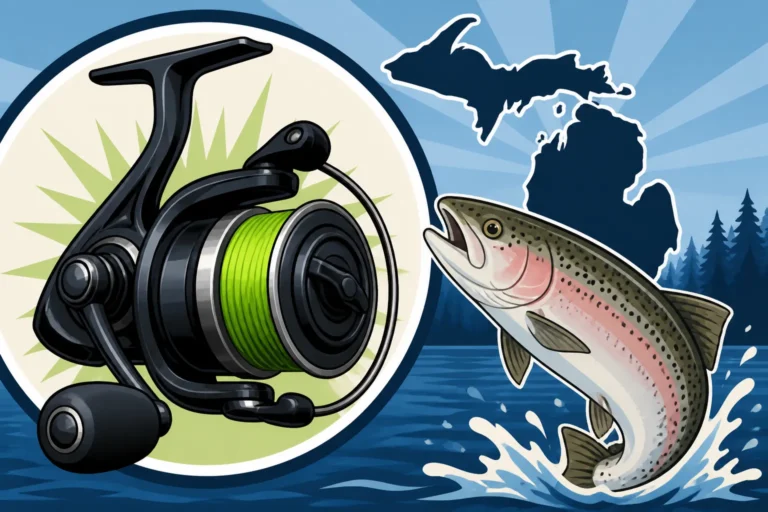
Pair this with a robust spinning reel, sized 3000 to 5000, that has a smooth drag system and ample line capacity. Look for reels with sealed components if you anticipate a lot of spray or accidental dips in the water. For line, braided line in the 15-30 lb test range is a fantastic choice due to its incredible strength-to-diameter ratio, zero stretch for superior sensitivity, and excellent casting capabilities. Many anglers will then add a 4-8 foot fluorocarbon leader (10-20 lb test) for abrasion resistance and invisibility in clear water. This setup allows you to cast far, detect bites clearly, and have the backbone to fight big fish. If you're targeting truly massive salmon or steelhead, you might even opt for heavier line and a stronger reel.
Tackle Box Essentials and Terminal Gear
Your tackle box for Great Lakes shore fishing needs to be well-stocked but also organized, as you might be hiking to your spot. Start with a good selection of spoons, jigs, and crankbaits. Popular spoons like Dardevles, Little Cleos, and Koho Kwikfish in silver, gold, and vibrant colors (orange, chartreuse) are incredibly effective for salmon and trout. For walleye and bass, jigs with soft plastic bodies (grubs, swimbaits), jerkbaits (like Rapala or Smithwick), and lipless crankbaits are essential. Don't forget an assortment of weights – pencil sinkers, pyramid sinkers, and egg sinkers – ranging from 1/4 ounce to 2 ounces, depending on the current and depth you're fishing.
Terminal tackle is equally crucial. You'll need extra hooks (single and treble), swivels (barrel and snap swivels to prevent line twist, especially with spoons), split rings, and leaders. Always carry a variety of leader material, usually fluorocarbon, in different strengths. A good pair of pliers for removing hooks and cutting line, a stringer or cooler for your catch, and a tape measure to ensure your fish meet size regulations are also must-haves. For those who prefer bait, a small container for live bait (like minnows or nightcrawlers) or cut bait is essential. Consider a multi-tool from Amazon for various small tasks.
Waders, Apparel, and Safety Considerations
Staying comfortable and safe while shore fishing on the Great Lakes is paramount. A good pair of waders, especially chest waders, can extend your casting range significantly by allowing you to step out into shallower water. They also provide crucial insulation against cold water, which is often the case even in warmer months. Neoprene waders are great for colder conditions, while breathable models are better for warmer weather. For a deep dive into choosing the right waders, check out our guide on Best Waders for River Fishing. Coupled with wading boots that offer good ankle support and grip on slippery rocks, you'll be much more agile and secure.
Layered clothing is always the best approach, as conditions can change quickly. A waterproof and windproof outer shell is essential, along with warm inner layers. Don't forget a hat, sunglasses (polarized ones greatly help with seeing into the water), and sunscreen. Safety items are non-negotiable: a small first-aid kit, a whistle (to signal for help), and a headlamp or flashlight if you're fishing near dawn or dusk. Even though you're on shore, a personal flotation device (PFD) is a wise choice if you plan to wade into deeper or fast-moving water, or if you're fishing near strong currents or powerful waves. Our article on Life Jackets and Michigan Boating Safety Rules provides more details on water safety.
Unlocking the Best Shore Fishing Locations in Michigan
Michigan's Great Lakes shoreline is incredibly diverse, offering a multitude of environments for shore anglers. From bustling city piers to secluded natural beaches, understanding the characteristics of each type of location is key to finding success. Each spot has its unique advantages and challenges, often dictating the techniques and species you might encounter.
Navigating Piers, Harbors, and Breakwalls
Piers, harbors, and breakwalls are arguably the most accessible and popular shore fishing spots on the Great Lakes. They offer deep water access often within a short cast, attracting a variety of fish species. Piers, like those stretching into Lake Michigan in towns such as Ludington, Grand Haven, and Holland, are legendary for their salmon and steelhead runs. These structures act as natural highways for migratory fish, and the deeper water at their ends can hold impressive numbers. Anglers often line these piers shoulder-to-shoulder during peak seasons, casting spoons, spawn bags, or still-fishing with cut bait. To learn more about specific spots, consult Best Fishing Spots on Lake Michigan Piers and Harbors.
Harbors, with their calmer, often deeper waters, provide sanctuary for baitfish, which in turn attracts predatory species like walleye, smallmouth bass, and perch. Many harbors along Lake Huron, such as those in Port Huron or Alpena, can be hot spots, especially during transitions seasons. Breakwalls, which protect harbors or shorelines from wave action, create current breaks and deep pockets where fish congregate. These rocky structures can be tricky to navigate, requiring sturdy footwear and caution, but the rewards can be significant. Look for areas with changes in depth, current, or structure along these features – they're often fish magnets.
Exploring Beaches, River Mouths, and Coastal Tributaries
While piers and breakwalls offer deep water, beaches and river mouths present a different kind of opportunity. Beaches, especially those with gradual slopes and some submerged structure (like old timber or rock piles), can be fantastic for targeting smaller species like perch or even casting for salmon and trout during high water events or specific feeding patterns. Early morning or late evening often yield the best results on sandy beaches. Wade out cautiously with your waders to extend your reach, but always be aware of drop-offs and currents. For tips on where to find good shoreline access on Lake Huron, check out Shore Fishing Access on Lake Huron.
River mouths and the lower stretches of coastal tributaries are absolute goldmines for shore anglers. These are the natural migration routes for salmon and steelhead heading upstream to spawn. Rivers like the Manistee, Muskegon, and Au Sable are famous for their runs. Here, you'll often find fish staging before entering the river or actively moving through the confluence. These areas can be incredibly productive, but also highly regulated. It's crucial to know the specific rules for Michigan Fishing Regulations Every Angler Should Know, as special tackle restrictions, snagging prohibitions, and possession limits often apply in these sensitive areas, especially during spawning runs. The convergence of river and lake water also creates unique current patterns and temperature breaks that attract baitfish and larger predators.
Effective Techniques for Diverse Shoreline Conditions
Shore fishing the Great Lakes demands adaptability. The techniques you employ will often be dictated by the species you're targeting, the specific location, and the prevailing environmental conditions. Having a versatile skill set and being willing to experiment are key ingredients to consistent success.
Casting and Retrieving Lures for Active Fish
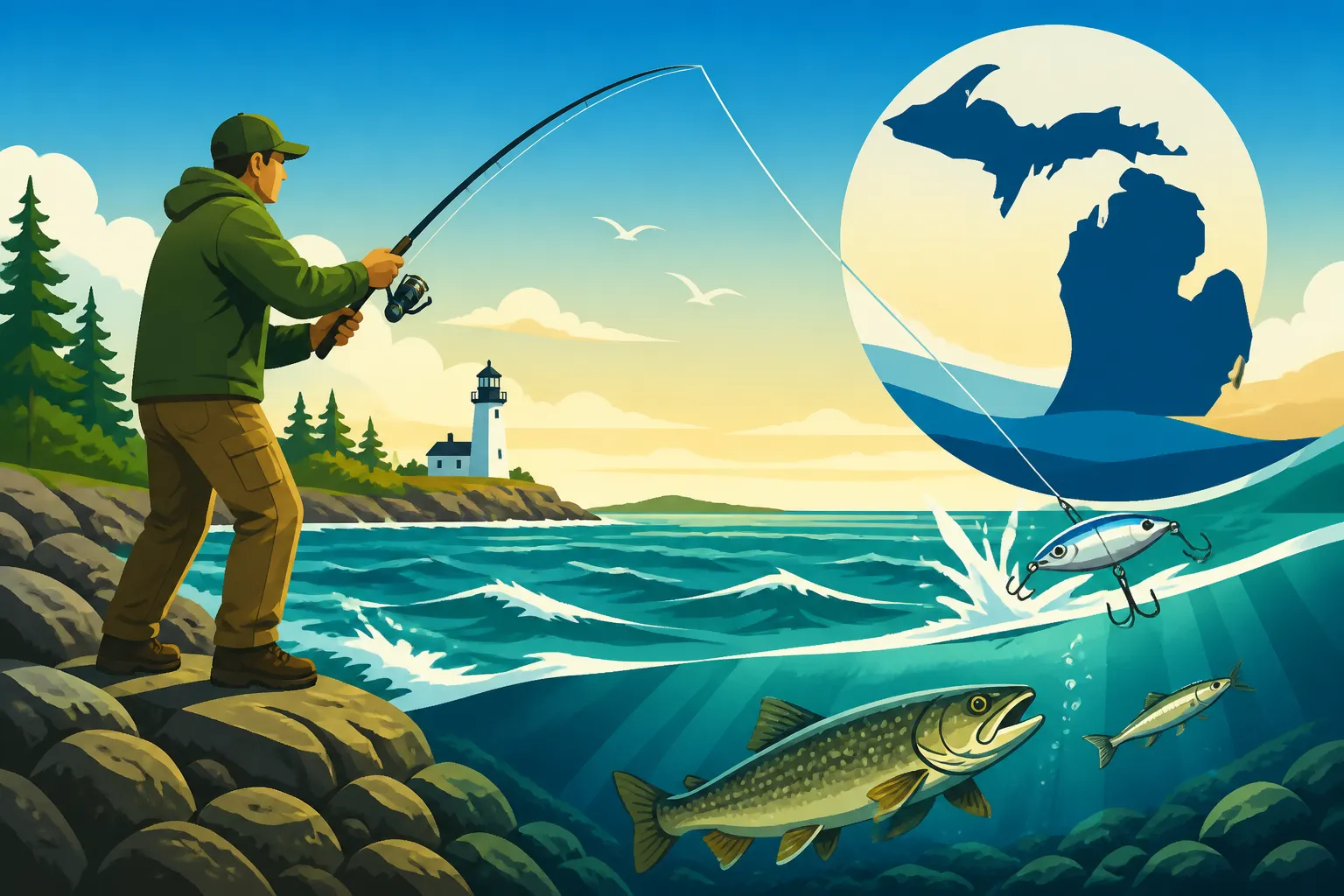
This is perhaps the most exhilarating and active form of Great Lakes shore fishing. It involves repeatedly casting various artificial lures out into the water and retrieving them in a way that mimics prey, triggering a strike from predatory fish. Spoons are a classic choice for salmon and trout. Cast them as far as you can, let them sink to your desired depth (counting them down helps), and retrieve with a steady, moderate pace, occasionally adding a twitch or pause. The flash and wobble are irresistible. Popular brands like Little Cleo, Dardevle, or Krocodile work wonders.
Jerkbaits and crankbaits are highly effective for targeting walleye, bass, and pike near structure. Vary your retrieve speed, incorporate pauses, and experiment with different colors and sizes until you find what the fish are keying in on. Soft plastics rigged on jig heads are incredibly versatile, allowing you to mimic baitfish, crawfish, or leeches. Fan-casting (casting to different spots in a fan-like pattern) helps you cover more water, increasing your chances of finding actively feeding fish. Always pay attention to your line for subtle taps or sudden slack, which often indicate a bite. For targeting walleye, our Michigan Walleye Fishing Techniques guide offers excellent insights.
Still Fishing with Bait for Bottom Dwellers
When fish are less active, or you're targeting species that prefer a more stationary meal, still fishing with bait is a highly effective technique. This involves presenting natural bait, like nightcrawlers, minnows, or cut bait, on or near the bottom. A common setup involves a simple Carolina rig or a drop-shot rig, using an egg sinker or a pyramid sinker to hold the bait down. The weight allows the bait to reach the desired depth and stay put, even in moderate currents.
This method is particularly effective for species like perch, catfish, and sometimes even reluctant walleye or lake trout. When fishing from a pier, you can often cast out, let your bait settle, and place your rod in a rod holder, waiting for the tell-tale tug. It requires patience, but it can be incredibly rewarding, especially during slower periods or when fish are holding tight to the bottom. Fresh bait is always best, so keep it lively and appealing.
Float Fishing and Specialty Rigs
Float fishing, also known as bobber fishing, is another excellent technique, especially when fish are suspended at certain depths or in shallower, slower-moving water. This involves using a float (slip bobber or fixed bobber) to suspend your bait or small lure at a predetermined depth. The float acts as a visual strike indicator, dipping or disappearing when a fish takes the bait. This method is incredibly effective for species like perch, panfish, and even migratory trout and salmon that are holding in specific water columns.
For river mouths and tributary fishing, "drift fishing" with floats and small spawn bags or beads is a deadly technique for steelhead and salmon. The float allows your offering to drift naturally with the current, presenting it without drag to wary fish. Specialty rigs, such as paternoster rigs for perch or even various fly fishing setups (if conditions allow and regulations permit), can also be employed depending on the target species and location. Remember, adapting your presentation is key, and sometimes a simple float rig can outperform complex artificials, especially when fish are shy or feeding subtly.
Targeting Popular Great Lakes Species from Shore
Michigan's Great Lakes are teeming with diverse fish species, and many of the most sought-after can be caught directly from shore. Understanding the habits and preferred habitats of these species will significantly increase your chances of success. Each fish presents its own unique challenge and reward.
Salmon and Trout: The Great Lakes' Prized Catches
When most people think of Great Lakes fishing, salmon and trout often come to mind, and for good reason! These powerful, acrobatic fish offer incredible fights and are highly prized. From shore, you'll primarily be targeting Chinook (King) Salmon, Coho Salmon, Steelhead (rainbow trout), and Brown Trout. Our Michigan Salmon Species Explained guide provides a detailed look at these magnificent fish. The best time to target them from shore is typically during their migratory runs – spring for steelhead and brown trout returning to the lake, and late summer/fall for salmon and steelhead heading into tributaries.
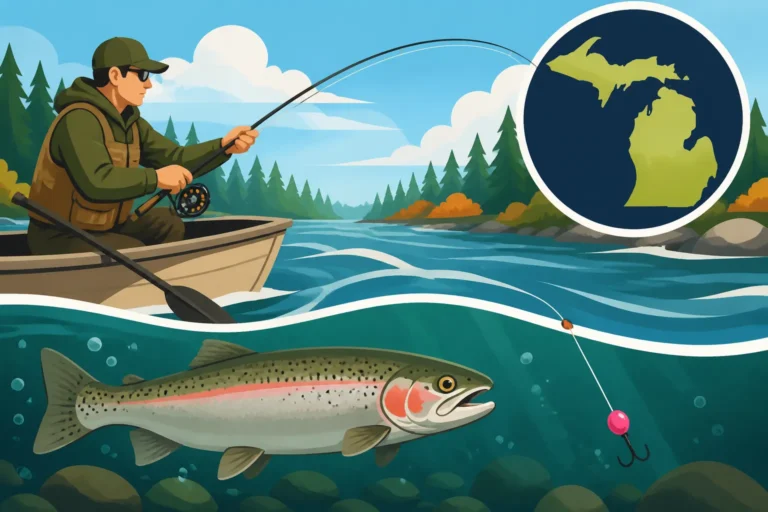
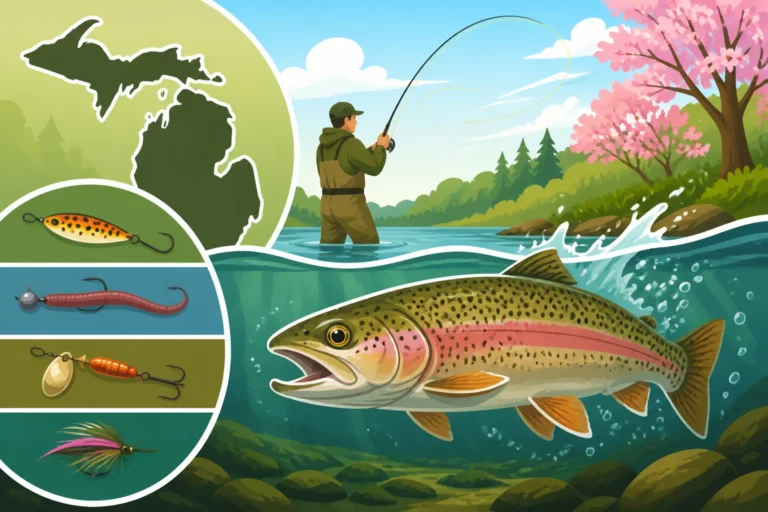
River mouths, piers, and breakwalls are prime locations. For salmon, large spoons (silver, chartreuse, orange) and crankbaits are excellent. During their spawning run, spawn bags or skein under a float can be incredibly effective. Steelhead and brown trout often respond well to smaller spoons, spinners, beads, or spawn bags. Look for areas where currents converge, or where there's deeper water close to shore. Early morning and late evening often provide the best bite, as these fish can be light-sensitive. When hooked, be prepared for a strong fight, as these fish are notorious for their jumps and powerful runs.
Walleye and Perch: Delicious Dinners from the Depths
Walleye and yellow perch are two of Michigan's most delicious and widely sought-after fish, and both can be caught from shore. Walleye, known for their delectable fillets and elusive nature, are often targeted from piers, breakwalls, and along sandy or rocky shorelines, particularly in Lakes Erie, Huron (especially Saginaw Bay), and Michigan. These fish are light-sensitive, so dawn, dusk, and even night fishing are often the most productive times. Jigs tipped with minnows or soft plastics, crankbaits, and swimbaits are excellent choices. During the spring, they might be found shallower, while in summer, they often hold in deeper, cooler water accessible from longer piers or drop-offs.
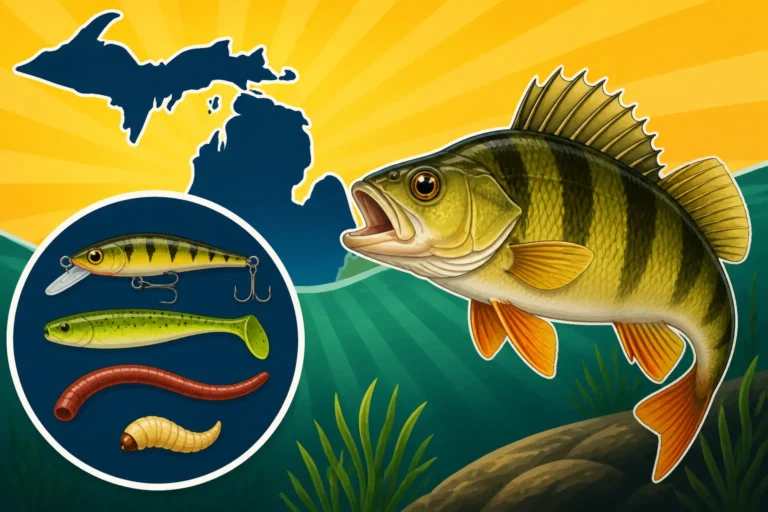
Yellow perch are a true panfish delight, often found in large schools, making for fast and furious action when you find them. They prefer cooler water and tend to school near structures like piers, docks, and weed beds. Smaller jigs tipped with waxworms, minnow pieces, or small minnows under a bobber are classic perch getters. They're often found close to the bottom. Lake St. Clair and Saginaw Bay are particularly famous for their fantastic perch fishing. When you catch one, there are likely many more nearby!
Bass and Pike: Aggressive Predators Nearshore
Smallmouth bass, with their incredible fighting spirit, are a blast to catch from shore, especially in rocky areas and near drop-offs on all the Great Lakes, particularly Lake St. Clair and parts of Lake Michigan. They love structure – rocks, submerged timber, and weed edges. Soft plastics (tubes, creature baits), crankbaits, jerkbaits, and even topwater lures during low light conditions can entice these aggressive feeders. They often strike hard and put up a fantastic battle, making them a favorite among many shore anglers.
Northern pike are another feisty predatory species that you can catch from shore, especially in shallower bays, weed beds, and around structure. They are ambush predators, so casting spoons, large spinners, spinnerbaits, or even lipless crankbaits near cover can be highly effective. Just be sure to use a steel or heavy fluorocarbon leader, as their razor-sharp teeth can easily cut through regular monofilament or braid. While pike are present in all the Great Lakes, some of the shallower bays and connecting waters offer excellent shore opportunities for them.
Timing Your Great Lakes Shore Fishing Adventures
Timing is everything in Great Lakes shore fishing. The massive size of these lakes means conditions can vary wildly, and fish behavior is profoundly influenced by the seasons, weather, and water dynamics. Being aware of these factors is crucial for planning a successful trip. To get a broader understanding of fishing seasons, check out our Michigan Fishing Season Dates and Rules guide.
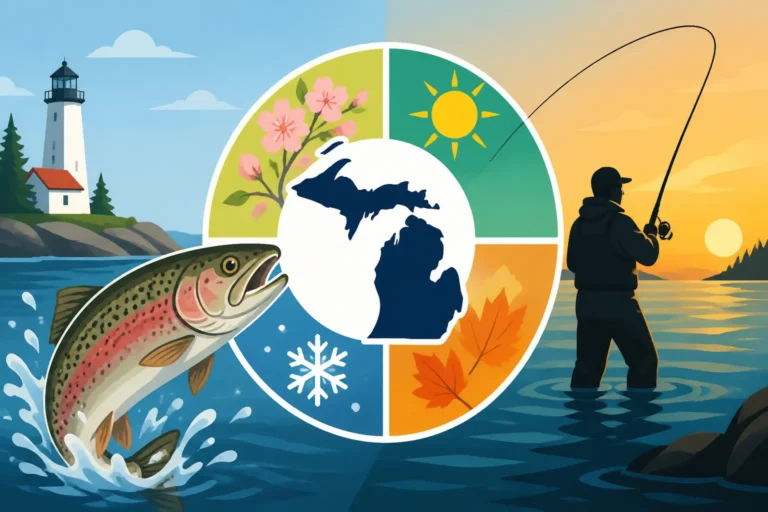
Seasonal Strategies: Spring, Summer, Fall, and Winter
- Spring: This is a prime time for shore anglers. As ice recedes and water temperatures slowly rise, baitfish become active, and migratory species like steelhead and brown trout push into river mouths and nearshore areas. Early spring can be excellent for walleye as they stage for their spawn. Look for warmer water near river discharges or shallow, sun-warmed bays. The
Michigan's Spring Fishing Season Guideoffers even more details on this productive time. - Summer: While some species move to deeper, cooler water, summer still offers great shore fishing. Early morning and late evening become critical for active predators. Smallmouth bass are often very active, and perch can be found in consistent numbers near piers and docks. River mouths can still hold resident trout and occasional salmon. Night fishing for walleye can be particularly productive as they move shallower to feed under the cover of darkness.
- Fall: This is arguably the most exciting season for Great Lakes shore anglers, especially for salmon and steelhead. Chinook and Coho salmon make their spectacular spawning runs into tributaries and stage heavily around river mouths, piers, and breakwalls. Following them are the hungry steelhead and brown trout, eager to feast on salmon eggs and whatever else they can find. The fishing can be fast and furious, but also crowded. Dress warmly, as the weather can be unpredictable.
- Winter: While ice fishing is popular on many inland lakes, open-water shore fishing on the Great Lakes is still possible in certain areas, particularly below dams on major rivers or in protected harbors that don't freeze solid. Steelhead, brown trout, and even some walleye can be caught. This requires specialized cold-weather gear and extreme caution. Ice safety is paramount, and if ice fishing is your thing, our Michigan Ice Fishing Guide is a must-read.
Understanding Weather, Wind, and Water Conditions
The Great Lakes are temperamental, and understanding how weather impacts your fishing is non-negotiable. Wind direction and strength are huge factors. A sustained west wind on Lake Michigan, for instance, can create massive waves that make casting impossible and muddy the nearshore waters. An east wind might calm the lake but could also push cold water nearshore. Always check the marine forecast before heading out.
Water temperature is another critical component. Fish are ectothermic, meaning their body temperature mirrors the water around them. Optimal feeding temperatures vary by species. In spring, look for slightly warmer water; in summer, slightly cooler pockets might hold fish. Water clarity is also important. Clear water often means fish are more wary, requiring lighter lines and more subtle presentations. Murky water, on the other hand, might mean they rely more on scent and vibration, making brighter lures or bait more effective. Paying attention to these subtle changes in conditions, often visible through local weather apps or marine forecasts, will greatly enhance your success.
Navigating Regulations and Ethical Angling Practices
Fishing the Great Lakes, even from shore, comes with responsibilities. Michigan has a comprehensive set of fishing regulations designed to protect fish populations and ensure sustainable angling for future generations. Ignorance of the law is never an excuse, so taking the time to understand the rules is just as important as knowing your fishing techniques.
Knowing Your Limits and License Requirements
First and foremost, if you're 17 years of age or older, you need a valid Michigan fishing license to fish in the Great Lakes. This applies to both residents and non-residents. Our Michigan Fishing License Guide for Residents and Nonresidents is an excellent resource for understanding the different types of licenses available, costs, and where to purchase them. You can easily buy them online through the Michigan Department of Natural Resources (DNR) website or licensed retailers. Always carry your license with you when fishing, either in physical form or digitally on your phone via the DNR Hunt Fish app.
Beyond the license, it's critical to understand bag limits and size limits. These regulations vary not only by species but can also differ depending on the specific body of water or even a particular stretch of a river. For instance, the walleye limit on Lake Erie might be different from an inland lake. You also need to know Michigan Great Lakes Fishing Regulations Guide to specific rules for different zones. These regulations are updated annually, so always consult the most current Michigan Fishing Guide (available online or at bait shops) before your trip. Fines for violations can be substantial, and nobody wants to ruin a good fishing day with an expensive ticket or, worse, losing your fishing privileges.
Practicing Responsible Catch and Release
While catching fish for a meal is a fantastic part of the angling experience, practicing responsible catch and release is vital for sustaining healthy fish populations, especially for larger breeding stock or protected species. If you intend to release a fish, handle it with care. Minimize its time out of the water, use wet hands to protect its slime coat, and support its body horizontally to avoid internal damage.
Consider using single, barbless hooks, especially when targeting fish primarily for sport. Barbless hooks make removal much easier and less traumatic for the fish. When releasing a fish, gently hold it upright in the water, allowing water to flow over its gills, until it regains its strength and can swim away on its own. For predatory fish like muskellunge, quick and careful release is paramount. Always dispose of your trash properly, avoid disturbing wildlife, and leave your fishing spots cleaner than you found them. These ethical practices ensure that future generations can enjoy the same incredible fishing opportunities you do.
Advanced Tips for Maximizing Your Shore Fishing Success
Moving beyond the basics, there are several nuances and strategies that can significantly elevate your Great Lakes shore fishing game. These involve a deeper understanding of fish behavior, environmental factors, and leveraging community knowledge.
Reading the Water and Identifying Holding Zones
One of the most valuable skills a shore angler can develop is "reading the water." This means observing subtle clues that indicate where fish might be holding or moving. Look for changes in current flow, such as eddies behind large rocks or piers, which create slack water where fish can rest and ambush prey. Areas where darker, deeper water meets shallower, lighter water are often key transition zones. Look for "structure" – submerged logs, rock piles, weed lines, or even old tires – anything that provides cover or a current break. Fish love to hide in these spots.
Pay attention to natural phenomena: diving birds often indicate schools of baitfish, which in turn attract larger predators. Surface disturbances, like ripples or swirls, could be feeding fish. The color of the water can also tell you a lot; clear water requires more finesse, while slightly stained water might offer fish more confidence to feed during the day. Observe other anglers, too – where are they casting? Are they catching anything? Sometimes, the fish are right under your nose, so spend time observing before making your first cast.
The Importance of Scouting and Local Knowledge
You wouldn't head into a wilderness hike without a map, and Great Lakes shore fishing is no different. Scouting potential fishing spots beforehand, even if it's just a quick drive-by, can provide invaluable information about access points, parking, water conditions, and visible structure. Online satellite maps (like Google Earth) can also be incredibly helpful for identifying submerged features or ideal casting locations before you even leave home. This pre-trip research saves time and helps you hit the ground running.
Beyond scouting, local knowledge is golden. Strike up conversations with bait shop owners – they often have the most up-to-date information on what's biting, where, and on what. Fellow anglers, if approached respectfully, can also be a fantastic source of tips and tricks. Many communities have online fishing forums or social media groups where local anglers share information. While you might not get someone's secret honey hole, you can often gather enough information to narrow down your search and identify productive patterns. Remember, every little bit of information adds up to a more successful day on the water.
Community and Technology: Learning from Fellow Anglers
The beauty of fishing in a place as popular as Michigan is the vibrant community of anglers. Don't be shy about joining online fishing forums dedicated to Michigan fishing, Facebook groups, or even following local fishing personalities on platforms like YouTube. You'll find a wealth of shared knowledge, recent reports, and even opportunities to connect with fellow anglers. Many professional guides also share general advice or daily reports through their channels, giving you a pulse on what's happening.
Modern technology has also given anglers powerful tools. Apps like Fishbrain provide user-submitted catch reports, showing what species were caught where, and on what bait. Marine weather apps, including wave height and wind direction forecasts, are indispensable for safety and planning on the Great Lakes. Even something as simple as a portable depth finder or sonar (many castable models are available on Amazon) can give you an edge by revealing bottom contours and fish presence right from the shore. Combining your observation skills with these technological aids and community insights will equip you to tackle Michigan's Great Lakes shore fishing with confidence and success.
Table: Popular Great Lakes Shore Fishing Species & Best Times
| Species | Best Shore Locations | Peak Seasons (Shore) | Recommended Lures/Bait | Key Indicators |
|---|---|---|---|---|
| Chinook Salmon | Piers, River Mouths, Breakwalls | Late Summer, Fall | Spoons (silver, chartreuse), Crankbaits, Spawn Bags | Current, Deeper water, Baitfish schools |
| Coho Salmon | Piers, River Mouths, Breakwalls | Late Summer, Fall | Spoons (orange, silver), Small Crankbaits, Spawn Bags | Nearshore pockets, Cooler water |
| Steelhead | River Mouths, Piers, Tributaries | Spring, Fall, Winter | Spawn Bags, Beads, Small Spoons, Spinners | River current, Gravel bottom |
| Brown Trout | Piers, River Mouths, Rocky Shorelines | Spring, Fall | Spoons, Spinners, Minnows, Small Crankbaits | Structure, Cooler water, Baitfish |
| Walleye | Piers, Breakwalls, Sandy/Rocky Shorelines | Spring, Fall, Night (Summer) | Jigs w/ Plastics, Crankbaits, Minnows | Low light, Bottom structure, Current seams |
| Yellow Perch | Piers, Docks, Weed Beds, Harbors | Spring, Summer, Fall | Small Jigs w/ Waxworms, Minnow Pieces, Small Spoons | Schooling, Clear/Stained water |
| Smallmouth Bass | Rocky Shorelines, Harbors, Drop-offs | Summer, Early Fall | Tubes, Jerkbaits, Crankbaits, Topwaters | Rocks, Deep weed lines, Structure |
| Northern Pike | Weedy Bays, River Mouths, Shallow Areas | Spring, Summer, Fall | Spoons, Spinnerbaits, Large Minnows | Weed beds, Ambush points, Cover |
Disclaimer
The information provided in this guide is for general informational purposes only and is not intended as legal advice. Fishing regulations in Michigan are subject to change, and it is the angler's responsibility to consult the most current Michigan Department of Natural Resources (DNR) fishing guide or website for up-to-date rules, regulations, and licensing requirements before engaging in any fishing activities. Always prioritize safety and practice responsible angling to protect yourself and Michigan's natural resources.