How to Catch Steelhead From Shore
Catching steelhead from shore in Michigan can feel like trying to find a needle in a haystack, especially when those elusive chrome beauties are running. Many anglers get frustrated feeling like they need a boat to access the best water, or they simply don't know where to start once they're actually standing on the riverbank. This comprehensive guide is here to demystify shore fishing for steelhead, helping you understand their behavior, master essential techniques, and select the right gear to increase your chances of success.
Understanding Michigan Steelhead Runs and Behavior
Steelhead, which are essentially rainbow trout that migrate from the Great Lakes into Michigan's rivers to spawn, are incredible fighters. Their migratory patterns are a huge factor in whether you'll find them close enough to shore to cast to, and knowing when and where to expect them is half the battle.
Timing Your Shore Fishing Excursions
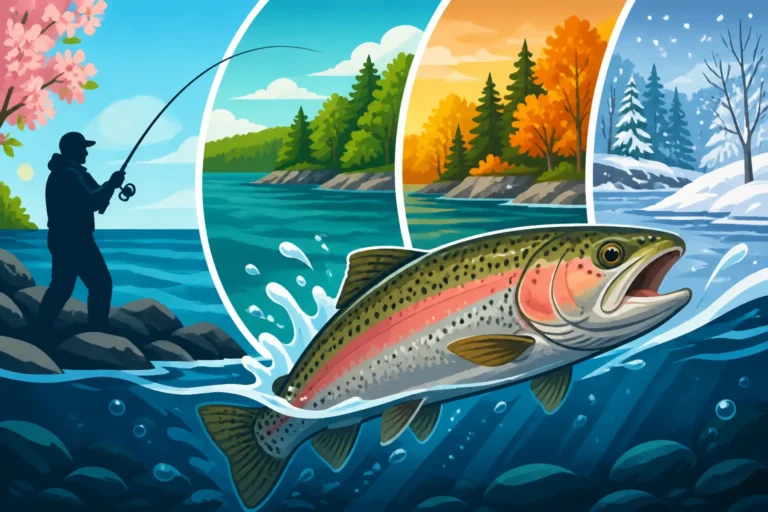
The timing of steelhead runs in Michigan's rivers is heavily influenced by water temperature and flow, but generally, we see two main pushes: fall and spring. The Michigan Steelhead Run Timing is critical knowledge for any angler. The fall run typically begins as lake temperatures drop, triggering fish to move into the lower stretches of rivers like the Manistee or Muskegon. These fish are often pre-spawn, entering the rivers to stage for the spring. Then, the real excitement often picks up in the spring, usually from March through May, when warmer temperatures and increased snowmelt signal the prime spawning period. However, knowing How Water Temperature Affects Steelhead Runs can help you pinpoint specific windows, as a cold snap can halt a run, and a warm rain can kick it into high gear. Don't overlook the potential for a Fall Steelhead Run in Michigan Rivers; it offers some fantastic opportunities before the winter chill sets in.
Where Steelhead Hold Near Shore
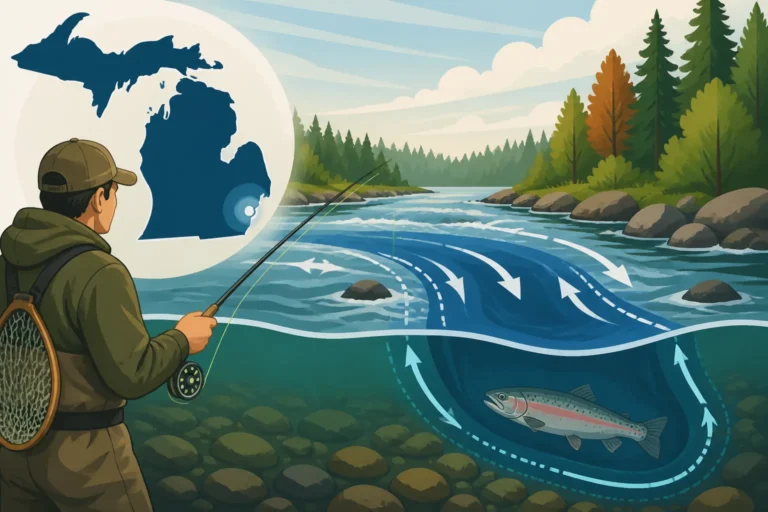
Steelhead, even when in rivers, often behave more like lake fish than typical resident trout. They prefer deeper pools, current breaks, and areas with structure that offer them cover and a place to rest out of the main current. When you're fishing from shore, your challenge is to identify these spots within casting distance. Look for bends in the river where the current digs a deeper channel along the bank, or areas with submerged logs, rock piles, or undercut banks. These are prime locations where steelhead will stage, feed, or hold before and after spawning. Understanding how fish use these features is crucial because you're essentially looking for their highway and rest stops. Sometimes, they'll even hold in surprisingly shallow water, especially when actively spawning in riffles, but the larger, deeper sections are generally more productive for shore anglers.
Essential Gear for Michigan Shore-Based Steelhead Anglers
Having the right gear makes a monumental difference when you're battling Michigan's powerful steelhead from the bank. You need equipment that can handle long casts, strong currents, and the incredible runs these fish are known for. It’s an investment, but good gear lasts and truly enhances the experience.
Rods, Reels, and Line Choices
For shore fishing, rod length is paramount. You'll often be contending with brush, trees, and the need for longer casts to reach prime water. A longer rod, typically between 9 and 11 feet, offers better line control, helps with mending your line in current, and provides the leverage needed to fight a strong fish. For spin fishermen, a medium-heavy power rod with a fast action is a great all-around choice. For those who prefer float fishing, a rod designed for centerpinning or a long spinning rod that mimics a centerpin action can be incredibly effective. Consider looking for options on platforms like Amazon for a wide selection of specific lengths and powers.
When it comes to reels, a durable spinning reel in the 2500-4000 series is ideal for most shore applications. It needs a smooth drag system, as a jerky drag will lead to broken lines and lost fish. Pair this with a main line of 8 to 12-pound monofilament or braided line. Braided line offers superior sensitivity and casting distance, but you'll almost always want to tie on a fluorocarbon leader (6-10 lb test) for stealth and abrasion resistance. Remember, a larger reel doesn't just hold more line; it often has a more robust drag and retrieve system, which is vital when a chrome missile decides to run downstream. If you’re unsure, check out guides on Best Rod Length for Steelhead Fishing and Best Reel for Steelhead Fishing for more specific recommendations. Don't forget that your What Line Weight for Michigan Steelhead choice can dramatically impact your success.
Here's a quick reference table for common shore fishing setups:
| Gear Type | Recommended Specifications | Purpose |
|---|---|---|
| Spinning Rod | 9-11 feet, Medium-Heavy, Fast Action | Long casts, line control, leverage |
| Spinning Reel | 2500-4000 series, Smooth Drag | Handle strong runs, retrieve line efficiently |
| Main Line | 8-12 lb Monofilament or Braided | Casting distance, sensitivity, shock absorption |
| Leader Line | 6-10 lb Fluorocarbon | Stealth (nearly invisible), abrasion resistance |
| Waders | Breathable, Neoprene (cold weather) | Staying dry and comfortable in the water |
| Wading Boots | Felt or Rubber Soles with Studs | Traction on slippery riverbeds |
| Net | Rubberized, Long Handle, Large Hoop | Safely land and release fish, protect slime coat |
Waders, Boots, and Safety Gear
Staying warm, dry, and safe are non-negotiable when fishing Michigan rivers from shore. A good pair of breathable chest waders is essential for accessing slightly deeper water and navigating riverbanks comfortably. In colder months, neoprene waders offer superior insulation. Paired with sturdy wading boots that provide excellent ankle support and grip, you'll be much more confident moving around on slippery rocks and uneven terrain. Look for boots with felt soles or rubber soles with studs for maximum traction. Best Waders for Cold River Fishing can be a real game-changer when you’re out in the chill of a Michigan spring.
Beyond waders and boots, always prioritize safety. A wading belt is a must-have; it creates a seal at your waist, preventing your waders from filling completely with water if you take an unexpected spill. A reliable fishing vest or backpack keeps your tackle organized and easily accessible. polarized sunglasses are incredibly useful for spotting fish and reading water, reducing glare from the surface. A quality landing net with a rubberized mesh is also vital for safely landing and releasing fish without damaging their protective slime coat. A net with a longer handle is particularly useful when you're fishing from an elevated bank or need to reach out a bit further. For more on nets, check out Best Net for Landing Steelhead.
Tackle Box Essentials for Shore Anglers
Your tackle box for shore-based steelhead fishing should be efficient and well-organized, as you’ll often be on the move. Key items include a selection of floats (bobbers) for different current speeds and depths, a variety of split shot weights, swivels, and sharp hooks (sizes #8 to #12 are common). For bait, spawn bags are a consistent favorite, often made with cured salmon or steelhead eggs. Beads, mimicking single fish eggs, have also become incredibly popular and effective. Don't forget small jigs (1/16 to 1/8 oz) in various colors, as well as a few small spinners or spoons, which can be surprisingly effective. You might find a great selection of these smaller tackle items readily available through online retailers like Amazon, making it easy to stock up. Always carry extra leader material, line clippers, and a pair of forceps for hook removal.
Top Techniques for Shore Fishing Steelhead
Once you’re geared up and you’ve identified some promising water, it’s time to talk tactics. Shore fishing requires a slightly different approach than boat fishing, but with patience and the right techniques, you can be just as successful.
Float Fishing with Spawn and Beads
Float fishing, often referred to as bobber fishing for those new to the game, is perhaps the most effective technique for shore-based steelhead anglers. The idea is to present your bait (usually a spawn bag or bead) naturally in the current, allowing it to drift freely at the same speed as the water, suspended just off the bottom. This technique allows you to cover a lot of water and present your offering in a way that looks completely natural to the fish.
To set up, you'll need a slip float or a fixed float, depending on the depth of the water you're fishing. Slip floats are fantastic for deeper runs because you can adjust the depth stopper to fish anywhere from a few feet to over twenty feet deep. For an in-depth look at this method, check out How to Float Fish for Steelhead. Below your float, you’ll typically have a few split shot weights to get your bait down quickly and keep it in the strike zone, followed by a small barrel swivel, and then your fluorocarbon leader with your hook. When fishing with beads, learning How to Rig a Bead for Steelhead properly is crucial to ensure it looks like a natural, free-drifting egg. The key here is proper weight distribution and drift management; you want your float to travel smoothly, without dragging or rushing, signaling a perfect presentation.
Drifting With Spinners and Jigs
While float fishing reigns supreme, drifting spinners and jigs can also be incredibly effective, especially when steelhead are actively feeding or when you want to cover water more aggressively. Spinners, like a size #2 or #3 Mepps or a Blue Fox Vibrax, create flash and vibration that can trigger a reaction strike from steelhead. Cast them slightly upstream and across, letting them drift down while maintaining just enough tension to feel the blade spin. How to Fish a Spinner for Michigan Steelhead effectively involves understanding retrieval speed and current interaction.
Jigs, often tipped with a piece of bait like a waxworm, maggot, or even a small plastic grub, are also excellent for drifting. Cast your jig upstream and allow it to bounce along the bottom, mimicking an insect or piece of natural forage dislodged by the current. This is a classic "drift fishing" technique, and understanding What Is Drift Fishing for Steelhead can greatly improve your success. The weight of your jig will depend on the current speed and depth, but typically 1/16 to 1/8 ounce jigs are common. The key to both spinners and jigs is feeling for that subtle "tick" that signals a strike, which can sometimes just feel like your lure hitting a rock. Set the hook quickly and firmly!
Strategic Casting and Retrieval
Whether you're float fishing or drifting lures, strategic casting and retrieval are vital for shore anglers. You often have limited casting lanes, so accuracy is paramount. Learn to make roll casts or sidearm casts to get under overhanging branches. When casting, aim to land your lure or float upstream of where you believe the fish are holding, allowing it enough time to sink to the desired depth and drift naturally into the strike zone.
With retrieval, the goal is often to maintain a natural drift or a consistent retrieve speed for spinners. For float fishing, this means "mending" your line—flipping sections of line upstream to keep it from dragging your float unnaturally. For jigs and spinners, it's about feeling the bottom and maintaining contact with your lure. Always be prepared for a strike as your lure swings through a likely holding spot, or as it comes to the end of its drift; steelhead often hit when the lure changes direction or speed. Don’t be afraid to experiment with different casting angles and retrieval speeds until you find what the fish are responding to.
Reading the Water and Overcoming Challenges
Fishing from shore means you’re often limited to what’s accessible. This puts a premium on your ability to "read the water" and understand where fish are likely to be. It also means you'll encounter unique challenges.
Identifying Prime Holding Water from Shore
When you're walking the riverbank, train your eyes to look for subtle clues that indicate prime steelhead holding water. How to Read River Flow for Steelhead Fishing is a skill that develops over time. Look for seams where faster current meets slower water, often indicated by foam lines or debris. Steelhead will sit just outside the main current, expending less energy while waiting for food to drift by. Deeper pools, especially those with dark patches indicating depth or structure, are always worth investigating. Undercut banks, fallen trees, and large boulders create excellent cover and current breaks. Don't dismiss areas with slight riffles, especially in the spring, as these can be active spawning grounds. Even subtle depressions in the riverbed can hold fish. The more time you spend observing the river, the better you’ll become at spotting these honey holes.
Adapting to River Conditions
Michigan's rivers are constantly changing. Water levels can rise quickly after rain or snowmelt, and clarity can vary from crystal clear to murky. Learning to adapt to these conditions is a hallmark of a successful shore angler. After a significant rain, the river might be high and dirty. In these conditions, steelhead often move closer to the banks, and brighter colored baits (like chartreuse or orange spawn bags or jigs) can be more visible. Focus on slower moving water and eddies. Conversely, in low and clear conditions, stealth becomes critical. Use lighter fluorocarbon leaders, smaller baits, and approach fishing spots cautiously to avoid spooking fish. This is where the almost invisible nature of fluorocarbon, often found through retailers like Amazon, truly shines. The ability to switch tactics based on conditions is key.
Handling Snags and Tricky Terrain
Shore fishing often involves navigating tricky terrain – slippery banks, dense brush, and plenty of snags underwater. Snags are an inevitable part of river fishing. To minimize lost tackle, try to keep your bait drifting just above the bottom. If you do get snagged, try walking downstream while pulling on your line; sometimes the angle change will free your lure. If you're using weighted floats, consider using a lighter leader (e.g., 8 lb test) for your hook, so if you snag the hook, you only lose the hook and not your entire float rig. Always be mindful of your footing. Take your time, especially when wading, and use a wading staff if you're unsure of the bottom. Remember, a broken line is better than a broken leg.
Practical Tips for a Successful Shore Fishing Trip
Beyond the techniques and gear, a few practical considerations can significantly impact your shore fishing experience for Michigan steelhead.
Ethical Angling and Catch-and-Release Practices
Michigan's steelhead are a precious resource, and practicing ethical angling is vital for their sustainability. If you plan to keep fish, make sure you understand and adhere to all current Michigan Bag and Size Limits Explained for trout and salmon species. However, many steelhead anglers practice catch-and-release, especially for the larger, actively spawning fish. When releasing, minimize the time the fish is out of water. Keep your hands wet when handling them, and use a rubberized net to protect their slime coat. If a fish is exhausted from the fight, hold it gently in the current until it can swim away on its own. Barbless hooks can also make for easier and less stressful releases. By doing your part, you ensure that these magnificent fish will be there for future generations of anglers.
Maximizing Your Time on the Water
Shore fishing requires persistence and a willingness to explore. Don't be afraid to walk, covering different sections of the river. If one spot isn't producing, move on. Early mornings and late evenings are often the most productive times, especially during low light conditions when steelhead feel safer moving and feeding. Plan your trips around the weather and predicted water conditions, and don't be afraid of less-than-ideal weather; some of the best fishing happens when others are staying home. Pack smart: snacks, water, and extra layers of clothing are always a good idea. Most importantly, enjoy the solitude and beauty of Michigan's rivers. The pursuit of steelhead from shore is a rewarding challenge, and every chrome beauty brought to hand is a testament to your dedication.
Disclaimer
Fishing regulations, seasons, and licensing requirements can change. Always consult the latest Michigan Department of Natural Resources (DNR) fishing guide or website before heading out to ensure you are fully compliant with all current rules and regulations. This guide is for informational purposes only and should not be considered legal advice.