Best Lures for Shore Fishing Steelhead
Oh, the thrill of chasing steelhead from shore in Michigan! It’s a pursuit that often tests your patience, your casting arm, and your tackle box, leaving many anglers wondering if they even have the right lures. There's nothing more frustrating than watching a fish roll just out of reach or trying lure after lure with no success, feeling like you're missing some secret trick. But don't despair! This comprehensive guide is here to shed light on the best lures for shore fishing steelhead in Michigan, breaking down what works, when it works, and why, so you can increase your chances of landing that chrome beauty.
Understanding Michigan Steelhead and Their Habits for Shore Anglers
Before we dive into the tackle, it’s crucial to understand the fish you’re after. Steelhead, which are essentially migratory rainbow trout, are notoriously finicky, but their behavior often provides clues to what lures will entice them, especially when you're limited to shore access.
The Migratory Journey from the Great Lakes to Rivers
Michigan's steelhead begin their lives in our rivers and tributaries, then migrate out to the vast waters of the Great Lakes (like Lake Michigan, Lake Huron, and Lake Superior) where they grow large and strong. This journey is cyclical. When they mature, instinct calls them back to their natal streams, or at least other suitable rivers, to spawn. This is when shore anglers have their best shot. They enter the rivers in waves, often starting in the fall, continuing through the winter, and peaking in the spring.
During these migrations, steelhead aren't necessarily feeding aggressively once they're well into the river system. Instead, they're often triggered by instinct, territoriality, or simply a reaction strike. This means your lure needs to either perfectly mimic something natural or provoke a strong enough reaction to get them to strike. Their energy levels and willingness to chase a lure can vary greatly depending on water temperature, river flow, and how far they are into their spawning run. A fresh-from-the-lake "chrome" steelhead in the lower stretches of a river, for instance, might be more aggressive than a darker, post-spawn fish that has been in the river for a while. Understanding the timing of these runs is key; you can learn more about specific patterns in our guide on Michigan Steelhead Run Timing.
Key Factors Influencing Steelhead Location from Shore
When you're planted firmly on the bank, your ability to reach fish is limited. This makes understanding where steelhead hold even more critical. They seek out specific types of water for various reasons:
- Rests and Runs: Steelhead need places to rest during their upstream migration. These often include slower, deeper pools, current breaks behind large rocks or logs, and seams where faster water meets slower water. From shore, look for these natural congregating points.
- Cover: Like most fish, steelhead appreciate cover that offers protection from predators and strong currents. Undercut banks, submerged logs, rock piles, and deep holes provide excellent cover. If you can cast to these spots from shore, you’re in a prime location.
- Spawning Gravel: During the spring spawn, steelhead will seek out gravel beds, often in shallower, oxygenated water with a moderate current, to create their redds (nests). While it's vital to avoid disturbing spawning fish, understanding these areas can help you find pre-spawn or post-spawn steelhead staging nearby.
- Water Temperature: Steelhead are cold-water fish, generally preferring temperatures between 38°F and 55°F. In colder water, they tend to be lethargic and hug the bottom in deeper holes. As temperatures rise, they become more active and might move into shallower, faster water.
Knowing these preferences helps you pick your spot on the riverbank and, in turn, influences your lure selection and presentation. You need to be able to get your lure to them, wherever they are.
Essential Lure Categories for Michigan Shore-Bound Steelhead Anglers
Now for the exciting part: what to tie on! When you're limited to shore casting, versatility and the ability to cover water effectively are paramount. The best lures for shore fishing steelhead in Michigan typically fall into a few key categories, each with its own strengths and ideal conditions.
Spoons and Spinners: Flash and Vibration
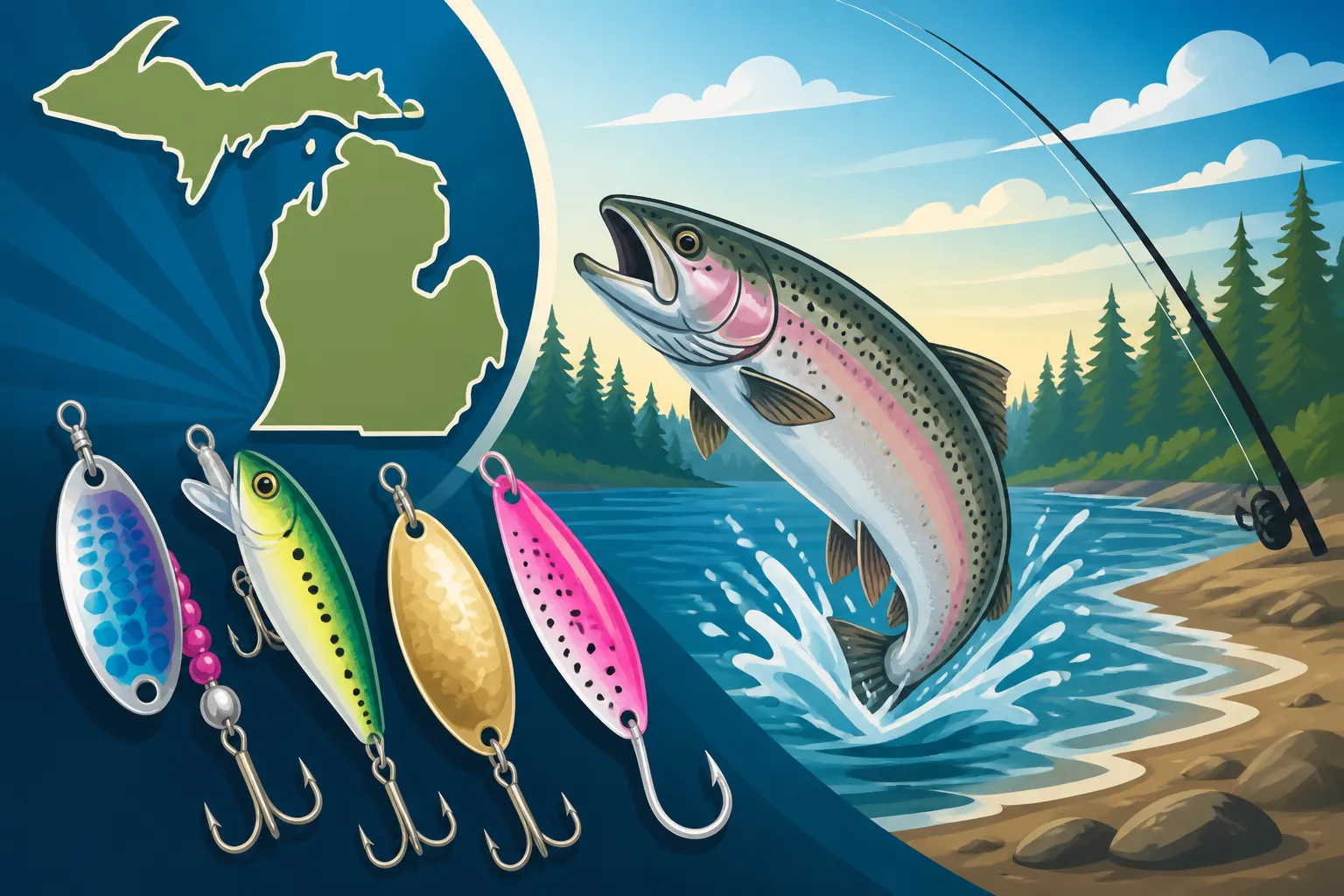
These are classic steelhead lures for a reason. Spoons and spinners are fantastic for covering water, especially when you're unsure exactly where the fish are holding or when fish are more aggressive. Their flash and vibration can trigger reaction strikes even from fish that aren't actively feeding.
- Spoons: The wobbling action of a spoon mimics an injured baitfish, making it irresistible to predatory steelhead. For shore fishing, spoons like the Little Cleo, Krocodile, or Dardevle in sizes ranging from 1/4 to 3/4 ounce are excellent choices. Popular colors include silver, gold, chartreuse, orange, and various combinations with black or blue. In clearer water, natural metallic finishes often shine, while brighter colors like chartreuse or orange can be killers in stained or murky conditions. A medium-heavy spinning rod of 8-9 feet helps cast these heavier lures a good distance, which is often crucial from shore. You can find a wide variety of these tried-and-true spoons on platforms like Amazon, making it easy to stock up for your next trip.
- Spinners: Spinners, with their rotating blades, create a distinct vibration and flash that can call in steelhead from a distance. Mepps Aglia, Blue Fox Vibrax, and Roostertail spinners are all fantastic options. Again, sizes from 1/4 to 1/2 ounce are generally suitable for river steelhead. Silver, gold, copper, and brightly painted blades (like chartreuse, orange, or pink) are common choices. In faster currents, a spinner's blade rotation helps it stay in the strike zone longer. Remember to use a barrel swivel to prevent line twist, which spinners are notorious for causing.
The key with both spoons and spinners from shore is to cast them upstream or up-and-across the current, allowing them to swing naturally through potential holding lies as they sink. Maintain a steady retrieve that keeps the lure just above the bottom.
Jigs and Soft Plastics: Subtlety and Presentation
When steelhead are holding tight to the bottom, are in slower water, or are less aggressive, jigs and soft plastics often outperform flashier presentations. These lures allow for a slower, more controlled drift and a more subtle presentation.
- Jigs: Small marabou jigs, chenille jigs, or lead-head jigs dressed with soft plastics are incredibly effective. A 1/16 to 1/8 ounce jig head is common, though you might go up to 1/4 ounce in deeper, faster water to get down quickly. Popular colors for marabou jigs include black, white, pink, purple, and chartreuse. The pulsing action of the marabou in the current is incredibly lifelike and can tempt even the most reluctant steelhead.
- Soft Plastics: Rigging soft plastics like tubes, grubs, or small worms (often 2-4 inches) on a jig head is another fantastic option. Brands like Berkley PowerBait and Gulp! offer scents that can further entice a strike. Paddle tail grubs, for instance, offer a subtle swimming action. Colors again follow the clear-to-stained water logic: natural greens, browns, and clear glitter for clear water; brighter oranges, pinks, and chartreuse for darker or off-color conditions.
The most effective way to fish jigs and soft plastics from shore is typically under a float (bobber). This allows for a completely natural, drag-free drift that mimics a free-floating piece of food. Choose a float that can support your jig's weight without being too bulky. This method is often referred to as "float fishing for Michigan river steelhead" and is incredibly popular. Casting upstream and letting the float carry your jig through a run, watching for any hesitation or dip of the float, is key.
Spawn Bags and Beads: Natural Imitations
When steelhead are focused on spawning, or are pre- or post-spawn, they are often keyed into consuming fish eggs. This makes natural egg imitations incredibly effective.
- Spawn Bags: A small mesh bag filled with cured salmon or trout eggs is a tried-and-true steelhead killer. These can be purchased pre-tied or made at home with roe from salmon you've caught. The scent and natural appearance are hard to beat. Bright colors for the mesh (like orange, pink, chartreuse) can add a visual trigger.
- Beads: Hard or soft plastic beads, typically 6mm to 12mm, are designed to imitate single fish eggs. They are often rigged on the main line just above a small hook, allowing the bead to float freely and look like a natural egg drifting in the current. Popular colors include orange, peach, pink, and chartreuse. Using beads is a widely accepted practice, and you might be curious if Is a Bead an Artificial Lure Under Michigan Trout Rules?. While typically considered artificial, their effectiveness in specific scenarios cannot be overstated. Beads are readily available from numerous tackle suppliers and online retailers like Amazon.
Both spawn bags and beads are best fished under a float to achieve a perfect, natural drift. The goal is to present them in a way that makes them look like loose eggs tumbling downriver, an easy meal for a steelhead. This technique is particularly potent during the fall salmon runs and throughout the spring steelhead spawn.
Choosing the Right Lure: Factors to Consider for Shore Fishing Success
Selecting the perfect lure isn't a one-size-fits-all situation. Several environmental and seasonal factors will heavily influence what lure will be most effective on any given day.
Water Conditions and Clarity
The condition of the river water is perhaps the most significant factor. Steelhead vision plays a huge role in how they perceive and react to your lure.
- Clear Water: When the water is crystal clear, steelhead can be incredibly spooky and have a good look at your presentation. This is when natural colors and subtle presentations excel. Think natural metallics (silver, gold) for spoons and spinners, darker or natural-colored jigs and soft plastics (olive, brown, black), and subtle colored beads (peach, natural orange). You'll want to use lighter fluorocarbon leaders, typically 6-8 lb test, to minimize visibility. Fishing during low light conditions (dawn, dusk, or overcast days) can also be advantageous in clear water, as it makes fish less wary.
- Stained or Murky Water: When the river is running high and dirty (after heavy rain or snowmelt), visibility is limited. Here, bright, contrasting colors and lures with strong vibration become your best friends. Steelhead rely more on lateral line detection and scent. Chartreuse, hot pink, fluorescent orange, and fire tiger patterns are fantastic. Lures that displace more water or create strong vibrations, like larger spinners or spoons, can help fish locate them. Spawn bags, with their natural scent, can also be particularly effective in these conditions. Don't be afraid to go up to 10-12 lb test leader if the water is very turbid.
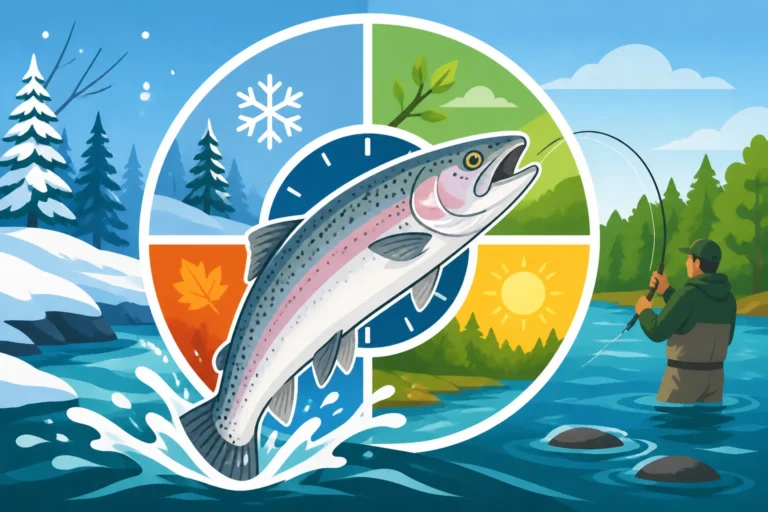
Time of Year and Run Phase
Steelhead behavior changes dramatically throughout their migratory cycle. Aligning your lure choice with their current phase in the run is critical.
- Early Fall Run (October-November): Fresh steelhead entering the rivers are often aggressive and still feeding somewhat. Spoons and spinners can be very effective as fish are willing to chase. This is also when salmon are spawning, so bright, natural egg imitations (spawn bags, beads) become highly productive as steelhead often "clean up" stray eggs.
- Winter (December-February): Water temperatures plummet, and steelhead become lethargic, often holding in deeper, slower pools. A slow, subtle presentation is key. Jigs fished under a float, small spawn bags, or single beads drifted painstakingly slowly through their holding lies are often the only things that will get a bite. Consider the gear you'll need for this cold-weather fishing, as described in our Michigan Ice Fishing Gear Guide.
- Spring Spawn Run (March-May): This is prime time! Large numbers of steelhead are in the rivers to spawn. Aggressive fish will hit spoons and spinners, especially early in the run. As they get closer to spawning, their focus shifts heavily to eggs, making spawn bags and beads incredibly effective. Jigs in bright colors (pink, chartreuse) can also trigger strikes, mimicking eggs or fry. Post-spawn fish, often called "drop-backs," are on their way out to the lake and can be surprisingly aggressive, hitting a variety of lures as they look to regain energy.
Local Regulations and Preferred Baits
Always, always consult the current Michigan Fishing Regulations Digest. Rules can vary by river section, especially concerning lure types. Some rivers or sections might have artificial-only regulations, or restrictions on natural bait. For example, some trout regulations specify What Counts as an Artificial Lure Under Michigan's Trout Rules. Ensure your chosen lure complies with local rules. Beyond regulations, some rivers or specific stretches simply have local preferences. Talking to local tackle shops or other anglers can provide invaluable insight into what's been working recently on that particular water.
Here’s a quick overview to help you decide:
| Lure Type | Best Water Clarity | Best Water Flow | Best Time of Year | Key Advantage |
|---|---|---|---|---|
| Spoons | Clear to Stained | Moderate-Fast | Fall, Early Spring, Post-spawn | Flash, Vibration, Covers Water |
| Spinners | Clear to Stained | Moderate-Fast | Fall, Early Spring, Post-spawn | Vibration, Flash, Aggressive Strikes |
| Jigs | Clear to Stained | Slow-Moderate | Winter, Spring, Tough Bites | Subtle, Slow Presentation, Bottom-focused |
| Soft Plastics | Clear to Stained | Slow-Moderate | Winter, Spring, Tough Bites | Scent (if added), Natural Movement, Subtle |
| Spawn Bags | Stained to Clear | Any | Fall (Salmon), Spring (Steelhead) | Natural Scent, Egg Imitation |
| Beads | Clear to Stained | Any | Fall (Salmon), Spring (Steelhead) | Natural Egg Imitation, Subtle |
Advanced Tips and Techniques for Presenting Shore Lures
Having the right lure is only half the battle. How you present it from shore can make all the difference between a productive day and a frustrating one.
Reading the Water and Identifying Holding Lies
From shore, your casting angles are fixed, so you need to be strategic about where you send your lure. Before making a single cast, take a few minutes to read the water.
- Current Seams: Look for lines where fast water meets slow water. Steelhead will often sit in the slower water, waiting for food to drift by in the faster current. These seams are prime target zones.
- Obstructions and Structure: Any large rock, fallen tree, or change in the river bottom that creates a current break or provides cover is a potential holding spot. Cast upstream of these features and let your lure drift past them.
- Depth Changes: Steelhead often hold in deeper pools, especially in colder water or bright sunlight. Look for visual cues like darker water, or use a probing cast with a heavy lure to feel out the bottom depth.
- Tailouts and Headwaters: The "tailout" of a pool (where the water starts to shallow and speed up) and the "headwater" (the top of a pool where water enters from a faster riffle) are frequently productive areas. Fish often stage in these zones.
Remember, shore access limits you, so make every cast count by aiming for these high-percentage spots. Sometimes, even a slight adjustment in your position on the bank can open up a completely new and productive casting lane.
Casting and Retrieval Strategies
Your presentation needs to be natural and enticing.
- The Drift: For jigs, spawn bags, and beads fished under a float, a natural, drag-free drift is paramount. Cast upstream, mend your line to keep it from bowing in the current, and let the float carry your offering downstream at the same speed as the current. Watch your float like a hawk for any pause, twitch, or dip – that's often a bite. The goal is for your lure to tumble along the bottom, mimicking natural food.
- Swinging Lures: For spoons and spinners, cast up-and-across the current. Allow the lure to sink for a few seconds, then begin a slow, steady retrieve. The current will impart a natural "swinging" action to your lure, allowing it to cover different depths and present itself to fish holding in various lies. Vary your retrieve speed and add occasional twitches to make the lure appear more injured or erratic.
- Bottom Bouncing/Dragging: In some situations, especially with jigs or soft plastics without a float, you might want to "bottom bounce" or gently drag your lure along the riverbed. This is effective when fish are hugging the bottom and not willing to rise for a presentation. Use just enough weight to maintain intermittent contact with the bottom without constantly snagging.
Experimentation is key. What works one day might not work the next. Don't be afraid to change your lure, your retrieve speed, or your casting angle.
Gear Considerations for Effective Shore Fishing
To truly maximize your shore fishing success, having the right gear setup is essential.
- Long Rods: An 8.5 to 11-foot medium-light to medium-heavy spinning rod is ideal for steelhead shore fishing. The extra length aids in casting distance, line control (especially for mending line during drifts), and fighting strong fish. A longer rod provides more leverage and helps cushion the runs of a powerful steelhead. You can find some excellent long spinning rods suitable for Best Rod Length for Steelhead Fishing on Amazon or at local tackle shops.
- Line Choice: A good quality braided mainline (10-20 lb test) with a fluorocarbon leader (6-12 lb test, depending on water clarity and conditions) is a popular setup. Braid offers excellent sensitivity and casting distance, while fluorocarbon is virtually invisible underwater and abrasion resistant. The length of your leader will vary, but usually 4-8 feet is a good starting point.
- Landing Net: A long-handled, large-hoop landing net with a rubberized mesh is invaluable. This not only protects the fish (especially if you plan to release it) but also helps you land it safely from a potentially elevated or tricky bank position. A good landing net is an essential piece of equipment for Catch-and-Release Techniques for Michigan Muskellunge, which apply to steelhead as well.
- Waders and Boots: You'll often need to wade shallow edges or get into certain positions to make effective casts. Breathable chest waders and sturdy wading boots with good grip are crucial for comfort and safety.
- Tackle Management: A small backpack or chest pack that allows for easy access to your most-used lures, weights, and leaders is perfect. Keep your gear organized so you can make quick changes.
Disclaimer
Fishing conditions and regulations in Michigan can change frequently. Always consult the latest Michigan Department of Natural Resources (DNR) fishing guide or website for the most current rules and regulations before heading out on the water. This article is intended for informational purposes only and does not constitute official legal advice.