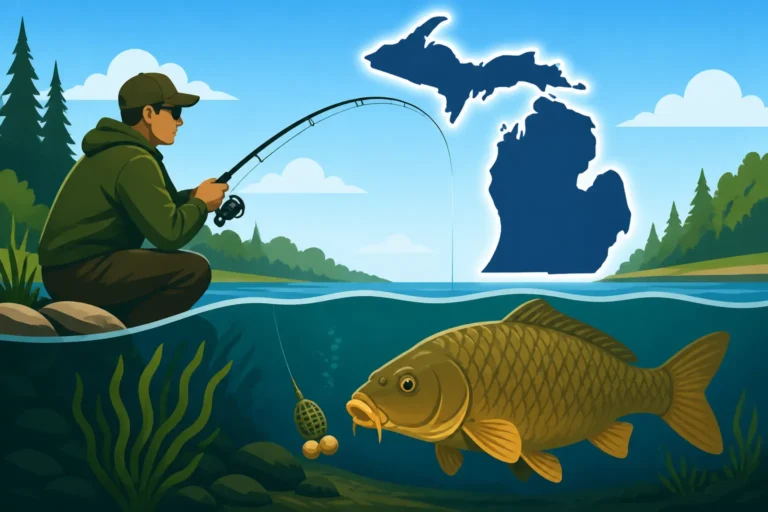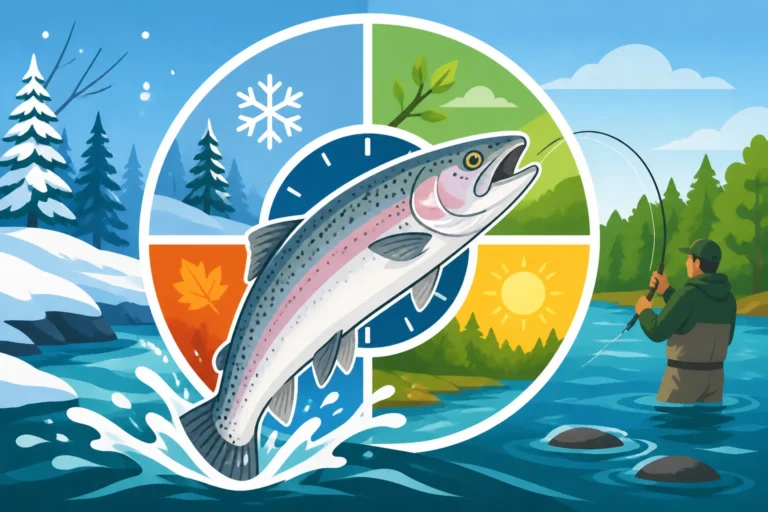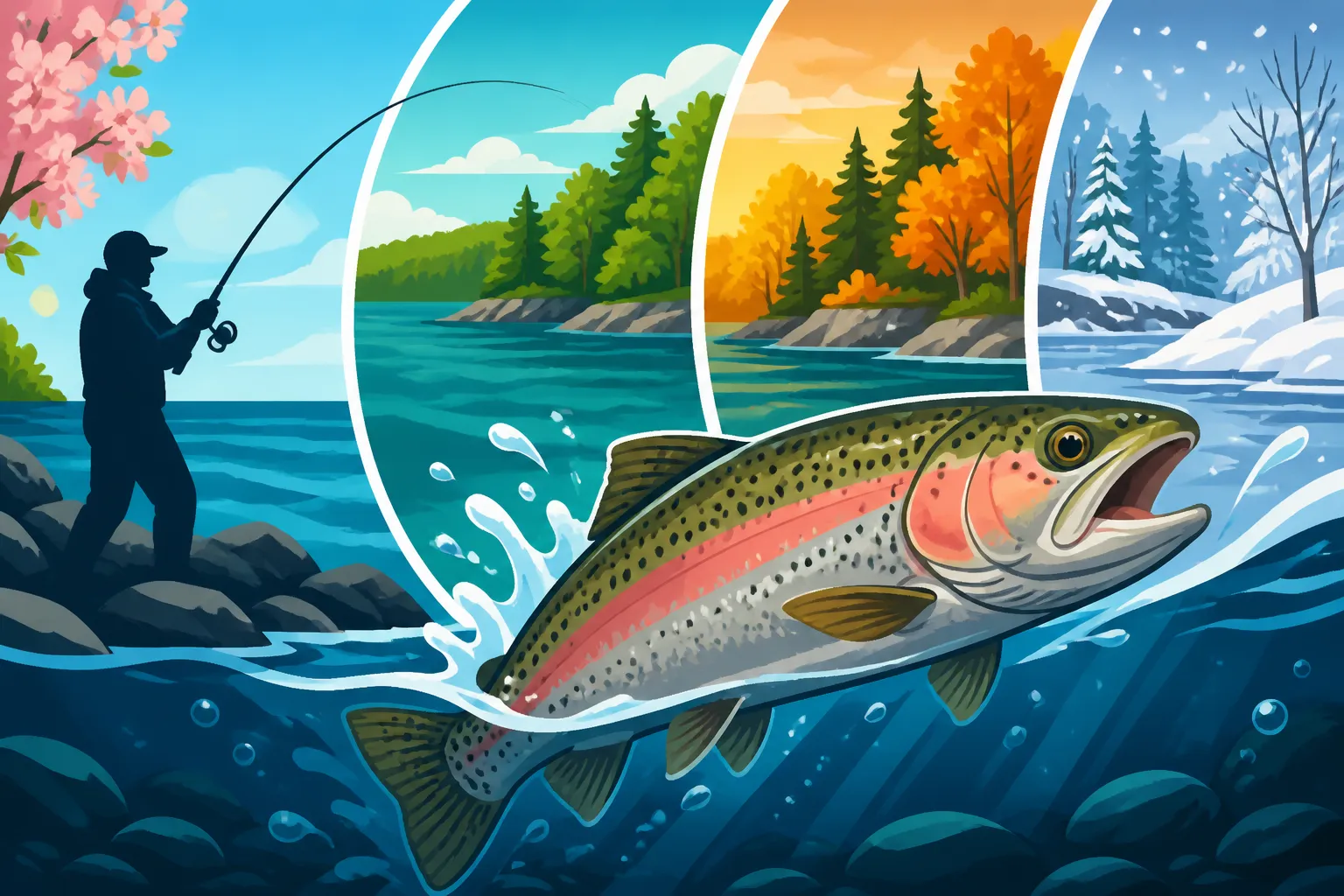
Michigan’s Great Lakes Year-Round Trout Season
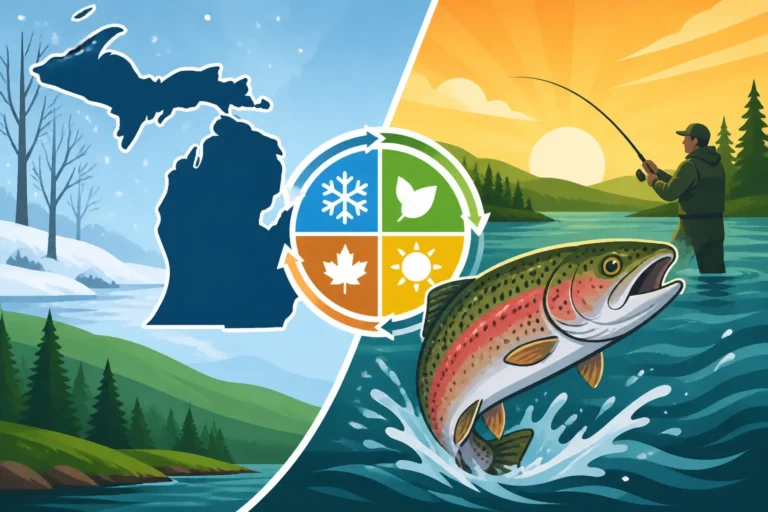
It's a common misconception that fishing in Michigan's Great Lakes comes to a grinding halt once the calendar flips to winter or that certain species completely disappear. Many anglers feel a pang of sadness as the vibrant autumn salmon runs conclude, thinking their chances for big trout are over until spring. But I'm here to tell you that’s simply not the case, especially when it comes to trout and salmon in our magnificent Great Lakes, where the season, for many species, is a glorious, uninterrupted year-round affair! This guide will delve deep into what makes this possible and how you can capitalize on Michigan’s incredible all-season fishery.
Understanding the Great Lakes Year-Round Trout Season
There’s something truly special about Michigan's Great Lakes, and one of the most incredible aspects for anglers is the extended, often year-round, season for many prized trout and salmon species. Unlike the strict opening and closing dates that govern many of our inland rivers and lakes, the sheer size and unique ecosystem of the Great Lakes allow for a continuous angling opportunity that keeps us on the water, no matter the month.
What "Year-Round" Really Means for Trout and Salmon
When we talk about a "year-round" trout season in the Great Lakes, we're not just being optimistic; it's a genuine regulatory provision by the Michigan Department of Natural Resources (DNR) for specific species. This means that for popular sport fish like Lake Trout, Splake, and even many of the stocked Chinook and Coho Salmon, you can legally pursue them 365 days a year, provided you adhere to the specific bag and size limits. It's a huge relief for dedicated anglers who hate putting their gear away, offering a continuous pursuit of these magnificent fish.
However, it's crucial to understand that "year-round" doesn't mean "anything goes." It specifically applies to the Great Lakes themselves and their connecting waters up to the first dam or designated boundary. Many tributary rivers and streams that feed into the Great Lakes do have very specific, often much shorter, seasons for trout and salmon. So, while you might be able to target steelhead (rainbow trout) in Lake Michigan year-round, the moment they swim into the mouth of the Pere Marquette River, different, often more restrictive, rules apply. Always, always check the current Michigan Fishing Regulations Every Angler Should Know for the specific body of water you intend to fish – it can save you a lot of headache and potential fines.
Key Species Covered by the Year-Round Rule
So, which glorious fish get to enjoy this perpetual angling attention? The primary beneficiaries of the Great Lakes year-round season are truly iconic species that draw anglers from all over the world.
First and foremost, the mighty Lake Trout is a year-round staple. These deep-water residents are native to the Great Lakes and provide incredible fighting action, whether you're trolling for them in the depths of summer or jigging through the ice in winter. Their sheer size and resilience make them a top target.
Then we have Splake, a hybrid cross between a Lake Trout and a Brook Trout, which are also open for year-round pursuit. These feisty fish offer a fantastic blend of both worlds and are often stocked in various Great Lakes harbors and nearshore areas.
And of course, we can't forget the Pacific Salmon – Chinook (King) and Coho (Silver) Salmon. While their most famous runs occur in the fall, you can legally target them in the open waters of the Great Lakes throughout the entire year. Many anglers successfully troll for immature "feeder" Kings and Cohos in the spring and summer before their spawning migration, providing fantastic action even outside the peak run times.
Finally, our beloved Steelhead (migratory Rainbow Trout) are also fair game year-round in the Great Lakes. While the prime time to catch them is during their spectacular runs up Michigan's rivers in spring and fall, brave anglers can find them cruising the nearshore waters of the Great Lakes any time the weather allows. They provide incredible aerial displays and are a true testament to the Great Lakes' diverse fishery.
Why the Great Lakes Are Different From Inland Waters
The fundamental reason for the year-round season in the Great Lakes, compared to the more restrictive seasons on inland lakes and rivers, boils down to ecology and management strategy. Inland waters are often smaller, more sensitive ecosystems with specific spawning grounds that need protection during critical periods. Many inland trout streams, for instance, are managed for wild trout populations where angling pressure during spawning could have detrimental effects.
The Great Lakes, on the other hand, are vast, dynamic, and possess an immense carrying capacity. They are often managed as put-grow-and-take fisheries, meaning millions of fish (especially salmon and some trout) are stocked by the DNR and various organizations specifically to support the sport fishery. These stocked fish are designed to thrive in the open waters, providing ample angling opportunities without overtaxing a delicate ecosystem. Furthermore, many Great Lakes species, like Lake Trout, spawn in deeper, more open water areas, making them less vulnerable to shore or shallow-water angling pressure during their reproductive cycles. This careful balance allows for a continuous, exciting angling experience that defines Michigan's Great Lakes Fishing Guide.
Navigating Michigan's Great Lakes Waters for Trout
Michigan boasts an incredible coastline along four of the five Great Lakes, offering diverse year-round trout and salmon fishing opportunities. Each lake presents its own unique challenges, species composition, and best fishing practices, making every outing an adventure.
Lake Michigan: A Prime Year-Round Fishery
Lake Michigan is arguably Michigan's most popular Great Lake for trout and salmon fishing, and its year-round season provides endless possibilities. From the sandy shores near Grand Haven to the bustling ports of Ludington and Manistee, this lake truly shines. During the colder months, while offshore trolling might be less common due to weather, many anglers shift their focus to nearshore opportunities.
Picture this: it's a crisp November day, the leaves are gone, but you're out on a smaller boat or even casting from a pier, hoping for a late-season Chinook or an early Coho. Or perhaps it’s early spring, and the ice has just receded from the harbors, allowing access to hungry Coho Salmon staging near shore. These fish are often found closer to temperature breaks or bait concentrations. In the summer, the action moves offshore, where large Lake Trout and powerful Chinook Salmon dominate the deeper waters, requiring specialized trolling setups. Many of the Best Lake Michigan Fishing Piers and Harbors offer fantastic shore-based opportunities, especially during spring and fall runs, but even in winter, if conditions allow, you might hook into a stray fish.
Lake Huron: Hidden Gems and Diverse Opportunities
While Lake Michigan often steals the spotlight, Lake Huron offers equally exciting, albeit sometimes different, year-round trout and salmon fishing. The lake’s vastness, from the rocky shores of the "Thumb" to the deeper waters of Thunder Bay, provides a diverse habitat. Lake Huron is well-known for its excellent Lake Trout fishing, particularly in deeper offshore areas, and also hosts healthy populations of Chinook and Coho Salmon, along with Steelhead and even Atlantic Salmon.
The year-round season here means that during the warmer months, offshore trolling reigns supreme for salmon and Lake Trout, especially in the northern parts of the lake and around the Straits of Mackinac. However, as winter approaches and ice begins to form in protected bays like Saginaw Bay (though more famous for walleye, some trout/salmon can be present), anglers can transition to ice fishing for smaller species and even some opportunistic larger fish. What makes Lake Huron special is the chance to target Atlantic Salmon, particularly in the northern areas, which are stocked in specific locations and offer a unique, thrilling fight. It’s a lake that demands adaptability, but rewards persistence with a fantastic variety of cold-water species.
Lake Superior: Cold Water Challenges and Rewards
Lake Superior, the largest, deepest, and coldest of the Great Lakes, presents a distinct set of year-round fishing challenges and rewards. While it might be intimidating, its crystal-clear, frigid waters are home to a truly magnificent fishery, particularly for native Lake Trout and the elusive Brook Trout.
The year-round season here is especially critical for Lake Trout, which thrive in its cold, oxygen-rich depths. Anglers targeting Lake Superior often use heavy-duty trolling gear to reach fish suspended hundreds of feet down in summer. In winter, brave ice anglers venture onto protected bays and harbors, targeting Lake Trout, Coho, and even Herring through the ice. What truly sets Lake Superior apart is its renowned Brook Trout fishery. Unlike their river-dwelling cousins, Lake Superior's "coasters" are often much larger, migratory fish that cruise the nearshore areas. Catching a beautiful, vibrant Brook Trout from the vastness of Lake Superior is an experience every angler should have. Our guide on Lake Superior Brook Trout Fishing goes into much more detail on how to tackle these unique opportunities. Due to its extreme weather, safety and robust gear are paramount when fishing Lake Superior year-round.
Essential Techniques for Year-Round Great Lakes Trout Fishing
To truly take advantage of Michigan's Great Lakes year-round trout and salmon season, you'll need a diverse set of techniques in your angling arsenal. What works in July for Chinook won't necessarily be effective for Steelhead in January, so adaptability is key.
Trolling for Deepwater Giants
Trolling is, without a doubt, the most common and often most effective technique for targeting trout and salmon in the vast open waters of the Great Lakes during the non-ice periods. This involves dragging lures behind a moving boat, often at specific depths, to cover large areas and present baits to fish that might be scattered or deep.
For Lake Trout and mature Chinook Salmon in summer, you'll often be targeting fish suspended deep, sometimes 50 to 150 feet down, or even deeper. This requires specialized equipment like downriggers, which are essentially crank-operated or electric winches that allow you to send your lure down to a precise depth using a heavy weight and release clip. Many successful anglers run multiple rods at various depths, each with a different lure or flasher-and-fly combination, to find what the fish are hitting. Planer boards are also critical when trolling, especially for Coho and Steelhead which tend to be higher in the water column and further from the boat's disturbance. These boards pull your lines out to the side, allowing you to cover an even wider swath of water. Common lures include large spoons (like Northern King or Magnum spoons), plugs (such as J-Plugs or Rapala Deep Divers), and meat rigs. Our dedicated guides on Trolling for Chinook Salmon on Lake Michigan and Trolling for Coho Salmon on the Great Lakes can give you even more in-depth knowledge on optimizing your spread and presentation.
Shore and Pier Fishing Strategies
Not everyone has a boat, and that's perfectly fine because shore and pier fishing can be incredibly productive, especially during the year-round Great Lakes season. These accessible spots often become hotspots during migratory periods or when fish move closer to shore in search of bait or temperature breaks.
During early spring, when the ice melts, Coho Salmon are often concentrated in harbors and near pier heads, eager to hit small spoons, spinners, or spawn bags. Later in the spring and through the summer, casting spoons or crankbaits from piers can pick up Steelhead or even small Kings patrolling the nearshore structure. As fall approaches, shore and pier fishing truly shine during the salmon runs, offering a chance to intercept migrating fish before they enter rivers. Popular lures include heavier casting spoons (like Little Cleos or Krocodiles), spawn bags drifted under a bobber, or even stickbaits resembling baitfish. Always be mindful of your casting distance and retrieve speed, as fish can be anywhere from just a few feet from the pier wall to out at the edge of your casting range. For more detailed advice, check out our guide on Shore Fishing Techniques for Michigan's Great Lakes. It's amazing what you can catch from solid ground!
Ice Fishing: A Winter Wonderland Opportunity
When the mercury drops and solid ice forms on protected bays and harbors of the Great Lakes, the year-round season truly proves its worth. Ice fishing isn't just for inland lakes; many areas like parts of Saginaw Bay, Grand Traverse Bay, and even protected harbors on Lake Superior offer fantastic winter trout and salmon opportunities.
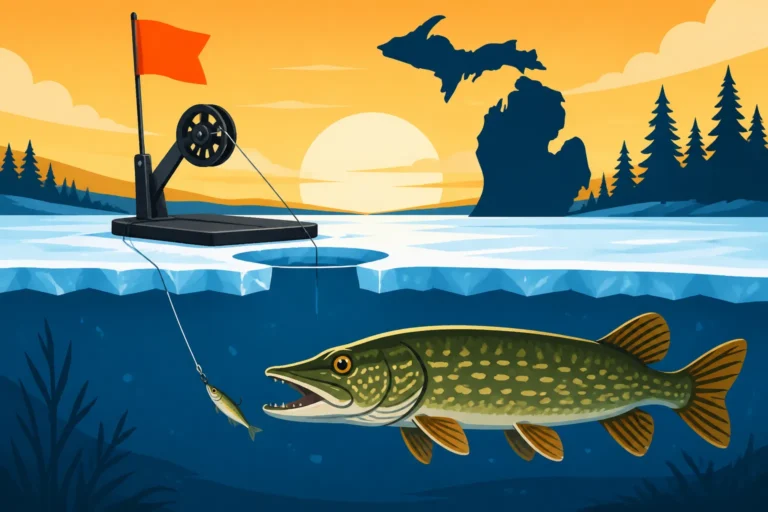
While you might not be catching massive offshore kings through the ice, you can certainly find hungry Lake Trout, Splake, Coho Salmon, and Steelhead, especially in deeper, protected areas where they overwinter. The techniques often involve jigging with spoons, flashy jigs, or small baits like minnows or wigglers. Tip-ups, set with live minnows, are also popular for passively targeting larger predators like Lake Trout and Steelhead.
Safety is paramount when ice fishing on the Great Lakes, as ice conditions can be unpredictable and vary greatly. Always check local ice reports, be aware of currents (especially near river mouths), and never fish alone. But for those willing to brave the cold, the rewards can be immense. Imagine pulling a beautiful, silvery Coho through a hole in the ice in the middle of winter! Our Michigan Ice Fishing Guide and Michigan Ice Fishing Season Timing posts offer comprehensive advice on how to stay safe and effective during these thrilling winter adventures.
Gear Up for Year-Round Great Lakes Trout Success
Success in Michigan's Great Lakes year-round trout and salmon fishery often hinges on having the right gear. The sheer variety of species, conditions, and techniques demands a versatile and reliable tackle setup.
Rods, Reels, and Line for Great Lakes Angling
Choosing the correct rod and reel setup is crucial, as the demands of fighting a 20-pound King Salmon are vastly different from jigging for a 3-pound Splake.
For offshore trolling, you'll want heavy-action trolling rods, typically 7-9 feet long, paired with robust line-counter reels. These reels are essential for knowing exactly how much line you have out and thus how deep your lures are running. A good example might be a Daiwa Sealine or a Penn Warfare line counter reel, spooled with 20-30 lb monofilament or braided line. The mono offers good stretch for shock absorption, while braid offers sensitivity and strength.
For shore and pier casting, a medium-heavy to heavy spinning rod, 8-10 feet long, paired with a reliable 3000-5000 size spinning reel, is ideal. This allows for long casts and the power to handle strong fish. Spool these with 10-15 lb monofilament or fluorocarbon, or 20-30 lb braid with a fluorocarbon leader. Brands like Shimano, Okuma, or Penn offer excellent options.
When ice fishing on the Great Lakes, you'll need specialized ice rods. For Lake Trout and Steelhead, a medium-heavy to heavy ice rod (28-36 inches) with a strong backbone is key, paired with a reliable spinning reel spooled with 8-12 lb fluorocarbon or braided line. Brands like St. Croix or Fenwick make excellent sensitive yet strong ice rods.
No matter the technique, having reliable gear is paramount. For more recommendations on specific setups, definitely check out our guide on Best Rods and Reels for Michigan Fishing.
Lures, Baits, and Tackle Essentials
The variety of lures and baits for Great Lakes trout and salmon is extensive, and often it's about matching the hatch or adapting to conditions.
For trolling, spoons are king. Popular colors often include bright metallics (silver, gold), greens, blues, and patterns that mimic baitfish like alewives or smelt. Brands like Dreamweaver, Michigan Stinger, and Warrior Lures are staples. Plugs such as J-Plugs or Rapala Deep Divers are also highly effective, especially for Chinook. Don't forget flashers and dodgers, which attract fish and impart action to trailing flies or bait rigs. You can find a huge selection of these on Amazon, ready to ship to your door for your next outing.
For shore/pier fishing, casting spoons like Little Cleo, Acme Kastmaster, or Krocodile in silver, gold, or bright fluorescent colors are proven fish-catchers. Spinners (e.g., Mepps, Rooster Tail) and twitch baits (like Rapala X-Raps) also work well. When fish are staging, especially Steelhead and Coho, fresh or cured spawn bags (often tied with salmon or trout eggs) under a float can be deadly.
For ice fishing, vertical jigging spoons (e.g., Swedish Pimple, Northland Buck-Shot Rattle Spoon) in silver, gold, or glow colors are effective. Small minnows, emerald shiners, or chunks of cut bait on a plain hook or small jig head are also excellent for tempting reluctant fish. Using a good portable fish finder, also widely available on Amazon, can greatly enhance your success in locating fish under the ice. Always have a variety of options in your tackle box.
Safety Gear and Cold-Weather Considerations
Year-round fishing on the Great Lakes means encountering all kinds of weather, from calm summer days to brutal winter gales. Safety should always be your top priority.
No matter the season, personal flotation devices (PFDs) are non-negotiable, especially when boating. In colder months, a float suit or an inflatable PFD designed for cold water can be a literal lifesaver. Layering is key for staying warm. Think moisture-wicking base layers, insulating mid-layers (fleece, down), and a waterproof/windproof outer shell. Good quality, insulated waterproof boots and gloves are also essential for comfort and preventing frostbite. When purchasing your winter gear, it's easy to compare brands and find reviews on Amazon before making a decision.
Beyond personal warmth, consider navigation and communication. A reliable GPS (often integrated into modern fish finders) is vital on the vast, featureless expanses of the Great Lakes. A VHF marine radio is a must for boating, and a fully charged cell phone (in a waterproof case) is a good backup. If ice fishing, bring spud bars to test ice thickness, ice picks for self-rescue, and a partner. The Great Lakes are beautiful but unforgiving, so respect the conditions and prepare accordingly.
Regulations, Conservation, and Best Practices
While Michigan’s Great Lakes offer year-round trout and salmon fishing, it’s not a free-for-all. Responsible angling requires a deep understanding and adherence to regulations, along with a commitment to conservation.
Understanding Michigan's Great Lakes Regulations
The year-round season is a fantastic privilege, but it comes with responsibilities. While the season for many trout and salmon in the Great Lakes is open 365 days a year, specific bag limits, size limits, and possession limits vary significantly by species and sometimes even by specific Great Lake. For example, the combined daily limit for trout and salmon might be five fish, but there could be further restrictions on how many of those can be Lake Trout or Chinook Salmon. These regulations are in place to ensure sustainable fish populations for future generations of anglers.
It's absolutely imperative to consult the latest Michigan Fishing Guide, published annually by the DNR. This document is your bible for all things regulatory. You can usually find a copy at any license retailer, DNR customer service center, or download the PDF directly from the DNR website. Always double-check any special regulations for particular bays or harbors you plan to fish, as these can sometimes differ from the general Great Lakes rules. Understanding Michigan's Combined Trout and Salmon Possession Limit is a great start, but specific species rules are crucial.
The Importance of Catch and Release
Even with a year-round season, practicing responsible catch and release, especially for certain species or larger trophy fish, is a vital part of conservation. Steelhead, for instance, undertake arduous spawning migrations, and careful handling can ensure they successfully reproduce. Larger, older Lake Trout also contribute significantly to the gene pool.
When practicing catch and release:
- Minimize handling: Keep the fish in the water as much as possible.
- Use appropriate gear: Avoid light tackle that prolongs the fight and exhausts the fish.
- Dehook carefully: Use needle-nose pliers or a dehooking tool to remove hooks quickly.
- Avoid touching gills or eyes: These are extremely sensitive areas.
- Support the fish horizontally: If you must lift it for a photo, support its full body weight, especially under its belly.
- Revive properly: Hold the fish gently facing into the current or move it back and forth gently until it can swim away under its own power.
Responsible angling ensures that the incredible year-round opportunities we enjoy today will still be there for our children and grandchildren.
Supporting Michigan's Fisheries
Every time you purchase a fishing license in Michigan, you're directly contributing to the conservation and management of our state's incredible fisheries. The revenue generated from license sales, along with federal excise taxes on fishing equipment (through the Dingell-Johnson Act), funds critical programs.
These programs include fish stocking initiatives for species like Chinook Salmon and Steelhead, habitat restoration projects on tributary rivers, scientific research to monitor fish populations and ecosystem health, and enforcement of regulations to prevent poaching. So, that annual Michigan Fishing License Guide for Residents and Nonresidents isn't just a piece of paper; it's an investment in the future of Michigan fishing. It allows the DNR to maintain public access sites, conduct water quality monitoring, and ensure that our Great Lakes continue to provide world-class, year-round angling opportunities for everyone.
Embrace the continuous adventure that the Great Lakes offer, gear up smart, fish responsibly, and you'll find that Michigan’s fishing season truly never ends!
| Species | Peak Seasons (Great Lakes) | Common Depths (Non-Ice) | Recommended Lures | Notes |
|---|---|---|---|---|
| Lake Trout | Summer, Winter | 50-200+ feet | Spoons, Plugs, Jigs, Bait | Native, deep-water residents, year-round. |
| Chinook Salmon | Spring, Summer, Fall | 40-100 feet | Spoons, Plugs, Meat Rigs | Trolling dominates, strong fighters. |
| Coho Salmon | Spring, Fall, Winter | 20-60 feet | Spoons, Plugs, Spinners | Often shallower, especially in spring. |
| Steelhead | Spring, Fall, Winter | Nearshore, Surface-60ft | Spoons, Plugs, Spawn, Jigs | Migratory, excellent fighters, year-round. |
| Splake | Spring, Fall, Winter | 20-80 feet | Spoons, Jigs, Bait | Hybrid, often stocked in nearshore areas. |
Disclaimer
The information provided in this guide is for general informational purposes only and is not intended as legal advice. Fishing regulations in Michigan are subject to change by the Department of Natural Resources (DNR). It is the responsibility of every angler to consult the most current Michigan Fishing Guide and any local regulations before fishing. Always prioritize safety on the water and ice.