Do Walleye and Sauger Interbreed?
It's a common conundrum for many Michigan anglers: you reel in a fish that looks kind of like a walleye, but it also has some features that make you wonder if it's a sauger. The confusion is absolutely valid because these two popular species can and do interbreed, creating a unique hybrid known as a saugeye. This guide will unravel the mysteries of walleye, sauger, and their intriguing hybrid offspring, giving you the knowledge to confidently identify your catch and understand what it means for fishing in our beautiful state.
The Basics: Walleye, Sauger, and the Hybrid Question
Many anglers, especially those new to fishing Michigan's diverse waters, might not even realize there's a difference between a walleye and a sauger, let alone that they can produce offspring together. It's a classic case of mistaken identity, often leading to debates on the boat or at the cleaning station. Understanding the parent species is the first step to appreciating their hybrid progeny.
Understanding Walleye and Sauger
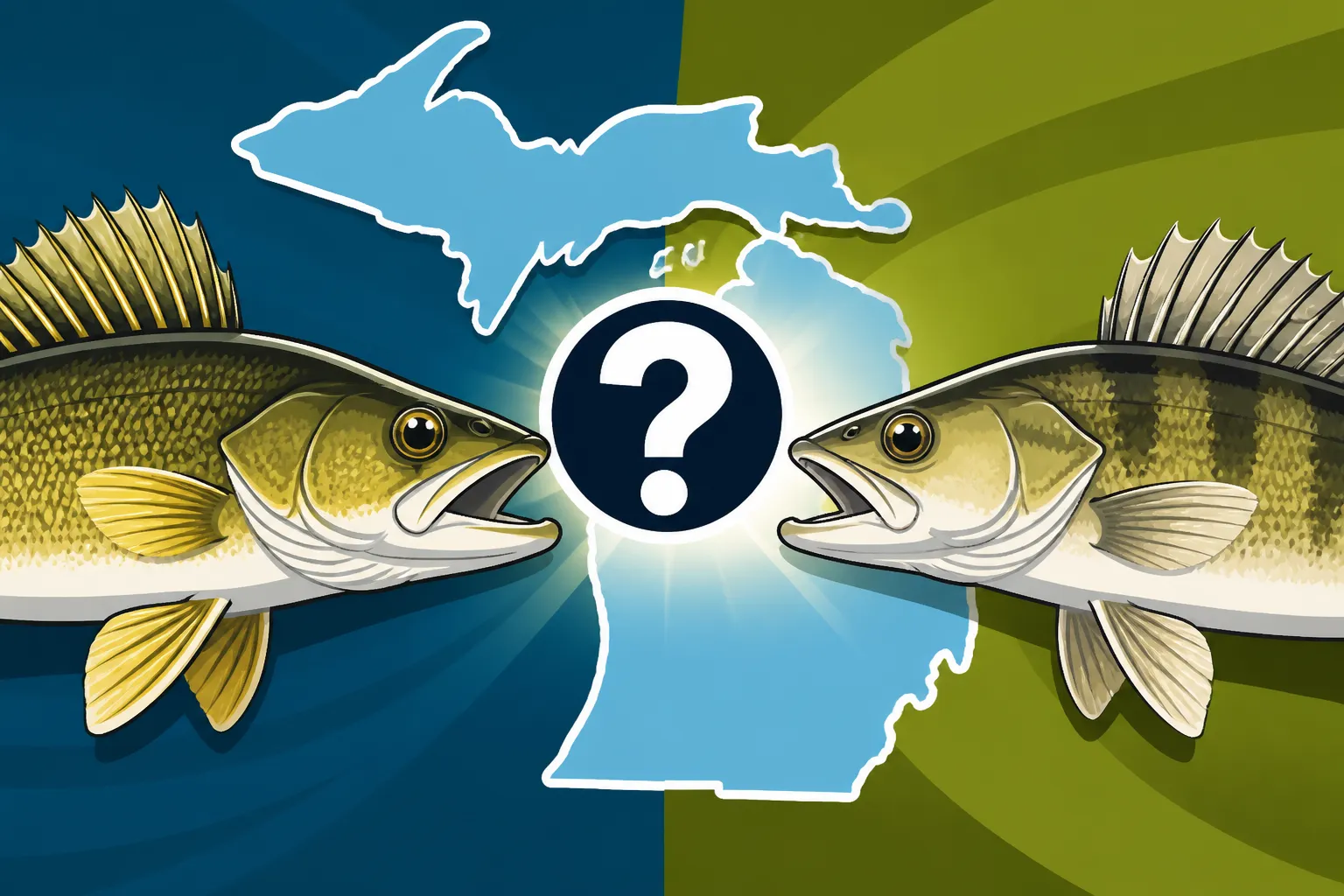
Walleye and sauger are both members of the perch family (Percidae) and share many similarities, which is precisely why they can be so tough to tell apart at a glance. Both are highly prized by anglers for their delicious, flaky white meat and their sporting fight. However, there are some key distinguishing features that, once you know them, make identification much easier. Walleye are generally larger, growing to impressive sizes in Michigan's Great Lakes and larger inland waters. They tend to have a more uniform, olive-green to golden-yellow body color, often with faint vertical bars, though these can be less pronounced. A defining characteristic of a walleye is the distinct white tip on the lower lobe of its caudal (tail) fin. This "white tip" is like a secret handshake among walleye anglers – a dead giveaway.
Sauger, on the other hand, are typically smaller than walleye and prefer murkier, warmer waters, often found in larger river systems or deeper, turbid lakes. Their body coloration is usually more pronounced, with darker, distinct blotches or saddle-like markings over a bronze to brownish-gray background. Unlike walleye, sauger lack the prominent white tip on the lower caudal fin. Instead, their dorsal (top) fin is usually spotted, and they often have a dark blotch at the base of their pectoral fins. If you're really paying attention, you'll also notice sauger tend to have a rougher skin texture compared to the smoother feel of a walleye. Understanding these nuances is crucial, and you can find more detailed information in our guide, What Is the Difference Between Walleye and Sauger.
What is a Hybrid Fish?
A hybrid fish, in the simplest terms, is the offspring resulting from the breeding of two different species. It's like a mule, which is a hybrid of a horse and a donkey. In the natural world, hybridization can occur when two closely related species share overlapping habitats and breeding grounds, and their reproductive cycles align. For walleye and sauger, this happens more often than you might think, especially in systems where both species are present in good numbers. These hybrids often inherit a mix of traits from both parents, making them a fascinating blend of characteristics.
The genetic compatibility between walleye and sauger is quite high, allowing for successful cross-breeding. This natural phenomenon contributes to the rich biodiversity of our aquatic ecosystems. However, it also presents a fun challenge for anglers who are trying to adhere to specific regulations for each species. It’s not just a biological curiosity; it has practical implications for your fishing trip. If you're curious about other species identification, take a look at Walleye Identification and Size in Michigan.
Introducing the Saugeye: A Blended Identity
Once you understand the distinct features of walleye and sauger, you're ready to tackle the intriguing world of the saugeye. This hybrid is not just a curious anomaly; it's a highly successful fish that often exhibits qualities desirable to anglers. It’s a bit like getting the best of both worlds in a single package.
Physical Characteristics of a Saugeye
The saugeye is, as you might guess, a mix-and-match of its walleye and sauger parents. When you look at a saugeye, you'll often see traits that lean towards one parent or the other, or a perfect blend right down the middle. One of the most common and reliable ways to identify a saugeye is by looking at its dorsal fin, specifically the spiny dorsal fin (the front one). While a pure walleye typically has no spots on its spiny dorsal fin (or only very faint ones), and a pure sauger has distinct rows of spots, the saugeye usually displays irregular spotting, often appearing as distinct blotches or bars rather than uniform rows. It's not quite the neat pattern of a sauger, nor the clean look of a walleye.
Another key identifier is the caudal fin. Remember that bright white tip on the lower lobe of a walleye's tail? A saugeye will often have a less pronounced, sometimes faint, or even absent white tip. It won't be as crisp and obvious as a pure walleye's. The body coloration also offers clues: saugeye tend to have more distinct, saddle-like markings or blotches along their sides, much like a sauger, but they might be on a more golden or olive background, like a walleye. Essentially, if you see a fish that has some of the dark markings of a sauger but also a hint of the walleye's white tail tip, or a mix of dorsal fin patterns, you've likely got a saugeye on your hands. For more general identification help, consider picking up a good fish identification guide, which you can often find on Amazon.
Where Do Saugeye Come From? Natural vs. Stocked Hybrids
Saugeye can arise in two primary ways: naturally or through stocking efforts. Natural hybridization occurs when walleye and sauger spawn in the same areas, and their eggs and milt mix, leading to fertilization. This is more common in river systems where both species migrate upstream to spawn. Think of it as a chance encounter that results in a unique offspring. These naturally occurring hybrids tend to be less common than stocked populations, but they definitely exist in shared habitats.
On the other hand, many states actively produce and stock saugeye in specific lakes and reservoirs. This is often done for various fisheries management reasons. Saugeye are known for their rapid growth rates, good catchability, and excellent table fare. They also tend to tolerate a wider range of water conditions than pure walleye, especially in turbid or warmer impoundments where walleye might struggle. They offer a fantastic angling opportunity, often growing larger than sauger and providing a strong fight. While Michigan primarily focuses on stocking walleye and other native species, understanding the potential for natural saugeye in our boundary waters or larger river systems where both parents are present is important.
The Presence of Saugeye in Michigan Waters
Now, let's bring it home to Michigan. While saugeye are highly valued in some other states, their presence and management in Michigan have specific considerations that every local angler should be aware of. It’s not always as straightforward as catching a bass or a perch.
Are Saugeye Common in Michigan?
Michigan's fisheries management primarily focuses on sustaining healthy populations of native walleye and sauger as distinct species. Unlike some states that actively stock saugeye, Michigan generally does not undertake widespread stocking programs for this hybrid. Therefore, encountering a saugeye in Michigan is relatively less common than in states where they are intentionally introduced. However, "less common" doesn't mean "never." Natural hybridization can still occur, particularly in waters where populations of both walleye and sauger coexist and share spawning grounds.
For instance, in certain stretches of the Great Lakes or their connecting rivers, like parts of Lake Erie and the Detroit River system, where both walleye and sauger are abundant, natural crosses might occasionally happen. These fish would be the result of incidental breeding rather than intentional stocking. So, while you're unlikely to target saugeye specifically in Michigan as you might in, say, Ohio or Pennsylvania, it's not impossible to reel one in. Being prepared to identify it correctly is part of being a responsible angler. You might even find some specialized fish identification guides or even regional fishing maps on Amazon that could help pinpoint these unique scenarios.
Identification Challenges and Local Regulations
The biggest challenge with saugeye in Michigan is precisely what we've been discussing: identification. Because Michigan doesn't officially recognize or manage saugeye as a separate species for most regulations, any hybrid caught must typically be identified as either a walleye or a sauger to comply with existing fishing rules. This means you need to be confident in your identification skills. If you're unsure, it's always best to err on the side of caution and follow the stricter regulations, often those pertaining to walleye, especially concerning size and possession limits.
Michigan's fishing regulations, which you can always find in the official digest or on the DNR website, are quite clear on Michigan Fishing Regulations Every Angler Should Know. They lay out specific Michigan Walleye Size and Bag Limits and, where applicable, sauger limits. Since saugeye blend traits, an angler might reasonably mistake a saugeye for a small walleye or a large sauger. In situations where identification is truly ambiguous, most conservation officers would likely treat the fish as a walleye for regulatory purposes, given that walleye often have more restrictive size and bag limits. This is why familiarizing yourself with How to Tell a Michigan Walleye From a Sauger is so important.
Angler Implications: Fishing for Walleye, Sauger, and Saugeye
So, what does all this mean for you, the angler, out on the water in Michigan? It's about being prepared, understanding your quarry, and fishing responsibly within the rules. The slight chance of catching a saugeye adds an extra layer of excitement to an already rewarding pursuit.
Tackle and Techniques for Catching Saugeye
If you happen to be fishing in waters where natural saugeye might occur, the good news is that the tackle and techniques you'd use for walleye or sauger will work perfectly well for their hybrid offspring. Saugeye, like their parents, are predatory fish that respond well to a variety of baits and lures. They feed on baitfish, insects, and crustaceans, and their feeding habits are often a blend of walleye and sauger behaviors.
For example, if you're targeting walleye with jigging presentations using soft plastics or minnows, or trolling with crankbaits and crawler harnesses, you stand a good chance of hooking a saugeye. Similarly, techniques used for sauger, such as vertical jigging with minnows or blade baits in deeper, murkier water, could also entice a saugeye. They tend to be aggressive feeders, inheriting the robust appetite of both species. When gearing up, it’s wise to have a versatile tackle box. A good selection of jig heads, grub bodies, deep-diving crankbaits, and perhaps some live bait like shiners or nightcrawlers will set you up for success. You can explore a wide array of Best Bait for Michigan Walleye and other lures for both species, available through retailers like Amazon.
Understanding Bag and Size Limits for Hybrids
This is perhaps the most critical takeaway for Michigan anglers concerning saugeye. Since Michigan does not have specific regulations for saugeye, any hybrid caught is generally subject to the regulations of the species it most closely resembles, or if ambiguous, often the more restrictive walleye rules. This means paying close attention to the Michigan Walleye 15-Inch Minimum Size Limit and daily possession limits.
Let's consider a scenario: you catch a fish that looks like a saugeye. You're trying to decide if it's a walleye or a sauger. The prudent approach, to avoid any potential misunderstanding with conservation officers, is to assume it's a walleye. This means measuring it against the walleye minimum size limit for that particular body of water (which can have exceptions to the statewide rule, so always check the digest!) and counting it towards your walleye daily bag limit. This ensures you're always on the right side of the law, even with these unique hybrid catches. It’s always best to be over-informed rather than under-informed when it comes to fish regulations, which are designed to protect and sustain our precious fisheries for everyone. Familiarize yourself with the Michigan Fishing Regulations Digest PDF for 2026 for the most current information.
| Feature | Walleye | Sauger | Saugeye (Hybrid) |
|---|---|---|---|
| Caudal Fin (Tail) | Prominent white tip on lower lobe | No white tip, often mottled/dark | Faint or absent white tip, sometimes mottled |
| Spiny Dorsal Fin | Usually no spots, sometimes faint | Distinct rows of black spots | Irregular spotting, blotches or bars |
| Body Markings | Faint bars, olive/golden-yellow body | Distinct dark blotches/saddle patterns | Blended; often distinct blotches on a lighter, more walleye-like background |
| Body Shape | More elongated, somewhat torpedo-like | More slender, slightly compressed | Intermediate, leaning towards walleye's length |
| Size | Generally larger | Generally smaller | Intermediate, can grow large rapidly |
| Preferred Habitat | Clearer, cooler waters | Turbid, warmer, deeper waters | Adaptable, often in turbid/warmer waters |
| Mouth | Large, prominent teeth | Large, prominent teeth | Large, prominent teeth |
Disclaimer
This article is for general informational purposes only and does not constitute professional advice. Laws, prices and regulations vary by location and change over time. Consult a qualified professional for guidance on your specific situation.