Best Technique for Catching Salmon in Rivers
Oh, the thrill of chasing salmon in a Michigan river! It’s a bucket-list experience for so many anglers, but let's be real, it can also be incredibly frustrating. You see those huge fish splashing, sometimes even jumping, and you think, "This is going to be easy!" Then you spend hours casting, changing lures, and walking stretches of river only to come up empty-handed while the guy downstream seems to be pulling them in left and right. It’s enough to make you want to pack it in. This guide is here to cut through that frustration, breaking down the most effective techniques for catching salmon in Michigan's rivers, so you can transform those frustrating days into memorable battles with powerful fish.
Understanding Michigan River Salmon
Before you even think about what lure to tie on, it’s crucial to understand why salmon are in the rivers and what drives their behavior. These fish aren't here to feed; they're here for one purpose: to spawn. This fundamental shift in their biology dictates everything about how you should approach them.
Species and Their Habits
Michigan's rivers see two primary species of Pacific salmon: Chinook (often called "Kings") and Coho (the "Silvers"). While both are here to reproduce, their sizes, temperaments, and even their preferred holding water can differ, which impacts your fishing strategy.
Chinook salmon are the true giants of the Great Lakes system, and when they enter the rivers, they bring that powerful, brute force with them. They're typically the first salmon to arrive in the fall, usually starting their push upstream in late August and peaking in September and early October. Kings are incredibly aggressive in the early stages of their river run, often striking out of pure instinct or territoriality rather than hunger. As they get further upriver and closer to spawning, they can become more sluggish but will still lash out at anything that invades their space. You'll find them holding in deeper pools, behind large structure like log jams, or in strong current seams where they can conserve energy.
Coho salmon, though smaller than Kings, are renowned for their acrobatic fights and their willingness to chase a well-presented lure. They tend to enter rivers a bit later than Chinooks, often overlapping with the tail end of the King run and continuing well into October and even November, especially if water temperatures remain favorable. Coho often prefer slightly shallower, faster-moving water than Kings, and they're particularly fond of current breaks and the edges of riffles. Their aggression often lasts longer into their river journey, making them a favorite for anglers who love a hard-fighting fish that will actively strike. Knowing these subtle differences in their behavior and timing is your first step to success.
Prime River Conditions and Timing
Timing and conditions are everything when it comes to river salmon. You can have the best gear and technique in the world, but if the fish aren't there or the conditions are off, it's an uphill battle. Salmon rely heavily on environmental cues to make their move from the Great Lakes into the rivers.
Cooling water temperatures, typically dropping into the 60s and then 50s degrees Fahrenheit, are the primary trigger for the fall salmon runs. A good rain can also be a game-changer. A significant rainfall event, especially after a dry spell, often causes river levels to rise and water temperatures to drop further. This rush of fresh, cool water acts like a highway signal, telling the salmon in the lake that it's time to push upstream. You’ll often hear anglers talking about "fresh fish" entering the river right after a good rain. Conversely, prolonged periods of low, clear water can make salmon extremely spooky and difficult to catch, as they're more wary of predators and human activity. For more on what starts these migrations, check out our guide on What Triggers the Fall Salmon Run in Michigan. Understanding these patterns means you're not just fishing, you're hunting with knowledge on your side. You can also learn more about specific species timing, such as When Does the Coho Salmon Run Start in the Great Lakes.
Essential Gear for River Salmon Fishing
Alright, let's talk tackle. You can't bring a knife to a gunfight, and you certainly can't bring ultralight gear when you're battling a twenty-pound Chinook salmon in a strong current. Investing in the right tools isn't just about catching more fish; it's about making the experience enjoyable and reducing the chance of lost fish due to equipment failure.
Rods, Reels, and Line
For river salmon, you need gear that can handle power. We're talking about heavy, fast-running fish that will test your drag and rod's backbone to its limits.
Rods: A medium-heavy to heavy power rod, typically between 8'6" and 10'6" in length, is ideal. Longer rods help with casting distance, mending line in current, and absorbing runs. A fast action tip will allow for sensitive bite detection, while the strong backbone is crucial for setting the hook and turning a powerful salmon away from snags. Many anglers prefer specialized "noodle rods" or float rods for certain techniques, which are even longer and have a more moderate action to protect light leaders. When you're looking for new gear, I often recommend checking out the selection on Amazon, as they have a wide variety of brands and price points to choose from.
Reels: A high-quality spinning reel in the 3000-4000 series or a baitcasting reel with a robust drag system is essential. The drag needs to be smooth and consistent, not jerky, to prevent break-offs during those initial powerful runs. Gear ratios around 5.0:1 to 6.0:1 are versatile enough for most techniques. Ensure your reel can hold at least 150-200 yards of line.
Line: Most experienced salmon anglers opt for a braided mainline, typically 20-30 lb test, due to its strength, sensitivity, and lack of stretch. This allows you to feel even the lightest taps. However, salmon are notoriously line-shy, especially in clear water, so a fluorocarbon leader is a must. Attach 8-12 lb fluorocarbon leader material (sometimes heavier for Kings) to your braid with a strong knot like a FG knot or an Albright knot. The length of your leader will vary based on water clarity and depth, but often ranges from 3-6 feet.
Lures, Baits, and Terminal Tackle
This is where you get to play detective, figuring out what the salmon will react to on any given day. Having a diverse tackle box is key, as what worked yesterday might not work today.
Natural Baits:
- Spawn Bags/Skein: These are arguably the most effective natural baits. Spawn bags are small mesh sacks filled with salmon or steelhead eggs, while skein refers to larger chunks of roe. Salmon instinctively react to the scent and sight of eggs, whether from a feeding response (less common in rivers, but still happens) or territorial aggression. Fresh eggs are always best.
- Beads: Simulating a loose salmon egg drifting in the current, beads are incredibly popular and effective, especially in clearer water. They're typically pegged a few inches above the hook, making for a natural, subtle presentation. You can find a fantastic array of bead colors and sizes on Amazon, which can really make a difference on different days. Our guide on Is a Bead Considered an Artificial Lure for Michigan Trout provides some good context on their usage, which applies similarly to salmon.
Artificial Lures:
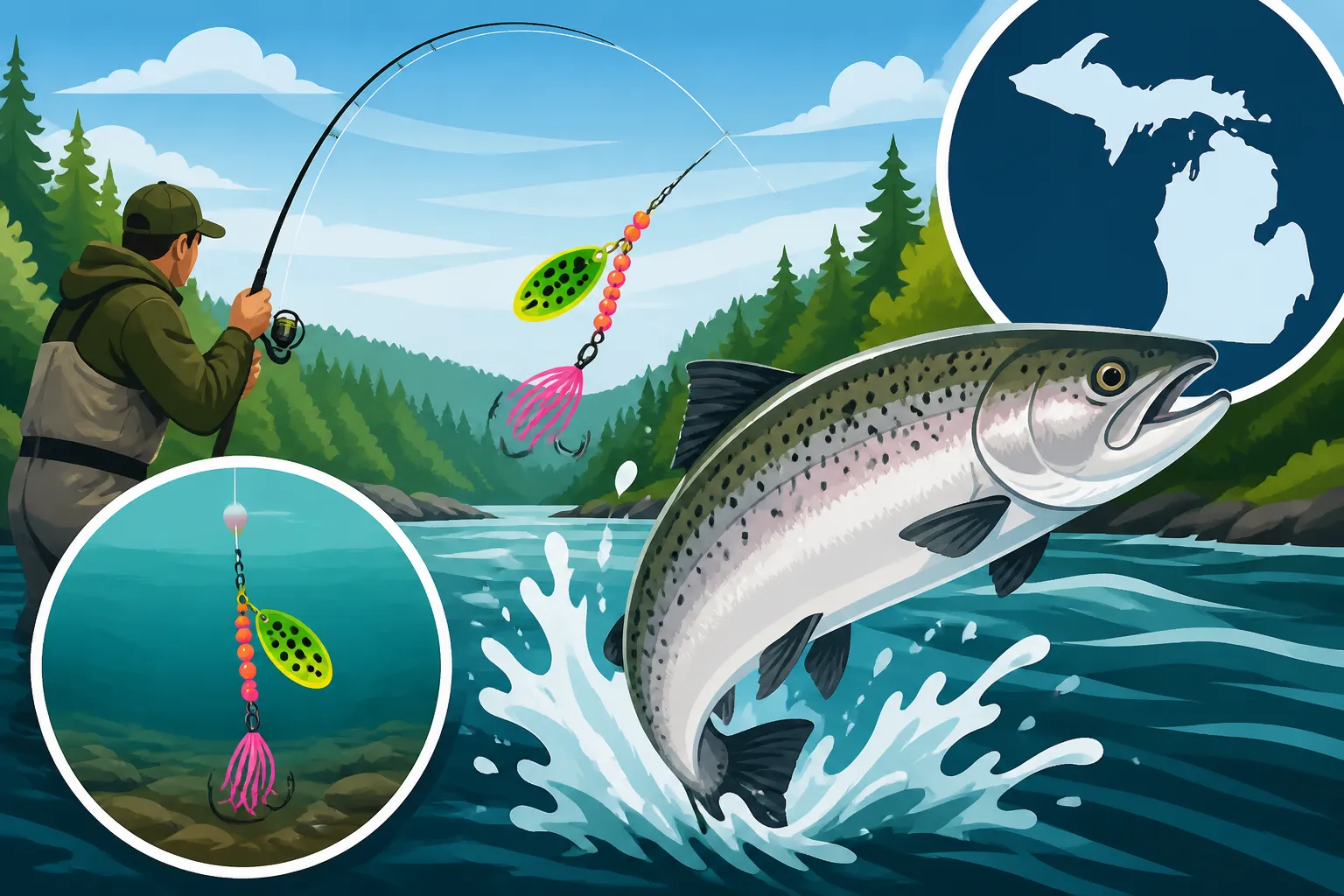
- Spoons: Classic salmon getters like Little Cleos, Dardevles, and Krocidiles in bright colors (chartreuse, orange, silver, blue) are fantastic for casting and retrieving, especially when fish are aggressive. The wobbling action mimics injured baitfish.
- Crankbaits/Plugs: Diving crankbaits or plugs like the Rapala Fat Rap, Wiggle Wart, or Kwikfish can be deadly, particularly in larger, deeper pools or when back-trolling from a boat. They create a lot of vibration and often elicit an aggressive strike.
- Jigs: Marabou jigs, often tipped with a piece of plastic or a maggot, can be incredibly effective when drifted under a float. Their subtle breathing action in the water can entice even lethargic salmon.
- Spinners: Roostertails, Mepps, and similar inline spinners can work, especially for Coho salmon in brighter conditions.
Terminal Tackle: Don't skimp here. Strong swivels to prevent line twist (especially with spoons), stout hooks (size 2 to 2/0, often octopus style for bait), and various weights (pencil lead, split shot, Slinky weights) for drift fishing are crucial. Make sure your leader material is fresh and free of nicks. For a deeper dive into effective bait strategies, some of the principles for walleye, like using spawn, are covered in our Best Bait for Michigan Walleye article.
Top Techniques for River Salmon
Now, let’s get down to the actual fishing. There isn't one "magic" technique that works every time. The most successful anglers are those who are versatile, adapting their approach to the specific conditions and the mood of the fish.
Drift Fishing with Spawn Bags/Skein
Drift fishing is a time-tested, highly effective method for targeting salmon in rivers, especially when they're holding in deeper runs or current seams. The key is to present your bait naturally, allowing it to tumble along the bottom as if it were a dislodged egg or piece of food.
Rigging: There are a few ways to rig for drift fishing. A common setup involves a three-way swivel, with your mainline tied to one eye, a short leader (6-12 inches) with a Slinky weight or pencil lead to another, and your fluorocarbon leader (18-36 inches) with a spawn bag or skein to the third. Alternatively, a "bottom-bouncing" rig uses a sliding weight (like an egg sinker or similar) above a swivel, then a leader to your bait. The goal is to get your bait down to the fish's level without excessive snagging.
Presentation: Cast slightly upstream and across the current, letting your weight and bait sink. As the current carries your rig downstream, keep a slight bow in your line and "mend" your line (picking up slack upstream with your rod tip) to ensure a natural, drag-free drift. You want to feel your weight occasionally ticking the bottom. Strikes are often subtle – a slight pause in the drift, a heavier feel, or a light tap. Set the hook decisively with a sweep of the rod when you feel anything out of the ordinary. For similar rigging principles, our guide on How to Rig a Spawn Bag for Steelhead can offer valuable insights.
Float Fishing with Beads or Jigs
Float fishing, often called "bobber fishing" by some, is incredibly popular and effective, especially in clearer water or when salmon are concentrated in specific holding areas. This technique allows for precise depth control and a completely drag-free presentation, which can be irresistible to line-shy salmon.
Rigging: This setup typically involves a sensitive slip float (which allows you to fish deeper than your rod length), a small piece of lead (split shot or a small pencil weight) crimped onto your line about 12-18 inches above your hook, and then your fluorocarbon leader with a bead or jig. The float is set to suspend your bait just off the bottom, or at the level you believe the fish are holding. This is a particularly effective method when you know the exact depth of the fish. You can find excellent quality slip floats and beads on Amazon to perfect your setup.
Presentation: Cast upstream and let the float carry your bait downstream with the current. Keep your rod tip high and maintain a straight line from your rod tip to the float, taking up any slack as the float drifts. This "drag-free drift" is crucial. Any unnatural pull on the float can deter a strike. Watch the float intently; any hesitation, dip, or outright disappearance means it's time to set the hook! This technique is very similar to how anglers target steelhead; read more about it in How to Float Fish for Steelhead.
Casting Spoons and Crankbaits
When salmon are actively aggressive, especially early in the run or in stained water, casting hardware can be incredibly productive. This technique relies on eliciting a reaction strike from a fish that isn't necessarily feeding.
Spoons: Cast spoons across or slightly upstream of likely holding water (current seams, deeper pockets, behind structure). Allow the spoon to sink briefly, then retrieve it with a steady, moderate speed. Vary your retrieve with occasional pauses, twitches, or short jerks to impart an erratic action that mimics an injured baitfish. Strikes are often violent!
Crankbaits: These are best used in deeper pools or slower current. Cast your crankbait out and retrieve it at a speed that allows it to dive to its advertised depth. Again, incorporate pauses and twitches. Some anglers even "drift" crankbaits, allowing the current to push the lure downriver while maintaining just enough tension to keep it wobbling. For a more aggressive approach, try ripping it through known salmon lies.
Back-Trolling or Back-Bouncing
These techniques are often employed from a boat or kayak but can be adapted by careful waders in wide, slow sections of river. They involve using the current to present your bait or lure downstream.
Back-Trolling (Plugs): From a boat, you'll use your motor (often an electric trolling motor) to hold your boat stationary or move it slightly slower than the current, allowing your plugs to "swim" downstream. This allows you to cover a lot of water and hold your lure in the strike zone for extended periods. It's particularly effective for Chinooks holding in deeper runs.
Back-Bouncing (Jigs/Spawn): This technique is similar to drift fishing but done from a boat, often by slowly backing the boat downstream. You use heavier jigs or weighted spawn bags that just tick the bottom as they drift. The angler constantly watches their line for the subtle indications of a strike. This is a fantastic way to methodically pick apart deep holes or long runs where salmon are likely holding.
River Fishing Strategy and Safety
Catching salmon in rivers isn't just about the right lure; it's about understanding the environment, being strategic, and prioritizing your safety.
Reading the River and Locating Fish
You can spend all day casting into dead water or you can learn to read the river and pinpoint where salmon are most likely to be holding. It's like a treasure hunt, and the river provides the map.
Current Seams: Look for areas where fast water meets slow water. Salmon will often hold in the slower water just out of the main current, waiting for eggs or dislodged insects to drift by, or simply conserving energy. These are prime ambush points.
Deeper Pools and Runs: Salmon need deeper water for comfort, security, and to stage before moving upstream. Focus your efforts on the deeper sections of the river, especially those with some current.
Structure: Log jams, large boulders, undercut banks, and even bridge pilings offer salmon cover and a break from the current. These are classic holding lies. Don't be afraid to cast into or along the edges of these features. Remember that salmon are moving upstream, so think about their migration path. Where would they naturally pause to rest or regroup? Our guide on How to Read River Flow for Steelhead Fishing offers excellent advice that can be directly applied to salmon, helping you identify these key holding spots.
Ethical Angling and Regulations
As anglers, we have a responsibility to respect the fish and the resource. This means understanding and following regulations and practicing ethical angling, especially when dealing with powerful, spawning fish.
Catch and Release: Many anglers choose to release most, if not all, of their river-caught salmon, especially as the fish near their spawning grounds and their meat quality declines. If you plan to release, handle the fish as gently as possible. Keep it in the water, use a rubberized net to protect its slime coat, and remove the hook quickly. If the fish is exhausted, hold it facing upstream in the current until it vigorously swims away on its own. Avoid taking it out of the water for extended periods for photos, especially if you intend to release it.
Michigan Regulations: Always, always consult the most current Michigan fishing regulations digest before heading out. Regulations vary by river, species, and time of year, covering everything from bag and size limits to specific gear restrictions and snagging rules. Snagging (foul hooking) is illegal, and deliberate snagging can result in serious fines and penalties. Make sure you understand how to properly hook a fish in the mouth. You can find comprehensive information in our articles like Michigan Fishing Regulations Every Angler Should Know and Michigan Bag and Size Limits Explained. Remember, these rules are in place to protect the fishery for everyone. When you are looking for things like protective mats or specialized tools like release nets, Amazon has a wide variety that can assist in ethical angling.
Safety First on the River
River fishing, especially for big salmon, comes with inherent risks. Cold water, strong currents, and slippery rocks can turn a fun day into a dangerous situation quickly.
Wading Safety: Always wear a good pair of studded or felt-soled wading boots for traction on slippery riverbeds. Use a wading staff for stability and to probe the depth before taking a step. Never wade alone if possible, and always let someone know where you're going and when you expect to return. Be aware of rising water levels, especially after heavy rains, which can create dangerous currents or make previously safe areas treacherous. If you're looking for sturdy, reliable waders, our guide on Best Waders for Cold River Fishing has some excellent recommendations.
Cold Water: Michigan's salmon rivers can be bone-chillingly cold in the fall. Dress in layers, wear waterproof waders, and consider bringing a dry bag with spare clothes. A fall into cold water can quickly lead to hypothermia. If fishing from a boat, always wear a life jacket. It could save your life.
Respect Other Anglers: River fishing can get crowded, especially during peak salmon runs. Be courteous, give other anglers space, and avoid casting over their lines. A friendly nod and a bit of patience go a long way in ensuring everyone has a good time.
Comparison of River Salmon Fishing Techniques
Here's a quick overview of the techniques we've discussed, to help you choose the right approach for your next river salmon adventure:
| Technique | Primary Gear | Best Conditions | Pros | Cons |
|---|---|---|---|---|
| Drift Fishing | Rod, reel, braid/fluoro, spawn/skein, weights | Moderate current, varied depths, somewhat stained water | Highly natural presentation, effective for lethargic fish | Can be prone to snags, requires good feel for bites |
| Float Fishing | Float rod, reel, slip float, beads/jigs | Clear to moderately clear water, consistent depth | Excellent depth control, drag-free presentation, visual bite detection | Less effective in very fast or very deep water, requires specific setup |
| Casting Spoons/Crankbaits | Medium-heavy rod, reel, braid/mono, lures | Aggressive fish, early run, stained water, faster current | Covers water quickly, triggers aggressive reaction strikes | Less effective on lock-jawed or spawning-focused fish |
| Back-Trolling/Bouncing | Boat/kayak, heavy rod, reel, plugs/jigs/bait | Deeper, wider river sections, consistent current | Keeps lure in strike zone longer, effective for covering structure | Requires a boat or kayak, can be slow |
Conclusion
Chasing salmon in Michigan's rivers is an exhilarating experience that combines skill, patience, and a deep understanding of these magnificent fish. While it can be challenging, armed with the right knowledge of their habits, essential gear, and a diverse set of techniques, you'll be well on your way to intercepting one of Michigan's most sought-after game fish. Remember to be flexible, adapt to the conditions, and always prioritize safety and ethical angling. The roar of the river, the crisp fall air, and the sheer power of a fresh salmon on the end of your line—it's an experience that truly connects you to Michigan's wild heart. Good luck out there, and tight lines!
Disclaimer
This article is for general informational purposes only and does not constitute professional advice. Laws, prices and regulations vary by location and change over time. Consult a qualified professional for guidance on your specific situation.