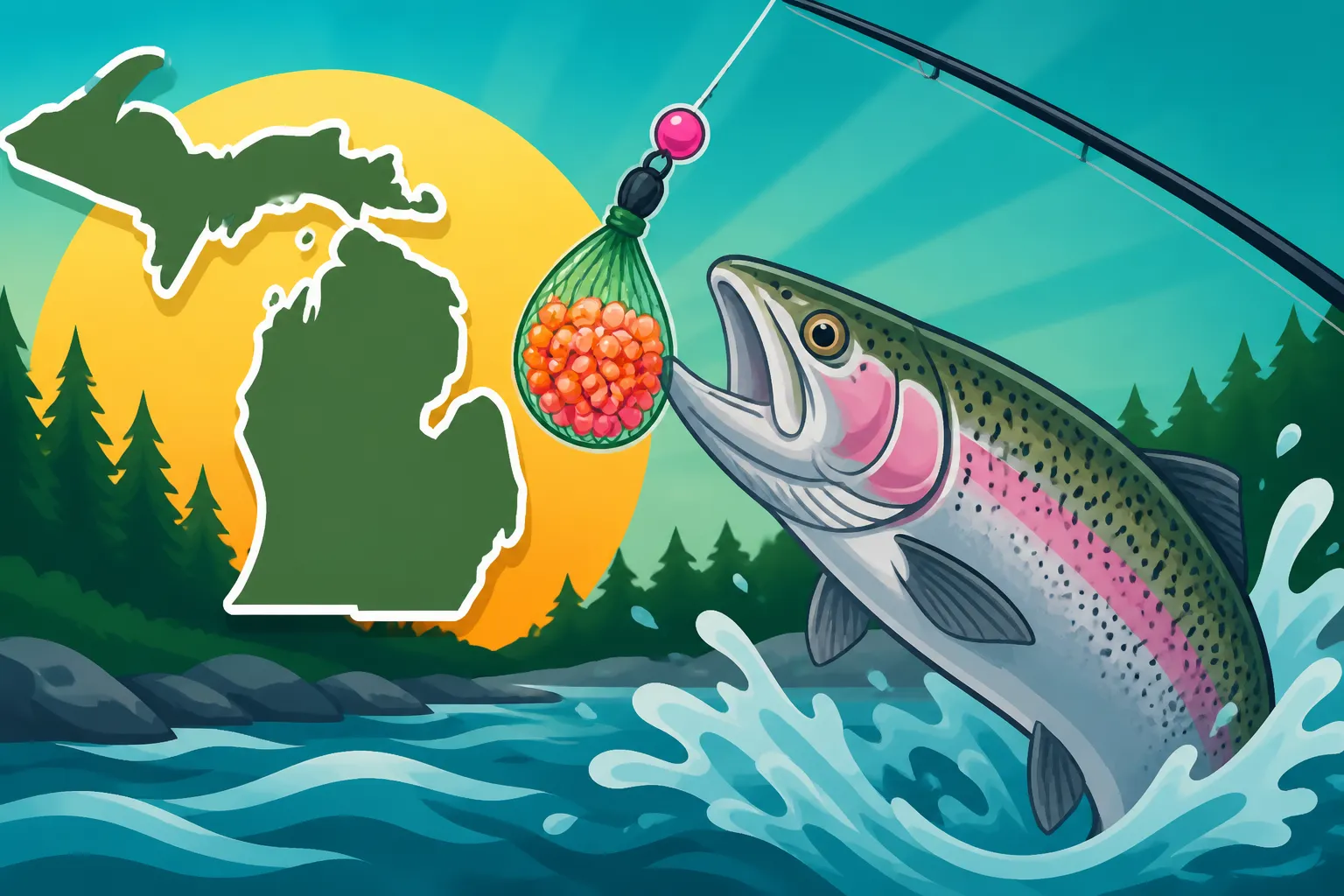
How to Fish a Spawn Bag for Steelhead
One of the most thrilling experiences an angler can have in Michigan is hooking into a powerful steelhead. These chrome beauties are notorious for their strong runs and acrobatic leaps, but they can also be incredibly challenging to catch, especially when they're not actively chasing artificial lures. That's where the humble yet incredibly effective spawn bag comes into play. If you've ever found yourself frustrated by picky steelhead, or just want to add a highly productive technique to your arsenal, understanding how to properly fish a spawn bag is absolutely essential for unlocking more success on Michigan's famous rivers. This guide will walk you through everything from why spawn bags work to tying your own and mastering the techniques that put more steelhead on your line.
Understanding Spawn Bags and Why They Work for Steelhead
Spawn bags might seem simple, but their effectiveness lies in their ability to perfectly imitate a steelhead's natural food source: fish eggs. When salmon and trout are spawning, their eggs become a readily available and highly nutritious meal for hungry steelhead. Replicating this natural offering is key, and a well-presented spawn bag can be irresistible.
The Allure of Natural Bait
Steelhead, being anadromous rainbow trout, spend a significant portion of their lives in the Great Lakes and then migrate into rivers to spawn. During these migrations, especially when other salmon and trout species are present and laying eggs, steelhead instinctively key in on this abundant food source. It's an ingrained part of their feeding behavior. A tiny, scent-filled bundle of eggs drifting naturally downstream looks, smells, and feels exactly like what they're looking for. Unlike a flashy spoon or a brightly colored fly, a spawn bag offers a subtle, protein-rich snack that requires minimal energy to consume, making it incredibly appealing to fish conserving energy during their strenuous migration. It's often the bait that convinces a wary or pressured steelhead to strike when nothing else will.
When and Where to Use Spawn Bags
Spawn bags shine brightest during the fall, winter, and spring steelhead runs in Michigan's rivers. This is precisely when salmon (Chinook and Coho) and resident trout are actively spawning, making eggs a prevalent part of the aquatic ecosystem. You'll find spawn bags particularly effective in rivers like the Manistee, Muskegon, and Au Sable when the water temperatures are cooler, and fish are less aggressive towards artificials.
- Fall Run: As Chinook and Coho salmon enter the rivers to spawn, their eggs are dispersed, and steelhead are right behind them, eager to capitalize. This is prime time for spawn bags.
- Winter Run: During the colder months, when steelhead can be lethargic, a natural, slow-drifting spawn bag is often the only thing they'll bother to eat. Ice fishing for steelhead with spawn bags can also be effective in certain areas where permitted.
- Spring Run: As winter loosens its grip and steelhead make their final push to spawn, they're still very much attuned to egg patterns. The Michigan Fishing Seasons Explained outlines these critical periods where natural presentations like spawn bags become paramount. Even during high, murky water conditions, the scent trail from a good spawn bag can be a game-changer, helping fish locate your offering when visibility is low.
Essential Gear for Fishing with Spawn Bags
Having the right gear isn't about being fancy; it's about optimizing your presentation and increasing your chances of landing a powerful fish. Fishing spawn bags effectively requires a balanced setup that allows for subtle drifts and strong hooksets.
Rods, Reels, and Line
For river fishing with spawn bags, sensitivity and control are paramount. You'll want a rod that's long enough to mend line effectively and absorb the shock of a hard-fighting steelhead.
- Rods: A medium-light to medium power rod, typically between 8.5 to 11 feet in length, is ideal. Longer rods (10-11 ft) are excellent for mending line on longer drifts, especially when Drift Fishing Michigan Rivers for Steelhead. A softer tip helps detect subtle bites, while a strong backbone is crucial for fighting big fish in strong currents. You can find a good selection of specialized steelhead rods on platforms like Amazon. For specific recommendations, check out what kind of Best Rod Length for River Steelhead is often suggested for different river sizes.
- Reels: A high-quality spinning reel in the 2500-4000 series is a common choice, offering smooth drag and reliable performance. For those who prefer a more direct connection and incredibly sensitive drifts, a centerpin reel is an exceptional tool for float fishing with spawn bags, offering unparalleled line control. When choosing your reel, consider the Best Reel for Steelhead Fishing to ensure you have the stopping power needed.
- Line: Most anglers opt for a main line of 8-12 lb monofilament or fluorocarbon, or 15-20 lb braided line with a fluorocarbon leader. Braided line offers superior sensitivity and casting distance, while fluorocarbon leaders are nearly invisible underwater and offer good abrasion resistance. Your leader material and length will often vary based on water clarity and conditions, but usually ranges from 4 to 8 lb test. Knowing What Line Weight for Michigan Steelhead is appropriate for different scenarios can make a big difference.
Spawn Bag Components
Making your own spawn bags is a rewarding process that allows for customization and ensures you have the freshest bait. You'll need a few key ingredients, most of which are readily available online or at local bait shops.
- Eggs: The heart of your spawn bag. Fresh, unfertilized salmon or trout eggs are best. Many anglers cure their own eggs (often from Chinook or Coho salmon caught during the fall run), but you can also purchase pre-cured eggs. The color of the eggs can range from bright orange to pale pink.
- Netting: Specialty spawn netting (often called "spawn netting" or "egg netting") comes in various colors (white, pink, orange, chartreuse) and mesh sizes. The color choice can sometimes make a difference depending on water clarity and fish preference on any given day. A finer mesh works well for smaller bags or softer eggs, while a slightly coarser mesh can hold larger egg clusters. You can find various options for spawn netting and curing supplies on Amazon.
- Spawn Thread: This thin, elastic thread is specifically designed to cinch the netting tightly around the eggs, creating a durable, leak-proof bag. It's crucial for keeping your bait intact during casts and drifts.
Terminal Tackle
Beyond your main setup, you'll need the small but mighty components that connect your spawn bag to your line.
- Hooks: Small, sharp, single hooks are preferred. Size 8 to size 12 octopus or salmon egg hooks work wonderfully. They are designed to hold the spawn bag securely while exposing enough of the hook point for a solid hookset. Ensure your hooks are sharp; a dull hook will lead to missed bites.
- Weights (Split Shot or Slinkies): To get your spawn bag down to the fish quickly and maintain a natural drift, you'll need weight. Removable split shot (sizes BB to 7) are common, allowing for easy adjustment. Slinky weights or pencil lead are excellent for snaggy bottoms as they tend to slide over obstructions. The amount of weight depends entirely on the current speed and water depth.
- Swivels: Small barrel swivels (size 10-14) are often used to attach your leader to your main line, helping to prevent line twist, especially when using lighter leaders or if your spawn bag spins during a retrieve.
Tying Your Own Spawn Bags: A Step-by-Step Guide
Tying your own spawn bags might seem intimidating at first, but with a little practice, you'll be a pro. The benefit is you can customize the size, egg type, and color to match the conditions and fish preferences.
Gathering Your Materials
Before you start, lay out everything you need in a clean workspace:
- Cured Salmon or Trout Eggs: These are the star. If you're curing your own, ensure they're prepped and ready.
- Spawn Netting: Choose your desired color. Cut it into small squares, typically 2×2 or 3×3 inches. The exact size will depend on how large you want your finished bag to be.
- Spawn Thread: Have a good length of it unwound and ready to use, or keep it on the dispenser if it's designed that way.
- Small Scissors: For trimming netting and thread.
- Optional: Egg Loop Tool: While not strictly necessary, an egg loop tool can make the process quicker and more consistent, especially for tying the thread securely.
The Tying Process
Here’s a common, effective method for tying a durable spawn bag:
- Prepare the Netting: Take one of your pre-cut netting squares and lay it flat in the palm of your non-dominant hand.
- Add the Eggs: Place a small cluster of eggs (about the size of a marble or a dime, depending on your desired bag size) directly in the center of the netting square. Don't overfill it, as this can make tying difficult and lead to a less compact bag. For clearer water or finicky fish, smaller bags (dime-sized) are often more effective, while in murkier or faster water, a nickel or quarter-sized bag might be preferred.
- Gather the Netting: Gently gather all four corners of the netting around the eggs, pulling them upward to form a tight little pouch. Try to eliminate any air pockets around the eggs. The goal is to create a compact, round bundle.
- Wrap with Thread: Once you have a tight pouch, take your spawn thread and start wrapping it firmly around the base of the gathered netting, just above the egg cluster. Make several tight wraps (4-6 times) to secure it. Don't be afraid to pull firmly; the thread is designed for this.
- Tie Off: Secure the thread with a simple overhand knot or a double knot. Some anglers prefer to use an egg loop tool to make a super snug knot quickly. Trim any excess thread, leaving a small tag end.
- Trim Netting: Using your scissors, carefully trim the excess netting above the knot. You want to leave just enough material so the knot doesn't unravel, but not so much that it creates a bulky "tail" that could impact the drift or deter fish. A small, neat nub is ideal.
- Inspect: Give your finished spawn bag a squeeze. It should be firm, compact, and hold its shape. There should be no loose eggs or weak spots in the netting. You can make a batch of these ahead of time and store them in a small container in your cooler or tackle box.
Effective Techniques for Fishing Spawn Bags
Tying a perfect spawn bag is only half the battle. Presenting it effectively is what truly makes the difference between a frustrating day and a successful one. Steelhead are often particular about how their food is offered.
Drift Fishing
Drift fishing is hands down the most popular and effective method for presenting spawn bags in rivers. It mimics the natural drift of eggs downstream, making your bait appear irresistible and effortless for a steelhead to intercept.
- The Setup: Begin by attaching your spawn bag to your leader (usually a 2-4 foot piece of fluorocarbon). Above your hook, pinch on several small split shot weights, starting with a few and adding more as needed. You want just enough weight to bounce subtly along the bottom without snagging excessively. The goal is a "controlled tumble" downstream. This is where What Gear Do You Need to Ice Fish in Michigan might seem out of place, but the concept of weight-to-current ratio is similar, just in a different environment.
- The Cast: Cast upstream and slightly across the current. Allow your spawn bag to sink and begin its natural drift.
- Line Mending: As your bait drifts, you'll need to "mend" your line. This means lifting your rod tip and flicking your line upstream to remove any slack or belly that the current creates. This keeps your line straight and allows for direct contact with your bait, crucial for detecting those incredibly subtle steelhead bites. Learn how to refine this technique by exploring resources on Drift Fishing Michigan Rivers for Steelhead.
- The Bite: Steelhead bites can range from a gentle tap to a strong tug. Often, it's just a slight pause or twitch in your line as it drifts, or a feeling of extra weight. When in doubt, set the hook!
Float Fishing
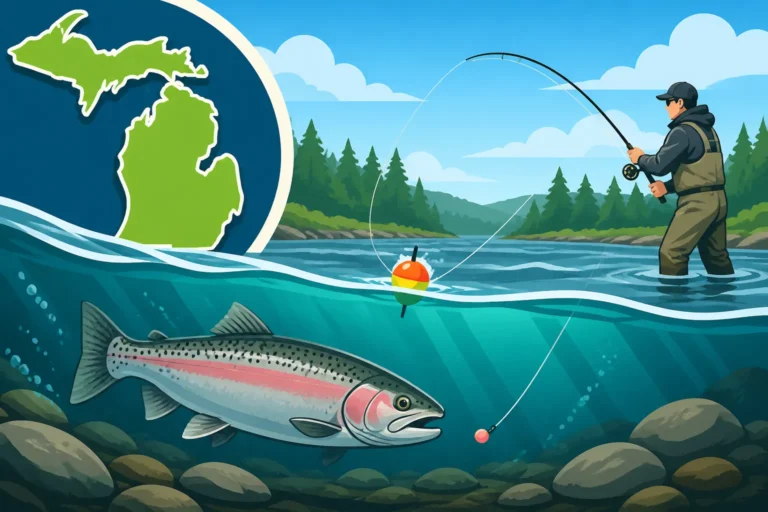
Float fishing, or "float-n-fly" as it's sometimes called, is another highly effective technique, especially for controlling depth and presenting your spawn bag in specific water columns or over complex river bottoms. It's an excellent method for targeting deeper runs or when steelhead are holding higher in the water column.
- The Setup: You'll use a specialized float (often called a "slip float" or "Drennan" style float) that allows your line to run through it, letting you easily adjust your fishing depth. A small split shot or two is typically placed close to your spawn bag to help it sink, with more weight (pencil lead or a larger shot) positioned above to cock the float properly.
- Casting and Drifting: Similar to drift fishing, cast upstream and across the current. The float suspends your spawn bag at a predetermined depth, allowing it to drift naturally with the current. This method is exceptionally good for covering specific pockets or seam lines where fish might be holding. Check out specialized guides like How to Float Fish for Steelhead for more in-depth strategies.
- Detecting Bites: When a steelhead bites, the float will dip, twitch, or completely disappear beneath the surface. This visual indicator makes bite detection very clear.
- Key Advantage: Float fishing helps keep your bait off the bottom, reducing snags in rocky areas and allowing for precise depth control, which can be critical when fish are holding at a specific depth.
Presentation and Retrieval
Regardless of whether you're drift fishing or float fishing, the presentation of your spawn bag is everything. Steelhead are wary, and anything that looks unnatural will be ignored.
- Natural Drift: The cardinal rule is to achieve a completely natural, drag-free drift. Your spawn bag should move at the exact same speed as the current. Any unnatural drag will make your bait look suspicious.
- Targeting Holding Water: Focus your drifts through known steelhead holding lies: current seams, behind large rocks or logs, deep pools, and the edges of fast water. Learning How to Read River Flow for Steelhead Fishing is crucial for identifying these prime spots.
- Subtle Entry: Aim for a soft, quiet entry of your bait into the water to avoid spooking fish, especially in clear, low-water conditions.
- Controlled Retrieval: After your drift, reel in slowly and smoothly. Sometimes a steelhead will follow the bait and strike on the swing at the end of the drift. However, avoid jerky movements or fast retrieves that make the bait look unnatural.
Tips for Maximizing Your Steelhead Success with Spawn Bags
Beyond the basic techniques, a few key considerations can significantly boost your success rate when targeting steelhead with spawn bags.
Reading the Water
Understanding where steelhead position themselves in a river is fundamental to effective fishing. They seek out areas that provide cover, a break from strong currents, and access to food.
- Current Seams: These are prime locations where fast water meets slow water. Steelhead will often sit just inside the slower water, waiting for food to drift by.
- Deep Pools and Runs: Steelhead often hold in deeper water, especially during colder periods, as it offers thermal refuge and a sense of security.
- Obstructions: Large rocks, fallen trees, and log jams create current breaks and cover. Fish will tuck in behind or beside these structures.
- Tailouts: The shallower, faster water at the end of a deep pool can be a productive spot, especially as fish move upstream. The Best Rivers for Trout and Steelhead in Michigan are full of these diverse features that you'll need to learn to "read."
Stealth and Sensitivity
Steelhead are incredibly sensitive to their environment. Loud noises, heavy footsteps on the bank, or even your shadow cast over the water can send them scattering.
- Approach Quietly: Move slowly and deliberately along the riverbank. Avoid making loud splashes or stomping.
- Stay Low: If possible, keep a low profile, especially when fishing clear, shallow runs.
- Use Your Senses: Pay attention to any subtle taps, pulls, or changes in your line's movement. These could be the only indications of a bite. Your ability to feel these subtle takes is enhanced by a sensitive rod and proper line management.
Dealing with Finicky Biters
Even with a perfect spawn bag, steelhead can be incredibly finicky. Don't be afraid to experiment when the bite is tough.
- Adjust Size and Color: If fish are ignoring larger bags, try downsizing to a dime or even pea-sized bag. Also, experiment with different netting colors—sometimes a subtle change from orange to pink or white can make a difference.
- Vary Your Weight: Too much weight can drag your bait unnaturally, while too little won't get it to the fish. Continuously adjust your split shot to achieve that perfect, slow, bottom-bouncing drift.
- Leader Length: A longer leader (up to 5-6 feet) can give your spawn bag a more natural, unencumbered drift, especially in clear water where fish might be line-shy.
- Freshness: Ensure your eggs are fresh and potent. Old, washed-out bags lose their scent and appeal quickly. Change them out regularly.
- Patience: Sometimes, it simply comes down to patience. Work a promising run thoroughly, making multiple drifts through different depths and angles.
Spawn Bag Size and Color Guide for Michigan Steelhead
| Water Condition | Recommended Bag Size (Approx.) | Netting Color (Commonly Effective) | Egg Color Preference | Notes |
|---|---|---|---|---|
| Clear/Low Water | Pea to Dime-sized | White, Peach, Light Pink | Natural, Light Orange | Focus on small, subtle presentations. Fish are warier. |
| Normal/Moderate Flow | Dime to Nickel-sized | Orange, Pink, Chartreuse, White | Bright Orange, Natural | Most versatile conditions. Experiment with brighter colors for active fish, natural for neutral. |
| High/Stained Water | Nickel to Quarter-sized | Chartreuse, Bright Orange, Cerise | Bright Orange, Red, Natural | Increased scent and visibility are key. Larger bags and vibrant colors help fish locate bait in murky conditions. |
| Cold Water/Winter | Pea to Dime-sized | White, Peach, Natural | Natural, Pale Orange | Fish are often lethargic. Focus on very slow, natural drifts and subtle colors. |
| Post-Spawn (Spring) | Dime-sized | Orange, Pink | Natural, Bright Orange | Steelhead might still be cleaning up eggs. Similar to normal conditions, but sometimes they prefer slightly brighter post-spawn. |
This table provides a general guideline, but remember that steelhead can be incredibly unpredictable. Always be willing to experiment with different sizes and colors on any given day. What worked yesterday might not work today, and what works on one river might not work on another.
Mastering the art of fishing spawn bags for Michigan steelhead is a rewarding endeavor that will undoubtedly lead to more bent rods and memorable battles. It requires attention to detail in tying, a commitment to natural presentation, and the willingness to adapt to changing river conditions. By understanding the allure of a perfectly presented egg, you'll tap into a highly effective method for targeting these magnificent fish. So, gear up, tie a few bags, and get out on the water—those Michigan steelhead are waiting!
Disclaimer
This article is for general informational purposes only and does not constitute professional advice. Laws, prices and regulations vary by location and change over time. Consult a qualified professional for guidance on your specific situation.