When Does the Coho Salmon Run Start in the Great Lakes
There's nothing quite like the thrill of a Michigan salmon run, but figuring out exactly when those magnificent Coho salmon decide to make their grand entrance into our rivers and tributaries can feel like trying to solve a puzzle. Many anglers feel frustrated when they miss the peak, or worse, show up too early or too late. This guide is all about demystifying the Coho salmon run in the Great Lakes, giving you the insights you need to anticipate their arrival and be ready when the action begins.
The Allure of the Great Lakes Coho Salmon Run
The Coho salmon, with their distinctive silver sides and fighting spirit, are a true prize for any angler fortunate enough to connect with one. These powerful fish offer an incredible challenge, whether you're casting from shore, wading a river, or trolling offshore. Their annual migration from the vast open waters of the Great Lakes back into the rivers to spawn is a spectacular natural event, drawing anglers from all corners of the state and beyond.
Why Coho Salmon Are a Premier Target for Anglers
Coho salmon are often considered one of the most exciting fish to pursue in Michigan. They're known for their acrobatic jumps and strong, sustained runs once hooked, making for a truly memorable battle. Unlike some other salmon species, Coho tend to remain aggressive and willing to strike lures and baits even as they enter the rivers, which means the river fishing can be just as exhilarating as the open water pursuit. Their relatively smaller size compared to Chinook salmon often makes them a more manageable, yet still challenging, fight on conventional gear. Plus, they're fantastic table fare when caught fresh from the lake. If you're curious to learn more about all the amazing species in our waters, check out our guide on Michigan Salmon Species Explained.
The Journey from Lake to Spawning Grounds
The Coho salmon's life is a remarkable journey. Hatched in the gravel beds of freshwater rivers, young Coho, or "smolts," spend a year or two in their natal streams before migrating out to the vastness of the Great Lakes. Here, they spend one to two years growing rapidly, gorging on baitfish like alewives and smelt, often reaching weights of 5 to 10 pounds, with some individuals growing even larger. It's during this time that they develop their incredible strength and endurance.
As their biological clock winds down, an ancient instinct calls them back to the very rivers where they were born. This homeward migration is what we call the "run." Driven by an unstoppable urge to reproduce, they navigate back to freshwater, transforming from their sleek, silver lake phase to a darker, often reddish-brown spawning coloration. This arduous journey is the culmination of their life cycle, and it's this precise timing that anglers eagerly await each year. Understanding this full process can give you a better grasp of Coho Salmon Fishing in Michigan.
Pinpointing the Start of the Coho Salmon Run in Michigan
One of the most common questions on any angler's mind is, "When does the Coho salmon run start?" The simple answer is: it varies. However, there are general patterns and specific indicators that can help you predict their arrival with reasonable accuracy. The Coho run in the Great Lakes region typically kicks off in the late summer and builds into the fall, but exact timing is heavily influenced by local conditions.
General Timeline Across the Great Lakes
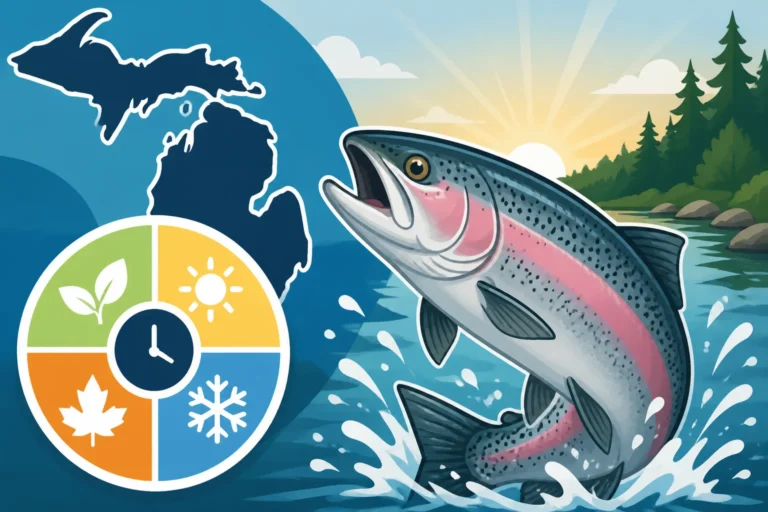
Generally speaking, the earliest signs of Coho salmon staging near river mouths in Michigan can begin as early as late August, particularly in the northern reaches of Lake Michigan and Lake Superior. However, the main push, when significant numbers of Coho start entering the rivers, usually commences in mid-September and continues strongly through October. Depending on weather patterns and specific river systems, good Coho fishing can extend well into November. It's a fantastic time of year to be out on the water, truly one of the Best Time of Year to Fish in Michigan.
Here's a general overview of the Coho salmon run progression:
| Period | Activity Level | Notes |
|---|---|---|
| Late August | Early Staging: A few fish may start appearing near river mouths in northern areas. Offshore trolling can be productive. | Often a precursor; not the main run. |
| Early September | Building Momentum: More fish stage at river mouths. Small pushes into rivers, especially after rain. | Offshore action remains strong. River fishing picks up slowly. |
| Mid-September | Peak Initial Run: Significant numbers begin to enter rivers, particularly larger systems. Consistent action. | Many anglers consider this the "start" of the main river run. |
| Late September – Mid-October | Prime Run: High numbers of fish in rivers. Excellent fishing. Fish are aggressive. | This is often the sweet spot for peak river action. |
| Late October – Early November | Extended Run: Good numbers still present, though activity might slow in colder temperatures. Some post-spawn fish. | Can still offer great opportunities, especially for those willing to brave cooler weather. |
Specific Timing for Key Michigan Waters
While the general timeline holds true, specific regions and individual river systems will have their own nuances. Lake Michigan tributaries, being Michigan's longest shoreline and largest source of Coho, often see the earliest and most robust runs.
- Lake Michigan Tributaries: Rivers like the Manistee River, Au Sable River (Lower Peninsula), and the Pere Marquette River are prime Coho destinations. Anglers might start seeing good numbers of Coho staging in the lower river sections and harbors of Lake Michigan ports like Ludington, Manistee, and Frankfort as early as the first week of September. The full river run in these systems typically gets into full swing by the third week of September and peaks in early to mid-October. This is a great area if you're exploring Best Rivers for Trout and Steelhead in Michigan, as these rivers also see steelhead later.
- Lake Huron Tributaries: While Lake Huron sees fewer Coho compared to Lake Michigan, some runs do occur, particularly in rivers connecting to the northern parts of the lake. Timing here is often a bit later, generally starting reliably in late September into October.
- Lake Superior Tributaries: Lake Superior's Coho runs are often less predictable and more localized due to the colder water temperatures and different stocking programs. Anglers might find Coho staging in late August, with the river runs peaking in September. The season can be shorter due to earlier and more severe cold snaps. Fishing the tributaries along the Keweenaw Peninsula or near Marquette can be very productive. To get a better handle on these vast waters, consult a comprehensive Michigan's Great Lakes Fishing Guide.
Environmental Cues That Trigger the Coho Migration
Coho salmon don't just decide to run on a calendar date; their migration is a sophisticated response to a combination of environmental signals. Understanding these triggers is key to anticipating their arrival and maximizing your chances of a successful fishing trip. It’s less about a specific day and more about a window of opportunity that opens when conditions are just right.
The Critical Role of Water Temperature Drops
Perhaps the most significant trigger for the Coho salmon run is a noticeable drop in lake and river water temperatures. As summer wanes and fall approaches, the cooler air temperatures begin to chill the surface waters of the Great Lakes. When lake temperatures fall into the ideal range, typically between 50 and 60 degrees Fahrenheit, Coho begin to feel that innate call to move towards shallower waters and river mouths.
Once in the rivers, sustained cooler water temperatures, ideally in the low to mid-50s, keep the fish active and encourage them to push upstream. A sudden cold front can sometimes accelerate a run, causing a surge of fish to enter the river as they seek stable thermal refuge. Conversely, a prolonged warm spell can delay the run, keeping fish out in the lake longer.
How Rainfall and River Flows Influence the Run
Another crucial factor is rainfall, particularly significant rain events that lead to increased river flows and slightly stained water. Low, clear rivers can make salmon hesitant to enter, as they are more exposed to predators and feel less secure. A good autumn rainstorm does several things:
- Raises Water Levels: This provides more depth, allowing fish to navigate shallower sections of rivers and traverse obstacles like rapids or small dams more easily.
- Increases Flow: Stronger currents provide a natural "highway" for salmon, guiding them upstream and making their journey less energetically demanding.
- Stains Water: Turbidity from increased flow offers camouflage, making the fish feel safer from predators and often more willing to travel and strike lures.
Many veteran anglers closely watch weather forecasts and river gauges, knowing that a significant rainfall event after a dry spell is often the catalyst for a major push of Coho into the rivers. This is why knowing Michigan Fishing Season Dates and Rules is crucial, as some rules may change with water levels.
Daylight Changes and the Biological Imperative
While water temperature and rainfall are immediate triggers, the underlying biological drive for the Coho run is tied to the changing photoperiod – the shortening daylight hours of late summer and fall. This subtle shift in light exposure acts as an internal clock for the salmon, signaling that it's time to begin their final journey. It's a deep-seated instinct, honed over millennia, that tells them winter is approaching and their reproductive window is opening. This biological imperative ensures that, regardless of short-term weather fluctuations, the salmon will eventually undertake their spawning migration, even if specific conditions might delay or accelerate individual pushes.
Essential Gear and Proven Techniques for Coho Salmon
Once you've got a handle on when the Coho salmon run typically begins and what triggers it, the next step is to ensure you're properly equipped and ready to employ the most effective techniques. Coho are aggressive, but they can also be finicky, so having the right tools for the job can make all the difference.
Recommended Rods, Reels, and Line for Success
For river fishing, a medium-heavy spinning rod or baitcasting rod, typically 8 to 10 feet in length, offers the backbone needed to fight powerful salmon while still providing enough flex to cast lighter lures and absorb head shakes. This length also helps with line control in river currents and protects lighter lines. Many anglers find excellent all-around rods perfect for this purpose on Amazon, with options like the St. Croix Eyecon or Fenwick HMG series being popular choices.
Pair your rod with a reliable spinning reel in the 2500-4000 size range, or a baitcasting reel with a smooth drag system. A good drag is paramount; Coho make blistering runs, and a sticky drag will quickly lead to lost fish. For line, 10-15 pound monofilament or fluorocarbon is a common choice for its shock absorption and abrasion resistance. Alternatively, some anglers prefer 20-30 pound braided line with a fluorocarbon leader for increased sensitivity and casting distance. Finding a quality line from brands like Berkley or PowerPro is easy to do through Amazon's extensive selection. For deeper dives on this, explore our guide on Best Rods and Reels for Michigan Fishing.
Effective Lures and Baits for Aggressive Coho
Coho salmon, particularly when fresh from the lake and aggressively pushing into rivers, will strike a variety of presentations.
- Spoons: Classic metal spoons like the Little Cleo, Dardevle, or Krocodile in bright colors (orange, chartreuse, silver, blue/silver) are deadly, especially in stained water or during overcast conditions. Sizes ranging from 1/4 to 3/4 ounce are usually sufficient.
- Crankbaits and Stickbaits: Hard-bodied crankbaits and stickbaits that imitate baitfish can be incredibly effective. Rapala Original Floaters, Husky Jerks, or Storm ThunderSticks are popular, particularly in natural baitfish patterns or bright, visible colors.
- Spinners: In-line spinners with Colorado or French blades, such as Mepps or Blue Fox, create significant flash and vibration, triggering aggressive strikes.
- Spawn Bags: Natural bait, like cured salmon eggs in small mesh bags, can be irresistible to Coho, especially as they get closer to spawning. Drift fishing these through prime holding lies is a highly effective technique.
- Soft Plastics/Jigs: Small jigs tipped with plastic grubs or scented worms can also entice strikes, particularly in slower pools or when fish are less active.
Many anglers ensure they have a wide array of these options on hand, often stocking up on various colors and sizes from Amazon before hitting the water.
Mastering Shore, Pier, and Boat Fishing Methods
Your approach to Coho fishing will depend heavily on where you plan to target them.
- Shore Fishing (Rivers): This is a popular and accessible method. Anglers often drift spawn bags or artificial baits under a float (bobber) or cast spoons and spinners into likely holding water. Focus on river bends, current breaks, and deeper pools. Look for areas where fish might rest before pushing further upstream.
- Pier Fishing (Great Lakes Harbors): Piers at the mouths of major river systems can be phenomenal spots. Casting spoons, stickbaits, or even vertical jigging can be highly productive as Coho stage and move in and out of the harbors. Early morning and late evening often provide the best action.
- Boat Fishing (Rivers and Lakes): In rivers, boats allow access to more remote sections. Anglers can back-troll, drift, or anchor and cast. On the Great Lakes, trolling for Coho salmon on the Great Lakes is a highly effective method. This typically involves using downriggers, Dipsy Divers, or planer boards to present spoons, flies, or crankbaits at specific depths where Coho are feeding. These fish often suspend in the upper water column, making shallow-set presentations crucial.
Navigating Regulations and Ethical Angling for Coho
Fishing for Coho salmon in Michigan is not just about catching fish; it's also about doing so responsibly and sustainably. Adhering to regulations and practicing ethical angling ensures that these incredible fisheries remain vibrant for generations to come.
Understanding Michigan's Salmon Limits and Rules
The Michigan Department of Natural Resources (DNR) sets specific regulations to manage Coho salmon populations. These rules cover everything from possession limits and minimum size requirements to specific gear restrictions in certain waters. It's common for there to be a combined daily possession limit for all salmon and trout species, often around five fish, with specific sub-limits for certain species or waters. For instance, there might be a rule about how many of those five fish can be a specific salmon species.
Before every outing, it is absolutely essential to consult the latest Michigan Fishing Regulations Digest, which is available online through the DNR website or at license retailers. These regulations can change annually, so relying on old information is risky. Remember, knowing the rules is just as important as knowing the timing; always consult Michigan Fishing Regulations Every Angler Should Know before heading out. Keep an eye out for specific rules regarding snagging, which is almost universally prohibited and harmful to the fish and the sport. You should also be aware of the Michigan's Combined Trout and Salmon Possession Limit.
Practicing Responsible Catch and Release
Even if you plan to keep some fish for the table, practicing responsible catch and release for the fish you don't intend to keep is vital for the health of the fishery. Coho salmon are incredibly resilient, but they are also delicate, especially as they approach their spawning phase.
Here are a few tips for ethical catch and release:
- Minimize Fight Time: Use appropriate tackle to bring the fish in as quickly as possible, reducing stress.
- Handle With Wet Hands: Always wet your hands before touching the fish to protect its protective slime coat. Avoid squeezing or putting fingers in their gills.
- Keep Fish in Water: Try to keep the fish in the water as much as possible, especially if you're taking a quick photo. Fish can quickly suffer from oxygen deprivation when exposed to air.
- Use Barbless Hooks: Barbless hooks, or hooks with crushed barbs, make de-hooking much easier and quicker, causing less damage to the fish's mouth.
- Proper De-hooking Tools: Carry a good pair of long-nosed pliers or a de-hooker to remove hooks efficiently.
- Revive Carefully: If a fish seems sluggish, hold it gently in the current, facing upstream, until it regains its strength and can swim away on its own.
By following these practices, you contribute to a healthy ecosystem and ensure that the thrill of the Coho salmon run can be enjoyed by all for many years to come.
Disclaimer
Fishing conditions and regulations are subject to change. Always consult the latest Michigan Department of Natural Resources (DNR) fishing guide and local advisories before planning your trip. The information provided here is for general guidance only and should not be considered a substitute for official DNR regulations.