What Triggers the Fall Salmon Run in Michigan
That feeling of anticipation, watching the calendar flip to September, knowing the big salmon are out there, waiting. But how do they know it's time to leave the vastness of the Great Lakes and make that epic journey upstream? It’s a question every Michigan angler has pondered, often while staring at a still river, wondering if the run has started yet. This guide is here to unravel the mysteries behind the fall salmon run, exploring the key environmental cues and biological impulses that trigger these magnificent fish to begin their arduous, final spawning migration.
Understanding the Salmon's Instinct: The Call to Spawn
The fall salmon run in Michigan isn't just a random event; it's a precisely timed, biologically driven migration that's been perfected over millennia. For species like Chinook and Coho salmon, this upstream journey is the culmination of their lives, their singular purpose being to reproduce before their inevitable end. It's a bittersweet spectacle for anglers, witnessing such raw determination. Many factors contribute to these fish getting the message, but a few stand out as the primary environmental triggers that tell them, "It's time."
The Unmistakable Signal of Water Temperature
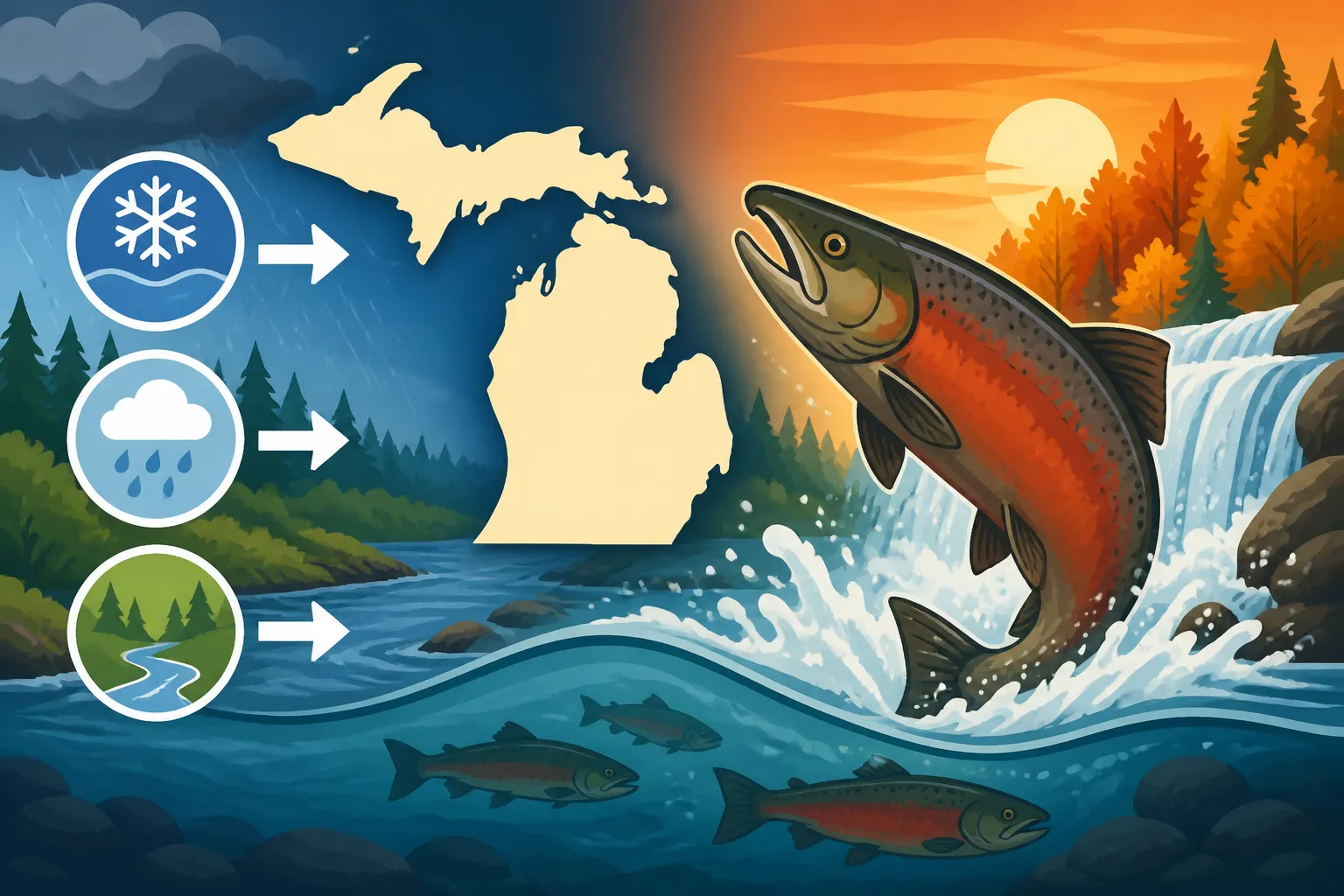
If there's one factor that stands above the rest in kicking off the fall salmon run, it's water temperature. Salmon, especially Chinook and Coho, are highly sensitive to changes in water temperature, and a sustained drop is like a biological alarm clock ringing for them. Throughout the summer, the Great Lakes maintain relatively warm temperatures in their shallower nearshore areas and tributaries. The salmon hang out in cooler, deeper offshore waters, gorging on baitfish, growing big and strong.
But as autumn approaches, those long, hot days give way to crisp nights and cooler air temperatures. This change gradually cools the Great Lakes themselves, but more importantly, it chills the waters of the rivers and streams that feed into them. When these tributary temperatures consistently drop into the mid-50s Fahrenheit, and especially when they dip into the low 50s or even upper 40s, it sends an undeniable signal to the salmon. It tells them that the conditions are becoming optimal for egg development and survival in the gravel beds upstream. Too warm, and the eggs won't develop properly; too cold, and they risk freezing or other issues. This temperature threshold is a critical cue, telling them that the internal clock they carry is now aligning with the external world. Anglers looking to time their trips often keep a close eye on river temperature gauges, sometimes even checking weather forecasts on their phones or trusty weather radios purchased from Amazon to anticipate these crucial drops.
The Power of River Flow and Rainfall
While temperature might set the stage, adequate river flow acts as the opening curtain for many salmon. Imagine a salmon in the lake, feeling the water cool, but then looking at the river mouth and seeing nothing but a trickle. That's not an inviting highway for a fish built for powerful upstream travel. Significant rainfall events, especially after a dry spell, can dramatically increase river levels and create a powerful draw that salmon instinctively follow.
Heavy rains swell the rivers, increasing their volume and velocity. This surge of fresh water acts as a beacon, creating a stronger current and a distinct plume of cooler, less saline freshwater that extends out into the Great Lakes. Salmon, with their incredible sense of smell and lateral line systems, can detect this change from a remarkable distance. The increased flow also helps to scour out obstructions, make rapids more passable, and generally provides an easier, albeit still challenging, path upstream. Often, you'll hear seasoned anglers talking about "the first good rain" in late August or early September as being the real trigger. It’s that combination of cooling water and increased flow that often creates the perfect storm, pushing thousands of fish into the rivers simultaneously. Knowing how to interpret these river conditions is crucial for predicting when the main push of fish will occur, a skill that often comes from years of experience and observing the How to Read River Flow for Steelhead Fishing patterns, which are very similar to salmon.
Daylight's Diminishing Role: Photoperiod
Beyond the tangible feel of water temperature and current, there's a more subtle, yet equally powerful, trigger at play: the photoperiod, or the length of daylight hours. As summer gives way to fall, each day becomes noticeably shorter. Less sunlight means cooler temperatures, yes, but it also directly impacts the salmon's internal biological clock through hormonal changes.
This decreasing photoperiod is a very reliable, consistent signal that autumn is truly here, regardless of any short-term weather fluctuations. Salmon's bodies are hardwired to respond to these changes in light exposure, initiating a cascade of hormonal shifts that prepare them for spawning. These physiological changes include the maturation of their eggs and milt, alterations in their coloration (developing those vibrant reds, greens, and browns), and a heightened drive to migrate. Think of it as the ultimate long-range forecast for their bodies. While an angler can't directly observe changes in photoperiod and predict an exact day, it's the overarching environmental factor that ensures the salmon are biologically ready to respond to the more immediate cues of temperature and flow. This natural rhythm is a fundamental part of Michigan Fishing Seasons Explained for many species.
The Salmon's Biological Clock and Journey
It's truly remarkable how a fish, after spending years in the vastness of the Great Lakes, knows exactly when and where to return to spawn. It's not just the external environment, but an intricate internal system that guides them, ensuring the perpetuation of their species. Understanding this internal compass helps us appreciate the complexity and fragility of these incredible creatures.
Internal Rhythms and Hormonal Changes
Salmon possess an incredibly precise biological clock, often referred to as their circadian rhythm, which is influenced by the changing seasons and, in particular, the photoperiod discussed earlier. As the days shorten in late summer and early fall, these internal clocks trigger a series of profound hormonal changes within the salmon. Think of it like a highly sophisticated timer that has been counting down since they hatched.
These hormonal shifts are responsible for preparing the salmon's body for the rigors of migration and spawning. Their reproductive organs mature rapidly, and their bodies begin to undergo a dramatic transformation. They develop the characteristic "kype" or hooked jaw in males, and their skin takes on deeper, more vibrant spawning colors. They also begin to reallocate energy stores, shifting from growth and feeding to the monumental task of swimming upstream and reproducing. This internal programming is so strong that even if external conditions aren't perfectly aligned, the salmon will still feel an overwhelming urge to begin their journey. It's an unstoppable force of nature, driving them forward. This complex dance of internal and external cues makes Michigan's Fall Salmon Run Fishing such a thrilling, yet predictable, annual event.
Navigating Home: Olfactory Cues and Memory
One of the most astounding aspects of salmon migration is their ability to return to the exact stream or river where they were born, sometimes years later. This incredible feat is largely attributed to their phenomenal sense of smell. As juvenile salmon, or smolts, migrate downstream to the Great Lakes, they imprint on the unique chemical signature of their natal stream. This "olfactory memory" is incredibly powerful.
When they mature and begin their spawning run, they use this memory as a homing beacon. They can detect the subtle chemical differences in various river systems and navigate with astonishing accuracy, often returning to the very gravel bed where they hatched. It’s an almost mythical ability, but it’s real and scientifically proven. This means that a salmon stocked in the Manistee River will return to the Manistee, not the Au Sable, even though both might be flowing with cool, fresh water. This precise homing instinct ensures that local populations remain distinct and genetically adapted to their specific environments. This powerful sense of smell is why they're so good at finding the plume of freshwater from a river far out in the lake, a vital part of the Chinook Salmon in Michigan's Great Lakes life cycle.
Species-Specific Timing and Nuances
While the general triggers of temperature, flow, and photoperiod apply to all Great Lakes salmon, there are important nuances between different species, primarily Chinook (King) and Coho (Silver) salmon. Understanding these differences can significantly improve an angler's success rate.
Chinook salmon typically kick off the main run earlier in the fall. You'll often see the first big pushes of Kings entering rivers in late August and peaking through September. They are larger, more aggressive, and generally prefer slightly warmer, but still cooling, water temperatures than Cohos. They're built for power and often make their spawning beds in deeper, faster stretches of river. For those targeting these magnificent fish, being prepared in late summer is key, often with robust gear that can handle their incredible fight, readily available on platforms like Amazon.
Coho salmon, on the other hand, tend to run a bit later. While some early Coho might show up with the Chinooks, their peak migration often occurs from late September through October, and sometimes even into November. They generally prefer slightly colder water temperatures and often spawn in shallower, slower riffles or side channels. Their fight is famously acrobatic, making Coho Salmon Fishing in Michigan a unique experience. Many anglers will target Chinook early in the fall and then seamlessly transition to Coho fishing as the season progresses and temperatures continue to drop. These species-specific timings mean that Michigan anglers can often enjoy a prolonged and diverse salmon season.
| Species | Primary Run Timing | Preferred Water Temp (F) | Avg. River Entry Triggers | Typical Spawning Habitat |
|---|---|---|---|---|
| Chinook | Late Aug – Sep | 50s – Low 60s | Cooling lake/river temps, increased flow after rain | Deeper runs, faster currents |
| Coho | Late Sep – Oct/Nov | Mid 40s – Low 50s | Continued cooling, consistent river flow | Shallower riffles, slower currents |
| Atlantic | Late Sep – Nov | Mid 40s – Low 50s | Cooling temps, strong flow for fall spawners | Similar to trout streams, cleaner gravel |
Reading the Signs: How Anglers Can Predict the Run
For us anglers, the biggest question isn't just what triggers the run, but when these triggers align to offer the best fishing opportunities. Predicting the fall salmon run effectively means paying close attention to environmental cues and being ready to act when the conditions are just right. It’s a mix of science, intuition, and local knowledge that makes for successful salmon fishing.
Monitoring Conditions for Optimal Timing
Successfully hitting the fall salmon run isn't about guesswork; it's about being a diligent observer of nature's subtle, and not-so-subtle, hints. The first step is to consistently monitor weather patterns, focusing especially on air temperature trends. A prolonged period of cooler nights, even if daytime highs are still warm, will gradually begin to drop lake and river temperatures. Keep an eye on regional weather reports and be aware of any significant cold fronts pushing through Michigan.
Beyond temperature, pay very close attention to rainfall. Summer can often be quite dry, leading to low river levels. A substantial rain event, particularly one that covers a wide area and persists for a day or two, can rapidly change river conditions. You’ll want to check river gauges online or through dedicated apps. Many local fishing forums and bait shops will also provide updates on river levels and clarity. The ideal scenario for a strong push of salmon is often a sustained period of cooler temperatures followed by a significant rain event that raises river levels and enhances flow. When these conditions align, you need to be ready to go, perhaps having your tackle box stocked with a fresh supply of roe bags and beads, which can be easily replenished with a quick order from Amazon. This attention to detail can make all the difference in catching the peak of the run, and it's a practice you'll want to extend to learning about Best Months for Salmon Fishing in Michigan for next year's planning.
Observing Fish Behavior and River Activity
Even with all the data, there's no substitute for getting out there and observing. Before the main run truly kicks off, you might notice some early indicators. Sometimes, a few "scout" salmon will venture into the river mouth or lower stretches, testing the waters. These fish might be larger males, eager to establish dominance or simply exploring. You might see them jumping or rolling in the river mouth, a tell-tale sign that fish are staging.
Once the run begins, pay attention to the overall activity in the river. Are fish moving upstream steadily? Are they holding in certain pools or riffles? Look for signs of "redds," which are the depressions in the gravel where salmon lay their eggs. Seeing active spawning behavior is a clear indication that the run is in full swing. Local knowledge is invaluable here; chat with fellow anglers at the boat launch, or stop into a bait and tackle shop. They often have the most up-to-date, real-time reports on what’s happening on the river. This community insight is often what sets experienced anglers apart from beginners, offering clues that the data alone can't provide. Observing these behaviors can also help you identify the fish and whether you are seeing How to Tell if a Salmon Is Spawning.
Gearing Up for the Run: Essential Preparations
Being prepared for the fall salmon run isn't just about knowing when the fish will show up, but being ready when they do. This means having your gear in order well before the first salmon starts nosing its way upstream. Consider the types of fishing you'll be doing. If you're going to be shore fishing or wading in the rivers, make sure your waders are leak-free and your boots have good traction for slippery rocks. For boat anglers, ensure your motor is serviced, and all safety equipment is on board.
Your tackle should be specifically geared for salmon. This typically includes heavier rods and reels capable of handling powerful fish in current, strong monofilament or braided line, and a variety of lures, flies, or bait setups. Spawn bags, beads, crankbaits, and spinners are all popular choices for Michigan's Fall Salmon Run Fishing. Don't forget essentials like a long-handled landing net designed for large fish, a good pair of pliers for hook removal, and a cooler with ice for your catch. Having everything prepped means you can drop everything and hit the water the moment those prime conditions hit, maximizing your chances of a memorable trip. This proactive approach ensures you're not scrambling when the conditions are perfect.
Disclaimer
This article is for general informational purposes only and does not constitute professional advice. Laws, prices and regulations vary by location and change over time. Consult a qualified professional for guidance on your specific situation.