How to Identify a Steelhead Run River in Michigan
There's nothing quite like the anticipation of Michigan's steelhead runs, but knowing exactly which rivers they're running up and when can feel like a secret code. Many anglers get frustrated, spending precious time on unproductive waters. This guide will demystify the process, helping you identify those prime steelhead run rivers so you can be in the right place at the right time.
The Seasonal Rhythm of Michigan Steelhead Runs
Understanding the natural lifecycle and migration patterns of steelhead is the first crucial step in identifying where and when to find them. These magnificent fish, essentially rainbow trout that migrate to the Great Lakes and return to rivers to spawn, are incredibly sensitive to environmental cues. Their movements are a testament to nature's intricate timing, and learning to read those signals is key to successful angling.
Understanding the Great Lakes Connection
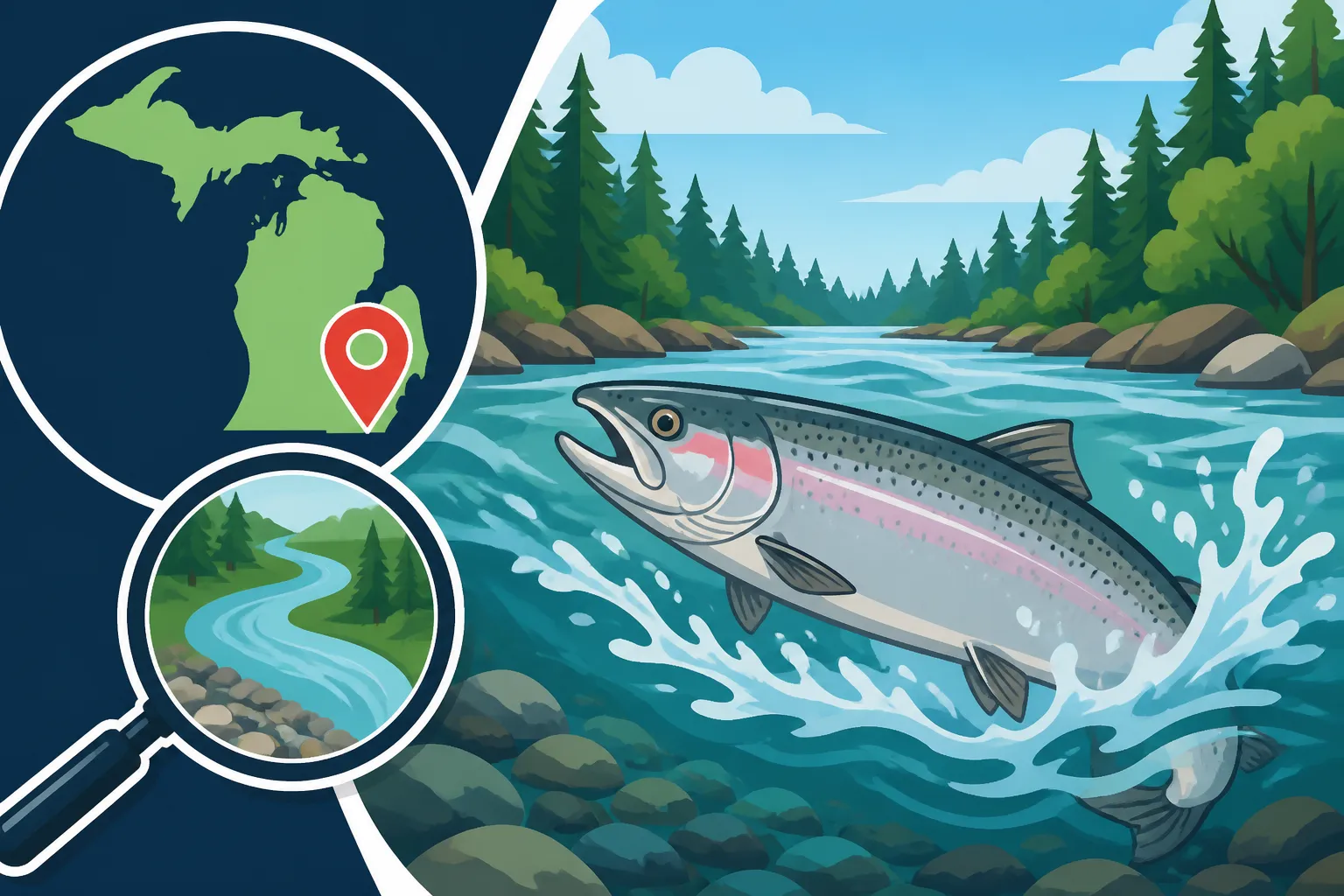
Michigan's steelhead are intrinsically linked to the Great Lakes – Michigan, Huron, and Superior. Unlike landlocked trout, steelhead spend a significant portion of their lives growing large and strong in these vast freshwater seas. When the time is right, driven by instinct, they embark on epic journeys back into the tributary rivers and streams where they were born or stocked. This anadromous behavior means that any river you're considering for steelhead must have a direct, unobstructed connection to one of the Great Lakes. You won't find significant steelhead runs far inland on rivers that don't drain directly into these big waters.
Think of it like a highway system; the Great Lakes are the main interstate, and the rivers are the exit ramps. A river that dead-ends into an inland lake, no matter how beautiful or productive for other species, simply won't have a steelhead run in the same way. This direct connection is non-negotiable. It's why rivers like the Manistee River Steelhead and Salmon Fishing in Michigan or the Pere Marquette River Fly Fishing in Michigan are legendary, as they offer clear pathways for these powerful fish.
Peak Migration Periods and Their Triggers
Steelhead runs in Michigan are a seasonal affair, primarily occurring in two distinct windows: fall and spring. The fall run, often referred to as the "staging" or "pre-spawn" run, sees fish entering rivers from September through December, driven by cooling water temperatures and the natural urge to find suitable overwintering and spawning grounds. These fall fish often follow salmon into the rivers, eager to feast on their eggs. The Fall Steelhead Run in Michigan Rivers is a highly anticipated event for many anglers.
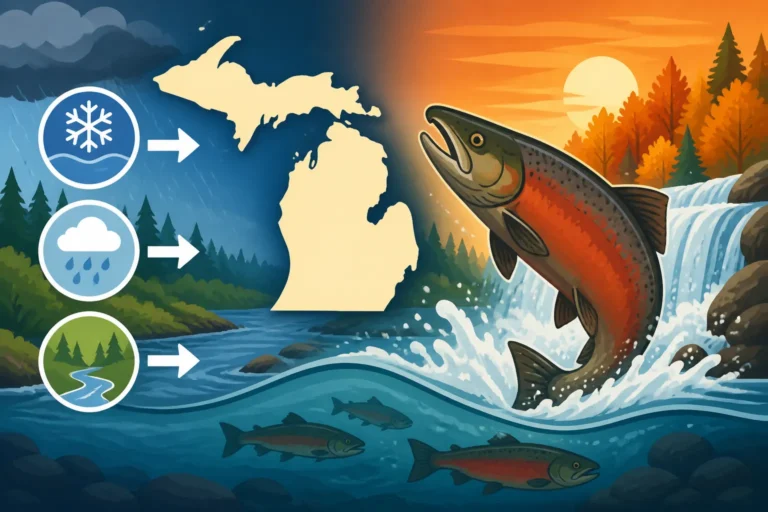
The spring run, typically from March through May, is the primary spawning migration. This is when the largest numbers of steelhead move upstream to deposit their eggs. Rising water temperatures, melting snow, and increased river flows all play a role in triggering this intense movement. Understanding these general timeframes is crucial, but remember that specific timing can vary year to year based on weather patterns, snowmelt, and water conditions. You might also encounter fish during the Winter Steelhead Run in Michigan Rivers if conditions remain mild enough.
Physical Characteristics of Prime Steelhead Rivers
Once you understand the seasonal patterns, the next step is to examine the rivers themselves. Not all Great Lakes tributaries are created equal when it comes to supporting a robust steelhead run. The ideal river possesses a combination of features that provide necessary habitat for migration, spawning, and holding.
River Mouths and Lower Reaches
The initial entry point for steelhead is always the river mouth, where the river meets the Great Lake. These areas are critical staging grounds. Fish will often stack up here, waiting for the right conditions—such as a temperature change, a rise in water level, or even just a good rain —to push them upstream. Observing activity at the river mouth, either in person or via local reports, can give you an early indication of a run starting. Harbors and piers near these river mouths, especially on Lake Michigan, can be fantastic places to intercept staging fish.
As you move upstream into the lower reaches of a river, you'll look for sections that offer easy passage and suitable holding water. Deeper channels, slower currents, and ample structure that allows fish to rest and conserve energy are essential. These lower sections can be excellent for early-run fish before they spread out further upstream.
Gravel Beds and Spawning Habitat
For steelhead to successfully reproduce, they need specific spawning habitat: clean, well-oxygenated gravel beds. Female steelhead, called hens, will dig depressions in these gravel beds, known as redds, to lay their eggs. Rivers known for strong steelhead runs will invariably have significant stretches of appropriate gravel substrate, usually ranging from pea-sized to golf-ball-sized stones. Without these vital spawning grounds, a river cannot sustain a naturally reproducing steelhead population, making it reliant solely on stocking efforts.
When scouting a river, look for areas where the current is brisk enough to keep the gravel clean but not so strong that it washes away the eggs. These areas are often found at the tails of pools, below riffles, or in slower glides. Identifying these spawning grounds can tell you a lot about a river's potential, especially for those highly sought-after spring run fish.
Depth, Structure, and Holding Water
Steelhead are strong swimmers, but they still need places to rest, hide from predators, and escape strong currents during their upstream migration. This is where river depth and structure become vital. Deep pools, often found on the outside bends of rivers or where obstructions create scour, provide essential holding water. Log jams, fallen trees, undercut banks, and large boulders offer cover and current breaks where fish can stage before moving further upstream.
A diverse river bottom, transitioning between deep pools, moderate runs, and shallow riffles, generally indicates a healthy steelhead river. Anglers targeting these fish need to learn How to Fish for Steelhead in Michigan by understanding how fish utilize these different types of water. Rivers with monotonous, shallow, or uniform bottoms tend to be less productive for migrating steelhead. You'll often find the fish congregating in these deeper, more protected pockets, sometimes in surprisingly large numbers.
Environmental Cues and Monitoring River Conditions
Beyond the physical characteristics of the river itself, steelhead are incredibly responsive to real-time environmental conditions. Being able to read these cues, even from a distance, can dramatically improve your chances of identifying an active run and finding success.
Water Temperature: The Steelhead's Thermometer
Water temperature is perhaps the most critical environmental factor influencing steelhead behavior. They have a preferred temperature range for migration and spawning, typically between 38°F and 50°F (3°C to 10°C). When water temperatures drop too low, fish may become lethargic and cease migration. When they rise too high, it can stress the fish or signal the end of the spawning window.
Monitoring river temperatures is essential. During the fall, cooling temperatures often trigger fish to move into the river, while warming temperatures in spring signal the peak of the spawn. A sudden warm spell in winter might briefly bring in a wave of fish, while a cold snap can shut down activity for days. For accurate water temperature readings, a reliable thermometer is essential and widely available on platforms like Amazon. Local bait shops and online fishing reports often provide current temperature readings, giving you valuable real-time data. What Triggers the Fall Salmon Run in Michigan is related, as salmon runs can also influence early steelhead movements due to available egg forage.
Water Levels and Flow Rates
Water levels and flow rates are also significant determinants of when and where steelhead will run. A sudden increase in water flow, often due to heavy rain or snowmelt, can act like a "freshwater highway" for steelhead, encouraging them to push further upstream. Low, clear water, on the other hand, can make fish wary and reluctant to move, often holding them in deeper pools or at the river mouth.
However, too much water can also be detrimental. Extremely high flows can make the river unfishable, scattering fish and making it dangerous for anglers. Learning How to Read River Flow for Steelhead Fishing is a skill developed over time, but generally, moderate to slightly elevated flows are considered ideal. Online gauges provided by various organizations can give you real-time data on river levels and discharge rates for many Michigan rivers, helping you predict fish movement.
Clarity and Color
The clarity and color of the river water can also influence steelhead behavior and angler success. Generally, steelhead prefer water with some stain or color, which offers them a sense of security from predators. Overly clear water can make fish skittish and harder to approach, especially in bright sunlight. Conversely, extremely muddy or turbid water, often caused by heavy runoff, can make it difficult for fish to navigate and locate bait, and it becomes nearly impossible for anglers to effectively present a lure or fly.
A "steelhead green" or slightly tea-stained color is often considered ideal. It provides enough cover for the fish while still allowing them to see potential food sources and for anglers to fish effectively. Observing the water conditions through local reports or firsthand accounts will help you determine if a river is in prime condition for a run.
Researching and Confirming Steelhead Run Locations
While understanding the biological and environmental factors is critical, combining that knowledge with practical research and observation is what truly pinpoints an active steelhead run river. Don't rely on just one source; cross-reference information to get the most accurate picture.
Local Knowledge and Online Resources
One of the best ways to identify a steelhead run is by tapping into local knowledge. Visit bait and tackle shops near the rivers you're interested in. The people who work there live and breathe local fishing and often have real-time reports on what's biting, where the fish are, and what the river conditions are like. They can also offer invaluable advice on Best Rods for Steelhead Fishing or Best Reels for Steelhead Fishing for specific local conditions.
Beyond face-to-face conversations, the internet offers a wealth of information. Fishing forums, social media groups dedicated to Michigan fishing, and dedicated fishing report websites are excellent resources. You can often find detailed river maps and guidebooks, easily purchased through retailers like Amazon, which highlight key access points and river features. Pay attention to consistent reports from multiple anglers; if several people are reporting fresh fish in a particular river, it's a strong indicator of an active run. However, always take online reports with a grain of salt, as some anglers prefer to keep their honey holes secret!
Scouting Trips and On-the-Water Observation
There's no substitute for getting out on the water yourself. Even if you don't plan to fish immediately, a scouting trip can provide a wealth of information. Drive or walk along potential steelhead rivers, looking for signs of fish activity. This might include seeing fish jump, watching for subtle rises or wakes, or even spotting anglers actively fishing. Observing where other successful anglers are concentrating their efforts can be a huge clue.
Look for the physical characteristics discussed earlier: gravel beds, deep pools, log jams. Pay attention to the water temperature, clarity, and flow rate with your own eyes. Good quality waders and boots, which you can easily browse on Amazon, are non-negotiable for comfortable and safe scouting and fishing trips. Sometimes, simply seeing other anglers hooked up is all the confirmation you need. Even if you don't spot fish, the absence of other anglers on a river known for runs might indicate that conditions aren't right, or the run simply hasn't started yet.
Table: Key Characteristics of Michigan Steelhead Rivers
Understanding these characteristics helps you quickly assess a river's potential for hosting a robust steelhead run.
| Characteristic | Description | Why it matters for Steelhead |
|---|---|---|
| Great Lakes Connection | River flows directly into Lake Michigan, Huron, or Superior. | Steelhead are anadromous; they must migrate from the Great Lakes. |
| Clean Gravel Beds | Sections of river with pea-to-golf-ball sized gravel. | Essential habitat for spawning (redd building) and egg incubation. |
| Varied Structure | Mix of deep pools, runs, riffles, log jams, undercut banks. | Provides holding lies, resting areas, escape cover, and feeding stations. |
| Consistent Water Flow | Stable water levels, not prone to extreme droughts or floods. | Easier navigation for migrating fish and stable spawning environment. |
| Optimal Water Temperature | Typically 38-50°F (3-10°C) during peak runs. | Triggers migration, influences fish activity, and supports egg development. |
| Accessible River Mouth | Clear passage from the Great Lake into the river. | Primary entry and staging point for fish beginning their migration. |
| Good Water Quality | Relatively clean, well-oxygenated water, often with some stain. | Vital for fish health, respiration, and successful egg development. |
Disclaimer
This article is for general informational purposes only and does not constitute professional advice. Laws, prices and regulations vary by location and change over time. Consult a qualified professional for guidance on your specific situation.