Best Line Weight for Michigan Steelhead
One of the most common frustrations for anglers chasing Michigan's powerful steelhead is figuring out what line weight gives them the best chance of landing these incredible fish without spooking them. It's a delicate balance, and picking the wrong line can lead to anything from frustrating break-offs to days spent watching fish swim by your invisible offering. This comprehensive guide will walk you through everything you need to know about selecting the best line weight for Michigan steelhead, ensuring your setup is ready for whatever the rivers throw at you.
Understanding the Michigan Steelhead Challenge
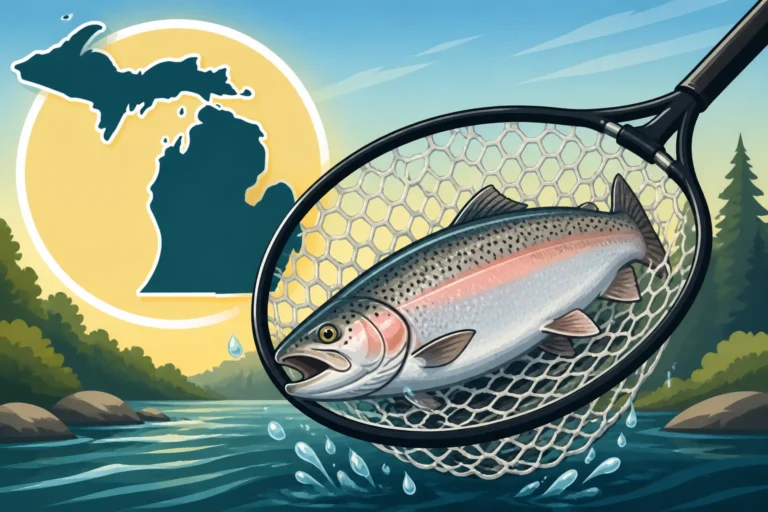
Steelhead, often referred to as "chrome," are truly special fish. They are lake-run rainbow trout, meaning they spend most of their lives growing large and powerful in the Great Lakes before migrating into Michigan's rivers to spawn. This lifecycle makes them incredibly strong fighters, notorious for acrobatic jumps and long, drag-screaming runs. But their riverine environment also means they can be highly sensitive to their surroundings, including your fishing line.
The Elusive Nature of Steelhead
Steelhead are inherently wild and wary. They've spent years in the vastness of the Great Lakes, developing incredible instincts for survival. When they enter the relatively confined spaces of a river, they become even more cautious. This wariness is why anglers often speak of "steelhead fever"—the intense challenge and immense reward of connecting with one of these magnificent fish. Their sensitivity means that every detail of your presentation matters, from the size of your bait to, crucially, the visibility and strength of your fishing line. A line that is too heavy or too visible can easily deter a finicky steelhead, making them ignore your offering entirely.
Diverse Fishing Environments
Michigan boasts an incredible array of rivers and streams that host steelhead runs. From the broad, powerful currents of the Manistee River and the Muskegon to the clearer, more intimate waters of the Pere Marquette or the Au Sable tributaries, each offers a unique challenge. These varied environments directly impact line choice. High, turbid water after a rain might allow for a heavier, more visible line, as the fish's visibility is reduced. Conversely, crystal-clear, low-flow conditions, common during much of the Winter Steelhead Run in Michigan Rivers, demand the lightest, most subtle presentation possible. Your line needs to be adaptable, or you need to have different setups ready to go. The changing conditions, sometimes within the same day, are a huge part of the puzzle when you're pursuing these incredible fish.
Factors Influencing Line Weight Choice
When it comes to selecting the perfect line weight for Michigan steelhead, it's not a one-size-fits-all answer. Several critical factors come into play, and understanding them will help you make informed decisions that improve your success on the water.
Water Conditions and Clarity
This is arguably the most significant factor in line selection. Imagine trying to sneak up on a deer in a wide-open field versus a dense forest; the visibility changes everything. The same applies to fishing line.
In Michigan's rivers, after heavy rains or during spring runoff, the water can be high and stained with sediment. In these "chocolate milk" conditions, fish often rely more on scent and lateral line senses than sight. Here, you can get away with heavier main lines, perhaps 15-20 lb test braided line with a 10-12 lb fluorocarbon leader. The added strength can be a huge advantage when battling a powerful fish in strong currents, and the slightly increased visibility of the line won't matter as much.
However, when the water is low and gin-clear, a common scenario during periods of drought or in the frigid depths of winter, stealth becomes paramount. Steelhead in clear water have excellent vision and can easily spot a thick, brightly colored line. This is when anglers often drop down to main lines as light as 6-8 lb monofilament or fluorocarbon, or use braided main lines as light as 10-15 lb paired with leaders of 4-6 lb fluorocarbon. The sacrifice in raw breaking strength is offset by the increased chances of getting a bite in the first place. You'll find a great selection of these specialized lines at places like Bass Pro Shops, making it easier to match your gear to the current conditions.
Fish Size and Fight
Michigan steelhead are renowned for their powerful runs and aerial acrobatics. While any steelhead is a good fish, they can range from smaller "half-pounders" to true trophies pushing into the upper teens or even twenty pounds. The potential size of the fish you're targeting naturally influences your line weight choice.
If you're fishing a river known for consistently large steelhead, you'll want to lean towards the heavier end of the spectrum to give yourself a fighting chance. An 8-pound steelhead can put up an incredible battle, but a 15-pound chrome missile can absolutely spool a reel or snap a light line if you're not careful. Having a main line that can withstand the initial surge and a leader strong enough to handle sharp head shakes and abrasion against submerged timber is crucial. However, it's a balance. Too heavy, and you might not get a bite. Too light, and you'll experience heart-wrenching break-offs. It's a calculated risk that every steelhead angler constantly evaluates. Understanding Michigan Steelhead Run Timing can give you an idea of when to expect larger fish.
Rod and Reel Compatibility
Your fishing line is just one part of a carefully calibrated system. The line weight you choose must be compatible with your rod and reel. Most fishing rods will have a recommended line weight range printed on the blank, typically near the handle. Exceeding or falling below this range can compromise the rod's performance, making it difficult to cast effectively or properly fight a fish.
Similarly, your reel has specific capacities for different line weights. A reel designed for light trout fishing might only comfortably hold 100 yards of 6 lb monofilament. Trying to spool it with 20 lb braided line would result in much less capacity, making you vulnerable to a long-running steelhead. Conversely, a large salmon reel spooled with overly light line might struggle with consistent drag performance or present challenges with line twist. Matching your line to your rod and reel ensures that the entire system works harmoniously, allowing for smooth casting, efficient fish fighting, and ultimately, more landed steelhead. Always check the manufacturer's recommendations, whether you're buying a new setup or just upgrading your line on Amazon.
Common Line Types and Their Ideal Weights for Steelhead
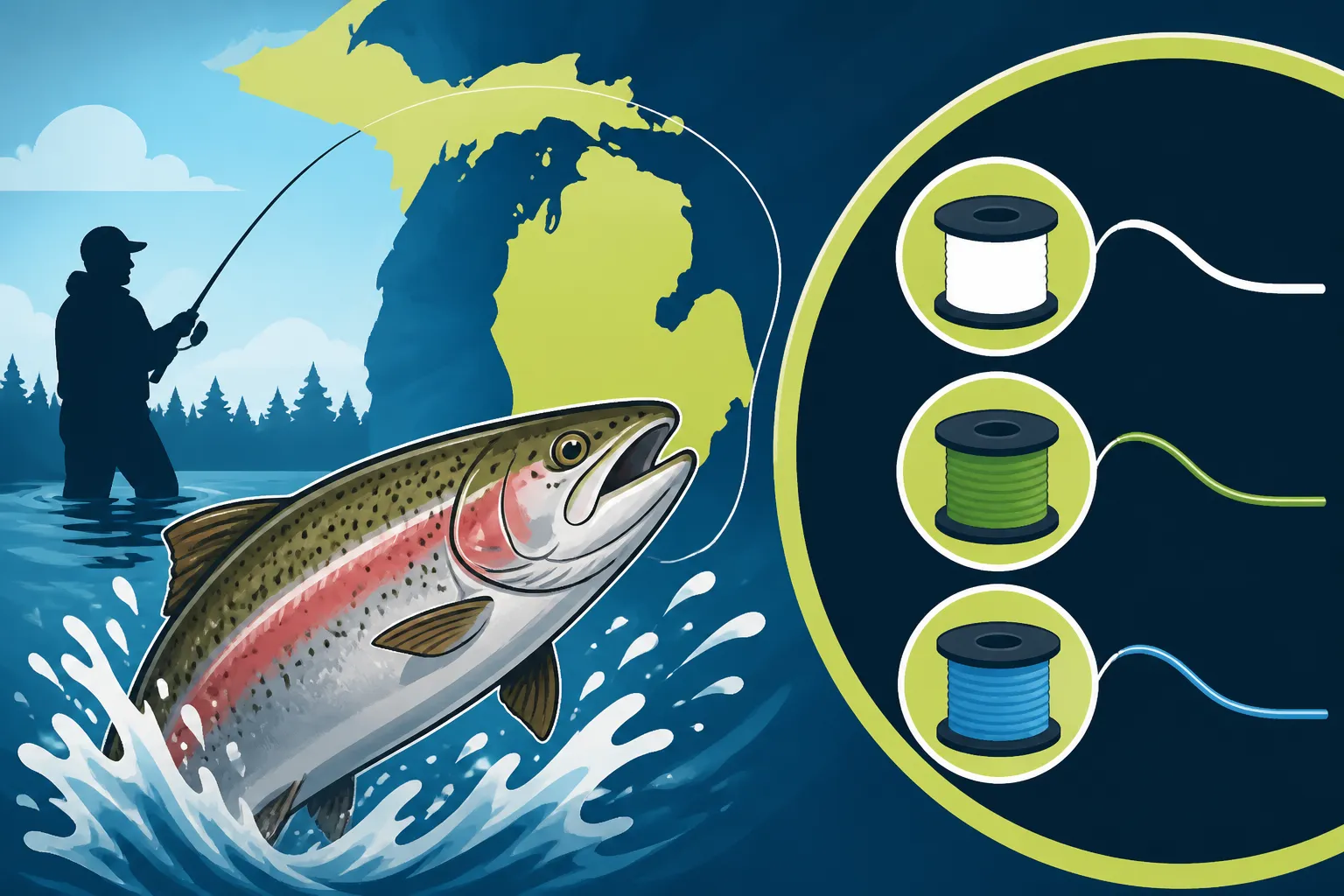
When you walk into a tackle shop or browse online for fishing line, the sheer variety can be overwhelming. For Michigan steelhead, three main types of line dominate: monofilament, fluorocarbon, and braided line. Each has distinct characteristics that make it suitable for different situations and angler preferences.
Monofilament Line
Often simply called "mono," monofilament line has been a staple in fishing for decades. It's made from a single strand of nylon, offering a balance of strength, stretch, and affordability.
Pros for Steelhead:
- Stretch: Mono's inherent stretch acts like a shock absorber, helping to cushion the impact of a steelhead's powerful headshakes and sudden runs. This can prevent hooks from tearing out of the fish's mouth, especially when using light leaders.
- Knot Strength: It's generally easy to tie strong, reliable knots with monofilament, a crucial factor when a trophy steelhead is on the other end.
- Cost-Effective: Mono is typically the most budget-friendly option, allowing anglers to spool up multiple reels or change lines more frequently.
Cons for Steelhead:
- Visibility: Monofilament is more visible underwater than fluorocarbon, which can be a disadvantage in clear water conditions.
- Sensitivity: Its stretch, while beneficial for shock absorption, reduces sensitivity, making it harder to detect subtle bites or feel the bottom.
- Memory: Mono can develop "memory" over time, especially if left on a reel for too long, leading to coils and tangles.
Ideal Weights: For main lines, anglers often choose 8-12 lb test monofilament for steelhead, particularly for float fishing or general spin fishing where some stretch is desired. When used as a leader, it might be 4-8 lb test, though fluorocarbon is generally preferred for leaders due to its stealth. Best Rod Length for Steelhead Fishing will often pair well with these lighter mono lines.
Fluorocarbon Line
Fluorocarbon is a newer material compared to monofilament, gaining immense popularity for its unique properties. It's denser than mono, sinks faster, and is known for its incredible stealth.
Pros for Steelhead:
- Nearly Invisible Underwater: This is fluorocarbon's superpower. Its refractive index is very close to that of water, making it virtually invisible to fish. This is a game-changer in clear water, where wary steelhead can be easily spooked.
- Abrasion Resistance: Fluorocarbon is generally more abrasion-resistant than monofilament, offering better protection against sharp rocks, logs, and gill plates during a fight.
- Sensitivity: With less stretch than mono, fluorocarbon transmits vibrations better, allowing you to feel subtle bites and bottom structure with greater clarity.
Cons for Steelhead:
- Stiffer: Fluorocarbon can be stiffer and have more memory than monofilament, making it sometimes harder to cast, especially in lighter weights as a main line.
- Knot Tying: It requires careful knot tying, as some knots can slip or break if not tied properly.
- Cost: Fluorocarbon is typically more expensive than monofilament.
Ideal Weights: Fluorocarbon shines as a leader material for steelhead, with anglers commonly using 6-10 lb test, and sometimes going down to 4 lb in ultra-clear, low-water conditions. For main lines, some anglers use 10-15 lb fluorocarbon, especially for presentations where a sinking line and sensitivity are paramount. When choosing your fluorocarbon leaders, you'll find a wide range of options at retailers like Bass Pro Shops or through online stores such as Amazon.
Braided Line
Braided line is constructed from multiple strands of synthetic fibers woven together, creating an incredibly strong and thin line with virtually no stretch.
Pros for Steelhead:
- Incredible Strength-to-Diameter Ratio: Braided line is significantly thinner than monofilament or fluorocarbon of the same breaking strength. This means you can pack more heavy line onto your reel, or use a much lighter diameter line for the same strength, which aids in casting distance and cutting through current.
- Zero Stretch: The lack of stretch provides unparalleled sensitivity, allowing you to feel everything that happens at the end of your line—from the faintest tap of a bite to your bait ticking the bottom. It also provides powerful hook sets.
- Durability: Braided line is very durable and long-lasting, resisting UV damage and requiring less frequent replacement than mono.
Cons for Steelhead:
- Visibility: Braided line is highly visible underwater, making it unsuitable for direct connection to your lure or bait, especially for wary fish like steelhead. A leader is almost always required.
- Abrasion: While strong, braid can fray against sharp edges or rocks.
- Cost: It's generally the most expensive line type upfront, though its longevity can offset this over time.
Ideal Weights: Braided line is almost exclusively used as a main line for steelhead, always paired with a fluorocarbon or monofilament leader. Common main line weights are 15-30 lb test. The thinner diameter allows for excellent casting and minimal drag in the current, making it a popular choice for techniques where sensitivity and strength are paramount.
Here's a quick comparison of these line types:
| Line Type | Pros for Steelhead | Cons for Steelhead | Ideal Main Line Weight | Ideal Leader/Tippet Weight |
|---|---|---|---|---|
| Monofilament | Stretch (shock absorption), good knot strength, cost-effective | More visible, less sensitive, memory | 8-12 lb | 4-8 lb (for general use) |
| Fluorocarbon | Nearly invisible, abrasion resistant, sinks well, sensitive | Stiffer, specific knot care, more expensive | 10-15 lb (often leader) | 6-10 lb (standard for leaders) |
| Braided | High strength-to-diameter, no stretch (sensitive), casts far | Very visible, needs leader, can fray on rough surfaces | 15-30 lb | N/A (always use leader) |
Matching Line Weight to Fishing Techniques
Your preferred fishing technique plays a massive role in determining the ideal line weight for Michigan steelhead. Different presentations require different line characteristics to be effective.
Float Fishing / Centerpinning
Float fishing, especially with a centerpin reel, is one of the most popular and effective methods for steelhead in Michigan's rivers. The goal is to present a natural, drag-free drift of your bait or lure under a bobber (or "float").
For float fishing, many anglers prefer a main line of 8-12 lb test monofilament. The inherent stretch of mono acts as a shock absorber, which is crucial when a steelhead hits hard while your rod is high, maintaining tension with the float. It also typically floats better than fluorocarbon, keeping your main line off the water for better mending and control. Some anglers will use 15-20 lb braided main line for extreme sensitivity and increased casting distance, but it's essential to use a longer, thinner monofilament or fluorocarbon leader (6-10 lb test, often 4-6 feet long) to connect to your float and then down to your hook. The goal is to have the lightest leader possible to achieve that natural drift and reduce visibility to wary fish. Learning Centerpinning for Michigan Steelhead will quickly highlight the importance of proper line selection for this technique.
Spin Fishing with Lures and Baits
Spin fishing is a versatile technique that covers everything from casting small crankbaits and spoons to drifting spawn bags or beads. The ideal line setup here often involves a braided main line with a fluorocarbon leader.
A common setup is 15-20 lb braided main line on a spinning reel. This provides incredible casting distance, excellent sensitivity to feel bumps and bites, and the brute strength needed to haul a big steelhead out of heavy current. The key, however, is the leader. Since braid is so visible, you must attach a fluorocarbon leader, usually 6-10 lb test, using a strong knot like an FG knot or a double uni knot. The leader length can vary, but 3-6 feet is a good starting point. This combination gives you the best of both worlds: the power and sensitivity of braid with the stealth of fluorocarbon right down to your presentation. If you're consistently losing fish due to line break, consider bumping up your leader strength slightly, especially when using larger Best Lures for Shore Fishing Steelhead.
Fly Fishing Leader/Tippet
While fly fishing uses "fly line weight" (e.g., 8-weight fly rod), this refers to the weight of the actual fly line itself, designed to cast the fly. When we talk about "line weight" in fly fishing for steelhead, we're really referring to the breaking strength of your leader and tippet.
Steelhead fly fishing often demands precise presentation with delicate flies or beads. Your main fly line, which is thick and visible, is connected to a tapered leader, which in turn connects to a section of tippet. The tippet is the thinnest, lightest section, directly connecting to your fly or bead.
For steelhead, tippet material is typically fluorocarbon due to its invisibility and abrasion resistance. Common tippet breaking strengths range from 6 lb to 12 lb test. In clear, low water, you might drop down to 6 or 8 lb tippet for a subtle presentation. In higher, stained water or when targeting larger, more aggressive fish, you might go up to 10 or 12 lb test. Your leader will be heavier, perhaps 15-20 lb at the butt section tapering down to match your tippet. Knowing How to Fly Fish for Michigan Steelhead involves mastering these subtle but crucial details.
Drift Fishing
Drift fishing, particularly popular for both steelhead and salmon in Michigan, often involves bouncing your bait or lure along the river bottom using minimal weight. This technique demands a line setup that is both sensitive to detect subtle bites and durable enough to withstand constant contact with the bottom.
Similar to spin fishing, a braided main line of 15-20 lb test is an excellent choice. Its zero stretch means you'll feel every tick and bump on the bottom, allowing you to distinguish between a rock and a bite. Attached to this, a fluorocarbon leader of 8-12 lb test provides the necessary abrasion resistance against rocks and logs, as well as the invisibility to avoid spooking fish. The length of your leader in drift fishing is often adjusted based on current and water depth, but usually falls in the 3-foot to 6-foot range. Given the constant contact with rough structure, regularly inspecting your leader for nicks and abrasions is critical, as a weakened leader can easily snap when a powerful steelhead hits.
Seasonal Considerations for Line Weight
Just as steelhead behavior and location change throughout the year, so too should your approach to line weight. The conditions of Michigan's rivers evolve with the seasons, impacting water clarity, current speed, and fish aggression.
Fall Runs
The fall steelhead run, often kicking off in September and lasting through November, is a vibrant time on Michigan's rivers. As salmon move upriver to spawn, steelhead follow, feasting on salmon eggs. During this period, rivers can experience significant water fluctuations due to autumn rains.
Typically, fall water tends to be higher and more stained than in the dead of winter. This allows anglers to often use slightly heavier line without compromising their chances. For main lines, 10-15 lb monofilament or 20-30 lb braided line is common. Leaders can range from 8-12 lb fluorocarbon, especially if you're targeting actively feeding fish in moderately clear water. The increased water flow and potential for larger, more aggressive fish mean that the added breaking strength is a definite advantage. However, even in fall, if you encounter a clear, low-water stretch, it's wise to drop your leader strength to 6-8 lb to match the conditions. The Fall Steelhead Run in Michigan Rivers is an exciting time, and having confidence in your line setup is key.
Winter & Early Spring
Winter steelhead fishing in Michigan is often a game of patience and finesse. As the temperatures drop, rivers can become extremely cold and clear, sometimes with very low flows. Steelhead can become lethargic and incredibly finicky, holding in deep pools and runs.
These conditions demand the lightest, most subtle presentations possible. This is when anglers truly benefit from lighter line weights. For main lines, 6-10 lb monofilament or 10-15 lb braided line (paired with a very long leader) is often preferred. The real key, however, is the leader material and weight. Fluorocarbon leaders of 4-8 lb test are common, sometimes extending to 8-10 feet in length to provide maximum stealth and a natural drift. The goal is to make your line virtually invisible, convincing those wary, cold-water steelhead to bite. A good pair of polarized sunglasses will help you spot these elusive fish in the clear water, and a robust selection of light leaders from a tackle shop will be invaluable. The patience required to fish in these conditions makes every landed fish feel like a significant victory.
Late Spring & Summer (Residual Steelhead)
While the primary steelhead runs occur in fall, winter, and early spring, some rivers may hold "resident" steelhead or late-spawning fish well into late spring and even early summer. As spring progresses, water temperatures rise, and rivers generally drop and clear up significantly after the snowmelt.
Fishing for these residual steelhead often mirrors the tactics used in winter – stealth is paramount. The water is typically very clear and fish can be found in a variety of holding patterns as they transition. You'll want to stick with lighter main lines and leaders. A 10-15 lb braided main line with a 6-8 lb fluorocarbon leader is a solid choice. In some cases, especially in smaller, gin-clear tributaries, you might even consider dropping to 4 lb test leaders if the fish are exceptionally finicky. This period might also overlap with trout season openers, and while not the primary focus, the tactics for wary fish in clear water remain similar. Michigan's Great Lakes Year-Round Trout Season can provide other opportunities for fishing, and the principles of line choice for clear water remain relevant.
Tips for Choosing and Maintaining Your Line
Beyond selecting the right line type and weight, how you handle and maintain your line can make a significant difference in your steelhead fishing success. A strong, reliable line is your direct connection to the fish, and any weakness can spell disaster.
Balancing Strength and Stealth
The constant push-and-pull in steelhead fishing is the trade-off between line strength and stealth. You want a line strong enough to handle a powerful, acrobatic steelhead, but subtle enough not to scare it away. This is where strategic line choices and leader systems come into play.
For many anglers, the "braid to fluorocarbon leader" setup offers the best balance. The braided main line provides raw power, casting distance, and incredible sensitivity for detecting light bites. The fluorocarbon leader, on the other hand, provides the necessary invisibility in the critical few feet leading up to your bait or lure. The key is to choose the lightest leader material that you feel confident fighting a fish on, given the water conditions and expected fish size. If the water is off-color and fast, you might get away with 10-12 lb fluorocarbon. If it's clear and slow, dropping to 6-8 lb will often increase your hookups. Don't be afraid to experiment! Sometimes, an extra two pounds of leader strength can be the difference between landing a fish and watching your line snap.
Regular Inspection and Replacement
Your fishing line is a consumable product, and it wears out. Monofilament and fluorocarbon lines can degrade from UV exposure, abrasion, and simply being stretched and used. Braided lines can fray, especially after rubbing against rocks or rough fish scales.
Before and After Each Trip: Make it a habit to run your fingers along the last 10-20 feet of your line. Feel for any nicks, abrasions, or rough spots. These are weak points that will inevitably fail under pressure.
After Every Fish: After landing a steelhead, especially if it's been a tough fight or the fish has rolled, immediately inspect your leader and the main line connected to it. Even a small nick can lead to a break-off on the next fish.
Respooling Annually (or More Often): Monofilament and fluorocarbon should ideally be replaced at least once a year, or even more frequently if you fish often. The line closest to your lure gets the most wear and tear. Braided line lasts longer but should still be checked and potentially reverse-spooled or replaced every few seasons. Don't let a year-old, fatigued line be the reason you lose that fish of a lifetime. You can find excellent bulk spools of line on Amazon or at your local Bass Pro Shops, making replacement easy and affordable.
Knot Tying and Leader Systems
Even the strongest line is only as strong as its weakest link – the knot. Poorly tied knots are a primary cause of lost fish. For steelhead fishing, where you're often joining two different types of line (braid to fluorocarbon), knowing how to tie reliable connection knots is critical.
Main Line to Leader Knots: The FG knot is incredibly strong, streamlined, and passes through rod guides smoothly, making it ideal for braid-to-fluorocarbon connections. The Albright knot or the double uni knot are also popular and effective alternatives. Practice these knots at home until you can tie them quickly and correctly, even in cold weather.
Line to Swivel/Lure Knots: For connecting your leader to a swivel or hook, a Palomar knot, improved clinch knot, or snell knot are excellent choices, depending on the application. Always moisten your knots before tightening them to prevent friction heat from weakening the line.
Leader Systems: Don't be afraid to use a multi-piece leader system, especially in fly fishing. A tapered leader helps transfer energy efficiently for casting and allows you to attach a lighter tippet. In spin and float fishing, a good leader of 4-10 feet of fluorocarbon or monofilament will give you the stealth you need. Understanding how to rig How to Rig a Bead for Steelhead also involves knowing the proper knots for your leader material. A robust leader setup is your final insurance policy against that powerful steelhead.
Disclaimer
This article is for general informational purposes only and does not constitute professional advice. Laws, prices and regulations vary by location and change over time. Consult a qualified professional for guidance on your specific situation.