Best Trolling Rod for Salmon
Trying to pick the perfect trolling rod for Michigan salmon fishing can feel like wading through a tackle shop blindfolded. There are so many options out there, and frankly, a lot of them just aren't up to the task of handling a powerful Great Lakes Chinook or Coho. This guide is here to cut through the confusion, helping you understand what truly makes a trolling rod excel for salmon and how to choose the best one for your Michigan adventures.
Why a Specialized Trolling Rod Matters for Michigan Salmon
You might think any stout rod will do for trolling, but when you're targeting salmon in the vast waters of Lake Michigan or Lake Huron, a specialized trolling rod isn't just a luxury – it's a necessity. These fish are not only powerful, but the techniques used to catch them demand very specific rod characteristics that a general-purpose rod simply can't offer.
The Brutal Power of Great Lakes Salmon
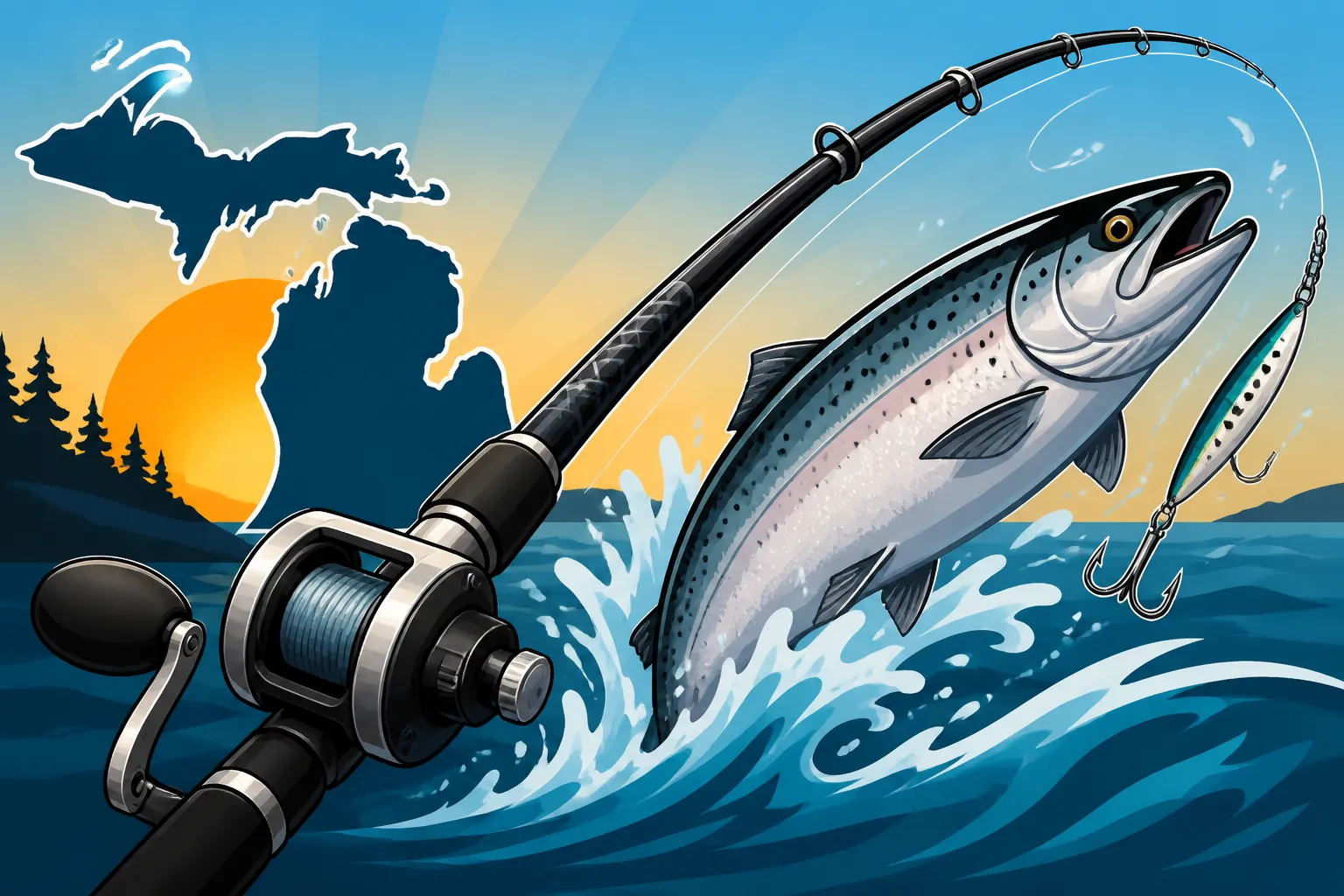
Let's be honest: hooking into a mature Chinook salmon often feels like you've snagged a submarine. These fish are built for battle, known for their explosive runs, head shakes, and incredible endurance. A rod designed for trolling salmon needs to absorb this initial shock and then have the backbone to maintain pressure throughout a prolonged fight. Imagine a 20-pound Chinook hitting a lure deep behind the boat – the force transmitted through the line is immense. A flimsy rod will either snap, lose the fish due to insufficient hook set, or simply exhaust the angler without ever truly controlling the fish. Chinook Salmon in Michigan's Great Lakes are formidable opponents, and your gear needs to be just as tough.
Beyond just the brute strength, Great Lakes salmon often fight in deep water, demanding a rod that can handle the resistance of hundreds of feet of line and a heavy fish. This isn't your average panfish fight; this is a true test of tackle and technique. A dedicated trolling rod helps distribute this stress evenly, protecting your reel and arms while giving you the leverage needed to turn a big fish.
The Importance of Proper Action and Sensitivity
"Action" and "sensitivity" might seem contradictory for a heavy-duty trolling rod, but they're both crucial. The action of a rod refers to where it bends under pressure. For salmon trolling, you generally want a moderate to slow action. This means the rod will bend over a larger portion of its length, rather than just the tip. Why? This softer, more parabolic bend acts like a shock absorber, cushioning the violent strike of a salmon and preventing hooks from tearing out of their mouths, especially when trolling with heavier lines and fast boat speeds. It also helps keep the line tight during those sudden head shakes or when a fish makes a run towards the boat.
Sensitivity, on the other hand, is about how well you can feel what's happening at the business end of your line. While trolling, you're not usually feeling subtle bites like you would jigging for walleye. Instead, sensitivity in a trolling rod allows you to:
- Detect subtle changes in lure action: Is your spoon fouled? Did a piece of weed get on your dodger? A sensitive tip will often show these slight changes in vibration.
- Monitor downrigger releases: You want to know immediately when a fish hits and pulls the line from the downrigger clip. A responsive rod tip will spring back noticeably.
- Gauge bottom contact: If you're running deep divers near structure, that extra bit of feel can save you from a snag.
Without the right action and sensitivity, you're essentially fishing blind, hoping for a screaming reel rather than anticipating or reacting to the subtle cues that often precede a hook-up.
Key Features to Look for in a Salmon Trolling Rod
When you're outfitting your boat for a day of targeting Michigan Salmon Species Explained on the big lakes, every piece of gear counts. The trolling rod is your direct connection to the fish, and its features play a huge role in your success and enjoyment. Let's break down what truly matters.
Rod Length and Power Considerations
Rod length for salmon trolling typically falls in the 7- to 10-foot range, though some specialized techniques might use slightly shorter or longer rods. The sweet spot for most anglers fishing the Great Lakes tends to be 8 to 9 feet.
- Longer rods (8.5 to 10 feet): These are fantastic for spreading out your lines, especially when running planer boards or when you need a longer lever to fight big fish. The added length provides more shock absorption and can help keep multiple lines from tangling when a fish decides to run across your spread. They also make it easier to reach around the boat to net a fish.
- Shorter rods (7 to 8 feet): While still effective, these are often preferred for downrigger fishing where the rod is held by a rod holder and its primary job is to load up when the line releases from the clip. They can be a bit more manageable in a crowded boat.
When it comes to "power," we're talking about the amount of force required to bend the rod. For salmon, you'll generally want a medium-heavy to heavy power rod. This provides the backbone needed to handle the substantial pull of a deep-diving lure, a heavy downrigger ball, and, of course, a hard-fighting salmon. Too light a power, and the rod will be constantly overloaded, making it difficult to detect strikes or properly fight the fish. Too heavy, and you might sacrifice that crucial shock absorption and risk ripping the hook out.
Understanding Rod Action and Materials
As mentioned earlier, the action describes where a rod bends. For salmon trolling, a moderate to moderate-fast action is ideal.
- Moderate action: This means the rod bends in the upper half or even two-thirds of its length. It's excellent for absorbing violent strikes and keeping tension on the line, which is crucial when Trolling for Chinook Salmon on Lake Michigan with high boat speeds.
- Moderate-fast action: This offers a bit more sensitivity in the tip while still providing a good bend further down the blank. It can be a good compromise for anglers who want a little more feel.
The materials used in the rod's construction directly influence its action, sensitivity, and durability.
- Fiberglass: This is a classic material for trolling rods. Fiberglass rods are known for their incredible durability and a slower, more parabolic action. They are extremely forgiving, making them excellent shock absorbers for heavy strikes and long fights. The downside is they can be a bit heavier and less sensitive than graphite. Many dedicated downrigger rods are fiberglass or a composite blend.
- Graphite (Carbon Fiber): Lighter and more sensitive than fiberglass, graphite rods offer a faster action. While some pure graphite rods might be too stiff or fragile for heavy-duty salmon trolling, many manufacturers use composite blanks, blending graphite with fiberglass. This provides the best of both worlds: the resilience and shock absorption of fiberglass with some of the lighter weight and sensitivity of graphite.
- Composite Blanks: These are often the sweet spot for salmon trolling. By combining different materials, manufacturers can dial in the precise action and power needed. Look for blanks that emphasize durability and a forgiving action.
Handle and Grip for Long Trolling Sessions
Think about it: you'll be holding this rod, or at least handling it frequently, for hours on end, potentially in cold or wet conditions. The handle and grip are more important than you might realize.
- Length: A longer handle (often 18-24 inches) provides better leverage for fighting large fish and more comfortable placement in a rod holder. It allows you to tuck the butt of the rod under your arm or into a fighting belt for added stability.
- Material:
- Cork: Offers excellent grip, especially when wet, and is traditionally comfortable. However, it can degrade over time with heavy use and sun exposure.
- EVA Foam: Extremely durable, lightweight, and provides a comfortable, non-slip grip. It's less susceptible to damage than cork and is a popular choice for modern trolling rods.
- Rubberized Grips: Some rods feature special rubber or synthetic grips that offer superior traction.
- Butt Section: A gimbal butt is a common feature, allowing the rod to lock into a fighting belt or specific rod holders. This is incredibly helpful when battling a truly massive salmon and needing to take the strain off your arms and back.
- Foregrip: A long, comfortable foregrip allows you to get a good hold on the rod above the reel, providing extra leverage when pumping a fish toward the boat.
When you're out on the Great Lakes, the weather can turn quickly, and your hands might be cold and wet. A secure, comfortable grip will prevent fatigue and ensure you maintain control when that trophy salmon decides to make its final, desperate run.
Different Trolling Methods, Different Rod Needs
Michigan salmon anglers employ a variety of trolling methods, each designed to present lures effectively at different depths and in various conditions. The beauty of it is that each method can benefit from a slightly different rod setup, optimized for that specific technique. Understanding these nuances will help you select the best rod for your preferred style of fishing.
Downrigger Rods for Precision Depth
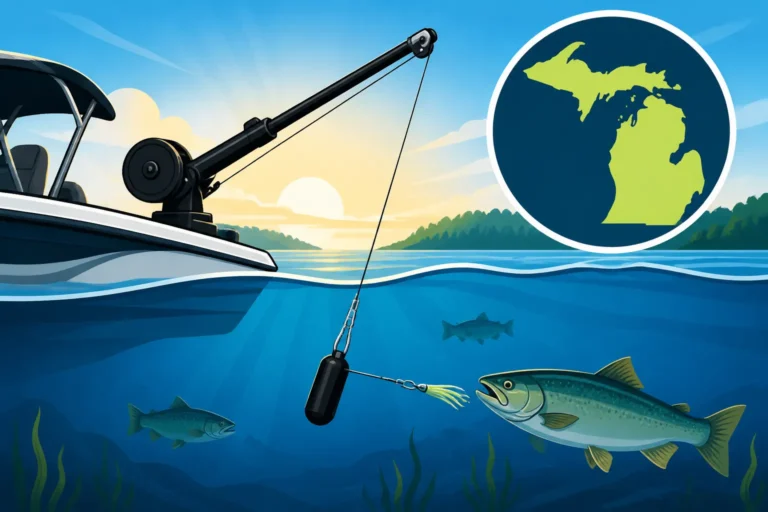
Downriggers are indispensable for precisely presenting lures at specific depths, often deep in the water column where salmon congregate. When a fish strikes, the line pops free from the downrigger release clip, and the fight is on. Downriggers for Michigan Great Lakes Trolling are common sights on salmon boats.
For downrigger fishing, you want a rod that can absorb the initial shock of the strike while the boat is moving and then recover quickly to fight the fish.
- Action: A moderate to slow (parabolic) action is absolutely key. This forgiving bend acts like a giant shock absorber, preventing the hook from tearing out of a salmon's mouth during the sudden transition from being pulled by the boat to fighting freely. It also helps maintain constant pressure during head shakes.
- Power: Medium-heavy to heavy power is typical, as these rods need to handle the resistance of the downrigger ball and often larger, heavier lures.
- Length: Often slightly shorter, in the 7 to 8.5-foot range, which makes them easier to manage in rod holders mounted along the gunwales.
- Durability: Since these rods sit in rod holders for extended periods, durability and robust guides are paramount. Look for rods with strong guides that can handle braided line or lead core if you're experimenting with different setups.
- Example Use: Imagine trolling Lake Michigan near Ludington. Your downrigger sends your spoon down to 80 feet. When a Coho hits, the rod springs back, signaling the strike, and its deep bend absorbs the powerful initial run, keeping the line tight.
Dipsy Diver and Planer Board Rods
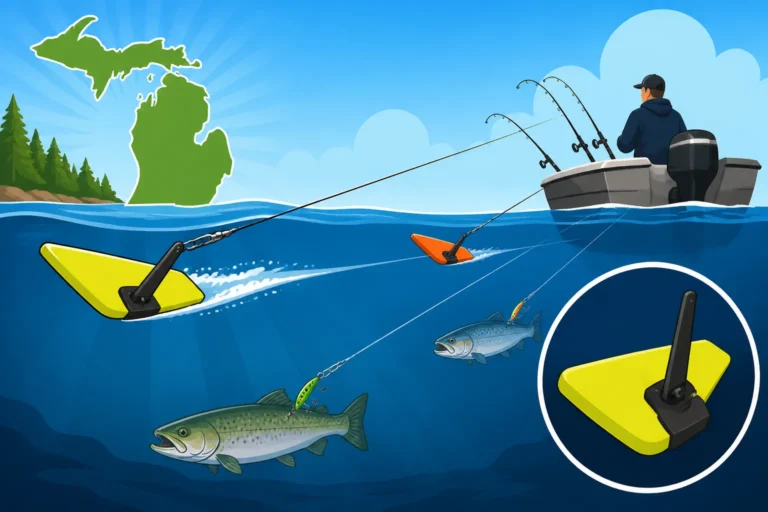
Dipsy divers and planer boards allow you to spread your lines wide, covering a much larger swath of water. Dipsy divers use their angled plate to dive and track out to the side, while planer boards run on the surface, pulling lines away from the boat. Both methods put significant drag on the rod, even before a fish strikes.
- Dipsy Diver Rods:
- Power: You'll need a stout, heavy power rod. Dipsy divers, especially larger sizes, create tremendous resistance, and a lighter rod will simply be overloaded, losing its action and sensitivity.
- Action: Moderate-fast to fast action can work here. You need enough backbone to work the diver, but still some flex to cushion the strike.
- Length: Often 8 to 9.5 feet. The longer length helps spread the lines further from the boat and provides better leverage when fighting a fish that's pulling against the diver.
- Guides: Heavy-duty guides are a must, as these setups often involve heavy mono, fluorocarbon, or even braided lines under high tension.
- Planer Board Rods:
- Length: These are typically the longest trolling rods, often 9 to 10.5 feet or even longer. The extra length is essential for getting lines way out to the side of the boat and clear of other lines, preventing tangles.
- Power: Medium-heavy to heavy power is common. While planer boards themselves don't dive, they create a lot of drag, and you're often running longer lead-core or copper lines off them.
- Action: A moderate action is preferred. The longer, softer action helps cushion strikes and makes it easier to manage a fish when you're retrieving a planer board along with the fish.
- Reel Seat: A sturdy reel seat is important to hold heavy trolling reels that handle long lengths of specialized lines.
If you're fishing a popular area like Grand Traverse Bay, where Grand Traverse Bay Salmon Fishing can be intense, using planer boards with the right rods can dramatically increase your coverage.
Lead Core and Copper Rods for Wide Spreads
Lead core and copper line fishing are specialized trolling techniques that use dense lines to achieve depth without the need for downriggers or divers. These lines are typically run off planer boards or directly out the back of the boat. The lines themselves are very heavy, and managing them requires specific rod characteristics.
- Action: A moderate to slow (parabolic) action is absolutely critical. The sheer weight and low stretch of these lines, combined with the resistance of the water, mean there's very little forgiveness in the system. A soft, bending rod is your shock absorber. It prevents hooks from pulling out and allows for smooth, consistent pressure.
- Power: Medium-heavy to heavy power is standard. These rods need to withstand the constant load of hundreds of feet of heavy line and a lure, even without a fish on.
- Length: Often in the 8 to 10-foot range. The longer length aids in cushioning the strike and helping to manage the long, heavy lines, especially when you're reeling in to check your lure or fight a fish.
- Guides: Roller guides or large, durable ceramic guides are highly recommended. The abrasive nature and weight of lead core and copper lines can quickly wear down standard guides. Roller guides minimize friction and heat buildup, extending the life of your line and preventing damage to the rod.
- Example: Imagine fishing Saginaw Bay for Saginaw Bay Walleye Fishing Spots, a technique that also often uses lead core. The principle is the same: the rod's forgiving nature absorbs the shock and helps you manage the heavy line. For salmon, the added power of a specific salmon rod is beneficial.
Here's a quick comparison of general rod characteristics for different trolling methods:
| Trolling Method | Typical Length | Action | Power | Key Feature Considerations |
|---|---|---|---|---|
| Downrigger | 7' – 8'6" | Moderate to Slow | Medium-Heavy | Strong backbone, forgiving bend, durable guides, secure reel seat. |
| Dipsy Diver | 8' – 9'6" | Moderate-Fast | Heavy | High power to handle diver resistance, robust guides. |
| Planer Board | 9' – 10'6"+ | Moderate | Medium-Heavy | Long length for wide spreads, good shock absorption. |
| Lead Core/Copper | 8'6" – 10' | Moderate to Slow | Medium-Heavy/Heavy | Parabolic bend, robust/roller guides, withstands heavy line load. |
Top Picks and Where to Find Them
Alright, now that we've delved into the nitty-gritty of what makes a great salmon trolling rod, let's talk about some general guidelines for selecting one and where you might start your search. Remember, what's "best" often comes down to personal preference, budget, and the specific techniques you use most often.
Choosing the Right Rod for Your Budget
The world of fishing rods spans a huge range of prices, and salmon trolling rods are no exception. It's easy to get overwhelmed, but here's how to approach it:
- Entry-Level (Often under $50-70 per rod): If you're just starting out, or only plan to troll a few times a year, there are perfectly functional rods in this price range. They might be a bit heavier, less sensitive, or have slightly less refined components (like basic guides or simpler EVA foam grips). However, they will get the job done. Look for durable fiberglass or composite blanks. Brands like Ugly Stik often have dependable, budget-friendly options that are surprisingly tough. These are great for someone who just wants to get out on the water without breaking the bank.
- Mid-Range (Typically $70-150 per rod): This is where you'll find an excellent balance of performance, durability, and features. Rods in this category often utilize better composite blanks, lighter weight components, and more comfortable grips. You'll notice a significant improvement in feel and overall quality compared to entry-level options. Many anglers find their "go-to" rods in this range, as they offer serious value for the money. You might find better quality guides and reel seats here.
- High-End (Over $150-200+ per rod): For the serious or professional angler, high-end rods offer the latest in blank technology, premium components (like Fuji guides, specialized reel seats, or custom cork handles), and refined actions. These rods are often lighter, more sensitive, and exceptionally balanced, which can make a noticeable difference during long days on the water or when battling trophy fish. While the performance gains might be incremental, they can be significant for those who demand the absolute best.
The important thing is not to feel pressured to buy the most expensive gear right away. Start with what you can comfortably afford, get out there and fish, and you'll naturally learn what features matter most to you as you gain experience.
Tips for Buying Online vs. In-Store
Both online retailers and physical stores have their advantages when it comes to purchasing fishing rods.
-
In-Store Experience:
- Pros: The biggest advantage is being able to feel the rod in your hands. You can assess the balance, the weight, the handle comfort, and the overall quality. You can "flex" the rod to get a sense of its action (though you can't truly test its power until it's under load). Speaking with knowledgeable staff can also be invaluable, especially at a dedicated fishing shop or a big box store like Bass Pro Shops. They can offer local insights and recommendations specific to Michigan's salmon fisheries.
- Cons: Limited selection compared to online, and prices might be slightly higher. It might also be a drive to get to a good selection.
-
Online Shopping:
- Pros: Unbeatable selection and often more competitive pricing. You can compare dozens of models and read countless user reviews from the comfort of your couch. Retailers like Amazon offer a vast array of brands and models, and you can often find detailed specifications and sometimes even video reviews. This is particularly useful if you already know exactly what you're looking for.
- Cons: You can't physically hold the rod before buying, which is a major drawback for something as tactile as a fishing rod. You're relying on descriptions and photos, which don't always convey the true feel. Returns can be a hassle if the rod isn't what you expected.
Hybrid Approach: A great strategy is to do your research online, narrowing down your options, then visit a store like Bass Pro Shops if possible to physically handle your top contenders. Once you've got a good feel for what you like, you can either buy it there or look for the best deal online. Remember, some online retailers have great return policies, which can mitigate the risk of buying sight unseen.
No matter where you buy, make sure to check the warranty and return policy. A good quality trolling rod should last you many seasons of battling Michigan's mighty salmon. If you're looking for other gear to go with your new rod, consider reading up on Best Trolling Rods for Michigan Salmon.
Pairing Your Rod with the Right Reel and Line
A great trolling rod is only part of the equation; it needs to be paired with an equally capable reel and appropriate line to create a balanced system. For Michigan salmon trolling, you're almost exclusively looking at conventional (baitcasting) reels, often specialized levelwind models designed for trolling.
- Reels: Look for reels with a high line capacity (you'll often need hundreds of yards of line, especially for lead core or copper), a smooth and powerful drag system, and durable internal components. Brands like Daiwa, Shimano, Okuma, and Penn offer many excellent trolling reels. When thinking about Best Reels for Steelhead Fishing, many of those principles apply to salmon reels as well, though salmon reels typically need even more line capacity and drag.
- Line: Your choice of line depends heavily on the trolling method.
- Monofilament: Often used for downrigger setups (15-25 lb test), it offers stretch which acts as an additional shock absorber.
- Braided Line: Can be used as backing or even as your main line for dipsy divers where minimal stretch and sensitivity are desired (30-65 lb test).
- Lead Core & Copper: Specialized lines designed to sink without added weight, used for achieving specific depths. These require specific rods due to their weight and low-stretch properties. What Line Weight for Michigan Steelhead can give you an idea of the considerations for strong fighting fish, which are similar for salmon.
By carefully selecting a rod that matches your preferred trolling method and pairing it with a robust reel and appropriate line, you'll be well-equipped to tackle the thrilling challenge of Michigan salmon fishing.
Disclaimer
This article is for general informational purposes only and does not constitute professional advice. Laws, prices and regulations vary by location and change over time. Consult a qualified professional for guidance on your specific situation.