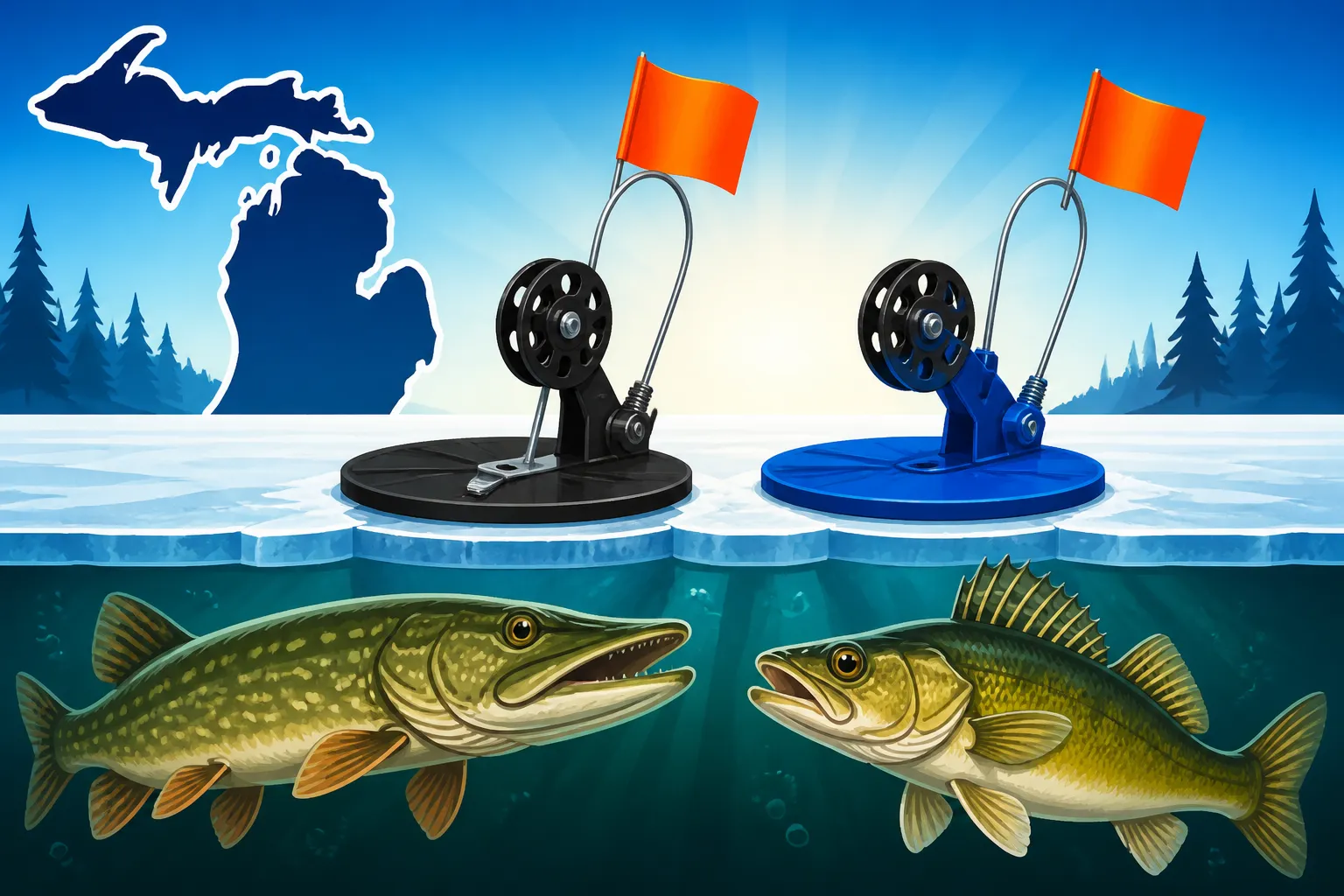
Best Tip-Ups for Pike and Walleye
There's nothing quite like the anticipation of a flag flying high over a frozen Michigan lake, signaling a bite from a powerful pike or a delicious walleye. But let's be honest, setting up for ice fishing can sometimes feel like a puzzle, especially when it comes to choosing the right tip-ups that won't freeze up, trip too easily, or leave you missing those crucial bites. This comprehensive guide is here to help you cut through the confusion, offering a deep dive into the best tip-ups specifically designed to help you succeed when targeting Michigan's most sought-after winter predators.
Understanding the Basics of Tip-Ups for Michigan Ice Fishing
Before we dive into specific models and advanced features, let's ground ourselves in what a tip-up actually is and why it's such an essential tool for ice anglers across Michigan. A tip-up is essentially a passive fishing device used to hold your line in the water while you attend to other holes or warm up in your shanty. When a fish bites, it trips a mechanism that raises a flag, giving you a visual cue that it's time to spring into action. It's a game of patience and quick reactions, and the right tip-up can make all the difference.
What Makes a Good Tip-Up for Pike and Walleye?
When you're out on the hard water, battling the elements and hoping for a trophy, your gear needs to be reliable. For pike and walleye, "good" isn't just about holding a line; it's about enduring frigid temperatures, resisting freeze-up, and indicating even the most subtle takes. A good tip-up will have a sturdy construction, often made from durable plastics or hardwoods that can withstand being kicked around in the sled or dropped on the ice.
Crucially, it needs a smooth-operating spool that won't create line memory or hinder a fish's run. For pike, you need a robust design that can handle the explosive force of a large fish stripping line, while for walleye, sensitivity is key to detecting those delicate nibbles. The flag mechanism must be easy to set but reliable enough not to false trip in windy conditions. And, let's not forget, it needs to be visible – a bright flag against a snowy backdrop is paramount.
Different Types of Tip-Ups: A Quick Overview
The world of tip-ups is more diverse than many anglers realize, with each style offering unique advantages depending on your fishing style and target species. From classic designs to modern innovations, understanding the fundamental differences will help you make informed choices. The most common types include cross-style, thermal, and various inline designs.
Cross-style tip-ups, often made of wood or plastic, are the quintessential "old faithful" of the ice fishing world. They span the hole, keeping the spool submerged or just above the water line. Thermal tip-ups are designed with a circular base that covers the entire fishing hole, trapping heat and preventing it from freezing over, a real blessing on bitterly cold Michigan days. Inline tip-ups, a newer innovation, aim to reduce line twist and offer a more direct fight by aligning the line directly with the hole, often featuring a small reel for line management. Each has its place, and often, a mix of types in your arsenal is the best approach for a successful outing.
Top Tip-Up Designs for Pike Fishing in Michigan
Pike fishing through the ice is an adrenaline rush. These aggressive predators hit hard and fast, making sturdy, reliable tip-ups a necessity. You need gear that can take a beating and still perform flawlessly when that flag snaps up. Many Michigan anglers swear by certain designs that have proven themselves time and again against these toothy giants.
Classic Cross-Style Tip-Ups: The Reliable Workhorses
When most folks picture a tip-up, they're probably imagining a classic cross-style design. These are the workhorses of the ice fishing world, tried and true for generations. Typically featuring two wooden or plastic arms that lay across the ice, with a central shaft that goes down into the hole, holding the line spool. The flag is often triggered by a simple spring mechanism when a fish pulls on the line.
Their simplicity is their strength. There's less to go wrong, and they're generally easy to set up and maintain. Brands like Bass Pro Shops carry a wide range of these traditional designs that are robust enough for pike. For big pike, look for models with larger spools that can hold plenty of heavy line (think 30-pound test or more) to allow those long runs without spooling you. The sturdier the cross arms, the less likely they are to get knocked around or broken when you're dashing across the ice. When setting up these tip-ups, ensuring the spool is well-lubricated with an ice-fishing specific grease or oil is critical to prevent freeze-up, especially if you're out for Winter Steelhead Run in Michigan Rivers.
Thermal Tip-Ups: Keeping Your Hole Ice-Free in Extreme Cold
There's nothing more frustrating than rushing to a tripped flag only to find your line frozen solid in the hole, or worse, the hole completely iced over, preventing you from reeling in your fish. This is where thermal tip-ups truly shine, especially during the deepest parts of Michigan's winter. These tip-ups are designed with a round, insulated base that completely covers the ice hole. This clever design traps heat from the water below, significantly slowing or even preventing the formation of ice in your fishing hole.
For pike anglers, this means less time chipping ice and more time focusing on catching fish. When a large pike takes your bait and runs, you need the line to pay out freely, and thermal tip-ups ensure that happens, even on those single-digit days. While they might be a bit bulkier to transport than some other styles, the benefit of a consistently open hole, especially if you're going to be out all day or overnight, is well worth the extra space. They often have larger diameter spools too, which is great for the heavy lines used for pike.
Modern Inline Tip-Ups: Precision for Finicky Pike
While pike are generally aggressive, sometimes even they can be a bit finicky, especially in highly pressured waters or specific conditions. This is where modern inline tip-ups can offer an edge. Unlike traditional tip-ups where the line comes off a horizontal spool, inline tip-ups keep the line perfectly straight, much like a traditional rod and reel setup. This design virtually eliminates line twist, which can be a major problem, especially with heavy monofilament or fluorocarbon lines.
By reducing line twist, the bait presents more naturally, and you maintain a more direct connection to the fish. Some inline models even incorporate a small reel, allowing for more precise drag adjustments than a simple spool tension. While they might not be as widely adopted for pike as the classic cross-styles, their precision can make a difference when targeting larger, more cautious pike. If you're looking for gear that gives you maximum control over your presentation, and perhaps a more direct fight, exploring inline options can be a rewarding experience.
Choosing the Right Tip-Up for Michigan Walleye
Walleye are often called the "fish of 10,000 casts," and while that might be an exaggeration for ice fishing, their subtle bites and often finicky nature require a different approach to tip-up selection. Sensitivity, finesse, and the ability to detect those light taps are paramount.
Spool vs. Reel-Style Tip-Ups for Walleye Sensitivity
When it comes to walleye, the battle often starts with detecting the bite, which can sometimes be incredibly subtle. This brings us to a key consideration: the type of line management system on your tip-up. Most traditional tip-ups use a simple spool, where the line wraps around a cylindrical drum. Tension is usually adjusted with a wing nut or a similar friction device. For walleye, you want this spool to be incredibly smooth-running. Any resistance can cause a walleye to drop the bait before the flag trips.
Reel-style tip-ups, often found on some inline models, integrate a small spinning or baitcasting reel directly into the tip-up design. This offers the advantage of a finely tuned drag system, similar to what you'd find on your open-water gear. This precise drag can be incredibly beneficial for walleye, allowing them to take line without feeling too much resistance, increasing the chances of a solid hookset. The choice often comes down to personal preference: the simplicity and ruggedness of a well-maintained spool versus the refined control of a reel. Many anglers find success with both, but if you're struggling with missed bites, a smoother or reel-based system might be worth investigating, especially if you're familiar with Jigging Techniques for Michigan Walleye.
Balancing Portability and Performance for Walleye Anglers
Michigan's vast landscape offers incredible ice fishing opportunities, from the sprawling Saginaw Bay for its famous walleye to countless inland lakes. Walleye anglers often find themselves moving from spot to spot, drilling multiple holes, and setting up a spread of tip-ups to cover different depths and structures. In these scenarios, portability becomes a significant factor. You don't want to be lugging around excessively bulky or heavy gear, especially when you're trying to stay mobile and adaptable.
Fortunately, many excellent walleye tip-ups strike a perfect balance between lightweight design and robust performance. Look for models made from high-impact plastics or compact wood designs that fold down easily. While thermal tip-ups are fantastic for preventing freeze-up, their larger footprint can sometimes be a hindrance if you're constantly on the move. Consider how many tip-ups you plan to deploy – How Many Tip-Ups Can You Use in Michigan is a good question to know the answer to – and how you'll transport them efficiently, perhaps in a sled alongside your auger and ice fishing rods. A lightweight, easy-to-deploy tip-up allows you to quickly adjust your spread to follow moving schools of walleye.
Incorporating Alarms and Indicators for Subtle Walleye Bites
Walleye are notorious for their light bites, especially when they're not in an aggressive feeding mood. Sometimes, the flag might barely twitch, or a fish might just mouth the bait before spitting it out. Traditional tip-ups rely on a visual flag, but in low light, adverse weather, or if you're inside a warm shanty, these subtle indicators can be missed. This is where electronic alarms and other enhanced indicators come into play, giving you an audible or more pronounced visual cue.
Some tip-ups come with integrated lights or audible alarms that activate when the flag trips. These can be lifesavers, alerting you to a bite even if you're not directly watching the tip-up. Aftermarket alarm systems are also available that can clip onto most standard tip-ups. These devices can be particularly useful when fishing multiple lines or when trying to Catch Walleye at Night in Michigan. While they add a layer of complexity and require batteries, the advantage of not missing a single walleye bite often outweighs the minor inconvenience. Just remember to check battery life regularly, as cold temperatures can drain them quickly.
Key Features to Consider When Buying a Tip-Up
With so many options out there, how do you really differentiate between a good tip-up and a great one? It often comes down to the details. Beyond the basic function, several key features contribute to a tip-up's effectiveness, durability, and ease of use. Paying attention to these elements will help you select gear that stands up to Michigan's harsh winters and delivers consistent performance.
Durability and Construction Materials
The Michigan ice fishing season can be brutal, with freezing temperatures, slush, snow, and rough handling being the norm. Your tip-ups need to be built to last. Many traditional tip-ups feature hardwood construction, often maple or oak, known for its classic look and natural strength. These can be very durable but might require occasional sealing or varnishing to prevent water damage over time.
Modern tip-ups often utilize high-impact plastics, which offer excellent resistance to cold-weather brittleness, rust, and water absorption. Brands like those found on Amazon or at Bass Pro Shops will often clearly state the materials used. Look for robust hinges, strong flagpoles, and sturdy cross arms that won't easily bend or break. Stainless steel components are a huge plus for critical moving parts like springs and nuts, as they resist corrosion. Investing in durable materials upfront will save you money and frustration in the long run, ensuring your tip-ups are ready for many seasons of Michigan Ice Fishing Guide.
Spool Design and Line Capacity
The heart of any tip-up is its spool, as it's responsible for holding your line and allowing it to pay out smoothly when a fish strikes. For pike, you'll want a large-diameter spool that can accommodate a significant amount of heavier line – often 25 to 50 yards of 20-pound test or more is a good starting point, sometimes even heavier if you're targeting truly monstrous pike. The larger diameter helps reduce line memory and allows for faster retrieve when you're hand-lining.
For walleye, a smooth-running spool is paramount. Even a slight bit of friction can deter a wary walleye. Look for spools with minimal play and a good quality bushing or bearing system. While walleye don't typically make the long, blistering runs of a pike, having enough line capacity (say, 50-75 yards of 8-12 pound test) is still important. Some spools come with an adjustable tension knob, allowing you to fine-tune the resistance based on the size of your bait and the activity level of the fish. Always ensure the spool is lubricated with non-freezing grease before hitting the ice.
Flag Mechanism and Sensitivity Adjustments
The flag is your primary indicator, and its mechanism is crucial. You want a flag that pops up reliably with a fish bite but doesn't false trip due to wind, bait movement, or other minor disturbances. Most tip-ups use a spring-loaded flag that is held down by a release arm. This arm usually rests against a pin or lever that is turned by the fish pulling line from the spool.
Sensitivity adjustments are a key feature to look for, especially for walleye fishing. Many tip-ups offer multiple settings on the release arm, allowing you to choose how much pressure is required to trip the flag. A lighter setting is ideal for subtle walleye bites or smaller panfish, while a heavier setting is better for robust pike strikes or when using larger live baits that might create their own movement. Some flags are even designed to be extra tall for maximum visibility across a wide expanse of ice. Always test your flag mechanism before deploying to ensure it's functioning correctly and set to the appropriate sensitivity for your target species and conditions.
Setting Up and Using Your Tip-Ups Effectively for Michigan Species
Having the best tip-ups won't guarantee success if you don't know how to set them up and use them properly. There are specific strategies and techniques that can significantly increase your chances of landing those coveted Michigan pike and walleye. From bait presentation to strategic placement, every detail matters.
Best Practices for Pike Tip-Up Deployment
Pike are ambush predators, often found lurking near structure, weed lines, or drop-offs. When deploying tip-ups for pike, think about spreading them out to cover a larger area and increase your chances of intercepting a cruising fish. If you're fishing a point, place tip-ups on either side and along the drop-off. For bays, target the edges of weed beds. Remember, the deeper the water, the more space you might need between holes to avoid tangles if a fish runs.
When rigging for pike, a strong leader is non-negotiable. Pike have razor-sharp teeth that can easily cut through monofilament or fluorocarbon. A steel or heavy fluorocarbon leader (60-80 lb test) is essential. Common baits include large shiners, suckers, or smelt, fished either live or dead, suspended at various depths from mid-water to just off the bottom. Tip-Up Fishing for Michigan Pike often involves setting the bait at a depth where the pike are actively hunting, which might vary throughout the day. Ensure your hook is sharp and appropriately sized for your bait. A good rule of thumb is to place it so the baitfish remains lively but can be easily swallowed by a pike.
Maximizing Walleye Success with Proper Tip-Up Rigging
Walleye, unlike pike, are often more concentrated in schools and frequently cruise specific breaks or humps. For these fish, a more strategic, often tighter, spread of tip-ups can be effective, especially around known feeding grounds. Pay attention to contour maps and use your electronics (if you have them for scouting) to identify prime locations. Walleye are also very light-sensitive, so consider fishing low-light conditions, like dawn and dusk, or even at night.
Rigging for walleye usually involves lighter line than for pike, typically 8-12 pound test monofilament or fluorocarbon main line, with a lighter leader if conditions call for it. Small to medium-sized minnows, shiners, or even waxworms on a small treble or single hook are popular choices. The key is often to suspend your bait just off the bottom or slightly above the thermocline if there is one. Many anglers use a small split shot or two to keep the bait down, allowing it to swim naturally. Sensitivity in your tip-up is crucial here; adjust the flag trigger to its lightest setting to detect those soft walleye bites. Don't forget, presentation is key for walleye; a natural, uninhibited bait can make all the difference, especially when focusing on Ice Fishing Techniques for Michigan Walleye.
Maintaining Your Tip-Ups for Longevity
Like any fishing gear, tip-ups perform best when properly maintained. After each outing, especially if you've been fishing in slushy or icy conditions, wipe down your tip-ups thoroughly. Remove any ice buildup from the spool, flag mechanism, and cross arms. Allow them to air dry completely before storing to prevent mildew or corrosion.
Regularly inspect your line for nicks or abrasions, and consider replacing it annually, especially if you use it frequently. Lubricate the spool shaft and any other moving parts with a quality, non-freezing lubricant designed for cold weather. Petroleum jelly or silicone grease works well. Check springs for rust and ensure the flag mechanism is still snapping up reliably. By taking a few minutes after each trip to clean and inspect your gear, you can ensure your tip-ups will be ready for action whenever the ice calls. Proper maintenance is also a consideration for other essential gear like Best Ice Augers for Michigan Ice Fishing.
Comparing Popular Tip-Up Models for Michigan Anglers
With the wide array of tip-ups available, choosing the "best" can feel daunting. However, by understanding the general characteristics of popular styles and considering your specific needs, you can narrow down the options. Let's look at some common tip-up styles and their typical applications for Michigan anglers.
Pros and Cons of Common Tip-Up Styles
Each tip-up design brings its own set of advantages and disadvantages to the ice, influencing performance, ease of use, and durability. Here's a quick comparison:
| Tip-Up Style | Pros | Cons | Best For |
|---|---|---|---|
| Classic Cross-Style | Simple, durable, affordable, easy to maintain, widely available | Can freeze up in extreme cold, less sensitive for light bites | All-around fishing, especially pike, on most Michigan lakes. Great for beginners due to ease of use. |
| Thermal (Round Base) | Prevents hole freeze-up, keeps slush out, good visibility | Bulkier to transport, heavier, generally more expensive | Extreme cold weather, long days on the ice, overnight fishing, stationary fishing, targeting walleye in deep cold. |
| Inline (Reel-Style) | Eliminates line twist, precise drag control, direct fight | Can be more complex to set up, generally more expensive, less traditional | Finicky walleye, highly pressured fish, anglers preferring a reel-like feel. Precision presentations. |
| Rail-Style | Compact, highly portable, often lightweight | Can be prone to blowing around in wind, limited line capacity on some models | Highly mobile anglers, scouting, small species, smaller baits. Quick setup and tear down. |
When making your choice, consider your most frequent fishing conditions, the species you target most often, and your budget. Many Michigan anglers end up with a mix of these styles in their ice fishing arsenal to cover all their bases.
Where to Find Quality Tip-Ups
Finding the right tip-ups means knowing where to look. In Michigan, you're fortunate to have access to several excellent retailers, both brick-and-mortar and online, that cater specifically to ice anglers. Local bait and tackle shops are always a fantastic resource; not only do they stock a variety of tip-ups, but the staff often have firsthand knowledge of what works best on local lakes and current conditions. They can offer invaluable advice and even show you how to set up specific models.
For a broader selection and competitive pricing, larger sporting goods retailers are a go-to. Stores like Bass Pro Shops typically have dedicated ice fishing sections where you can physically handle different tip-ups, compare features, and speak with knowledgeable sales associates. Their range often includes everything from entry-level classic models to advanced thermal and inline designs. Online retailers, such as Amazon, also provide an extensive catalog, allowing you to browse countless options, read reviews from other anglers, and have them delivered right to your door. Just remember to double-check shipping times if you need them for an upcoming trip! Regardless of where you buy, investing in quality will pay off when you're out on the ice, waiting for that next flag to fly. You'll want equally reliable gear for other aspects of your trip, such as What Gear Do You Need to Ice Fish in Michigan.
Disclaimer
This article is for general informational purposes only and does not constitute professional advice. Laws, prices and regulations vary by location and change over time. Consult a qualified professional for guidance on your specific situation.