How to Rig a Bead for Steelhead
If you’ve spent any time on Michigan’s legendary steelhead rivers, you know how frustrating it can be when these powerful fish seem to ignore everything you throw at them. Sometimes, the most natural presentation is the only thing that will entice a strike, and for steelhead, that often means mimicking their favorite food source: fish eggs. Learning how to rig a bead effectively for steelhead can dramatically improve your success, giving you a stealthy, irresistible offering that looks just like the real thing drifting down the current. This guide will meticulously walk you through the process, from understanding why beads work to the precise steps of setting up your rig, helping you unlock more hook-ups on your next Michigan steelhead adventure.
Understanding the "Why" Behind Bead Fishing for Steelhead
When you’re trying to catch steelhead, especially in Michigan’s clear river systems, presenting something that looks entirely natural is paramount. Steelhead, which are essentially rainbow trout that migrate from the Great Lakes into rivers to spawn, often key in on the eggs of their brethren and other salmon species. This instinctual feeding behavior makes egg imitations incredibly effective.
The Allure of the Egg Imitation
Think about it: during the spring and fall spawning runs, Michigan's rivers become literal buffets of protein-rich fish eggs. Salmon and trout are laying their roe, and opportunistic steelhead are right there, ready to snatch up any loose eggs drifting downstream. A perfectly presented bead, designed to replicate these natural eggs in size, shape, and color, triggers that ancient feeding response. It's not just a passing snack; it's a vital food source that helps them regain energy after their arduous journey upstream. Anglers who consistently catch steelhead understand that mimicking nature, down to the smallest detail, is often the secret ingredient to success.
Mimicking Nature: How Beads Present Like Natural Roe
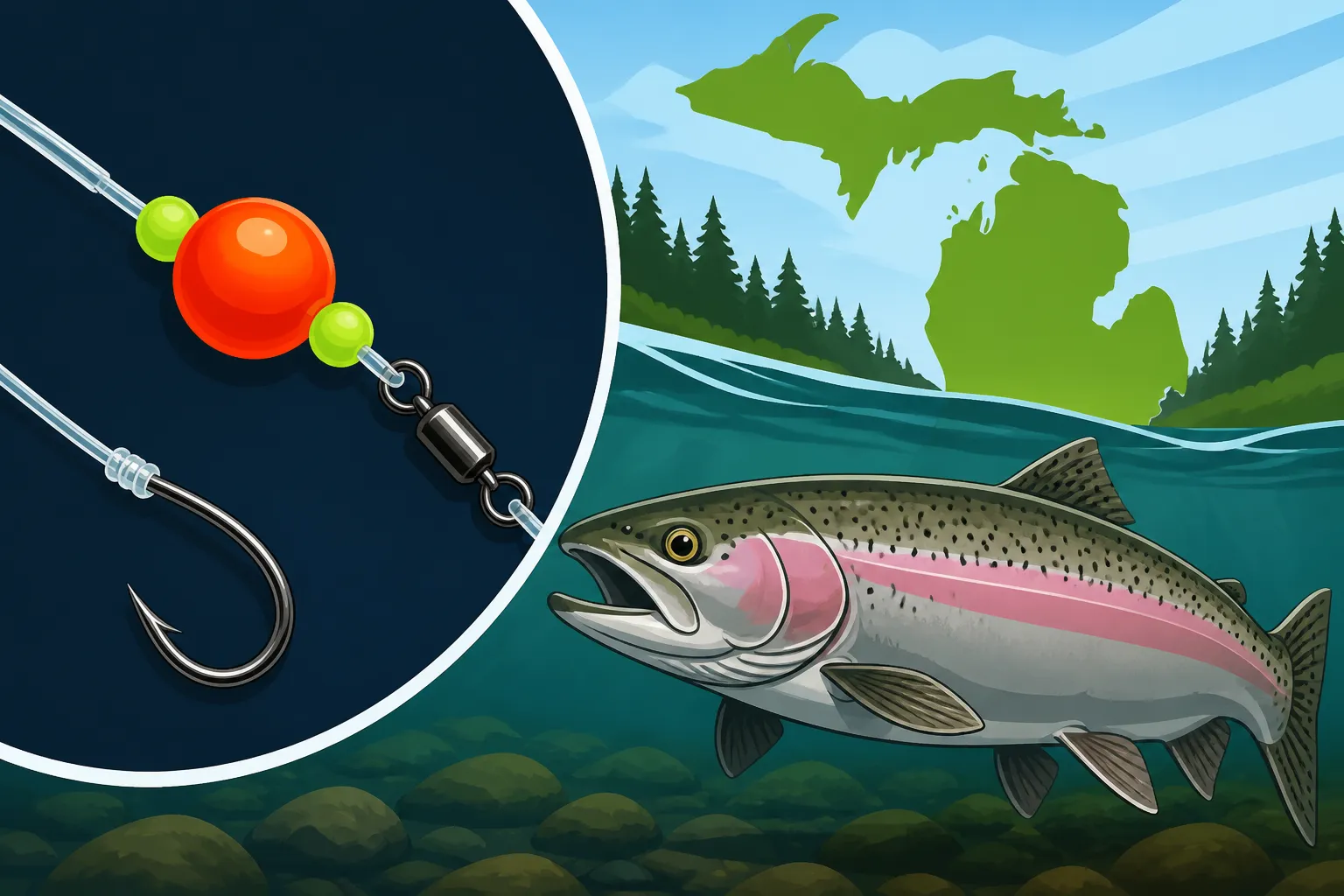
The beauty of a bead rig lies in its simplicity and its incredible ability to imitate a free-drifting egg. Unlike a bulky lure or a jig, a bead is designed to slide freely on your fishing line, typically stopped by a small bobber stop just above the hook. This setup ensures that the bead tumbles and drifts naturally with the current, unhindered by the weight or drag of the hook itself. When a steelhead sees a single, perfectly round "egg" drifting past, it looks exactly like what they'd expect to find dislodged from a redd (a spawning bed). The weight of your split shot or pencil lead helps the bead sink to the fish’s feeding zone, while the bead's free movement ensures it behaves just like a natural egg, rolling and bouncing along the bottom without any unnatural action. This subtle, lifelike presentation is often the difference between a frustrating day and a successful one, especially for wary, river-wise steelhead.
The Different Types of Beads
Not all beads are created equal, and understanding the variations can significantly impact your success. Beads come in a multitude of materials, sizes, and colors, each with its own advantages depending on water conditions and fish preference.
Materials:
- Plastic/Acrylic Beads: These are the most common and affordable. They're durable, come in a vast array of colors, and are typically opaque or translucent. They float slightly, requiring more weight to get them down, but their buoyancy can make for a more subtle drift in certain conditions. You can find a huge selection of these on Amazon, often in multi-packs, making it easy to experiment.
- Glass Beads: Known for their natural sheen and density, glass beads sink faster and reflect light in a way that can be very appealing to fish. They are more prone to chipping or breaking, but their natural aesthetic is hard to beat in clear water.
- Stone Beads: Some specialized beads are made from actual stone, offering a unique texture and density. These are less common but can be very effective in mimicking natural gravel or larger pieces of roe.
Sizes:
Beads typically range from 6mm to 12mm in diameter.
- 6mm-8mm: These smaller sizes are fantastic for low, clear water conditions or when fish are pressured and finicky. They mimic smaller eggs, like those from brown trout or smaller salmon.
- 8mm-10mm: The sweet spot for most steelhead fishing in Michigan. These sizes represent larger salmon or steelhead eggs and are versatile for a variety of water conditions. Many anglers consider the 8mm and 10mm to be their go-to sizes.
- 10mm-12mm: Larger beads can be effective in high, murky water where a more prominent profile is needed, or when targeting particularly aggressive fish.
Colors:
Color choice is critical and often depends on water clarity and the specific spawn you're trying to imitate.
- Natural/Egg Colors: Peach, natural roe, orange, chartreuse, and clear variations are staples. These mimic fresh or curing eggs.
- Bright/Attractor Colors: Hot pink, fluorescent orange, and bright chartreuse can be great in stained or off-color water, or when fish need a little extra coaxing to see your offering.
- Subtle/Natural: Clear, light pink, or even dark roe colors are excellent for clear water where an exact imitation is needed.
Experimentation is key, but having a variety of sizes and colors on hand will ensure you’re prepared for whatever Michigan's rivers throw your way.
Essential Gear for Your Michigan Bead Rig
Rigging beads effectively requires a specific setup to maximize your chances of a natural drift and solid hook-sets. While you might already have some gear, a few specialized items make all the difference.
Rods, Reels, and Line Choices
Your main setup is the foundation of any successful bead rig. For steelhead, you're looking for a combination that offers sensitivity, backbone, and the ability to manage line effectively in flowing water.
Rods:
- Length: A longer rod, typically 9 to 11 feet, is highly advantageous for bead fishing. This extra length helps you mend your line, control your drift over longer distances, and keep as much line off the water as possible, reducing drag. A medium-light to medium power rod with a fast action tip provides the sensitivity to detect subtle strikes and the power to fight strong steelhead. Many seasoned anglers opt for specialized float rods or even centerpin rods for this technique, as they excel at maintaining long, drag-free drifts. If you're looking to upgrade, consider exploring options for the Best Rod Length for River Steelhead to find what suits your style best.
- Action: A fast action tip allows you to see and feel the lightest taps from a steelhead mouthing the bead, while the backbone further down the blank gives you the leverage needed to set the hook and turn powerful fish in strong currents.
Reels:
- Spinning Reels: A quality spinning reel in a 2500 or 3000 size is perfectly adequate for bead fishing. Look for a smooth drag system, which is crucial when a steelhead makes an unexpected run. A fast retrieve ratio can also be helpful for quickly picking up slack line.
- Centerpin Reels: For the ultimate in drag-free drifts, many dedicated steelhead anglers turn to centerpin reels. These free-spooling reels allow for exceptionally long, natural drifts, but they do have a steeper learning curve compared to spinning reels. Understanding Centerpinning for Michigan Steelhead can open up a whole new world of river fishing.
Line:
- Mainline: A high-visibility monofilament line in 8-12 lb test is a popular choice for the mainline, especially when using a float. The visibility helps you track your line and detect subtle movements that indicate a bite. Braided line can also be used, but its lack of stretch requires a longer leader for shock absorption.
- Leader: This is arguably the most critical part of your line setup for bead fishing. You'll want to use a high-quality fluorocarbon leader in 6-10 lb test. Fluorocarbon is nearly invisible in water, sinks slightly, and offers excellent abrasion resistance against rocks and logs. A length of 3 to 6 feet is common, connecting your mainline (or swivel) to your hook. Getting the right What Line Weight for Michigan Steelhead is paramount for both detection and landing fish.
Terminal Tackle: Hooks, Leaders, and Weights
The smaller, often overlooked components of your rig are what truly connect you to the fish. Getting these right ensures a natural presentation and reliable hook-sets.
Hooks:
- Size: The size of your hook is crucial for a subtle presentation. For bead fishing, you'll typically use a size 8, 10, or even 12 single egg hook or an octopus-style hook. The key is to select a hook that is small enough to be concealed or presented inconspicuously just below the bead, yet strong enough to handle a hard-fighting steelhead. Small, sharp hooks made by brands like Gamakatsu or Owner are excellent choices.
- Style: Egg hooks are designed with a wider gap to accommodate the bead and provide good hook penetration. Octopus hooks also work well due to their turned-up eye, which helps the hook sit properly.
Leaders:
As mentioned, fluorocarbon is your best friend here. It's tough, invisible, and helps your bead drift naturally. You'll typically tie your hook directly to your fluorocarbon leader using a snell knot or an improved clinch knot. Make sure to check your knots regularly, as big steelhead can quickly test their integrity. Knowing the ins and outs of your leader material is key, and if you're ever in doubt, picking up some reputable fluorocarbon leader from Amazon is a safe bet.
Weights:
- Split Shot: Small, soft lead (or lead-free alternatives) split shot are commonly used. You'll crimp these onto your mainline or leader (above a swivel, if using one) to help achieve the desired sink rate. Distributing several small split shot along your line, rather than one large one, creates a more natural "shot pattern" that allows your bait to drift more freely.
- Pencil Lead: For faster currents or deeper holes, pencil lead can be more effective. This thin, cylindrical lead can be cut to length and attached to a small swivel or directly to the line via a surgical tubing stopper. It flows smoothly through currents and snags less often than traditional egg sinkers.
The Beads Themselves: What to Look For
Choosing the right bead is half the battle. When selecting your beads, consider the following factors:
Realistic Appearance:
Look for beads that have a realistic, translucent quality, especially in natural egg colors like peach, orange, or clear with specks. Some beads even feature a "blood dot" or subtle marbling to further enhance their lifelike appearance. Brands like Mad River Steelhead & Salmon Fishing, Atlas Mike's, or even generic brands available on Amazon offer a wide range of realistic options.
Durability:
While glass beads offer a great look, plastic and acrylic beads are much more durable when bouncing off rocks and logs, which is an inevitable part of river fishing. Having a good stock of various sizes and colors is always a good idea, as conditions can change rapidly on Michigan's rivers.
Hole Size:
Ensure the bead's hole is large enough to easily thread your leader through, but not so large that it slides over your bobber stop too easily. Most quality steelhead beads are designed with an appropriate hole size for common leader diameters.
Step-by-Step Guide: Rigging a Bead for Steelhead
Now that you have all your gear, let’s get down to the nitty-gritty of putting together a bulletproof bead rig. Precision here makes all the difference in presentation and hook-up ratios.
Preparing Your Leader and Hook
The foundation of a good bead rig starts with your leader and hook. Take your time with these initial steps.
- Cut Your Leader: Start by cutting a 3 to 6-foot section of 6-10 lb test fluorocarbon leader. The exact length will depend on water clarity, depth, and personal preference, but a good starting point is about 4 feet. In very clear or low water, a longer, lighter leader might be beneficial, while in stained or faster water, a shorter, heavier leader could be more manageable.
- Tie on Your Hook: Attach your size 8, 10, or 12 egg or octopus hook to one end of the fluorocarbon leader. A snell knot is often preferred for egg hooks as it helps the hook sit properly for optimal hook-ups. An improved clinch knot is also a reliable choice. Ensure your knot is cinched down tightly and trim any excess tag end close to the knot.
- Add Your Bobber Stop (Optional, but Recommended): While some anglers skip this, a small, adjustable bobber stop (the kind used for slip floats) can be incredibly useful. Thread it onto your leader about 1-2 inches above your hook. This will act as a secondary stopper for your bead, giving you more control over its placement. You can find these bobber stops easily at local tackle shops or online at retailers like Amazon.
Securing the Bead: The Key to a Natural Drift
This is the crucial step that makes a bead rig work its magic – ensuring the bead stays in place just above the hook, but can still move freely on the line.
- Thread the Main Bobber Stop: Take a small, silicone or rubber bobber stop and thread it onto your leader. This stop will ultimately hold your bead in place. You'll typically push the line through a loop on a small wire, then slide the stop off the wire and onto your leader. Make sure it's snug but still adjustable.
- Thread Your Bead: Now, thread your chosen bead (e.g., an 8mm natural roe color) onto your leader, positioning it so it rests against the bobber stop you just threaded.
- Position the Bead: Slide the bobber stop down your leader until the bead sits anywhere from 0.5 to 2 inches above the eye of your hook. The exact distance is a matter of preference and experimentation. Some anglers prefer the bead right up against the eye, others prefer it a little further up. The goal is for the bead to float freely above the hook, allowing the hook to ride beneath it, ready for a strike. A general rule of thumb is to place the bead where it won't impede the hook's ability to penetrate the fish's mouth.
- Add a Second Bobber Stop (Optional, for Extra Security): To prevent the bead from sliding too far up your line during a cast or fish fight, many anglers add a second bobber stop above the bead. This creates a "sandwich" effect, keeping the bead precisely where you want it. This also makes it easy to adjust the distance of the bead from the hook without having to re-tie anything. This double-stop method is particularly helpful when fishing faster, turbulent water where a single stop might slip.
Attaching Your Weight: Fine-Tuning the Presentation
Proper weighting is essential for achieving a natural, drag-free drift that puts your bead in the fish's strike zone.
- Attach to Mainline/Swivel: Connect your leader to your mainline using a small barrel swivel, or tie it directly with a reliable knot like a double uni knot. If using a swivel, the main line goes to one end, the leader to the other.
- Place Your Weights: Attach your split shot or pencil lead above the swivel, onto your mainline. The amount of weight will vary greatly depending on the current speed and water depth. Start with enough weight to get your rig down to the bottom, allowing it to tumble and drift naturally without snagging excessively. Distribute the weight using several smaller split shot (e.g., three or four BB-sized shots) rather than one large one. This creates a more natural "shot pattern" and a more subtle descent.
- Adjusting for Depth and Current: As you fish, you'll need to constantly adjust your weight. If your float is drifting too fast, add more weight. If you're constantly snagging the bottom, remove some weight or move your shot pattern closer to your float. The goal is for your bead to be ticking the bottom occasionally, but not dragging heavily. This "ticking" mimics a natural egg bouncing along the riverbed. Understanding the optimal depth and how to read the current is also key to successful Float Fishing for Michigan River Steelhead.
Here's a quick reference table for bead choices:
| Bead Material | Size Range (mm) | Common Colors | Pros | Cons | Ideal Conditions |
|---|---|---|---|---|---|
| Plastic/Acrylic | 6-12 | Orange, Peach, Chartreuse, Pink, Clear | Durable, Wide Color Range, Affordable, Slight Buoyancy | Less Natural Sheen | Versatile, Stained Water, Budget-Friendly |
| Glass | 6-10 | Natural Roe, Clear, Amber | Natural Sheen, Sinks Faster, Realistic | Fragile, Can Chip/Break | Clear Water, Finicky Fish |
| Stone | 8-12 | Earth Tones, Grey, Brown | Unique Texture, Dense, Natural Feel | Less Common, Heavier, Higher Cost | Specific Situations, Match Gravel |
Mastering the Presentation and Drift
Having your bead rig perfectly set up is only half the battle. How you present it and detect strikes will truly determine your success on Michigan’s steelhead rivers.
Reading the Water: Where to Cast and Drift
Steelhead are creatures of habit and prefer certain lies in the river. Understanding where they hold is crucial for putting your bead in front of them.
- Identify Holding Water: Look for seams where fast current meets slower water, deep pools, current breaks behind large rocks or logs, and the tail-outs of runs where the current slows down. These are prime areas where steelhead will rest and wait for food to drift by. Pay particular attention to areas near spawning salmon or trout, as these are natural egg factories. The Best Rivers for Trout and Steelhead in Michigan often have clear indications of where fish will hold.
- Make Upstream Casts: Cast your bead rig slightly upstream and across the current from where you anticipate fish to be holding. This allows your rig to sink and achieve its natural depth before it reaches the strike zone.
- Follow Your Float (or Line): If you're using a float (which is highly recommended for bead fishing), keep a keen eye on its drift. It should move at the same speed as the surrounding current, without dragging or rushing. If you’re not using a float, you'll need to watch your line where it enters the water for any hesitations or unnatural movements. This technique is similar to drift fishing, a common approach for How to Fish for Steelhead in Michigan.
The Importance of a Natural Drift: Making It Look Real
A truly natural, drag-free drift is paramount for fooling wary steelhead. Any unnatural drag on your line will make your bead behave unnaturally, quickly deterring a fish.
- Mend Your Line: As your rig drifts downstream, you'll need to constantly "mend" your line. This means lifting your rod tip and flipping any slack line upstream, keeping a straight line from your rod tip to your float (or the point where your line enters the water). This prevents the current from grabbing your line and pulling your rig unnaturally. Your longer rod really shines here, allowing for precise mends over longer distances.
- Match the Current Speed: Your float should drift at the exact speed of the water around it. If it's speeding up or slowing down, you have drag. Practice observing leaves or foam on the surface to get a feel for the current speed and adjust your mends accordingly. A truly natural drift makes your bead look like just another egg tumbling downstream, irresistible to a hungry steelhead.
- Adjust Weight for Depth: Ensure your bead is consistently ticking the bottom. This means adding or subtracting weight as you move through different depths or current speeds. If your float is laying over or getting pulled under without a bite, you likely have too much weight or are snagging. If it's sailing high, you need more weight.
Detecting the Strike: Subtlety is Key
Steelhead strikes on a bead rig can be incredibly subtle, often just a slight dip of your float or a faint tick on your line. You need to be hyper-attuned to even the smallest changes.
- Watch the Float: Your float is your primary indicator. Any hesitation, wobble, dip, or outright disappearance below the surface should be met with a swift, firm hook-set. Don't wait for the float to be fully submerged; often, the fish will mouth the bead very gently.
- Feel for the "Tick": If you’re not using a float, or even when you are, pay attention to the feel of your line. A steelhead bite often feels like a soft "tick" or a sudden increase in weight. The sensitivity of your rod and fluorocarbon leader will help transmit these subtle signals.
- Set the Hook Immediately: When you detect a strike, don't hesitate. A quick, upward sweep of your rod tip is usually all it takes. Steelhead are notorious for spitting baits quickly, so a delayed reaction often means a missed fish. When these powerful fish decide to run, a strong drag and proper technique are essential. For more seasonal insights, understanding the Michigan Steelhead Run Timing can help you predict when these fish are most active and likely to strike. Many anglers find the Fall Steelhead Run in Michigan Rivers to be particularly productive for bead fishing, as salmon are on their redds and eggs are abundant. Likewise, the Winter Steelhead Run in Michigan Rivers also offers excellent opportunities for bead presentations.
Remember, practice makes perfect. The more time you spend on the water, observing the current, adjusting your rig, and paying attention to subtle cues, the more proficient you'll become at rigging and fishing beads for Michigan steelhead.
Disclaimer
Fishing regulations, license requirements, and fish species information can change. Always consult the latest Michigan Department of Natural Resources (DNR) fishing guide or website before heading out on the water to ensure compliance with all current rules and laws. This guide is for informational purposes only and does not constitute legal advice.