Best Time to Ice Fish for Perch
You've bundled up, drilled your holes, and set up your shelter, but the vexing question still looms: when exactly is the best time to ice fish for perch in Michigan? It's a common frustration for anglers, staring at an empty hole, wondering if you're just in the wrong place or, more importantly, at the wrong time. This guide is going to peel back the layers of ice and help you understand the precise windows and conditions that make Michigan perch bite during the frozen months, turning those quiet moments into active fishing opportunities.
Understanding Perch Behavior Under the Ice
Catching yellow perch through the ice isn't just about showing up; it's about understanding how these prolific panfish behave when the water turns to ice. Their entire world changes, and their activity levels fluctuate dramatically based on factors you might not even consider. If you've ever spent hours over a hole with no bites, only to have a friend pull in a bucketful a few hundred yards away, it’s often because they understood these subtle shifts better.
The Impact of Water Temperature and Oxygen
When a lake or pond freezes over, it creates an entirely new environment beneath the surface. Water temperature stabilizes, typically hovering just above freezing, around 39 degrees Fahrenheit, at the bottom. This chill slows down the metabolism of cold-blooded fish like perch. They don't need to eat as much, nor do they expend as much energy. This is a crucial piece of the puzzle because it means you're often targeting less-active fish.
Another critical factor, especially as the winter progresses, is oxygen levels. Ice and snow cover can prevent sunlight from reaching aquatic plants, reducing photosynthesis and thus oxygen production. Decomposing organic matter on the lakebed also consumes oxygen. In shallow, weedy bays or smaller, nutrient-rich lakes, oxygen depletion can become a significant issue in mid to late winter. Perch, like most fish, need oxygen, and they will gravitate towards areas where it's most abundant, often deeper water near inlets or springs, or where there's still some subtle current.
The changing oxygen levels throughout the ice season mean that what was a hotspot in early December might be a dead zone by late February. This is why staying mobile and checking different depths and structures is paramount to consistent success when ice fishing for perch. You need to be thinking like a perch, constantly seeking the most comfortable and oxygen-rich environment.
Perch Foraging Habits in Winter
Even though their metabolism slows down, perch still need to eat. Their winter diet typically consists of smaller insects, larvae, tiny crustaceans, and sometimes even smaller baitfish. What's particularly interesting is how they hunt during this period. Instead of actively chasing down prey over wide areas, perch often school up tightly and cruise along specific depth contours or structures, methodically picking off whatever they find.
Understanding this passive foraging means your presentation needs to be subtle and enticing. A flashy lure might scare them away, whereas a small jig tipped with a wax worm or a minnow might be irresistible. The key is to present something that looks like an easy meal that doesn't require much energy to catch. Think about how a person feels on a cold, lazy winter day – you're more likely to grab a snack that's within arm's reach rather than going on a long hunt for food. Perch are much the same.
This also impacts where you'll find them. They won't be chasing bait in open water much; instead, they'll hug structure, weed lines (if they're still green), or subtle bottom contours where their prey is likely to congregate. If you're not finding fish in one spot, consider how their food sources might have shifted.
Locating Perch in Winter Habitats
Finding perch under the ice often comes down to knowing their preferred winter hangouts. Early in the season, after the first solid ice forms, perch will often still be found in similar areas they inhabited in late fall—near weed edges, drop-offs, and shallow flats adjacent to deeper water. They might even be quite active in surprisingly shallow water, especially if those areas still hold green weeds providing food and oxygen.
As winter progresses and the ice thickens, many perch will retreat to deeper water, often suspending over humps, along breaklines, or near submerged points. They're looking for stable temperatures and reliable oxygen. On larger lakes, this might mean focusing on expansive flats or distinct underwater structures that offer both food and shelter. Conversely, in smaller, shallower lakes, they might congregate in the deepest basins available.
Don't forget about specific structures within these areas. Submerged timber, rock piles, or even artificial fish habitats can be magnets for perch, offering both cover and a place for their prey to hide. Many veteran anglers will study contour maps of their favorite lakes extensively before ice-up to identify these potential hotspots, recognizing that perch are creatures of habit and often return to the same wintering grounds year after year. For more general advice on finding fish in different Michigan waters, check out our guide on the Best Places to Fish in Michigan.
Prime Ice Fishing Periods for Perch in Michigan
Just like open water fishing, ice fishing has its peak times. These aren't necessarily tied to specific dates on a calendar, but rather to the stages of ice formation and melting. Understanding these stages is critical to maximizing your chances of a productive perch outing. If you go out at the wrong time, you could be left wondering why the fish aren't biting, even if you're doing everything else right.
Early Ice: The Golden Window
Oh, early ice! For many Michigan anglers, this is the most exciting time of the entire ice fishing season. It's that period right after the lake first forms safe, walkable ice – usually 4 inches or more – but before heavy snowpack has significantly reduced light penetration or depleted oxygen levels. This typically happens in late November through December, though it can vary greatly depending on where you are in Michigan and the specific winter conditions. You can learn more about general timing in our Michigan Ice Fishing Season Timing article.
During early ice, perch are often still very active and aggressive. They haven't been subjected to weeks of angling pressure, and the water is still relatively rich in oxygen. You'll often find them cruising the same shallow to mid-depth weed beds and transitions they frequented in late fall. This is when you can experience some truly epic bites, sometimes catching multiple fish from the same hole in quick succession. The key here is safety, as early ice can be unpredictable, but the rewards for those who are cautious are often immense. It's a time when you might not need the most elaborate gear; even a simple jigging rod and some wax worms can bring in a fantastic haul.
Mid-Winter Slump: Patience is Key
Then comes the mid-winter slump, and let's be honest, this is where many anglers get frustrated and sometimes give up entirely. This period usually runs from mid-January through February. The ice is thick, often covered by heavy snow, which drastically reduces light penetration into the water. This can make fish lethargic and less willing to bite. Oxygen levels might also start to dip in some areas, pushing fish into deeper, more stable environments.
During this time, perch tend to school up much tighter and become more localized. They might move less and bite more subtly. Your presentations need to be slower, more finesse-oriented. You might have to drop your bait right on their nose and gently coax a bite. This is when having a good fish finder is invaluable, as it helps you locate those tight schools that are reluctant to move. Don't be discouraged by fewer bites; the fish are still there, just less active. Patience becomes your best friend, and being able to detect those incredibly light takes is crucial. This is also a great time to experiment with different baits and colors, as what worked in early ice might not be effective now. Our guide on Ice Fishing Techniques for Perch can offer some specific strategies for this tougher period.
Late Ice: A Renewed Opportunity
Just when you thought winter would never end, late ice arrives, offering a fantastic resurgence in perch activity. This period typically begins in March as the days get longer, the sun grows stronger, and the ice slowly starts to break down. Increased sunlight penetrates the water, stimulating algae growth and increasing oxygen production. Often, anglers find perch moving back towards shallower water, sometimes even into pre-spawn staging areas if conditions are right.
Perch can become incredibly aggressive during late ice, feeding heavily to build up energy reserves for the upcoming spawn. You might find them in areas that were completely barren during mid-winter, like shallow bays or points adjacent to deeper channels. The bite can be fast and furious, reminiscent of early ice. However, just like early ice, safety is paramount. Deteriorating ice conditions can be extremely dangerous. Always check ice thickness regularly, pay attention to changing weather, and never venture out alone. If you're cautious and smart, late ice can provide some of the most memorable perch fishing of the entire season. Knowing When Does Ice Fishing Season End in Michigan can help you plan these exciting late-season trips.
Here's a quick overview of what to expect during each ice period:
| Ice Period | Typical Timing | Perch Activity | Preferred Depths/Locations | Key Strategy |
|---|---|---|---|---|
| Early Ice | Late Nov – Dec | High, Aggressive | Shallow to mid-depth weed edges, drop-offs | Target active fish, explore various spots. |
| Mid-Winter | Jan – Feb | Low, Lethargic | Deeper basins, distinct underwater structures | Finesse presentations, use electronics, patience. |
| Late Ice | March (until break-up) | High, Aggressive | Moving back to shallower bays, pre-spawn staging | Focus on renewed activity, prioritize safety. |
Daily Timing: When to Drop Your Line
Beyond the general phases of the ice season, perch also have daily patterns that can significantly influence your success. It's not enough to be on the ice during the "right" month; you also need to consider the "right" hours. If you're only fishing midday, you might be missing the best action entirely.
Sunrise and Sunset: The Low-Light Bite
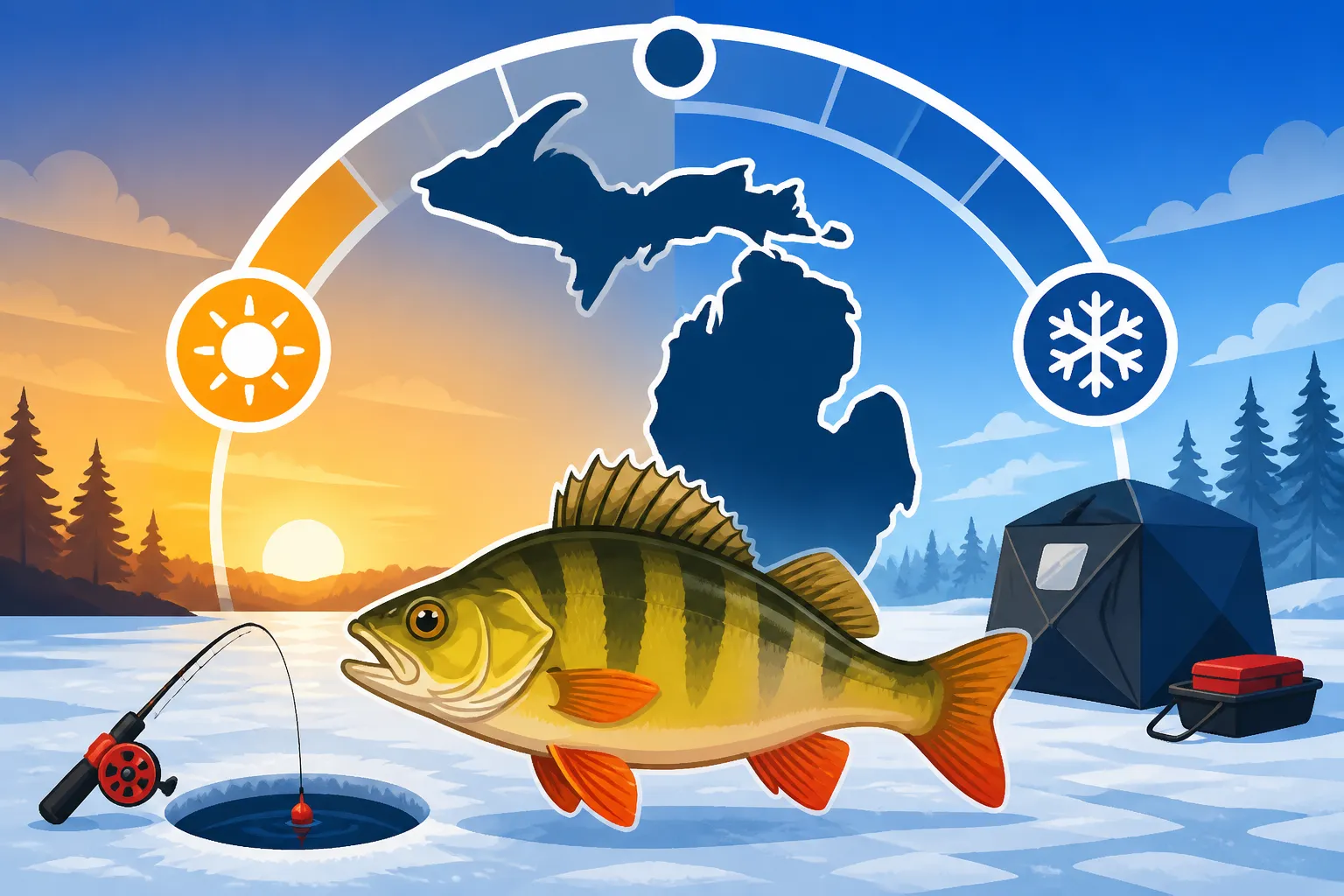
Just like many other fish species, perch are often most active during periods of low light. This means sunrise and sunset are frequently the prime windows for catching them through the ice. As the sun rises and sets, the natural light levels change, often triggering a feeding response in perch. This is particularly true in mid-winter when overall light penetration is lower due to thick ice and snow.
Many dedicated ice anglers will be on the ice well before sunrise, setting up their gear and drilling holes in anticipation of that first light bite. The hour around sunrise, and especially the hour before sunset, can often produce the most consistent action. During these times, perch might move more freely from their deeper holding areas to shallower feeding flats or along breaklines, making them more accessible and aggressive. Don't underestimate the power of these transitional periods; they can turn a slow day into a memorable one. Plan to spend more time on the ice during these hours, even if it means bundling up a bit extra.
Midday Slowdowns and Strategies
While the low-light hours are often best, that doesn't mean you should pack up your gear once the sun is high in the sky. Midday can certainly be slower, especially during the challenging mid-winter period. Perch might retreat to deeper water or become much less active, hugging the bottom or suspending in dense schools. This is where many anglers get frustrated, but it's also where strategic thinking can pay off.
During the midday slump, focus on finesse. Slow down your jigging retrieve significantly. Often, the subtle quiver of a small jig tipped with a live bait is all it takes to trigger a reluctant bite. Experiment with dead-sticking – leaving a rod perfectly still with a bait hanging motionless. Many perch will hit a completely still bait when they won't chase a moving one. This is also a good time to explore new spots, particularly those deeper humps, channels, or sudden drop-offs that might hold less active but still catchable fish. You might not catch them in droves, but even a few quality perch during the midday can make the trip worthwhile.
Weather Patterns and Their Influence
Weather, even above the ice, plays a significant role in perch activity. Overcast days, for instance, often lead to a better bite throughout the day compared to bright, sunny days. The reduced light penetration on cloudy days can make perch feel more comfortable and active in shallower water for longer periods. If you have a choice, pick a cloudy day for your ice fishing adventure.
Barometric pressure is another factor. Stable high-pressure systems after a cold front often lead to tough fishing, as fish tend to be less active. Conversely, a falling barometer, often preceding a snowstorm or milder weather, can trigger a strong feeding frenzy. Many veteran anglers keep a close eye on the forecast, specifically looking for those pre-front conditions. While you can't control the weather, being aware of these patterns can help you adjust your expectations and strategies, making the best of whatever conditions Mother Nature throws your way. Remember, even on tough weather days, there's always a chance to catch a few, especially if you're patient and persistent.
Gear, Bait, and Tactics for Winter Perch Success
Even if you hit the best time to ice fish for perch, having the right setup and knowing how to use it makes all the difference. Imagine having a hot bite on your hands, but your reel freezes up or your line snaps – pure misery! Being prepared with suitable gear and understanding effective tactics is crucial for consistent success.
Essential Gear for Michigan Ice Fishing Perch
You don't need to break the bank to get started, but certain pieces of gear are non-negotiable for a comfortable and effective perch outing. First and foremost, a quality ice fishing rod and reel combo is essential. For perch, you'll want a sensitive ultralight or light action rod, typically between 24 and 30 inches, paired with a small spinning reel. This setup allows you to feel those incredibly subtle bites that finicky perch are known for. You can find some excellent entry-level combos on sites like Amazon that are perfect for getting started.
Next, consider your line. Light line, usually 2-4 pound test monofilament or fluorocarbon, is key for perch. It's less visible to the fish and allows your small jigs to sink naturally. A good Ice Auger for Michigan Ice Fishing is a must-have for drilling holes efficiently, whether you opt for a manual, electric, or gas-powered model. Don't forget an ice scoop to keep your holes free of slush. A portable fish finder, even a basic flasher unit, can dramatically improve your success by showing you fish below and your bait's depth. Lastly, consider a portable shelter and a portable heater for comfort, especially during the brutal Michigan winters. You can learn more about specific gear in our comprehensive Michigan Ice Fishing Guide.
Best Baits and Lures for Finicky Perch
When it comes to tempting winter perch, subtle is often better. Live bait is incredibly effective, with wax worms, spikes (maggots), and small minnows being perennial favorites. Thread a single wax worm onto a tiny jig, or hook a minnow through the back for a natural presentation. The movement and scent of live bait are often irresistible to lethargic perch.
For artificials, small jigs in sizes 1/32 to 1/16 ounce are king. Popular styles include teardrop jigs, small tungsten jigs, and horizontal jigs. Tip these with a single wax worm, a couple of spikes, or a small piece of soft plastic imitation bait. Colors can vary, but chartreuse, glow-in-the-dark, pink, orange, and naturalistic browns or greens are often productive. Don't be afraid to experiment! Sometimes, a slight change in color or profile can make all the difference. For more ideas on what to present, check out our guide on the Best Bait for Perch in Michigan. You can even find multi-packs of popular jigs and small spoons on Amazon, which is a great way to build up your tackle box without breaking the bank.
Mastering Ice Fishing Techniques for Perch
Once you have your gear and bait sorted, it's time to talk tactics. The most common and effective technique for perch is jigging. Drop your lure or bait to the desired depth, often near the bottom or suspended just above a school of fish, and then impart a subtle jigging motion. This might involve lifting the rod tip an inch or two and letting it fall, or gently quivering the rod tip. The key is subtlety; sometimes the slightest movement is all it takes to trigger a bite.
Another crucial technique, especially when fish are incredibly finicky, is dead-sticking. This involves setting up a second rod with a live minnow or a simple jig, leaving it completely motionless in the water. Perch often inspect a jigging presentation, but will then turn and take the stationary, "easy" meal on the dead stick. Having multiple lines (where legally allowed, check your local Michigan regulations!) can significantly increase your chances.
Remember that perch often suspend, especially in deeper water. Don't assume they're always on the bottom. If your fish finder shows a school of fish at 10 feet in 30 feet of water, that's where you need to present your bait. Stay mobile, use your electronics, and be willing to experiment with depth, presentation, and retrieve speed until you find what the perch are looking for on that particular day. For more detailed techniques, you can always refer to articles like How to Catch Perch Through the Ice in Michigan.
Disclaimer
This article is for general informational purposes only and does not constitute professional advice. Laws, prices and regulations vary by location and change over time. Consult a qualified professional for guidance on your specific situation.