How to Catch Whitefish in Michigan
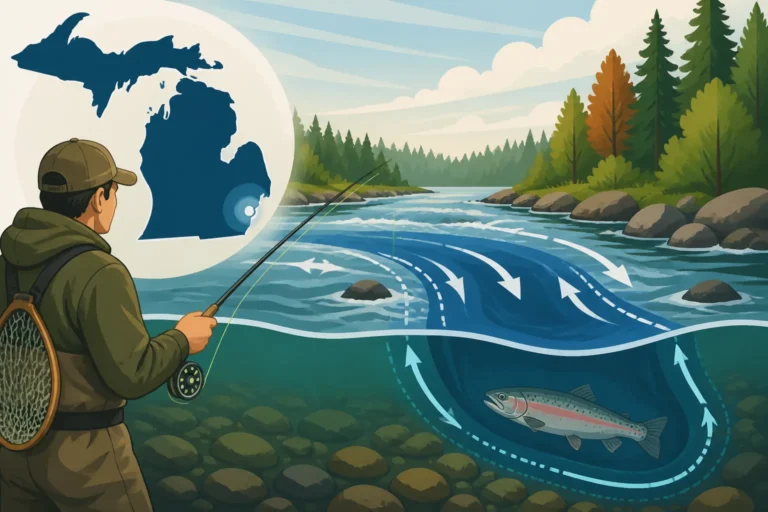
Many anglers in Michigan dream of reeling in a trophy salmon or a feisty smallmouth bass, but they often overlook one of the state's most delicious and challenging catches: the humble whitefish. These deep-water dwellers can be incredibly elusive, leading to frustrating days on the water with no bites. This comprehensive guide aims to unlock the secrets to successfully catching whitefish in Michigan, covering everything from their habits to the best techniques and gear.
Understanding Michigan Whitefish Behavior and Habitat
Before you can hope to catch a whitefish, you need to understand what makes them tick. These fish are fascinating creatures, perfectly adapted to the cold, deep waters of Michigan. Their behavior and preferred habitats dictate much of how and where we try to catch them.
Key Whitefish Species and Characteristics
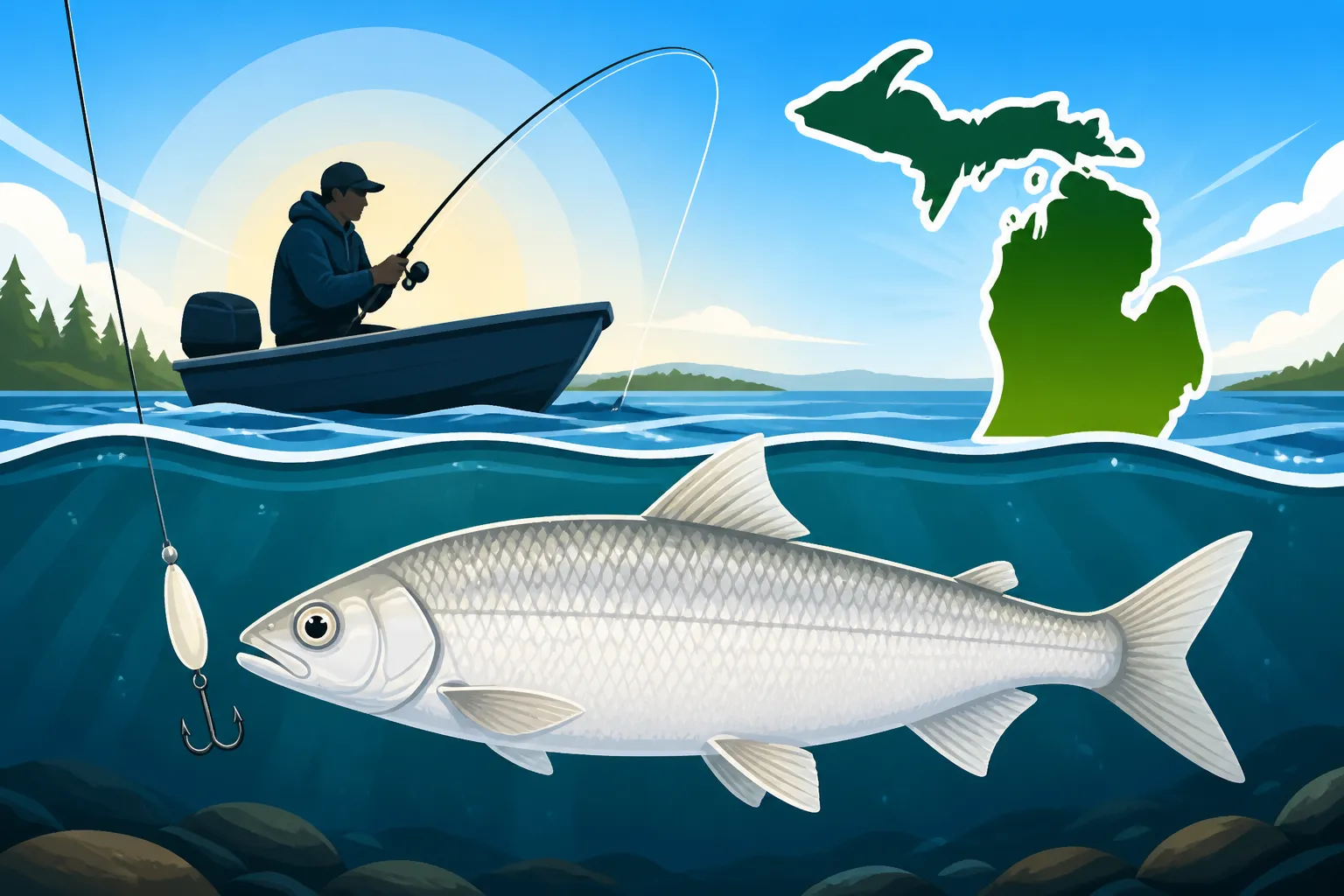
When we talk about whitefish in Michigan, we're primarily referring to the Lake Whitefish (Coregonus clupeaformis). These beautiful fish are characterized by their silvery scales, a small, down-turned mouth, and often a slightly humped back. Unlike many predatory fish, whitefish are bottom feeders, primarily subsisting on small invertebrates like amphipods, midge larvae, and even tiny mussels and snails. Their small mouth is perfectly designed for sifting through substrate, not for engulfing large prey. This feeding habit is crucial to understand when selecting your baits and presentations.
You'll find lake whitefish thriving in the Great Lakes – especially Lake Michigan, Lake Huron, and Lake Superior – as well as some of Michigan's larger, deeper inland lakes. They are a native species and a vital part of the ecosystem, often overlooked for their fighting prowess but highly prized for their delicate, flaky, and rich-tasting flesh. Many Michigan anglers consider them a true delicacy, especially when smoked.
Preferred Depths and Seasonal Movements
Whitefish are cold-water species, which means they prefer deeper, cooler water, especially during the warmer months. In summer, you'll often find them congregating in depths ranging from 60 to well over 120 feet, where water temperatures remain stable and oxygen levels are high. They tend to school up, so once you find one, you're likely to find more.
Their movements are largely dictated by water temperature and spawning cycles. In the spring and fall, as water temperatures cool, whitefish will often move into shallower waters, sometimes as shallow as 15-30 feet, particularly for their fall spawning runs. During these times, they can be more accessible to shore anglers or those fishing in smaller boats. Come winter, they'll often hold in similar depths under the ice, making them a prime target for ice anglers. Understanding these seasonal shifts is paramount, as fishing the wrong depth can mean going home empty-handed. Always consult local reports or marine charts for specific lake depths and structures that whitefish are known to frequent.
Proven Techniques for Catching Michigan Whitefish
Successfully targeting whitefish requires a blend of patience, precision, and the right approach. These are not aggressive biters like a pike or a bass; their takes are often incredibly subtle, almost imperceptible. This makes the techniques for catching them quite specialized, focusing on finesse and presentation.
Vertical Jigging and Dropping
Vertical jigging is hands down one of the most effective methods for whitefish, especially when fishing from a boat in open water or through the ice. The key here is a small, subtle presentation. You'll want to use tiny tear drop jigs, small Swedish Pimples, or other compact spoons. The action isn't about aggressive jigging; it's about a slight lift and fall, or sometimes just dead sticking the lure a few inches off the bottom.
Many successful whitefish anglers employ a "dead sticking" approach, where they use two rods – one actively jigging with minimal movement, and another simply suspended in a rod holder, barely moving. Often, the dead stick gets the bite because the whitefish are sensitive to too much commotion. Tip your jig with a small piece of natural bait, like a wax worm, a spike (maggot), or even a small piece of emerald shiner. The scent and added wiggle can be the difference-maker. When you feel that almost imperceptible tap, or just a slight weight on your line, set the hook with a gentle upward sweep. It can be frustrating to learn to feel these subtle bites, but once you get it, it becomes incredibly rewarding.
Bottom Bouncing and Drifting from a Boat
For boat anglers covering larger areas, especially in the Great Lakes, bottom bouncing or controlled drifting can be very productive. This technique involves using a three-way swivel rig. On one eye of the swivel, tie your main line. On another, attach a short leader (about 6-12 inches) with a small bell sinker or bottom bouncer that allows you to maintain contact with the bottom. On the third eye, tie a longer leader (18-36 inches) with a small, sharp hook. This hook should be tipped with your chosen bait, such as wax worms, spikes, or a small piece of cut bait.
The goal is to drift slowly over potential whitefish habitat, allowing your weight to occasionally tap the bottom while your baited hook drifts just above it. Use your boat's electronics to identify subtle depth changes, humps, or structures where whitefish might be holding. Maintain enough line out so that your weight is consistently ticking the bottom without getting snagged. This method can cover ground more efficiently than static jigging, helping you locate active schools of fish. Just like jigging, the bites will be subtle, so keep a close eye on your rod tip for any unusual twitch or slack.
Trolling with Dipsy Divers and Planer Boards
While vertical presentations are most common, trolling can also be an effective strategy for whitefish, particularly in the vast expanses of the Great Lakes where they might be found suspended or scattered. This method is often employed by anglers targeting salmon or lake trout who incidentally catch whitefish, but it can be specialized for whitefish too. You'll need equipment like downriggers or Dipsy Divers, which allow you to get your lures down to specific depths. Planer boards can help spread your lines out, covering a wider swath of water.
For whitefish, you'll want smaller spoons, dodgers, or even small flies presented behind a dodger or flasher. The key is to match the hatch, offering something that mimics the small invertebrates or baitfish they feed on. Run your presentations at depths where you're seeing whitefish on your sonar. The trolling speed should be relatively slow, often around 1.5 to 2.5 miles per hour, to allow whitefish to properly track and strike the smaller baits. This technique can be a bit more gear-intensive, but it allows you to prospect large areas and can be highly effective when whitefish aren't strictly glued to the bottom.
Best Seasons and Locations for Michigan Whitefish
Knowing when and where to find whitefish in Michigan is just as crucial as knowing how to catch them. Their distribution and activity levels change throughout the year, making seasonal adjustments to your fishing strategy essential.
Year-Round Whitefish Opportunities
Michigan truly offers year-round opportunities for whitefish, though the methods and locations will vary significantly.
- Spring: As the ice melts and water temperatures begin to rise, whitefish can often be found in shallower waters, making them more accessible from shore or smaller boats. They're recovering from winter and may be feeding more actively. This is a great time to target them in bays and near river mouths.
- Summer: This is when whitefish retreat to their deep-water sanctuaries. Anglers will need to focus on deep vertical jigging or bottom bouncing from boats, often in 60-120+ feet of water in the Great Lakes. This is the time when good sonar becomes indispensable.
- Fall: The cooling waters trigger a movement back into shallower areas, especially for their spawning migrations. This can be an excellent time to find them, sometimes as shallow as 15-30 feet, particularly near rocky shoals or gravel beds. Many anglers have great success with deeper pier fishing or boat fishing relatively close to shore during this period.
- Winter (Ice Fishing): Without a doubt, winter is prime time for many whitefish enthusiasts. Once stable ice forms on lakes like Grand Traverse Bay or Higgins Lake, whitefish become a popular target. Ice anglers can set up shanties directly over whitefish schools and use specialized jigging techniques. The stillness of the ice and the ability to punch multiple holes makes it easier to locate and stay on active fish. You can learn more about this exciting season in our Michigan Ice Fishing Guide.
Top Michigan Waters for Whitefish
Michigan boasts some fantastic whitefish fisheries. Here are some of the most consistent locations:
- Lake Michigan: Particularly the northern half, including Grand Traverse Bay, is a whitefish hotspot. The deep, cold waters provide ideal habitat. Anglers often find success jigging or bottom bouncing in areas with significant depth changes or underwater structure. You can find more comprehensive details on Michigan's Great Lakes Fishing Guide.
- Lake Huron: Especially Saginaw Bay and Thunder Bay, offer good whitefish opportunities. While Saginaw Bay is more famous for its walleye, whitefish can be found there in deeper channels and offshore humps.
- Lake Superior: As the coldest and deepest of the Great Lakes, Lake Superior holds abundant whitefish populations, often found in very deep water. Targeting them here can be challenging but highly rewarding.
- Northern Inland Lakes: Larger, deep, cold-water lakes such as Higgins Lake Fishing Guide, Torch Lake Fishing in Northern Michigan, Burt Lake, and Mullett Lake are also excellent whitefish destinations. These lakes often have extensive deep flats and sharp drop-offs where whitefish congregate. Ice fishing on these lakes can be exceptional.
Essential Gear for Whitefish Fishing Success
While whitefish don't require heavy-duty tackle, they do demand specialized gear that prioritizes sensitivity and finesse. Trying to catch them with a salmon rod is like trying to pick up a dime with a shovel – it's just not going to work.
Rods, Reels, and Line Selection
For whitefish, sensitivity is paramount.
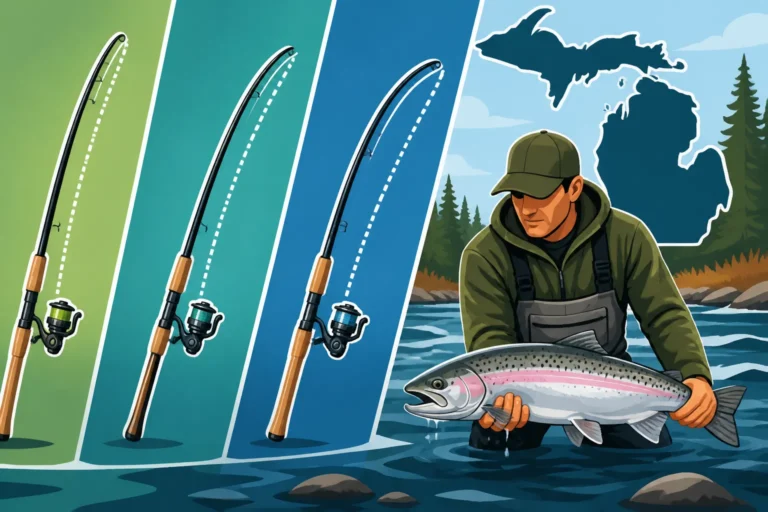
- Rods: Opt for ultra-light to light action spinning rods, typically 28 to 36 inches long for ice fishing, and 6 to 7 feet long for open water. A fast tip is crucial to detect those subtle bites. Graphite rods are excellent for transmitting even the slightest tap. You want a rod that can handle delicate presentations and feel like an extension of your hand.
- Reels: Pair your sensitive rod with a small, high-quality spinning reel (500 to 1000 size). The reel should have a smooth drag system, as whitefish, despite their delicate bite, can put up a surprisingly good fight, especially in deeper water.
- Line: Light line is non-negotiable. 2 to 4-pound test monofilament or fluorocarbon is ideal for your main line. Some anglers prefer braided line (4-6 lb test) for its no-stretch sensitivity, but then they'll almost always use a long fluorocarbon leader (6-10 feet) for invisibility in clear water. Fluorocarbon is often favored for its low visibility and good abrasion resistance, especially when fishing near rocky bottoms.
You can find a great selection of sensitive rods and reels perfect for whitefish on retailers like Amazon, ensuring you have the right tools for the job. For more general advice on selecting fishing equipment, see our Best Rods and Reels for Michigan Fishing.
Lures, Baits, and Presentation
The size and type of your lure or bait are critical for tempting whitefish.
- Jigs and Spoons: Small tear drop jigs, size 8-14, are excellent, especially in various glow-in-the-dark or metallic colors. Tiny spoons, like a 1/8 to 1/4 oz Swedish Pimple, Custom Jigs & Spins Chekai, or similar ice jigs, are also very effective. Experiment with colors, but silver, gold, chartreuse, and white are often reliable.
- Baits: The natural element is key. Always tip your jig or spoon with a wax worm, spike (maggot), or a small piece of cut emerald shiner. The scent and natural movement provided by these baits are often what seals the deal. Whitefish often mouth the bait before committing, and the live offering gives them that extra incentive. Sometimes, a plain small hook with just a wax worm can outperform a jig.
- Presentation: Remember the subtle nature of their bite. Less is often more. A gentle quiver, a slow lift of just a few inches, or letting the bait rest still for extended periods can be what triggers a strike. Think finesse and patience.
Essential Electronics and Accessories
Modern electronics can give you a significant advantage when chasing whitefish.
- Fish Finders/Flasher Units: A quality fish finder or flasher unit (especially for ice fishing) is almost a necessity. These allow you to locate schools of whitefish, identify the depth they're holding at, and even see your lure in relation to the fish. Brands like Humminbird, Lowrance, and Garmin offer excellent units that can drastically improve your success rate. For ice fishing, a flasher like a Vexilar or Marcum can show you real-time interaction with fish.
- Underwater Cameras: For ice fishing, an underwater camera can be incredibly insightful. Seeing how whitefish react to your lure, how they approach, and how they mouth the bait can help you fine-tune your presentation in real-time. It's also just fascinating to watch!
- Warm Clothing and Shelter: Whitefish fishing, particularly in colder months or deep-water Great Lakes conditions, can expose you to the elements. Quality waterproof and insulated clothing, along with a portable ice shelter for winter, will make your experience much more enjoyable and extend your time on the water. You can find a vast array of high-quality ice fishing gear, including shelters and heaters, available on Amazon.
- Net: A fine-mesh landing net is useful, especially for ice fishing, to avoid losing your catch at the hole.
Whitefish Fishing Technique Comparison
| Technique | Primary Season | Typical Depth (Feet) | Key Gear | Bait/Lure Examples | Ideal Conditions |
|---|---|---|---|---|---|
| Vertical Jigging | Winter, Summer | 60-120+ (Open Water), 20-80 (Ice) | Ultra-light rod, small spinning reel, 2-4lb line | Tear drop jigs, Swedish Pimples, tipped with wax worms/spikes | Calm water, precise depth control, active fish |
| Bottom Bouncing | Spring, Summer, Fall | 40-100 | Light rod, spinning reel, 4-6lb line, 3-way swivel, sinker | Small hooks with wax worms, spikes, cut bait | Drifting from boat, covering varied structure |
| Trolling | Summer, Fall | 30-80 | Trolling rods, downriggers/dipsy divers, 8-15lb line | Small spoons, dodgers with flies, small crankbaits | Large open water, searching for suspended fish |
Successfully catching whitefish in Michigan is a testament to an angler's patience and ability to adapt to subtle clues. It’s not always about power; it’s about finesse, understanding the fish, and using the right tools. Good luck out there, and enjoy the delicious reward! Don't forget to check the current Michigan Fishing Regulations Every Angler Should Know before heading out.
Disclaimer
Please remember that fishing regulations, including seasons, bag limits, and size restrictions, can change. Always consult the latest Michigan Department of Natural Resources (DNR) fishing guide or website before you head out to fish. The information provided in this guide is for general informational purposes only and should not be considered legal advice.