What Fish Are Native to Michigan
One of the most common questions I hear from fellow anglers, especially those new to fishing in Michigan, is "What fish am I supposed to be catching here?" It’s a completely valid question, because our waters are teeming with so many different species, and it can be confusing trying to figure out which ones are truly at home here and which are visitors. This guide aims to clear up that confusion, offering a comprehensive look at the incredible variety of fish that are native to Michigan, helping you understand their role and how to identify them.
Understanding "Native" in Michigan Fishing
Before we dive into the specific fish, let's talk about what "native" truly means when we're discussing Michigan's aquatic inhabitants. It’s more than just a label; it speaks to the very fabric of our ecosystems and the long, fascinating history of our waterways.
What Does "Native" Truly Mean for Fish?
When we say a fish species is "native" to Michigan, we're talking about species that have historically occurred in our waters without human intervention. These are the fish that evolved here, adapted to our specific climate, water temperatures, and ecological niches over thousands of years. They reproduce naturally in our lakes, rivers, and streams, fulfilling their life cycles as part of Michigan's original aquatic biodiversity. This means their presence predates the major stocking efforts and accidental introductions that have occurred over the last couple of centuries.
Think about it like this: A native oak tree has grown from an acorn dropped by another oak tree that was part of the original forest, not one planted by a landscaping company. Similarly, native fish species maintain their populations through natural spawning, their genetic lines stretching back through countless generations in these very same waters. They have a deep, inherent connection to the specific flow of our rivers, the unique chemistry of our lakes, and the seasonal rhythms of our Michigan landscape. It's this long-standing connection that defines their native status, distinguishing them from species that were later introduced, even if those introduced species have since established thriving, self-sustaining populations.
Why Native Species Matter
Native species aren't just a historical curiosity; they are absolutely vital to the health and resilience of Michigan's aquatic ecosystems. Each native species plays a specific role in the food web, from tiny invertebrates that feed small fish to the large predators that keep other populations in check. When native populations are healthy, they contribute to a balanced ecosystem that is better equipped to handle environmental changes and resist the negative impacts of invasive species. They are the cornerstones of our state's natural heritage.
For us anglers, native fish represent the true essence of Michigan fishing. Catching a native brook trout in a pristine stream, knowing that its ancestors have swum those very waters for millennia, offers a unique sense of connection to the land. These fish often have evolved specific behaviors and features that make them perfectly suited to their Michigan homes, offering a distinct challenge and reward for those who seek them out. Preserving their habitats and ensuring their continued success is a critical part of maintaining the high quality and diversity of fishing experiences Michigan offers. Understanding and appreciating native species helps us become better stewards of our natural resources, guiding our conservation efforts and ensuring that future generations can enjoy the same incredible fishing opportunities we do.
Iconic Native Fish of Michigan's Rivers and Lakes
Michigan is blessed with an incredible array of native fish, many of which are highly sought after by anglers. Let's take a closer look at some of the true stars of our waterways.
The Walleye: A Prized Native Game Fish
Oh, the walleye! If there's one fish that epitomizes Michigan's fishing culture for many, it's the walleye. Known for its delicious, flaky white meat and its notoriously finicky bite, the walleye is a true native hero of our larger lakes and rivers. These fascinating fish thrive in cooler, deeper waters, often preferring sandy or gravelly bottoms where they can ambush prey. They are primarily nocturnal feeders, which is why many dedicated walleye anglers find great success fishing for them after dusk or before dawn.
Walleye are identifiable by their characteristic large, opaque eyes, which are adapted for low-light conditions, giving them a distinct advantage over their prey. Their bodies are elongated, typically olive green to gold, with a mottled pattern that helps them blend into their surroundings. They are strong fighters, though perhaps not as acrobatic as some other game fish, offering a solid, determined tug on the line. Anglers often target them using jigs, crankbaits, or by trolling with crawler harnesses. While specific rules can vary, knowing your Michigan Walleye Size and Bag Limits and Michigan Walleye Daily Possession Limit is crucial for a successful and legal outing. The thrill of landing a hefty walleye, especially on a calm evening, is a core Michigan fishing memory for many.
Brook Trout: Michigan's Only Native Stream Trout
If you're looking for a jewel among Michigan's fish, you don't have to look much further than the brook trout. This stunning fish, with its vibrant red spots, blue halos, and white-edged fins, is Michigan's sole native stream trout. Unlike the brown and rainbow trout, which were introduced from other regions, the brook trout has called our cold, clear, oxygen-rich streams home for millennia. They are incredibly sensitive to water quality and temperature, making them excellent indicators of healthy aquatic environments.
Fishing for brook trout is often as much about the experience as it is about the catch. You'll find yourself wading through remote, pristine stretches of water, surrounded by lush forests, searching for subtle bends and logjams where these elusive fish might hide. They rarely grow to monstrous sizes, but their beauty and the challenge of catching them in their natural habitat make them exceptionally rewarding. Brook Trout in Michigan Rivers are a testament to the wild beauty of our state, and protecting their delicate ecosystems is a passion for many conservation-minded anglers. Using light tackle and a stealthy approach, often with small dry flies or tiny spinners, is key to coaxing these wary beauties to bite.
Smallmouth and Largemouth Bass: The Warmwater Natives
When it comes to bass fishing, Michigan offers excellent opportunities for both smallmouth and largemouth bass, both of which are native to our waters. These two species, while similar in name, have distinct preferences and characteristics that make targeting each a unique experience.
Smallmouth bass, often called "bronze-backs," prefer clearer, cooler waters with rocky bottoms, gravel, and submerged timber. You'll find them in the Great Lakes, larger inland lakes like Torch Lake, and many of our medium to large rivers. They are renowned for their incredible fighting ability, often leaping clear of the water and making powerful runs. Catching a smallmouth bass often feels like wrestling a small, muscular bulldog, providing an exhilarating battle. Their coloration is typically a bronze-brown with vertical bars, and their upper jaw doesn't extend past the eye. For those looking to learn more, Smallmouth Bass Identification in Michigan can help you distinguish them from their green cousins.
Largemouth bass, on the other hand, are the kings of the weed beds and warm, shallower waters. They thrive in lakes, ponds, and slow-moving rivers with plenty of aquatic vegetation, submerged logs, and docks. They are ambush predators, often hiding in cover and exploding out to strike unsuspecting prey. While they might not jump as much as smallmouths, they deliver powerful head shakes and strong pulls. You'll recognize them by their distinctive dark horizontal stripe along their sides and a large mouth where the upper jaw extends well past the eye. For clarity, refer to Largemouth Bass Identification in Michigan. Both bass species are incredibly popular, offering thrilling fishing experiences throughout the warmer months, and their native presence speaks to the rich biodiversity of Michigan's diverse aquatic landscapes.
Other Key Native Fish Species
Michigan's native fish population extends far beyond just trout and bass. Our waters are home to a diverse cast of characters, each playing an important role in the ecosystem and offering unique angling opportunities.
Northern Pike and Muskellunge: Apex Predators
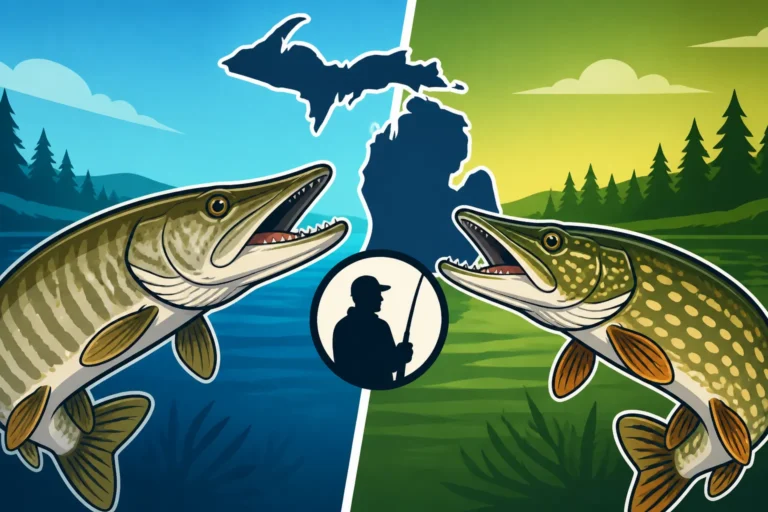
Michigan's waters are home to two formidable native apex predators: the northern pike and the muskellunge (often shortened to muskie). These toothy giants are revered for their aggressive strikes, impressive size, and challenging fights, making them bucket-list fish for many anglers. Both are members of the Esox family, sharing a long, slender body shape, duck-bill snouts, and rows of razor-sharp teeth, but they have distinct differences.
Northern pike are widely distributed throughout Michigan's lakes and slow-moving rivers, preferring weedy areas where they can ambush prey. They are an aggressive and often opportunistic feeder, striking at everything from spinnerbaits to live bait. Catching a pike can be a sudden, violent affair, and their sheer power is unforgettable. Muskellunge, however, are often called "the fish of 10,000 casts" for good reason. They are more solitary and elusive, growing to much larger sizes, often over 50 inches! Found in specific Michigan lakes like Lake St. Clair, they require specialized gear and immense patience. For those seeking the ultimate challenge, understanding Michigan Muskellunge Fishing Techniques is crucial. Telling them apart can sometimes be tricky, but pike have light spots on a dark body and fully scaled cheeks, while muskie have dark spots or bars on a light body and only the upper half of their cheek is scaled. Learning Northern Pike Identification in Michigan is a great first step to understanding these magnificent native predators.
Yellow Perch: The Panfish King
If there's a fish that evokes nostalgic memories of childhood fishing trips, it’s the yellow perch. These ubiquitous panfish are perhaps one of Michigan’s most popular and widespread native species, cherished for their abundance, cooperative nature, and, of course, their unbelievably delicious flavor. You can find them in almost every lake, pond, and slow-moving river throughout the state, often schooling in large numbers.
Yellow perch are easily recognizable by their distinctive vertical black stripes, a bright yellow-gold body, and two dorsal fins. They are a staple forage fish for many larger predators, but also a fantastic target for anglers of all ages and skill levels. Whether you're dropping a worm under a bobber from a pier or ice fishing with a small jig, perch offer consistent action. Yellow Perch Fishing in Michigan is a year-round activity, providing endless enjoyment. They don't grow particularly large, typically ranging from 6 to 12 inches, but a cooler full of perch makes for an incredible fish fry. Understanding Yellow Perch Identification in Michigan will help you quickly spot these tasty natives when they start biting.
Whitefish and Lake Trout: Great Lakes Staples
In the vast, cold depths of our Great Lakes, two more magnificent native species thrive: the whitefish and the lake trout. These fish are true icons of the Great Lakes, having been a vital part of the region's ecology and economy for centuries.
Lake trout are the largest members of the char family and are absolute powerhouses, perfectly adapted to the deep, cold waters of the Great Lakes. They can grow to impressive sizes, often over 20 pounds, and offer a powerful, stubborn fight when hooked. These native char are distinguished by their pale spots on a darker body and a deeply forked tail. Targeting them often involves deep-water trolling with heavy gear. For more details on these magnificent fish, check out Lake Trout Identification in Michigan.
Whitefish, particularly Lake Whitefish, are another crucial native species in the Great Lakes. They are bottom feeders, primarily foraging on insects, small crustaceans, and mollusks. While not typically as aggressive as lake trout, they are highly prized for their incredibly delicate and flavorful meat. Commercial fishing for whitefish has a long history in Michigan, but they also offer a unique sport fishing opportunity, often targeted by jigging in deep waters or through the ice. Learning about Whitefish Fishing in Michigan reveals a different, often more subtle, side of Great Lakes angling. Both species are a testament to the immense, cold-water ecosystems of our largest bodies of water.
Spotting the Difference: Native vs. Non-Native
Understanding which fish are native to Michigan and which aren't is not just about trivia; it’s about appreciating our natural heritage and understanding the ecological balance of our waters. Knowing the difference helps anglers make informed decisions, whether it's about catch-and-release practices or simply appreciating the unique biodiversity.
Characteristics of Native Species
Native fish species in Michigan often share some common characteristics that reflect their long adaptation to our specific environments. Many native species, especially those in pristine northern streams, can exhibit more vibrant, distinct color patterns compared to their hatchery-raised or non-native counterparts, a result of natural selection and a healthy ecosystem. For example, a wild brook trout from a remote Michigan stream will often display more intense reds, blues, and golds than a stocker trout. Their body shapes and fin integrity also tend to be robust and unblemished, a sign of their wild upbringing.
Observing natural spawning behaviors is another key indicator. Native species reproduce successfully on their own, often utilizing very specific gravel beds in rivers or particular depths in lakes. They are part of a self-sustaining cycle. When you're out fishing, observing the health of the fish you catch, the vibrancy of their colors, and even the habitat itself, can give you clues about the native status and overall health of the fish population. It's a subtle appreciation for the details that only comes with experience, but it starts with simply knowing what to look for and recognizing that inherent wildness.
Brief Look at Common Non-Native Fish
While our focus is on native species, it’s helpful to have a quick understanding of some of the common non-native fish you'll encounter in Michigan. These are species that were either intentionally introduced for sport or food, or accidentally brought into our waters. Perhaps the most widely known non-natives in Michigan are the brown trout and rainbow trout (including steelhead). Both were introduced from Europe and the Pacific Northwest, respectively, and have become incredibly popular sport fish. They thrive in many of our rivers and lakes, often outcompeting the more sensitive native brook trout.
Other notable non-native species include the common carp, introduced from Europe for food, which can thrive in degraded habitats and often stir up bottom sediments, impacting water clarity. Then there are the truly invasive species, like the round goby from Eurasia, which arrived via ship ballast water. Gobies are a major concern because they compete with native fish for food and habitat, and can consume the eggs of native species. Understanding species like those covered in Invasive Fish Species in Michigan Waters is crucial for all anglers. While many non-native fish offer fantastic angling opportunities, recognizing them helps us appreciate the delicate balance of our ecosystems and the importance of preventing further introductions of harmful species.
Resources for Identification and Learning
With so many species swimming in Michigan’s waters, it’s completely normal to feel a bit overwhelmed when trying to identify them all. Luckily, there are fantastic resources available to help you become an expert in no time. One of the best tools is a good, old-fashioned fish identification guide. You can find excellent waterproof field guides that cover all the species found in Michigan, complete with clear photos and descriptions of distinguishing features. These are invaluable to keep in your tackle box or boat. Many outdoor retailers carry them, and you can often find a great selection on Amazon to browse before your next trip.
Beyond physical guides, the Michigan Department of Natural Resources (DNR) website is a treasure trove of information. While I can't link directly or provide specific URLs, a quick search for "Michigan DNR fish identification" will lead you to detailed species profiles, sometimes even with videos and habitat maps. Apps are also becoming increasingly popular, offering on-the-spot identification features. When choosing a guide, look for one that highlights key differences between similar-looking species and points out specific markings or fin counts that are often the easiest ways to tell fish apart. With a reliable guide in hand, perhaps one you picked up from Amazon, you’ll gain confidence in identifying your catches and deepen your appreciation for the native aquatic life of Michigan.
Here's a quick overview of some key native Michigan fish:
| Species | Primary Habitat | Distinguishing Features | Average Size (Native) | Angling Notes |
|---|---|---|---|---|
| Walleye | Large lakes, slow rivers (cooler, deeper) | Large, opaque eyes; olive-gold, mottled body; two dorsal fins | 15-25 inches | Prized for meat; nocturnal; jigs, crankbaits, trolling |
| Brook Trout | Cold, clear, oxygenated streams | Red spots with blue halos; white-edged fins; worm-like markings on back | 6-12 inches | Sensitive to water quality; light tackle, flies |
| Smallmouth Bass | Clear, rocky lakes & rivers (cooler) | Bronze-brown with vertical bars; upper jaw ends before eye; strong fight | 10-20 inches | Powerful fighter; lures, live bait, jigs |
| Largemouth Bass | Warm, weedy lakes, ponds, slow rivers | Dark horizontal stripe; upper jaw extends past eye; ambush predator | 10-20 inches | Explosive strike; soft plastics, topwater, crankbaits |
| Northern Pike | Weedy lakes, slow rivers | Light spots on dark body; fully scaled cheeks; duck-bill snout | 20-35 inches | Aggressive; spoons, spinnerbaits, live bait |
| Muskellunge | Large lakes (e.g., Lake St. Clair), specific rivers | Dark spots/bars on light body; only upper half of cheek scaled | 30-50+ inches | "Fish of 10,000 casts"; large lures, heavy tackle |
| Yellow Perch | Almost all lakes & slow rivers | Vertical black stripes; yellow-gold body; two dorsal fins | 6-12 inches | Delicious; prolific; bait, small jigs |
| Lake Trout | Deep, cold Great Lakes, some large inland lakes | Pale spots on darker body; deeply forked tail | 15-30+ inches | Powerful fighter; deep trolling, jigging |
| Lake Whitefish | Deep, cold Great Lakes, some inland lakes | Small mouth; silver sides; large, soft-rayed fins | 15-25 inches | Prized for meat; bottom feeder; jigging |
Disclaimer
This article is for general informational purposes only and does not constitute professional advice. Laws, prices and regulations vary by location and change over time. Consult a qualified professional for guidance on your specific situation.