Largemouth Bass Identification in Michigan
It can be incredibly frustrating when you're out on a Michigan lake, reeling in a beautiful bass, and you're just not quite sure if it's a largemouth or a smallmouth. Those few seconds of uncertainty can make all the difference, especially when you're trying to adhere to specific regulations. This comprehensive guide is here to demystify the identification of largemouth bass, ensuring you confidently know what's on your line and how to handle it responsibly.
The Distinctive Features of Michigan Largemouth Bass
When you think of a classic bass, chances are the largemouth is what springs to mind. They're an iconic species, beloved by anglers across Michigan for their aggressive strikes and powerful fights. But beyond their reputation, largemouth bass possess several key physical characteristics that, once you know them, make identification much clearer. You won't be left guessing anymore once you pay attention to these tell-tale signs.
Jawline and Mouth Structure
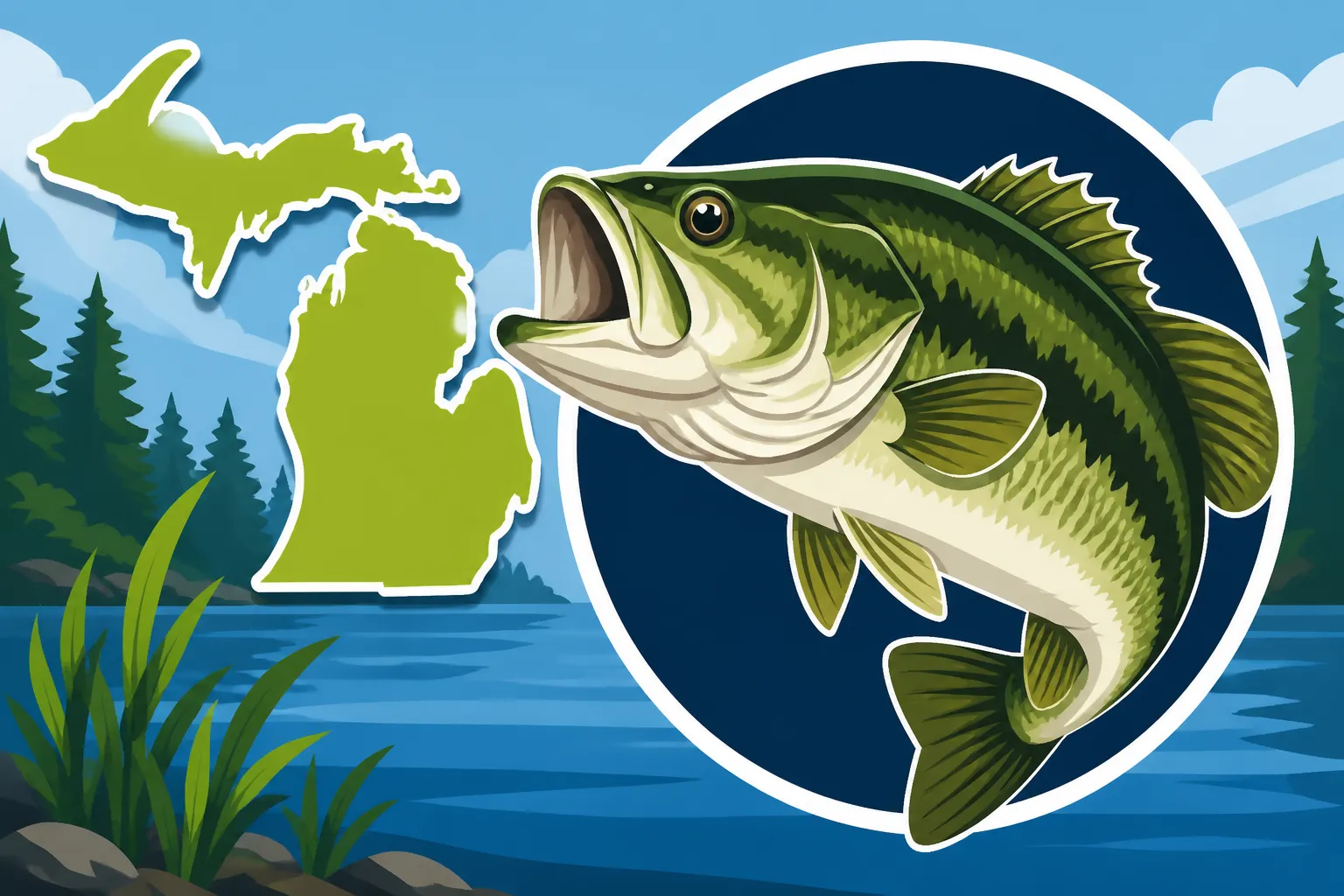
One of the most defining features of a largemouth bass, and arguably the easiest to spot, is its mouth. This isn't just about how big it opens when it strikes your lure; it's about how far back that jaw extends. Take a moment to examine the fish's jaw. The corner of a largemouth's mouth, when closed, extends noticeably beyond the rear edge of its eye. Imagine drawing a vertical line down from the back of the eye; if the jaw goes past that line, you're looking at a largemouth. This is a crucial distinction and often the first thing experienced anglers check.
Think about it: when you're holding a bass, that visual cue is instantaneous. It's not something you need to measure precisely; it's a clear, "Does it go past the eye? Yes or no?" kind of check. This wide gape is part of what makes them such efficient predators, allowing them to engulf larger prey items with ease, from baitfish to frogs to even small birds or rodents that might fall into the water. If you're using a big topwater lure or a hefty spinnerbait, you're likely targeting a fish built to swallow it whole, and that's usually a largemouth.
Dorsal Fin Separation
Another critical identification point for largemouth bass involves their dorsal fin – that prominent fin along their back. Unlike some other bass species, the largemouth has two distinct dorsal fins that are almost completely separated. There might be a very shallow notch, but for all practical purposes, they appear as two separate fins: a spiny front dorsal fin and a softer-rayed rear dorsal fin.
Picture holding the fish and running your finger along its back. With a largemouth, you'd feel a clear, deep dip between the stiff, sharp spines of the front fin and the softer, more flexible rays of the back fin. It's like two separate islands of fin on its back. This separation is more pronounced than you'll find on a smallmouth bass, for example, where the two dorsal fins are typically connected with only a slight dip. This characteristic is often less discussed than the jawline but is equally reliable for quick and accurate identification, especially if the fish is in a net or livewell and you can't get a perfect look at its mouth.
Spotting the Key Coloration and Body Shape
Beyond the structural aspects, the overall appearance of a largemouth bass, including its coloration and body shape, provides further clues. These characteristics can vary slightly depending on the water clarity and habitat, but general patterns hold true across Michigan's diverse lakes and ponds.
Lateral Line and Body Markings
The most prominent marking on a largemouth bass is its distinctive dark lateral line. This isn't just a faint stripe; it's often a very bold, broken or continuous horizontal band running from the gill plate straight back to the tail. The darkness and clarity of this line can vary – it might be almost black in some fish, or a murky green in others, especially those caught from turbid waters. This line is made up of specialized scales that detect vibrations in the water, but to us anglers, it's a primary visual identifier.
In addition to this strong lateral line, many largemouth bass will have blotchy, dark green spots or patterns above and below the lateral line, particularly on their flanks. These patterns help them camouflage perfectly among submerged vegetation, lily pads, and fallen timber. A largemouth caught from a clear, sandy-bottomed lake might appear lighter with less pronounced markings, while one from a tannin-stained, weedy swamp could be much darker, almost blackish-green, with very distinct blotches. You can often see these patterns quite clearly, making them a great secondary identifier. Keep an eye out for these mottled patterns when you're unsure, as they tend to be more pronounced on largemouth than on their smallmouth cousins.
Overall Body Profile and Coloration
When you look at the entire largemouth bass, you'll generally observe a more robust, "football" shaped body, especially in mature specimens. They tend to be heavier-bodied and somewhat stockier than a smallmouth of comparable length. Their overall color is typically a deep green, often transitioning to a lighter green or yellowish-white on the belly. This green coloration is what allows them to blend seamlessly into the aquatic plants and cover they so often inhabit.
The belly itself is usually a milky white, sometimes with a slight yellow tint, and distinctly lighter than their flanks. The fins will often mirror the body color, ranging from dark green to olive. The specific hue can be influenced by the environment; a largemouth from a crystal-clear, deep lake might have a brighter, almost iridescent green, while one from a shallow, muddy pond will have a duller, more muted green or brownish-green tone. The combination of this solid, deep green back and flanks, contrasted with a lighter belly and that prominent lateral line, creates a classic largemouth profile that's hard to mistake once you know what to look for. This robust shape is also indicative of their powerful fighting style, as they use their broad flanks to turn and pull against your line.
Distinguishing Largemouth from Smallmouth Bass
This is where many anglers, especially those new to Michigan fishing, run into trouble. Largemouth and smallmouth bass share similar general appearances, but several key differences will help you tell them apart quickly and confidently. Knowing these distinctions is vital for adhering to Michigan's Combined Largemouth and Smallmouth Bass Limit and other specific regulations.
Jawline and Cheek Scales: The Easiest Tells
As mentioned earlier, the jawline is your primary go-to. For a largemouth bass, the corner of the mouth extends noticeably past the back edge of the eye when the mouth is closed. For a smallmouth bass, the jaw typically only reaches the middle of the eye or, at most, the back edge of the eye. This difference is stark once you get your eye in. It's the absolute quickest way to tell them apart without needing to examine anything else. If you're struggling with identification, focus on this one feature first.
Another subtle but reliable indicator is the presence of scales on the cheek. Largemouth bass have scales that extend further back onto their cheek, right up to the edge of the eye. Smallmouth bass, however, tend to have a patch of smaller, or sometimes even absent, scales on their cheek just behind the eye, giving that area a smoother appearance. While less obvious than the jawline, if you're holding the fish, you can gently feel for this difference or observe it closely. For further reading on this specific comparison, check out How to Tell Smallmouth From Largemouth Bass.
Coloration and Pattern Differences
Beyond the mouth, the coloration and patterns on the body offer further clues. Largemouth bass generally have a more consistent, deep green or olive green back and flanks, with that distinctive horizontal, often broken, dark lateral line. The blotchy patterns are usually more irregular and can look like scattered dark patches. They prefer dense cover, and their coloration reflects that need for camouflage in weedy, murky environments.
Smallmouth bass, on the other hand, tend to have a brassy or bronze coloration, sometimes almost yellowish, with vertical bars or stripes that are often referred to as "tiger stripes." These bars can fade and reappear depending on the fish's mood or environment, but they are a hallmark of the smallmouth. They lack the strong horizontal lateral line of the largemouth, instead displaying more uniform vertical bands. Their bellies are usually a creamy white or yellowish. If you're catching a fish with distinct vertical bars and a coppery hue, it's almost certainly a smallmouth. This bronze color is perfect for blending in with rocky bottoms and clear water, which is precisely where you'll find smallmouth bass thriving. Remember that if you're ever in doubt, having a good field guide or even a quick search on a device (many are available on Amazon) can really help cement your understanding.
Habitat Preferences: A Strong Clue
Where you catch the fish is often a huge indicator of its species. Largemouth bass are famously fond of warm, shallow, vegetated waters. Think lily pads, submerged weed beds, fallen timber, docks, and any kind of heavy cover that offers ambush points. If you're casting a frog lure into thick weeds on a warm summer day in a shallow Michigan lake, you're almost certainly targeting largemouth bass. Their entire physiology, from their broad body to their large mouth, is designed for attacking prey in these types of environments. What Do Largemouth Bass Eat in Michigan gives more insight into their diet and therefore their habitat preference.
Smallmouth bass, by contrast, prefer cooler, clearer, deeper water with rocky or gravel bottoms. They're often found in large, clear lakes or rivers with strong currents and plenty of rock formations. While you might find some overlap in larger lakes, typically, if you're catching bass off a rocky point in 20 feet of water on one of Michigan's Great Lakes, it's going to be a smallmouth. Their streamlined bodies and smaller mouths are adapted for pursuing crayfish and baitfish in open water and rocky structures. Knowing the typical habitat of each species can help you mentally "pre-identify" what you're likely to catch before you even see it.
Michigan's Largemouth Bass Habitats
Michigan is a haven for largemouth bass anglers, boasting an incredible variety of waters where these feisty fish thrive. Understanding their preferred habitats is key to successfully targeting them and, consequently, easier identification. You'll find them in environments that offer plenty of cover and ample food sources.
Inland Lakes and Ponds
Across Michigan, from the smallest farm pond to the largest inland lakes like Houghton Lake or Lake St. Clair, largemouth bass flourish in still or slow-moving waters. They absolutely adore areas with dense aquatic vegetation, like lily pads, cattails, and submerged weed beds. These green havens provide perfect ambush points for striking unsuspecting prey and crucial cover from predators and the harsh sun. You'll often find them tucked right into the thickest part of the weeds, just waiting for a frog or a baitfish to swim by.
Man-made structures like boat docks, piers, and brush piles are also prime real estate for largemouth. These structures offer shade, cover, and a congregation point for baitfish, making them irresistible to a hungry bass. If you're fishing one of Michigan's smaller, shallower lakes, focus your efforts around these types of cover. Think about a hot summer afternoon – where would a fish want to hide from the sun and still have easy access to food? That's exactly where you'll find a largemouth. These spots are excellent for throwing topwater lures or pitching jigs, and if you're lucky, you might even spot them cruising the shallow edges.
Slow-Moving Rivers and Backwaters
While smallmouth bass dominate many of Michigan's faster-flowing rivers, largemouth bass are quite at home in the slower, lazier stretches and backwater areas. Look for oxbow lakes, stagnant pools, and areas where the current is minimal, often choked with weeds or lined with fallen trees. These areas mimic the conditions of a pond or small lake, providing the warm, shallow, and vegetated habitat that largemouth prefer.
Rivers like the Kalamazoo River or parts of the Grand River, especially where they widen or have oxbows, can hold significant populations of largemouth bass. They'll hug the banks where overhanging branches provide shade, or lurk beneath mats of duckweed. Anywhere you find sluggish water, thick cover, and a good food supply of baitfish and amphibians, you've got a potential largemouth hotspot. Don't be surprised to find them sharing these waters with species like northern pike and even panfish like bluegill and crappie, as all these species often utilize similar types of cover.
Size, Growth, and State Records
Knowing the typical size and growth patterns of largemouth bass in Michigan can help manage expectations and appreciate the true trophies when you encounter them. While not a direct identification method, understanding what constitutes a "big" largemouth reinforces your understanding of the species.
Average Size and Growth Rates
Most largemouth bass caught in Michigan will fall into the 1 to 3-pound range, with fish between 12 and 18 inches being quite common. These are the "eating size" fish for many anglers (though many prefer to release them, especially the larger ones, to maintain healthy populations). Largemouth bass grow relatively quickly in favorable conditions, reaching legal catchable sizes within a few years. However, growth rates can vary dramatically based on the abundance of food, water temperature, and fishing pressure in a particular body of water.
A 4 to 6-pound largemouth is considered a very respectable catch in Michigan, and anything over that starts to move into true trophy territory. These larger fish have typically survived multiple seasons and have found consistent food sources. They become much warier with age, making them a significant challenge to catch. If you're regularly pulling in bass pushing 5 pounds or more, you're likely fishing a well-managed lake with excellent habitat and a healthy forage base. For more details on what to expect, refer to How Big Do Largemouth Bass Get in Michigan.
The Pursuit of a Michigan State Record
While most anglers are happy with a respectable bucketmouth, the dream for some is to land a state-record largemouth. Michigan has a rich history of trophy bass, with some truly massive fish being caught over the years. The pursuit of such a fish often involves targeting specific lakes known for producing giants, understanding their seasonal movements, and using specialized techniques and larger baits. Landing a record-class largemouth is a testament to both skill and patience, as these fish are incredibly rare and elusive.
The state record isn't just about pure size; it's about the challenge and the story behind it. Anglers dedicate countless hours trying to find that one fish that shatters previous records. While I can't give specific current record weights or locations (those change and require real-time data), the fact remains that Michigan waters consistently produce world-class largemouth bass, fueling the dreams of many an angler. Always remember to handle these larger, older fish with care, especially if you plan to release them, as they are invaluable to the genetics of the fishery. Many anglers consider a catch-and-release photo on an Amazon purchased bump board to be the best trophy of all.
Behavioral Clues and Habitat Preferences
While physical identification is primary, understanding the behavior and preferred habitat of largemouth bass can offer strong secondary clues, helping you confirm your catch or even predict where you'll find them. This knowledge enhances your overall fishing experience and increases your chances of success.
Association with Structure and Cover
Largemouth bass are creatures of cover. They use it for ambush, protection, and temperature regulation. If you're fishing a spot with heavy vegetation, brush piles, submerged logs, or man-made structures like docks and seawalls, you are inherently in largemouth territory. They won't just be near the cover; often, they'll be in it, tucked tightly against a log or buried deep in a weed bed, waiting for an unsuspecting meal to swim by. This strong association with structure is a hallmark of their predatory behavior.
Think of it this way: if you cast a weedless jig or a Texas-rigged plastic worm right into the heart of a dense lily pad field and get a strike, you can be pretty confident it's a largemouth. This isn't to say other fish won't use cover, but largemouth bass are masters of it. Their broad, camouflaged bodies are perfectly adapted for blending in and launching explosive attacks from these concealed positions. This behavioral trait often differentiates them from smallmouth bass, which prefer more open, rocky habitats.
Diet and Feeding Habits
Largemouth bass are opportunistic predators with a diverse diet, which again links directly to their habitat. Their large mouths allow them to consume a wide variety of prey. In Michigan, this includes baitfish like shiners, minnows, and perch, as well as crayfish, frogs, snakes, and even ducklings or small rodents. If you're using larger, more aggressive lures that mimic these prey items, you're likely appealing to a largemouth's appetite. They are known for their explosive topwater strikes, particularly during low-light conditions or over dense cover, which is a thrilling experience for any angler.
Their feeding habits are less about delicate nibbles and more about powerful engulfing strikes. When a largemouth hits your lure, it's often a solid thump or a sudden acceleration of your line, followed by powerful head shakes. This aggressive feeding behavior, combined with their preference for ambush points in heavy cover, points strongly to a largemouth. Best Lures for Muskellunge are often similar in size to what you'd use for a trophy largemouth, highlighting their shared predatory nature. Understanding their diet helps you choose the right bait and infer the species you're targeting.
Regulations and Responsible Angling
Knowing how to identify your catch is paramount to being a responsible angler in Michigan. State regulations, including Michigan Bag and Size Limits Explained and Michigan Daily Bag Limits by Species, vary by species, and misunderstanding them can lead to unintentional violations.
Size and Bag Limits for Largemouth Bass
Michigan has specific regulations for bass, often combining largemouth and smallmouth into one category for daily possession and size limits. However, there can be specific regional differences or special regulations on certain bodies of water. For instance, some lakes might have minimum size limits or slot limits to protect certain age classes of bass. It's crucial to consult the most current Michigan Fishing Regulations Digest before heading out. A quick download of the DNR's Hunt Fish app (available on app stores) or a physical copy (often found at bait shops or sporting goods stores, and sometimes on Amazon) can provide this information readily.
For example, you might encounter a statewide minimum size limit of 14 inches for bass, with a daily possession limit of five fish. However, certain lakes might have a 12-inch minimum or an 18-inch minimum. Failure to accurately identify your bass could mean keeping a fish that's undersized for a specific lake or exceeding your possession limit if you mistakenly keep a species with a lower limit. Always measure your fish carefully and understand the rules for the specific body of water you're fishing.
Catch and Release Best Practices
Many anglers, especially those targeting larger largemouth bass, practice catch and release. This helps maintain healthy fish populations and allows trophy-sized fish to continue contributing to the gene pool. When practicing catch and release, proper handling is crucial. Always wet your hands before handling a fish to protect its slime coat, which is vital for disease prevention. Use pliers or a dehooking tool to quickly and carefully remove hooks, minimizing handling time.
If taking photos, support the fish horizontally with both hands, one supporting the belly and the other gently gripping the lower jaw. Avoid holding a heavy fish vertically by the jaw alone, as this can cause severe internal damage. Gently release the fish back into the water, ensuring it's upright and strong enough to swim away. For those truly monstrous fish, consider a quick measurement and a bump board (many options are available on Amazon) rather than a scale, to minimize stress. By following these practices, you ensure the future of Michigan's incredible largemouth bass fishery.
| Feature | Largemouth Bass | Smallmouth Bass |
|---|---|---|
| Jawline | Extends beyond the rear edge of the eye | Does not extend beyond the rear edge of the eye |
| Dorsal Fins | Deep, distinct separation between spiny and soft fins | Connected by a low membrane, slight notch |
| Lateral Line | Prominent, dark, horizontal line (often broken) | Absent or very faint; vertical bars instead |
| Coloration | Deep green to olive, lighter belly, blotchy patterns | Brassy, golden, or bronze; distinct vertical bars |
| Body Shape | Robust, "football" shaped, often deeper body | More streamlined, slender, torpedo-like |
| Cheek Scales | Scales extend further back onto the cheek | Patch of smaller/absent scales behind the eye |
| Preferred Habitat | Warm, shallow, vegetated water (weeds, docks, logs) | Cooler, clear water, rocky bottoms, current |
Disclaimer
This article is for general informational purposes only and does not constitute professional advice. Laws, prices and regulations vary by location and change over time. Consult a qualified professional for guidance on your specific situation.