How Big Do Largemouth Bass Get in Michigan
It's an age-old question for any angler wetting a line in Michigan waters: just how big do largemouth bass get around here? You might be dreaming of a lunker that bends your rod double, or you might be wondering what's a realistic expectation for an afternoon out. This guide will dive deep into the fascinating world of Michigan largemouth bass, exploring typical sizes, what factors influence their growth, and the truly colossal fish that hold the state record, giving you a clear picture of what you can expect and how to chase those bigger bites.
Understanding Michigan's Largemouth Bass Landscape
Michigan offers an incredible diversity of fishing, and largemouth bass are a staple for many anglers, especially in the warmer, weed-choked inland lakes and slow-moving rivers. While they might not reach the gargantuan sizes seen in some southern states, Michigan largemouth are certainly respectable fighters that provide endless thrills.
Typical Size Expectations for Michigan Largemouth
When you head out fishing for largemouth bass in Michigan, what you'll most commonly encounter are fish in the 1 to 3-pound range. These are your bread-and-butter bass – feisty, fun to catch, and plentiful in many of our lakes. A "good" day might involve catching several bass in this size class, perhaps with a few pushing 4 pounds, which most anglers consider a really nice catch.
Think of an average largemouth as being somewhere between 12 and 18 inches long. They're robust, well-fed fish, but they haven't yet reached the true trophy status. These are the bass that are perfect for honing your skills, experimenting with different lures, and enjoying the simple pleasure of a tug on the line. It's easy to get fixated on the giants, but the truth is, most of the fish you encounter will be these healthy, medium-sized bass. They're a testament to the abundance of our waters and the consistent effort to maintain healthy fisheries. Sometimes you'll even reel in a smaller one, barely a foot long, which just means there's a thriving population with new generations coming up!
Factors Influencing Largemouth Bass Growth in Michigan
Several key environmental elements play a huge role in how large a largemouth bass can grow in Michigan. It's not just about luck; it's about the conditions that foster growth. Understanding these factors can help you target waters with higher potential for larger fish.
Firstly, forage availability is paramount. Bass need a consistent and abundant food supply to grow big. This means a healthy population of baitfish like shad, golden shiners, and juvenile panfish such as bluegill and crappie. Crayfish are also a favorite food source that provides excellent protein for growth. Lakes with diverse ecosystems and plenty of cover for these prey species often produce larger bass. If a lake has a booming population of, say, Yellow Perch Fishing in Michigan, those young perch become prime targets for hungry largemouth.
Secondly, water quality and habitat are critical. Clean, well-oxygenated water with a stable temperature range allows bass to thrive. Lakes and rivers with ample submerged vegetation (weed beds), fallen timber, rock piles, and distinct depth changes offer both ambush points for hunting and protection from predators. These features create a perfect environment for bass to live, feed, and grow without expending too much energy. Conversely, waters with poor quality or sparse habitat will generally support smaller, less healthy fish. Michigan's diverse aquatic environments, from shallow, fertile inland lakes to deeper glacial lakes, offer various growth potentials. For more general guidelines, you might check out Michigan Fishing Regulations Every Angler Should Know to understand how environmental protections contribute to healthy fish populations.
Finally, fishing pressure can also influence the average size. Heavily fished lakes, especially those with less emphasis on catch-and-release, might see a higher harvest of larger, older fish, thus skewing the average size smaller over time. Waters with responsible angling practices and selective harvesting often allow more fish to reach their full growth potential.
Chasing Trophy Largemouth in Michigan Waters
While catching a 2-3 pound largemouth is common, the dream for many is to land that elusive "lunker"—a true trophy bass that pushes the scales to impressive numbers. Michigan has certainly produced some giants, proving that these fish exist if you know where to look and how to fish for them.
Michigan's State Record Largemouth Bass
The state record for largemouth bass in Michigan is a testament to the incredible potential of our waters. While records are meant to be broken, the existing one represents a truly exceptional fish. The current Michigan state record largemouth bass weighed in at 11 pounds, 15 ounces. This absolute monster was caught in a private lake in Berrien County, a testament to the fertile waters and perhaps less pressured environment found in some of the state's smaller, more secluded bodies of water.
To put that into perspective, an 11-pound, 15-ounce largemouth is a rare beast. Most anglers will fish their entire lives and never encounter a bass of that caliber. It's the kind of fish that demands respect, not just for its size, but for its age and ability to survive and thrive for so long in its environment. Catching a fish like that requires a perfect storm of conditions: an ideal habitat, abundant food, genetic predisposition for size, and, of course, a skilled angler on the right day. This record highlights that while average sizes are common, Michigan definitely holds the potential for true world-class largemouth.
Lakes and Rivers Known for Larger Largemouth Bass
While the state record came from a private lake, Michigan has numerous public waters that consistently produce larger-than-average largemouth bass. Generally, you'll find bigger bass in the warmer, nutrient-rich lakes of the Lower Peninsula, particularly in the southern half of the state.
Some of the standout waters known for their trophy largemouth potential include:
- Lake St. Clair: While primarily famous for its incredible smallmouth bass fishing, Lake St. Clair also holds a significant population of very large largemouth, especially in its extensive weed beds and canals. Anglers often find largemouth in the 5-7 pound range here, particularly in shallower, protected bays. If you're comparing species, knowing How to Tell Smallmouth From Largemouth Bass is crucial on this lake!
- The Chain of Lakes (around Traverse City): While northern Michigan often brings trout and salmon to mind, many of the interconnected lakes like Torch Lake, Elk Lake, and Lake Charlevoix, while deep, have shallower bays and arms that hold impressive largemouth. These areas provide the perfect blend of cover and forage. Many of these spots are detailed in guides like Michigan Inland Lakes Worth Fishing.
- Muskegon Lake: This large drowned river mouth lake connected to Lake Michigan offers a diverse fishery, and its extensive shallow flats and structured areas can hold significant largemouth. Its connection to the larger Great Lakes system can sometimes lead to an influx of larger forage, benefiting the bass.
- Certain Private Lakes and Smaller Public Lakes: Many smaller, less-pressured inland lakes, particularly those with good fertility and structure, can be sleepers for giant largemouth. These often fly under the radar but can hold bass that have grown old and large due to less angling pressure and abundant food. This is often where local knowledge becomes invaluable. For more general options, consider consulting a Michigan's Lower Peninsula Fishing Spots Guide.
These waters tend to have excellent forage bases, diverse habitat, and sufficient depth variations that allow bass to thrive through all seasons, ultimately growing to impressive sizes.
Gear and Techniques for Targeting Larger Bass
Catching a truly large largemouth bass often requires a specific approach. While any tackle can technically catch a big fish, using the right gear and employing smart techniques significantly increases your odds.
Essential Tackle for Big Michigan Largemouth
When you're serious about targeting bigger bass, your tackle setup needs to match the challenge. You'll want a slightly heavier-action rod, a reliable reel, and line that can handle the powerful runs and sudden surges of a lunker.
- Rods: Look for a medium-heavy to heavy power casting rod, typically 6'6" to 7'6" in length. This gives you the backbone needed to cast larger lures, drive hooks home, and muscle big fish out of thick cover. Brands like St. Croix, G. Loomis, and Daiwa offer excellent options that are robust and sensitive.
- Reels: A baitcasting reel with a good drag system and a moderate gear ratio (around 6.x:1) is ideal for most largemouth applications, especially when throwing heavier jigs, crankbaits, or Texas-rigged soft plastics. For certain techniques like topwater, a faster retrieve reel (7.x:1 or higher) can be advantageous. Finding the right robust rod and reel combo, along with a selection of proven lures, is easy with online retailers like Amazon, offering a vast selection and often helpful reviews to guide your choice.
- Line: For heavy cover and big bass, 15-20 pound fluorocarbon or monofilament is a solid choice. If you're fishing extremely dense vegetation or pitching big baits, consider 30-50 pound braided line with a fluorocarbon leader for maximum strength and sensitivity. You might even find Best Rods and Reels for Michigan Fishing helpful for a broader gear overview, though it's not exclusively bass-focused.
- Lures: Big bass often prefer bigger meals. Focus on lures that imitate substantial forage.
- Jigs: Flipping and pitching jigs (1/2 oz to 1 oz) with bulky trailers are deadly in heavy cover.
- Soft Plastics: Large creature baits, worms (7-12 inches), and swimbaits rigged Texas-style or on a weighted hook are excellent.
- Crankbaits: Deep-diving crankbaits can entice big bass from open water or deeper structures. For specific lure ideas, check out Best Crankbait for Smallmouth Bass which can often apply to largemouth as well.
- Topwater: Frogs, larger poppers, and walking baits can produce explosive strikes from big bass in shallow, weedy areas, especially during low light conditions. Best Topwater Lure for Bass is a must-read for anyone wanting to experience this thrill.
- Swimbaits: Realistic soft or hard swimbaits, especially those over 6 inches, can mimic larger baitfish and trigger strikes from truly large bass.
Don't forget accessories like a good pair of pliers for hook removal, a net large enough to handle a big bass, and a measuring board or scale to document your catch (many quality options available on Amazon).
Strategies for Locating and Landing a Lunker
Big bass are often solitary, territorial, and more wary than their smaller counterparts. You'll need patience and a keen understanding of their behavior to consistently find them.
- Target Structure and Cover: Lunkers love ambush points. Focus your efforts on dense weed lines, lily pad fields, fallen trees, brush piles, boat docks, rock piles, and sharp drop-offs. These areas provide both food and protection. When boat fishing, use your electronics to identify submerged structure that might hold fish.
- Fish During Prime Times: Early mornings, late evenings, and overcast days are often the best times for big bass, as they become more active feeders during low light. However, don't rule out bright, sunny days when they might be buried deep in heavy cover, requiring a precise pitch or flip.
- Slow Down and Be Thorough: Instead of covering vast amounts of water quickly, pick a promising area and dissect it. Make multiple casts from different angles to every piece of cover. Big bass won't always strike on the first pass. Sometimes a slower presentation, allowing your bait to sit in the strike zone longer, is the key.
- Understand Forage Patterns: If you can locate the primary food source in a lake, you're more likely to find the bass. Pay attention to signs of baitfish, such as schooling activity or surface boils, and fish those areas aggressively. Knowing What Do Smallmouth Bass Eat in Michigan gives you insights into the broader bass diet.
- Be Prepared for the Fight: When a big bass hits, it's often a violent strike. Set the hook hard, keep your rod tip up, and use your reel's drag system to wear the fish down. Try to keep the fish from diving into heavy cover, as that's often where they'll break off. This is where your heavy-action rod and strong line pay off. Good Casting Techniques for Smallmouth Bass are broadly applicable here as well.
Realistic Expectations and Angler Responsibility
While the allure of catching a state-record largemouth is powerful, it's important to maintain a realistic perspective and always prioritize the health of the fishery.
The Thrill of the Hunt vs. Everyday Catches
Let's be honest, chasing a state record is a long shot. The vast majority of your fishing trips in Michigan will result in catches of average-sized largemouth bass, and that's perfectly okay! The joy of bass fishing isn't just about the size of the fish; it's about the entire experience: the peaceful mornings on the water, the challenge of reading the lake, the satisfaction of a well-placed cast, and the sheer excitement when a bass hits your lure.
Focusing too much on only catching giants can lead to frustration and diminish the overall enjoyment of the sport. Celebrate every catch, whether it's a 1-pounder or a 5-pounder. Each fish represents a successful interaction with nature and a chance to refine your skills. The "thrill of the hunt" for that trophy fish is a fantastic motivator, but it should be balanced with an appreciation for the everyday pleasures of fishing. For a holistic view of what Michigan fishing offers, exploring Michigan's Most Popular Fish Species can broaden your perspective.
Conservation and Proper Handling
For those rare, truly large largemouth bass you might be lucky enough to catch, practicing proper catch-and-release techniques is vital. These big fish are often the prime spawners in a population, contributing significantly to future generations. Releasing them ensures they can continue to pass on their genes.
Here are some tips for responsible handling:
- Minimize Fight Time: Use appropriate tackle to land the fish as quickly as possible without over-stressing it.
- Wet Hands: Always wet your hands before handling a fish. Dry hands can remove the fish's protective slime layer, making it vulnerable to disease.
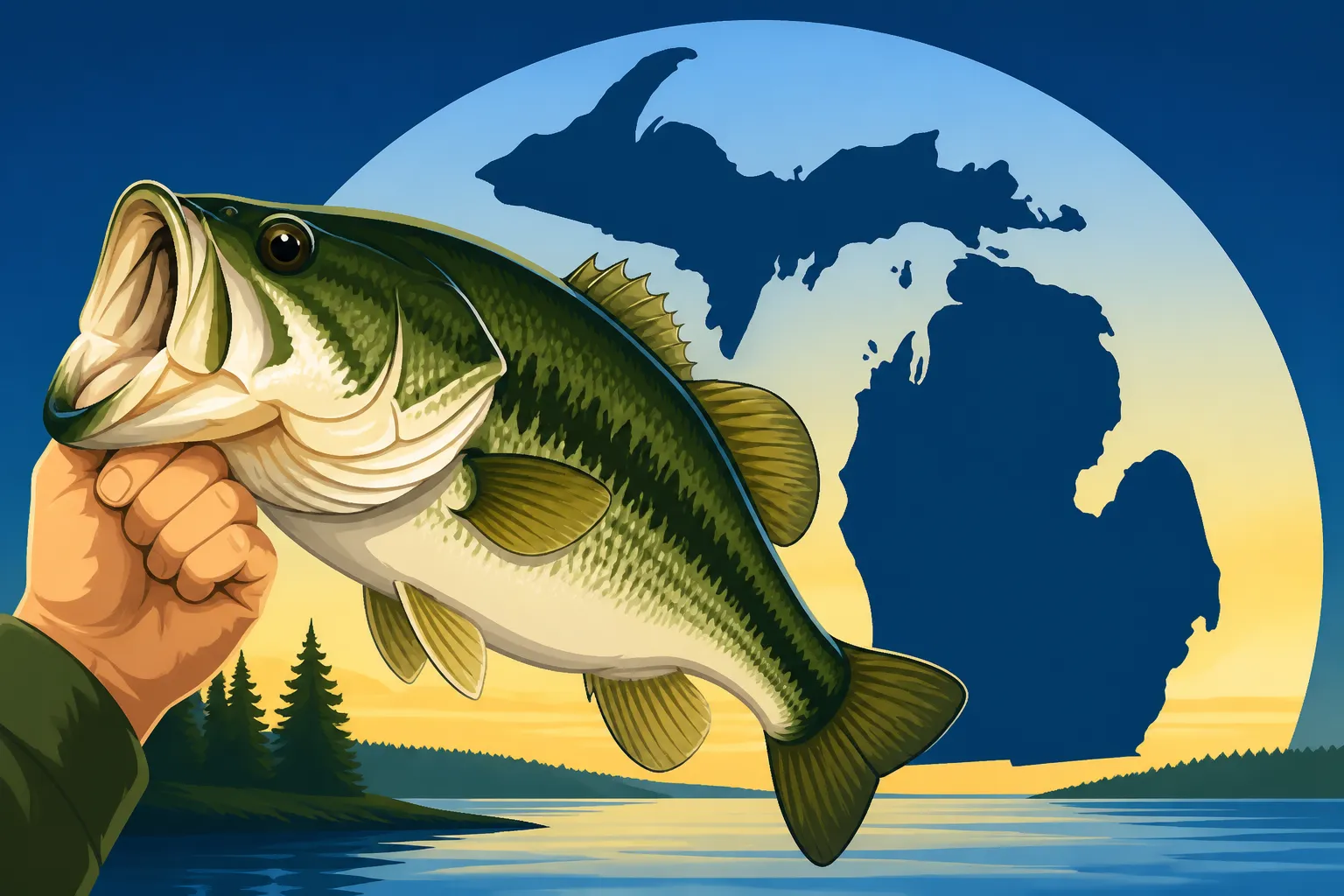
- Support the Fish: When holding a large bass, support its body horizontally with one hand under its belly and the other gently gripping its lower jaw. Avoid holding a large bass vertically by only its jaw, as this can damage its internal organs and jaw structure.
- Quick Photo and Release: Get your photo quickly and return the fish to the water as soon as possible. If the fish seems stressed, gently hold it upright in the water, allowing water to flow over its gills until it swims away under its own power.
- Know the Limits: Always be aware of local regulations, including Michigan's Combined Largemouth and Smallmouth Bass Limit, to ensure you're fishing legally and responsibly.
By respecting the fish and practicing good conservation habits, we ensure that Michigan's largemouth bass fishery remains vibrant and continues to offer opportunities for anglers to chase their dreams of a lifetime catch.
Disclaimer
This article is for general informational purposes only and does not constitute professional advice. Laws, prices and regulations vary by location and change over time. Consult a qualified professional for guidance on your specific situation.