How to Tell if a Salmon Is Spawning
Trying to figure out if that salmon you're eyeing in a Michigan river is getting ready to spawn can be tricky, but it's crucial for responsible angling. Knowing the signs helps you respect their vital reproductive journey and make informed decisions about your fishing. This guide will help you identify spawning salmon by their physical changes, behaviors, and environmental cues, ensuring you can enjoy Michigan's incredible salmon runs ethically.
The Visual Transformation: Physical Cues of Spawning Salmon
When salmon migrate from the vast expanse of the Great Lakes into Michigan's rivers to spawn, they undergo a truly remarkable and sometimes startling physical transformation. This isn't just a subtle shift; it's a profound change driven by their biological imperative to reproduce. Understanding these visual cues is the first step in identifying a spawning fish.
Changes in Coloration
One of the most immediate and noticeable indicators is a dramatic change in their body color. Out in the Great Lakes, salmon like Chinook and Coho are renowned for their sleek, silver, and iridescent scales, reflecting the deep blues and greens of their open-water habitat. They are powerful, vibrant, and typically pristine. However, once they enter the freshwater rivers and begin their upstream journey, their silvery sheen begins to dull and often takes on much darker, more mottled hues.
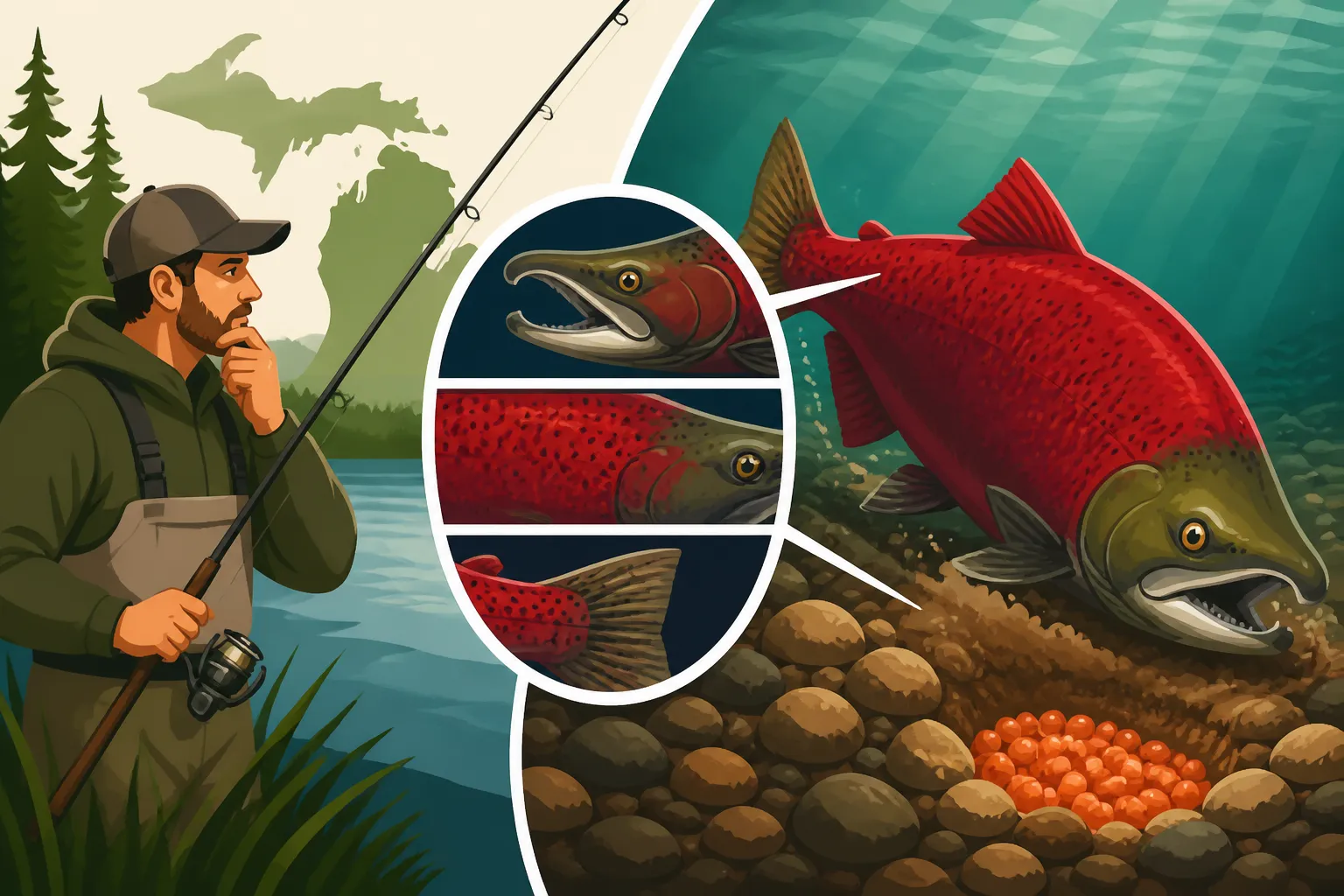
Chinook salmon, often called "Kings," can turn from bright silver to a dark, almost black or olive-brown color, often with reddish or purplish blotches on their sides. Coho salmon, or "Silvers," frequently develop a deep reddish-maroon color along their flanks, sometimes with a greenish-black back. These color changes are part of their camouflage in the shallower, tannin-stained river waters and a physiological response to their reproductive cycle. The flesh of these fish also begins to deteriorate internally, losing its vibrant color and firm texture, becoming paler and softer as their bodies divert all energy to spawning.
Development of Kypes and Humps
Beyond coloration, male salmon develop striking secondary sexual characteristics that are unmistakable. The most prominent is the "kype," a pronounced, often hooked jaw that protrudes dramatically. This isn't for eating; in fact, spawning salmon largely stop feeding once they enter the rivers. Instead, the kype is used in territorial displays and battles with other males for access to females and spawning redds. The bigger and more defined the kype, generally, the more advanced the male is in his spawning journey.
Males, particularly large Chinook, also develop a noticeable hump on their back, just behind the head. This "humpback" appearance further distinguishes them from their sleek, lake-dwelling counterparts. Both the kype and hump are temporary structures that serve their purpose only during the spawning ritual. Seeing a fish with these features is a strong indicator that it's in full spawning mode. Using a good pair of polarized sunglasses, perhaps from Amazon, can really help you spot these details in the glare of the river.
Wear and Tear: Physical Deterioration
The journey upstream is grueling, and the act of spawning is physically demanding. As a result, spawning salmon often exhibit significant signs of wear and tear. Their fins, especially the tail fin, can become frayed, tattered, or even partially torn from constantly battling currents, navigating rapids, and, for females, digging redds. Their bodies might also show abrasions, scrapes, or white patches of fungus (saprolegnia) from rubbing against rocks, logs, or other fish, or from bacterial infections due in part to their weakened immune systems as they devote all resources to reproduction.
These physical injuries and signs of deterioration are not signs of poor health in the traditional sense, but rather evidence of a fish fully committed to its final life mission. A salmon that looks beaten up, with faded colors and damaged fins, is almost certainly a spawning fish. Their incredible drive to reproduce means they push themselves to their absolute limit.
Behavioral Indicators: What Spawning Salmon Do
Beyond their changing appearance, spawning salmon exhibit distinct behaviors that set them apart from actively feeding or migrating fish. Observing these actions can provide strong clues about their reproductive intent. Being patient and quietly watching a stretch of river can reveal a lot about what the fish are up to.
Redd Building and Guarding
One of the most definitive signs of spawning activity is the presence of "redds." A redd is a salmon's nest, and it's created by the female. She uses her tail to fan away silt and small gravel, creating an oval-shaped depression in the riverbed. Downstream from this depression, you'll often see a small mound of clean, lighter-colored gravel. This clean, disturbed gravel contrasts sharply with the darker, algae-covered rocks around it, making redds relatively easy to spot in clear, shallow water. The female will lay her eggs in this depression, and the male will fertilize them, after which she covers them with gravel.
Both male and female salmon will vigorously guard their redds or chosen spawning territories. Females will often sit directly over their redds, fanning occasionally to keep the eggs aerated, while males patrol nearby, chasing away any perceived threats. You'll see aggressive lunges and territorial displays if other fish, including rival salmon, venture too close. They are highly protective, and this aggression is a clear sign they are focused solely on reproduction, not feeding.
Lack of Feeding Activity and Aggression
A critical behavioral shift in spawning salmon is their almost complete cessation of feeding. Once they enter the rivers, their digestive systems begin to shut down, and their bodies run purely on stored energy reserves. This means they are generally not interested in eating typical baits or lures that mimic food sources. If you cast a traditional lure through a pool of seemingly active salmon and get no interest, it might be because they're in spawning mode.
However, a lack of feeding interest doesn't mean a lack of aggression. Spawning salmon, especially males, can be extremely territorial and will strike at anything they perceive as a threat to their redd or mate. This is why some anglers still manage to "catch" spawning salmon—they aren't eating the lure; they're attacking it. This aggressive, non-feeding strike is another strong indicator of spawning behavior. It's why anglers often use larger, more flashy lures or flies that are meant to provoke an aggressive reaction rather than mimic natural food. Best Lures for Muskellunge might even elicit a similar territorial strike from a salmon, though it's not their usual target!
Location and Water Depth
Spawning salmon seek out very specific habitats within rivers. They look for stretches of river with good current, clear, cold water, and a gravel bottom. The depth is often relatively shallow, ranging from a few inches to a few feet, making their activity more visible. These areas provide the necessary oxygen and protection for their eggs. You'll typically find them in the heads of riffles, at the tail-outs of pools, or in gravelly runs where the current is steady but not too strong.
If you observe groups of salmon congregating in shallow, gravelly areas, particularly if they are paired up, fanning their tails, or exhibiting aggressive behavior towards other fish, it's highly probable they are actively spawning. This contrasts with migrating salmon who might be resting in deeper pools or moving steadily upstream without stopping. Knowing Best Rivers for Salmon and Steelhead in Michigan like the Manistee or Pere Marquette can help you narrow down where to look for these conditions.
Timing and Ethical Considerations for Anglers
Understanding when and where salmon typically spawn in Michigan, combined with a strong ethical approach to fishing, ensures the sustainability of this incredible natural resource. Fishing for spawning salmon comes with a particular set of responsibilities.
Spawning Seasons in Michigan
For the main Pacific salmon species in Michigan—Chinook and Coho—the primary spawning season is in the fall. Chinook salmon typically begin their runs in late August and continue through September, with peak spawning occurring in late September and early October. Coho salmon usually follow shortly after, with their runs peaking in October and sometimes extending into November. These fish spend several weeks in the rivers, culminating in spawning, after which they die, completing their anadromous life cycle.
While the prompt focuses on salmon, it's worth noting that steelhead, which are anadromous rainbow trout, also undertake spawning runs, primarily in the spring (March through May) in Michigan rivers, with some also running in the fall for staging. Observing their behavior is similar, though their life cycle allows them to potentially return to the Great Lakes after spawning. Anglers must be aware of Michigan Fishing Season Dates and Rules for different species, as some regulations might be in place to protect spawners.
Ethical Angling and Catch-and-Release
Fishing for salmon during their spawning run can be a contentious topic. While it's often legal to fish for them in the rivers, many ethical anglers choose to avoid targeting actively spawning fish. There are several reasons for this:
- Poor Eating Quality: The flesh of spawning salmon has deteriorated significantly. It's soft, pale, and lacks the flavor and fat content of a lake-run fish. Keeping a spawning salmon for the table is often a disappointing experience.
- Reproductive Impact: Disturbing fish on their redds or actively engaged in spawning can disrupt the process, potentially reducing the success rate of egg deposition and fertilization. While incidental hook-ups happen, intentionally casting into redds or at paired fish is generally frowned upon.
- Increased Mortality: Spawning fish are under immense stress. Even with careful How to Catch and Release a Muskellunge-style techniques, the added stress of being caught can increase post-release mortality, especially for fish nearing the end of their life cycle.
Many anglers prefer to target salmon earlier in their runs, when they are still in the lower river sections or near the river mouths, before they have fully committed to spawning. At this stage, they are often still bright, powerful, and more likely to strike out of hunger. For those fishing during the run, practicing responsible catch-and-release is paramount. This means minimizing fight time, keeping the fish in the water, avoiding handling them by the gills, and releasing them gently.
How to Fish Responsibly When Salmon Are Spawning
Even when salmon are spawning, there are still ways to enjoy the fishery responsibly.
- Target Different Areas: Focus your efforts on deeper pools or runs where fish might be resting before or after spawning, rather than shallow, gravelly redds. Some fish will congregate in these areas, still holding a bit of their lake vigor.
- Observe Before You Cast: Take time to watch the water. If you see fish paired up, fanning their tails, or aggressively defending a spot, move on to another location. There's plenty of water to fish in Michigan's famous salmon rivers.
- Use Appropriate Gear: If you do fish for late-run salmon, be prepared with gear that can handle a strong fish quickly, minimizing stress. A proper net for landing fish without excessive handling is also key. Amazon offers a wide selection of nets suitable for various fish sizes.
- Consult Regulations: Always carry and consult the current Michigan Fishing Regulations Digest PDF for 2026 (or whatever the current year is). Regulations can change and might include specific restrictions for certain rivers or seasons to protect spawning fish.
By understanding the subtle and not-so-subtle cues of spawning salmon, anglers can not only increase their knowledge of these incredible fish but also contribute to the long-term health of Michigan's precious salmon populations. It's all about respecting the fish and the natural cycle.
Disclaimer
This article is for general informational purposes only and does not constitute professional advice. Laws, prices and regulations vary by location and change over time. Consult a qualified professional for guidance on your specific situation.