What Is a Saugeye
Have you ever heard the term "saugeye" and found yourself scratching your head, wondering if it's a new type of walleye, a fancy name for a sauger, or something else entirely? It's a common confusion, especially for anglers in Michigan where walleye and sauger are well-known. This guide is here to clear up the mystery, explaining precisely what a saugeye is, why these unique fish exist, and how you can identify them, even if they're not a common catch in our Michigan waters.
Unraveling the Mystery: What Exactly is a Saugeye?
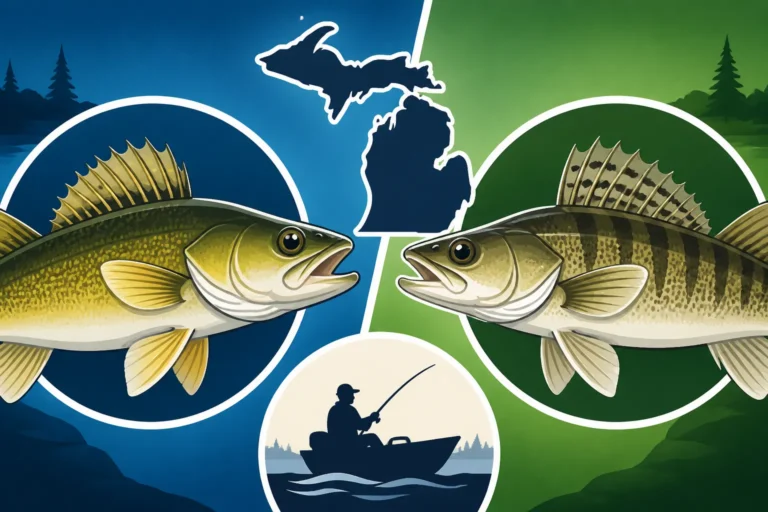
Let's dive right into it. A saugeye isn't some mythical creature from the deep, nor is it just a nickname for a fish you already know. It is, in fact, a hybrid fish, a genetic blend of two distinct species: the walleye and the sauger. Think of it like a mule in the animal kingdom – a cross between a horse and a donkey. In the fish world, a saugeye is the result of spawning a female walleye with a male sauger. This specific cross creates a fish that often exhibits the best traits of both its parents, making it a desirable species for stocking in certain regions.
The creation of a saugeye is usually a deliberate process in fish hatcheries, rather than something that happens frequently in the wild. While walleye and sauger can coexist in the same waters, their spawning habits and timing generally differ enough to prevent widespread natural hybridization. However, when fishery biologists want a fish with specific characteristics – perhaps a faster growth rate or greater tolerance to certain water conditions – they can create these hybrids under controlled environments. It’s a testament to the science of fisheries management and the constant effort to improve fishing opportunities.
Understanding the parent species is key to grasping what makes a saugeye tick. Walleye are famous for their large size, delectable taste, and tend to prefer clear, deep waters of large lakes and rivers. Sauger, on the other hand, are typically smaller, more slender, and often thrive in turbid (murky) river environments. They’re also known for their keen eyesight in low light conditions, which is a trait passed down to their hybrid offspring. So, a saugeye essentially inherits a mix of these characteristics, often leading to a robust, fast-growing game fish.
Why Saugeye Exist: The Purpose of this Hybrid Fish
The primary reason for the existence of saugeye is strategic fisheries management, particularly in states that don't have the ideal habitat for pure walleye or sauger. Hatcheries intentionally produce saugeye for stocking programs because these hybrids offer several advantages over their parent species in specific environments. While Michigan's focus is largely on its abundant natural walleye populations and restoring native species, other states find saugeye to be a fantastic fit for their waters.
Enhanced Growth Rates and Hardiness
One of the most significant benefits of saugeye is their "hybrid vigor." This scientific term describes the tendency of crossbred offspring to be stronger and healthier than either parent line. For saugeye, this often translates to faster growth rates compared to pure walleye or sauger, especially in their early years. Imagine a fish that grows quickly to a catchable size, providing more immediate angling opportunities. This rapid growth can be a huge advantage in lakes and reservoirs with heavy fishing pressure.
Beyond growth, saugeye also tend to be more tolerant of a wider range of environmental conditions. They can handle murkier waters better than pure walleye, inheriting the sauger's adaptability to turbid river systems. At the same time, they can often grow larger than sauger, making them a more appealing target for anglers seeking bigger fish. This versatility makes them an excellent choice for waters that might be marginal for either pure walleye or sauger, maximizing the success of stocking efforts. For anglers keen on learning more about different fish behaviors, understanding how diverse species thrive in varying conditions is fascinating and can inform tackle choices, which you can often find a wide selection of on Amazon.
Filling Specific Ecological Niches
Saugeye also play a role in filling specific ecological niches where native species might struggle or where a particular type of sport fish is desired. In some reservoirs, for instance, the water might be too warm or turbid for walleye to thrive naturally, but sauger might not grow to the size preferred by anglers. Enter the saugeye, a hybrid that can tolerate these conditions while still offering a substantial fight and a good meal.
This selective stocking helps maintain healthy fish populations and provides diverse angling experiences. It's all about balancing the ecosystem and meeting recreational fishing demands. While Michigan has a robust program for stocking native species and managing its natural fisheries, particularly Does the DNR Stock Walleye in Michigan?, the strategic use of hybrids like saugeye demonstrates how innovative approaches can enhance fishing opportunities elsewhere.
Identifying a Saugeye: Key Distinctions from Walleye and Sauger
Knowing what a saugeye is conceptually is one thing, but being able to identify one on the water is another. Since saugeye are a hybrid of walleye and sauger, they display characteristics of both. This can make field identification a bit tricky, but there are several key features that can help you tell them apart. It’s a fun challenge for any keen angler!
Distinct Physical Traits and Markings
Let's break down the visual cues:
-
Dorsal Fin Markings: This is often the most reliable indicator.
- Walleye: Typically have a distinct, dark blotch at the bottom rear of their spiny dorsal fin. The rest of the fin is usually clear or subtly spotted.
- Sauger: Will have distinct, dark spots or bars (like small tiger stripes) across their entire spiny dorsal fin. There's no single large blotch.
- Saugeye: Will generally exhibit a mix. They'll have distinct spots or bars on the dorsal fin, much like a sauger, but they might also retain a fainter version of the walleye's dark blotch, or the spotting will be more pronounced than a walleye but less uniform than a sauger. It's often described as a scattered pattern of spots.
-
Body Markings:
- Walleye: Generally have a relatively plain body coloration, often olive, gold, or brown, with lighter bellies. They may have faint vertical barring, but it's usually not sharply defined.
- Sauger: Are known for their more pronounced, irregular dark blotches or saddle patterns along their sides and back, giving them a somewhat "splotchy" or mottled appearance.
- Saugeye: Will usually have more distinct, irregular dark blotches or saddle patterns than a walleye, but perhaps not as intensely defined or consistent as a pure sauger. It's a blend – often appearing more mottled than a walleye, but perhaps not as dark or uniformly marked as a sauger.
-
Tail Fin:
- Walleye: The lower lobe of their tail fin often has a milky white tip. This is a very characteristic feature.
- Sauger: Do not have this white tip on their tail fin. Their tail fins are usually plain or slightly mottled, matching their body color.
- Saugeye: This is where it gets interesting. Saugeye may or may not have a white tip on their lower tail fin lobe. If they do, it's often much fainter or smaller than what you'd see on a pure walleye. If you see a faint white tip and the dorsal fin spotting, you're likely looking at a saugeye.
-
Scales on Cheek: Another subtle but important detail.
- Walleye: Have smooth cheeks, mostly or entirely devoid of scales.
- Sauger: Have fully scaled cheeks, which will feel rough to the touch.
- Saugeye: Will typically have partially scaled cheeks, a mix between the smooth walleye and the rough sauger. You might feel a patch of scales on the upper part of the cheek.
These identification points are crucial when trying to determine What Is the Difference Between Walleye and Sauger and especially when adding a saugeye to the mix. Carrying a good fish identification guide, which you can easily purchase on Amazon, can be a great asset for distinguishing these closely related species.
Here's a comparison table to help visualize these differences:
| Feature | Walleye | Sauger | Saugeye (Hybrid) |
|---|---|---|---|
| Spiny Dorsal Fin | Dark blotch at rear base, rest clear/faint spots | Distinct dark spots/bars across entire fin | Scattered, irregular spots/bars; may have faint rear blotch |
| Body Markings | Faint or no vertical bars, generally plain | Irregular dark blotches/saddle patterns on sides | More distinct blotches/saddle patterns than walleye, less uniform than sauger |
| Lower Tail Fin Lobe | Distinct white tip | No white tip | May have a faint or small white tip, or none |
| Cheeks | Smooth, largely scaleless | Fully scaled, rough | Partially scaled (patch on upper cheek) |
| Average Size | Larger, thicker-bodied | Smaller, more slender | Intermediate to larger, robust |
Understanding the Nuances for Proper Identification
It’s important to remember that these are general guidelines. Hybrid fish can sometimes exhibit a wider range of variation, making definitive identification challenging even for experts. Environmental factors can also influence coloration. When in doubt, it’s always best to err on the side of caution and adhere to the most conservative regulations, typically those for walleye, as they often have the more restrictive Michigan Walleye Size and Bag Limits.
If you're ever truly unsure, taking clear photos of the fish, especially its dorsal fin, tail, and cheeks, can be incredibly helpful for later identification with resources like your state's fisheries department or online forums. The ability to identify fish correctly is a vital part of responsible angling and contributes to knowing Michigan Fishing Regulations Every Angler Should Know.
Saugeye in Michigan: A Rarity in the Great Lakes State
Now for the big question: are saugeye actually found in Michigan waters? The short answer is: they are not typically stocked or commonly found in Michigan. While saugeye are highly valued and extensively stocked in several neighboring states, particularly Ohio, Michigan's fisheries management strategy has historically focused on enhancing and maintaining native walleye populations and naturally occurring sauger.
Michigan's Focus on Native Species and Walleye Management
The Michigan Department of Natural Resources (DNR) dedicates significant resources to managing our diverse native fish populations. For species like walleye, this includes extensive stocking programs using pure-strain walleye, especially in the Great Lakes and larger inland lakes. Our state's waters, from the vast stretches of Lake Michigan to the smaller inland gems, provide excellent habitat for walleye to thrive, grow, and reproduce naturally. Because of this, there hasn't been a strong biological or management need to introduce a hybrid like the saugeye.
Michigan's commitment extends to maintaining the genetic integrity of its fish. Introducing a hybrid species that could potentially cross-breed with existing walleye or sauger populations, even if unlikely, could dilute native genetics. This is a common concern among fisheries biologists who prioritize the health and sustainability of wild populations. The DNR's efforts are largely aimed at promoting native species and restoring fisheries, as highlighted in guides like Michigan's Most Popular Fish Species.
What If You Think You've Caught a Saugeye in Michigan?
Given that saugeye are not generally found in Michigan, if you catch a fish that strongly resembles a saugeye, it's most likely either a pure walleye or a pure sauger that simply has some atypical markings, or perhaps even a naturally occurring, rare walleye-sauger hybrid. Natural hybridization, while uncommon, isn't impossible where both species coexist. This is particularly true in boundary waters or large river systems where populations might overlap.
If you suspect you've caught a saugeye, the first step is to carefully examine the identification features discussed above. Compare the dorsal fin, body markings, tail, and cheeks. Take a photo if possible! Secondly, always default to the regulations for walleye, as they typically have the more stringent size and bag limits in Michigan. This ensures you're compliant with the law, even if the fish turns out to be something slightly different. For more details on species identification, checking resources like Walleye Identification and Size in Michigan and How to Tell a Michigan Walleye From a Sauger can be very helpful.
While catching a saugeye in Michigan would be an extremely rare occurrence, understanding what they are and how to identify them adds another layer to your angling knowledge. It prepares you for trips to other states where they are common and simply makes you a more informed and versatile angler. And who knows, you might just impress your fishing buddies with your newfound expertise on this unique hybrid fish! For those looking to improve their general fish identification skills, an angler's pocket guide is always a good addition, and you can find many comprehensive options on Amazon to carry on your next outing.
Disclaimer
This article is for general informational purposes only and does not constitute professional advice. Laws, prices and regulations vary by location and change over time. Consult a qualified professional for guidance on your specific situation.